
What Is an Alarm Philosophy?

Key Highlights
- An alarm philosophy is the starting point for effective alarm management in industrial automation.
- It defines roles, responsibilities, design rules, operator response expectations, and governance of alarms.
- ISA 18.2 ties alarm philosophy to the full alarm management lifecycle, from design to audit.
- Plants without a clear philosophy often face alarm floods, operator overload, and alarm fatigue.
- A strong document supports process safety, equipment protection, operational efficiency, and better situational awareness.
- Practical use depends on workshops, performance monitoring, management of change, and regular review.
Introduction
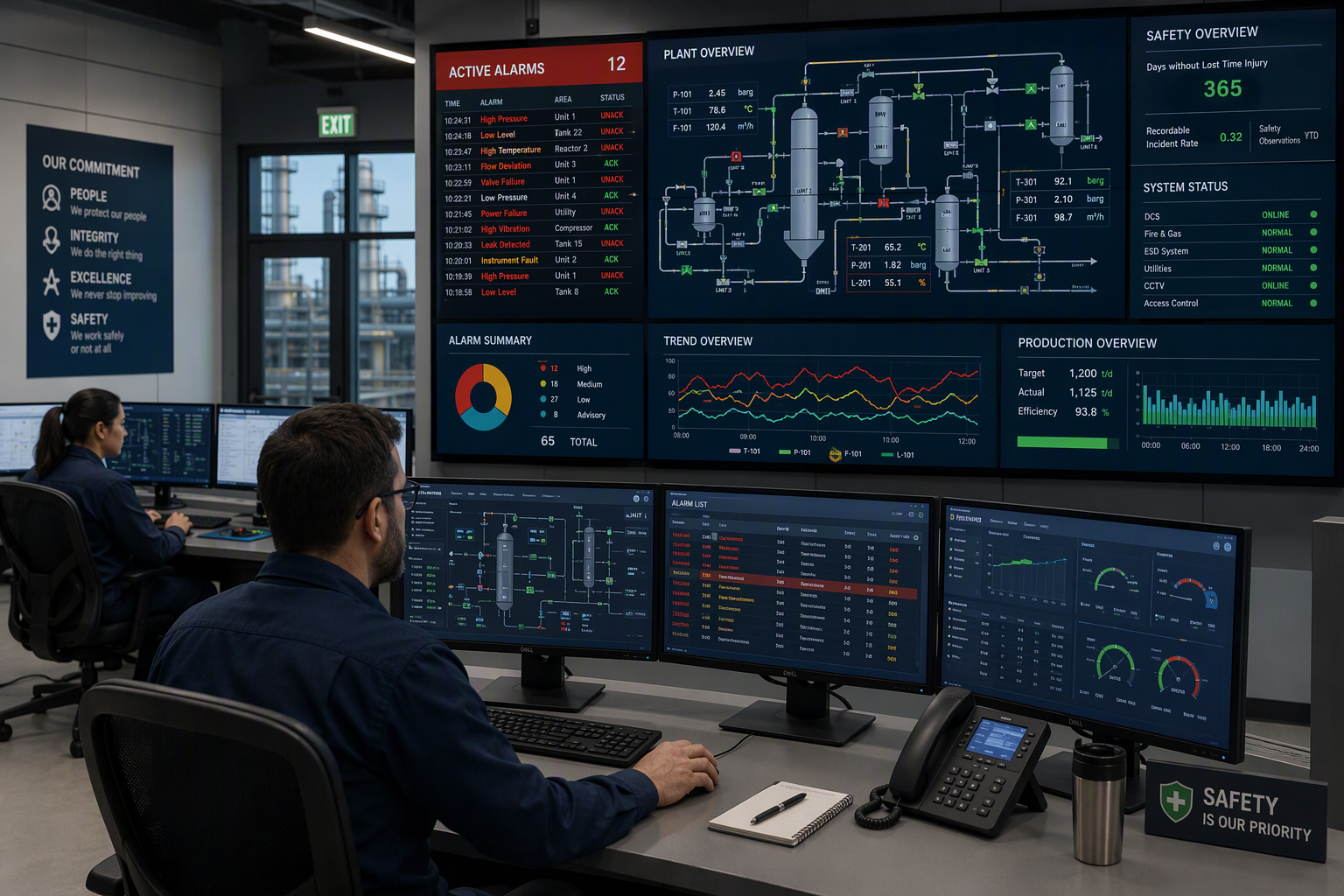
In industrial automation, an alarm philosophy is the document that gives your site a clear, repeatable way to manage alarms. It explains how alarms should be created, prioritized, operated, maintained, and reviewed. That matters because effective alarm management is not just about configuring points in a control system. It is about helping operators act at the right time during abnormal situations. If your plant wants better control, safer operation, and fewer nuisance alarms, this is where you begin.
What an Alarm Philosophy Is — and What It Is Not
An alarm philosophy in industrial automation is a documented set of principles and rules for alarm management at a site. In process industries, it serves as the starting point for alarm system design, operation, maintenance, testing, training, and governance of alarms. It records the basic principles behind decisions so your team is not making alarm choices one tag at a time with no shared standard.
What it is not is a simple alarm list, a collection of settings, or a one-time engineering task. It is also not limited to compliance. Good practice covers roles and responsibilities, rationalization, design, operation effectiveness, condition-based maintenance, cost management, and management of change. In short, the alarm philosophy document sets best practices for how your entire site will manage alarm systems over time.
Why Plants Without a Philosophy Drown in Alarms
Without an alarm philosophy, your alarm system can become unregulated. That often leads to too many alarms, inconsistent priorities, poor setpoints, and little real control over how alarms are added or changed. In process industries, that is a direct path to alarm floods, standing alarms, and bad actors that keep returning shift after shift.
The human effect is just as serious. Operators can only handle a limited alarm rate during normal operations. When the system keeps generating nuisance alarms, operator overload grows and alarm fatigue sets in. Then response time slips, critical events are harder to spot, and situational awareness drops. A clear philosophy reduces that noise by defining what should be an alarm, what operator action is expected, and how the system should perform.
The ISA 18.2 Alarm Management Lifecycle at a Glance
ISA 18.2 gives process control teams a structured alarm management lifecycle. The standard connects alarm philosophy to every later activity, so the philosophy is not separate from implementation. It is the foundation for identification, rationalization, detailed design, operation, maintenance, monitoring, audit, and management of change. If you want consistency, this lifecycle is the framework.
Here is a simple view of the phases of the alarm management lifecycle:
| Phase | Purpose |
|---|---|
| Philosophy | Define principles, targets, roles, and governance of alarms |
| Identification | Decide which abnormal situations need alarms |
| Rationalization | Confirm need, priority, cause, and operator response |
| Detailed Design | Set alarm setpoints, deadbands, delays, classes, and displays |
| Implementation | Configure alarms in the control system |
| Operation | Use alarms to guide operator action during abnormal situations |
| Maintenance | Test and maintain alarm function and health |
| Monitoring & Assessment | Review alarm data and performance metrics |
| Management of Change | Control changes to alarm logic and settings |
| Audit | Verify that site practice matches the philosophy |
Phase 1: Philosophy — Setting Principles Before Settings
Before anyone adjusts alarm setpoints or assigns priority, your site needs shared principles. That is why the alarm philosophy is the starting point. It explains why alarms exist, how they support operators, and how they act as an important barrier against unwanted conditions turning into accidents. It also sets the premise for safe, reliable, and cost-effective alarm system design.
A useful philosophy includes best practices for roles and responsibilities, rationalization, operation effectiveness, testing, training, maintenance, and management of change. It should also describe how the site will judge alarm system performance and who approves exceptions. When these rules come first, engineering decisions become consistent. Without them, settings tend to reflect local habits, not plant-wide needs. This phase makes every later step easier.
Phase 2: Identification and Rationalization
Once the philosophy is in place, the next step is alarm identification. Your team decides which abnormal situations truly require operator attention. Then comes alarm rationalization, where each proposed or existing alarm is reviewed in a structured way. The aim is simple: confirm that the alarm is needed, define the expected operator response, and make sure the priority fits the consequence and available response time.
This is where rationalization workshops are valuable. Operations, maintenance, automation engineers, and management level stakeholders can review alarms together using the philosophy as the rulebook. That highlights the difference between alarm philosophy and alarm rationalization. The philosophy sets the site-wide principles. Rationalization applies those principles to individual alarms. One defines policy; the other tests every alarm against it.
Phase 3: Detailed Design, Implementation and Operation
After rationalization, your team moves into detailed design and alarm implementation. This is where alarm system design choices become real settings in the control system. Priorities, alarm setpoints, deadbands, delays, classes, and display paths need to match the philosophy and the rationalization record. If they do not, nuisance alarms return quickly and the document loses value.
Operation is where the benefit shows up. A better-designed system lowers alarm count, improves operator response, and makes critical events easier to recognize. Operators spend less time chasing noise and more time managing the process. That supports better situational awareness and steadier process control. When the philosophy guides implementation, the system becomes a tool for action, not just a source of interruption.
Phase 4: Maintenance, Monitoring and Assessment
A healthy alarm system does not stay healthy on its own. Ongoing monitoring is needed to catch drift, bad actors, stale alarms, and changes in alarm rate. That means using alarm data to review standing alarms, chattering alarms, peak loads, and overall alarm system performance. Performance monitoring turns alarm management from a one-time project into routine plant discipline.
Assessment also shows where support is needed. Historical data reviews, alarm system audits, and structured workshop sessions help teams build or improve an alarm philosophy. Internal teams often use alarm records, reports, and performance dashboards to find gaps. The document should then guide maintenance, testing, and follow-up actions. When alarm system management includes regular review, nuisance alarms can be reduced before they become normal.
Phase 5: Management of Change and Audit
Even a strong alarm philosophy will fail if site changes happen outside control. Management of change keeps alarm edits, new equipment, and operating mode changes aligned with the original principles. Any change to alarm logic, priorities, setpoints, suppression rules, or displays should be checked against the philosophy. That protects consistency across the alarm management lifecycle.
Audit closes the loop. It checks whether plant practice still matches the document and whether performance metrics show the system is doing its job. Ownership should be shared across operations, automation engineers, maintenance, and site leadership, with clear approval authority. Reviews should happen whenever major changes occur and as part of regular site practice. If no one owns updates, the philosophy becomes outdated and less useful.
What a Good Alarm Philosophy Document Actually Contains
A good alarm philosophy document gives your site clear rules that people can apply in daily work. At minimum, it should cover roles and responsibilities, alarm rationalization, design principles, operation effectiveness, testing, training, maintenance, cost management, and management of change. It should also explain how alarms support process control and why they are a key operator support system during abnormal situations.
Just as important, the document should provide actionable insights rather than broad statements. Your team should be able to use it when deciding alarm priorities, classes, shelving rules, deadbands, delays, and review practices. It should describe how alarm system performance will be measured and how decisions will be documented. If it cannot guide an actual engineering or operating choice, it is not complete enough.
Alarm Priorities, Classes and Performance Targets
Every site needs a consistent priority system. If everything is marked high priority, nothing stands out when operators need it most. ISA 18.2-based practice points to a priority distribution of about 80% low, 15% medium, and 5% high or critical. That kind of structure helps operators sort alarms by urgency and supports faster, more reliable response during upsets.

Performance targets matter just as much as labels. Common measures include average alarm rate, peak alarm rate during disturbances, standing alarms, nuisance alarms, and chattering alarms. A proper alarm philosophy defines these performance targets up front so alarm classes and priorities connect to measurable outcomes. The main benefits are better situational awareness, fewer missed alarms, improved operational efficiency, and better control of alarm system performance.
Shelving, Suppression, Deadbands and Delays in the Philosophy
A practical philosophy needs clear rules for shelving, alarm suppression, deadbands, and delays. These are not technical extras. They are core tools for reducing nuisance alarms and making sure alarms appear only when operator action is needed. For example, a low-flow alarm may need suppression when a pump is intentionally stopped, and a noisy analog point may need a proper deadband to avoid chattering.
Common mistakes happen when sites use these features without rules. Unlimited shelving, hidden suppression, narrow deadbands, or delays added without documented reason can weaken alarm management instead of helping it. Your philosophy should state when each method is allowed, who can apply it, how long it can remain active, and how it is reviewed. That keeps noise down without hiding important conditions.
Writing the Document: A Practical Workshop Approach
The easiest way to write an alarm philosophy document is not to hand it to one engineer and wait. A practical approach is to build it through workshops with operations, maintenance, controls, and management level participants. These sessions bring together the people who design alarms, respond to them, maintain them, and approve changes. That improves buy-in and makes the document more realistic.
You can use current alarm data, alarm lists, event history, and performance reports as workshop inputs. Those tools help the team identify pain points, bad actors, and gaps in alarm system management. From there, the group can define rules for priorities, response expectations, maintenance, and governance of alarms. The result is a document shaped by plant reality, not just theory.
Common Mistakes That Make a Philosophy Sit on a Shelf
Some alarm philosophy documents fail because they are written for compliance and not for use. They may be too vague, too technical, or disconnected from how the plant actually runs. If operators, engineers, and supervisors cannot apply the document to real decisions, it will sit on a shelf while local habits take over again. That weakens process control and erodes consistency.
Another mistake is ignoring behaviour reasons. The philosophy should guide the behaviour of console operators, automation engineers, and operation management. It should also reflect work environment needs, not just technical settings. Best practices only matter when they shape day-to-day actions, training, review, and change control. A document with no ownership, no metrics, and no update process will not improve anything.
A 90-Day Plan to Create or Refresh Your Alarm Philosophy
In the first 30 days, collect your alarm data, current standards, alarm lists, and known operator pain points. Review alarm count, standing alarms, nuisance alarms, and any recent abnormal situations. Then define the starting point: who owns the document, which stakeholders join workshops, and which site problems the philosophy must address first.
During days 31 to 60, hold workshop sessions to define rules for priorities, classes, shelving, suppression, maintenance, testing, and management of change. In the final 30 days, draft the document, approve it, and connect it to improvement initiatives and performance monitoring. Set a review trigger for major system changes and a regular update cycle. This kind of structure can support safer operation and annual cost reduction through fewer interruptions, lower maintenance burden, and less unplanned downtime.
Conclusion
In conclusion, an effective alarm philosophy is not merely a document but a living framework that must be actively integrated into daily operations. By emphasizing ownership and accountability, it aligns technical standards with the realities of the work environment, fostering a culture of proactive engagement rather than passive compliance. Through this structured 90-day approach, organizations can transform their alarm management practices into a robust system that enhances safety and operational efficiency.
The continuous evolution of this philosophy ensures that it remains relevant in the face of changing technologies and operational demands.
Start small and stay consistent. Pick one unit or area, review its worst alarms, agree on priorities and response expectations, and record the decisions in the philosophy. Then measure the result for a month before expanding the work to other areas. A philosophy that is used, reviewed, and updated will do more for safety and reliability than a perfect document that sits on a shelf.
When the alarm rate climbs again, or when shelved alarms never return, treat those signals as a prompt to revisit the philosophy rather than simply adding more alarms. Check whether priorities still match real risk, whether response steps are clear, and whether operators trust the displays in front of them. Small, regular reviews keep the document honest and keep the control room focused on the alarms that truly need action.
Leadership support matters here. Approve the document, assign clear ownership, and protect time for workshops, testing, and audit. When operators see that their feedback changes alarm design, they engage with the process instead of working around it. That shared ownership is what turns a written philosophy into daily practice on every shift.
Finally, keep the philosophy visible. Store it where operators and engineers can find it, reference it in training, and use it when new alarms are proposed. A document that guides real decisions earns trust over time. Review it after major changes, after incidents, and at least once a year, so it grows with the plant instead of falling behind it.
Frequently Asked Questions
What is the difference between an alarm philosophy and an alarm rationalization?
An alarm philosophy sets the site-wide rules for alarm management in process industries. Alarm rationalization applies those rules to each individual alarm. In rationalization workshops, teams confirm whether an alarm is needed, what operator action is required, and what priority fits. One defines policy; the other applies it.
How often should an alarm philosophy be reviewed?
Your alarm philosophy should be reviewed whenever major alarm changes, operating changes, or project updates occur. It should also be part of routine best practices within the alarm management lifecycle. Performance monitoring and management of change often show when updates are needed, even before a formal review date arrives.
Who should own and approve an alarm philosophy?
Ownership should be shared across operations, automation engineers, maintenance, and site leadership, because each group influences the management of alarm systems. Final approval usually belongs to plant leadership or the defined governance of alarms authority. In process industries, cross-functional ownership keeps the alarm philosophy document practical and current.