Innovations Shaping the Industrial Automation Industry Today
Key Highlights
- Industrial automation uses connected automation systems to run industrial processes with less manual effort.
- Modern plants rely on artificial intelligence and sensor data to improve speed, uptime, and quality control.
- Predictive maintenance helps teams spot equipment issues early and reduce unplanned shutdowns.
- Smart factories connect machines, software, and operators through shared industrial data and control systems.
- Businesses choose different automation models based on volume, flexibility, and production needs.
- Growth continues as companies pursue safety, consistency, cost savings, and stronger output.
Introduction
Industrial automation is changing how companies run the manufacturing process every day. Instead of relying on constant manual input, businesses now use numerical control systems, software, and machines to keep production moving with greater speed and consistency. That matters if you want better output, fewer errors, and safer operations. From assembly lines to process plants, industrial automation is now central to modern production. The innovations behind this shift are shaping how industries compete, grow, and improve performance.
Understanding Industrial Automation Industry in the Modern Era
At its core, industrial automation means using automation systems to run industrial processes with minimal direct effort from people. Machines, software, and control tools handle routine actions while teams focus on oversight and planning.
In modern automation, sensors detect conditions, controllers process information, and equipment responds in real time. This closed-loop approach reduces repeated human intervention and helps operations stay stable, fast, and consistent across many industrial processes.
Definition and Core Principles of Industrial Automation
Industrial automation is the use of machines, software, and industrial control tools, including machine tools, to perform production tasks with minimal human intervention. In simple terms, it shifts routine work from people to systems that can monitor, decide, and act. You still need people, but their role changes from doing every step to guiding performance and strategy.
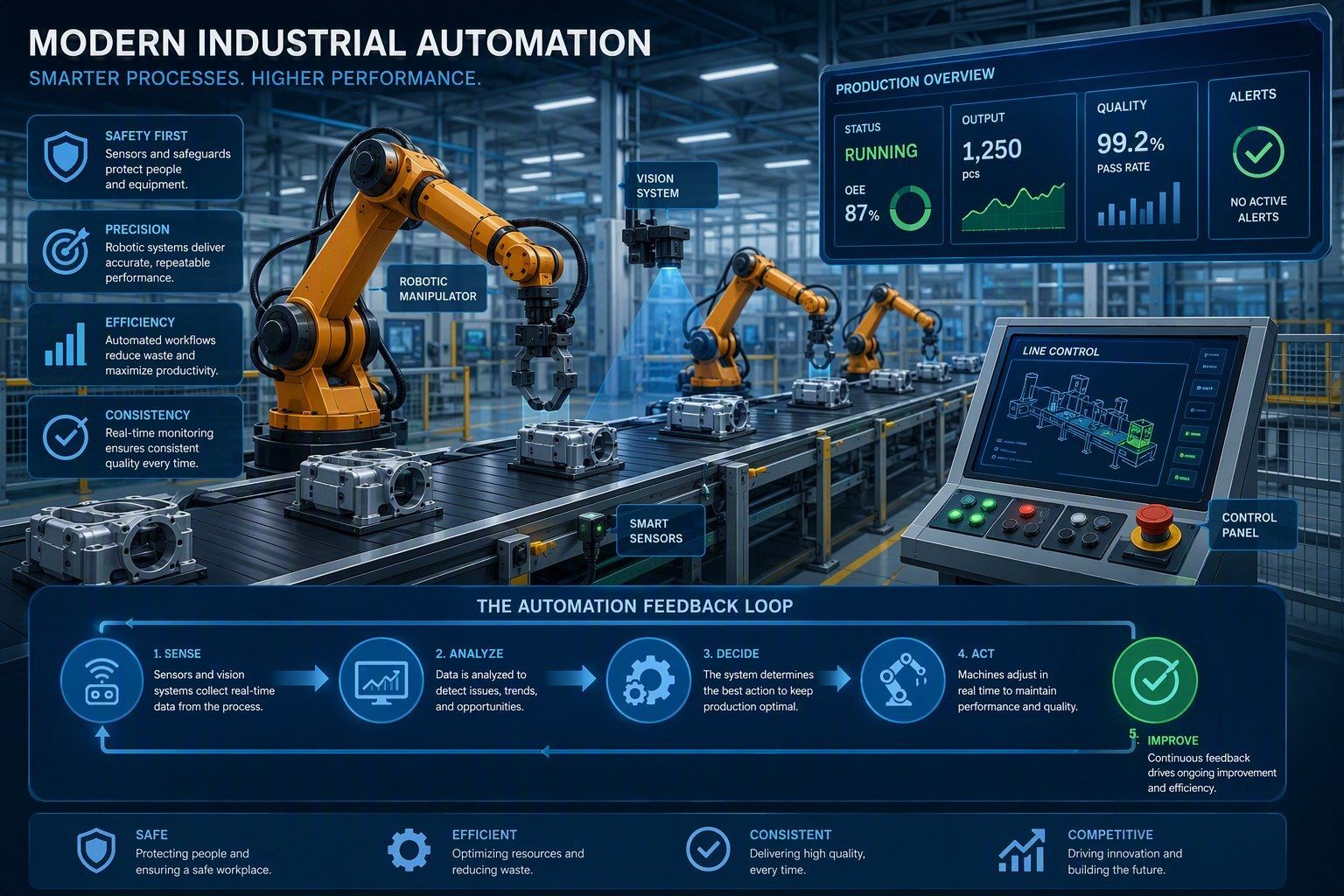
At the center of this approach are control systems. These include programmable logic controllers, software platforms, and field devices that work together to manage process control. Sensors collect data from equipment, controllers evaluate it, and actuators carry out the next action.
That feedback loop is the core principle behind industrial automation. It allows industrial control systems to respond quickly, keep conditions within target ranges, and support consistent output. The result is safer, steadier, and more repeatable production in modern industrial environments
How Industrial Automation Works Across Industries
Most automation systems follow a clear chain. Sensors detect what is happening on a machine or production line. Controllers receive those signals, apply control logic, and send commands. Motors, valves, or robotic arms then perform the physical task.
That structure works across many industrial processes because each control level has a job. Field devices gather data, controllers manage decisions, and software gives operators a live view of performance. This setup supports the manufacturing process without needing constant manual adjustment.
You can see these use cases in automotive manufacturing, electronics assembly, beverage processing, and warehouse flow. Whether the goal is welding, filling, sorting, or final assembly, automation systems help companies improve consistency, reduce delays, and scale output more smoothly.
Evolution from Traditional to Innovative Automation Solutions
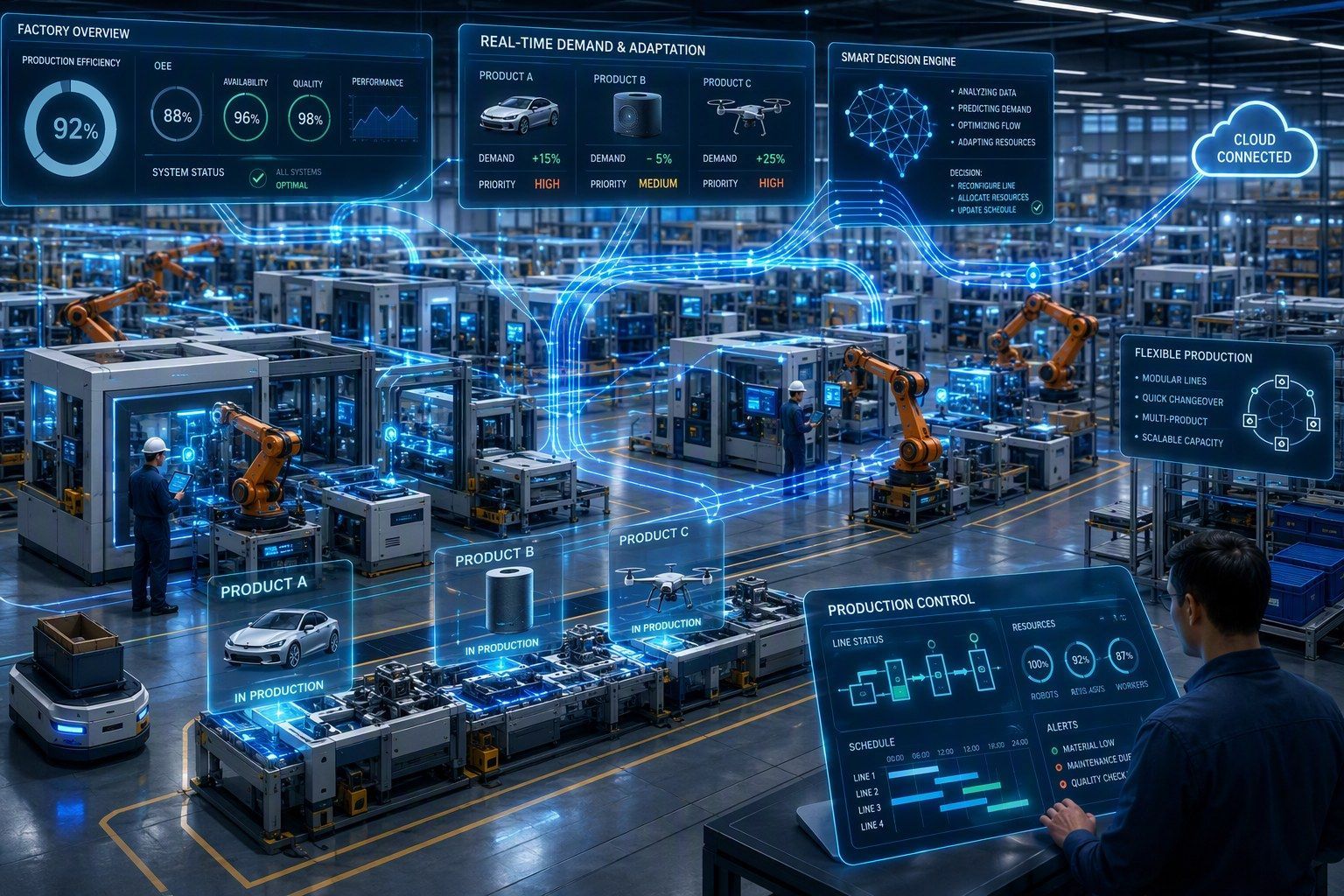
Traditional automation focused heavily on output and labor reduction. Early systems were built for fixed routines, especially where the same item was made again and again. These setups worked well, but they were harder to change when product needs shifted.
Modern automation has moved beyond that narrow model. Today’s control systems use programmable logic controllers, software, sensors, and connected devices to support quicker changes and better visibility. Plants are not just automating a task. They are building systems that can monitor, adjust, and improve in real time.
This shift supports flexible automation and smarter decision-making. Instead of locking production into one pattern, innovative solutions allow businesses to handle different products, changing demand, and quality goals with less downtime. That is one reason automation continues to expand across modern manufacturing.
Exploring Different Types of Industrial Automation Systems
Fixed Automation Systems
Programmable Automation Systems
Flexible Automation Systems
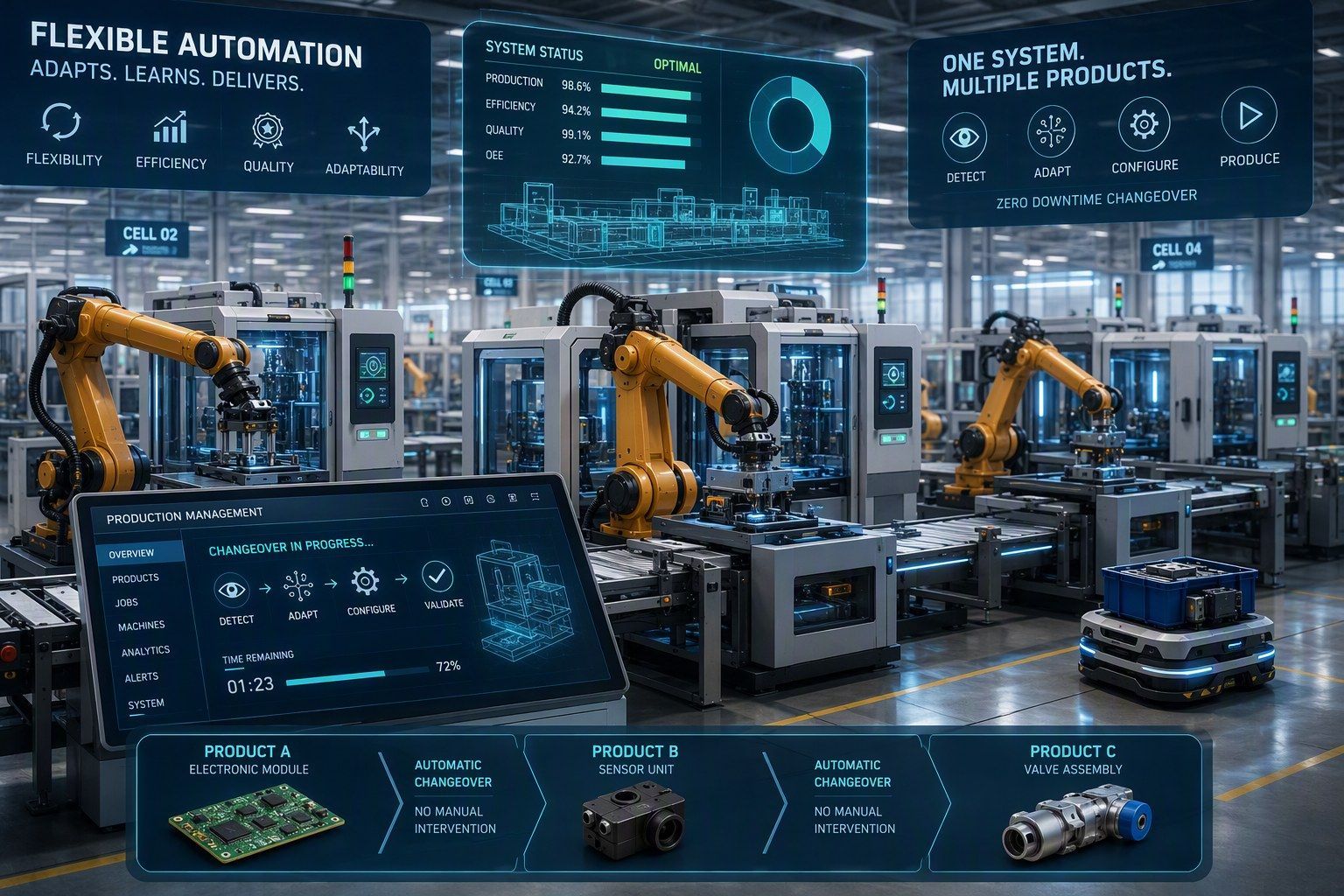
Flexible automation is built for fast changeovers and greater adaptability. Instead of stopping for long reprogramming periods, the system can move between different products with minimal delay. That makes it a strong choice when market demand changes quickly.
This type supports production processes that need variety without losing too much speed. Robots, sensors, and smart software help equipment adjust to new product design requirements and operating conditions. It is especially useful when businesses must produce customized items or shorter runs.
You will often see flexible automation in industries that handle many different products. The benefit is clear: less downtime between jobs and better responsiveness. The downside is higher system cost, but for companies that value agility, flexible automation can be a practical long-term fit.
Process Automation and Integrated Automation
Process automation focuses on using technology to automate workflows, manage data, and reduce manual handling in operations. It helps standardize tasks, remove bottlenecks, and improve visibility. This is useful in both manufacturing and broader business processes where consistency matters.
Integrated automation goes a step further. It connects machines, software, sensors, and control systems into one coordinated platform. Instead of separate stations working alone, all parts of the operation share information and act together through common process control.
For industrial processes, that connection is powerful. Integrated automation can reduce downtime, improve consistency, and make scaling easier. It also supports the smart factory model, where systems monitor and adjust performance in real time. The main challenge is the upfront investment and expertise needed to put everything in place.
Robotic Process Automation (RPA)
Robotic process automation, or RPA, is different from physical factory robotics. It uses software bots to handle repetitive tasks that people usually complete on screens and digital systems. These bots follow rules, move data, and complete transactions with speed and consistency.
Because RPA is rule-based, it reduces routine human intervention in administrative workflows. It can support functions such as scheduling, onboarding, and data handling. Businesses often use it where legacy systems or manual digital steps slow work down.
RPA does not replace every decision or create full autonomy. It still needs oversight, updates, and clear rules. Still, for repetitive tasks, it can improve workflow, reduce errors, and free employees for work that requires judgment. That makes it a useful part of broader automation efforts.
Key Technologies Fueling Industrial Automation
Today’s industrial automation technology is driven by connected tools that help machines sense, decide, and respond faster. Artificial intelligence, machine learning, and advanced software are no longer side topics. They are becoming part of everyday operations.
At the same time, the internet of things links devices across the plant and improves visibility. Combined with real-time data handling, these tools support process optimization, stronger uptime, and better decisions. The next sections break down the technologies behind that shift.
Artificial Intelligence and Machine Learning Applications
Artificial intelligence is changing industrial automation by helping systems interpret data and respond more intelligently. Instead of only following fixed commands, some tools can spot patterns, support decisions, and improve operations as conditions change.
Machine learning is especially useful where large amounts of industrial data are available. It can help identify trends in equipment behavior, detect process drift, and support predictive maintenance. That means issues may be flagged before they turn into costly downtime or equipment failure.
Another major use is quality control. AI-driven analysis can improve inspection, reduce defects, and help teams maintain more consistent output. In practical terms, artificial intelligence helps plants move from reacting to problems toward preventing them. That shift supports better uptime, more stable performance, and smarter use of resources.
Robotics, Cobots, and Autonomous Systems
Robotics remains one of the most visible parts of industrial automation. Industrial robots handle tasks such as welding, painting, moving parts, and final assembly with speed and repeatability. The common types of industrial robots are widely used where precision and nonstop output are important.
Cobots and autonomous systems add more flexibility. Instead of working in isolation, these tools support changing workflows and can help with movement, handling, and machine tending across the production line. Their value is strongest where tasks are repetitive, hazardous, or physically demanding.
Common roles include:
- Industrial robots performing welding, painting, and assembly tasks.
- Cobots assisting with material handling and shared work areas.
- Autonomous systems moving products through warehouse and plant operations.
Together, these technologies help reduce strain on workers, improve consistency, and support more efficient production flow.
SCADA and Supervisory Control Solutions
SCADA systems are a key part of supervisory control in industrial settings. They give operators a broad, real-time view of equipment, alarms, and performance across connected assets. That visibility helps teams monitor operations without standing at every machine.
In process automation, SCADA systems collect information from field devices and present it through software dashboards. They often work with remote terminal units and other control hardware to gather data, issue commands, and support operating decisions across large facilities.
This matters because plants need both automation and oversight. Supervisory control solutions help teams track trends, respond to changes, and manage machine start, shutdown, and historical records. When combined with other control systems, SCADA improves awareness, coordination, and consistency across complex industrial processes.
Internet of Things (IoT) in Automation
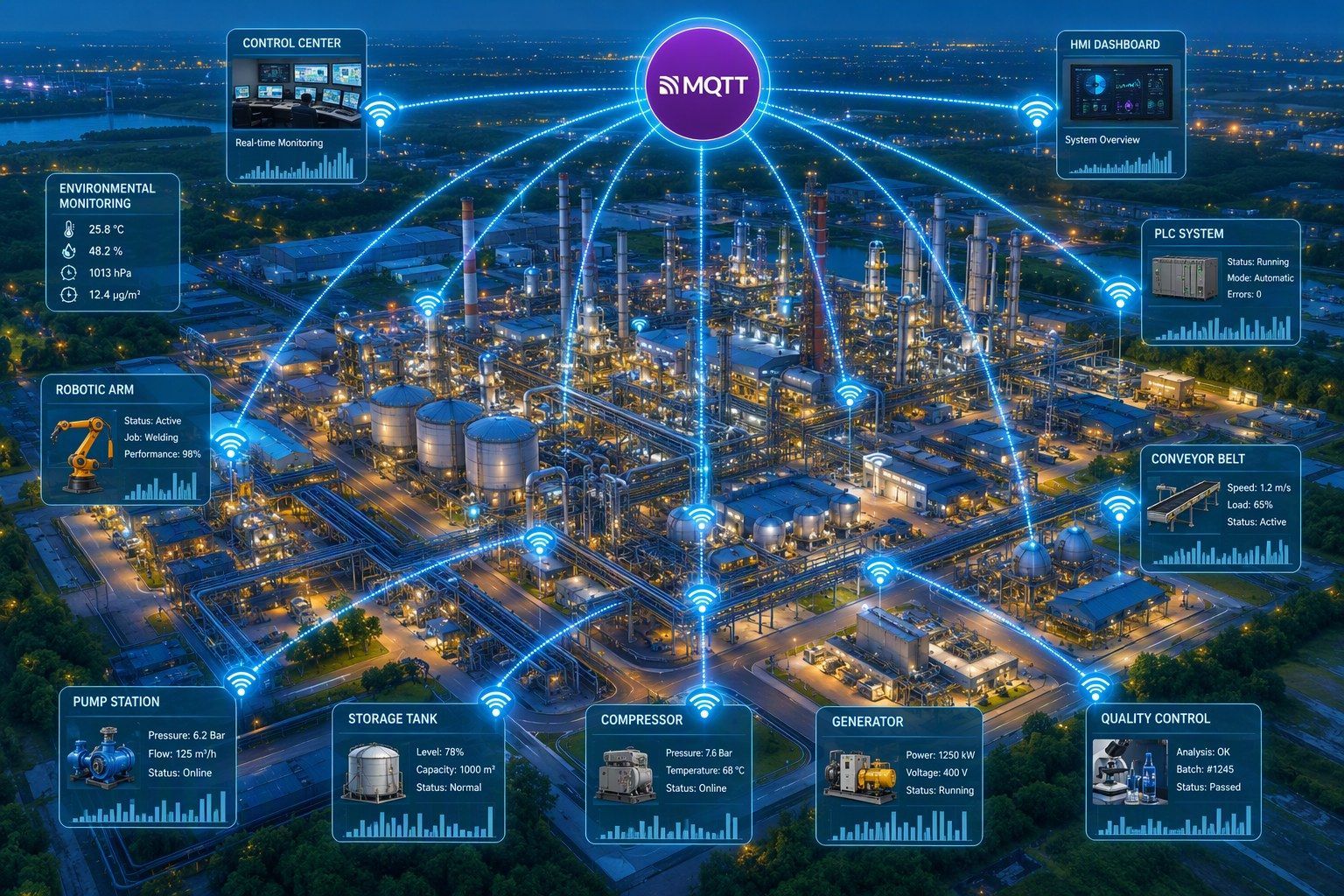
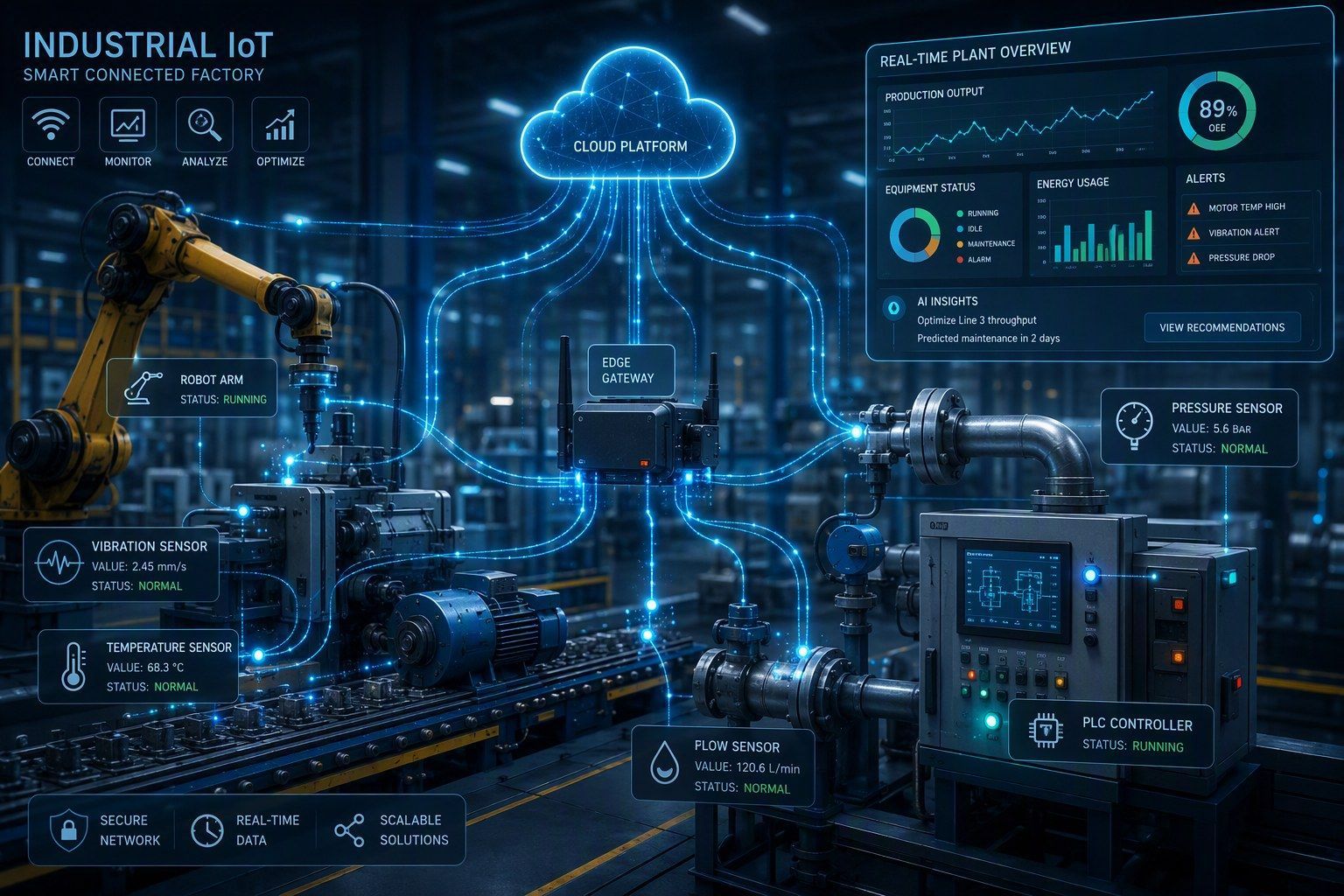
The industrial internet of things connects machines, sensors, and software so they can share information across a facility. That creates a more visible and responsive operation. Instead of isolated equipment, you get a networked environment that supports faster decisions.
Sensor data sits at the center of this model. Devices collect readings from machines, production lines, and process conditions, then send that information through communication networks for data acquisition and monitoring. Operators and systems can act on that information much faster than with manual checks.
For manufacturers, this improves control and planning. The industrial internet of things supports smarter maintenance, better tracking, and more accurate information for process improvements. It also lays the groundwork for smart factories, where connected systems continuously watch and adjust operations.
Edge Computing and Real-Time Data Processing
Edge computing brings data processing closer to the equipment that creates the information. Instead of sending everything to a distant system first, some decisions happen near the source. That reduces delay and supports faster response times.
This is important in industrial automation because many actions need to happen in real time. During data acquisition, sensors and machines generate constant updates. If a system can evaluate those signals immediately, it can react faster to changing conditions on the floor.
The benefit is practical process optimization. Faster analysis can help maintain stable output, reduce waste, and improve uptime. In operations where seconds matter, edge computing supports stronger control, especially when combined with connected devices, software, and responsive automation systems.
Market Drivers and Growth Trends in Industrial Automation
The industrial automation market is expanding as companies try to stay competitive, improve output, and reduce operating strain. Businesses want better consistency, stronger uptime, and more control over production.
That demand is pushing industry expansion across many sectors. Automation adoption trends are also supported by advances in robotics, AI, IoT, and predictive maintenance. Together, these drivers are increasing interest in connected systems and shaping how the global market size continues to grow.
Global Market Size and Industry Expansion
The industrial automation market has shown strong momentum. Compiled industry figures note a global market size of about $191 billion in 2021, with expectations of reaching about $395 billion by 2029. That points to major long-term interest in automation across production and logistics.
Why is this happening? Growth trends are tied to pressure for efficiency, quality, and scalability. Companies want 24/7 operations, lower error rates, and better process visibility. These needs are showing up across several sectors, not just one part of manufacturing.
Here is a simple sector analysis view:
Market Measure
Snapshot
Global market size, 2021
About $191 billion
Expected market size, 2029
About $395 billion
Main growth drivers
Cost pressure, productivity, quality, labor challenges
Technology influences
AI, IoT, robotics, predictive maintenance
High-interest sectors
Manufacturing, warehousing, food, automotive, electronics
Factors Accelerating Automation Adoption
Several forces are speeding up automation adoption. Global competition is one of the biggest. Businesses are under pressure to produce more, reduce waste, and meet tighter customer expectations without adding the same level of labor or downtime.
Cost savings also matter. Automated systems can run longer, reduce error-related losses, and support better production efficiency. For many companies, the value shows up through faster cycle times, longer equipment life, and improved throughput. These gains help explain ongoing industry expansion.
Key drivers include:
- Pressure to improve cost savings and output consistency.
- Labor shortages, safety concerns, and limits on manual scaling.
- Growth in smart manufacturing tools such as AI, IoT, and connected control systems.
When these pressures come together, automation becomes less of an option and more of a practical business response.
Leading Countries and Sectors in Automation Growth
Automation growth is strongest in sectors where precision, volume, and repeatability matter most. Compiled examples point clearly to automotive manufacturing, electronics assembly, food production, and warehousing as major users of advanced automation.
The available material does not name a full list of leading countries in detail, but it does show that global competition is pushing adoption across major industrial markets. As companies try to improve quality and scale output, automation continues spreading through modern manufacturing sectors.
Automotive manufacturing stands out because it uses robotic arms, transfer lines, and automated final assembly for tasks that demand speed and accuracy. Food plants use filling and packaging systems, while electronics producers depend on high-speed automated placement. These sectors lead because their operations benefit quickly from consistency, throughput, and lower manual error.
Transformative Innovations Shaping Automation Today
Industrial innovation is now centered on systems that do more than repeat commands. New automation technology helps companies monitor, predict, and adjust operations with far better visibility than older setups.
That shift is part of a wider digital transformation across modern industry. From digital twins to predictive maintenance, the goal is process optimization through connected data, smarter analysis, and stronger coordination. The following innovations show where automation is heading right now.
Digital Twins and Virtual Simulation
Digital twins and virtual simulation support better planning before changes reach the production floor. Instead of testing only on physical equipment, teams can model systems, review product design choices, and study likely outcomes in a digital environment.
This is useful because automation works best when problems are identified early. A virtual simulation can help teams review workflows, check machine interaction, and spot potential inefficiencies before launch. That supports stronger process optimization and more confident deployment.
Digital twins also help with quality checks by giving teams a clearer picture of how a line or process should behave. When expected and actual performance are easier to compare, adjustments can happen sooner. In practical terms, this reduces risk, improves planning, and supports better decisions across automated operations.
Industrial Cloud Computing Solutions
Industrial cloud solutions help companies bring together data from machines, software, and operations in a more usable way. Instead of keeping information trapped in separate systems, businesses can centralize it and improve visibility across the plant.
This supports stronger data acquisition and easier access to industrial data. When machine information, maintenance records, and production metrics are available in one place, teams can respond faster and make more informed decisions. It also helps align shop floor activity with planning systems.
ERP systems are part of that wider supply chain connection. When operational data links with business systems, companies gain a clearer view of production, inventory, and workflow performance. Industrial cloud tools do not replace local control, but they can make reporting, coordination, and long-range planning far more effective.
Computer Vision and Quality Control
Computer vision is helping factories improve inspection speed and consistency. Instead of relying only on manual checks, automated vision systems can examine products with cameras and software to identify defects, missing parts, or variation from standards.
Machine vision is especially useful where high volume makes manual review difficult. In fast-moving production, inspection systems can support quality control by checking more items in less time and with greater repeatability. That reduces the chance of fatigue-related misses.
For manufacturers, this means more dependable product quality and faster feedback when something changes on the line. Better inspection also helps reduce scrap and rework. As automation expands, computer vision is becoming an important tool for keeping standards high without slowing production.
Predictive Maintenance Technologies
Predictive maintenance helps companies move away from waiting for equipment to fail. Instead, they use sensor data and system monitoring to identify warning signs early. This makes maintenance more proactive and less disruptive.
That early insight improves maintenance scheduling. Rather than servicing machines only on a fixed calendar or after a breakdown, teams can act when actual equipment conditions suggest a need. This lowers the risk of unplanned shutdowns and can extend equipment life.
The result is stronger process optimization. Less downtime means steadier output, better asset use, and fewer emergency repairs. Predictive maintenance is one of the clearest examples of how connected automation improves both performance and planning in industrial operations.
Advanced Industrial Communication Protocols
Automation depends on reliable industrial communication. Machines, sensors, controllers, and software must exchange information clearly if operations are going to stay synchronized. Without strong communication networks, even advanced equipment can become harder to manage.
Modern control systems need fast and dependable signal flow to support real time communication. That matters for monitoring conditions, sending commands, and updating operators with accurate machine status. Communication quality affects both response speed and overall stability.
As factories become more connected, industrial communication plays a bigger role in performance. Shared data helps equipment coordinate, improves visibility, and supports quicker reactions to process changes. In other words, better networks make better automation possible.
Advantages and Benefits of Automation Systems
Why do so many companies invest in automation systems? The answer is simple: they help plants operate with more consistency, less waste, and better output. That supports enhanced productivity across daily operations.
Benefits also show up in quality, safety, and long-term cost savings. Many businesses use automation to improve uptime, reduce errors, and support sustainability goals at the same time. The next sections break these gains into practical categories you can measure.
Enhanced Productivity and Throughput
One of the clearest benefits of automation technology is higher productivity. Automated equipment can operate longer with fewer interruptions, which helps plants keep production moving beyond the limits of manual scheduling.
That directly improves throughput. Many facilities once relied on multiple labor shifts just to keep machines running as much as possible. Even then, output was limited by fatigue, staffing, and downtime. Automation makes round-the-clock operation more realistic and more stable.
Cycle times often improve as well. When repetitive actions are programmed and controlled, each step can happen faster and more consistently. That means more units produced in the same period without sacrificing control. For businesses trying to meet demand, automation offers a practical path to stronger output and steadier performance.
Improved Quality, Safety, and Repeatability
Automation improves quality control by reducing variation in routine tasks. People can make mistakes, especially during long shifts or repetitive work. Machines do not fatigue in the same way, which helps maintain more consistent performance over time.
Less direct human intervention in repetitive steps often leads to stronger product quality. A good example from the compiled information is piston installation in automotive work. A task once done by hand with a higher error rate can now be completed by automated machinery with far fewer mistakes.
Safety and repeatability also improve. Robots can take on hazardous tasks involving heat, pressure, toxic material, or fast movement. At the same time, programmed motion supports repeatability by performing the same action with a near-constant range every cycle. That combination protects workers while helping output stay consistent.
Cost Savings and ROI Implications
Automation systems usually require a large upfront investment, but many companies still move forward because the long-term ROI can be strong. The savings come from improved uptime, fewer errors, and better use of equipment and labor.
Human labor costs are one factor. Automated operations reduce dependence on repeated manual work, which lowers ongoing expenses tied to wages, benefits, and schedule gaps. Maintenance can also be more predictable, especially when equipment is monitored and serviced before breakdowns happen.
The return is often visible in measurable gains: faster cycle times, reduced scrap, longer equipment life, fewer unplanned shutdowns, and increased throughput without adding labor. When you look beyond the purchase price, automation can support both profitability and operational stability over time.
Sustainability and Environmental Impact
Automation can support sustainability by helping plants use resources more carefully. When production is controlled more precisely, companies often waste less material and reduce unnecessary rework. That makes operations more efficient from both a business and environmental view.
Process optimization plays a big role here. Better monitoring and faster adjustments help equipment stay within target conditions, which can improve output and lower avoidable losses. More accurate data also gives teams a clearer basis for reducing waste across the line.
Energy consumption matters too. While the compiled information does not claim every system uses less power, it does show that connected automation improves decision-making and process control. Over time, better-managed production can reduce environmental impact by improving efficiency, limiting scrap, and extending equipment life through smarter operation and maintenance.
Challenges and Considerations for Adoption
Automation adoption brings real advantages, but it also comes with practical hurdles. Companies need to think about integration, cost, training, and how new systems will fit existing operations.
Technology barriers can slow progress if equipment, software, and people are not ready. Cybersecurity and workforce skills are also major concerns in connected environments. Before investing, businesses need a clear view of both the benefits and the work required to implement automation well.
Integration and Organizational Readiness
Integration is often one of the hardest parts of adopting automation technology. A company may already have machines, software, and workflows in place, and new systems must fit into that environment without creating confusion or costly delays.
That is why organizational readiness matters. Teams need clear goals, realistic timelines, and a plan for how process automation will affect daily operations. Without that preparation, even strong technology can struggle to deliver expected results.
Integrated automation can unite machines and data under one platform, but doing that well takes planning and expertise. Businesses must think about compatibility, oversight, and how departments will work together. When readiness is strong, implementation is smoother and the long-term value of automation becomes easier to capture.
Technical Barriers and Workforce Skills
Technical barriers can slow automation projects even when the business case is clear. Advanced systems often require specialized setup, programming, and ongoing support. In older industrial environments, that can be harder if current equipment was not designed for connected operation.
Workforce skills are another major factor. Automation does not remove the need for people. It changes what people need to know. Operators, technicians, and engineers may need stronger digital, programming, and troubleshooting abilities to manage modern systems effectively.
That makes training essential. Companies must invest in skill development so teams can maintain, monitor, and improve automated operations. Reskilling also helps workers move into technical or supervisory roles as manual tasks change. With the right preparation, businesses can reduce technical barriers and build a workforce ready for modern manufacturing.
Data Security and Cybersecurity Concerns
Connected automation creates new value, but it also creates new exposure. When machines, software, and communication networks share information continuously, protecting that environment becomes a critical part of operations.
Cybersecurity is especially important because industrial data and process control systems can be vulnerable if they are not secured properly. A breach could affect monitoring, coordination, or access to operational information. That risk grows as more assets are linked together.
Strong data security practices help reduce that exposure. Businesses need to think about system access, monitoring, and how communication networks are protected across the plant. Automation works best when reliability and security are treated as part of the same strategy, not as separate concerns.
Industrial Automation in Leading United States Industries
In the United States, industrial automation is gaining traction in sectors where scale, quality, and safety matter every day. Leading industries use connected systems to keep production steady and reduce manual risk.
Manufacturing remains the clearest example, but adoption also reaches automotive, food, pharmaceuticals, warehousing, and utilities. Each sector uses automation differently based on its process needs. The next sections show how these industries are applying automation in practical ways.
Manufacturing and Automotive Innovations
Manufacturing and automotive manufacturing are among the strongest users of automation. These sectors rely on speed, repeatability, and tight control, which makes them a natural fit for automated equipment and connected production systems.
Industrial robots are central here. In modern car plants, robotic arms handle welding, painting, part installation, and final assembly with high precision. This reduces manual strain and helps maintain consistent output across large production volumes.
The broader manufacturing process benefits in similar ways. Automated systems can reduce error rates, improve timing, and keep operations moving across multiple stages of production. For industries producing large numbers of parts or vehicles, automation supports the accuracy and reliability needed to stay competitive.
Food & Beverage and Pharmaceutical Applications
Food, beverage, and pharmaceutical operations depend on consistency and careful handling. That is why automation plays a major role in these sectors. Systems can manage filling, mixing, packaging, and related tasks with steady speed and repeatable results.
In beverage processing, computerized equipment can fill and cap large volumes quickly while keeping output uniform. This supports product quality and helps reduce waste. Similar benefits apply in other tightly controlled environments where exact handling matters.
Batch production is also common in these sectors, especially where formulas, sizes, or product variants change. Programmable automation helps companies switch between runs while maintaining quality control. For products that consumers ingest or depend on, automation helps keep standards reliable from one batch to the next.
Utilities, Oil & Gas, and Renewable Energy Integration
Utilities and energy operations rely on stable monitoring and coordinated control, which makes process automation highly valuable. These environments often involve large systems, continuous activity, and equipment that must be tracked carefully.
In utilities and oil & gas settings, automation supports oversight, data collection, and more reliable response to changing conditions. The same connected logic can also support renewable energy operations where system coordination and visibility are important.
While smart factories are often discussed in manufacturing, the core idea applies here too. Connected devices, software, and control systems help operators make real-time decisions and improve operational consistency. Across energy-related industries, automation helps bring together monitoring, process control, and more efficient system management.
Emerging Sectors and Digital Transformation
Automation is not limited to long-established factory models. Emerging sectors are also using connected systems to improve output, visibility, and flexibility. As technology becomes more accessible, more operations can adopt advanced tools without waiting for a full rebuild.
Digital transformation is driving much of this change. Companies are connecting machines, software, and workflows so information moves faster and decisions are based on real operating conditions rather than delayed reports.
The industrial internet of things is a major part of that shift. By linking equipment and sensor data, businesses gain a stronger base for smart manufacturing. Whether the setting is logistics, electronics, or another growing field, automation is helping newer sectors build more responsive and data-driven operations from the start.
The Future of Industrial Automation
The future of automation points toward more connected, responsive, and flexible operations. Companies are moving beyond isolated machines and building systems that share data, adapt faster, and support better decision-making.
Upcoming technologies will strengthen smart factories and reshape daily work on the plant floor. At the same time, human-machine collaboration will become more important, not less. The future is not about removing people completely. It is about changing how people and machines work together.
Expert Predictions and Upcoming Technologies
Expert predictions in the compiled material point to continued growth in connected and intelligent automation. The main direction is clear: more systems will combine data, software, and machine control to improve speed, consistency, and decision-making.
Upcoming technologies are expected to build on what is already expanding today. Artificial intelligence, industrial IoT (IIoT) connectivity, predictive maintenance, and advanced robotics are all part of the next stage of automation technology. These tools are making plants more responsive and more informed.
Key themes include:
- Greater use of AI for quality control and predictive maintenance.
- Wider adoption of connected devices in smart factory environments.
- Continued growth of robotics, cloud-connected systems, and digital workflows.
Taken together, these trends suggest automation will become more integrated, more adaptive, and more central to industrial performance.
Automation’s Role in Smart Factories
Smart factories depend on automation systems that do more than execute simple tasks. They connect machines, data, and oversight into one coordinated environment. That allows production to be monitored and adjusted in ways older factories could not easily support.
In the manufacturing process, this means equipment can share information continuously and respond faster to changes. Operators gain a clearer view of what is happening, while systems help maintain output, reduce delays, and improve coordination across the floor.
Process optimization is the core payoff. When connected automation supports real-time visibility and action, businesses can reduce downtime, improve consistency, and scale more effectively. Smart factories are not defined by one machine. They are defined by how well automation brings the whole operation together.
Sustainable Manufacturing through Automation
Sustainable manufacturing depends on using materials, equipment, and time more efficiently. Automation helps by reducing avoidable waste, improving consistency, and giving teams better data to guide operational decisions.
Process optimization supports that goal. When systems can monitor conditions closely and make faster adjustments, production is less likely to drift into inefficient patterns. That can help reduce scrap, unnecessary rework, and other losses that affect both cost and environmental performance.
Energy consumption is also part of the conversation. The compiled material focuses on better control, improved maintenance, and more accurate decision-making rather than broad energy claims. Even so, more efficient and stable operations can support sustainability efforts over time. In that sense, automation is becoming an important tool for cleaner, better-managed production.
Next-Gen Workforce and Human-Machine Collaboration
The next-gen workforce will work differently from past production teams. As automation grows, people will spend less time on repetitive manual steps and more time on supervision, programming, analysis, and system support.
Human-machine collaboration is central to that shift. Machines handle repeatable or hazardous work, while people focus on judgment, problem-solving, and improvement. This balance helps businesses gain efficiency without losing human oversight where it matters most.
To make that work, workforce skills must continue evolving. Training, reskilling, and familiarity with collaboration technology will become more important in modern industrial settings. The future is not machines alone. It is skilled people working with advanced systems to keep operations safe, flexible, and productive.
Conclusion
In conclusion, the innovations shaping the industrial automation industry are not just enhancing efficiency but also redefining the future of work across various sectors. From the integration of artificial intelligence and IoT to the rise of robotic process automation, these advancements are providing businesses with significant benefits, including improved productivity, cost savings, and sustainability. However, as we embrace these transformative technologies, it's crucial to remain aware of the challenges that may arise, such as workforce readiness and cybersecurity concerns. By staying informed and adaptable, companies can leverage automation to not only thrive in today’s market but also shape a more sustainable and innovative future. If you're considering adopting industrial automation solutions, don't hesitate to reach out for a consultation to explore how these technologies can benefit your business.
Frequently Asked Questions
What are the main benefits of industrial automation systems?
Industrial automation improves productivity, supports more consistent quality, and reduces repeated human intervention in routine tasks. Automation systems can also improve safety, increase repeatability, lower some operating costs, and help companies run longer with fewer errors or unplanned shutdowns.
Which industries are advancing fastest with automation technologies?
Manufacturing and automotive are among the fastest-moving sectors in industrial automation. These industries use industrial robots, connected equipment, and process control tools for welding, assembly, inspection, and material handling. Food, beverage, electronics, warehousing, and other process-driven operations are also advancing quickly.
What challenges do companies face when implementing automation?
Common automation adoption challenges include integration with existing systems, high upfront cost, technical barriers, workforce skills gaps, and training needs. Companies also need to address data security risks because connected equipment and industrial data can be exposed if communication networks and controls are not properly protected.
What It Costs When There Is No Backup and the Terminal Dies
The terminal itself is the smallest cost: a replacement PanelView or industrial PC, possibly with volume pricing for expedited shipping, and possibly a different model because the exact unit is discontinued. That still leaves you with an empty screen.
Without a usable application, the real work is reverse engineering. Someone — your engineer, or an integrator called in urgently — has to reconstruct the application from the PLC program, operator memory ("there was a button here that did something with the reject count"), photographs if anyone has them, and paper records. For a comprehensive assessment, you can also contact us for a free evaluation. Basic screens take days. Applications with recipes, trending, alarm history, and multiple machines take longer, and the rebuild is rarely identical — some functions nobody remembered do not come back until someone needs them mid-run. Outside repair services can help with the failed hardware, but only a current backup restores the application itself. A rush repair service can replace a failed terminal quickly, but it cannot rebuild the application without a backup.
An hmi application backup is cheap insurance against that cost, and frequent testing keeps it honest. With a current .APA and .MER on file, a dead terminal means a rapid turnaround time — swap the unit, load the runtime, and the line is running again the same day. Meanwhile the line is down or running degraded, with extra staff watching processes the HMI used to monitor and quality records kept by hand. Add downtime, overtime, expedited hardware and engineering at urgent rates, and missed shipments, and one failure without a backup routinely costs more than years of the routine above — a few hours per quarter and some server space. Planned work gets delayed too, because the same people are rebuilding screens that existed the week before.
Closing: Get the Files While the Terminals Are Still Running
None of this requires a shutdown, new software, or a capital project. Upload the .MER files, locate or recover the projects, archive proper .APA backups, store them on a plant server and off-site, and put the quarterly check on the calendar. Contact us for a no-obligation quote. A complete hmi application backup for a typical plant is days of scattered work, most of it minutes per terminal — and it turns your next terminal failure into a routine swap.
Empowered Automation Solutions, a leading industrial repair service provider, can recover and back up these applications for you: uploading runtimes from running terminals, restoring .MER files into editable projects, cleaning up recovered applications, creating proper .APA archives, and setting up an organized backup library for your HMIs, PLCs, and drives. If you do not know, right now, where the current source for every terminal in your plant is, that is the place to start — while the terminals are still running and the files are still there to get.
You might also like