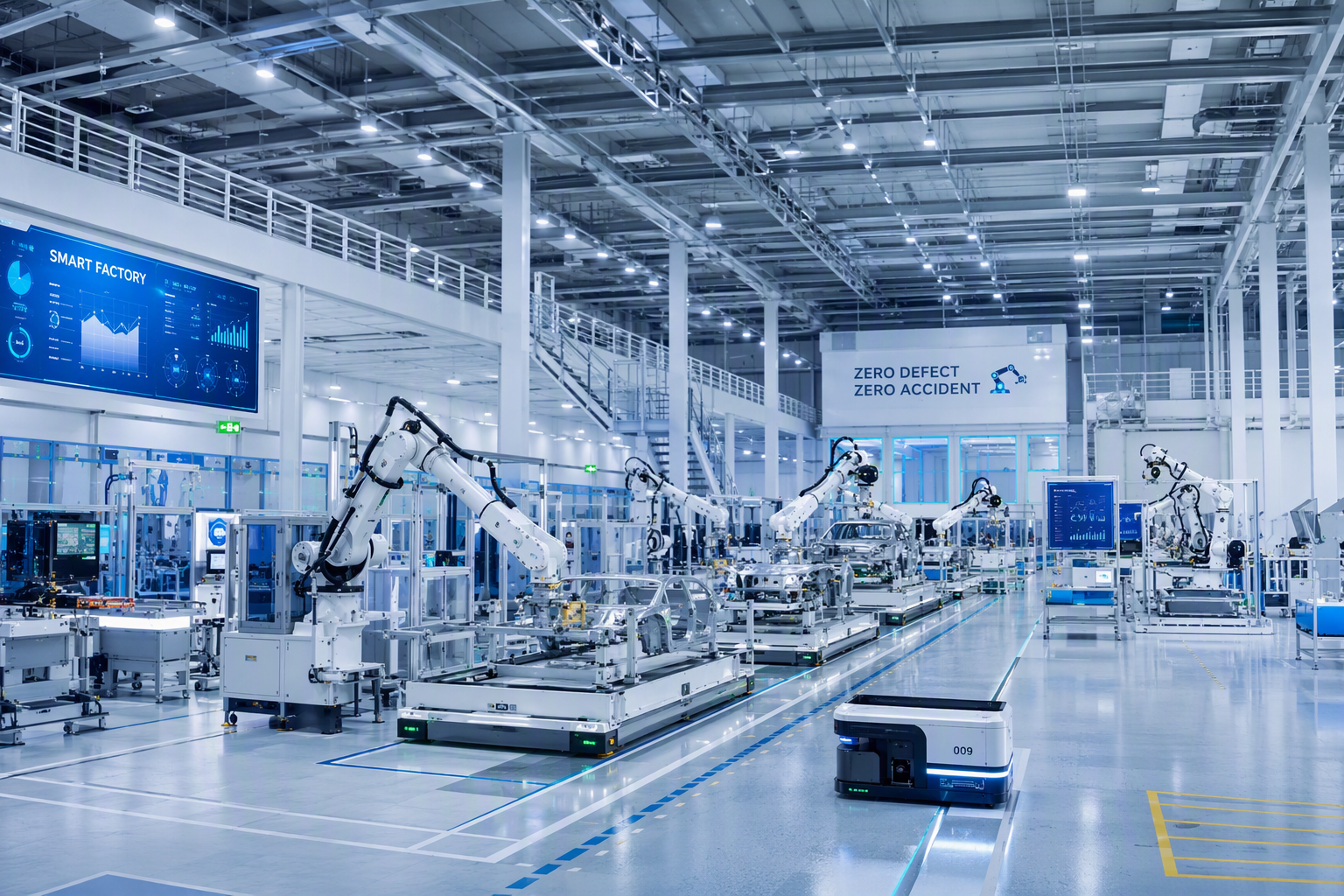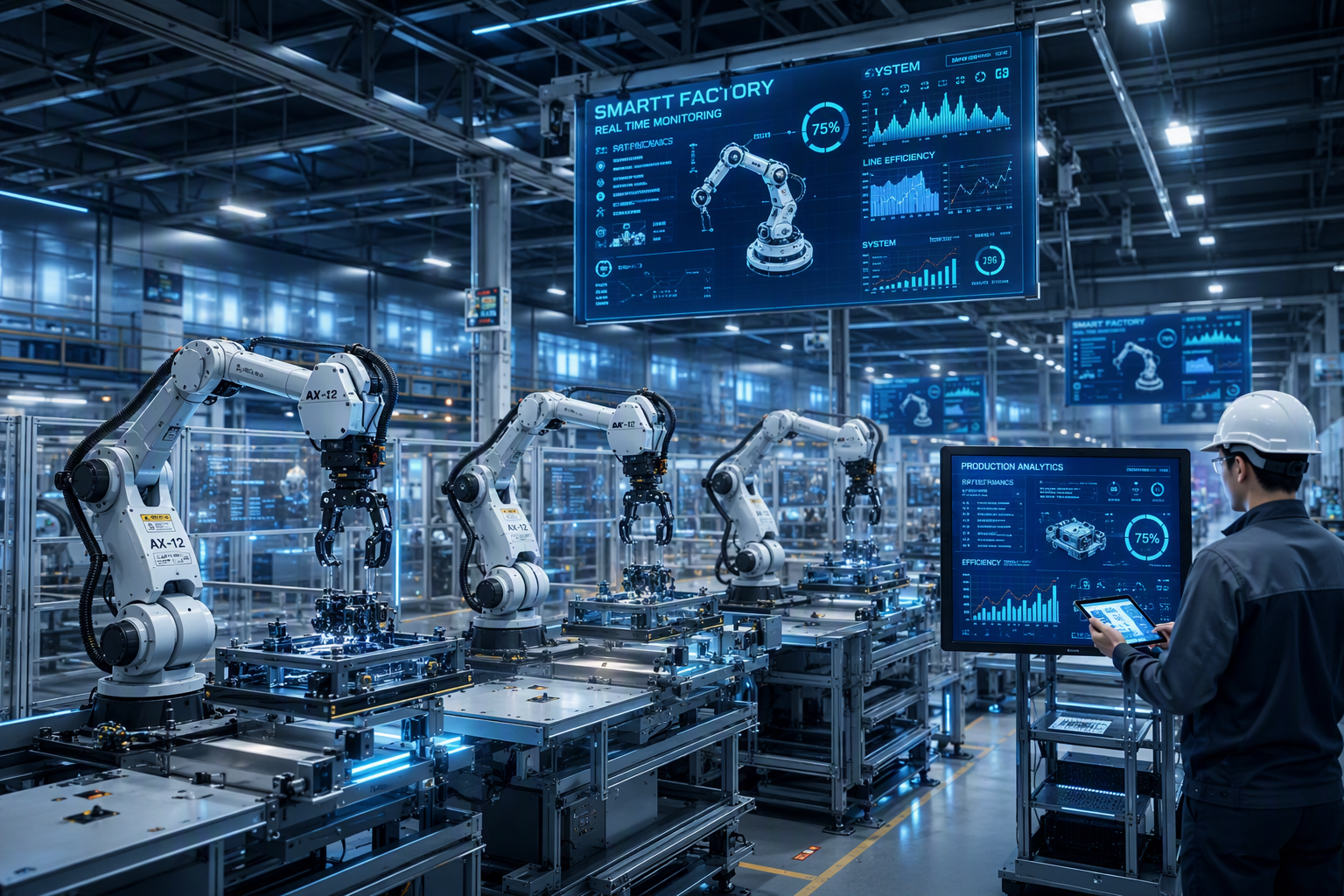
AGVs: Transforming the Future of Automation
AGVs: Transforming the Future of Automation
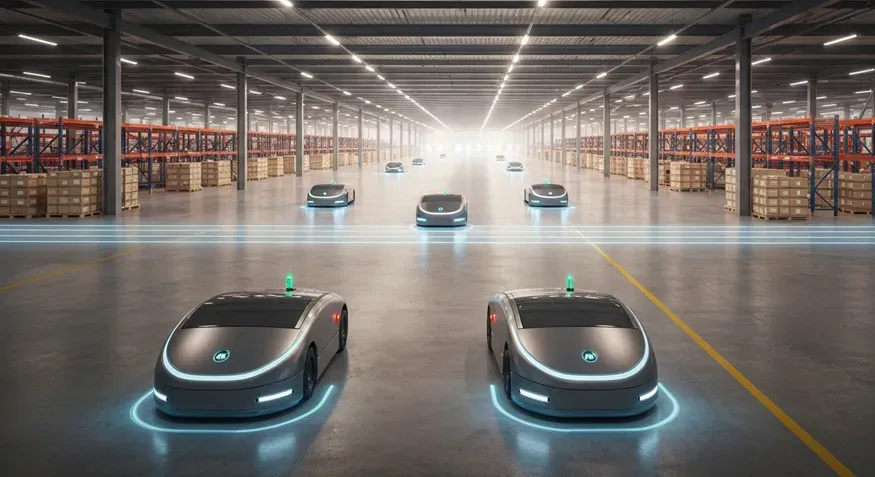
Key Highlights
- Automated Guided Vehicles (AGVs) are revolutionizing warehouse operations by streamlining material handling and reducing the need for manual labor.
- AGVs utilize advanced navigation systems like magnetic tape and laser guidance to efficiently traverse distribution centers and production lines.
- The application of AGVs spans multiple industries, including manufacturing, healthcare, and retail, enhancing the flow of goods and ensuring operational efficiency.
- Businesses can achieve notable cost savings and improved safety through the integration of AGVs in warehouse automation.
- Adopting AGVs facilitates continuous operation, leading to increased productivity while minimizing workplace risks.
Introduction
In today's fast-paced industrial world, the automated guided vehicle (AGV) is making a huge impact. These smart mobile robots are changing how work gets done in logistics, manufacturing, and warehousing. As they become more intelligent, AGVs are emerging as essential tools for moving materials with minimal human help. This technology is not just a futuristic idea; it's a practical solution that is already transforming warehouse operations and boosting productivity across many different industries.
Understanding Automated Guided Vehicles (AGVs)
Automated Guided Vehicles (AGVs) have become essentialin optimizing material handling across various industries.These driverless robots navigate through industrial environments using advancednavigation systems, like laser sensors and magnetic tape. AGVs effectivelytransport heavy loads, streamline the flow of goods, and enhance efficiency inmanufacturing facilities, distribution centers, and warehouses. By minimizingmanual labor and the risk of accidents, they contribute to lower operationalcosts while ensuring quality control. Their adaptability makes them anexcellent choice for dynamic environments with specific handling requirements.
Defining AGVs and Their Role in Modern Automation
Automated Guided Vehicles (AGVs) play a crucial role in the evolution of automation by streamlining material transport within various industrial environments. These driverless robots utilize advanced navigation systems, like laser sensors and magnetic strips, to efficiently move raw materials and finished goods across production lines and warehouse operations. Their ability to operate continuously and perform repetitive transport tasks with minimal human intervention significantly reduces labor costs. By enhancing the flow of goods and optimizing material handling processes, AGVs contribute to increased efficiency and safety in modern manufacturing facilities.
Key Components of an AGV System
An effective agv system is made up of several key parts working in harmony. It's not just about the vehicle itself but the entire infrastructure that supports its operation. This includes a master control system that directs the vehicles, units for data communication, and stations for charging.
The AGVs themselves are equipped with sophisticated technology to function safely and efficiently. These components are what allow the vehicle to navigate its environment and perform its tasks without direct oversight.
The most critical elements include:
- Advanced sensors and cameras for navigation and obstacle detection.
- Robust navigation systems to guide the vehicle along its path.
- Safety mechanisms for collision avoidance to protect people and property.
Together, these components create a smart, self-managed system. The control software coordinates routes and speeds, ensuring that multiple vehicles can operate in the same space without issues. This intelligent control is the brain behind the entire operation.
How AGVs Navigate and Operate
Have you ever wondered how AGVs find their way around a busy warehouse? They rely on different types of navigation systems to move quickly and safely. One common method is track-guided navigation, where the vehicle follows a physical path, such as a magnetic tape on the floor. This method is reliable but requires careful planning, as changing the route can be a significant effort.
A more flexible and modern approach is natural feature navigation. This technology uses a laser navigation system, where the AGV scans its surroundings with laser sensors. It identifies permanent features like walls, racks, and columns to determine its position and navigate freely without needing any tracks or reflectors.
This laser-based system also excels at obstacle avoidance. The AGV continuously scans its environment, allowing it to detect unexpected objects or people in its path and stop or reroute safely. An intelligent control software coordinates the movements of the entire fleet, managing traffic and assigning tasks for a seamless flow.
Types of AGVs Used in Industry
One of the great things about AGV technology is its versatility. Almost any type of industrial truck you see in manual operation can be converted into an automated guided vehicle. This includes tractors, pallet stackers, counterbalanced forklift trucks, and even very narrow aisle trucks, providing a wide range of different types of agvs.
This variety means there is a type of agv for nearly any application. Whether you need to tow heavy loads to production lines, stack pallets in a warehouse, or move goods in tight spaces, there's a solution available. Let's look at some of the most common types.
Automated Guided Carts (AGCs)
Automated guided carts (AGCs) are compact, versatile automated guided vehicle solutions perfect for transporting smaller loads. These carts, part of an agc system, are excellent at navigating tight spaces and can handle loads up to 1,500 kilograms. They are designed to improve material flow by transporting items between static reloading stations or conveyor belts.
A great example is a mobile platform that can drive under a trolley, lift it, and transport it to a destination. This makes them ideal for applications where flexibility and maneuverability are key. You might see them delivering parts to an assembly line or moving finished goods in a small warehouse.
Because of their small size and ability to position loads anywhere in a space, AGCs are incredibly efficient for low-level material transport. They can easily integrate into existing layouts, offering a simple way to automate a portion of your operations without a major overhaul.
Towing and Tugger AGVs
When it comes to moving heavy loads, towing AGVs, also known as tuggers, are the workhorses of the automated world. These powerful vehicles are designed to pull a train of carts or trailers, making them perfect for transporting large quantities of materials over medium to long distances within a facility.
Imagine a driverless electric tow tractor that can move towing loads of up to 5,000 kilograms. This is what towing AGVs can do. They are commonly used in industrial companies to supply production halls, haul larger loads, and remove waste. Their ability to handle heavy loads with ease makes them indispensable for efficient material transport.
These tuggers play a crucial role in connecting different parts of a large facility, such as moving raw materials from the receiving dock to the production line or transferring finished goods to the shipping area. By automating this process, companies can ensure a consistent and reliable flow of materials.
Forklift and Pallet Truck AGVs
For pallet handling tasks, automated forklift agvs and pallet stackers are the go-to solution. These vehicles are essentially driverless versions of the manual trucks you are already familiar with, designed to automate the storage, retrieval, and transport of palletized goods. They are a type of unit load agvs focused on handling standard-sized loads.
Automated pallet stackers are perfect for storage and retrieval at low to medium heights. They can handle loads up to 2 tons and reach shelf heights of over 3 meters. Some models even come with cantilevered forks, allowing them to handle closed load carriers like Euro pallets, which is especially useful at transfer stations.
These AGVs streamline pallet handling by automating the entire process. From picking up a pallet at a transfer station to placing it on a shelf, they perform the task with precision and consistency. This reduces the need for manual forklift operation, improving both safety and efficiency in the warehouse.
Unit Load and Heavy Burden Carriers
For the most demanding material handling challenges, unit load agvs and heavy burden carriers are the answer. These specialized vehicles are built to manage very heavy loads and operate in high-density storage environments. They include automated reach trucks and very narrow aisle trucks.
Automated reach trucks are designed for storing and retrieving goods at heights up to 11 meters, handling loads up to 1,600 kilograms. Their compact size makes them ideal for warehouses with narrow paths, enabling higher storage capacity. They are versatile enough for both warehouse use and supplying workstations.
When you need to reach even greater heights, very narrow aisle trucks are the perfect choice. These AGVs can lift loads of up to 1,500 kilograms to an impressive 14 meters. They seamlessly interact with other infrastructure, like belt conveyors, to automate the entire high-rack storage and retrieval process.
Custom and Hybrid AGV Solutions
Sometimes, a standard AGV just doesn't fit the bill. That's where custom AGVs and flexible automation solutions come in. Many providers can create custom AGVs tailored to your specific handling requirements, whether that means adjusting the size, payload capacity, or navigation technology to fit a unique application.
A key aspect of this flexibility is the ability to use AGVs in mixed operations. Many automated trucks are based on their manual counterparts, which means they can be controlled by a human operator if needed. This hybrid functionality is perfect for environments where you need both automation for repetitive tasks and manual control for unexpected situations.
This adaptability allows for seamless integration into existing processes. Companies can start by automating one part of their workflow and scale up over time. These solutions provide the best of both worlds, combining the efficiency of automation with the flexibility of manual operation.
Core AGV Navigation Technologies
The magic behind an AGV's movement lies in its navigation systems. These technologies are what guide the vehicle through a facility safely and accurately. There are two main categories of navigation available, each with its own set of advantages depending on the environment and application.
The first type is track-guided navigation, which relies on physical guides like wires or magnetic tape laid on the floor. The second, more advanced type is natural feature navigation, which uses laser sensors and cameras to map and navigate the environment freely. Let's explore these technologies in more detail.
Wired, Magnetic, and Tape-Guided Navigation
One of the most established methods for AGV guidance is track-guided navigation. This approach uses physical lines or markers on the floor to create a fixed path for the vehicle to follow. It’s a straightforward and reliable way to direct AGVs in a structured environment.
The technology works in a couple of ways. The AGV's sensors are programmed to detect and follow these guides, ensuring it stays on course. The most common types include:
- Wired Navigation: Wires are embedded in the floor, emitting an electrical signal that the AGV follows.
- Magnetic and Tape-Guided Navigation: The AGV follows a magnetic field created by magnetic strips or magnetic tape applied to the floor surface.
While highly dependable, these methods require significant planning. The routes are fixed, and making changes later can be costly and time-consuming. This makes them best suited for processes that are standardized and unlikely to change.
Laser, Lidar, and Vision-Based Guidance
For more flexibility, many modern AGVs use advanced guidance systems like laser navigation. In one method, the AGV emits laser beams that bounce off reflective targets placed around the facility. By measuring the angle and distance to these targets, the vehicle can calculate its exact position and navigate with high precision.
Another cutting-edge technology is lidar, which stands for Light Detection and Ranging. Lidar creates a detailed, 360-degree 3D map of the vehicle's surroundings by scanning the environment up to 10 times per second. This rich data allows the AGV to navigate autonomously, locate itself precisely, and avoid obstacles in real-time.
Vision-based guidance is another smart approach where AGVs use cameras to "see" their environment. The system identifies landmarks, patterns, or markers to navigate. This is especially useful in dynamic environments where the layout might change, as the system can adapt without needing physical infrastructure.
Natural Feature and Geo-Guidance Systems
Natural feature guidance takes laser navigation to the next level by removing the need for any additional infrastructure like reflectors. With these navigation systems, the AGV uses its laser sensors to scan and map the existing environment—including walls, shelving, and machinery—to navigate. This makes installation quick and easy.
This method is incredibly flexible. If your warehouse layout changes, the system can be adapted and rescaled with minimal effort. The AGV simply needs to perform a new mapping scan of the area, and it's ready to go. This adaptability is a huge advantage in dynamic business environments.
Geo-guidance is another advanced system that relies on detailed digital maps of the facility, similar to GPS. By integrating this geographic information, the AGV has full awareness of its surroundings and can calculate the best route with high accuracy. This is particularly effective in large, complex spaces like manufacturing plants and distribution centers.
Comparing AGVs with Autonomous Mobile Robots (AMRs)
Automated guided vehicles (AGVs) and autonomous mobile robots (AMRs) serve unique roles within various industries, particularly in material handling. While AGVs typically follow predefined paths using magnetic tape or laser navigation, AMRs utilize advanced sensors to navigate dynamically, even in complex environments. This difference allows AMRs to adapt to their surroundings, which is ideal for varied tasks like transporting goods in unpredictable warehouse operations. Each system has distinct advantages, making the choice dependent on specific operational requirements, such as the need for collision avoidance or the ability to manage heavy loads efficiently.
Key Technical Differences
Understanding the nuances between AGVs and AMRs is essential for optimizing automation. AGVs typically rely on fixed paths, using navigation systems like magnetic tape or laser sensors, ensuring precise movement along designated routes. Conversely, AMRs leverage artificial intelligence for real-time pathfinding in dynamic environments, allowing them to navigate around obstacles. AGVs excel in material handling tasks that involve repetitive transport, whereas AMRs can adapt to various operational needs. This adaptability makes AMRs ideal for complex warehouse systems where flexible automation solutions are paramount, significantly enhancing operational efficiency.
Practical Applications: AGVs vs. AMRs
In various industrial settings, automated guided vehicles (AGVs) excel at handling repetitive transport tasks, especially in structured environments like production lines and distribution centers. Their efficiency shines as they transport heavy loads along defined paths, often guided by magnetic tape or laser navigation systems. Conversely, autonomous mobile robots (AMRs) thrive in dynamic environments, equipped with advanced sensors for real-time navigation and obstacle avoidance. This versatility allows AMRs to adapt to shifting layouts, making them ideal for material handling tasks in complex warehouse systems or tight spaces.
Choosing the Right System for Your Operation
Selecting the ideal system for your operation involves considering specific factors such as the types of tasks you perform and the layout of your facility. Understanding your material handling needs is crucial, whether it’s for pallet handling or transporting raw materials. Different types of AGVs, including unit load AGVs and forklift AGVs, cater to various environments. Assess your space constraints and the flexibility required in dynamic environments to ensure smooth navigation and efficient workflow. Implementing the right AGV system can significantly enhance your operational efficiency and reduce reliance on manual labor.
Common Applications of AGVs
AGVs are incredibly versatile, finding uses in a wide array of environments. Their primary function is to automate material transport, taking over repetitive material handling tasks that are inefficient for human workers. You'll find them moving goods on production lines, within distribution centers, and across large facilities.
By automating these movements, companies can streamline their processes, reduce errors, and ensure a consistent flow of materials. This technology is not limited to just one or two industries; its applications are broad and continue to expand. Here are some of the most common places you'll see AGVs at work.
Warehousing and Distribution Centers
In busy distribution centers and warehouses, maintaining a smooth flow of goods is critical. AGVs play a vital role in optimizing warehouse operations by automating the movement of pallets, containers, and other goods. They can handle everything from receiving and put-away to order picking and shipping.
AGVs can be integrated with a warehouse management system (WMS) to receive tasks automatically. For example, an AGV can be dispatched to unload a pallet from a trailer, transport it to a designated storage area, and then update the inventory system—all without human intervention.
This automation significantly speeds up processes, reduces the risk of product damage, and allows employees to focus on more complex tasks. By ensuring goods move efficiently through the facility, AGVs help distribution centers meet tight deadlines and handle high order volumes with ease.
Manufacturing and Assembly Lines
Manufacturing facilities are another prime environment for AGVs. On production lines, a consistent and timely material flow is essential to keep everything running. AGVs are used to deliver raw materials and components to assembly lines exactly when they are needed, a process known as "just-in-time" delivery.
These vehicles can transport everything from small parts to large sub-assemblies between different stages of the manufacturing process. For example, a towing AGV might pull a train of carts loaded with components to various workstations along an assembly line, ensuring each station is always stocked.
By automating material delivery, manufacturers can reduce line-side inventory, minimize production downtime, and improve overall efficiency. AGVs help create a leaner, more agile manufacturing process that can quickly adapt to changes in production demand.
Healthcare and Hospital Logistics
Hospitals are complex environments where efficiency can directly impact patient care. AGVs are increasingly being used in hospital logistics to handle a wide range of non-clinical transportation tasks. This frees up doctors, nurses, and other clinical staff to focus on what matters most: the patients.
AGVs in a hospital setting can transport meals, linens, sterile supplies, lab specimens, and waste. They can navigate hallways and even operate elevators to move between floors, providing a reliable 24/7 delivery service. This automation ensures that supplies are delivered promptly and accurately.
By handling these routine tasks, AGVs not only improve efficiency but also enhance quality control. They reduce the risk of cross-contamination and ensure that sensitive materials are transported securely. This is a perfect example of how automation can support critical operations behind the scenes.
Food and Beverage, Retail, and Other Industries
The use of the automated guided vehicle extends far beyond manufacturing and warehousing. Many other industries are leveraging this technology to optimize their material transport processes. The food and beverage and retail sectors, for instance, have found significant value in AGV automation.
In these industries, AGVs help move goods efficiently while adhering to specific requirements, such as hygiene standards or fast-paced fulfillment demands. Here are a couple of examples:
- Food and Beverage: AGVs transport raw materials, move finished products to cold storage, and prepare pallets for shipping, all while operating in clean and temperature-controlled environments.
- Retail: In large distribution centers that support e-commerce, AGVs are crucial for moving inventory, sorting packages, and loading trucks to ensure fast and accurate order fulfillment.
From automotive plants to pharmaceutical labs, AGVs are proving to be a flexible and powerful tool for improving productivity and safety across various industries.
Benefits of Adopting AGVs in Warehouse Automation
Adopting AGVs for warehouse automation brings a host of compelling benefits. By automating repetitive transport tasks, you can significantly reduce your reliance on manual labor, leading to lower costs and improved operational consistency. AGVs can work around the clock, enabling continuous operation and maximizing your facility's output.
These advantages go beyond just saving money. Implementing AGVs can transform your entire operation, making it safer, more efficient, and more productive. Let's explore some of the key benefits you can expect from this technology.
Increased Efficiency and Productivity
One of the most significant advantages of AGVs is the dramatic boost in increased efficiency and productivity. Unlike human workers who need breaks and work in shifts, AGVs can provide continuous operation, 24 hours a day, 7 days a week. This significantly increases your overall handling capacity.
AGVs are designed to perform repetitive transport tasks with a high degree of precision and reliability. They follow optimized routes and execute tasks consistently every time, which reduces errors and minimizes delays. This level of predictability streamlines your entire material flow.
By taking over these monotonous tasks, AGVs free up your employees to focus on more complex, value-adding activities that require human intelligence and problem-solving skills. This not only makes your operation more efficient but also creates a more engaging work environment for your team.
Improved Safety and Risk Reduction
Workplace safety is a top priority in any industrial environment, and AGVs can make a substantial improvement. A significant portion of workplace accidents involve vehicles operated by human operators. By automating transport, you can dramatically reduce the risk of accidents.
AGVs are equipped with advanced safety features, including laser scanners, cameras, and collision avoidance systems. They can detect people, obstacles, and other vehicles in their path and will automatically slow down or stop to prevent a collision. This makes them much more predictable and safer than manually operated vehicles.
This focus on safety not only protects your employees but also reduces the costs associated with accidents, such as damage to goods, equipment, and building infrastructure. By creating a safer work environment, AGVs provide peace of mind and contribute to a more stable operation.
Cost Savings and ROI over Manual Methods
While there is an initial investment in purchasing and commissioning AGVs, the long-term cost savings are substantial. A major portion of the operational costs in many warehouse systems comes from manual labor. AGVs help achieve lower costs by automating tasks that would otherwise require staff, reducing your dependence on a tight labor market.
The savings don't stop there. By optimizing processes and reducing error rates, AGVs minimize costly damage to products and equipment. Their efficiency also means you can handle more volume without a proportional increase in costs, making your entire operation more profitable.
Experience shows that the investment in an AGV system often pays for itself very quickly. The combination of reduced labor costs, increased productivity, and improved safety leads to a strong return on investment (ROI), making it a financially smart move for many businesses.
Frequently Asked Questions (FAQ)
What are AGVs and how do they work? Automated Guided Vehicles (AGVs) streamline material handling by transporting goods through predefined routes in environments like warehouses and manufacturing plants. They utilize advanced navigation systems—such as magnetic tape or laser navigation—allowing for efficient and collision-free operation. How do AGVs compare to AMRs? While both serve similar purposes in material transport, AGVs typically follow set paths, whereas Autonomous Mobile Robots (AMRs) can navigate dynamic environments. Understanding these distinctions is crucial for selecting the best system tailored to specific operational needs.
Can AGVs be integrated with existing warehouse management systems?
Yes, absolutely. Modern automated guided vehicle solutions are designed for seamless integration with existing warehouse management systems (WMS). This connection allows the WMS to send transport orders directly to the AGVs, creating fully automated and synchronized material handling systems for maximum efficiency.
What safety features do AGVs typically include?
To ensure safety, an automated guided vehicle is equipped with multiple features. These include advanced sensors like laser scanners and cameras for its navigation systems, sophisticated collision avoidance software to prevent accidents, and physical emergency stop buttons. These systems work together to detect obstacles and ensure safe operation around people.
Are AGVs suitable for small businesses, or just large-scale operations?
AGVs are not just for large corporations; they are increasingly suitable for small businesses too. Thanks to flexible automation solutions and scalable systems, an automated guided vehicle can be implemented in various warehouse operations. As long as processes are standardized, businesses of any size can benefit from improved efficiency.
Conclusion
In conclusion, Automated Guided Vehicles (AGVs) are revolutionizing the landscape of automation across various industries. With their ability to streamline operations, improve safety, and boost productivity, AGVs represent a significant advancement in technology. Understanding the different types of AGVs, their navigation systems, and their practical applications can help businesses make informed decisions about their automation strategies. As industries continue to evolve, integrating AGVs into your operations can lead to substantial cost savings and enhanced efficiency. If you're ready to transform your business with the power of AGVs, don’t hesitate to reach out for more information or support!
You might also like