Enhancing Efficiency with AGVs in Manufacturing
Enhancing Efficiency with AGVs in Manufacturing
Key Highlights
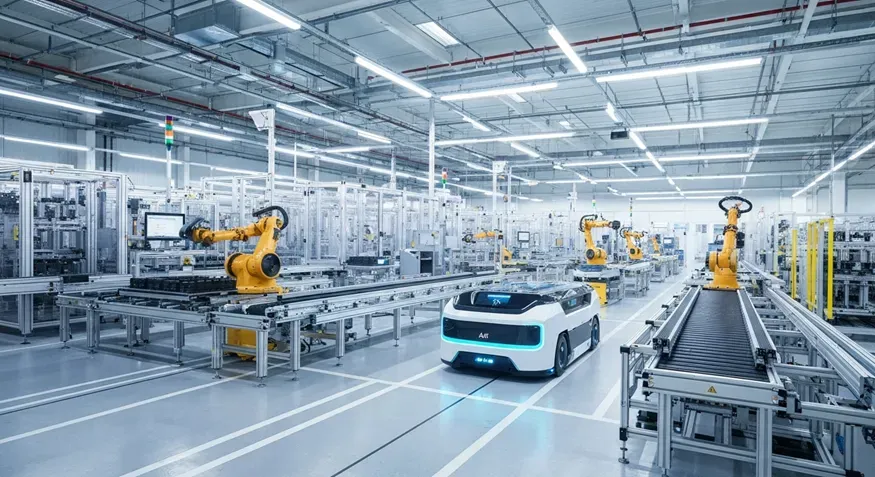
- An automated guided vehicle (AGV) is a driverless robot that automates material handling in manufacturing facilities.
- AGVs enhance warehouse operations by taking over repetitive transport tasks, allowing for continuous 24/7 work.
- Implementing AGVs can significantly reduce long-term labor costs and minimize expensive manual errors.
- Advanced sensors and collision avoidance technology make AGVs a safe solution for busy industrial environments.
- Different types of AGVs exist, from tuggers that pull heavy loads to forklifts that handle pallet stacking.
- AGVs can be integrated with existing warehouse management systems to create a seamless, efficient workflow.
Introduction
In today's fast-paced industrial world, companies are constantly searching for ways to work smarter, not harder. This is where the automated guided vehicle (AGV) comes in, revolutionizing material handling in manufacturing facilities and warehouses. These self-guiding vehicles are becoming essential tools for automating the movement of goods, boosting productivity, and streamlining operations. If you're looking to enhance efficiency, AGVs might be the perfect solution for your facility.
Understanding Automated Guided Vehicles (AGVs) in Manufacturing
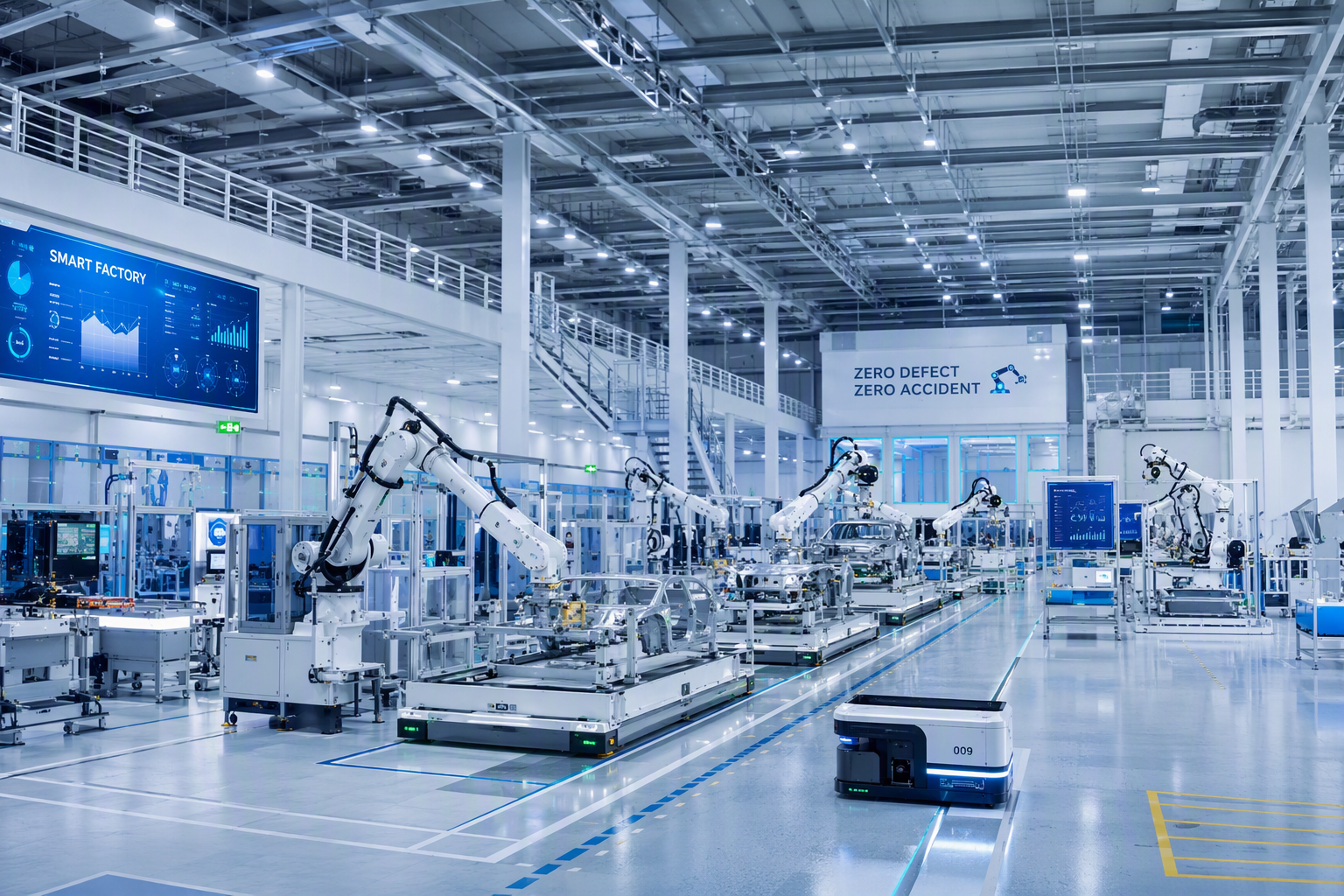
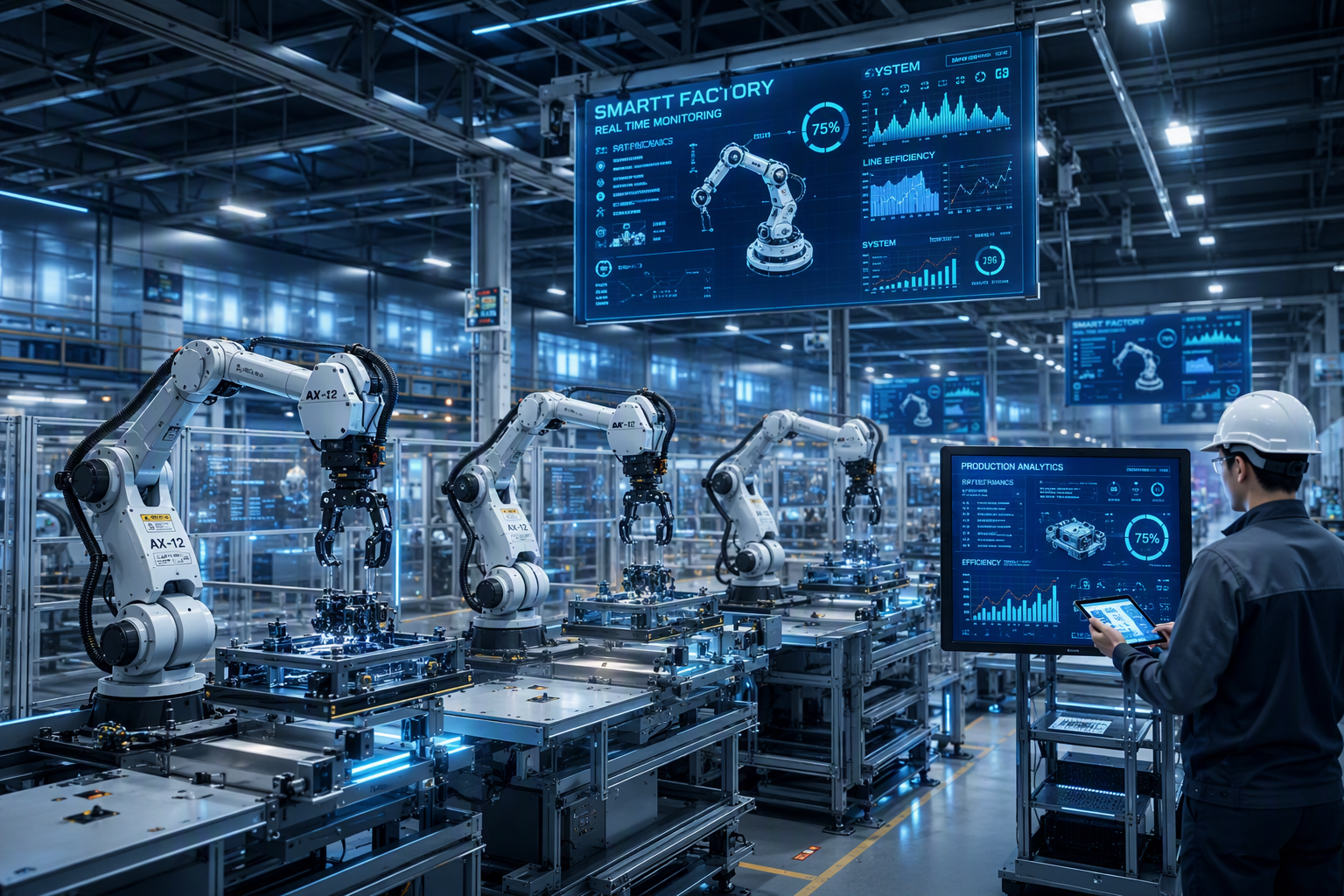
Automated guided vehicles (AGVs) play a vital role in modern manufacturing, primarily focusing on material handling tasks. These driverless robots navigate through production lines and warehouses, utilizing advanced sensors and navigation systems to transport goods without human intervention. With benefits like continuous operation and efficient flow of materials, AGVs significantly enhance operations in tight spaces and dynamic environments. Their versatility allows them to handle raw materials and heavy loads with ease, making them an excellent choice for various industries looking to optimize their processes and reduce labor shortages.
Definition and Core Functions of AGVs
Automated guided vehicles (AGVs) are driverless robots designed to transport materials efficiently within manufacturing facilities. Utilizing navigation systems such as laser beams or magnetic tape, these vehicles follow predetermined paths to ensure smooth material flow across production lines and storage areas. Functions include moving heavy loads, handling repetitive transport tasks, and enhancing warehouse operations. By reducing the need for manual labor and minimizing human intervention, AGVs significantly improve operational efficiency, allowing businesses to focus on quality control and maximize productivity in dynamic environments.
Historical Evolution of AGV Technology
The concept of an automated guided vehicle is not brand new, but the technology has advanced significantly in recent years. Early versions were often simple, track-guided machines that followed wires or magnetic tape on the floor. While effective, updating these routes was often a costly and disruptive process for the entire industry.
As technology progressed, AGVs became much smarter. The introduction of more flexible navigation methods, such as laser-guided and vision-based systems, has been a game-changer. This shift has allowed AGVs to become more adaptable to changing layouts in manufacturing plants and on busy production lines without requiring major infrastructure changes.
Today's AGVs are sophisticated robots that can navigate complex environments, communicate with other systems, and make decisions in real time. This evolution has made them an invaluable tool for modern logistics, capable of handling dynamic tasks that were once impossible for automated systems.
Components and System Architecture of AGVs
An effective AGV system is more than just the vehicle itself. It is a complete architecture comprising several key components that work together. This includes the mobile robots, a master control unit, data communication infrastructure, and charging stations to keep the fleet operational.
Each vehicle is equipped with its own essential hardware. This includes a navigation system to guide its movement and advanced sensors to detect its surroundings and avoid obstacles. These components are what allow the AGV to move safely and accurately through your facility, whether it's a bustling warehouse or a complex manufacturing floor.
The master control software is the brain of the AGV system. It coordinates the routes and speeds of all the vehicles in the fleet, assigns tasks, and communicates with other warehouse systems. This integration is crucial for ensuring a smooth and efficient flow of materials throughout the supply chain.
Types of AGVs Used in the Manufacturing Industry
Not all material handling tasks are the same, which is why there isn't just one type of AGV. In fact, almost any industrial truck used in manual operations can be found in an automated version. Different types of AGVs are designed to meet specific needs, from transporting small parts to lifting heavy pallets.
You can find everything from automated carts and tuggers to unit load AGVs and forklift AGVs. Each design is optimized for certain material handling tasks, allowing you to choose the perfect solution for your unique requirements. Let's explore some of the most common types of AGVs you'll see in the industry.
Automated Guided Carts and Tuggers
When it comes to moving materials, automated guided carts (AGCs) and tuggers are two of the most popular types of automated guided vehicle solutions. Tugger AGVs are powerhouse machines designed to pull trailers or carts carrying heavy loads, often towing thousands of pounds at a time across a facility.
On the other hand, automated guided carts are more compact vehicles designed to transport goods in smaller quantities. They are ideal for applications like feeding parts to an assembly line or moving items between workstations. Some models can even drive under stationary trolleys to pick them up and transport them.
These vehicles are essential for streamlining material handling in many settings. Their common applications include:
- Supplying production halls with necessary parts and materials.
- Hauling larger or heavy loads between different buildings or departments.
- Removing waste or finished products from production areas.
Forklift AGVs for Pallet Handling
For tasks involving pallets, forklift AGVs are the go-to solution. These automated vehicles are designed to perform the same functions as their manual counterparts, such as lifting, stacking, and transporting pallets, but without the need for a human operator. They are perfect for automating storage and retrieval in warehouses and supporting production lines.
Different models of forklift AGVs are available to handle various needs. Pallet stackers are great for handling pallets at low to medium heights, while reach trucks can access shelving up to 11 meters high. There are even very narrow aisle forklift AGVs designed to operate in high-density storage areas, maximizing warehouse space.
Forklift AGVs are ideal for a range of material handling duties, including:
- Storing and retrieving goods in racking systems, even at significant heights.
- Transporting heavy loads and palletized goods from receiving to storage.
- Supplying workstations and production lines with pallets of raw materials.
Unit Load AGVs for Material Movement
Unit load AGVs are specialized vehicles built to handle and transport single, large items like pallets, rolls, or containers. These AGVs are commonly found in manufacturing and warehouse operations, where they excel at performing repetitive tasks related to material movement. They are designed to carry substantial loads autonomously over set routes.
A great example of their use is in large fulfillment centers, where unit load AGVs move entire pallets of products from storage areas to shipping docks. This automation dramatically speeds up pickup and delivery times, making the entire operation more efficient. They are the workhorses for moving large quantities of goods.
These AGVs are best suited for specific roles within a facility, such as:
- Transporting goods between static reloading stations or conveyor belts.
- Automating repetitive tasks in warehousing and distribution.
- Moving large, palletized materials across a facility with speed and precision.
Hybrid and Custom AGV Solutions
Sometimes, a standard AGV just won't cut it. For facilities with unique challenges or specific handling requirements, hybrid and custom AGV solutions offer the perfect answer. Hybrid AGVs are particularly interesting because they are often based on standard manual trucks, which means they can be operated manually if needed. This provides incredible flexibility.
Custom AGV solutions take this a step further by being tailor-made for a particular job. These AGVs can be adapted in size, payload capacity, or navigation technology to operate in complex environments or handle unconventional items. They are one of the most flexible automation solutions available for unique industrial challenges.
Customization allows AGVs to perform highly specialized roles, including:
- Delivering bulk materials in large-scale automotive manufacturing plants.
- Integrating with existing machinery for unique transfer tasks.
- Navigating challenging layouts that standard vehicles cannot manage.
Key Industries Utilizing AGVs for Material Handling
The use of AGVs is not limited to just one or two sectors. In fact, various industries have embraced this technology to optimize their material handling and manufacturing process. From automotive plants and distribution centers to food and beverage facilities, AGVs are proving their worth across the board.
Their ability to improve efficiency, safety, and consistency makes them a valuable asset in any environment where materials need to be moved regularly. Let's take a look at some of the key industries that are making the most of AGV technology.
Automotive and Heavy Equipment Manufacturing
The automotive and heavy equipment manufacturing sectors are among the biggest users of AGVs. In these industries, production relies on a perfectly timed flow of parts and components to the assembly lines. An AGV system excels at this, ensuring that materials arrive exactly when and where they are needed, reducing congestion and downtime.
Companies in this space use AGVs to transport everything from small components to large body parts. For example, some automotive plants use fleets of custom AGVs to deliver materials for the body shop and general assembly, optimizing the entire material flow from start to finish.
The roles of AGVs in this sector are critical and diverse. They are commonly used for:
- Delivering parts directly to assembly lines.
- Transporting unfinished materials between production stages.
- Moving finished vehicles off the line.
- Optimizing logistics within the plant.
Food, Beverage, and Consumer Goods Sectors
In the food, beverage, and consumer goods sectors, efficiency and reliability are paramount. These industries often deal with high volumes and tight deadlines, making AGVs an ideal solution for automating warehouse operations and strengthening the supply chain. AGVs can handle the repetitive task of moving pallets of goods from production to storage or from storage to shipping docks.
For example, leading contract logistics companies and retailers use AGVs to manage the flow of goods in their massive distribution centers. Automated forklifts can store and retrieve pallets, while tuggers can transport long trains of carts to shipping areas, streamlining the entire process.
In these fast-moving industries, AGVs help with a variety of tasks, such as:
- Managing the increased flow of goods during peak demand.
- Automating pallet handling in warehouses.
- Loading trailers for shipment.
- Ensuring a consistent and reliable supply chain.
Electronics and High-Tech Assembly
The electronics and high-tech assembly industries require precision and careful handling of sensitive components. An automated guided vehicle is perfectly suited for this environment, where consistency is key to quality control. These automated material handling systems can transport delicate parts without the risk of human error or damage.
In these facilities, AGVs are used to create a seamless flow of materials between the warehouse, production lines, and finished goods storage. For instance, a manufacturer of high-tech fan and motor products can use AGVs to fully automate the transport of finished items to the dispatch area, ensuring they are handled correctly every step of the way.
AGVs play a crucial role in high-tech manufacturing by:
- Transporting sensitive electronic components with care.
- Supplying high-tech assembly lines with necessary parts.
- Improving process stability and quality control.
Essential Technologies Behind AGV Systems
The magic behind an AGV system lies in a combination of sophisticated technologies that allow it to operate autonomously. These core technologies work in harmony to ensure the vehicles can navigate accurately, operate safely, and communicate effectively with the central control system.
The main pillars of AGV technology are its navigation system, its onboard advanced sensors for obstacle detection, and its communication link to the wider warehouse network. Understanding these elements is key to appreciating how AGVs can so seamlessly integrate into a busy work environment.
Navigation and Guidance Methods (Laser, Magnetic, Vision-Based)
An AGV's navigation system is what guides it along its path. There are several methods used today, each with its own advantages. Some of the most common approaches are track-guided navigation and natural feature navigation.
Track-guided methods involve physical guides, like magnetic tape or wires embedded in the floor. The AGV uses sensors to follow these magnetic strips, which is a reliable method for fixed, well-defined routes. More advanced AGVs use laser navigation, where the vehicle's laser sensors scan the surroundings and use natural features like walls and racking to determine its position. This method is incredibly flexible and easy to adapt. Vision-based navigation is another modern approach where AGVs use cameras to see and interpret their environment.
Different navigation systems are chosen based on the facility's needs. The primary methods include:
- Magnetic: Following magnetic tape or strips on the floor.
- Laser: Using laser beams to scan the environment or reflect off targets.
- Vision-Based: Relying on cameras to identify landmarks and navigate.
- Wired: Following wires embedded in the floor that emit an electrical signal.
Onboard Sensors and Obstacle Detection
Safety is the top priority for any automated system, and AGVs are equipped with a host of advanced sensors to ensure safe material handling. These sensors are the eyes and ears of the vehicle, constantly scanning the environment for potential hazards. This technology is crucial for effective obstacle avoidance and collision avoidance.
Many AGVs use laser sensors that create a 360-degree view around the vehicle, with defined safety zones. If an object or person enters a warning zone, the AGV will slow down. If they enter the safety zone, the vehicle will stop completely. Some systems also use curtain lasers to detect hovering obstacles that might be missed by floor-level scanners.
These safety systems work together to prevent accidents and protect both people and property. Standard safety features include:
- Laser scanners with multiple safety and warning fields.
- Collision avoidance systems that stop or reroute the vehicle.
- Cameras and 3D imaging devices for object detection.
- Emergency stop switches on the vehicle itself.
Communication with Central Control and WMS
For an AGV to be truly effective, it must communicate seamlessly with your facility's existing systems. This is why integration with a Warehouse Management System (WMS) or Enterprise Resource Planning (ERP) system is so important. This communication allows for the smooth and automated processing of material flows.
When integrated, the WMS can send transport orders directly to the AGV's master control system. The control system then assigns the task to the most appropriate vehicle and optimizes its route. This level of communication ensures that the AGVs are always working on the highest-priority tasks and that the entire supply chain runs efficiently.
This connectivity creates a fully networked and intelligent logistics operation. Benefits of integration include:
- Automatic assignment of tasks from the WMS to the AGVs.
- Real-time visibility into material flow and vehicle status.
- Synchronization with other automated warehouse systems, like doors and conveyor belts.
Comparing AGVs with Autonomous Mobile Robots (AMRs)
Automated guided vehicles (AGVs) and autonomous mobile robots (AMRs) both play essential roles in modern manufacturing facilities, but they cater to different needs. AGVs are typically designed for repetitive transport tasks along predetermined paths, making them ideal for streamlined material handling in production lines. In contrast, AMRs utilize advanced sensors and artificial intelligence to navigate complex environments, adapting to unexpected obstacles. This flexibility allows AMRs to handle diverse tasks in dynamic settings. Understanding their distinct functionalities helps in selecting the most effective solution for specific material flow and storage challenges.
Differences in Navigation and Use Cases
Various navigation methods distinguish automated guided vehicles (AGVs) from their autonomous mobile robot (AMR) counterparts. While AGVs typically rely on guided paths, such as magnetic tape or embedded wiring, AMRs use advanced sensors and artificial intelligence to navigate complex environments independently. The choice of navigation system often aligns with specific use cases; AGVs excel in predictable settings like production lines and warehouses, handling repeated material transport tasks. Conversely, AMRs thrive in dynamic environments, easily adapting to changing layouts while managing heavy loads without human intervention.
Pros and Cons of AGVs vs. AMRs
Automated Guided Vehicles (AGVs) excel in structured environments like production lines and warehouses, making them ideal for repetitive transport tasks. Their predictable paths reduce risks of accidents, especially in tight spaces. However, their reliance on fixed navigation systems, like magnetic tape, may limit adaptability in dynamic environments. In contrast, Autonomous Mobile Robots (AMRs) offer flexibility thanks to advanced sensors and can navigate complex surroundings. Yet, AMRs may involve higher upfront costs and require ongoing human intervention. Balancing these strengths and weaknesses empowers facilities to tailor solutions to their specific handling requirements.
Choosing the Right Solution for Your Facility
Selecting the perfect solution for your facility involves understanding specific handling requirements and the unique challenges you face. Take into account factors like the type of AGV, whether it’s a unit load or forklift AGV, and how it will integrate with your existing material handling systems. Consider the layout of your space, including tight spaces and very narrow aisles, to determine the best navigation system. Ultimately, the right AGV system should enhance your material flow, streamline operations, and adapt to your facility's evolving needs.
Core Benefits of Implementing AGVs in Manufacturing
Implementing an automated guided vehicle in your material handling operations offers a wide range of powerful benefits. Beyond just moving goods, AGVs can fundamentally improve your entire supply chain. They lead to lower costs, greater efficiency, and a safer workplace for everyone involved.
In an era of labor shortages and increasing demand, automation is more important than ever. AGVs provide a reliable solution to these challenges, helping you optimize processes and stay competitive. Let's dive into the core benefits you can expect from this technology.
Enhancing Operational Efficiency and Speed
One of the most significant advantages of AGVs is the dramatic boost in operational efficiency. By automating the material flow between production lines and storage areas, you can significantly increase your overall handling capacity. AGVs create a more stable and predictable process, ensuring a consistent flow of goods.
Unlike human workers, AGVs can provide continuous operation 24 hours a day, 7 days a week. They don't need breaks or shift changes, which means your warehouse operations can run around the clock. Studies have shown that AGVs can increase efficiency by 50-70%, a truly transformative impact on productivity.
AGVs enhance efficiency in several key ways:
- Enabling 24/7 continuous operation.
- Optimizing material flow and increasing handling capacity.
- Reducing travel time by finding the most efficient routes.
- Creating process stability and predictability.
Reducing Labor Costs and Manual Errors
Manual labor can be one of the biggest expenses in a warehouse, with staff accounting for up to 80% of the overall costs for manually controlled vehicles. AGVs directly address this by automating the repetitive tasks that currently require human intervention. This not only reduces labor costs but also helps combat the challenges of skilled worker shortages.
In addition to cost savings, AGVs also reduce the rate of manual errors. Human-operated forklifts can accidentally damage goods, racking, or building infrastructure, leading to expensive repairs and lost product. Since AGVs follow precise, programmed paths, the risk of these costly mistakes is significantly minimized.
By implementing AGVs, you can:
- Lower dependence on manual labor for transport tasks.
- Reduce costs associated with damage to goods and infrastructure.
- Reallocate employees to more value-adding activities.
Improving Workplace Safety and Predictability
Industrial environments can be dangerous, with thousands of workplace injuries reported each year. AGVs play a crucial role in improving workplace safety by reducing the risk of accidents. Equipped with advanced collision avoidance systems, sensors, and cameras, they can safely navigate busy areas and prevent collisions with people, assets, and other vehicles.
The predictable movement of AGVs also contributes to a safer workplace. They follow their designated routes with precision and adhere strictly to safety protocols, unlike human operators who can sometimes be unpredictable. This leads to a more controlled and secure environment for everyone.
AGVs enhance safety and predictability by:
- Utilizing advanced sensors for obstacle detection and collision avoidance.
- Reducing the risk of accidents caused by human error.
- Following predetermined routes with high precision.
- Freeing human workers from performing dangerous tasks.
Practical Considerations for AGV Implementation
Deciding to implement an AGV system is a big step, and it requires careful planning to ensure success. Before you begin your journey into automation, there are several practical considerations to think about. These include understanding the costs, calculating the potential return on investment, and planning the integration with your existing material handling systems.
Proper planning will help you select the right vehicles, design an effective workflow for your transportation tasks, and ensure a smooth transition to an automated environment. Let's explore some of the key factors to consider.
Cost Factors and Return on Investment
When considering an AGV, the main costs are associated with the procurement of the vehicles and the commissioning of the system. The exact price will depend on several factors, including the size of the fleet you need and the complexity of the application. For example, a system designed to handle heavy loads will have different costs than one moving small parts.
While the initial investment is higher than for manual solutions, experience shows that the return on investment for an AGV system is often very quick. This is because automation leads to significant savings in staffing costs, a reduction in errors and damages, and increased overall efficiency.
Key factors influencing cost and ROI include:
- Initial Costs: The number of vehicles, complexity of navigation, and integration needs.
- ROI Drivers: Savings on labor costs, reduced damage expenses, and gains in productivity.
Integration with Existing Warehouse Management Systems (WMS)
A successful AGV implementation hinges on its ability to seamlessly integrate with your existing warehouse management system (WMS). This integration is what transforms a fleet of individual robots into a fully coordinated part of your supply chain. The AGV's control software must be able to communicate with your WMS to receive orders and provide status updates.
This networking allows for the automated assignment of tasks, ensuring that goods are moved from production to storage areas or shipping docks without any manual input. A professional implementation team can help design the system, integrate it with your current processes, and ensure it operates smoothly.
Benefits of a successful WMS integration include:
- A fully automated workflow from order to fulfillment.
- Real-time coordination of all warehouse systems.
- Optimized material flow throughout the facility.
Conclusion
In conclusion, Automated Guided Vehicles (AGVs) are revolutionizing the manufacturing landscape by enhancing efficiency, reducing labor costs, and improving workplace safety. As manufacturers look to streamline operations, understanding the various types of AGVs and their core benefits becomes essential. From automotive to electronics sectors, AGVs provide a robust solution tailored to specific needs, driving productivity to new heights. As you consider implementing AGVs in your facility, keep in mind the practical aspects, including cost factors and integration with existing systems. By embracing AGV technology, you position your business to thrive in an increasingly automated world. For those interested in exploring how AGVs can specifically benefit your operations, don't hesitate to reach out for a consultation.
Frequently Asked Questions
Are AGVs a viable option for small and mid-sized manufacturers?
Yes, absolutely. The viability of an automated guided vehicle depends more on the standardization of your processes than the size of your manufacturing plant. With flexible automation solutions and the potential for lower costs over time, these driverless robots can provide a strong return on investment for any business looking to improve efficiency.
What are standard safety features in manufacturing AGVs?
Modern AGVs are equipped with robust safety features for industrial environments. These typically include advanced sensors for collision avoidance and obstacle avoidance, such as 360-degree laser sensors, curtain lasers for detecting hovering objects, and emergency stop switches. These systems ensure the vehicles can operate safely around people and infrastructure.
How do AGV costs compare to traditional manual transport solutions?
While the initial purchase price of an AGV is higher than for manual labor, they offer significantly lower costs in the long run. By automating material handling and warehouse operations, AGVs reduce ongoing labor expenses and minimize costly errors, leading to a fast return on investment for most businesses.
You might also like