Understanding AGVs: Types and Their Key Applications
Key Highlights
- An automated guided vehicle (AGV) is a mobile robot that transports materials without a human operator.
- AGVs navigate using predefined paths like magnetic tape, lasers, or optical lines to improve material handling.
- There are many types of AGVs, including towing, forklift, and unit load models, to suit various needs.
- These vehicles are transforming warehouse operations in industries like manufacturing, automotive, and healthcare.
- AGV solutions enhance safety, boost productivity, and can be integrated with existing management systems.
Introduction
The evolution of material handling has transformed the landscape of industrial environments, with automated guided vehicles (AGVs) leading the charge. These efficient machines streamline processes, facilitating material transport across assembly lines, warehouses, and distribution centers. With advanced navigation systems like laser sensors and magnetic tape, AGVs navigate complex environments with ease, significantly reducing the need for manual labor. By minimizing human intervention, they enhance safety and operational efficiency, making them a trusted partner in the supply chain. Join us in exploring the various types and applications of AGVs in modern industry!
Automated Guided Vehicles (AGVs) Explained
Automated guided vehicles are essential tools in today’s dynamic industrial landscape. These innovative machines streamline material handling processes, helping to transport heavy loads without the need for manual labor. Equipped with advanced navigation systems, such as laser navigation and magnetic tape, AGVs operate seamlessly within complex environments like manufacturing plants and distribution centers. Their ability to continuously operate while minimizing human intervention reduces labor costs and enhances operational efficiency. With safety features like collision avoidance and emergency stops, AGVs serve as a trusted partner in improving the flow of goods.
What Is an AGV?
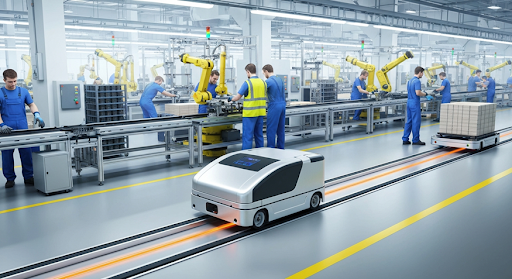
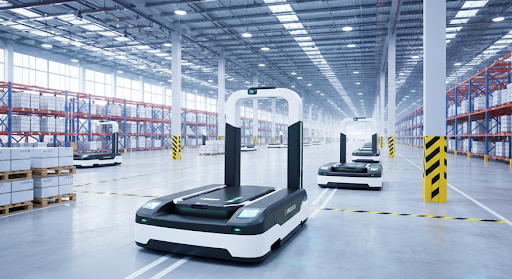
Automated Guided Vehicles (AGVs) are mobile robots used in various industries to transport materials without human intervention. They follow predefined paths using sensors, magnets, or lasers, enhancing efficiency in logistics and manufacturing processes while minimizing operational costs and improving safety.
How Do AGVs Operate in Modern Facilities?
AGVs operate within a facility by following predefined routes set by various navigation methods. These can include physical guides like magnetic tape on the floor or more advanced systems like laser guidance that uses reflectors. An AGV system uses this guidance to navigate through aisles and between workstations.
In a typical scenario, an AGV receives instructions from a central control system. For example, it might be tasked with moving parts from a storage area to an assembly line. The vehicle then autonomously travels to the pickup point, collects the materials, and delivers them to the designated drop-off location.
This process eliminates the need for manual handling on production lines and in other parts of a facility. By automating the flow of materials, AGVs ensure a steady and uninterrupted workflow, which is crucial for maintaining productivity and meeting production targets.
Core Technologies Behind AGVs
The magic behind how AGVs work lies in a combination of sophisticated technologies. These vehicle systems rely on a robust navigation system to find their way, advanced sensors to perceive their surroundings, and communication protocols to coordinate their actions. AGV navigation is what allows them to move precisely along their designated paths.
Together, these components enable AGVs to operate safely and efficiently without direct human control. Let's look at the specific technologies that make this automation possible.
Navigation Systems: Laser, Magnetic, and Optical Guidance
An AGV's navigation system is its internal map and compass, guiding it through a facility. There are several popular methods, each with its own advantages. These systems ensure the vehicle stays on its intended path.
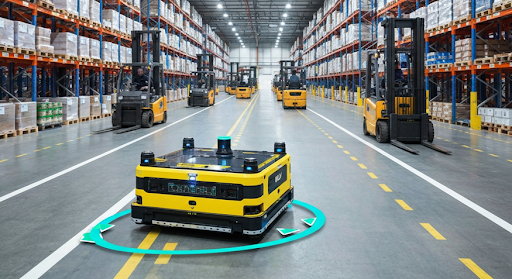
One of the most common methods involves magnetic guidance. With this approach, the AGV follows magnetic tape or magnetic strips laid on the floor. A sensor on the vehicle detects the magnetic field and keeps the AGV on course. Another method is optical guidance, where the vehicle follows a painted line on the floor.
More advanced AGVs use laser navigation. This technology doesn't require physical lines on the floor. Instead, it works by:
- Emitting laser beams from a rotating turret on the AGV.
- Detecting reflections from targets placed at strategic points in the facility.
- Calculating its exact position based on the angle and distance to these reflectors.
Sensors for Obstacle Detection and Avoidance
To operate safely around people and equipment, AGVs are equipped with advanced sensors for collision avoidance. These sensors are the vehicle's eyes and ears, constantly scanning its environment for potential hazards. This technology is critical for reducing the risk of accidents in a busy workplace.
AGV systems use a variety of sensors to detect obstacles. For example, laser sensors (like Lidar) create a 360-degree map of the area, allowing the AGV to spot objects in its path from a distance. Ultrasonic sensors work similarly, using sound waves to detect nearby obstructions.
When an obstacle is detected, the AGV can automatically slow down or come to a complete stop. Other safety features include:
- Physical bumpers that trigger an emergency stop upon contact.
- Emergency stop buttons that allow humans to halt the vehicle instantly.
Wireless Connectivity and Communication Protocols
Wireless connectivity is the invisible thread that connects an AGV to the rest of your operation. AGVs use communication protocols like Wi-Fi to link with a central control system. This connection allows for real-time data exchange, which is essential for efficient coordination.
Through this wireless link, the control system sends task assignments, routing information, and other instructions to each vehicle. In return, the AGV sends back status updates, such as its current location, battery level, and task completion status. This constant flow of information ensures everything runs smoothly.
For facilities that operate a fleet of AGVs, this communication is vital. The central system can manage traffic, prevent bottlenecks, and optimize the movements of all vehicles to ensure tasks are completed as quickly as possible. This real-time coordination is key to maximizing the efficiency of your material handling operations.
Key Types of Automated Guided Vehicles
Not all AGVs are created equal. There are many different types of AGVs, each designed for specific tasks and environments. From small carts to heavy-duty haulers, these mobile robots can be adapted to fit your unique material handling needs. An automated guided vehicle system can even include custom AGVs for highly specialized applications.
Understanding the various models available is the first step in finding the right solution for your facility. Here is a look at some of the most common types you’ll find in warehouses and manufacturing plants.
Unit Load AGVs
Unit load AGVs are designed to transport single, large items such as pallets, bins, or large racks. These vehicles typically feature a platform or deck that the load can be placed on directly. They are a workhorse in material handling for moving substantial items from one point to another.
You will often see unit load AGVs in warehouse operations, where they are used to move pallets from receiving to storage or from storage to shipping docks. They are also common in manufacturing, where they transport large components or work-in-process materials through the assembly process.
By automating the movement of unit loads, these AGVs ensure a consistent and efficient flow of materials. This helps speed up processes, reduce reliance on manual forklifts, and minimize the risk of product damage during transit.
Towing AGVs and Tugger Models
Towing AGVs, also known as tugger AGVs, function like an automated train. Instead of carrying a load on top, they are designed to pull a train of one or more carts or trailers. This makes them incredibly efficient for moving multiple loads simultaneously.
These tugger models are ideal for transporting heavy loads over longer distances within a facility. For example, they are frequently used to deliver parts and supplies to production lines in a manufacturing plant or to move goods through a large distribution center.
Using towing AGVs can significantly streamline your supply chain by allowing for the synchronized movement of materials. A single tugger can replace several trips made by other types of vehicles, reducing traffic congestion and improving overall operational efficiency.
Forklift AGVs for Pallet Handling
Forklift AGVs are exactly what they sound like: autonomous forklifts. These vehicles are designed to perform the same functions as a traditional forklift but without a human operator. They are equipped with forks to lift, move, and stack pallets at various heights.
These AGVs are a popular choice for pallet handling in warehouse operations. They can autonomously retrieve pallets from racking systems, transport them to different locations, and load or unload trucks. This automates one of the most common tasks in any warehouse.
By using forklift AGVs, you can create a more predictable and efficient material flow. They can operate around the clock, reducing labor needs and minimizing the risk of accidents and damage associated with manual forklift operation.
Automated Guided Carts (AGCs)
Automated guided carts (AGCs) are a simpler and more compact type of AGV. They are designed to transport smaller loads, such as totes, bins, or individual items. Due to their smaller size, they are excellent for navigating tight spaces where larger AGVs might not fit.
AGCs are often used for tasks like delivering components to assembly lines, sorting items in a distribution center, or transporting supplies in a hospital. They typically follow simple guidance paths, such as magnetic tape, making them an easy-to-implement solution for automating material flow.
Within larger AGV systems, AGCs can handle the "last mile" of delivery, bringing specific parts right to a workstation. Their versatility and small footprint make them a great entry point into automation for many facilities.
Heavy Burden Carrier AGVs
For the biggest and heaviest jobs, there are heavy burden carrier AGVs. These vehicles are engineered to handle extremely large and heavy loads, such as engine blocks, large coils of steel, or massive assembly components. They are the powerlifters of the AGV world.
You will find these robust AGVs in industries like heavy machinery manufacturing, steel production, and automotive assembly plants. Their strong frames and powerful drive systems allow them to safely transport materials that would be difficult or dangerous to move manually.
By automating the material handling of these large items, heavy burden AGVs play a critical role in the manufacturing process. They ensure that these essential components are delivered to the right place at the right time, keeping production schedules on track.
Hybrid AGVs and Custom Solutions
Hybrid AGVs offer the best of both worlds by combining autonomous operation with the option for manual control. This means they can follow pre-programmed paths on their own, but a human operator can take over when needed for complex or non-standard tasks.
This flexibility makes hybrid AGVs particularly useful in dynamic industrial environments where you might need to occasionally deviate from a set routine. For example, an operator could manually guide the vehicle to handle an unusual load or navigate a temporarily blocked area.
For truly unique challenges, you can work with a trusted partner to develop custom AGVs. These are solutions tailored to your specific application, with specialized attachments, payload capacities, or navigation technologies. Custom solutions ensure that you get the perfect vehicle for your facility's needs.
AGVs vs Autonomous Mobile Robots (AMRs)
Automated guided vehicles (AGVs) and autonomous mobile robots (AMRs) serve distinct roles in material handling and logistics. While AGVs typically follow predefined paths using methods like magnetic tape or laser navigation, AMRs utilize advanced sensors and AI to navigate more freely within their environments. This makes AMRs particularly beneficial in complex settings where human intervention may be needed. Both types enhance operational efficiency, but the choice between them largely depends on specific application scenarios in warehouses and manufacturing plants, as well as the desired level of autonomy.
Differences in Navigation and Intelligence
Navigating complex environments requires advanced systems equipped with unique navigation methods. Automated guided vehicles (AGVs) rely on magnetic tape or laser beams to trace predetermined paths, ensuring smooth operation in tight spaces. In contrast, autonomous mobile robots (AMRs) exhibit higher intelligence, using sensors and algorithms to adapt to changing surroundings and optimize their routes in real time. This flexibility allows AMRs to independently handle material transport, enhancing operational efficiency. While AGVs offer reliable, continuous operation, AMRs significantly reduce the need for human intervention, making both valuable partners in modern warehousing.
Application Scenarios in Warehousing and Logistics
In the fast-paced world of warehousing and logistics, automated guided vehicles (AGVs) shine by optimizing material handling tasks. These efficient machines glide seamlessly along established pathways, such as magnetic tape or laser-identified routes, ensuring smooth material flow while minimizing human intervention. Typically utilized in distribution centers and assembly plants, AGVs excel in transporting heavy loads and managing inventory in tight spaces. By automating these processes, businesses reduce labor costs and enhance operational efficiency, making AGVs an indispensable ally in modern supply chain management.
Applications of AGVs in Material Handling
AGVs have a wide range of applications in material handling, all aimed at improving efficiency and creating a smoother material flow. In manufacturing plants and warehouses, they can be integrated with warehouse management systems (WMS) to automate the movement of goods from receiving to shipping.
By taking over these repetitive transport tasks, AGVs allow for more streamlined operations. Let’s explore some of the key ways AGVs are used to handle materials throughout a facility.
Raw Material Transportation
One of the most common applications for AGVs is the transportation of raw materials. When materials like plastic, metal, or paper arrive at a facility, AGVs can take over the task of moving them from the receiving dock to a storage area or directly to the production lines.
This automated material transport ensures that your production areas have a consistent and reliable supply of the materials they need. It eliminates delays that can occur with manual transport, helping to keep the entire supply chain running smoothly.
By automating this initial step, you can improve the efficiency of your entire operation. AGVs can be programmed to deliver materials just in time, reducing the amount of space needed for storage at the production line and preventing costly downtime.
Work-in-Process Movement
During the manufacturing process, materials and partially finished goods need to be moved between different workstations. This is known as work-in-process (WIP) movement, and it is a perfect task for AGVs. They can transport items from one stage of the assembly process to the next.
This continuous movement is vital for maintaining an optimized material flow. AGVs can be programmed to move items between workstations, ensuring that each stage of production receives what it needs without interruption. This helps to increase productivity and reduce the chance of bottlenecks.
By automating WIP movement, you can create a more streamlined and efficient manufacturing process. This reduces the need for manual handling of partially completed goods, which can also help minimize the risk of damage during transit.
Handling Finished Goods and Outbound Cargo
Once the manufacturing process is complete, AGVs are often used to handle the finished goods. They can transport products from the end of the production line to a storage area or directly to the shipping dock to be prepared as outbound cargo.
This automated handling of finished goods minimizes the risk of damage that can occur with manual transport. It also ensures that products are moved to the correct location in a timely manner, which is crucial for efficient warehouse operations in distribution centers.
By automating these final material handling tasks, you can speed up the process of getting orders ready for shipment. This helps ensure that your customers receive their products on time, improving overall satisfaction.
Automated Storage and Retrieval Operations
AGVs can also play a key role in an automated system for storage and retrieval. While some facilities use complex AS/RS solutions, AGVs can perform similar functions by transporting goods from receiving areas to storage locations or from long-term storage to forward picking areas.
In this role, AGVs can act as a flexible alternative to fixed conveyor belts. For example, an AGV can pick up a pallet of goods and deliver it to an open storage location, with its destination determined by the warehouse management system. For retrieval, it can be dispatched to pick up an item and bring it to a picking or packing station.
This use of AGVs in warehouse operations provides a high degree of flexibility. Unlike fixed systems, AGV paths can be easily reconfigured to adapt to changing storage needs or warehouse layouts.
Industries Benefiting from AGV Deployment
The use of AGVs is not limited to just one or two sectors. A wide range of industries are discovering the benefits of deploying these vehicles to improve their material handling processes. From large manufacturing facilities and assembly plants to bustling distribution centers, AGVs are making operations safer and more efficient.
This widespread adoption shows just how versatile this technology is. Here are some of the key industries that are leading the way in integrating AGVs into their daily workflows.
Manufacturing and Production Facilities
Manufacturing facilities are one of the biggest users of AGVs, with the sector accounting for a large portion of the market. In these environments, AGVs are used to create "smart factories" by automating the flow of materials, parts, and finished products.
An AGV system can be used to deliver raw materials to production lines, move work-in-process between stations, and transport finished goods to storage. This creates a seamless and efficient material flow that is essential for modern manufacturing.
Companies in this sector use AGVs to boost productivity, reduce labor costs, and shift their workforce to more value-added tasks. By automating repetitive transport, they can ensure their production lines run smoothly and without interruption.
Automotive Assembly and Distribution
The automotive industry has long been a pioneer in automation, and the use of AGVs is no exception. In automotive assembly plants, AGVs are critical for logistics and production. They are used to transport everything from small components to large parts like engines and car bodies.
AGVs deliver parts to the assembly line with precise timing, ensuring that each workstation has what it needs for the assembly process. This "just-in-time" delivery reduces congestion on the factory floor and improves overall efficiency.
Beyond assembly, AGVs also play a role in distribution. They can be used to move finished vehicles from the production line to storage lots or to load them onto transport carriers. This streamlines the entire process from manufacturing to delivery.
Warehousing, Distribution Centers, and the Supply Chain
In the world of logistics, speed and accuracy are everything. That is why warehouses and distribution centers are increasingly turning to AGVs to improve their operations. An automated guided vehicle system can handle a wide variety of tasks, from inventory management to order fulfillment.
AGVs are used for pallet handling, stock replenishment, and moving goods from storage to picking stations. By integrating with a warehouse management system, they can execute tasks autonomously, ensuring that the right products are in the right place at the right time.
This automation strengthens the entire supply chain. By improving the efficiency of warehouse operations, companies can reduce order fulfillment times, minimize errors, and better respond to changing customer demands.
Healthcare, Food, and Beverage Industries
The benefits of AGVs extend beyond manufacturing and logistics. The healthcare and food and beverage industries are also finding valuable uses for this technology. In these sectors, cleanliness and safety are paramount, and AGVs can help meet these stringent requirements.
In healthcare settings like hospitals, AGVs are used to transport meals, linens, medical supplies, and waste. This frees up staff to focus on patient care and reduces the risk of workplace accidents associated with manual material handling.
In the food and beverage industry, AGVs are used for:
- Transporting raw ingredients to production areas.
- Moving finished products from packaging to cold storage.
- Handling pallets of goods in distribution centers.
Integrating AGVs with Warehouse Management Systems
To unlock their full potential, AGVs need to be part of a larger, coordinated system. This is achieved by integrating the AGV system with existing warehouse management systems (WMS). This integration allows for seamless communication, efficient task assignment, and intelligent data exchange.
A well-integrated system enables real-time coordination and traffic control, turning a collection of individual vehicles into a highly efficient fleet. Let's look at how this integration works.
Data Exchange and System Compatibility
System compatibility is crucial when implementing AGV solutions. The AGV control system needs to be able to communicate effectively with your facility's warehouse management systems. This connection allows for a smooth data exchange between the two platforms.
When a task is generated in the WMS—such as moving a pallet from one location to another—the information is automatically sent to the AGV system. The AGV system then assigns the task to the most appropriate vehicle. Once the task is complete, the AGV reports back, and the WMS is updated in real time.
This seamless flow of information ensures that your inventory records are always accurate and that you have full visibility into your material handling operations. Choosing AGV solutions that are designed for easy integration can save a lot of time and effort during implementation.
Real-Time Fleet Coordination
When you have a fleet of AGVs operating in your facility, coordination is key. A central control system provides real-time fleet coordination, acting as an air traffic controller for your vehicles. This automated system optimizes the movements of all AGVs to maximize efficiency.
The system manages traffic control to prevent collisions and reduce congestion. It can dynamically reroute vehicles to avoid bottlenecks and ensure that high-priority tasks are completed first. This intelligent management is essential for keeping operations running smoothly.
By coordinating the entire fleet of AGVs, the system ensures that your material handling processes are as efficient as possible. This real-time optimization helps speed up the movement of goods, including outbound cargo, leading to faster order fulfillment and improved productivity.
Enhancing Safety and Efficiency with AGVs
Two of the biggest advantages of using an automated guided vehicle are the simultaneous improvements in safety and operational efficiency. By automating repetitive and potentially hazardous tasks, AGVs reduce the risk of accidents while also boosting productivity.
These vehicles are designed with numerous built-in safety features and protocols that allow them to operate reliably alongside human workers. Let's examine how AGVs contribute to a safer and more efficient workplace.
Built-In Safety Features and Protocols
Modern AGVs come equipped with a host of built-in safety features designed to prevent accidents. These features provide a 360-degree awareness of the vehicle's surroundings, allowing it to operate safely in busy environments. The primary goal of these systems is collision avoidance.
AGVs use a combination of sensors, such as laser sensors and ultrasonic detectors, to identify people, equipment, and other obstacles in their path. When a potential hazard is detected, the vehicle is programmed to automatically slow down or perform an emergency stop.
Some of the standard safety features you can expect to find on an AGV include:
- Warning lights and audible alerts to signal the vehicle's presence and movement.
- Physical safety bumpers that trigger an instant stop on contact.
- Easily accessible emergency stop buttons for manual intervention.
Improving Productivity and Reducing Manual Labor
One of the most significant benefits of deploying AGVs is the dramatic increase in productivity. Unlike human workers, AGVs can operate 24/7 without breaks, shifts, or time off. This continuous operation ensures a steady and predictable flow of materials throughout your facility.
By automating repetitive manual labor, AGVs help reduce labor costs and free up your employees to focus on more complex, value-added tasks. This automation also eliminates issues related to human fatigue, which can lead to errors and decreased efficiency over the course of a shift.
The result is a more productive and cost-effective operation. AGVs can complete tasks with a high degree of accuracy and consistency, leading to fewer mistakes, less product damage, and a more streamlined workflow from start to finish.
Challenges in Implementing AGV Solutions
While the benefits of AGV solutions are clear, the implementation process can present some challenges. The successful adoption of AGVs requires careful planning, particularly when it comes to facility integration and managing the transition for your human operators.
Addressing these potential hurdles head-on is the key to a smooth and successful rollout. Understanding the common obstacles will help you prepare your facility and your team for the change.
Common Obstacles in Facility Integration
One of the main challenges in facility integration is adapting your existing infrastructure. AGVs, especially those that follow fixed paths, may require modifications to your facility's layout. This can be particularly challenging in older buildings or complex environments.
Issues like narrow aisles, uneven floors, or areas with less space can pose problems for AGV navigation. Transitioning from a system based entirely on manual handling to one that incorporates automation requires a thorough assessment of your current space and workflows.
Some common obstacles to consider include:
- The need to install guidance infrastructure like magnetic tape or reflectors.
- Ensuring floor surfaces are smooth and clear of debris.
- Rerouting foot traffic and other vehicles to accommodate AGV paths.
Staff Training and Change Management
Technology is only one part of a successful AGV implementation. The human element is just as important. Proper staff training and effective change management are essential to ensure your team is comfortable and confident working alongside the new AGV system.
Employees will need to be trained on how the AGVs operate, the safety protocols to follow, and how to interact with the vehicles. This includes knowing when human intervention might be required and how to respond to any issues that may arise.
Managing the change is also crucial. It is important to communicate the benefits of the new system to your team, addressing any concerns they may have about their roles. A positive and well-managed transition will help ensure a smooth adoption and maximize the return on your investment.
The Future of AGVs in the United States
The future for AGVs in the United States looks bright, with the market projected to grow significantly in the coming years. This growth will be driven by ongoing technological innovations and evolving market trends. As companies continue to seek ways to improve efficiency and safety, the demand for advanced AGV solutions is expected to increase. We are also seeing a greater emphasis on sustainability and energy efficiency in logistics and manufacturing.
These trends will shape the next generation of AGVs, making them smarter, more capable, and more environmentally friendly. The push for automation is stronger than ever, and AGVs will be at the forefront of this transformation.
Technological Innovations and Market Trends
Technological innovations are constantly pushing the boundaries of what AGVs can do. We can expect to see continued advancements in AGV navigation, with more vehicles adopting vision-based and Lidar systems that allow for greater flexibility and autonomy.
Market trends also point toward more intelligent and connected systems. The integration of artificial intelligence (AI) and machine learning will make the entire automated guided vehicle system smarter, enabling predictive maintenance, better traffic management, and more efficient task allocation.
As these technologies become more accessible and affordable, we will likely see AGVs being adopted by a wider range of industries and in smaller facilities. This will further solidify their role as a cornerstone of modern automation.
Sustainability and Energy Efficiency Initiatives
Sustainability is becoming a major focus for businesses across all sectors. Future AGV solutions will be designed with energy efficiency in mind, incorporating more advanced battery technologies and power management systems. This will help reduce the environmental footprint of logistics and manufacturing operations.
Initiatives around energy efficiency will lead to AGVs that can operate for longer periods on a single charge, supporting continuous operation with less downtime. We may also see the rise of autonomous charging solutions, where AGVs automatically navigate to a charging station when their battery is low.
By investing in sustainable and energy-efficient AGV solutions, companies can not only reduce their operational costs but also meet their corporate responsibility goals. This focus on green technology will be a key driver of innovation in the years to come.
Conclusion
In summary, automated guided vehicles (AGVs) represent a remarkable innovation in material handling, significantly boosting operational efficiency in various environments. Their ability to navigate complex spaces, handle heavy loads, and minimize labor costs underscores their value as trusted partners in manufacturing and logistics. As industries continue to evolve, the adoption of AGVs promises a safer and more streamlined approach to warehouse operations. With advancements in technology, including enhanced navigation systems and advanced sensors, the future of material flow looks even brighter with AGVs leading the way.
Frequently Asked Questions
What are the main types of AGVs and how do they differ?
The main types of AGVs include towing, unit load, and forklift models, each designed for different material handling tasks. They differ in their load capacity and function, from pulling carts to lifting pallets. Their AGV navigation system also varies, from simple magnetic tape to advanced laser guidance, to suit various industrial environments.
Can AGVs be integrated with existing warehouse management systems?
Yes, an automated guided vehicle can be integrated with most existing warehouse management systems. This integration requires system compatibility to allow the WMS to send tasks to the AGV system. This connection enables automated task assignment, real-time tracking, and efficient traffic control for the entire fleet.
What safety measures are standard with AGVs?
Standard AGV safety features are designed to minimize the risk of accidents. These include advanced sensors for collision avoidance, such as lasers and bumpers. AGVs also have audible and visual warnings, as well as an emergency stop button, to ensure they can operate safely around people and equipment.
You might also like