Discover the Future of Work: Embrace Automation
Discover the Future of Work: Embrace Automation
Key Highlights
- Automation uses technology to perform tasks with minimal human intervention, aiming to streamline processes and improve efficiency.
- The global automation market is expanding rapidly, projected to reach over $459 billion by 2032.
- Major types of automation include industrial automation, Robotic Process Automation (RPA), and cognitive AI automation.
- Key benefits of adopting automation include increased productivity, enhanced accuracy, cost savings, and improved workplace safety.
- While automation may displace some jobs, it is also expected to create millions of new roles requiring new skills.
- Automation is transforming various industries, from manufacturing and healthcare to retail and finance.
Introduction
Welcome to the new era of work! The world is in the middle of a significant digital transformation, and at its heart is automation technology. This powerful force is reshaping industries, streamlining how businesses operate, and changing the very nature of our jobs. Understanding automation is no longer optional—it's essential for navigating the future of work. Are you ready to see how embracing automation can unlock new levels of efficiency and innovation for your career and business?
Understanding Automation in the Modern Workplace
At its core, automation is the use of technology to perform tasks that once required human intervention. The primary goal is to make processes smoother, faster, and more reliable. From simple business process automation to complex automation systems, this technology is reducing errors and boosting efficiency across the board.
To truly grasp its impact, it's helpful to look closer at what automation is, where it came from, and how leading experts define it. Let's explore the fundamental concepts that make automation a cornerstone of the modern workplace.
Definition of Automation and Key Concepts
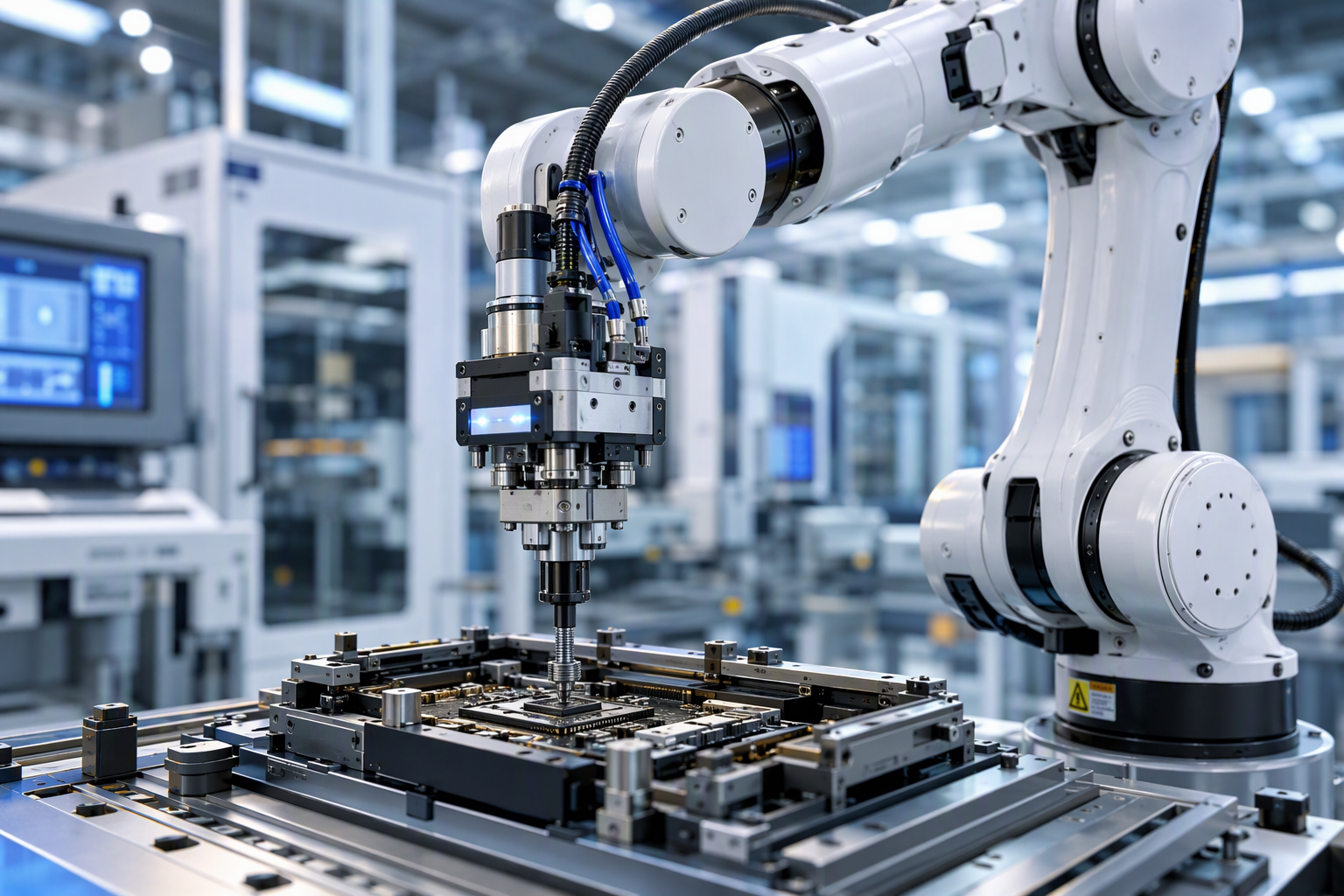
Process automation refers to any technology that carries out tasks with minimal human involvement. Think of a car factory where robotic arms assemble parts on a production line. These machines are programmed to perform specific actions repeatedly, ensuring speed and consistency without needing constant human oversight. This is a classic example of automation systems at work.
In the IT world, automation is just as crucial. An IT professional might use scripts to handle routine system maintenance, software updates, and data backups. This allows them to focus on more complex, strategic problems while the essential, repetitive work gets done reliably in the background.
The engine behind modern automation often involves programming, algorithms, and data. Developers write instructions that tell a machine how to act in different situations. Advanced systems even use machine learning to analyze data from consumer behavior, helping businesses deliver personalized marketing and improve the overall customer experience.
Historical Evolution of Automation Technologies
The concept of automation isn't new, but its application has grown tremendously. The term "automation" itself was reportedly first used in 1946 by the car manufacturer General Motors. They used it to describe the automatic handling of parts, which was a groundbreaking form of industrial automation at the time.
Initially, automation was primarily associated with manufacturing floors, where machines took over highly repetitive tasks. This innovation dramatically increased production speed and consistency in factories. However, the scope of automation quickly began to expand beyond the assembly line.
Today, thanks to the rise of new technologies like artificial intelligence and software robotics, automation has moved into virtually every industry. It has evolved from handling physical jobs to automating complex digital processes in finance, healthcare, and software development, fundamentally changing how work is performed across the board.
Official Sources Defining Automation
Many official sources and research firms have studied automation's impact, and their findings highlight its growing importance. These organizations provide valuable insights into market trends, job market shifts, and the overall economic effects of automation solutions.
Here is a look at what some leading sources have reported on the state of automation:
| Source | Key Insight or Prediction |
|---|---|
| Precedence Research | The global automation market is expected to grow from $195 billion in 2022 to nearly $460 billion by 2032. |
| World Economic Forum | Automation may displace 85 million jobs by 2030 but is also projected to create 97 million new roles. |
| Gartner | The market for Robotic Process Automation (RPA) alone is forecast to exceed $12 billion globally by 2025. |
| McKinsey & Company | The widespread adoption of automation could boost global GDP by up to 1.4% annually by 2030. |
These figures demonstrate a clear and powerful trend. Experts agree that automation is not just a passing phase but a fundamental shift in how business processes are managed. It is an economic driver that is reshaping industries and creating new opportunities for growth and innovation.
Major Types of Automation Used Today
When we talk about automation, it's not a one-size-fits-all concept. There are several different types of automation, each suited for specific tasks and industries. From manufacturing floors to office workflows, automation technology is incredibly diverse and can be adapted to almost any environment.
Understanding these variations, such as business process automation and industrial robotics, helps clarify how this technology can be applied. Let's look at some of the major automation categories in use today, including industrial, robotic, and cognitive automation.
Industrial Automation in Manufacturing
Industrial automation involves using machinery, control systems, and robots in manufacturing and other industrial settings. This type of automation is designed to perform physical tasks like assembly, packaging, and monitoring with high precision and speed. It's the powerhouse behind modern factory production.
You can see industrial automation in action on automotive assembly lines. Here, large robotic arms perform tasks like welding, painting, and tightening bolts. These robots work tirelessly alongside human workers, handling dangerous or repetitive jobs with an efficiency that manual labor cannot match.
By taking over these tasks, industrial automation significantly boosts production rates and improves quality control. This leads to more consistent products, safer working conditions for employees, and a stronger foundation for business growth in the competitive manufacturing sector.
Robotic Process Automation (RPA) for Business Operations
Robotic Process Automation, or RPA, uses software robots—often called "bots"—to automate repetitive, rule-based digital tasks. These bots mimic human actions by interacting with applications and systems just like a person would. They can log into programs, fill out forms, extract data, and more.
RPA is especially useful for back-office functions that involve a high volume of predictable work. For instance, in finance departments, RPA can automate invoice processing and data entry, tasks that are often tedious and prone to human errors when done manually.
By deploying these software robots, companies can dramatically speed up their workflows, reduce labor costs, and free up their employees to focus on more strategic, high-value activities. It's a powerful tool for improving efficiency in any business that relies on digital processes.
Cognitive and Artificial Intelligence Automation
Cognitive automation represents the next frontier, integrating artificial intelligence and machine learning to handle complex tasks that normally require human thought. Unlike rule-based automation, these systems can analyze unstructured data, make judgments, and learn from past experiences to improve their performance over time.
This advanced form of automation uses technologies like natural language processing to understand human speech and writing. This allows AI-powered automation tools to interact with people in a more natural way, such as through customer service chatbots that can understand and respond to user queries.
A great example is in healthcare, where AI systems can analyze medical data to help doctors with diagnoses and treatment planning. This technology doesn't just perform tasks; it provides insights, making it one of the most transformative types of automation available today.
Automation Across Key Industries
The impact of automation is not limited to just one or two sectors; it is driving a widespread digital transformation across various industries. From hospitals to banks, companies are adopting automation solutions to enhance their operations, improve accuracy, and deliver better services to their customers.
This technology is proving to be incredibly versatile, with applications that are tailored to the unique challenges of each field. Let’s examine how automation is making a difference in key sectors like healthcare, finance, and manufacturing.
Automation in Healthcare and Medical Services
Healthcare automation is revolutionizing everything from patient care to administrative tasks. In hospitals and clinics, process automation helps streamline workflows, manage patient data, and reduce the burden of paperwork on medical staff, allowing them more time to focus on patients.
One of the most exciting developments is in medical procedures themselves. Robotic surgery systems, for example, allow surgeons to perform complex, minimally invasive operations with greater precision. Additionally, AI-powered diagnostic tools can analyze medical images like X-rays and CT scans, helping radiologists spot abnormalities more quickly and accurately.
These advancements not only improve the quality of care but also enhance the patient customer experience. With faster diagnoses, less invasive surgeries, and more efficient administrative processes, automation is helping to create a healthcare system that is both more effective and more patient-friendly.
Automation in Finance, Banking, and Accounting
The financial industry has eagerly embraced business process automation to manage its complex and data-heavy operations. Banks and accounting firms use automation to handle a wide range of repetitive tasks, from data entry and transaction processing to compliance checks.
A common application is the automation of invoice processing. Instead of manually entering data from thousands of invoices, software can now extract the necessary information, validate it, and route it for approval, all automatically. Major banks also use AI-powered chatbots to provide instant customer service for tasks like checking balances or scheduling payments.
By automating these processes, financial institutions achieve significant cost savings and reduce the risk of manual errors. This frees up financial professionals to focus on higher-value work, such as financial analysis and client advisory services, making the entire sector more efficient.
Smart Manufacturing and Its Impact
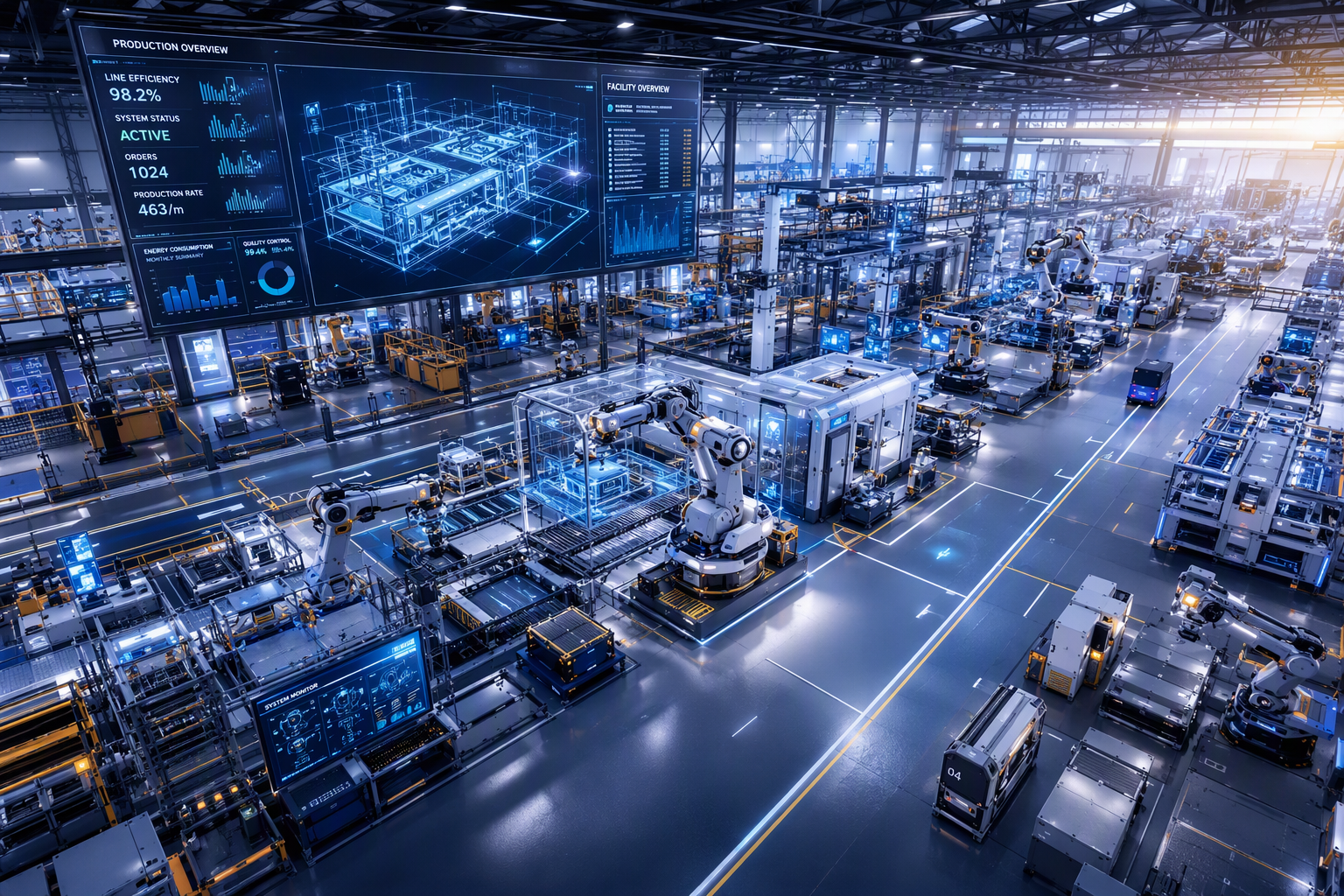
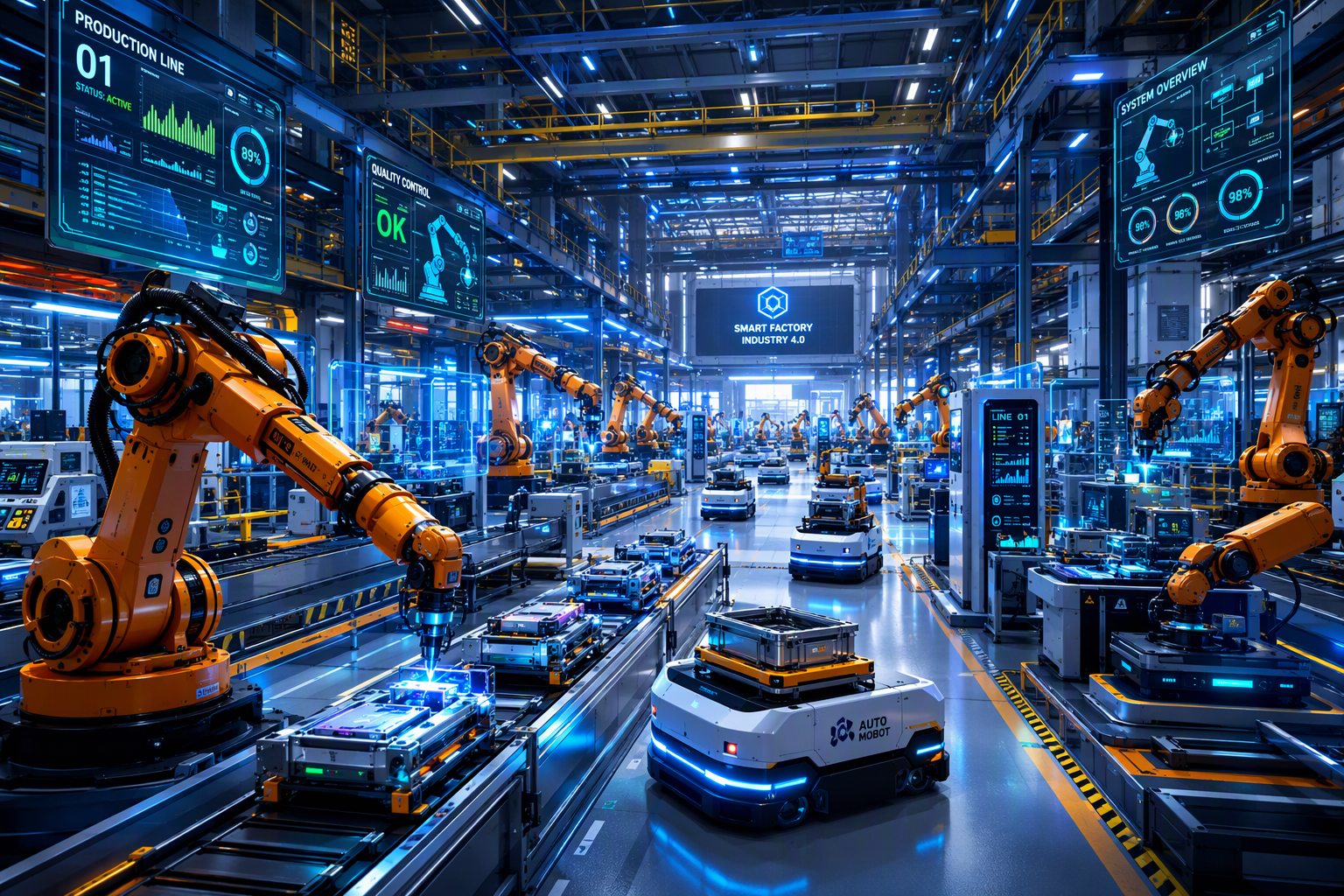
Smart manufacturing takes industrial automation to the next level by integrating it with cutting-edge technologies like AI and the Internet of Things (IoT). In a smart factory, machines are interconnected, sharing data in real-time to create a fully optimized and responsive production environment.
One of the key features of smart manufacturing is predictive maintenance. Sensors on machinery constantly monitor performance and can predict potential failures before they happen. This allows maintenance to be scheduled proactively, preventing costly downtime and extending the life of the equipment.
This intelligent approach makes manufacturing more agile and efficient. Factories can quickly adapt to changing market demands, optimize their resource usage, and improve overall reliability. Smart manufacturing is not just about making things faster; it's about making the entire production process smarter.
Everyday Examples of Automation
Automation isn't just for large factories or corporate offices; it has quietly become a part of our daily lives. From the way we shop to how we manage our homes, technology is taking over tasks to make life more convenient and efficient. You might be using automation without even realizing it.
Examples can be found everywhere, including in home automation, retail automation, and transportation automation. Let's explore some of the common ways automation shows up in our everyday routines, making them simpler and smoother.
Home Automation Devices and Smart Homes
Home automation is one of the most familiar examples of this technology in action. Smart homes use interconnected devices and systems to manage household functions with minimal human intervention, offering new levels of convenience, comfort, and security.
Many of these devices are now commonplace. Some popular examples of home automation include:
- Smart thermostats that learn your schedule and adjust the temperature to save energy.
- Voice assistants like Amazon Alexa or Google Home that control lights, play music, and answer questions on command.
- Automated security systems that monitor your home and send alerts to your phone.
- Smart appliances that can be controlled remotely.
By automating these everyday tasks, smart home technology simplifies daily routines and provides peace of mind. This focus on convenience and control leads to greater customer satisfaction and shows how automation can directly improve our quality of life.
Retail Automation: Self-Checkouts and Inventory Management
Retail automation is transforming the way we shop, both in-store and online. Retailers are using technology to streamline operations, reduce costs, and create a better experience for shoppers. This automation touches everything from the checkout line to the stockroom.
You have likely encountered several forms of retail automation during your shopping trips. Common examples include:
- Self-checkout kiosks that let you scan and pay for items without a cashier.
- Automated inventory management systems that use robots to scan shelves.
- Cashier-less stores that use cameras and sensors to track what you take.
- Personalized marketing algorithms that suggest products based on your browsing history.
These technologies improve customer service by reducing wait times and ensuring products are available. By using automation to monitor stock levels and manage inventory, retailers can operate more efficiently and keep their customers happy.
Transportation and Logistics Automation
The world of transportation and logistics has been completely reshaped by automation. This technology is critical for efficient supply chain management, ensuring that goods get from the warehouse to your doorstep as quickly as possible. It is the invisible force behind modern e-commerce.
In massive fulfillment centers, fleets of autonomous robots are used to move inventory, sort packages, and prepare orders for shipment. These robots optimize storage and dramatically speed up order fulfillment. Companies are also experimenting with drone delivery systems for even faster last-mile deliveries.
Beyond warehouses, automation is making its way onto our roads with the development of self-driving technology for cars and trucks. All of these innovations in logistics operations are designed to make the supply chain faster, cheaper, and more reliable than ever before.
Benefits of Embracing Automation
The benefits of automation are compelling, offering businesses a powerful way to enhance their performance and gain a competitive advantage. By automating tasks, companies can significantly improve their operational efficiency, reduce labor costs, and create a more agile organization.
These advantages are a major driver of business growth and innovation. Whether in manufacturing or customer service, automation is a key strategy for success in the modern economy. Let's dive into some of the specific ways your business can benefit from this technology.
Increased Productivity and Efficiency
One of the most significant benefits of automation is a dramatic boost in productivity. Automated systems can streamline processes and work around the clock without getting tired, allowing businesses to accomplish more in less time. This leads to a direct increase in output and operational efficiency.
Automation excels at handling the repetitive tasks that often slow down workflows and consume valuable employee time. When machines take over this kind of work, it frees up your team from the drudgery of manual labor.
This allows your employees to focus on more creative, strategic, and engaging activities that add greater value to the business. With increased productivity from automation, your entire organization can become more dynamic and results-oriented.
Enhanced Accuracy, Consistency, and Safety
Automated systems perform tasks with an exceptional level of precision, which leads to enhanced accuracy across your operations. Unlike humans, machines don't have bad days or lose focus, so they significantly reduce the human errors that can lead to costly mistakes.
This consistency is vital for quality control. Whether it's assembling a product or processing a transaction, automation ensures that every task is performed the same way every time. This reliability builds trust and leads to higher customer satisfaction, as clients know they can depend on the quality of your products and services.
Furthermore, automation can make workplaces much safer. In industries like manufacturing or mining, robots can be assigned to handle hazardous materials or perform physically demanding jobs, protecting human workers from dangerous environments and reducing the risk of injuries.
Business Scalability and Competitive Advantages
Automation provides a clear path to business scalability. When your operations are automated, you can handle a sudden increase in demand or workload without needing to hire and train a proportional number of new employees. Automation solutions allow your business to grow smoothly and efficiently.
This adaptability gives you a significant competitive edge. Companies that leverage automation are more agile and can respond more quickly to changes in the market or shifts in customer preferences. This ability to pivot and adapt is crucial for staying ahead of the competition.
Ultimately, investing in automation boosts your operational efficiency and fosters a culture of innovation. By making your business more agile and resilient, automation positions you as a leader in your industry and prepares you for long-term success.
Conclusion
In conclusion, embracing automation is not just a trend but a crucial step toward the future of work. By understanding the various types of automation and its applications across industries, businesses can harness its potential to enhance productivity, accuracy, and scalability. Automation simplifies routine tasks, allowing employees to focus on more strategic initiatives, ultimately leading to a more dynamic workplace. As we move forward, staying abreast of automation technologies will be essential for maintaining a competitive edge. Ready to explore how automation can transform your organization? Get in touch to discover tailored solutions that fit your needs!
Frequently Asked Questions
How do automation tools like Automation Anywhere help companies?
Automation tools from providers like Automation Anywhere and UiPath offer software robots that execute process automation. These bots automate repetitive business processes such as data entry and invoice management. This helps companies achieve significant cost savings, reduce errors, and allow employees to focus on more valuable work.
What are the potential drawbacks of automation?
The primary drawback of automation is the potential for job displacement. As machines take over manual tasks previously performed by human labor, some roles may be altered or eliminated. This shift necessitates a focus on reskilling and upskilling the workforce to adapt to the ongoing digital transformation.
Why is automation critical for future work environments?
Automation technology is critical because it drives operational efficiency and business growth. It gives companies a competitive edge by enabling them to adapt quickly to market changes. By reducing the need for human involvement in tedious tasks, it allows people to focus on innovation, creativity, and strategic thinking.
You might also like