AGVs: The Future of Automated Transportation
AGVs: The Future of Automated Transportation
Key Highlights
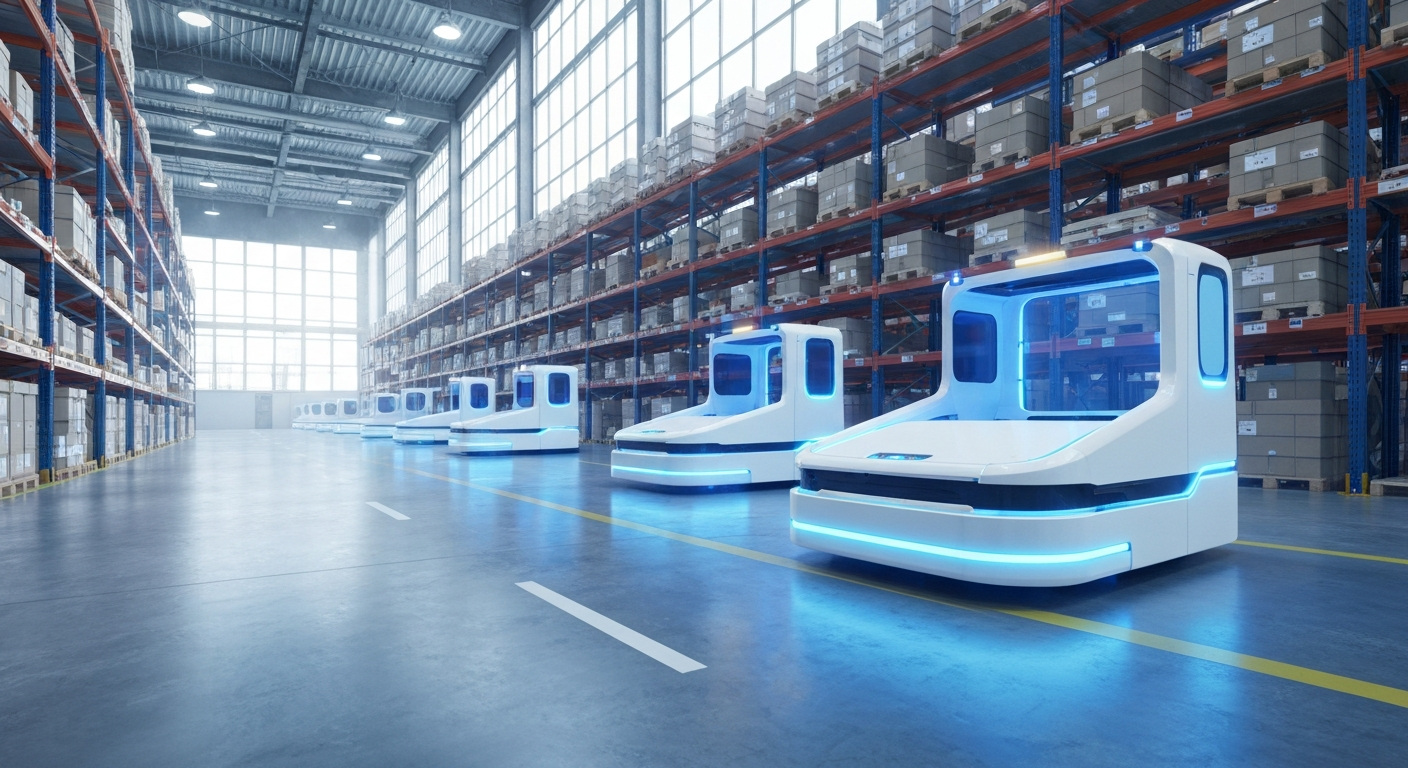
- An automated guided vehicle (AGV) is a driverless robot that transforms material handling in warehouses and factories.
- AGVs utilize various navigation systems, such as magnetic tape and lasers, to move efficiently along predefined paths.
- Built-in collision avoidance technologies and safety features are crucial for safe warehouse operations.
- Different types of AGVs, like towing vehicles and forklifts, are designed for specific tasks to optimize the supply chain.
- Implementing AGVs can significantly boost productivity, reduce errors, and enhance workplace safety.
Introduction
In today's fast-paced industrial world, companies are always looking for ways to become more efficient. Automated Guided Vehicles (AGVs) are stepping up to revolutionize how work gets done. These smart vehicles are becoming a common sight in logistics, manufacturing, and warehousing. An automated guided vehicle can handle everything from assembling products to moving pallets, streamlining material handling and optimizing the supply chain. As this technology becomes more advanced, it's proving to be an invaluable tool for complex industrial environments.
Discover the Benefits of AGVs in Modern Industry
What Are Automated Guided Vehicles (AGVs)?
Automated guided vehicles (AGVs) are robotic systems designed for material handling and transportation tasks. They navigate predetermined paths using various technologies, enabling efficient movement of goods within warehouses or manufacturing facilities. AGVs streamline operations, reduce labor costs, and enhance overall productivity.
Definition and Core Functions of AGVs
Automated Guided Vehicles (AGVs) are sophisticated machines designed to transport materials within various industrial environments efficiently. Utilizing advanced navigation systems such as laser navigation and magnetic tape, AGVs streamline material flow and enhance productivity in manufacturing facilities and distribution centers. Their core functions include moving heavy loads, performing repetitive tasks, and integrating seamlessly with warehouse management systems. AGVs also prioritize workplace safety, featuring obstacle avoidance technologies and emergency stop buttons to minimize the risk of accidents. By reducing the need for manual labor, AGVs significantly lower operational costs and improve overall efficiency in material handling processes.
Historical Development and Evolution of AGV Technology
The journey of automated guided vehicles has been remarkable, evolving from simple, guided carts in the late 20th century to today’s sophisticated AGVs equipped with advanced sensors and navigation systems. Early systems relied on magnetic tape for guidance, highlighting a basic approach to material transport. Over time, enhancements in laser navigation and control software have allowed AGVs to operate seamlessly in complex environments. As industries recognized the benefits of reduced labor costs and improved operational efficiency, the adoption of AGVs flourished, paving the way for a new era in material handling and industrial automation.
How Do Automated Guided Vehicles Work?
Automated Guided Vehicles (AGVs) operate through a combination of sensors, navigation systems, and control software. These components enable them to follow predefined paths, avoid obstacles, and communicate with other systems, ensuring efficient material handling and streamlined workflows in various environments.
AGV Components and Key Technologies
An automated guided vehicle system relies on several components and key technologies to ensure smooth operation in various industrial environments. Central to their functionality are advanced navigation systems, which can include laser navigation, magnetic tape, and magnetic strips, allowing AGVs to travel through complex pathways. Additionally, guidance systems play a critical role in obstacle avoidance, ensuring workplace safety by minimizing the risk of accidents. Equipped with advanced sensors, these vehicles efficiently handle heavy loads and engage in repetitive material handling tasks, thus streamlining the flow of goods within production lines and warehouse operations.
Typical Workflow of an AGV System
Automated guided vehicles seamlessly integrate into material handling processes, following a specific workflow to enhance efficiency. Initially, an AGV receives a task from a control system, directing it to pick up materials from designated storage areas. Equipped with advanced sensors and navigation technologies, it then traverses pre-defined pathways—avoiding obstacles and ensuring workplace safety. After completing its journey, the AGV delivers the materials to various locations, such as assembly lines or distribution centers, contributing to smooth operations. This continual loop not only reduces labor costs but also minimizes manual intervention, showcasing the benefits of AGV technology in complex environments.
Main Types of AGVs for Warehouses and Factories
Not all AGVs are created equal. Just as you'd use different tools for different jobs, there are different types of AGVs designed for specific roles in warehouses and factories. These vehicles are tailored to handle various loads, navigate diverse environments, and perform distinct material handling functions. This variety ensures that businesses can find the perfect automated solution for their needs.
From towing heavy carts in manufacturing facilities to lifting pallets onto high racks, the design of an AGV determines its application. Understanding these main types is the first step in figuring out how automation can benefit your operations. Let's look at some of the most common AGVs you'll find on the job.
Towing AGVs and Tugger Systems
Towing AGVs, also known as tugger AGVs or automated tow tractors, are the workhorses of many industrial environments. Instead of carrying loads on top, they are designed to pull a train of one or more non-powered carts. This makes them incredibly efficient for transporting multiple loads over longer distances in a single trip.
You will often see these tugger AGVs supplying production halls in large factories or moving waste materials for removal. They are ideal for creating a consistent material flow and are a popular choice for optimizing the supply chain in assembly-line environments. A single towing AGV can move a significant amount of material, reducing traffic and improving overall efficiency.
Common applications for towing AGVs include:
- Production delivery and line-side replenishment
- Hauling larger loads between different areas of a facility
- Waste and dunnage removal
Forklift AGVs and Unit Load Carriers
When you need to lift and move pallets, automated forklift AGVs are the solution. These vehicles are essentially driverless versions of the manual forklifts you see in nearly every warehouse. They can autonomously pick up, transport, and place pallets at various heights, making them perfect for stacking, storage, and retrieval tasks.
Unit load AGVs are a similar category, designed to carry single, heavy loads like pallets, bins, or large containers directly on the vehicle's platform. They are excellent for point-to-point transfers of materials. Both forklift and unit load AGVs play a vital role in automating warehouse operations, especially those dealing with heavy loads.
By automating these common material handling processes, companies can improve their inventory management, reduce the risk of product damage, and ensure that materials are moved with precision and consistency. These AGVs are a common sight in distribution centers and large-scale storage facilities.
Automated Guided Carts (AGCs) and Custom Designs
Automated guided carts (AGCs) are a simpler and often more compact type of AGV. They are designed to transport smaller items, such as totes, bins, or individual products, often by following a magnetic tape path. AGCs are a cost-effective way to automate simple material transport and are well-suited for assembly operations and order picking support.
For businesses with unique challenges, a custom AGV design may be the answer. These are tailor-made solutions built to handle specific requirements that standard models can't address. This could involve a unique size, a specialized lifting mechanism, or the ability to navigate a particularly challenging environment. Custom designs ensure that automation can be applied even in the most complex settings.
AGCs and custom AGVs are particularly useful for:
- Moving materials from storage areas to workstations
- Supporting order fulfillment and picking processes
- Enhancing workplace safety by automating repetitive transport in tight spaces
Navigation and Guidance Systems in AGVs
One of the most fascinating aspects of AGVs is how they find their way around. The magic behind their movement lies in their navigation systems. Various guidance systems and navigation technologies allow an AGV to travel along its designated path accurately and safely. The choice of technology often depends on the complexity of the environment and the need for flexibility.
Some systems rely on physical guides like magnetic tape, while others use advanced methods like laser navigation to map their surroundings. These different approaches to AGV navigation each have their own strengths and are suited for different applications. Let's examine some of the most common guidance methods used today.
Magnetic Tape and Wired Navigation
One of the most traditional and straightforward guidance systems for AGVs is wired navigation. This method involves embedding a wire in the floor, which emits a radio signal. A sensor on the AGV detects this signal and follows the wire's path. While very reliable, this method is inflexible, as changing the route requires cutting into the floor.
A more flexible alternative is navigation using magnetic tape. With this method, magnetic strips are laid down on the surface of the floor to create the desired path. The AGV is equipped with sensors that detect the magnetic field and guide the vehicle along the tape. This is a popular choice for simpler material handling tasks in environments where routes are consistent but may need occasional changes.
Changing the path is as simple as pulling up the old tape and laying down a new one, making it much easier to adapt than wired systems.
| Feature | Magnetic Tape Navigation | Wired Navigation |
|---|---|---|
| Installation | Quick and easy; tape is applied to the floor surface. | Invasive and time-consuming; requires cutting channels in the floor. |
| Flexibility | High; routes can be changed easily by moving the tape. | Low; changing routes is a major construction project. |
| Reliability | Good, but tape can be damaged by traffic or debris. | Very high; the wire is protected within the floor. |
| Cost | Lower initial cost for installation and modification. | Higher initial cost due to floor work. |
Laser, LiDAR, and Vision-Based Navigation
For more flexibility and intelligence, modern AGVs turn to advanced navigation methods like laser, LiDAR, and vision systems. Laser navigation, often called natural feature navigation, uses a laser scanner to identify and map fixed objects in the environment, like walls, racking, and columns. The AGV uses these "natural features" as reference points to calculate its exact position and navigate freely without any physical guides on the floor.
LiDAR (Light Detection and Ranging) is a similar technology that creates detailed, 3D maps of the vehicle's surroundings. This provides a rich data set that is excellent for both navigation and obstacle avoidance, allowing the AGV to make instant decisions in dynamic environments. Vision-based navigation uses cameras to identify landmarks or follow painted lines on the floor.
These advanced systems offer several advantages:
- No need for floor infrastructure like tape or wires.
- High flexibility to change paths via software updates.
- Superior ability to operate in complex and changing environments.
- Enhanced safety through real-time obstacle detection and avoidance.
Key Safety Features and Compliance Standards for AGVs
When you have driverless vehicles moving around a facility, safety is paramount. AGVs are equipped with a host of safety features designed to protect people, products, and property. These systems are essential for ensuring smooth operations and minimizing the risk of accidents. From intelligent sensors to emergency stop mechanisms, every aspect is engineered for workplace safety.
Furthermore, AGVs must adhere to strict compliance standards and industry regulations. These standards ensure that all automated systems meet a high bar for safety and reliability. Let's look closer at the technologies that prevent collisions and the rules that govern their use.
Obstacle Detection and Collision Avoidance Technologies
The cornerstone of AGV safety is its ability to perform obstacle detection and collision avoidance. Modern AGVs use a multi-layered approach to sense their surroundings and react to potential hazards. This is primarily achieved through a suite of advanced sensors that create a virtual safety field around the vehicle.
Laser scanners are a standard component, constantly scanning the area in front of and around the AGV. If an object or person enters the scanner's warning field, the AGV will slow down. If the object enters the closer safety field, the vehicle will come to a complete stop. This ensures that the AGV can operate safely alongside human operators and other equipment.
In addition to sensors, AGVs are equipped with other critical safety features:
- Physical bumpers that, when contacted, immediately stop the vehicle.
- Audible alarms and warning lights to alert nearby personnel of the AGV's presence and movements.
- Easily accessible emergency stop buttons that can be pressed to halt the vehicle instantly.
Industry Safety Regulations and Certifications
To ensure workplace safety, the design and implementation of AGVs are governed by specific industry safety regulations and certifications. In North America, the most prominent standard is ANSI/ITSDF B56.5, which outlines the safety requirements for driverless industrial vehicles. This standard covers everything from vehicle design and operation to system installation and maintenance.
These regulations mandate many of the safety features we've discussed, such as non-contact sensing devices and emergency controls. They also specify requirements for braking systems, load stability, and how AGVs should interact with their environment, including other vehicles and personnel.
Adhering to these certifications is not just about compliance; it's about creating a culture of safety. Companies that deploy AGVs must conduct thorough risk assessments and provide proper training for employees who will work in or around the automated systems. This comprehensive approach to safety is crucial for the successful integration of industrial automation.
Comparing AGVs with Autonomous Mobile Robots (AMRs)
Automated guided vehicles (AGVs) and autonomous mobile robots (AMRs) play vital roles in modern material handling. While AGVs excel in structured environments, relying on defined paths—such as magnetic strips or laser navigation—AMRs navigate dynamic spaces, adapting to real-time changes using advanced sensors. Both technologies aim to enhance efficiency and reduce labor costs, but their operational capabilities differ significantly. AGVs are ideal for repetitive tasks and heavy loads, while AMRs thrive in complex, unpredictable settings, allowing for greater flexibility in managing the flow of goods and enhancing workplace safety across various industries.
Differences in Technology and Operational Capabilities
Automated guided vehicles (AGVs) and autonomous mobile robots (AMRs) serve distinct purposes within the realm of material handling. AGVs typically utilize predefined navigation systems, such as magnetic tape or laser navigation, to transport materials along fixed paths. In contrast, AMRs are equipped with advanced sensors and AI-driven control systems that enable them to traverse dynamic environments autonomously. While AGVs excel in performing repetitive tasks within warehouses, AMRs shine in complex scenarios requiring adaptability and less human intervention, making each technology suitable for specific operational demands in various industries.
Choosing Between AMRs and AGVs for Material Handling
Selecting the right solution for material handling can be a daunting task. Automated Guided Vehicles (AGVs) and Autonomous Mobile Robots (AMRs) each offer unique advantages tailored to different operational needs. AGVs are fantastic for structured environments like production lines or warehouses, relying on predetermined navigation paths and effective control systems. In contrast, AMRs thrive in dynamic spaces, utilizing advanced sensors for flexibility and obstacle avoidance. Consider your specific requirements—such as load types, operational environments, and workflow complexity—before making a choice that aligns with your organization’s goals and enhances efficiency in material transport.
Major Industrial Applications for AGVs
The versatility of AGVs means they have found major applications across a wide range of industries. From bustling manufacturing facilities to massive distribution centers, different types of AGVs are hard at work streamlining operations. Their ability to reliably transport materials makes them a valuable asset wherever goods need to move.
AGVs are especially prevalent in environments that require consistent, repetitive movement of materials, such as along production lines or between storage and shipping areas. Let’s explore some of the most common industrial settings where you can find AGVs making a significant impact.
Manufacturing and Assembly Lines
In manufacturing, maintaining a steady flow of materials is critical to keeping production on schedule. AGVs excel in these industrial environments by automating the delivery of raw materials and components to assembly lines. This ensures that workers always have the parts they need without having to leave their workplaces to fetch them.
Towing AGVs are often used to pull trains of carts filled with parts along a set route that services multiple points on the production lines. Other AGVs might transport sub-assemblies from one manufacturing stage to the next. This creates a "just-in-time" delivery system that minimizes line-side inventory and reduces congestion in aisles.
By automating this movement, manufacturers can reduce manual labor, minimize the risk of part shortages that can halt production, and create a more organized and efficient factory floor. AGVs have become an indispensable part of modern, lean manufacturing strategies.
Warehousing, Distribution, and Fulfillment Centers
Warehouses and distribution centers are another primary domain for AGVs. In these vast facilities, moving goods from receiving to storage areas, and then from storage to shipping docks, involves a tremendous amount of travel. AGVs automate these long-distance transport tasks, freeing up employees to focus on value-added activities like picking and packing.
In large-scale fulfillment centers, AGVs are crucial for efficient inventory management. Automated forklift AGVs can store and retrieve pallets from high-bay racking, while unit load carriers can transport full pallets to and from conveyor belts or packing stations.
Some key applications in this sector include:
- Pallet put-away and retrieval
- Long-distance transfer of goods between different zones
- Automated trailer loading and unloading
By automating these processes, warehouses can increase throughput, improve order accuracy, and operate around the clock with greater efficiency.
Real-World Examples of AGV Deployments
It's one thing to talk about what AGVs can do, but it's another to see them in action. There are countless real-world examples of successful AGV deployments across various industries. These case studies show how companies are leveraging this technology to solve real-world problems and gain a competitive edge.
From the high-tech world of automotive manufacturing to the highly regulated food and beverage industry and complex pharmaceutical applications, AGVs are proving their worth every day. Let's look at a few specific examples of how this technology is being used.
Automotive Industry Case Studies
The automotive manufacturing sector was one of the earliest adopters of AGVs and continues to be a leader in their use. In modern car plants, an AGV system is essential for keeping the complex assembly process moving. For example, companies like General Motors and Nissan use fleets of AGVs for a variety of material transport tasks.
These vehicle systems deliver everything from small components to entire car bodies to the production lines. Some AGVs are designed to move along with the assembly line, carrying the vehicle chassis as workers add parts. This creates a more flexible and ergonomic workspace compared to a traditional fixed conveyor.
Other AGVs are used to deliver kits of parts to specific workstations, ensuring that the right components arrive at the right time. This "just-in-time" material flow, managed by a sophisticated AGV system, is a cornerstone of efficient automotive production.
Food, Beverage, and Pharmaceutical Applications
In the food industry and beverage industry, hygiene and consistency are critical. AGVs, particularly those made from stainless steel, are ideal for these environments because they can be easily cleaned and provide precise, repeatable material handling. They are often used to transport raw materials to production areas and move finished goods to cold storage or shipping.
For pharmaceutical applications, the need for traceability and gentle handling is paramount. AGVs provide a reliable and documented material transport solution, which is crucial for compliance with strict industry regulations. They can move sensitive materials between cleanrooms or transport finished medicines for packaging, all while minimizing the risk of contamination or damage.
In both of these sectors, AGVs help to optimize the supply chain by ensuring a smooth flow of goods, reducing the potential for human error, and maintaining the high standards of quality and safety required.
Core Advantages of Using AGVs in Material Handling
So, why are so many companies turning to AGVs? The AGV benefits are numerous and can have a profound impact on a company's bottom line. By automating material handling, businesses can significantly reduce operational costs, boost efficiency, and improve overall workplace safety. These advantages make a compelling case for investing in automation.
The implementation of AGVs transforms repetitive, low-value transport tasks into a streamlined and reliable process. Let's break down some of the most significant advantages that AGVs bring to the table.
Enhanced Efficiency and Productivity
One of the most immediate benefits of AGVs is a dramatic increase in efficiency and productivity. Unlike human workers, AGVs can work around the clock. This capability for continuous operation, 24/7, means that material flow never has to stop, significantly increasing a facility's overall handling capacity.
By automating repetitive tasks, AGVs free up employees to focus on more complex, value-added activities that require human intelligence and problem-solving skills. This not only boosts overall productivity but can also lead to lower labor costs, as the need for staff dedicated solely to material transport is reduced.
The result is a more optimized workflow with fewer bottlenecks. Key contributors to this enhanced efficiency include:
- 24/7 continuous operation without breaks or shift changes.
- Optimization of material flows, leading to increased handling capacity.
- Automation of non-value-adding, repetitive tasks.
- Reduction in direct labor costs associated with transport.
Improved Safety, Accuracy, and Consistency
AGVs bring a new level of safety, accuracy, and consistency to material handling. Their advanced sensors and navigation systems allow them to move with a precision that is difficult for human operators to match consistently. This reduces the risk of accidents, such as collisions with racking or other equipment, which can cause costly damage to goods and infrastructure.
The automated nature of AGVs eliminates the variability that comes with manual operations. Each task is performed in the exact same way, every single time. This consistency leads to a significant reduction in errors, such as delivering materials to the wrong location, which can disrupt production and supply chain processes.
Ultimately, a safer and more predictable work environment is created. By taking over physically demanding and repetitive transport tasks, AGVs help lower the risk of accidents and injuries associated with manual material handling, making the workplace safer for everyone.
Common Challenges in Implementing AGVs
While the benefits are clear, AGV implementation isn't without its hurdles. There are several common challenges that companies may face when introducing this technology into their operations. These can range from technical issues, like integration with existing software, to physical constraints related to the facility layout.
Successfully navigating these challenges requires careful planning and a deep understanding of both the technology and your own operational needs. Being aware of potential obstacles from the start can help ensure a smoother transition to automation in both simple and complex environments.
Integration with Existing Systems
One of the biggest technical challenges is the integration of the AGV system with a company's existing software infrastructure. For seamless automation, the AGVs need to communicate with systems like Warehouse Management Systems (WMS) and Enterprise Resource Planning (ERP) software. This is how the AGVs receive their tasks and how the overall system tracks material movements.
Achieving this integration can be complex. It requires the AGV control software and the WMS or ERP to be able to "talk" to each other, which may necessitate the development of custom interfaces or middleware. Without this connection, the AGVs would operate in a silo, limiting their effectiveness and requiring manual task assignment.
Successful integration ensures that the AGV system becomes a natural extension of your overall material handling processes. It allows for a fully networked and synchronized operation, where automated material flow is driven by real-time data from your core business systems.
Adaptation to Complex Facility Layouts
Another significant challenge is adapting AGV navigation to complex facility layouts. Older buildings or facilities that have grown organically over time often have narrow aisles, uneven floors, or unconventional layouts that can be difficult for AGVs to navigate. The chosen guidance systems must be able to function reliably in these complex environments.
For AGVs that rely on fixed paths like magnetic tape, any changes to the facility layout can require a significant effort to update the routes. In dynamic environments where the material flow changes frequently, this lack of flexibility can be a major drawback.
Key considerations for adapting AGVs to your layout include:
- Aisle width and clearance for safe passage.
- Floor conditions, as cracks or debris can interfere with some guidance systems.
- Interaction with other traffic, including forklifts and pedestrians, which requires careful planning of routes and safety protocols.
Careful planning and sometimes even facility modifications are necessary to ensure the AGV system can operate efficiently and safely.
Essential Maintenance and Support Requirements for AGVs
Like any sophisticated piece of machinery, an AGV system requires regular maintenance to ensure it operates at peak performance and has a long service life. Proper AGV maintenance is crucial for maximizing uptime and protecting your investment. This includes both routine checks and more advanced strategies like predictive maintenance.
Beyond just physical upkeep, having robust support requirements in place for troubleshooting and upgrades is essential. A well-maintained AGV system is a reliable one. Let's explore the key tasks involved in keeping your automated fleet running smoothly.
Routine Checks and Predictive Maintenance Tasks
Routine checks are the foundation of any good AGV maintenance program. These are simple, regular inspections designed to catch small issues before they become big problems. This can include checking battery levels, inspecting wheels for wear and tear, cleaning sensors, and ensuring all safety features are functioning correctly.
A more advanced approach is predictive maintenance. Modern AGV systems can continuously monitor their own performance and condition. By analyzing data on factors like motor temperature, battery health, and component wear, the system can predict potential failures before they happen. This allows maintenance teams to schedule repairs proactively, minimizing unplanned downtime.
Implementing both routine checks and predictive maintenance helps to reduce overall operational costs. It prevents costly emergency repairs and ensures the AGV system and its control system remain reliable, maximizing the return on your automation investment.
Troubleshooting and Upgrading AGV Systems
Even with the best maintenance, issues can still arise. Having a clear process for troubleshooting is essential for getting a downed AGV back in service quickly. This often involves diagnostic tools built into the AGV system's control software, which can help pinpoint the source of a problem, whether it's a sensor malfunction or a communication error.
As your business evolves, you may also need to consider upgrading your AGV system. This could involve adding more vehicles to the fleet, updating the control software with new features, or modifying routes to accommodate changes in your facility. A scalable and upgradeable system is key to future-proofing your automation.
Effective support strategies include:
- Having trained technicians available for quick troubleshooting and repairs.
- Maintaining a stock of critical spare parts to minimize downtime.
- Partnering with your AGV provider for software upgrades and system expansions to control long-term operational costs.
Key Factors for Deciding if AGVs are Right for Your Operations
Deciding to pursue AGV adoption is a major strategic decision. It’s not just about buying new technology; it’s about transforming a core part of your operations. To determine if AGVs are the right fit, you need to conduct a thorough evaluation of your business needs, the physical readiness of your facility, and the financial implications of the investment. A careful cost-benefit analysis will reveal if the potential gains in efficiency and safety justify the upfront cost.
This evaluation process involves asking some critical questions about your current processes, your future goals, and your facility's ability to support automation. Scalability is another key factor to consider, as your needs may grow over time. A well-planned approach will ensure that your decision to adopt AGVs is a successful one.
Evaluating Business Needs and Facility Readiness
The first step in considering AGV adoption is to clearly define your business needs. What specific problems are you trying to solve? Are you looking to reduce labor costs, increase throughput, improve safety, or solve for an unreliable material flow? Understanding your goals will help you determine if AGVs are the right tool for the job.
Next, you must assess your facility readiness. This involves a detailed look at your physical environment. You need to analyze your current workflows, the distances materials travel, and the types of loads being moved. This analysis will help you identify the most promising areas for automation, such as repetitive, long-distance transport to and from production lines.
Key questions to ask during this evaluation include:
- Are your material handling tasks repetitive and standardized?
- Do you have a consistent and predictable material flow?
- Is your facility layout suitable for AGV navigation?
- Do you operate in multiple shifts where continuous operation would be a major benefit?
Cost-Benefit Analysis and Scalability Considerations
A thorough cost-benefit analysis is essential before investing in an AGV system. The initial investment includes the cost of the vehicles themselves, the control software, installation, and integration. It's crucial to look beyond this upfront expense and calculate the potential return on investment (ROI).
On the benefit side, you should quantify potential savings in labor, reductions in product and infrastructure damage, and gains from increased productivity and throughput. By comparing these long-term savings to the initial investment, you can determine how quickly the AGV system will pay for itself. Experience shows that for many warehouse operations, the investment pays off very quickly due to optimized processes and lower operational costs.
Finally, consider scalability. Your business needs will likely change over time. A good AGV system should be able to grow with you. Can you easily add more vehicles to the fleet? Can routes be modified without significant effort? Choosing a scalable solution ensures your investment remains valuable for years to come.
Conclusion
In conclusion, Automated Guided Vehicles (AGVs) are revolutionizing the landscape of automated transportation, offering enhanced efficiency and safety across various industries. The evolution of AGV technology combined with innovative navigation systems ensures these machines can seamlessly integrate into existing workflows while adapting to the unique layouts of facilities. As businesses continue to embrace automation, understanding the key advantages and challenges of AGVs is essential for making informed decisions about their implementation. By evaluating your specific operational needs and considering the long-term benefits of AGVs, you can position your organization at the forefront of this technological advancement. If you're ready to explore how AGVs can transform your operations, don't hesitate to reach out!
Frequently Asked Questions
What is the difference between an AGV and an AMR?
The main difference is in their navigation systems. An AGV follows fixed paths, like magnetic tape, and will stop if an obstacle is in its way. An AMR uses advanced sensors and onboard maps to navigate dynamically, allowing it to move around obstacles without human intervention, making it more flexible than other mobile robots.
What industries benefit the most from using AGVs?
Industries with repetitive material handling needs benefit most from an AGV. This includes manufacturing, where they supply production lines, and warehousing or distribution centers, where they transport goods for storage and shipping. Automotive, food and beverage, and pharmaceutical industries are also major users.
What safety measures should be considered when deploying AGVs?
Key safety measures for an AGV include built-in collision avoidance systems with laser scanners, physical bumpers, and audible and visual warnings. Readily accessible emergency stop buttons are also crucial. Proper training for employees and adherence to industry standards are essential to prevent workplace accidents.
You might also like