Understanding PLC vs HMI: Key Differences Explained
Introduction: The Differences Between PLC and HMI
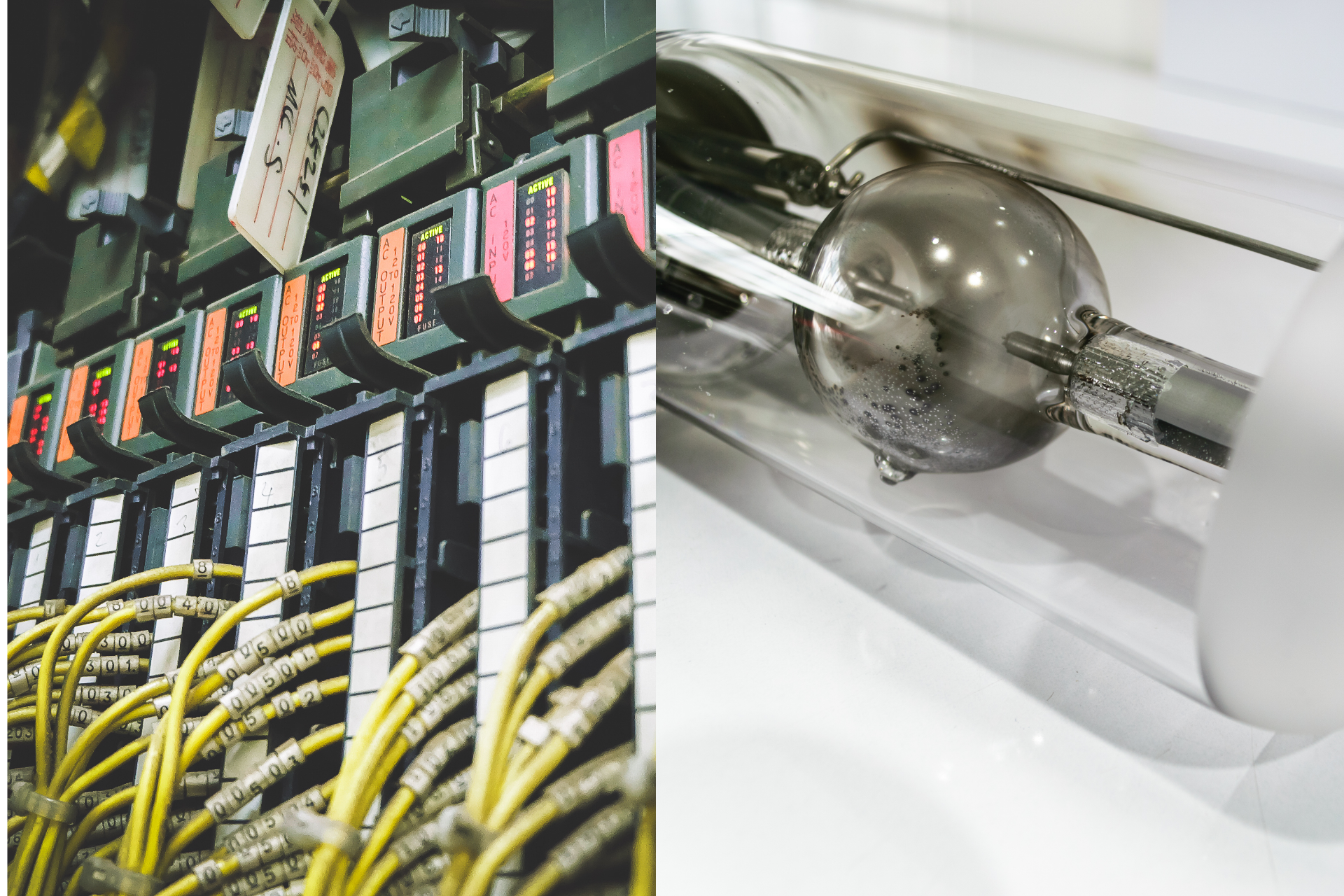
The differences between a PLC and an HMI are significant.
PLCs are the more traditional technology, and they are used to control equipment in industrial processes within the industrial setting for different purposes. An HMI is a newer technology that is used for more of the human-machine interface.
An HMI system is typically easier to use than a PLC because it has a graphical user interface that can be controlled with a mouse or touchscreen. This means that people without much knowledge of PLC logic programming can still use a SCADA and HMI System to control machinery. Learn more about HMI SCADA.
PLCs, on the other hand, are designed for automation and control purposes and require more programming language knowledge to operate effectively. They are often used to control complex industrial processes, such as assembly lines in manufacturing plants and power generation systems. PLCs utilize a ladder logic programming language, which requires users to have a solid understanding of programming languages concepts and syntax. While an HMI is essential for providing a user-friendly interface to monitor and interact with the system controlled by a PLC, it cannot replace a PLC in applications that require actual process control and automation. An HMI does not have the ability to execute control logic or directly manage complex industrial operations as a PLC does.
One of the key differences between a PLC and an HMI is their primary function. While a PLC is responsible for executing control logic and managing inputs and outputs, an HMI focuses on providing a user-friendly interface that enhances user experience for operators to interact with the system. The HMI system serves as a bridge between the user and the underlying PLC, enabling operators to monitor the process, view real-time data, and make necessary adjustments in the control logic.
Another difference lies in their hardware components. PLCs are standalone devices that consist of a processor unit, input/output modules, and communication interfaces. They are built for a wide range of rugged environments and have high reliability and durability. On the other hand, HMIs are typically software applications that run on a computer or dedicated hardware device, offering ease of use through their graphical interface. They rely on the processing power and storage capacity of the host device to provide the graphical interface and communication capabilities. While an HMI cannot replace a PLC in most applications, since PLCs handle direct control of industrial processes, there are rare cases in simple monitoring or data display tasks where an HMI alone may be sufficient; however, for automation and control functions, a PLC is required.
In terms of programming, PLCs require the use of ladder logic programming or other programming languages specific to the brand or model. This programming language is based on relay ladder logic and is used to define the control logic and behavior of the PLC. Programmers need to have a deep understanding of ladder logic programming and the specific programming software used by the PLC manufacturer.
HMIs, on the other hand, utilize software applications that offer a more visual and intuitive user interface approach to graphical user interfaces programming. The software provides a range of tools and pre-built components that can be used to design screens, create graphical objects, and define user interactions. This makes it easier for operators to monitor and control processes visually, with real-time feedback and user-friendly navigation. When comparing PLCs to HMIs, a key advantage of using a PLC is its reliability and suitability for executing complex control logic with high speed and precision, especially in industrial automation tasks. However, PLCs typically lack visual interfaces, making them less accessible for direct human interaction. HMIs excel in simplifying human-machine interaction and providing clear process visualization, but they cannot directly control machinery and rely on PLCs for underlying automation logic. The main con of relying solely on an HMI is that it cannot replace the robust control capabilities of a PLC.
When it comes to connectivity in industrial settings, both modern PLCs and HMIs are designed to communicate with various field devices and systems. PLCs typically support a wide range of communication protocols, such as Modbus, Profibus, or Ethernet/IP, to exchange data with sensors, actuators, and other devices. HMIs also support these protocols but primarily focus on communicating with the PLC or other control devices to retrieve data and issue commands.
Overall, the choice between a PLC and an HMI depends on the specific requirements of the industrial process. If the main objective is to automate and provide precise control over complex machinery and processes, a PLC plays a crucial role in being the more suitable choice. It offers advanced programming capabilities and is designed to handle intricate control tasks.
On the other hand, if the emphasis is on providing a user-friendly interface for operators to monitor and interact with complex systems, an HMI is the preferred option. Its graphical interface, ease of use, and customization capabilities make it ideal for operators without extensive programming knowledge.
In many cases, a combination of both PLC and HMI systems is employed to achieve optimal control and monitoring in industrial settings. The PLC handles the control logic and manages the hardware components, while the HMI provides an intuitive interface for operators to visualize and interact with the control systems and processes of the system.
the choice between a PLC and an HMI depends on the complexity of the control tasks and the level of user interaction required in an industrial process, ultimately leading to efficient and optimized operations with SCADA systems, which have become important tools for organizations.
In conclusion, while both PLCs and HMIs play essential roles in industrial automation, they have distinct differences in terms of their functions, programming complexity, hardware components, and user interfaces. Understanding these differences is crucial for selecting the most appropriate system to meet the specific needs of an industrial process. Whether it's the robust control capabilities of a PLC or the user-friendly interface of an HMI, these technologies contribute to efficient and effective monitoring and control of industrial automation operations. The integration of PLCs and HMIs in the realm of industrial automation underpins advancements in process efficiencies and productivity.
Understanding Programmable Logic Controllers (PLCs)
Programmable Logic Controllers (PLCs) are essential components in industrial automation, primarily designed to control complex processes and machinery. Since their inception in the late 1960s, PLCs have evolved significantly, becoming more sophisticated in terms of functionality and programming capabilities. A PLC operates based on a custom program that defines how it should control various input and output devices, including a power supply, allowing it to execute control processes with precision and reliability. This programmability enables users to configure the PLC for specific applications, whether it's controlling an assembly line, managing a water treatment facility, or ensuring effective power supply management.
The programming of a PLC typically involves using languages like Ladder Logic, which mimics electrical relay logic, allowing for intuitive control process definitions that include program logic related to PLC programming. This makes it easier for engineers and technicians to design and modify control systems as needed. With their ability to handle multiple tasks simultaneously and respond to real-time input from various sensors, PLCs are integral to enhancing operational efficiency in a wide array of industries.
Key Features and Advantages of PLCs
PLCs are renowned for their precision control and adaptability in various industrial settings. One of the key features is their ability to process output signals accurately, ensuring that machinery operates within specified parameters. This precision is vital in applications like robotic assembly in manufacturing processes where even minor deviations can lead to significant errors. Additionally, PLCs can integrate seamlessly with various sensors, allowing for real-time data collection and feedback loops that optimize performance.
Another advantage is their rugged design, which enables them to function effectively in harsh industrial environments. PLCs are built to withstand high levels of vibration, temperature fluctuations, and electrical noise, making them reliable for continuous operation in harsh industrial environments. Their scalability is also a significant benefit for an automation system; as production needs change, additional I/O modules can be added to the existing PLC infrastructure without requiring a complete overhaul. This flexibility ensures that businesses can grow and adapt their control systems as necessary.
How PLCs Work
A Programmable Logic Controller (PLC) operates through a systematic process known as the scan cycle. During this cycle, the PLC continuously scans its input devices, which can include sensors, switches, and other data sources, to gather real-time information about the system. This input data is then processed by the PLC logic, where the processor executes pre-programmed instructions based on the received information. The result is the generation of output signals that control connected output devices, such as motors or valves, to perform desired actions. This cycle repeats multiple times per second, allowing for responsive and accurate control in various industrial applications.
The PLC system's ability to manage complex logic and decision-making processes is key to its effectiveness in automation. As it scans inputs and executes logic, the PLC can respond to changing conditions quickly, ensuring that processes run smoothly. By employing sophisticated programming languages like Ladder Logic, engineers can define intricate control sequences, enhancing the versatility of the PLC system in diverse industrial environments. This capability to adapt and control various output signals makes PLCs indispensable in scenarios where precision and reliability are paramount.
In essence, the PLC's scan cycle represents its core functionality, enabling it to act as the brain of industrial systems. By continually processing input data and executing the program logic of control logic, PLCs ensure efficient operations, making them a vital component in modern automation technologies.
Common Applications and Industries Using PLCs
PLCs are widely utilized across numerous industries due to their flexibility, reliability, and ease of use. Here are some key applications:
- Manufacturing Processes: PLCs control assembly lines, manage robotic operations, and oversee quality control processes, ensuring efficient production.
- Energy Sector: They are essential in power generation and distribution, managing operations in power plants and substations.
- Automotive Industry: PLCs facilitate the automation of various assembly line tasks, enhancing productivity and safety in vehicle manufacturing.
- Water Treatment Facilities: They regulate the processes involved in purifying and distributing water, maintaining system integrity and efficiency.
In these applications, PLCs enhance operational efficiency by enabling real-time monitoring and control of complex processes, making them invaluable in industrial automation.
History Of PLCs
The history of Programmable Logic Controllers (PLCs) dates back to the late 1960s when they were first developed to replace cumbersome relay systems in the automotive industry. General Motors was a significant driving force behind this innovation, seeking a more flexible and efficient method to control manufacturing processes. The first PLC, the Modicon 084, was introduced in the late 1960s, marking a pivotal moment in industrial automation.
Since their inception, PLCs have undergone significant advancements, evolving into sophisticated devices capable of managing complex operations and multitasking. The introduction of user-friendly programming languages, such as Ladder Logic and Instruction List, has made it easier for engineers to design and modify control systems, increasing their adoption across various sectors.
Today, modern PLCs are integral to the automation landscape, offering enhanced functionality, scalability, and durability. From simple control tasks to intricate automation systems, PLCs have transformed the way industries operate, laying the foundation for the advancements we see in industrial systems technology today.
Basic Components of PLCs
| Component | Description |
|---|---|
| Power Supply | Provides the necessary electrical power for the PLC to function effectively. |
| Input Devices | Various sensors, along with switches, provide data to the PLC regarding the status of various processes. |
| Output Devices | Actuators, motors, and other devices controlled by the PLC to execute commands based on processed data. |
PLCs consist of several fundamental components that work together to perform automation tasks efficiently. The power supply ensures that the PLC operates reliably, while input devices gather real-time data from the environment. Output devices, based on the produced output signals, are then controlled by the PLC based on the processed input, allowing for precise control over machinery and processes. This integration of components enables PLCs to manage complex industrial applications effectively.
Understanding Human-Machine Interfaces (HMIs)
Human-Machine Interfaces (HMIs) are critical components in modern industrial automation, serving as the bridge between human operators and machinery. An HMI allows users to interact with machines through a graphical interface, enhancing user experience and operational efficiency. They are designed to simplify complex operations, providing real-time data visualization and control options that make it easier for users to monitor and manage processes.
The evolution of HMIs has been driven by advancements in technology and the need for intuitive user experiences. Today, HMIs can range from simple control panels to sophisticated touchscreens that offer extensive functionality for mobile devices. They enable operators to access vital information quickly, adjust settings, and respond to system alerts, ultimately improving overall productivity in industrial settings.
By facilitating seamless communication between humans and machines, HMIs play a vital role in streamlining operations and enhancing the effectiveness of automation systems across various production lines and industries. Their design focuses on creating an engaging and efficient user experience, making it easier for operators to perform their tasks accurately and confidently.
Definition of Human-Machine Interface (HMI)
A Human-Machine Interface (HMI) is a user interface that connects operators with machines, systems, or processes. In industrial settings, HMIs allow users to monitor and control machinery through graphical displays, providing real-time data and insights into operational performance. The design of a user interface HMI can vary widely, but its primary function remains consistent: to facilitate effective communication between humans and machines.
At its core, an HMI provides a graphical representation of the underlying processes, enabling operators to visualize system status, make adjustments, and respond to alerts. This interface allows for heightened situational awareness, empowering users to take informed actions based on the displayed system status information. As technology advances, HMIs continue to evolve, integrating features that enhance usability and accessibility in various industrial environments.
The significance of HMIs lies in their ability to simplify complex interactions, making it easier for operators to engage with automated systems and improve overall efficiency. By providing a graphical interface that bridges the gap between technology and human operators, HMIs are essential in modern industrial automation.
Role and Importance of HMI in Industrial Automation
Human-Machine Interfaces (HMIs) play a crucial role in industrial automation by facilitating effective communication between operators and machines. Their primary purpose is to provide a user-friendly interface, including the HMI screen, that allows operators to monitor and control processes efficiently. By displaying real-time data and system status, HMIs enhance situational awareness and empower operators to make informed decisions quickly.
The importance of HMIs extends beyond mere monitoring; they also enable supervisory control and data acquisition (SCADA) functionalities, including advanced data acquisition. This capability allows operators to gather critical performance metrics, manage alarms, and troubleshoot issues in real-time, significantly improving operational efficiency. By streamlining these processes, HMIs contribute to enhanced productivity and reduced downtime in industrial settings.
Moreover, HMIs offer customization options to suit specific user needs, enabling organizations to tailor interfaces for different applications and streamline operations. This flexibility ensures that operators can interact with systems in ways that are most effective for their tasks, ultimately improving user experience and operational outcomes. In summary, HMIs are integral to modern industrial automation, enhancing efficiency, safety, and overall performance.
How HMIs Work: User Interfaces, Connectivity, etc.
Key features of programmable logic controllers (PLCs) include their ability to execute complex control processes with precision. Utilizing ladder logic and various programming languages, PLCs are designed for real-time automation, facilitating the control of machinery and industrial processes. Their modular design allows integration with input and output devices, making them adaptable for various applications in harsh industrial environments. With their vital role in improving operational efficiency, PLCs continuously monitor system status, ensuring streamlined operations across production lines and assembly lines.
Key Features and Advantages of HMIs
One standout aspect of PLCs is their robust ability to handle complex control processes through programming languages such as ladder logic and instruction lists. This allows for precise control of machinery within industrial environments, enhancing operational efficiency. Additionally, their modular design enables easy integration with a wide range of field devices and input/output signals. The adaptability of PLCs makes them suitable for various applications, from assembly lines to assembly lines data acquisition in SCADA systems, positioning them as critical components in today's industrial automation landscape.
Common Applications and Industries Using HMIs
Programmable Logic Controllers (PLCs), also referred to as programmable logic controllers, are sophisticated devices that execute control processes within industrial automation systems. Their use of ladder logic and various programming languages allows engineers to create programs that manage a range of inputs and outputs, ensuring efficient operation of machinery. With the ability to connect to field devices and perform real-time data acquisition, PLCs enhance operational efficiency. Their versatility enables deployment in assembly lines, manufacturing processes, and harsh industrial environments, making them vital for streamlining operations across diverse industries.
What are the components of an HMI?
Programmable Logic Controllers (PLCs) offer a robust backbone for automation in various industrial environments. Their unique programming languages, such as ladder logic and Function Block Diagram (FBD), allow for precise control of machinery and production processes. Key features include real-time monitoring, extensive data acquisition capabilities, and adaptability to harsh industrial conditions. Moreover, PLCs streamline operations through efficient scan cycles and control logic execution, significantly enhancing operational efficiency. They serve as the brain of an automation system, ensuring the seamless interaction between input devices, output signals, and field devices.
What are the Types of HMIs?
Human-Machine Interfaces (HMIs), also referred to as human machine interface technology, come in several types, each tailored to different operational needs and user preferences. One prominent type is the graphical user interface (GUI), which employs visual elements like icons and menus, making it easier for operators to interact with machinery. GUIs are commonly found in modern industrial settings, allowing for intuitive navigation and control of complex production processes.
While HMIs play an important role in monitoring and controlling equipment, they cannot replace a PLC in applications that require actual automation logic or machine control. HMIs function primarily as interfaces for human interaction, whereas PLCs are designed to execute real-time control tasks and automation sequences.
Another type is the touch screen HMI, which allows users to interact directly with the system by touching the touch screens. This type is especially popular due to its ease of use and the ability to customize interfaces for specific tasks. Touch screens have become standard in many industrial applications, providing real-time data visualization and control capabilities. Common use cases for PLCs include handling automated processes such as machine control, sequencing, and safety interlocks, where precise and reliable control of equipment is required. In contrast, HMIs with touch screens are typically used for monitoring, data visualization, and enabling operators to adjust settings on the equipment, making them ideal for tasks that require human interaction with automated processes.
Additionally, HMIs can be categorized based on their connectivity. Web-based HMIs enable remote access, allowing operators to monitor and control processes from anywhere with an internet connection on mobile devices. This flexibility is increasingly important in today's interconnected industrial environments, where remote access to real-time data can significantly enhance operational efficiency and responsiveness. Each type of HMI plays a crucial role in ensuring effective communication and control in industrial automation, catering to the diverse needs of different applications.
Graphical User Interface (GUIs)
Key features of PLCs include their ability to execute complex control logic via programming languages like ladder logic or function block diagrams. These programmable logic controllers excel at managing input devices and output signals from various sensors and field devices, ensuring operational efficiency in intricate industrial processes. Their robust design allows for seamless integration into harsh industrial environments, where they play a vital role in controlling machinery and automating production lines. Enhanced by real-time data acquisition, PLCs ensure precise control and reliability in automated systems.
Touchscreens
Several key features make programmable logic controllers (PLCs) indispensable in industrial automation. Their ability to execute complex logic through various programming languages, including ladder logic and instruction list, allows for precise control of the sequence of operations for machinery in diverse industrial settings. Additionally, PLCs boast a robust design optimized for harsh environments, ensuring operational efficiency. Their versatile input and output capabilities enable seamless interaction with field devices, streamlining control processes across manufacturing systems and enhancing overall productivity while minimizing human error.
Web-Based HMIs
A programmable logic controller (PLC) offers unique advantages in industrial automation through its robust programming capabilities and adaptability in complex systems. With functionalities like ladder logic and various programming languages, it ensures precise control over machinery and industrial processes. By implementing a PLC system, industries can significantly enhance operational efficiency, minimize human error, and streamline operations. Its importance in real-time data acquisition and supervisory control makes it a vital component in modern production lines, ensuring safety and reliability in harsh industrial environments.
Multi-Touch Interfaces
Key features of programmable logic controllers encompass their robust design and versatility in various industrial settings. By utilizing ladder logic and diverse programming languages, PLCs can efficiently control machinery and streamline operations. Their ability to process input signals from various sensors and manage output devices ensures precise control over industrial production processes. Additionally, PLCs contribute significantly to operational efficiency by reducing human error and enhancing system status monitoring, which is crucial for maintaining productivity across production lines and assembly lines in harsh industrial environments.
Can an HMI replace a PLC in any applications?
An HMI cannot fully replace a PLC in any applications, as they serve different functions within industrial automation. A PLC (Programmable Logic Controller) is designed for controlling machinery and processes, executing logic and operations, while an HMI (Human-Machine Interface) is used for monitoring and interacting with these processes, providing essential data visualization. However, in some simple applications, an HMI may be used to perform basic control tasks, but it does not have the capabilities and reliability of a PLC for complex operations.
When should I use a PLC instead of an HMI for a control system?When should I use a PLC instead of an HMI for a control system?
When deciding between a PLC (Programmable Logic Controller) and an HMI (Human Machine Interface) for your control system, consider the specific requirements of your application within industrial processes. PLCs are designed for automation and control tasks, handling inputs from sensors and executing control logic to manage machinery and processes. They are ideal for scenarios that require precise control, high reliability, and real-time processing. On the other hand, HMIs are primarily focused on providing a user interface for operators to interact with the system, displaying data and allowing for manual input. If your application demands complex control algorithms and automation, opt for a PLC; however, if the emphasis is on monitoring and user interaction, an HMI would be more appropriate.
Is it better to have a combined HMI+PLC unit or keep them separate?
When considering whether to use a combined HMI+PLC unit or to keep them separate, the decision often depends on the specific needs of the application. A combined unit can save space and reduce installation complexity, making it an attractive option for smaller automation systems or projects with limited budgets. However, keeping them separate may offer greater flexibility, easier maintenance, and the ability to upgrade components independently. Ultimately, the choice should be based on factors such as system scalability, ease of troubleshooting, and the specific requirements of the automation process.
Where are PLC and HMI found?
PLC and HMI systems are commonly found in industrial settings such as manufacturing plants, processing facilities, and assembly lines. PLCs control machinery and processes, while HMIs provide operators with a graphical interface to monitor and interact with these automated systems, enhancing operational efficiency and safety.
You might also like