Transform Your Business with Industrial Automation Solutions
Transform Your Business with Industrial Automation Solutions
Key Highlights
- Industrial automation uses control systems to automate tasks and reduce manual labor.
- The right automated solutions can raise output, improve accuracy, and support operational efficiency.
- Common automation system types include fixed, programmable, flexible, and integrated setups.
- US industries often use programmable logic controllers, robotics, sensors, and human machine interface tools.
- Top industrial automation companies include Rockwell Automation, ABB, and Mitsubishi Electric.
- Strong planning, customization, monitoring, and commissioning help businesses get better results.
Introduction
Industrial automation helps businesses run faster, safer, and with better consistency. If you want fewer manual tasks and more reliable output, the right automated solutions can make a real difference. An automated system can connect machines, sensors, and software to support production goals without adding unnecessary complexity. From simple conveyor-based setups to connected factory tools, industrial automation gives you practical ways to improve day-to-day operations and prepare your business for smarter growth.
Understanding Industrial Automation Solutions
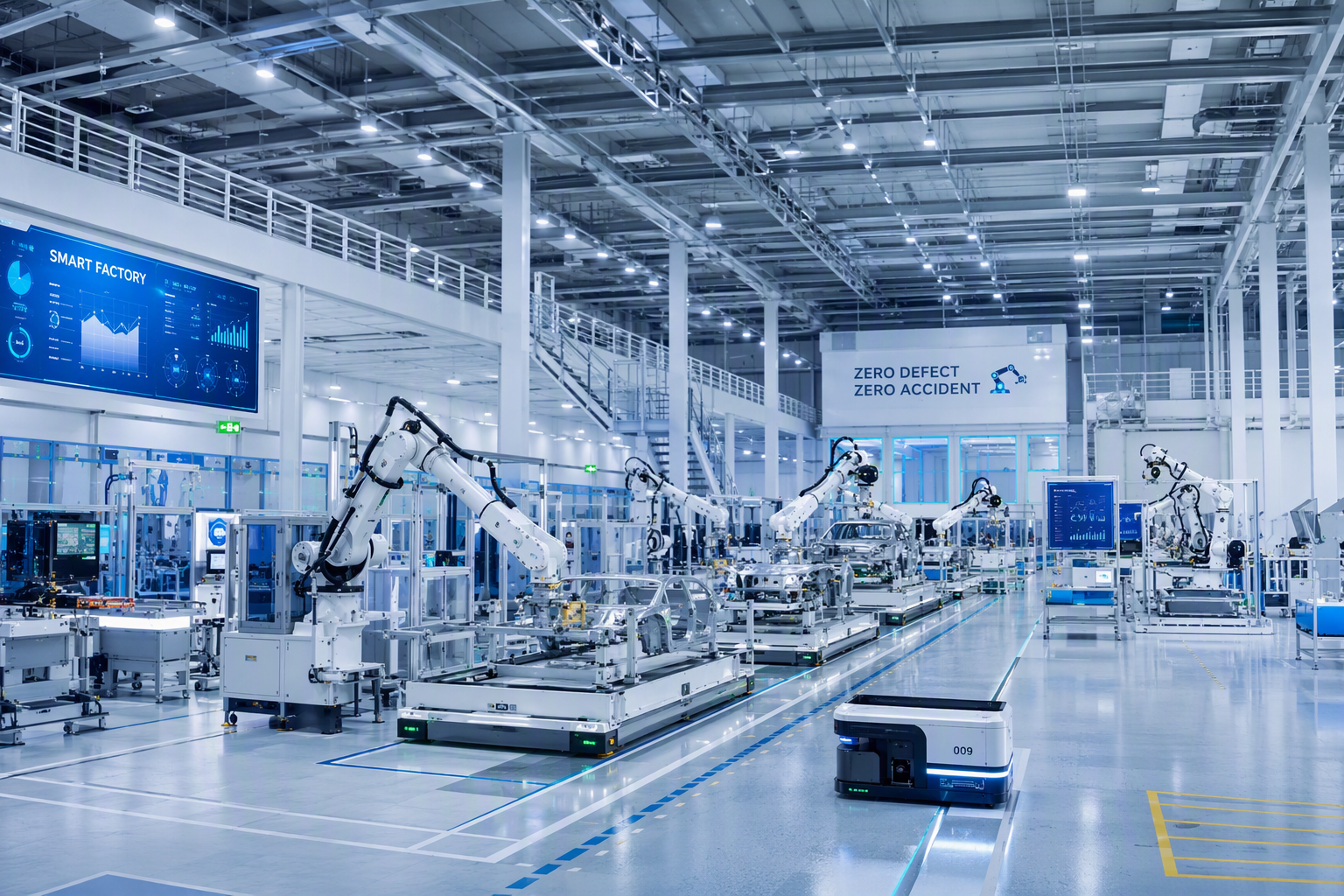
At its core, industrial automation is the use of control systems, machines, actuators, sensors, processors, and networks to automate production tasks. It started with simple conveyor belts, but today it covers a much wider range of connected tools.
Why does this matter to you? Good solutions can reduce labor demands, improve precision, and support more consistent across your operation. They also help handle dull or risky work, improve output quality, and create better visibility for production decisions.
Types of Automation Systems Used in the United States
In the United States, a typical automated system often falls into four groups: fixed, programmable, flexible, and integrated automation. Fixed systems fit continuous, high-volume work with limited change. Programmable setups are better for batch production, where product runs change more often.
Many facilities rely on programmable logic controllers, other controllers, and human machine interface tools to manage machines and operator input. These tools help teams control workflows, track performance, and make quick adjustments on the floor.
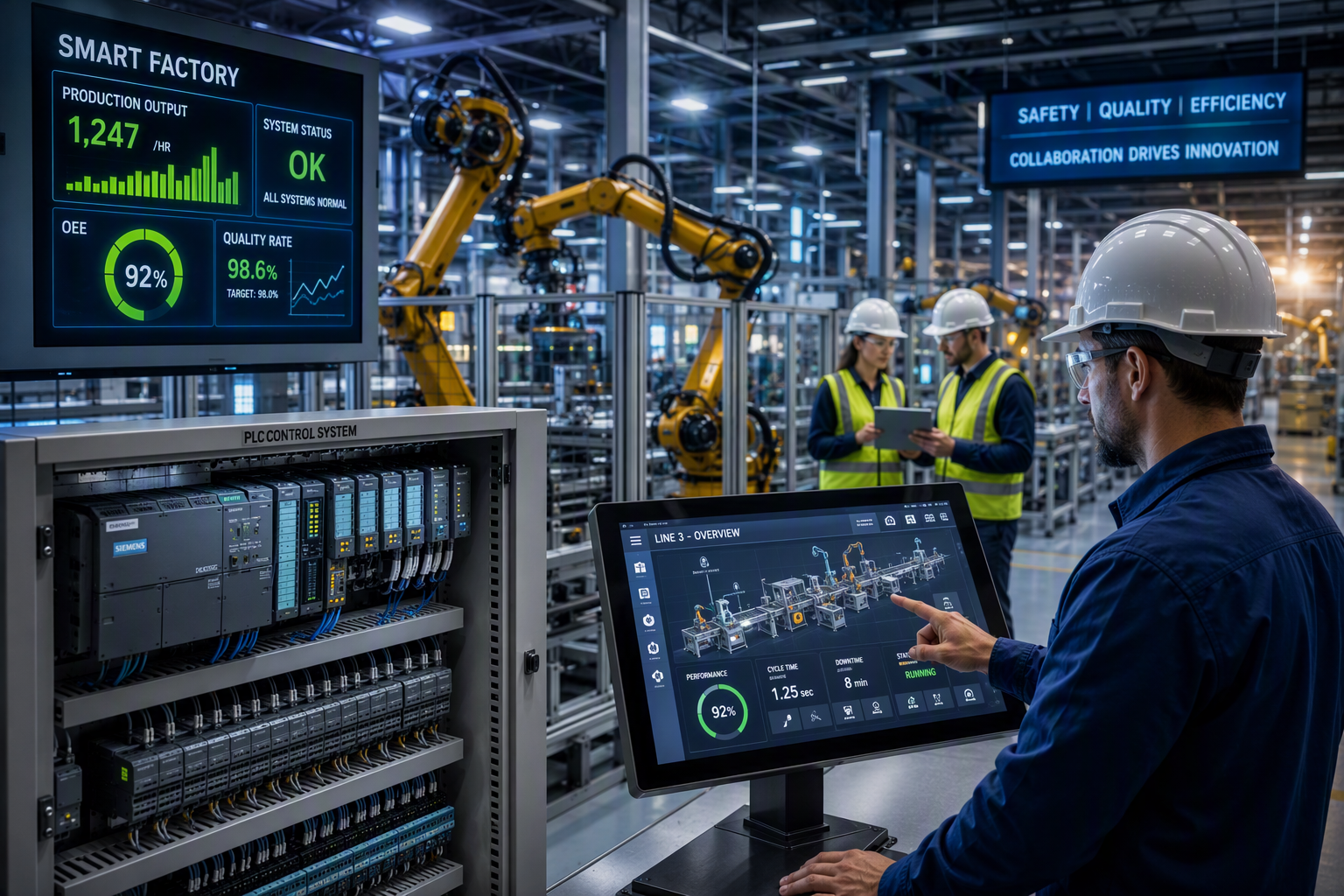
Empowered Automation Robotics
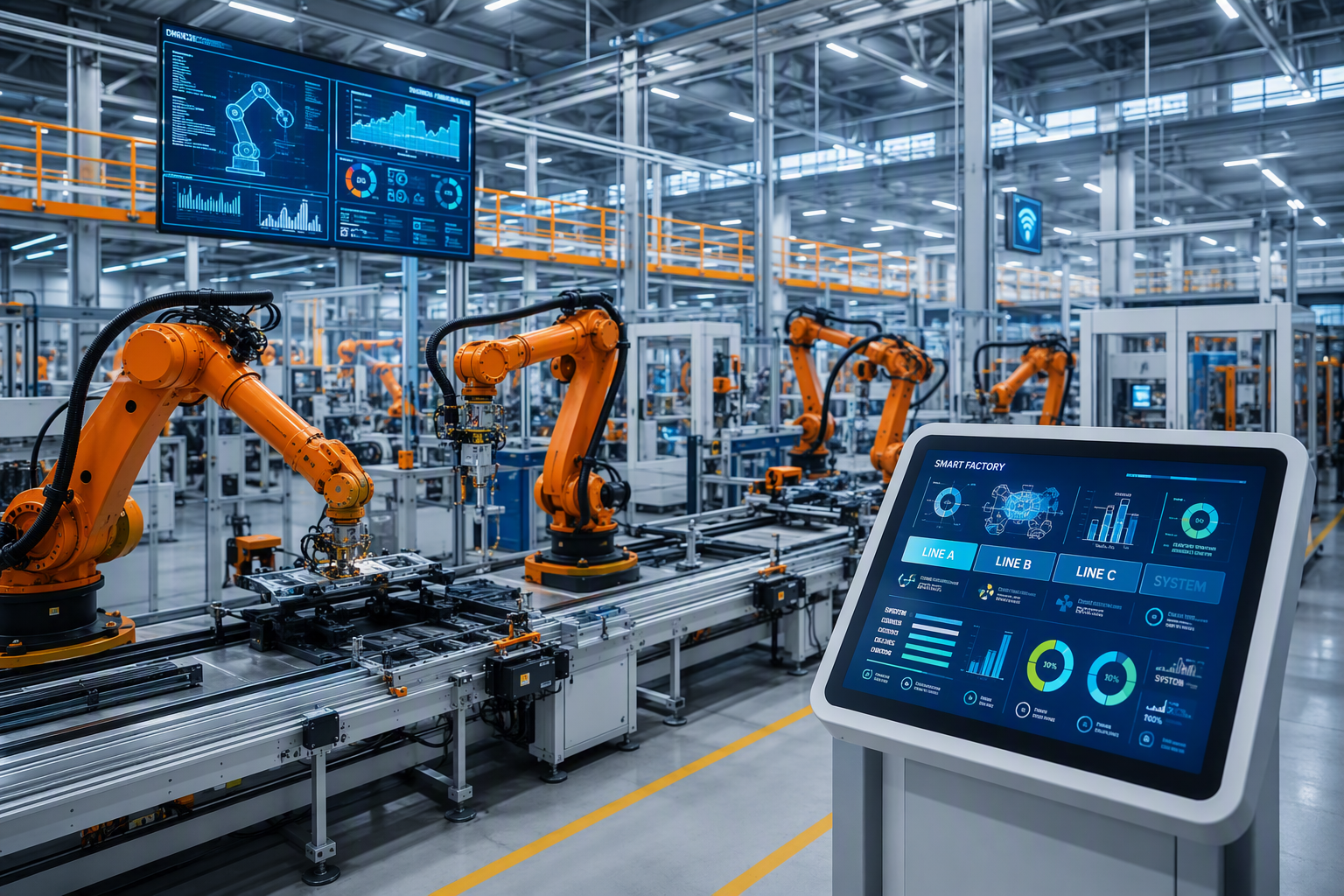
You will also see robotics used where tasks are repetitive, dangerous, or require strong precision. Manufacturing operations, along with sectors such as automotive, food and beverage, energy, and infrastructure, adopt these systems because they need reliable output, safer processes, and better production control.
Common Applications Across Manufacturing and Other Industries
Across modern facilities,Industrial Automation Solutions is used to keep production lines moving with less interruption. It supports repeatable work, faster throughput, and closer monitoring of equipment. That is why so many manufacturers and process-driven businesses continue to invest in connected systems.
You can see these tools in sectors that make beverage items, consumer products, automotive components, chemicals, and energy-related goods. Sensors and motion control tools are especially useful where speed, timing, and quality must stay consistent from one cycle to the next.
Common applications include:
- Monitoring machine conditions and performance in real time
- Managing motion control on fast-moving production lines
- Tracking quality signals through connected sensors
- Supporting safer operation in hazardous tasks
- Improving output in beverage and consumer products production
Key Benefits of Industrial Automation Solutions for Businesses
For many businesses, the biggest value of Industrial Automation Solutions is stronger operational efficiency. Well-planned automated solutions help reduce slowdowns, improve consistency, and support better use of labor. You get more visibility into what is happening across machines and processes.
Control systems also help teams respond faster to issues before they affect output. When machines, data, and workflows are connected, your plant can run with fewer surprises. The next sections explain how that shows up in productivity, quality control, and worker safety.
Boosting Plant Efficiency and Machinery Productivity
When your goal is better operational efficiency, it gives you a clear advantage. Connected equipment can identify downtime, performance loss, and bottlenecks before they grow into bigger production problems. That means less wasted time and smoother daily output.
Another benefit is better use of machinery. With monitoring and automated devices working across a shared platform, teams can spot root causes, regulate production speeds, and make faster decisions. Some systems even support predictive maintenance, which helps reduce avoidable stoppages.
For your business, that translates into higher productivity without simply pushing people harder. Strong automated solutions improve uptime, keep work flowing, and help plants react sooner when conditions change. In many cases, that is how Industrial Automation Solutions improves overall plant efficiency in a practical, measurable way.
Enhancing Quality Control and Worker Safety
Quality issues often start small. Industrial Automation Solutions helps you catch them earlier through better monitoring, repeatable machine actions, and clearer production data. That supports stronger quality control, less rework, and more confidence that finished parts meet requirements before they leave the floor.
Safety improves too. It can take over dull, dirty, and dangerous tasks that involve repetitive motion, heavy lifting, or hazardous conditions. That reduces unnecessary human interaction with risky equipment and can make the work environment safer for your team.
If you are weighing the value of automated services, these two gains matter most: more consistent output and fewer worker risks. Together, they explain why industrial automation remains a strong choice for manufacturers that want stable quality, better visibility, and safer day-to-day operations.
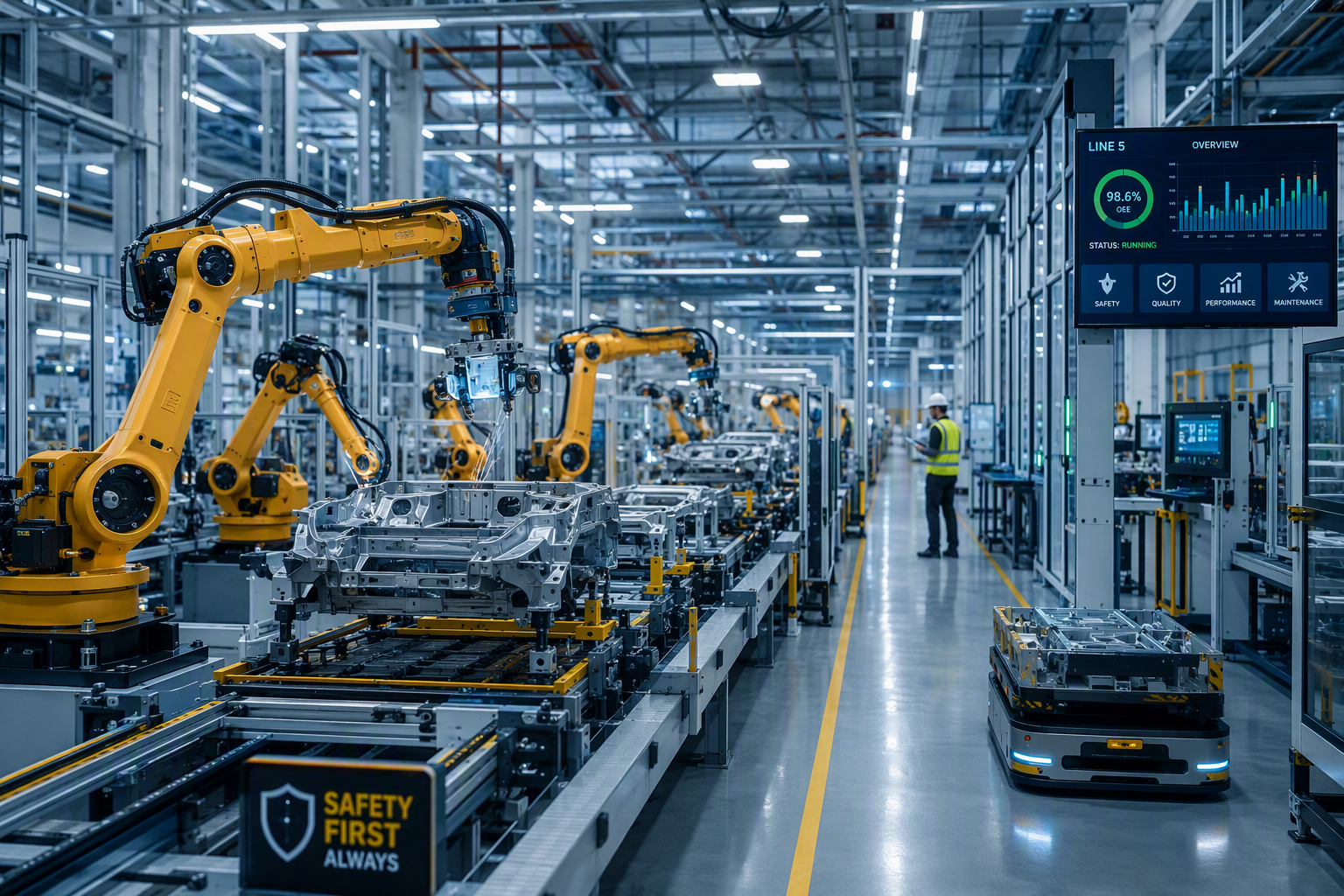
Leading Providers of Industrial Automation Solutions
Many industrial automation companies now offer broad automated solutions that combine hardware, software, monitoring, and support. The strongest providers help businesses connect machines, improve visibility, and manage production with less manual effort. That range matters when your needs span controls, robotics, and plant data.
Among the top industrial companies, several names stand out for their products, scale, and automation services. In the next section, you will see a quick overview of major US-focused providers and what they are known for.
Overview of Top US-based Automation Companies
If you are reviewing top industrial automation companies, a few names come up again and again. They serve manufacturers with controls, software, robotics, monitoring, and connected production tools. Each company has a slightly different strength, so your choice depends on what your facility needs most.
Rockwell Automation is widely known for software, drive systems, industrial sensors, human machine interface tools, and motion control. ABB is recognized for robotics and digitally connected industrial equipment. Mitsubishi Electric is valued for controllers, visualization, drive products, industrial robots, and power monitoring products.
Here is a simple comparison of major automation companies:
| Company | Key strengths |
|---|---|
| Rockwell Automation | Advanced process control, distributed control systems, HMI, industrial sensors, motion control |
| ABB | Robotics, control room solutions, drives, measurement and analytics, low and medium voltage systems |
| Mitsubishi Electric | Controllers, drive products, visualization, industrial robots, power monitoring products |
| Emerson | Measurement instrumentation, valves, control and safety systems, asset management, services and consulting |
| Honeywell | Control, monitoring and safety systems, instrumentation, industrial security, wireless tools |
Essential Features to Consider When Choosing a Solution Provider
Choosing a provider starts with your actual production needs. Not every platform or vendor fits every factory. The best automated solutions match your product mix, changeover needs, and current equipment while giving you room to improve over time.
You should also look closely at service support. Strong industrial partners do more than sell equipment. They help with planning, integration, monitoring, and commissioning so your system works in real conditions, not just on paper.
Important features to consider include:
- Customization for your workflows, equipment, and production volume
- Clear monitoring tools that help teams see downtime and performance issues
- Reliable automation services, including setup and ongoing support
- Easy commissioning to shorten startup time and reduce disruption
- Software and hardware compatibility across connected assets
The Process of Implementing Industrial Automation
Implementing industrial automation usually starts with identifying where better control, visibility, or speed will have the biggest effect. That might be one machine, a group of assets, or full production lines. The goal is to connect the right tools without creating unnecessary disruption.
From there, teams move into planning, integration, testing, and commissioning. Good services support each stage so your automated solutions fit the factory setting, the operators, and the production targets. Next, let’s break down the typical steps and common adoption barriers.
Steps for Successful Integration in a Factory Setting
A successful rollout begins with a clear review of current production. You need to know where delays, downtime, or quality issues are happening before choosing automation solutions. That makes it easier to focus on the areas with the greatest return.
Next comes system design and connection. At this stage, teams choose the right system components, such as sensors, controllers, networks, and machine interfaces. The aim is to link equipment in a way that supports real production needs and clear performance tracking.
The last step is testing and commissioning. This is where you confirm that devices communicate correctly, data is useful, and operators can work with the system confidently. In most factories, the typical process includes evaluation, integration, trial runs, and final commissioning before broader expansion.
Addressing Challenges and Team Adoption
Yes, team adoption can be a challenge. People may worry that new automated solutions will disrupt routines, add confusion, or reduce their role in the operation. That hesitation is common, especially when changes affect familiar tasks on the floor.
A helpful way to address this is to show what automation actually changes. In many cases, it reduces repetitive or risky work rather than removing all human interaction. It also gives teams better information, which can make daily decisions easier and less stressful.
You can build trust by rolling out changes in steps and explaining the purpose clearly. Good companies support this process by helping with training, startup, and practical use. When workers see safer tasks, clearer data, and smoother workflows, acceptance usually grows.
Smart Manufacturing and Emerging Trends
Smart manufacturing builds on industrial automation by connecting machines, systems, and data across the factory. Instead of isolated tools, you get a more complete view of operations. That makes it easier to respond to downtime, quality shifts, and changing production needs.
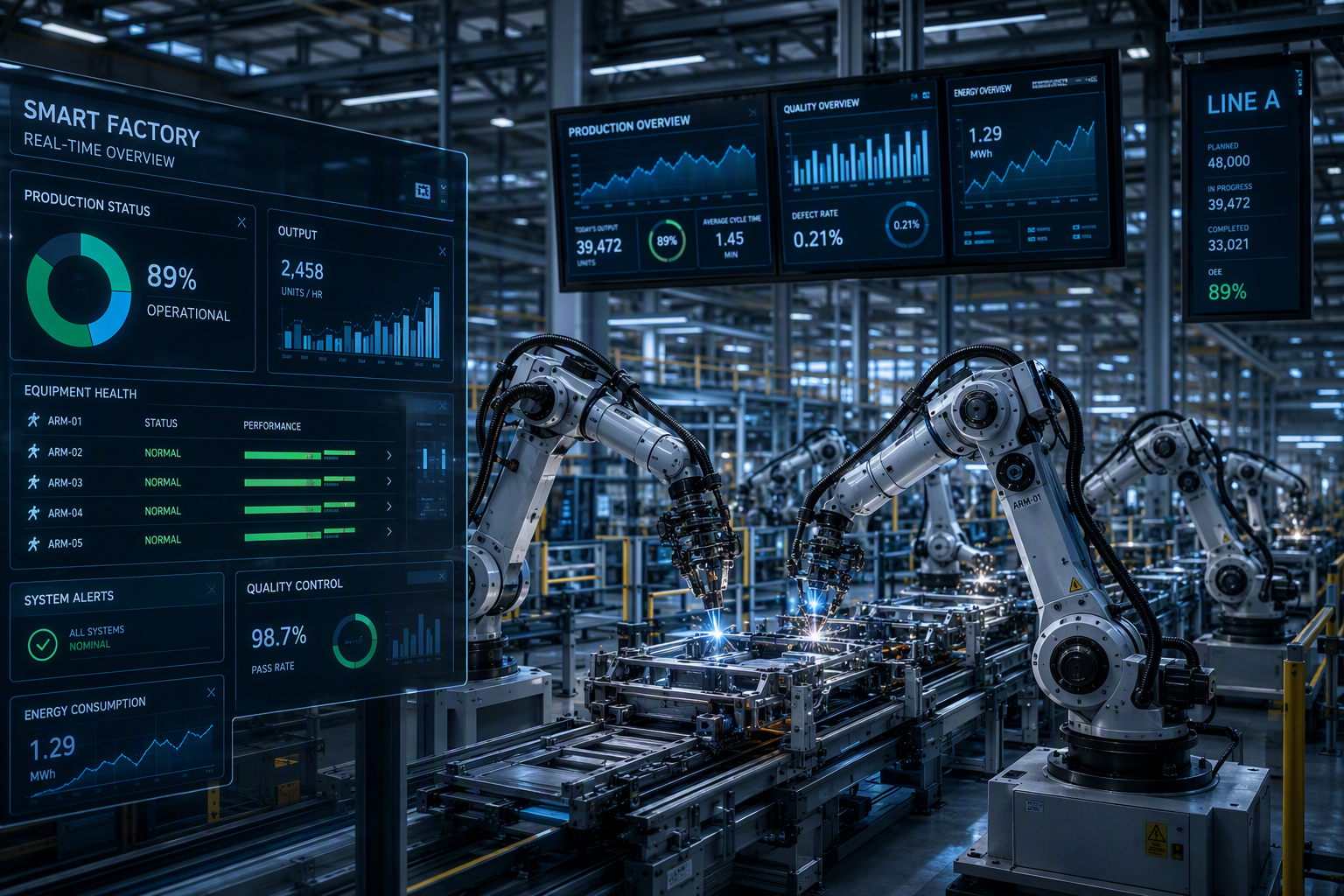
IOT Solutions & Monitoring
Many of today’s solutions support this shift through IoT devices and stronger monitoring. As more assets share information in real time, businesses gain better control and visibility. The following sections show how that powers smart factories and where US automation is heading next.
How Industrial Automation Powers Smart Factories
Smart factories rely on industrial automation to connect production assets into a more responsive system. Instead of managing separate machines one by one, teams can monitor operations through shared data and coordinated controls. That creates a more complete picture of what is happening on the floor.
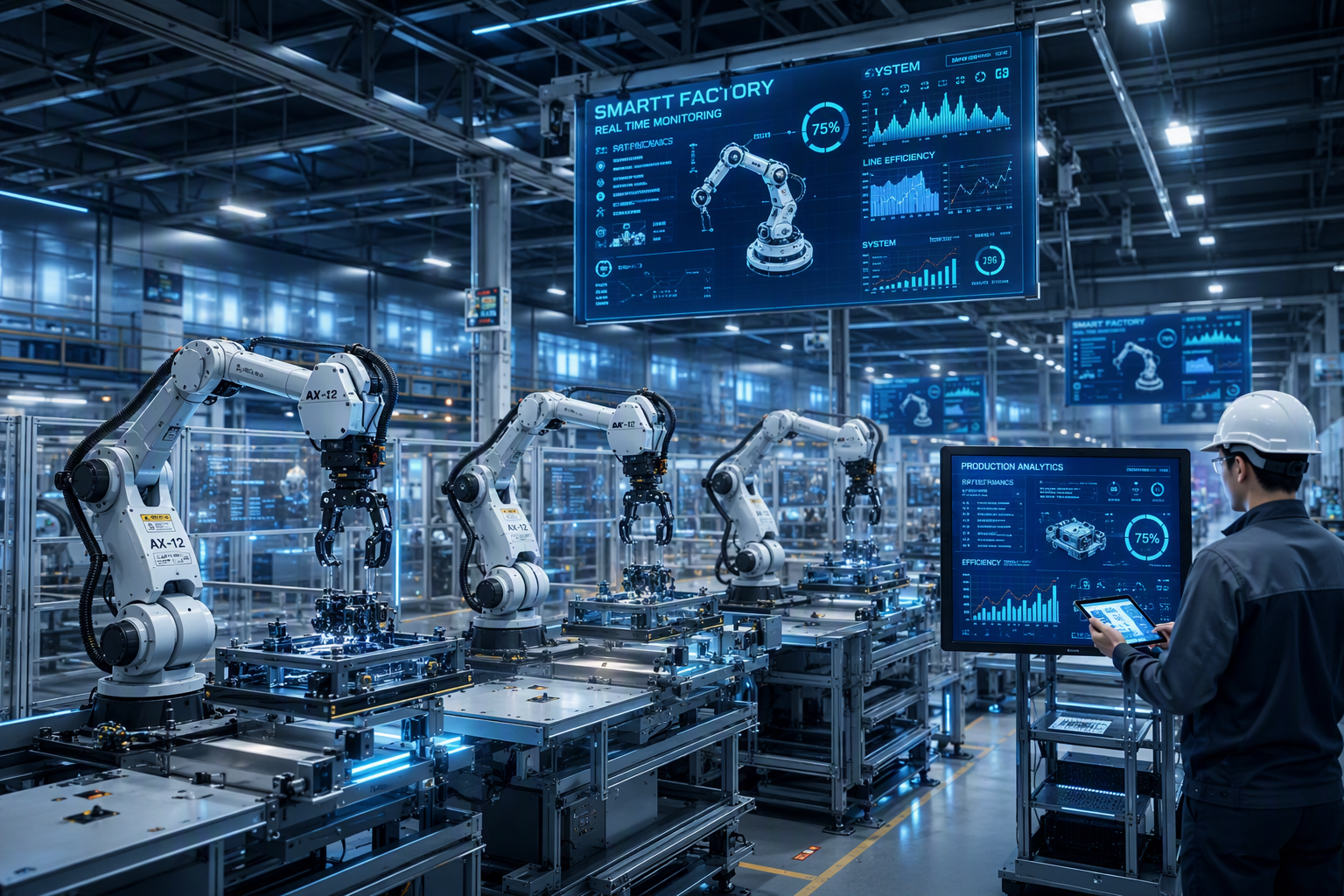
IoT plays a big role here. Connected devices can send real-time information about output, downtime, and machine status. When paired with the right solutions, that information helps managers adjust labor, supply needs, and production flow more effectively.
For you, the biggest gain may be transparency. Better visibility across equipment and processes helps catch issues earlier and supports faster action. That is how smart manufacturing relates to industrial automation solutions: it turns connected machines and data into a practical operating advantage.
Future Innovations Shaping US Automation Solutions
Several trends are shaping the future of industrial automation in the United States. One major direction is deeper integration, where machines, production lines, and business systems communicate across a shared network. This supports faster decisions and more flexible manufacturing.
Another important area is the growing use of IoT and real-time monitoring. These tools help businesses collect machine data quickly, understand performance patterns, and decide where solutions will have the strongest effect. Built-in security is also becoming more important as more assets connect.
You can also expect continued innovation in robotics, AI, and machine learning. The compiled information shows that automation is moving far beyond basic conveyors into connected, intelligent systems. For many manufacturers, future progress will come from better data use, more flexible equipment, and smarter networked control.
Conclusion
In conclusion, embracing industrial automation solutions is essential for businesses aiming to thrive in today's competitive landscape. By understanding the various systems available and their applications, companies can significantly boost efficiency, enhance quality control, and ensure worker safety. The right provider can guide you through the implementation process, addressing any challenges along the way to ensure a smooth transition. Moreover, staying informed about emerging trends in smart manufacturing can position your business at the forefront of innovation. Don't wait any longer to elevate your operations—get started on your journey toward a more automated and efficient future today!
Frequently Asked Questions
Which industries most benefit from industrial automation solutions?
Beverage Industry
Industries with repeatable, high-volume work often benefit most from industrial automation. That includes beverage, consumer products, automotive, chemicals, and other manufacturing sectors. These businesses use solutions to keep production lines moving, improve consistency, reduce manual effort, and support safer handling of demanding or repetitive tasks.
What are the main features to look for in industrial automation software?
Look for software that supports customization, clear monitoring, and strong compatibility with control systems already in your plant. Good automated solutions should also work well with programmable logic controllers, help track machine performance, and make it easier for your team to understand downtime, output, and process conditions.
How does industrial automation improve overall manufacturing efficiency?
Industrial automation improves operational efficiency by reducing downtime, catching bottlenecks sooner, and making output more consistent. With automated solutions that use sensors and robotics, manufacturers can monitor machines in real time, improve maintenance decisions, lower rework, and keep production flowing with fewer interruptions.
You might also like