Unlock Efficiency with Industrial Automation Solutions
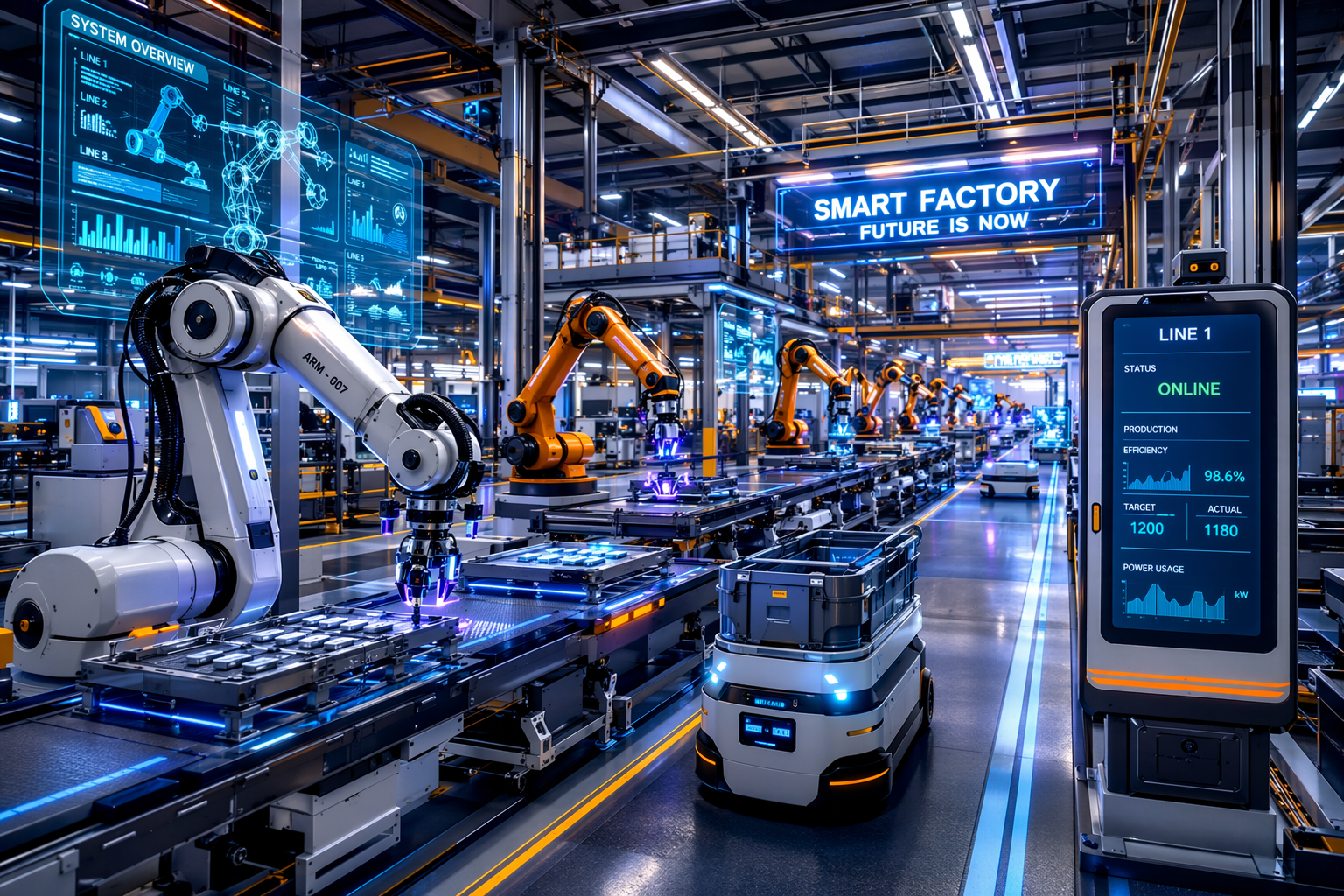
Key Highlights
- Industrial Automation Solutions uses control systems, software, and machines to run industrial processes with minimal human input.
- These Industrial Automation Solutions help improve the manufacturing process through better speed, accuracy, and consistency.
- Factories use advanced technologies such as PLCs, robots, HMIs, IoT devices, and AI to streamline operations.
- Strong control systems support safer work environments and reduce errors in repetitive tasks.
- Industries from automotive to food production benefit from automation solutions that raise output and product quality.
- Choosing the right provider matters for integration, planning, support, and long-term performance.
Introduction
Industrial Automation Solutions is changing how manufacturers run daily work. Instead of relying heavily on manual labor, companies now use advanced technologies and automation solutions to improve speed, consistency, and decision-making. So, what are
industrial automation solutions and how do they help manufacturing companies? In simple terms, they use connected machines, software, and data to handle tasks with less human effort. That helps you reduce waste, improve quality, increase output, and build a more reliable production environment.
What Are Industrial Automation Solutions?
Industrial automation solutions are systems that use machines, software, sensors, and control systems to manage industrial processes with limited human intervention. They sit at the center of the Industrial Automation Solutions industry because they help facilities run faster and with greater consistency.
For manufacturing companies, these automation solutions support better productivity, lower errors, and improved flexibility. They also help collect accurate production data, improve safety, and reduce strain on human workers. To understand their value clearly, it helps to look at their core principles first.
Definition and Core Principles of Industrial Automation
At its core, industrial automation means using computer-controlled equipment to perform work that once depended on people operating machines directly. This includes robots, programmable logic controllers, software, and connected devices that manage industrial processes with less human intervention.
The basic principle is simple. Automation systems create a feedback loop. Sensors detect conditions on a machine or production line. Control systems process that information and decide what should happen next. Actuators, motors, and robotic systems then carry out the physical action. HMIs and software give operators a real time view of performance.
So, what does an industrial automation company do in simple terms? It helps you design, install, and support systems that let machines handle specific tasks more reliably. Your team then focuses less on routine operation and more on oversight, quality, and continuous improvement.
How Industrial Automation Solutions Transform Operations
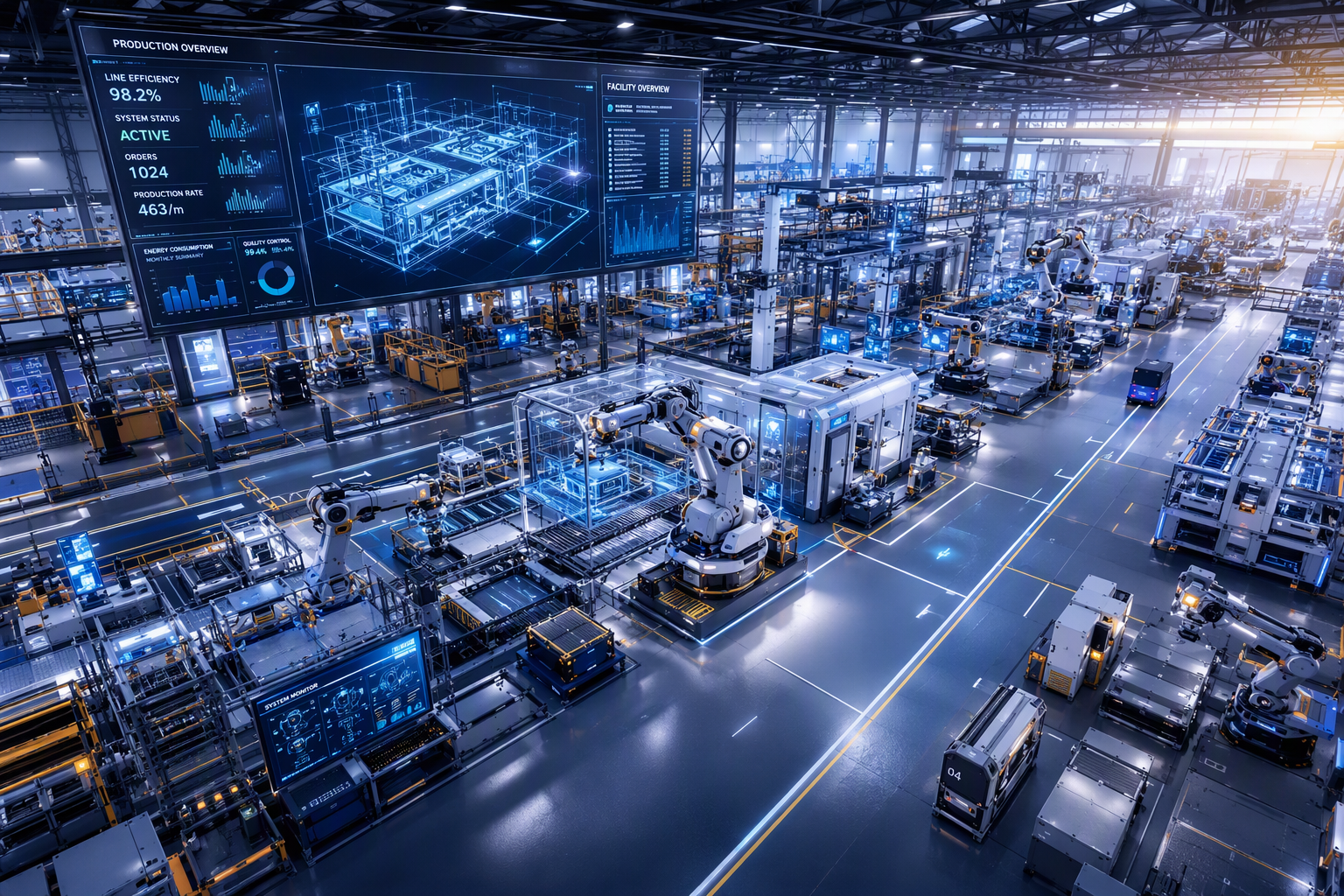
When you introduce automation solutions into a factory, daily operations become more stable and easier to scale. Machines can run longer hours, respond faster to changes, and complete repetitive tasks without fatigue. That directly improves operational efficiency and reduces variation across the production process.
Just as important, automation supports stronger product quality. In automotive manufacturing, for example, automated machinery can perform precision work with far lower error rates than manual methods. It also improves safety by moving people away from hazardous environments and supports better data collection for smarter decisions.
Key benefits often include:
- Higher throughput with fewer delays and bottlenecks
- Better product quality through consistent execution
- Lower waste, fewer defects, and reduced unplanned downtime
These gains explain why so many industries now see automation as a practical business tool, not just a technology upgrade.

Industries Benefiting from Industrial Automation
Industrial automation supports a wide range of sectors, especially where speed, precision, and consistency matter. The manufacturing industry leads the way, but it is far from alone. Companies turn to automation solutions when they face labor shortages, safety risks, quality issues, or pressure to increase output.
You will most often see
automation services used in automotive, food and beverage, pharmaceuticals, electronics, and warehouse operations. Each sector applies automation in different ways, depending on its production goals, product mix, and compliance needs. Let’s look at the most common examples.
Manufacturing and Automotive Sectors
Manufacturing is one of the biggest users of automation technology because it depends on repeatable output, controlled timing, and cost efficiency. In many plants, automation helps the manufacturing process run around the clock while maintaining consistency. That is especially useful when customer demand rises or labor availability becomes less predictable.
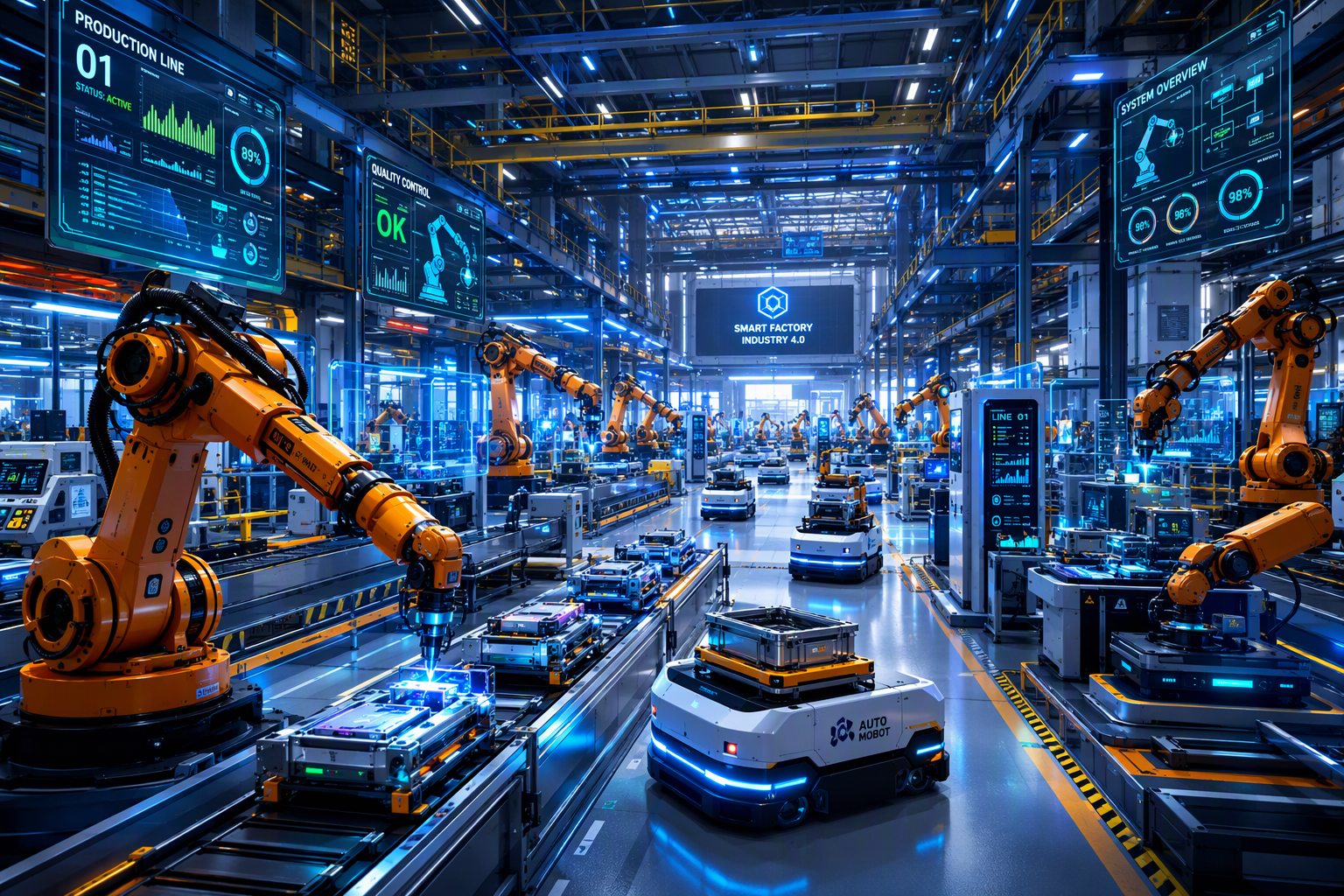
In automotive manufacturing, fixed automation is common on assembly lines. Robotic arms and other machines handle welding, painting, part installation, and material handling with high precision. These systems are built for high-volume production, where the same tasks happen again and again across the production line.
This approach improves speed and reduces human error. It also helps companies manage large-scale output without adding the same level of human labor. For manufacturers focused on reliability, volume, and safety, automation has become a core part of daily operations.
Food & Beverage, Pharmaceuticals, and Other Key Industries
Beyond heavy manufacturing, several other sectors depend on automation systems to protect product quality and keep workflows moving. Food and beverage facilities use automated filling, capping, mixing, and packaging equipment to support a fast, clean, and consistent production process.
Pharmaceutical operations also benefit because they need tight quality control and the ability to handle different products with accuracy. Flexible automation and programmable automation are especially useful when quick adjustments are needed between product runs. In the automation industry, this adaptability is a major advantage.
Common examples include:
- Food plants using sensors and computerized controls for filling and packaging
- Pharmaceutical lines managing batch production with rapid changeovers
- Warehouses using conveyors, autonomous robots, and smart sorting for material handling
Electronics assembly also relies on high-speed machines to place small components accurately, helping meet strict standards at scale.
Major Technologies Used in Industrial Automation
Industrial automation depends on several connected tools working together. At a basic level, facilities use industrial robots, sensors, software, and control systems to monitor conditions, make decisions, and move equipment. These advanced technologies help machines respond in real time and keep production stable.
The exact setup depends on your facility, product type, and output goals. Some operations need fixed systems for repetitive work, while others need flexible platforms for different products. The most common technologies are worth understanding before you plan any automation project.
Robotics, PLCs, and Human-Machine Interfaces (HMIs)
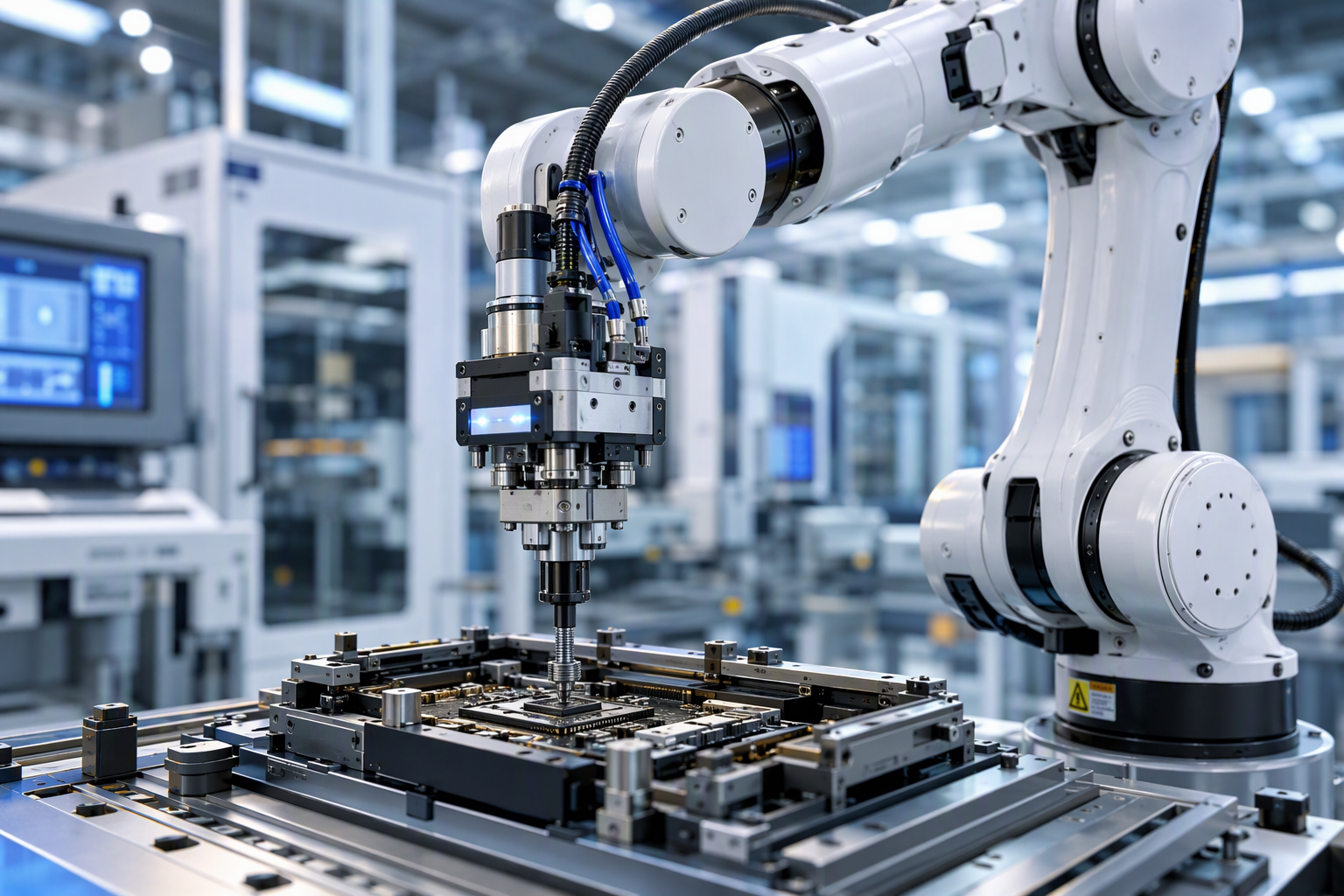
Robotics plays a major role in modern plants. Industrial robots are often used for welding, painting, packaging, assembly, and other repetitive or hazardous tasks. They work with high speed and precision, which helps reduce variation and supports safer conditions for employees.
At the decision-making level, programmable logic controllers act as the brains of many automation systems. PLCs receive signals from sensors, process the information, and send instructions to machines. This allows equipment to respond quickly to changing conditions without relying on constant manual input.
Human-machine interfaces, or HMIs, give operators a clear view of what is happening. Through human-machine interfaces, teams can monitor equipment, review alarms, and make adjustments when needed. Together, robotics, PLCs, and HMIs create a practical foundation for reliable, connected production control.

Internet of Things (IoT) and Artificial Intelligence (AI) Integration
A newer layer of automation comes from the internet of things and artificial intelligence. IoT devices connect machines, sensors, and software so they can share data across the entire production line. That makes it easier to monitor performance, detect issues, and improve response times in real time.
Artificial intelligence and machine learning add another level of value. These tools help analyze data, improve process decisions, and support predictive maintenance. Instead of reacting after a problem happens, you can identify risks earlier and reduce significant downtime.
This integration often helps you:
- Track machine conditions through connected IoT devices
- Improve data analysis for faster operational decisions
- Support predictive maintenance and stronger equipment life
As smart factories grow, IoT and AI are becoming central to advanced systems that improve flexibility, reliability, and output.
Selecting a Trusted Industrial Automation Solution Provider
Choosing the right partner can shape the success of your industrial automation project. A good provider should understand your facility, production goals, and existing control systems. You need more than equipment. You need practical automation solutions and automation services that fit your operations and can scale over time.
Before moving ahead, think about downtime risks, integration needs, training, cybersecurity, and the initial investment. You should also consider whether your plant needs fixed, programmable, flexible, or integrated automation. The next sections break down what to evaluate and which providers appear in the compiled information.
Key Criteria to Evaluate Providers
Start by matching providers to your specific needs. Some facilities need help with assembly lines and control upgrades, while others need flexible systems for batch production or data-driven workflow improvements. The right partner should understand your product mix, current bottlenecks, and long-term production goals.
It also helps to review the provider’s range of services. Planning, integration, training, deployment, and support all matter because automation does not end at installation. You should ask how they help manage maintenance, workforce training, and system adjustments as demand changes.
Useful criteria include:
- Fit with your production goals, budget, and operational costs
- Ability to support integration, training, and ongoing technical needs
- Experience with the type of automation that matches your facility
A strong provider should help you streamline operations while keeping risk, downtime, and complexity under control.
Top Industrial Automation Companies in the United States
Based on the compiled information, two named providers appear in the United States context: Sure Controls and HighGear. Each is presented with a different focus inside the wider automation industry. One emphasizes industrial automation for manufacturing environments, while the other highlights workflow automation and business process support.
If you are comparing providers, the key is not just brand recognition. You should look at whether their automation solutions align with your plant goals, integration needs, and level of system complexity. Advanced systems deliver value when they fit the operation, not when they simply add more technology.
| Company | Focus in Compiled Information | What They Highlight |
|---|---|---|
| Sure Controls | Industrial automation for manufacturing | Connected control systems, AI, IoT sensors, production optimization |
| HighGear | Workflow automation and manufacturing process support | No-code tools, business process management, training, deployment, integrations |
These examples show why provider fit matters as much as technical capability.
Conclusion
In conclusion, embracing industrial automation solutions can significantly enhance operational efficiency and productivity across various sectors. By implementing technologies such as robotics, PLCs, IoT, and AI, businesses can streamline processes, reduce human error, and improve overall performance. It's essential to choose a trusted provider who understands your unique needs and goals in order to maximize the benefits of automation. Remember, the right solution can propel your business into the future, making it more competitive and responsive to market demands. Don't hesitate to explore the possibilities of industrial automation—it's an investment in your organization's success. For further guidance tailored to your needs, feel free to reach out for a consultation!
Frequently Asked Questions
What services do industrial automation solution providers typically offer?
Industrial automation providers typically offer a range of services that may include planning, system design, deployment, integration, training, and ongoing support. Their automation services often help companies choose automation solutions, connect control systems, improve workflows, and maintain performance as production needs change over time.
How do automation systems integrators assist with industrial automation projects?
Automation systems integrators help connect machines, software, sensors, and control systems into one working setup. In industrial automation, they support planning, installation, testing, and adjustments so automation solutions fit the facility. Their role is important in the automation industry because integration affects performance, visibility, and long-term reliability.