The Future of the Industrial Automation Industry Explained
Key Highlights
- Industrial automation is changing industrial processes through smarter control systems and connected automation solutions.
- Artificial intelligence, machine learning, industrial robots, and the industrial internet of things are pushing faster decisions in real time.
- Businesses gain stronger operational efficiency, better quality control, and lower maintenance costs with less human intervention.
- Top adopters include automotive, electronics, oil & gas, food & beverage, healthcare, and logistics.
- Growth in the automation market is tied to labor shortages, supply chain pressure, and smart factories.
- The future points to wider digital twin use, predictive maintenance, and minimal human intervention.
Introduction
Industrial automation is shaping how modern business runs, from the manufacturing process to material handling and quality checks. This blog explains how automation technology works, where it is being used, and why it matters to your operations. You will see the main system types, the advanced technologies behind smart factories, and the industries moving fastest. You will also learn how market growth, efficiency goals, and reduced manual labor are influencing the future of automation.
Understanding the Industrial Automation Industry
At its core, industrial automation uses control systems, software, and connected equipment to run industrial operations with less manual effort. It supports better speed, consistency, and process control across many work environments.
For your business, understanding industrial automation helps you choose automation solutions that fit production requirements, quality goals, and cost targets. It also shows how control logic and data can improve decisions. To make that clear, the next sections break down the meaning, scope, and core ideas behind automation.
Definition and Scope of Industrial Automation
Industrial automation is the use of automation technology to manage industrial processes through programmed control logic, connected machines, and smart devices. Instead of relying fully on manual labor, businesses use systems that monitor, adjust, and execute tasks with greater consistency. That is how the industrial automation industry works in practice.
Its scope reaches far beyond one factory floor. You see it in assembly line work, batch production, material handling, process automation, and supervisory control. It supports both discrete production and continuous operations, depending on the production requirements of each industry.
Real examples include industrial robots handling repetitive tasks, temperature sensors tracking process conditions, and control systems managing process control in energy sites. In short, industrial automation covers the tools and methods used to improve speed, safety, and quality across many sectors.
Difference Between Factory Automation and Industrial Automation
Factory automation focuses on production environments such as assembly lines, packaging stations, and machine cells. It uses control systems and automation logic to run equipment, move materials, and complete repetitive tasks inside a factory setting. You often connect it with manufacturing speed and product consistency.
Industrial automation is broader. It includes factory automation, but it also covers process automation in sectors like oil & gas, energy, utilities, and food & beverage. That means it supports both manufacturing and wider industrial operations where process control matters just as much as output volume.
So how do they relate? Factory automation is one part of industrial automation overall. If your goal is to automate plant-floor equipment, factory automation is the focus. If you need to automate larger industrial processes across sites, systems, and workflows, industrial automation is the bigger framework.

Core Principles Driving Automation Technologies
Strong automation technology is built on clear rules, reliable data, and repeatable performance. At the center is control logic, which tells machines and systems when to start, stop, adjust, or alert. The goal is not only speed. It is process optimization with safer and more stable output.
Several principles drive modern automation:
- Standardized control logic for consistent results
- Real-time monitoring for faster response
- Minimal human intervention in repetitive tasks
- Better data use for process optimization
You can see these principles in automated quality checks, motion control, and predictive maintenance. They also support key trends shaping the industrial automation industry today, including connected equipment, smarter decisions, and wider use of advanced technologies. With those basics in place, it helps to look at how automation reached this point.
Evolution of Industrial Automation
Industrial automation has moved from simple mechanical support to complex automation systems that connect data, machines, and decisions. Early setups handled basic repetitive work, while newer systems use advanced technologies for process control, monitoring, and flexible production.
Today, smart manufacturing and digital transformation are changing what automation can do. Businesses are linking the shop floor to software, analytics, and connected devices for better visibility and faster response. To understand current trends, it helps to review the milestones, digital shift, and rising role of connectivity.
Milestones in Industrial Automation History
The history of automation systems shows a steady move toward higher precision and less manual work. Early systems focused on fixed control and repetitive output. Over time, process automation expanded into more industries, and traditional industrial robots became common for tasks that required repeatable movement.
Key milestones include:
- The rise of hard automation for stable, high-volume production
- Wider use of process automation in industrial operations
- Adoption of industrial robots for repetitive tasks
- Growth of digital control in modern plants
Each step mattered because it increased speed, improved consistency, and reduced dependence on manual labor. These milestones also set up today’s key trends, where connected systems, industrial iot, and smarter software now shape how businesses design and run production. That shift becomes clearer when you compare analog and digital methods.
From Analog to Digital: The Transformation Journey
For years, analog systems supported basic measurement and control in industrial settings. They helped operators monitor equipment, but changes often required slower manual adjustment and offered limited visibility across the full operation. That made coordination harder when production demands shifted.
The move to digital control changed that. Digital systems support faster data handling, tighter control logic, and easier integration between machines, software, and business tools. This digital foundation is one reason smart factories can react more quickly to issues, changing output goals, and quality needs.
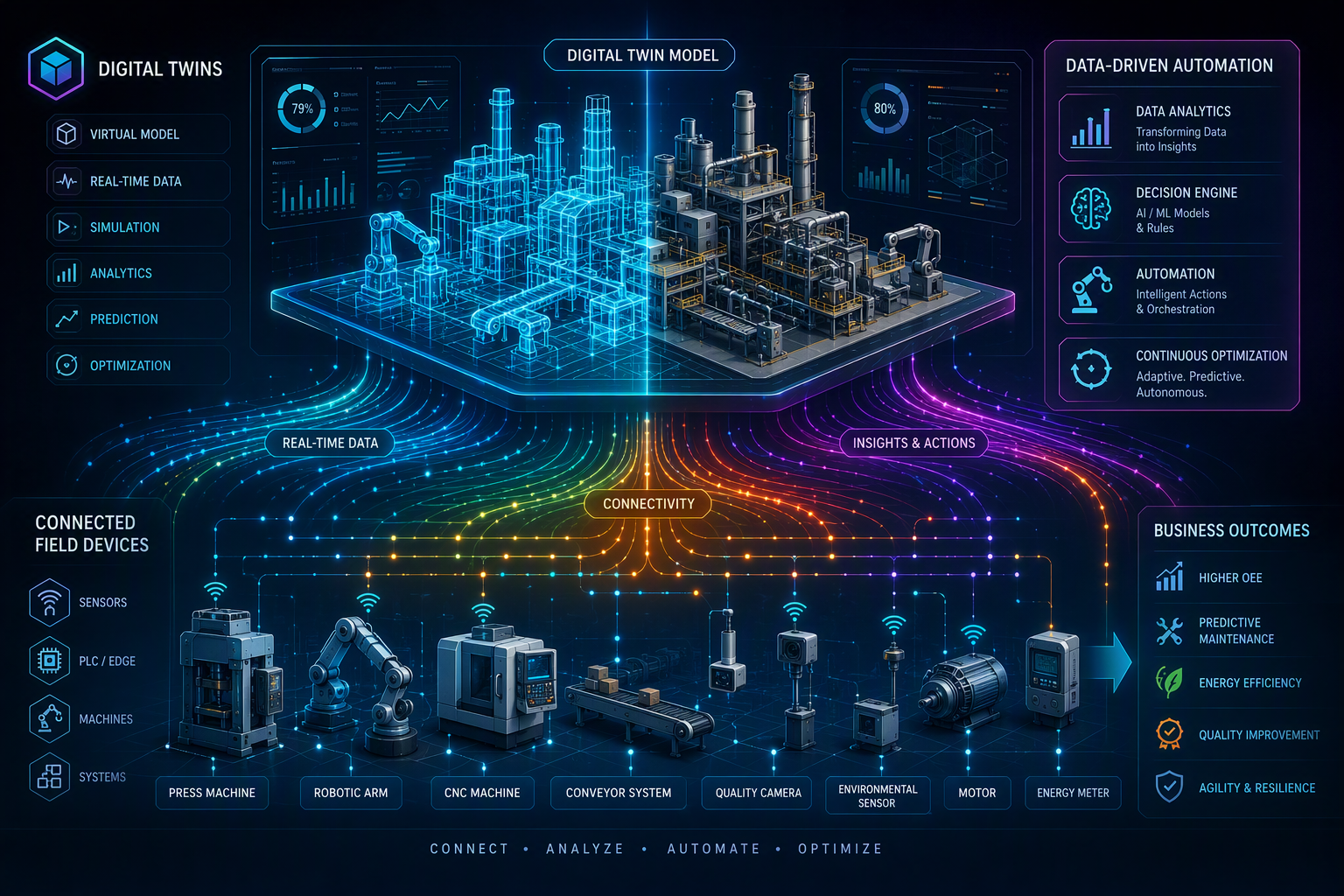
Now the transformation includes tools such as digital twin models, connected field devices, and data-driven automation solutions. These tools help teams test scenarios, improve process optimization, and reduce unplanned downtime. As intelligence grows in automation, connectivity becomes just as important as the machines themselves.
Role of Connectivity and Digitization in Modern Automation
Connectivity has become a core part of modern automation. With the industrial internet of things, machines, sensors, and control systems can share information across the shop floor in real time. That gives your team a clearer view of what is happening and where action is needed.
Digitization turns raw machine signals into useful operating insight. Instead of checking problems after they happen, businesses can monitor quality checks, machine status, and process conditions as work moves forward. This helps reduce delays, improve decisions, and support stronger operational efficiency.
You can see the value in connected material handling systems, live temperature sensors, and machine alerts tied to maintenance needs. Real-time visibility also supports smarter scheduling and more stable output. Once you understand that connected foundation, it becomes easier to compare the major types of industrial automation systems used today.
Types of Industrial Automation Systems
There are several types of industrial automation, and each one fits different production goals. Some automation systems are built for high-volume repetitive work, while others are designed for batch production or changing product needs. The right choice depends on output, flexibility, and complexity.
If you choose the wrong setup, you may create cost issues or limit future growth. That is why it helps to understand fixed, programmable, flexible, and integrated automation systems before making a decision. The next sections explain where each option works best.
Fixed Automation and Its Applications
Fixed automation, also called hard automation, is designed for high-volume production with a set process and limited variation. It works best when the same repetitive tasks happen again and again. Because the sequence stays stable, businesses can achieve strong output speed and consistency.
Common applications include:
- Assembly line production
- Material handling with repeated paths
- Packaging and sorting operations
- Motion control in dedicated equipment
The biggest advantage is efficiency. Fixed automation can lower labor needs and improve output in stable environments. The tradeoff is lower flexibility. If your product design or production requirements change often, this system can become harder to adapt. That is why fixed automation suits predictable operations better than mixed or frequently changing production.
Programmable Automation: Flexibility for Manufacturers
Programmable automation gives manufacturers more flexibility than fixed setups. It uses control software that can be adjusted when product types, process steps, or production requirements change. This makes it useful when you need repeated production runs, but not always of the exact same item.
Key features include:
- Better fit for batch production
- Reprogrammable control software
- Easier changes between product runs
- More adaptable automation logic
This approach works well in environments where variety matters. A manufacturer may use programmable automation to shift between product groups without rebuilding the entire line. You still get automation benefits, but with more room to respond to demand changes. For businesses balancing output and variety, it offers a practical middle ground between rigid and highly dynamic systems.
Flexible Automation Solutions
Flexible automation is built for operations that need quick adjustments without long delays. Unlike fixed setups, it can support changing product mixes and shifting production targets with less disruption. The automation logic is designed to adapt, which makes the system more responsive to market or customer changes.
This is a strong fit for smart manufacturing, where connected machines, software, and material handling systems work together. Businesses use flexible automation to manage variation while keeping productivity high. It supports shorter runs, faster changeovers, and better use of equipment across different tasks.
You might see flexible automation in lines that handle multiple product versions or in facilities where production priorities shift often. It helps you stay efficient without locking operations into one narrow path. That value grows even more when separate systems are linked into a broader integrated setup.
Integrated Automation Systems
Integrated automation connects machines, control platforms, and business software into one coordinated system. Instead of operating in isolation, process control tools, field devices, and planning systems share information. This gives businesses a wider view of operations and helps align production with business needs.
A major advantage is the link between plant activity and erp systems. That connection supports better scheduling, inventory awareness, and production tracking. Integrated automation solutions can also improve decision-making by combining shop floor data with planning and reporting tools.
Still, integration brings challenges. Systems may be harder to design, connect, and maintain, especially when older equipment is involved. Even so, the benefits are strong when you need better visibility and coordination. Once those system types are clear, the next step is understanding the technologies driving them forward.
Key Technologies Shaping Industrial Automation
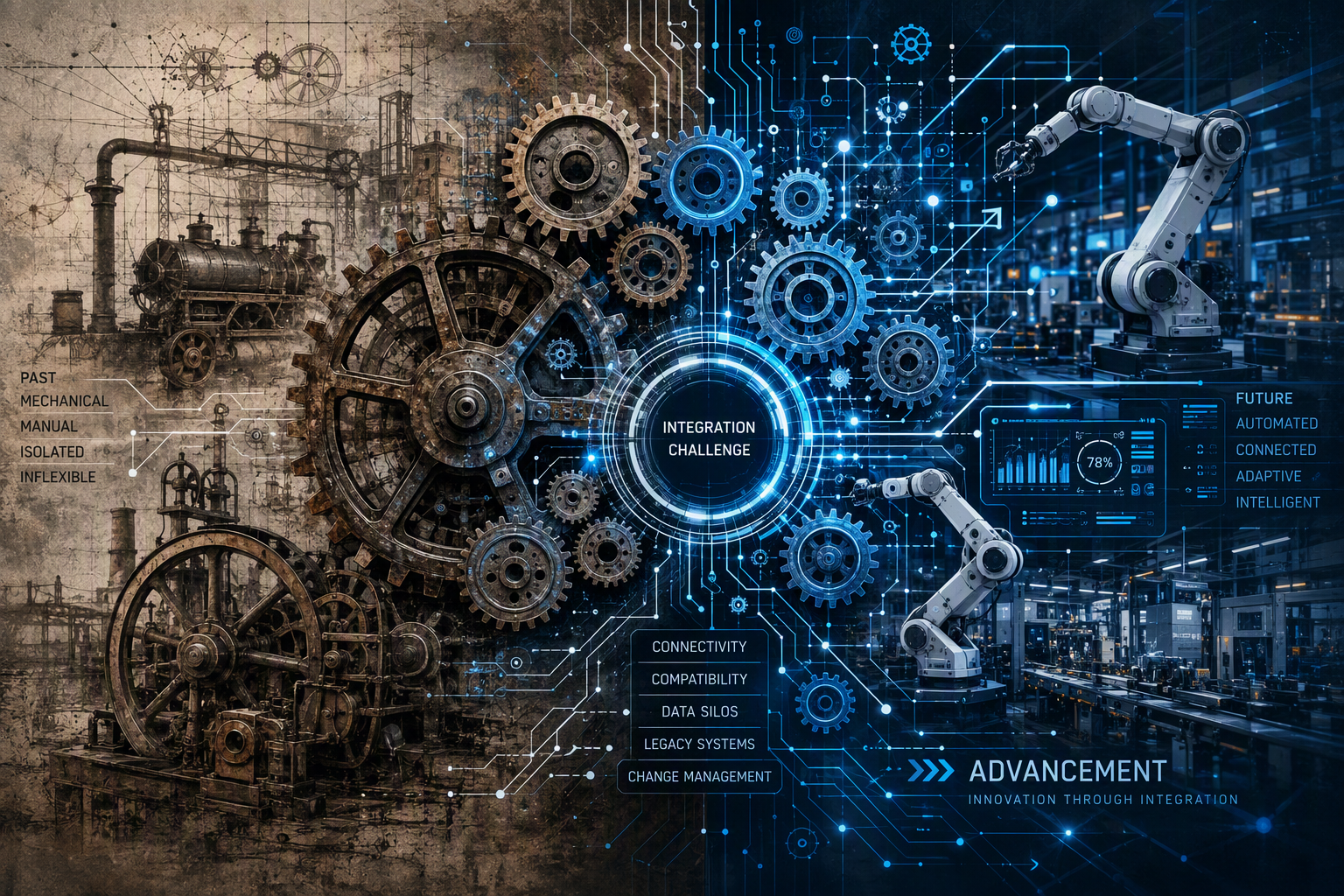
A new wave of advanced technologies is changing what automation technology can deliver. Businesses are moving beyond basic machine control toward connected, adaptive, and data-driven systems that support smart factories. That means better visibility, faster action, and stronger process performance.
These tools are improving efficiency, quality control, and productivity across the shop floor. From artificial intelligence to digital twin platforms, each technology adds a different layer of value. The following sections explain how intelligence, connectivity, and device-level innovation are reshaping industrial automation.
Artificial Intelligence and Machine Learning in Automation
Artificial intelligence and machine learning help automation systems move from simple response to smarter decision support. Instead of following only fixed rules, systems can identify patterns, flag issues, and support better timing for actions. This is one of the biggest ways intelligence is changing the industrial automation sector.
A key use case is predictive maintenance. By reviewing equipment signals and process data, machine learning can help detect conditions linked to wear, failure, or unplanned downtime. That allows maintenance teams to act earlier and reduce maintenance costs before a serious problem stops production.
AI also supports quality control. It can improve quality checks by spotting variation that may be missed in slower manual review. For your business, that means more stable output, fewer defects, and better operational efficiency. As AI grows, it works alongside robotics, sensors, and connected platforms rather than replacing them.
Robotics and Cobots: Next-Gen Workforce
Industrial robots are built to handle structured, repeatable work with speed and precision. They are often used for repetitive tasks such as assembly, sorting, and movement along controlled paths. In many settings, they are separated from workers because of speed, force, or safety concerns.
Collaborative robots, or cobots, are different. They are designed to work closer to people and support shared tasks in a more flexible way. This makes them useful when businesses want automation without fully redesigning the work area. Cobots can also help where manual tasks still need some human judgment.
Both options improve safety by taking on hazardous tasks and physically demanding work. They also support productivity by reducing fatigue and increasing consistency. Common use cases include assembly line activity, material handling, and quality-related support. Together, industrial robots and collaborative robots are expanding what the workforce can achieve.
Industrial Internet of Things (IIoT)
The industrial internet of things connects machines, field devices, sensors, and control systems so they can exchange data in real time. In simple terms, it gives your operation a digital link between equipment and decisions. That connection is a major reason automation is becoming faster and more visible.
IIoT supports process optimization by turning machine data into actionable insight. Field devices can report temperature, motion, status, and performance conditions as work happens. This helps businesses catch issues sooner, improve process control, and respond before delays grow into larger problems.
A practical example is using connected temperature sensors and machine signals to improve quality checks or identify maintenance needs. Another is tracking equipment performance across a shop floor to support better scheduling. As IIoT expands, it strengthens the value of cloud tools, edge computing, and smarter analytics.
Cloud Computing and Edge Processing
Cloud computing and edge computing both support modern automation solutions, but they solve different needs. Cloud platforms help store, organize, and analyze larger volumes of operational data. Edge computing works closer to the machine, which helps when your system needs real time action without delay.
That difference matters on the shop floor. If a process needs immediate response, edge computing can handle local decisions faster. At the same time, cloud computing can connect multiple operations, support trend analysis, and give teams broader visibility across sites or systems.
Used together, they create a stronger automation setup. Edge tools help with quick control actions, while cloud tools help with planning, reporting, and long-range process improvement. This balance supports better uptime, quicker decisions, and more connected operations. The same pattern appears in the devices gathering data at the source.
Sensors, Actuators, and Smart Devices
Sensors, actuators, and smart devices are the front line of industrial automation. Sensors collect information from machines and processes, while actuators turn control signals into physical movement or action. Together, they make automation solutions possible by linking data and execution.
Different devices serve different jobs. Temperature sensors track process conditions, vision systems support quality checks, and motion-related devices help coordinate movement. Smart devices often add communication features, which means they can send status updates and receive commands within broader automation systems.
You can find these components in packaging equipment, material handling lines, and process automation environments. A sensor may detect a condition, the control system may analyze it, and an actuator may respond at once. That chain is what helps businesses improve quality control, reduce errors, and run operations more consistently.
SCADA Systems and Process Control
SCADA systems are used for supervisory control and data acquisition in industrial settings. They help operators monitor equipment, collect data, and manage process control from a central view. This makes them valuable in operations where visibility across multiple assets or locations is important.
In process automation, SCADA systems support alarms, status tracking, and coordinated control decisions. They help teams understand what is happening, respond faster to issues, and maintain more stable operating conditions. That is especially useful when equipment performance and process timing directly affect output quality.
Modern SCADA systems are becoming more connected and data-driven. They can work with field devices, digital platforms, and broader automation systems to improve insight and response. For your business, that means stronger monitoring, better control, and easier access to operational information. Another technology taking this further is the digital twin.
Digital Twin Technology
A digital twin is a digital model of equipment, systems, or processes used to mirror real operating conditions. In industrial automation, it helps teams understand how machines and workflows behave without changing the live environment first. That creates a safer space for testing and improvement.
One major benefit is predictive maintenance. By comparing expected behavior with actual performance, a digital twin can help reveal wear patterns, process drift, or efficiency loss. This supports earlier action, less unplanned downtime, and more informed maintenance planning across critical assets.
Digital twin tools also support process optimization in smart factories. Teams can review changes, test scenarios, and improve system performance before applying adjustments on the shop floor. For businesses trying to reduce risk while improving output, this technology offers a practical bridge between planning and real operations.
Market Landscape and Growth Projections
The automation market continues to expand as businesses invest in faster, smarter, and more connected operations. Demand is being shaped by efficiency goals, changing production needs, and growing interest in automation solutions that reduce delays and improve control.
Large market players, digital transformation, and broader adoption across industries are all pushing the market forward. To answer how big the industrial automation market is and what its growth may look like, it helps to review the United States first and then the wider global picture.
Size and Value of the Industrial Automation Market in the United States
In the United States, the automation market is supported by strong industrial demand, widespread use of automation technology, and the presence of major market players. Growth is tied to smarter manufacturing, process control upgrades, and increased interest in industrial automation solutions that improve operational efficiency.
Here is a simple overview of the United States market landscape:
| Area | United States Automation Market Overview |
|---|---|
| Market direction | Growing due to demand for smarter industrial operations |
| Main drivers | Operational efficiency, labor shortages, supply chain pressure |
| Key technologies | Artificial intelligence, industrial iot, digital twin, robotics |
| Example market players | Rockwell Automation, Schneider Electric, Mitsubishi Electric, Siemens AG |
For your business, this means the United States remains a major center for automation adoption and innovation. Strong vendor presence and broad industrial use continue to support market value and future expansion.
Global Market Trends and Forecasts
The global market for industrial automation is growing as more businesses adopt automation solutions to improve speed, quality, and resilience. Rising pressure on the supply chain, combined with the need for stronger operational control, is encouraging investment across manufacturing and process industries.
A clear trend is the spread of connected systems, smart manufacturing, and digital tools that help businesses respond faster to change. Market players are competing around industrial robots, intelligent software, real-time data, and integrated automation platforms. These areas are likely to remain central to future growth.
Regions leading adoption are typically those with strong industrial bases, advanced manufacturing activity, and high pressure to improve output and lead times. As the global market expands, businesses are focusing not just on automation itself, but on how well it connects with planning, maintenance, and supply chain performance.
Factors Driving Market Expansion
Market expansion is being driven by clear business needs rather than simple interest in new technology. Companies want stronger operational efficiency, more reliable output, and better control over changing demand. Automation solutions help address these pressures in ways that manual processes often cannot.
Key growth drivers include:
- Labor shortages that increase the need for automation
- Supply chain pressure that rewards faster response
- Demand for higher operational efficiency
- Rising use of connected and intelligent systems
These drivers are linked closely to industry needs. When staffing is harder, automation supports continuity. When supply chain issues affect timing, connected systems improve visibility and reaction speed. For businesses facing tighter margins and higher expectations, automation becomes a practical growth strategy rather than an optional upgrade.
Leading Industries in Industrial Automation Adoption
Some industries are adopting industrial automation solutions faster than others because the return is clear. They need better speed, tighter quality control, safer operations, and stronger process optimization to stay competitive. Automation helps them reach those goals with more consistent output.
The manufacturing process remains a major area of adoption, but it is not alone. Energy, food, healthcare, and logistics are also investing heavily. The next sections show which industries are leading and why automation matters so much in each one.
Manufacturing: Automotive, Electronics, and Consumer Goods
Manufacturing is one of the strongest users of industrial automation, especially in automotive, electronics, and consumer goods. These sectors rely on a stable manufacturing process, repeatable quality, and fast output. Automation supports those needs by reducing delays, improving coordination, and increasing operational efficiency.
In automotive settings, automation helps with assembly line work, motion control, and material handling. In electronics, it supports precision tasks and quality checks. Consumer goods producers use automation to manage packaging, product flow, and high-volume repetitive tasks while keeping production organized.
The result is better consistency, improved lead times, and stronger use of resources. For manufacturers, automation is not just about replacing manual labor. It is about building a faster, more reliable process that can meet demand without losing quality. That same logic applies in industries where safety and remote control are equally important.
Oil & Gas, Energy, and Utilities
Oil & gas, energy, and utilities are major users of process automation because they manage complex operations that demand reliability and safety. In these sectors, a small issue can affect output, cost, or site conditions quickly. Automation helps maintain tighter control over industrial processes.
Process automation improves monitoring, supervisory control, and response speed across energy systems and industrial assets. Predictive maintenance is especially valuable here because it helps identify equipment issues before they lead to unplanned downtime or expensive disruption. That creates a direct benefit for uptime and maintenance planning.
Specific use cases include remote monitoring, condition tracking, and automated response to process changes. In environments with hazardous tasks, automation also reduces direct exposure for workers. For these industries, the value comes from better control, stronger safety, and more stable performance under demanding conditions.
Food & Beverage Processing
Food & beverage operations depend on speed, consistency, and dependable quality control. That is why process automation plays a growing role in this sector. It helps businesses manage repeated steps, monitor conditions, and support batch production with less variation from run to run.
Automation is useful in mixing, packaging, sorting, and material handling. It can also improve quality checks by tracking process conditions and helping operators respond faster when performance shifts. For producers handling multiple product lines, automation supports smoother batch production and more stable output.
Another benefit is easier control over standards and repeatability. When your process is more consistent, it becomes easier to maintain product quality and support compliance-related expectations. In food & beverage, automation helps protect both efficiency and trust, which is why adoption continues to grow.
Healthcare and Pharmaceuticals
Healthcare and pharmaceuticals use automation technology where accuracy, consistency, and control are critical. In these settings, small process problems can affect product quality, timing, or safety. Automation helps reduce variation and supports more dependable workflows across production and handling tasks.
In pharmaceuticals, process optimization is especially important. Automated systems can help manage production steps, quality-related checks, and repeatable operations with greater stability. That improves efficiency while supporting the high level of control needed in regulated environments.
Healthcare settings also benefit from better process flow and less dependence on manual handling in repeatable tasks. For your organization, the value of automation here is not only speed. It is also about reliability, traceability, and safer outcomes tied to better-controlled processes. Similar gains appear in fast-moving storage and distribution environments too.
Logistics and Warehousing
Logistics and warehousing are adopting automation technology to improve movement, timing, and visibility across the supply chain. These environments deal with high volumes, changing demand, and constant pressure on lead times. Automation helps businesses keep goods moving with fewer delays and fewer manual bottlenecks.
Material handling is one of the biggest use areas. Automated systems can support sorting, routing, storage movement, and repetitive transfer tasks more consistently than fully manual methods. This helps improve flow while reducing strain on workers handling routine jobs.
The payoff is faster processing, better accuracy, and more reliable lead times. In warehousing, automation supports smoother operations from receiving through shipment. For companies facing growing customer expectations and supply chain pressure, that makes automation a practical tool for service and cost control.
Benefits of Industrial Automation for Businesses
The business case for automation is clear. Companies adopt it to improve operational efficiency, increase consistency, and reduce wasted time across industrial operations. Better monitoring, faster response, and less reliance on manual labor all support stronger day-to-day performance.
Financial results matter too. Productivity gains and cost savings often come from fewer delays, lower maintenance costs, and better use of equipment. If you want to understand the practical payoff of industrial automation in manufacturing, the next section focuses on output and cost impact directly.
Productivity Gains and Cost Savings
Incorporating automation solutions can lead to significant productivity gains and cost savings for businesses. With advanced technologies like artificial intelligence and machine learning, operations become more streamlined, reducing lead times and enhancing process control. As automation technology takes over repetitive tasks, businesses can allocate human resources to more value-added activities. Furthermore, the use of real-time data from the industrial internet of things allows for predictive maintenance, which minimizes unplanned downtime and cuts maintenance costs. Embracing these innovations ultimately fosters long-term operational efficiency within the industrial automation ecosystem.
Enhanced Quality and Consistency
Utilizing advanced automation solutions leads to significant improvements in quality and consistency across production lines. With the integration of intelligent control systems, real-time monitoring becomes seamless, ensuring that every product meets high standards. By minimizing human intervention through machine learning and automation technology, companies can reduce the likelihood of errors during repetitive tasks. The implementation of quality checks at various stages, coupled with predictive maintenance, ensures that equipment operates at peak performance, ultimately enhancing the overall quality of the manufacturing process. This not only satisfies customer demands but also strengthens brand reputation.
Improved Safety and Workforce Management
The integration of advanced technologies in industrial automation significantly enhances safety and workforce management. Automation solutions like collaborative robots take over hazardous tasks, reducing the risk of injuries while allowing human workers to focus on higher-value activities. This synergy fosters a safer workplace environment, promoting employee wellbeing. Additionally, real-time monitoring through the industrial internet of things (IIoT) enables managers to track operational efficiency and quickly identify potential safety issues. By prioritizing safety and supporting workforce adaptation, companies can create a more productive, secure, and resilient working atmosphere.
Environmental Sustainability and Resource Efficiency
In today’s industrial landscape, utilizing advanced automation technology propels environmental sustainability and resource efficiency. Smart factories leverage the Internet of Things (IoT) to monitor energy consumption in real-time, enabling companies to adjust processes and minimize waste. Moreover, predictive maintenance reduces the risk of unplanned downtime, thereby optimizing operational efficiency and lowering maintenance costs. Automation solutions also facilitate better inventory management, aligning production with demand to avoid excess materials. Engaging in these practices not only enhances the bottom line but also supports ecological responsibility by decreasing the carbon footprint of industrial operations.
Major Challenges Facing the Industrial Automation Industry
Numerous hurdles are currently impacting the industrial automation industry. One significant challenge is the skill gap; as advanced technologies like artificial intelligence and the Internet of Things emerge, existing workforces often struggle to adapt. Additionally, cybersecurity and data protection are becoming increasingly vital as interconnected systems evolve. Integration difficulties with legacy systems can stall progress, while navigating regulatory compliance adds layers of complexity. Together, these factors can hinder operational efficiency and slow down the adoption of innovative automation solutions needed for modern smart factories.
Skill Gaps and Workforce Adaptation
Navigating the landscape of industrial automation hinges on bridging the skill gaps present in today's workforce. As automation technology evolves, the demand for skilled labor equipped with knowledge in artificial intelligence, machine learning, and data integration grows. Businesses need to cultivate a culture of continuous learning and development, ensuring that employees adapt to new roles alongside collaborative robots and smart manufacturing systems. Programs focusing on upskilling allow teams to embrace automation solutions effectively while enhancing operational efficiency, ultimately driving productivity in rapidly changing industrial processes. Engaging and empowering workers can yield significant advancements for both individuals and businesses alike.
Cybersecurity and Data Protection
Protecting sensitive data in the industrial automation landscape is essential for maintaining operational integrity. With the rise of connected devices through the industrial Internet of Things (IIoT), the risk of cyber threats increases, making robust cybersecurity measures paramount. Implementing automation technologies that incorporate advanced security protocols ensures that control systems and data acquisition remain secure. Continuous monitoring and predictive maintenance can help identify vulnerabilities before they escalate, thus safeguarding against unauthorized access and data breaches. A proactive approach not only protects valuable information but also fosters trust among stakeholders, leading to greater operational efficiency.
Integration Difficulties Across Legacy Systems
Integrating new automation technology with existing legacy systems often presents significant challenges. Many businesses rely on older systems that lack compatibility with modern automation solutions, creating hurdles in data exchange and process control. Upgrading to more advanced control logic and automation systems can require substantial investment in both time and resources. The complexity increases, especially when dealing with disparate systems from various manufacturers. Emphasizing collaboration between IT and operational teams is crucial for seamless integration, ensuring that smart factories can maximize efficiency while minimizing unplanned downtime and maintenance costs.
Regulatory Compliance in Automation
Navigating the landscape of regulatory compliance is crucial for thriving in the industrial automation sector. Ensuring adherence to industry standards and regulations can significantly impact operational efficiency and mitigate risks. With the rise of automation solutions and advanced technologies, organizations must focus on implementing robust control systems that facilitate seamless compliance. This involves regular audits, comprehensive documentation, and an understanding of pertinent regulations. Ultimately, staying compliant not only enhances productivity but also fosters trust with stakeholders, ensuring sustainable growth in a rapidly evolving marketplace.
Conclusion
In navigating the landscape of the industrial automation industry, one thing is clear: transformative potential abounds. By embracing advanced technologies like artificial intelligence and the industrial internet of things, businesses can unlock new levels of operational efficiency and productivity. However, addressing the key challenges, such as workforce adaptation and cybersecurity, is essential for sustained success. As the industry progresses, staying updated on trends and innovations will empower organizations to thrive in this dynamic environment. Ultimately, a thoughtful approach to automation solutions will pave the way for a brighter future.
Frequently Asked Questions
What are the future career opportunities in industrial automation?
As the industrial automation sector evolves, careers will expand in robotics engineering, data analysis, and cybersecurity. Professionals skilled in AI integration and system optimization will be in high demand. Additionally, roles focusing on sustainability practices are likely to emerge as environmental concerns grow.
Will artificial intelligence replace human workers in automation?
While artificial intelligence enhances productivity and efficiency in automation, it is more likely to augment human workers rather than replace them entirely. The focus will shift towards collaborative roles where humans and AI work together, leveraging each other's strengths for optimal outcomes.
Who are the leading industrial automation companies in the United States?
Some leading industrial automation companies in the United States include Rockwell Automation, Siemens USA, and Honeywell. These firms are renowned for their innovative solutions in control systems, robotics, and software, driving advancements in productivity and efficiency across various industries.
You might also like