What Are the Industry 4.0 Standards?
Key Highlights
- Industry 4.0 is the fourth industrial revolution, built on connected digital technologies in the manufacturing industry.
- A smart factory uses sensors, software, and automation to improve visibility and speed.
- Data analytics helps teams make better decisions across production, supply chain, and service operations.
- Predictive maintenance reduces downtime by spotting issues before machines fail.
- Standards such as RAMI 4.0 and OPC UA support connected, interoperable systems.
- These changes continue the industrial revolution by making manufacturing more flexible and responsive.
Introduction
Industry 4.0 is changing how the manufacturing industry works. It builds on each industrial revolution that came before it, but adds connected systems, automation, and smarter decision-making. Instead of relying on separate tools and slow updates, manufacturers can now use real-time information to improve how they make, move, and support products. If you want to understand what Industry 4.0 standards are, it helps to first see how this shift is reshaping modern manufacturing from the factory floor to the wider business.
Understanding Industry 4.0 Standards
Industry 4.0 is the current stage of the industrial revolution. It brings digital transformation into production by connecting machines, software, and people across a smart factory. The goal is not just automation, but faster and better decisions.
Standards matter because they help systems work together across business processes. Without common rules, data stays trapped in silos. With them, manufacturers can connect production, supply chain, and service systems in ways that improve visibility, flexibility, and overall performance.
What Is Industry 4.0?
At its core, Industry 4.0 refers to the fourth industrial revolution. It is the use of digital technologies to transform how industrial companies operate, especially in manufacturing. This includes connected equipment, software, analytics, and automation working together in real time.
What makes it different is the way smart machines communicate and share information. Instead of acting alone, machines, sensors, and systems can exchange data, support faster responses, and improve efficiency across production lines and other business operations.
That matters because modern manufacturing needs speed, accuracy, and flexibility. Industry 4.0 helps companies improve decision-making, respond to changing demand, and support better outcomes across the value chain. In simple terms, it turns factories from isolated environments into connected systems that can learn, adapt, and perform better.
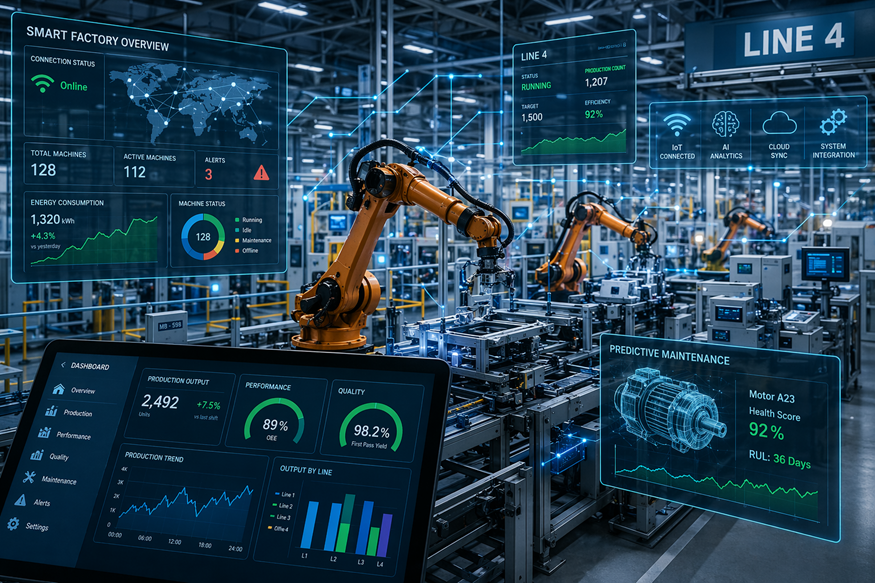
The Importance of Industry 4.0 in Modern Manufacturing
Modern manufacturing is under pressure to produce faster, control costs, and still meet customer needs. Industry 4.0 supports that by improving the manufacturing process with connected data, automation, and better coordination across business processes.
It also changes the old model of mass production. Instead of making the same item at scale with limited flexibility, manufacturers can move toward more responsive production while protecting product quality and efficiency.
Key benefits include:
- Better visibility into the manufacturing process and equipment performance.
- Faster response to issues that affect product quality and output.
- Higher efficiency through automation and smarter scheduling.
- Stronger links between factory activity and wider business processes.
For many companies, these gains are why Industry 4.0 has become a practical priority rather than just a future concept.
How Industry 4.0 Differs from Previous Industrial Revolutions
The fourth industrial revolution differs from earlier shifts because it combines automation with connected intelligence. The first industrial revolution focused on mechanical power. Later stages introduced mass production, electricity, and then computing.
Now, machines, software, and data work together across entire operations. The term is widely linked to Klaus Schwab, executive chairman of the World Economic Forum. Unlike earlier revolutions driven mainly by energy delivery or single technologies, Industry 4.0 is defined by connected, data-driven systems.
Evolution of Industrial Revolutions
To understand Industry 4.0, it helps to look at the full timeline. Each industrial era changed how goods were produced, but each one used a different foundation. The first industrial revolution relied on mechanical power. The second introduced large-scale production. The third brought the digital revolution into factories.
Here is a simple text table:
| Industrial Revolution | Main Driver | Typical Change |
|---|---|---|
| First industrial revolution | Water power and steam power | Machines replaced much hand work |
| Second industrial revolution | Electricity, oil, gas | Assembly line methods and mass production |
| Third industrial revolution | Computers and telecommunications | Automation, programmable logic controllers, data analysis |
| Fourth industrial revolution | Connected digital systems | Smart factories, real-time decisions, integration |
Seen together, the pattern is clear. The first industrial revolution started mechanization, the second scaled output, the third digitized operations, and the fourth connects systems so they can respond with more speed and insight.
Key Innovations That Define Industry 4.0
Industry 4.0 is defined by a group of technologies working together, not by one tool alone. A smart factory depends on data flowing between machines, software platforms, and people. That is what makes operations more responsive.
The biggest shift comes from turning industrial activity into usable information. The internet of things and industrial IoT connect equipment. Big data gives scale. Artificial intelligence helps teams spot patterns and act sooner.
The main innovations include:
- Internet of things devices and sensors that collect factory data.
- Big data platforms that handle large volumes of information.
- Artificial intelligence and machine learning that improve decisions.
- Smart factory systems that connect assets across operations.
These innovations support better visibility, stronger automation, and more reliable action across industrial processes.
Core Technologies Behind Industry 4.0 Standards
Behind Industry 4.0 standards are several core technologies that make connected manufacturing possible. The industrial internet of things links machines and devices, while cloud computing supports storage, scaling, and shared access to information.
At the same time, data analytics turns raw inputs into action, and a digital twin creates a virtual view of assets or processes. Together, these tools support predictive maintenance, real-time monitoring, and stronger coordination across production environments. The next sections explain how these building blocks work.
Industrial Internet of Things (IIoT)
The industrial internet of things is a central part of Industry 4.0. It connects machines, devices, and systems across the factory floor so they can share information. This gives manufacturers more visibility into industrial processes as they happen.
In practice, IIoT depends on iot sensors embedded in equipment. These sensors collect performance and condition data in real time. Once that information is available, teams can monitor operations more closely and respond faster to quality or equipment issues.
This is why IIoT and smart factories are so closely linked. A smart factory needs connected assets to support automation, data sharing, and faster decision-making. Without the industrial internet of things, many Industry 4.0 benefits, such as predictive maintenance and near-real-time control, would be much harder to achieve.
Cyber-Physical Systems and Smart Factories
Cyber-physical systems connect digital technologies with machines and equipment in the real world. In manufacturing, that means software can monitor, analyze, and influence physical processes rather than just record them after the fact.
This connection is a major reason the smart factory model works. Sensors, embedded software, and automation tools gather data from equipment, then support decisions that improve output, reduce errors, and protect product quality. The system becomes more aware of what is happening on the floor.
For you, the value is simple. When digital tools and physical systems work together, factories become more responsive. Problems can be detected sooner, equipment can be adjusted more quickly, and teams gain a clearer picture of performance across the plant.
Key Industry 4.0 Standards and Frameworks
Industry 4.0 depends on standards because connected manufacturing only works well when systems can exchange information reliably. As digital transformation expands, companies need frameworks that support structure, communication, and consistency.
Two important names you will often hear are RAMI 4.0 and OPC UA. RAMI 4.0 gives a reference model for organizing Industry 4.0 environments, while OPC UA supports secure communication between systems. Together, they help create interoperable systems that can scale more effectively.
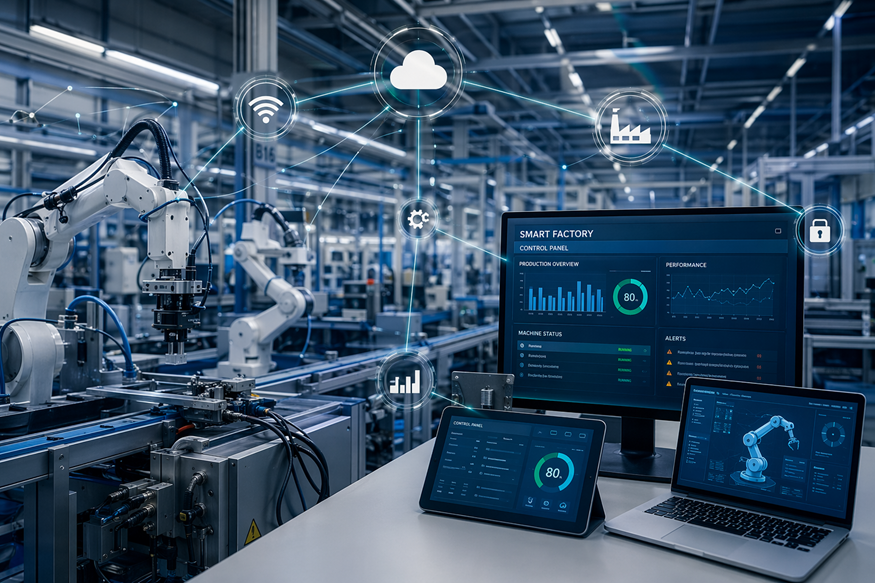
RAMI 4.0 (Reference Architectural Model for Industry 4.0)
RAMI 4.0 stands for Reference Architectural Model for Industry 4.0. It is a framework used to organize how systems, assets, and information fit together in a connected manufacturing environment. For companies planning digital transformation, it offers a clearer structure.
In the manufacturing industry, that structure matters because many systems must interact across industrial processes. A shared model makes it easier to map assets, software layers, and lifecycle stages without losing consistency.
RAMI 4.0 helps by:
- Creating a common view of complex Industry 4.0 environments.
- Supporting planning across systems, assets, and process layers.
- Improving alignment during digital transformation efforts.
- Helping manufacturers manage connected industrial processes more clearly.
If you are trying to understand the standards behind Industry 4.0, RAMI 4.0 is one of the core frameworks worth knowing.
OPC UA (Open Platform Communications Unified Architecture)
OPC UA is a communication standard that helps systems exchange data in a consistent and secure way. In Industry 4.0 settings, that matters because machines, software platforms, and enterprise tools all need to share information without confusion.
For industrial processes, OPC UA helps bridge the gap between factory equipment and wider digital environments. It supports data flow from machines into platforms used for cloud computing, business operations, and monitoring. That makes connected manufacturing more practical.
Its value grows when companies want stronger data analysis across departments. Instead of keeping information locked in separate tools, OPC UA supports communication that can feed reporting, control, and planning systems. In short, it is one of the standards that helps make connected operations usable at scale.
Digital Transformation in Industry 4.0 Environments
Digital transformation is the engine behind Industry 4.0. It changes how companies connect systems, manage work, and use information across business processes. This is not only about buying new equipment. It is about changing how decisions are made.
As smart machines generate more data, manufacturers can combine factory information with inputs from sales, service, and supply operations. Big data then becomes useful across the business. The next sections look at two critical pieces of that shift: IT and OT integration, and the role of analytics and connectivity.
Integrating IT and OT Systems
One of the biggest changes in Industry 4.0 is the link between it systems and ot systems. IT usually manages enterprise applications and information, while OT runs machines and production equipment. In the past, these areas often stayed separate.
That separation limits visibility. In the manufacturing industry, companies need digital technologies that connect factory activity with planning, service, and management tools. Strong data integration allows information from the shop floor to support wider decisions across the business.
When IT and OT work together, manufacturers can react faster and plan better. Real-time equipment data can support scheduling, maintenance, and quality decisions. It also helps reduce isolated data silos, which is essential when companies want a connected and scalable Industry 4.0 environment.
Role of Data Analytics and Connectivity
Data on its own does not improve performance. The value comes when manufacturers can collect, connect, and interpret it. That is where data analytics plays a major role in Industry 4.0 systems.
With strong connectivity, information moves from machines and devices into tools that support big data processing, cloud computing, and real time action. This helps teams see what is happening now, not just what happened last week.
Key reasons this matters include:
- Data analytics helps identify trends, patterns, and operational issues.
- Real time visibility supports faster responses to safety or quality problems.
- Cloud computing makes large-scale data handling more practical.
- Connected digital technologies improve coordination across departments.
If you want Industry 4.0 to deliver results, data has to move freely and be usable across the business.
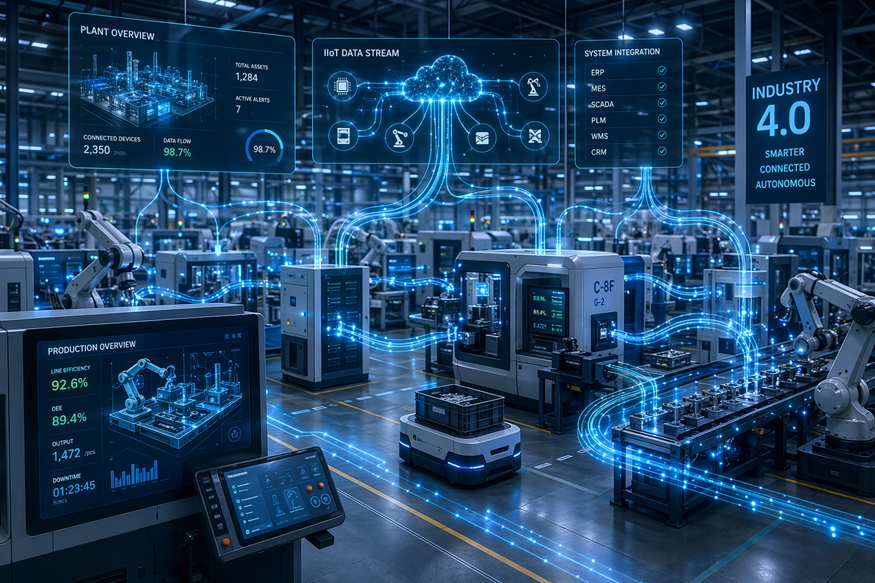
Beginner’s Guide: How to Get Started with Industry 4.0 Standards
Getting started with Industry 4.0 does not mean changing everything at once. A better approach is to begin with clear business needs, then build your digital transformation around them. That keeps smart manufacturing practical and focused.
You may want better equipment visibility, stronger quality control, or faster development of new products. From there, you can choose the standards, tools, and training that fit your goals. The next two sections cover the basic resources you need and a simple path to begin implementation.
Essential Tools, Technologies, and Resources Needed
Before you begin, focus on the tools that make connected operations possible. Industry 4.0 depends on digital technologies that can capture data, connect systems, and support decisions across production and maintenance.
You do not need every tool at once. What you do need is a practical base that supports growth. That often includes connected devices, scalable platforms, and equipment that can share useful information.
Common essentials include:
- Iot sensors to collect machine and process data.
- Cloud computing tools to store and process information efficiently.
- Smart machines that can communicate performance and status data.
- Analytics and software platforms that turn raw data into action.
These resources give manufacturers a starting point for smarter operations. Once the basics are in place, it becomes easier to expand into more advanced Industry 4.0 use cases.
Step-by-Step Guide to Implementing Industry 4.0 Standards
A successful rollout starts with a clear reason for change. In the manufacturing industry, that may be reducing downtime, improving quality, or connecting production with wider business operations. The target should be practical and measurable.
From there, companies can build digital transformation in stages. That reduces disruption and gives teams time to improve data integration, train staff, and connect systems in a controlled way.
A useful sequence looks like this:
- Identify the business need and priority outcome.
- Review current systems and gaps in data integration.
- Choose standards and technologies that support the goal.
- Expand gradually across operations once early value is clear.
This approach helps businesses gain efficiency, stronger visibility, and better decision-making without trying to transform everything in one move.
Step-by-Step Guide to Implementing Industry 4.0 Standards
Implementing Industry 4.0 works best when you break it into manageable steps. That helps teams connect technology choices to real goals such as better quality control, smoother production processes, or lower downtime.
As IoT and smart factory capabilities grow, so does the need for structure. Data analytics, predictive maintenance, and connected systems can deliver results, but only when the basics are in place first. The following steps walk through a practical path from assessment to continuous improvement.
Step 1: Assessing Your Current Infrastructure and Needs
Start by looking closely at your current infrastructure. You need a clear picture of what equipment, software, and networks are already in place across your production facilities. Without that baseline, it is hard to plan any useful change.
Next, define the business need. Some companies want stronger uptime. Others want better quality, faster decisions, or more flexible production. The right digital transformation path depends on what problem you are trying to solve in the manufacturing process.
This step also helps expose common challenges. You may find disconnected systems, limited data access, or older equipment that cannot easily connect. Spotting those issues early makes the next decisions more practical and reduces the risk of investing in tools that do not fit your real environment.
Step 2: Selecting the Right Industry 4.0 Technologies and Standards
Once you know your starting point, choose technologies and standards that match your goals. Not every factory needs the same setup. What matters is selecting tools that support your smart factory plans and fit existing business processes.
Standards are especially important here. They help systems communicate and reduce the risk of building isolated solutions. This is where frameworks such as RAMI 4.0 and OPC UA become useful for planning and connectivity.
When selecting, focus on:
- Technologies that solve a clear operational problem.
- RAMI 4.0 for architectural structure and planning.
- OPC UA for system communication and data exchange.
- Tools that fit both factory needs and wider business processes.
A careful selection process makes implementation smoother and gives you a stronger base for future expansion.
Step 3: Building Skills and Training Your Workforce
Technology alone will not make Industry 4.0 work. Your workforce needs the skills to use new systems, understand data, and work effectively with connected equipment. That is why training should begin early, not after deployment.
The most useful digital skills often include working with connected tools, understanding data outputs, and adapting to software-driven workflows. As machine learning and analytics become more common, employees also need confidence in interpreting system insights.
This is where human resources plays a key role. Training plans, onboarding updates, and ongoing support help teams adjust without feeling left behind. When people understand the purpose of change and feel prepared to use the tools, adoption becomes easier and the value of Industry 4.0 grows faster.

Step 4: Establishing Data Management and Connectivity
After technology selection and training, you need a reliable way to manage information. Industry 4.0 depends on data that can move between machines, platforms, and teams without getting trapped in separate systems.
Good data integration makes that possible. It allows equipment data to support business operations such as planning, service, and supply coordination. If the flow breaks, the value of connected manufacturing drops quickly.
This is also where cloud computing often helps. Large volumes of factory information can be stored, shared, and processed more efficiently, which supports stronger data analytics. For manufacturers, the goal is simple: create a dependable data foundation so decisions can be based on timely, complete, and usable information.
Step 5: Monitoring Progress and Continuous Improvement
Implementation does not end once systems are live. You need regular monitoring to see whether the new tools are improving uptime, efficiency, and product quality. That makes Industry 4.0 a process of continuous improvement rather than a one-time project.
Start by tracking meaningful results. This might include downtime reduction, stronger quality control, or better response times. These measures show whether connected systems are delivering value or need adjustment.
Over time, predictive maintenance and analytics can reveal patterns that help improve performance further. That may lead to fewer equipment failures, more stable output, and better product quality. The big benefit is not only short-term efficiency, but the ability to keep refining operations as your environment changes.
Real-World Examples of Industry 4.0 Standards in Action
Industry 4.0 becomes easier to understand when you look at how companies use it in real settings. In smart manufacturing, connected systems help improve output, reduce waste, and respond faster to change.
You can see this in smart factory monitoring, predictive maintenance, and more connected supply chain planning. These approaches also support the design and delivery of innovative products. The next sections show where these ideas create practical value across manufacturing and logistics.
Smart Manufacturing Use Cases
Smart manufacturing use cases often start with visibility. When digital technologies connect machines, teams can see more of the manufacturing process and respond sooner to issues that affect output or product quality.
Another common use case is remote monitoring. With cloud computing and connected devices, quality control personnel can monitor operations from different locations. Machine learning can also help detect errors earlier, before repair work becomes more expensive.
Examples include:
- Monitoring production conditions to improve product quality.
- Using connected devices to support remote process visibility.
- Detecting equipment or process issues earlier in production.
- Linking factory data with cloud computing tools for faster response.
These use cases show how smart manufacturing turns data into action, helping plants improve consistency, speed, and control.
Supply Chain Optimization and Predictive Maintenance
Industry 4.0 also creates value beyond the factory floor. A connected supply chain can use shared production data to improve scheduling, reduce waste, and support better delivery timing. When disruption happens, companies can adjust faster.
At the same time, predictive maintenance is one of the clearest practical examples of Industry 4.0 in action. Data gathered through the industrial internet of things helps teams detect failure patterns before a machine breaks down.
That has a direct impact on uptime and maintenance costs. Instead of reacting after damage is done, manufacturers can plan service more effectively and protect business processes from unnecessary interruption. In many operations, this combination of smarter maintenance and better supply coordination delivers fast and measurable value.
Addressing Challenges When Adopting Industry 4.0 Standards
Adopting Industry 4.0 can bring real gains, but it also creates practical challenges. Many companies struggle with system integration, protecting sensitive data, and making sure new tools work across existing operations.
Another common issue is workforce upskilling. Digital transformation changes how people work, not just which technologies they use. That means security planning and employee readiness have to move forward together. The next two sections look at both the technical and people-side hurdles that companies need to manage carefully.
Overcoming Integration and Security Hurdles
One major challenge is integration. Many manufacturers already use a mix of older and newer systems, and those tools do not always connect easily. Without strong integration, information stays fragmented and the value of Industry 4.0 is reduced.
Security is just as important. As more equipment and platforms connect, more paths open for risk. That matters even more when operations involve sensitive data, remote access, and cloud computing environments.
The answer is to build interoperable systems and treat security as part of the design, not an afterthought.
Manufacturers need connected environments that support communication while protecting assets and information. When integration and security are planned together, companies are in a much better position to scale Industry 4.0 safely and effectively.
Managing Change and Workforce Upskilling
Even well-chosen technology can fail if people are not ready for it. Industry 4.0 often changes routines, reporting, and daily responsibilities. That is why change management should be part of the plan from the start.
Your workforce needs support as smart machines and connected systems become part of normal operations. Upskilling is not only about technical training. It is also about helping employees understand why the changes matter and how they can work with them confidently.
Useful priorities include:
- Building digital skills for connected tools and software.
- Offering ongoing upskilling rather than one-time sessions.
- Explaining changes clearly through structured change management.
- Preparing teams to work alongside smart machines and data tools.
When people feel informed and capable, adoption becomes smoother and the long-term value of Industry 4.0 becomes easier to sustain.
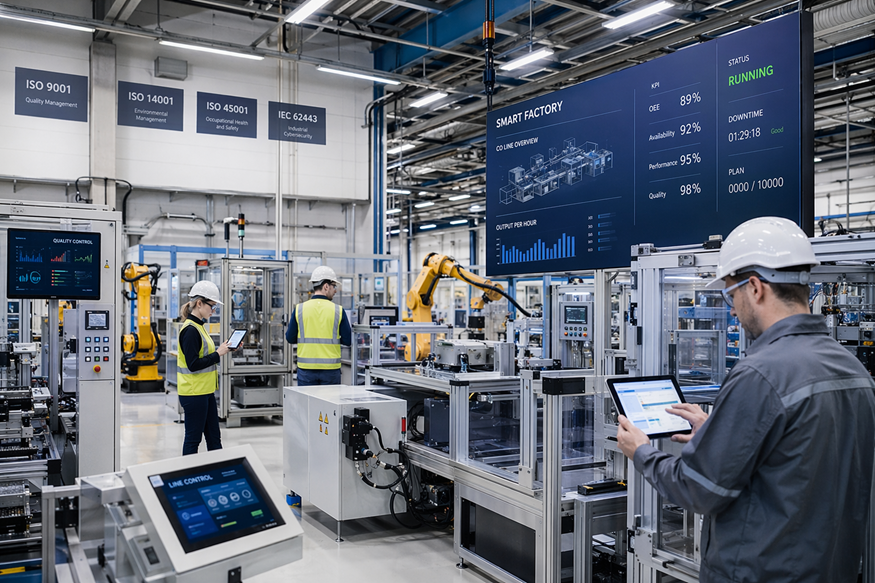
Conclusion
In conclusion, understanding Industry 4.0 standards is crucial for businesses looking to thrive in the modern manufacturing landscape. By embracing these standards, companies can leverage innovative technologies like IIoT, cyber-physical systems, and data analytics, leading to smarter operations and enhanced efficiencies. The transition may seem daunting, but with a structured approach—assessing infrastructure, selecting appropriate technologies, and upskilling your workforce—you can navigate this digital transformation successfully. Remember, staying ahead of the curve in adopting these standards not only improves productivity but also positions your business as a leader in innovation. If you’re ready to take the next step, reach out for a free consultation to discuss how to implement Industry 4.0 standards tailored to your needs.
Frequently Asked Questions
What are the essential standards that define Industry 4.0?
Key Industry 4.0 standards include RAMI 4.0 and OPC UA. RAMI 4.0 provides a framework for organizing connected manufacturing environments, while OPC UA supports communication between systems. Together, they support digital transformation by helping manufacturers build interoperable systems that can share information more effectively.
How do smart factories utilize Industry 4.0 technologies?
A smart factory uses digital technologies such as the industrial internet of things, connected sensors, and data analytics to monitor equipment and processes in real time. This helps teams respond faster, improve visibility, support automation, and make better operating decisions across the production environment.
Why is data integration important for Industry 4.0 success?
Data integration is essential because smart manufacturing depends on information flowing across machines, software, and business operations. When systems connect properly, big data becomes useful for planning, maintenance, and quality decisions. That supports better product quality, fewer silos, and stronger performance across the organization.
What skills should employees develop for Industry 4.0 environments?
Employees should build digital skills that help them work with connected systems, data analytics, and cloud computing tools. In some roles, understanding machine learning outputs is also useful. A prepared workforce can adapt faster, use new tools with confidence, and support stronger results from Industry 4.0 initiatives.
You might also like