Explore Industrial Automation Solutions
Explore Industrial Automation Solutions
Key Highlights
- Industrial automation helps businesses improve speed, accuracy, and quality control across daily operations.
- Modern automation solutions combine software, machines, and industrial robots to reduce repetitive manual work.
- Process automation supports safer, more consistent output in the manufacturing industry and other sectors.
- Key systems often include sensors, programmable logic controllers, and operator dashboards for control.
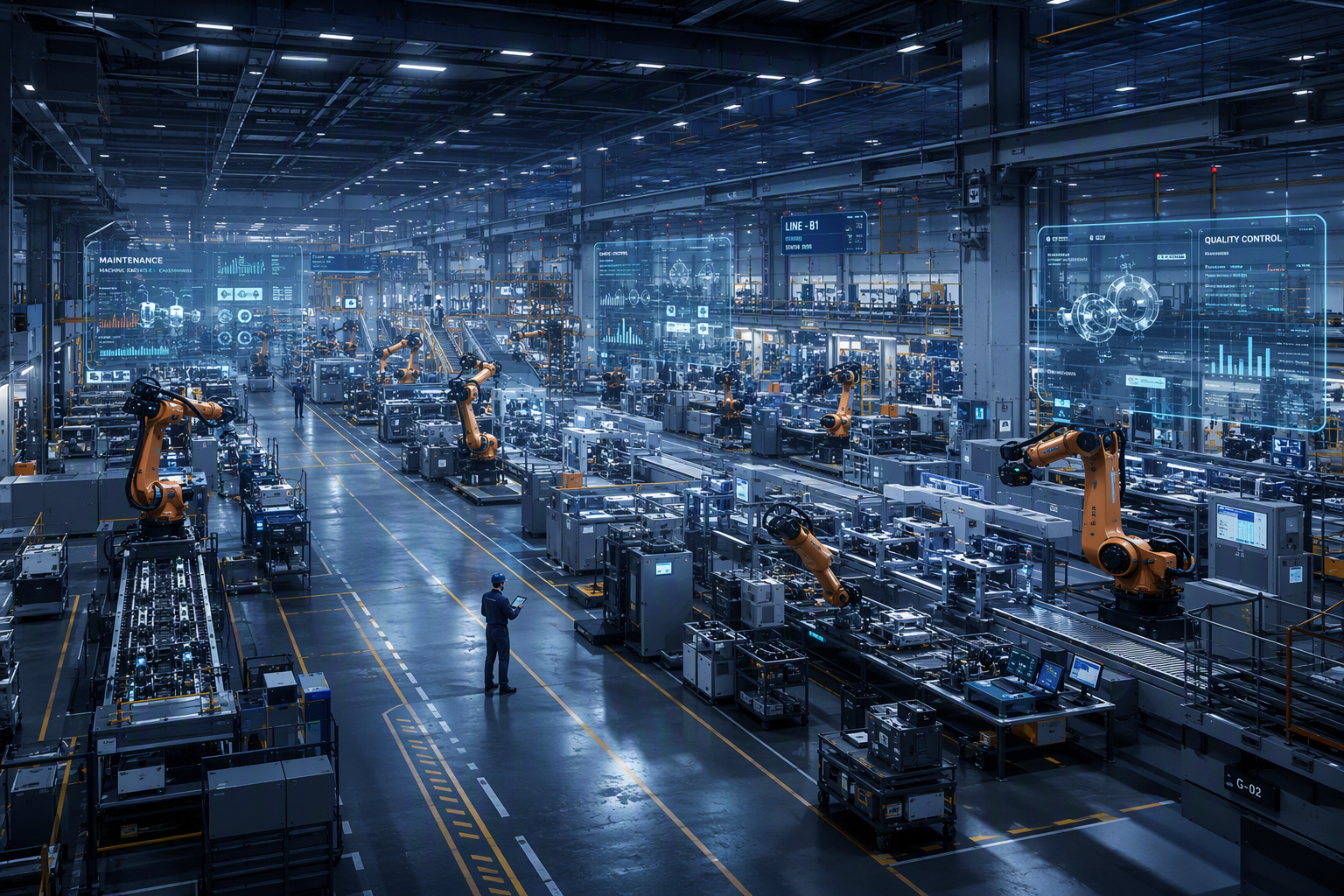
- Smart factories use connected tools to support digital transformation, better decisions, and lower waste.
- The right provider can align automation services with your operational goals and support needs.
Introduction
Industrial automation is changing how businesses run, build, and compete. What once felt optional now plays a central role in meeting market demands, improving product quality, and controlling costs. Today’s automation solutions help companies move faster while supporting digital transformation across the shop floor and beyond. If you want stronger output, fewer mistakes, and better visibility into your operations, understanding industrial automation is a smart place to start. The sections below explain what it is, why it matters, and where it fits.
Defining Industrial Automation and Its Importance
At its core, industrial automation uses technology to monitor, control, and improve industrial processes. It reduces the need for constant human intervention in tasks that are repetitive, time-sensitive, or difficult to manage by hand. For the manufacturing industry, that means more consistent output and smoother workflows.
Just as important, automation solutions help businesses respond to pressure around quality, cost, and speed. They support safer operations, stronger accuracy, and better control over production. To see how this works in practice, it helps to start with the basic definition and business value.
What Is Industrial Automation?
Industrial automation is the use of machines, software, and control systems to run parts of a manufacturing process with less manual effort. In simple terms, it allows equipment to perform tasks automatically, often with greater speed and consistency than people can achieve by hand.
In many settings, process automation handles routine steps such as monitoring equipment, moving materials, or managing timing on a production line. This improves stability and helps companies maintain output without relying on constant direct supervision. It also supports cleaner, more repeatable workflows.
A typical setup includes tools such as programmable logic controllers, sensors, and other digital controls that guide machines in real time. These systems help businesses manage industrial processes more effectively while reducing delays, variation, and avoidable mistakes across the operation.

Why Is Industrial Automation Vital for Modern Businesses?
Modern businesses face constant pressure to produce more, move faster, and still meet strict quality standards. That is why automation solutions have become so important. They help companies streamline tasks, improve consistency, and respond better to changing customer needs and market demands.
For the manufacturing industry, one of the biggest gains is stronger operational efficiency. Automated systems can keep work moving without the breaks, slowdowns, or handoff issues common in manual processes. They also reduce human error, which helps lower defects and limit rework.
There is also a strategic advantage. Businesses that automate key steps can improve product quality, support worker safety, and control labor costs over time. In a competitive environment, those benefits make industrial automation less of a nice-to-have and more of a business requirement.
Key Components of Industrial Automation Systems
Every industrial automation setup depends on a mix of hardware and software working together. These automation solutions do more than power machines. They gather information, send commands, and help teams keep industrial processes stable, safe, and productive through connected control systems.
You will also find tools that support visibility and decision-making. A human machine interface gives operators a clear view of equipment status, alarms, and settings. The next sections break down the parts and technologies that make these systems work in real time.
Essential Hardware and Software in Automation
An automation system relies on several connected parts that keep operations moving. Some components control logic, some gather data, and others carry out physical work. Together, they form the backbone of modern control systems used across factories and processing environments.
Common components often include the following:
- Programmable logic controllers that manage machine actions and timing
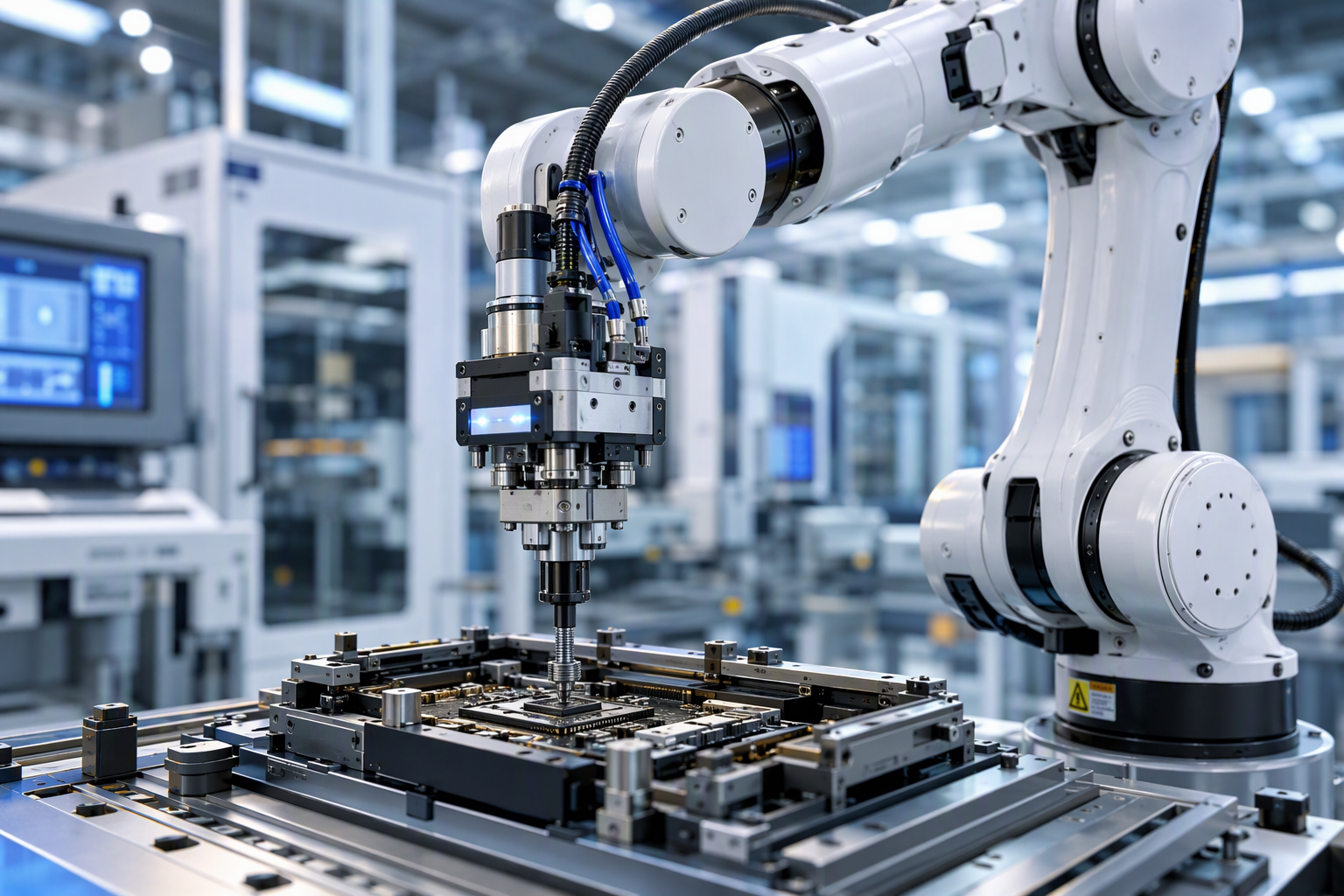
- Industrial robots for welding, packaging, material handling, and similar tasks
- Sensors that detect position, temperature, motion, or product conditions
- SCADA or related software that monitors processes in real time
- Human machine interface screens that help operators view and adjust settings
On the software side, these tools help businesses monitor performance, spot issues, and support maintenance needs. When hardware and software are properly integrated, they create a reliable setup that improves precision, reduces downtime, and supports better operational control.

Common Automation Technologies: Robots, PLCs, and Sensors
Many of today’s most common automation solutions are built around industrial robots, programmable logic controllers, and sensors. Each one serves a different purpose, but they work best when connected. That combination helps businesses automate movement, monitoring, and decision-making on the floor.
Industrial robots are often used for tasks such as welding, packaging, sorting, and material handling. They are especially useful when a job is repetitive, fast-paced, or requires steady precision. In quality inspections, robots paired with machine vision can also detect defects and support alignment.
Meanwhile, programmable logic controllers act like the command center for many machines. Sensors feed them real time information, allowing systems to respond quickly to changes in the environment or process. This setup improves reliability and helps maintain quality standards across different production operations.
Types of Industrial Automation Solutions
Businesses can choose from different automation solutions depending on what they make, how often products change, and how much output they need. Some systems are built for steady, repeatable work, while others support frequent changes and broader process automation across connected operations.
As industrial automation expands, digital transformation is also shaping how these systems are designed and managed. Companies now look beyond single machines and toward connected, data-driven environments. The next two sections compare traditional approaches with newer smart factory models.
Fixed vs. Flexible Automation Systems
Not all automation works the same way. Some businesses rely on fixed systems designed for high-volume, repeated output. Others need flexible automation that can adjust more easily when products, schedules, or customer requirements shift. The right fit depends on your production line and long-term goals.
Fixed automation is often seen in assembly lines where the same product moves through the same steps again and again. Flexible automation is better for operations that need faster changeovers and more adaptability. Both support process automation, but they solve different problems.
| System Type | Best Fit | Strength |
|---|---|---|
| Fixed automation | High-volume, repeat production | Strong speed and consistency on a stable production line |
| Flexible automation | Changing products or shorter runs | Easier adjustment and better responsiveness |
| Assembly-focused setup | Standardized assembly lines | Reliable sequencing and repeatable output |
| Adaptive process setup | Mixed operations | Better support for variety and operational shifts |
Emerging Trends: Industry 4.0 and Smart Factories
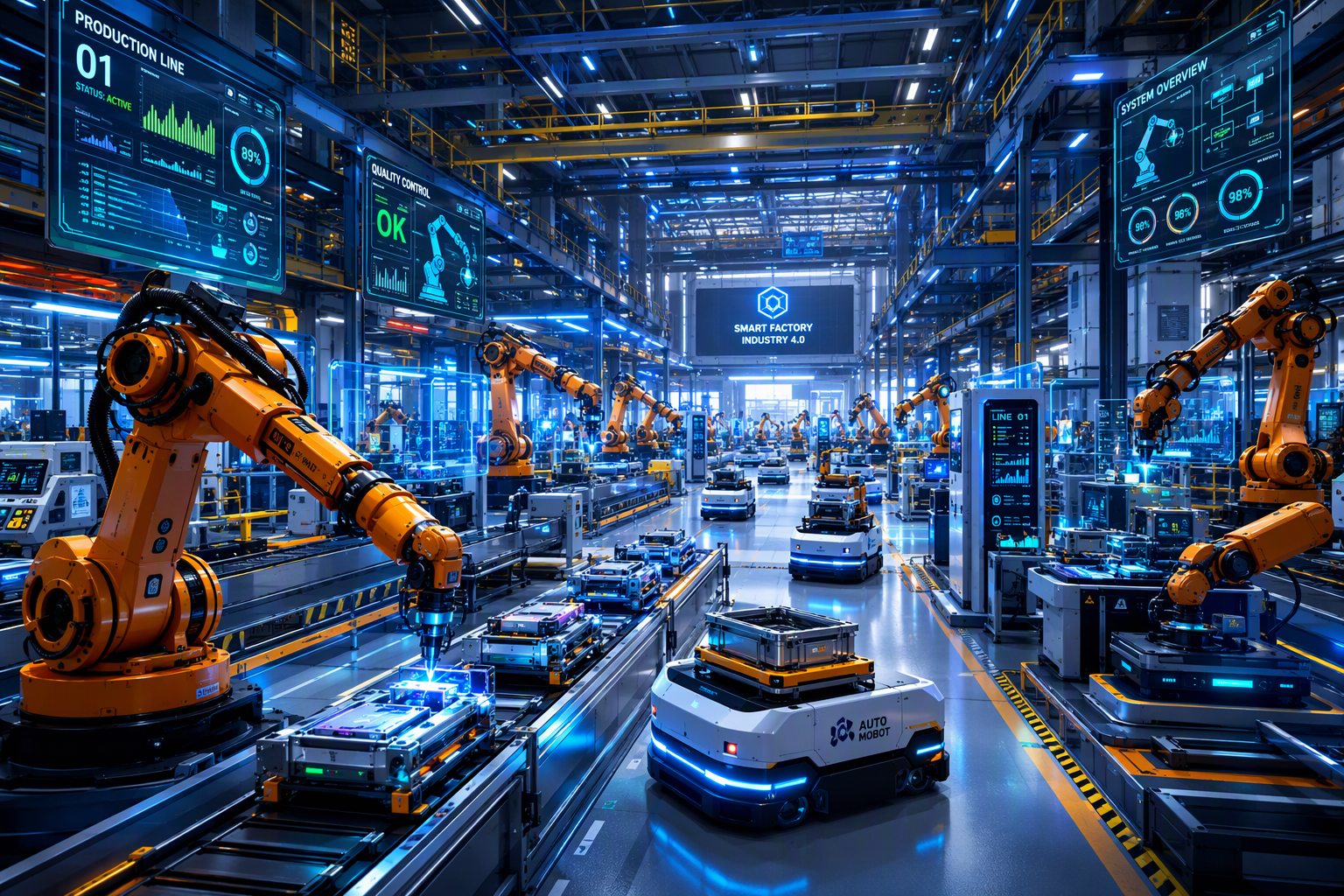
Industry 4.0 refers to a more connected and intelligent stage of industrial automation. It links machines, software, and data so businesses can monitor operations more closely and respond faster. In simple terms, it takes automation beyond single tasks and turns it into a connected system.
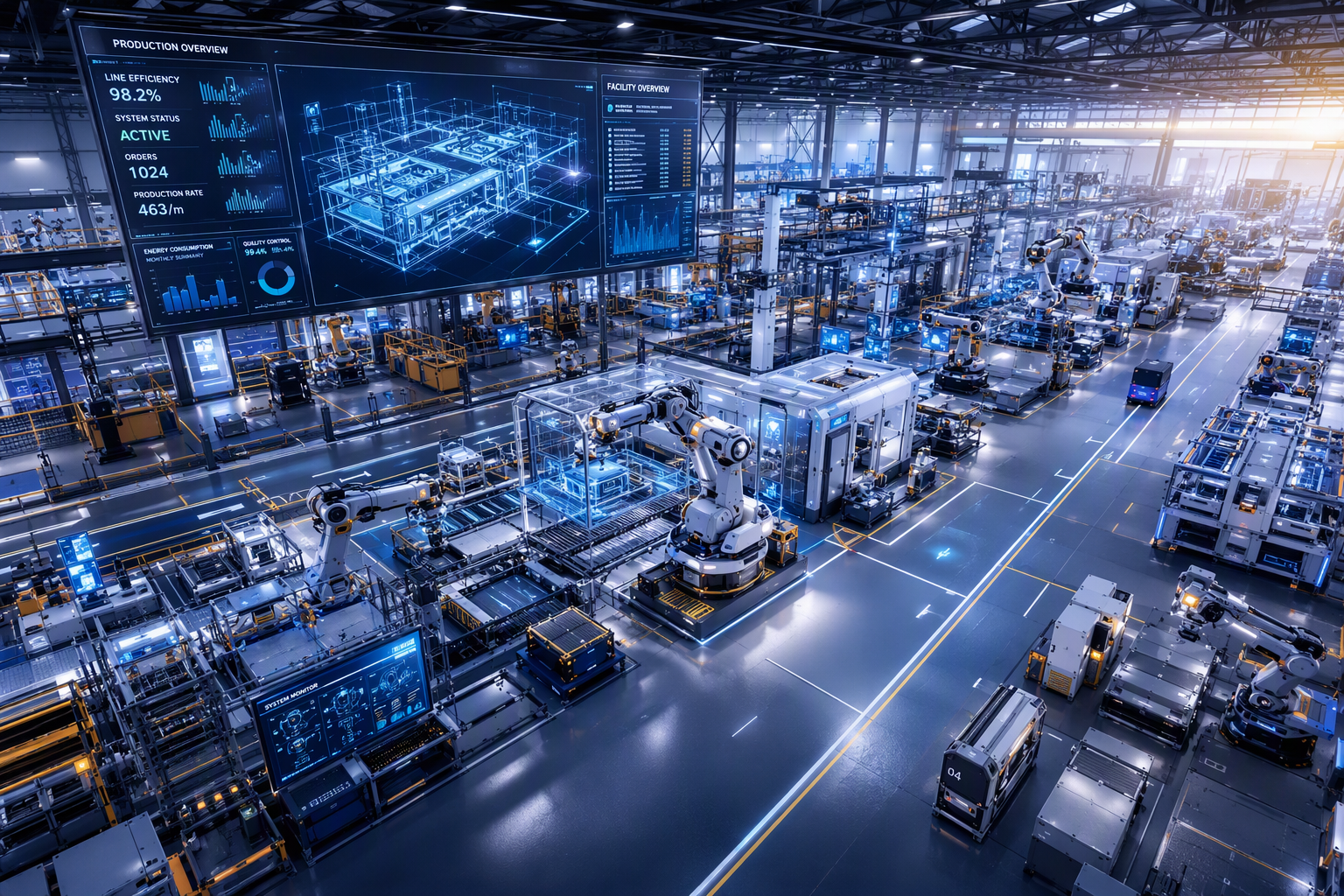
At the center of this shift are smart factories powered by the internet of things, digital transformation, and better data analysis. Machines can share information across a facility, helping teams track output, identify issues, and improve decisions with stronger visibility across the operation.
Artificial intelligence and machine learning are also becoming part of this picture. They help businesses support predictive maintenance, optimize schedules, and improve performance over time. As these tools grow, Industry 4.0 continues to expand the impact of automation in modern manufacturing environments.
Benefits of Industrial Automation for U.S. Industries
Across the United States, industrial automation is helping businesses improve speed, consistency, and control. The benefits of automation are showing up in factories, processing plants, warehouses, and utility operations where companies need stronger output without sacrificing safety or quality.
There is also a financial and environmental upside. Better energy efficiency, less waste, and fewer process errors can lead to meaningful cost savings over time. To understand that value more clearly, it helps to look at productivity gains first and then sustainability outcomes.
Increased Efficiency and Productivity
One of the clearest benefits of automation is stronger operational efficiency. Automated equipment can keep working without pauses for routine breaks or task switching, which helps businesses maintain steady flow. That kind of consistency is hard to match with manual processes alone.
On a production line, automation handles repetitive tasks with speed and repeatability. This reduces bottlenecks and helps projects stay on schedule. When systems are designed well, they also support higher efficiency by keeping materials, machines, and timing aligned across each stage of work.
The result is more output with fewer delays. Businesses gain better throughput, improved product quality, and more stable day-to-day performance. For factories trying to meet deadlines and customer expectations, automation solutions create a practical path to faster and more reliable production.
Sustainability and Cost Savings
Industrial automation can support sustainability by helping businesses use resources more carefully. Automated systems are typically more precise, which means they can reduce unnecessary energy consumption and improve control during production. That precision supports cleaner operations and more predictable performance.
Another major advantage is lower material waste. When machines follow exact settings and maintain repeatable output, businesses often see fewer defects and less rework. That saves raw materials and helps operations stay aligned with both environmental targets and practical operational goals.
Cost savings often follow these improvements. Reduced waste, lower labor demands for routine tasks, and better use of equipment can improve the bottom line over time. For companies looking to balance performance with responsibility, automation offers a strong way to support both business and sustainability priorities.
Applications Across Different Industries
Industrial automation is not limited to one field. It supports various sectors that need greater speed, accuracy, safety, and control. While the manufacturing industry remains one of the biggest users, many other operations now depend on automation solutions to meet strict performance demands.
From packaging and testing to monitoring and material handling, the use cases are broad. Some industries focus on precision, others on hygiene, safety, or output. The following sections show how automation works in manufacturing, automotive, food processing, energy, and beyond.
Manufacturing and Automotive
The manufacturing industry is one of the largest users of automation because it depends on repeatability, speed, and reliable output. In automotive settings, that need is even more visible. Large-scale production, tight tolerances, and complex workflows make automation a practical necessity.
Across assembly lines, automated systems help companies maintain quality control while increasing output. They support tasks that require accuracy and steady timing, especially when products move through multiple stages. In automotive operations, this can improve both throughput and consistency.
Common uses include:
- Robotic welding and material handling in automotive plants
- Automated testing and inspections in the manufacturing industry
- Packaging systems that keep output moving across assembly lines
- Machine vision tools that strengthen quality control and defect detection
Food Processing, Energy, and Beyond
Automation also plays a major role outside traditional manufacturing. In food processing, companies use automated systems to support hygiene, packaging, and consistent output. These tools help reduce contamination risk while making it easier to meet strict quality standards.
In the energy sector, automation is used to monitor and optimize operations across power plants, renewable sites, and oil and gas facilities. Better visibility and control can improve energy efficiency while helping teams manage complex systems more effectively in real time.
Beyond those industries, automation supports pharmaceuticals, healthcare, aerospace, logistics, mining, chemical production, construction, and agriculture. In each case, process automation helps address specific needs such as precision, safety, speed, or compliance. That broad reach shows just how widely industrial automation now supports modern operations.

Choosing the Right Industrial Automation Provider
Choosing among industrial automation companies is about more than picking a well-known name. You need a provider that understands your workflows, offers the right automation services, and can support your system after installation. A strong match should fit both your current operations and future plans.
Technical support matters just as much as design. If a provider cannot help with updates, troubleshooting, or maintenance needs, your gains may not last. The next sections cover what to evaluate and which companies are often recognized in this space.
Criteria for Evaluating Providers
A good provider should offer more than equipment. The best partners help design, integrate, and maintain automation solutions that fit your production goals. They should understand your processes, know how to reduce risk, and support reliable performance after the system goes live.
When comparing providers, look closely at the following:
- Their ability to tailor systems to your workflow and operational goals
- The strength of their technical support and response to service issues
- Experience meeting quality standards in your industry
- Their plan for updates, training, and long-term maintenance needs
It also helps to evaluate whether the provider can integrate robots, sensors, software, and control systems into one clear solution. Strong support, practical experience, and a clear service model can make a major difference in how well your automation investment performs over time.
Leading Companies in the United States
In the United States, businesses often look to established industrial automation companies with strong experience in controls, software, robotics, and system integration. These companies help manufacturers improve reliability, adapt to market demands, and build more connected operations.
Schneider Electric is one of the recognized names in this space and is often associated with industrial controls and automation technologies. Companies like this are valued because they support design, deployment, and ongoing service needs, not just equipment sales.
For many businesses, the real question is not only who is well known, but who can deliver the right fit. A provider that understands your industry, supports technical needs, and helps you respond faster to change can give you a stronger competitive edge in a demanding market.
Conclusion
In conclusion, industrial automation is revolutionizing the way businesses operate, driving efficiency, sustainability, and productivity. By understanding the various components and benefits of automation, industries can make informed decisions that not only streamline processes but also enhance overall performance. As we embrace technologies like Industry 4.0, the potential for growth and innovation becomes limitless. If you're ready to take your operations to the next level, don’t hesitate to reach out for a consultation with our team of experts. Let's explore how we can transform your business through industrial automation!
Frequently Asked Questions
How do industrial automation solutions improve efficiency in factories?
Industrial automation improves operational efficiency by handling repetitive tasks with consistent speed and accuracy. On a production line, automation solutions reduce delays, limit handoff issues, and keep output moving more smoothly. That helps factories increase throughput, reduce errors, and maintain steadier performance throughout daily operations.
What types of industrial automation systems are commonly used today?
Common systems include industrial robots, programmable logic controllers, sensors, SCADA platforms, and other control systems. These tools support process automation for tasks such as welding, packaging, monitoring, and quality inspections. Many businesses combine them to create more reliable, connected, and efficient industrial operations.
How can industrial automation help achieve sustainability goals?
Industrial automation supports sustainability by improving process automation accuracy and reducing unnecessary energy consumption. Better control can increase energy efficiency, while repeatable output helps cut material waste and rework. Over time, these improvements help businesses align production performance with environmental and cost-related goals.
You might also like