Alarm Management Maturity Model: Where Does Your Plant Stand
Alarm Management Maturity Model: Where Does Your Plant Stand
Every plant has alarm systems, but not every plant manages them well. The alarm management maturity model gives teams a starting point for an honest assessment: it describes how alarm management processes move from chaotic, reactive handling to a mature level where alarm performance is measured, reviewed, and improved on a regular basis. Use it to see where your control room stands today, what the next level requires, and which changes will actually reduce risk, not just add work.
What is an alarm management maturity model?
A maturity model is a structured way to judge how well a plant runs its alarm management system across its operating environment. It looks at process control, alarm settings, and whether each alarm has a defined response, not just at how many alarms appear. It also covers detailed design, operator training, and the change process, so a plant can move from fixing individual alarms to running a comprehensive approach that is part of the company policy.
The five levels at a glance
Most models use five levels, from a first level where work is reactive to a mature level where the system is part of a continuous improvement program. The middle levels add structure step by step, first at the management level, then across different areas, and finally at the line of business level, so improvement reaches all layers of the company. A quick scan of the five levels helps a team agree on its current position before choosing the next improvement, rather than arguing about individual alarms.
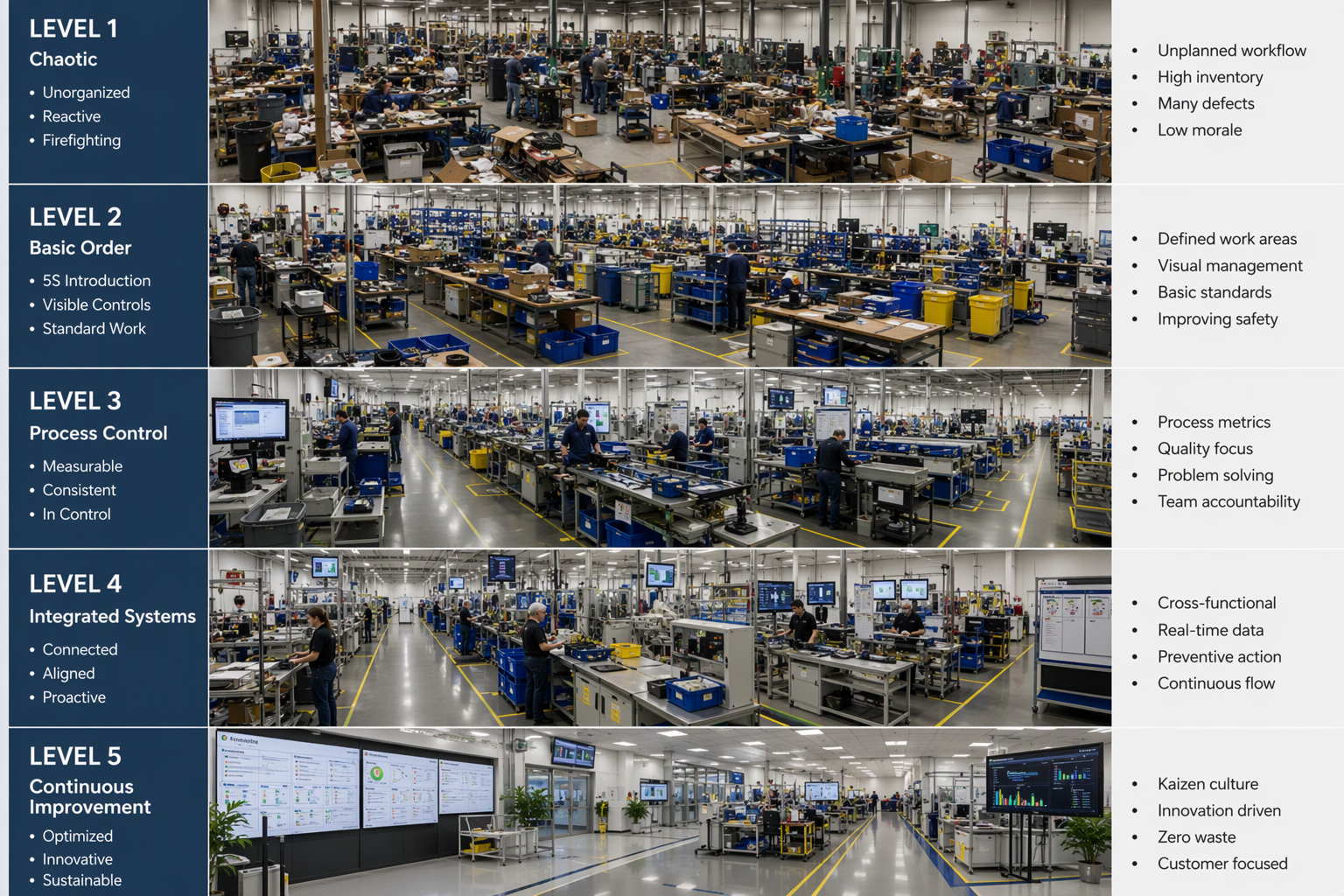
Level 1: chaotic and reactive alarm handling
At the first level, alarm handling is chaotic and reactive. Operators face nuisance alarms and a large proportion of the alarms have no clear owner, so the rate of alarms stays high and the details of the alarms are hard to trust. Settings are often left at default settings, with little attention to dead band or to the current operation mode. Work starts only after a problem appears, and there is significant manual input just to keep the list readable.
Level 2: basic alarm management processes
Level 2 adds basic alarm management processes, but the work is still narrow. Teams gain a basic understanding of the performance of the alarm management system and start to use basic dynamic suppression of individual alarms. Alarm prioritization begins, and a simple management system tracks changes, yet the effort is often limited to one unit or one shift. The main challenge is consistency: without a standard way of working, good practice in one area does not spread to different areas.
Level 3: a defined alarm management system
Level 3 means a defined alarm management system is in place. A specific alarm philosophy, often a professional alarm philosophy, sets the rules for design, review, and change, and the system works in a closed loop: alarms are reviewed, actions are assigned, and results are checked. Critical alarms have a defined response, operator training is planned, and changes follow a clear change process. The system is no longer a collection of individual fixes.
Level 4: measured and managed alarm performance
Level 4 adds measurement to the system. Performance metrics show alarm management performance over time, and statistical analysis of past performance reveals long term trends, not just daily spikes. Identification of bad actors becomes routine, and new bad actor alarms are reviewed before they become a chronic problem. This level is part of a continuous improvement program, with reviews on a regular basis and a strong focus on risk reduction.
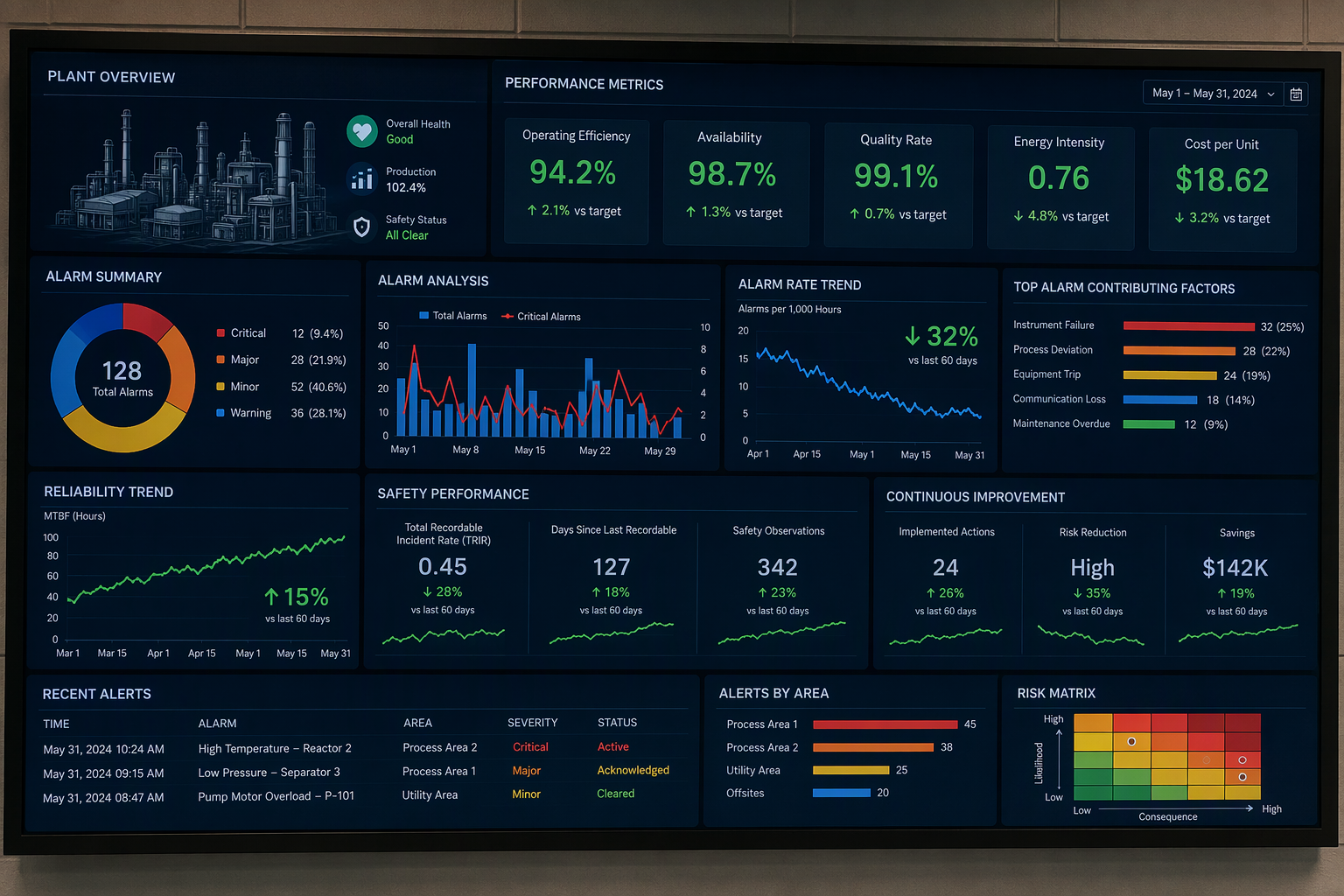
Level 5: a mature level of intelligent alarming
At a mature level, intelligent alarming supports optimal process steering, not just warning. The system accounts for multivariate relationships between process variables, uses minimal customization to stay maintainable, and meets international standards, industry standards, and common standards in a consistent manner. Operators have high confidence in the system, and alarm management is a central part of the organization, linked to the organization's strategy and to process improvement.
How to assess your plant honestly
Start assessment with choice questions that ask how the system actually works, not how it is described on paper. Review the critical part of the work first: philosophy, design, training, and the management of change process that controls new settings. Use the alarm management maturity model as a strategic tool, scoring each area honestly and noting evidence, not opinion. A plant that scores itself too high learns nothing; a plant that scores itself honestly gains a clear starting point for improvement.
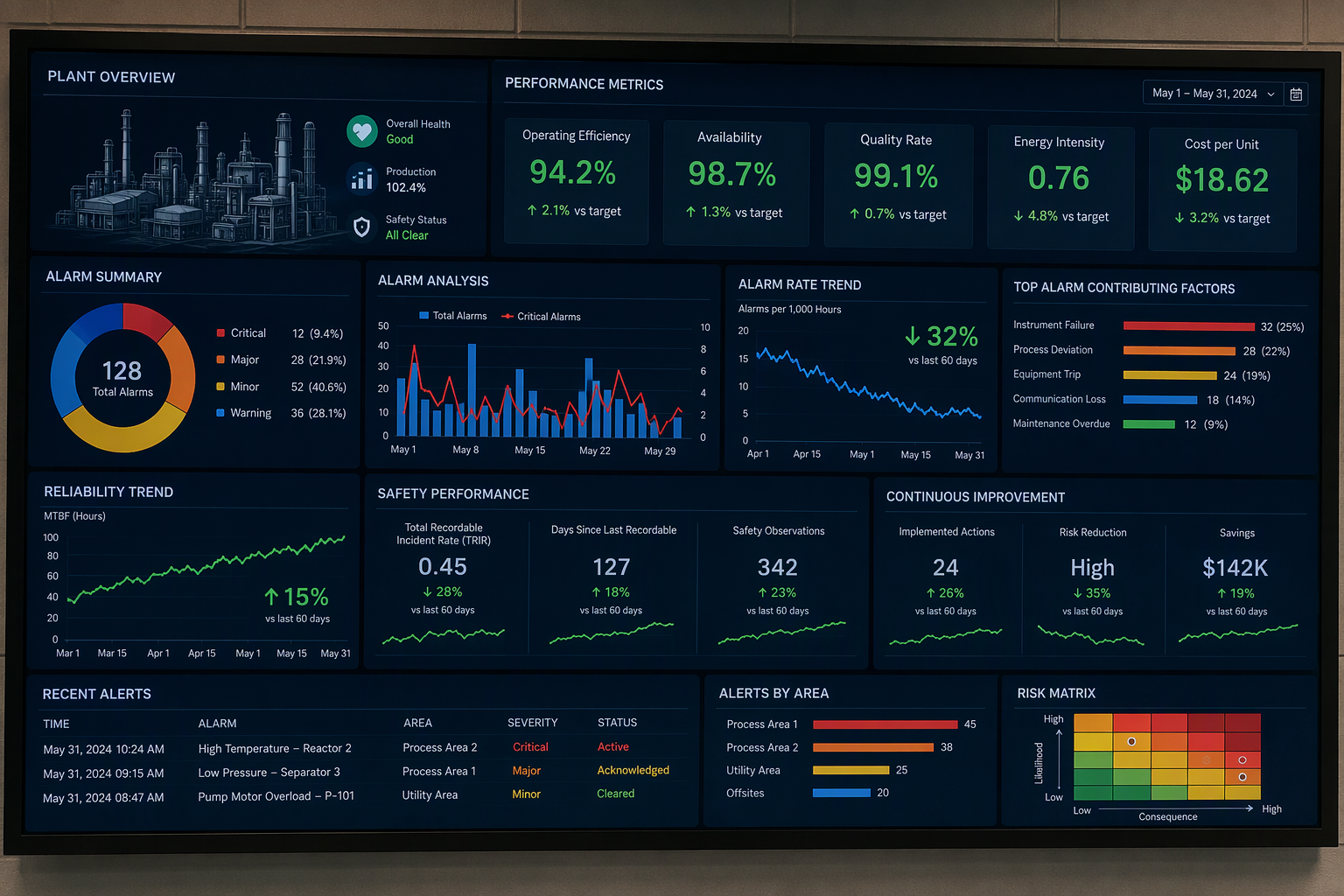
From assessment to improvement: a practical plan
Turn the assessment into a plan with one owner, one deadline, and one measure for each improvement. Fix the worst bad actors first, update the philosophy where it is vague, and review progress on a regular basis. Keep the change process simple enough that teams actually follow it, and use performance metrics to show whether the rate of alarms and the workload in the control room are actually falling. Small, steady steps beat a large, unfinished program.
Common pitfalls that stall maturity
Many programs stall when teams treat the model as a one-time project, not as part of a continuous improvement program. Another pitfall is adding alarms without removing nuisance alarms, which leaves operators with more work and less trust. A third pitfall is skipping operator training, so a new design is not used in the operating environment. Avoid these traps by reviewing the plan regularly, by keeping the philosophy current, and by measuring results, not just activity.
What should you do next?
Begin with a quick scan of your current level, then choose one improvement to complete in the next month. Review your alarm management maturity model score with operations and engineering, agree on the next level, and record the change. That single, focused step starts real progress.
You might also like