Essential Alarm Response Procedures for Plant Operators
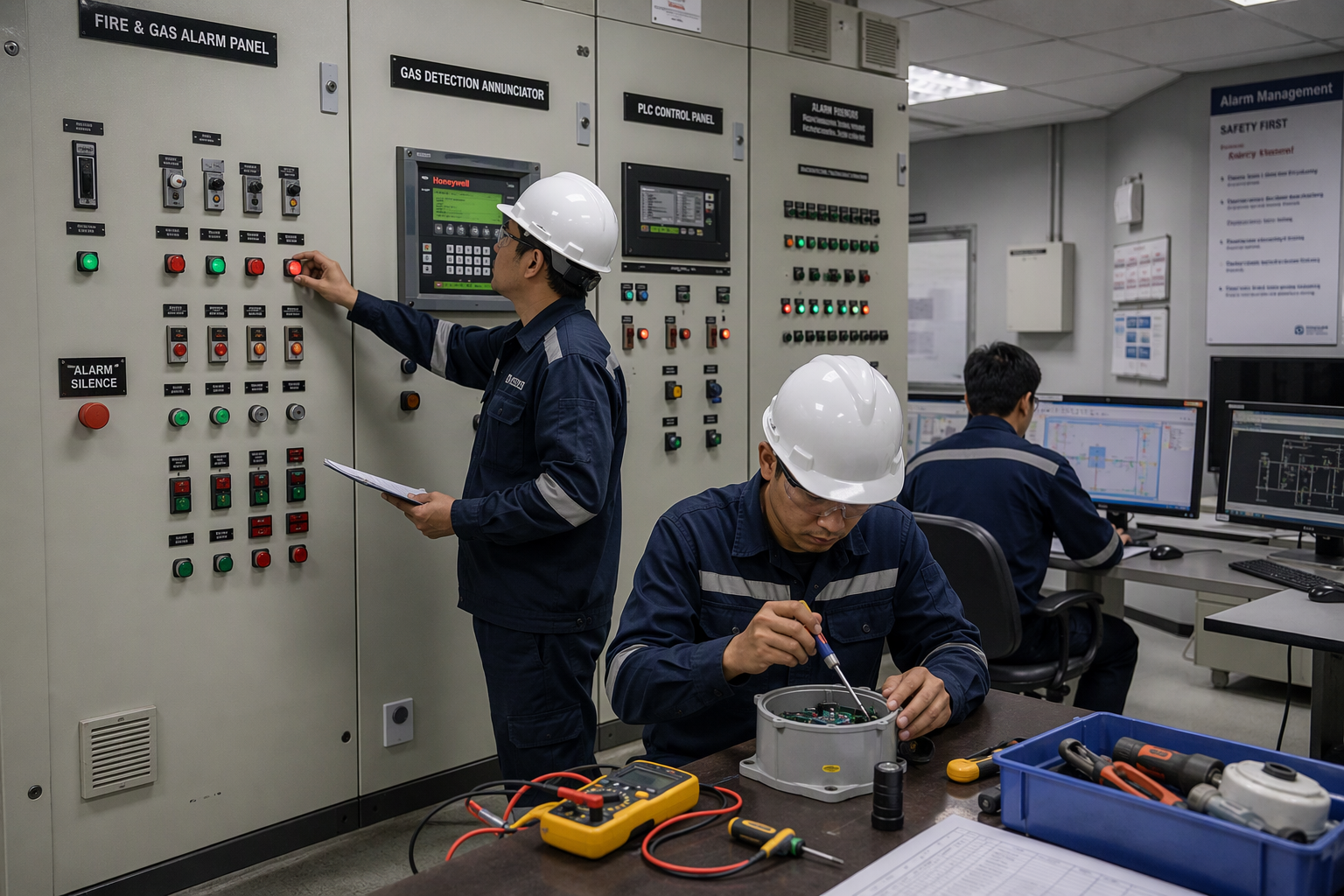
What is the use of a fire alarm or receiver?
A fire alarm or receiver is vital for detecting smoke or fire, alerting occupants and response teams promptly. It activates alarms to warn individuals, ensuring swift evacuation. Additionally, it communicates with emergency services, facilitating a coordinated response to protect lives and property during a fire incident.
https://cbsecuritysolutions.com/office-lobby-security-visitor-screening-mistakes/
https://cbsecuritysolutions.com/
https://cbsecuritysolutions.com/retail-security-guards-deterrence-incident-response-store-staffing/
https://cbsecuritysolutions.com/warehouse-security-solutions-cameras-guards-theft-prevention/
https://cbsecuritysolutions.com/services/
https://cbsecuritysolutions.com/duties-and-responsibilities-of-security-officers/
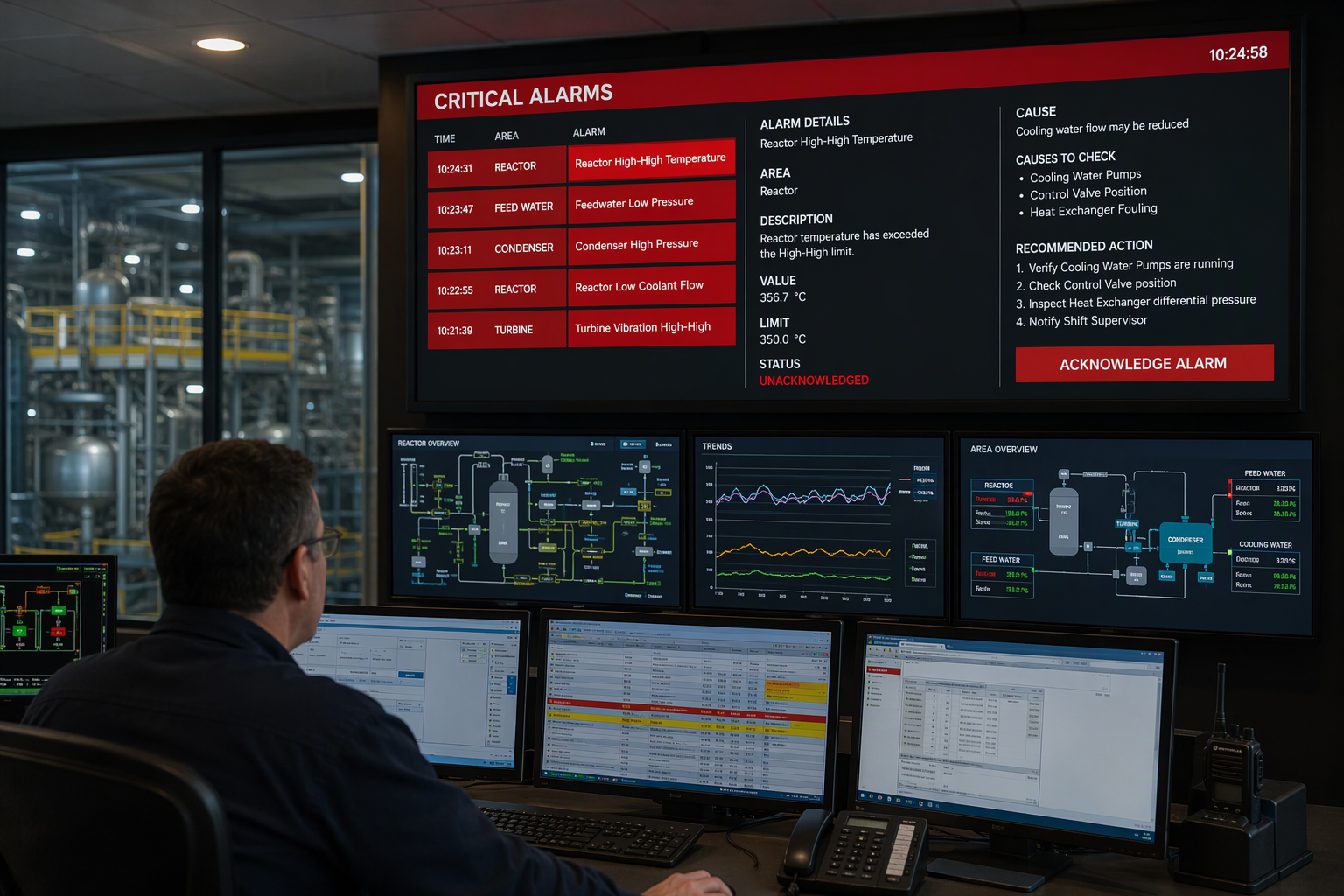
When an alarm sounds in a plant, the next few minutes decide whether a small upset stays small or grows into an incident. Operators do not improvise in that moment; they follow alarm response procedures that tell them what to check, what to do, and when to call for help, particularly in a closed warehouse scenario. This guide explains what operators do when alarm calls occur and an alarm sounds, from the first acknowledgment to the final record, so the response is calm, consistent, and safe.
Why Alarm Response Procedures Matter
Without written procedures, every operator responds differently to the same alarm event, and that inconsistency is dangerous. A good response plan gives every operator the same first step, the same checks, and the same escalation rule, so the alarm response does not depend on who happens to be on shift. Procedures, like those offered by CB Security Solutions, also protect the plant legally and operationally: they show that alarm systems are managed deliberately, including the use of electronic notifications, not left to chance. Best practices from alarm management all point the same way: write the response down, train it, and drill it.
The First Minute After an Alarm Sounds
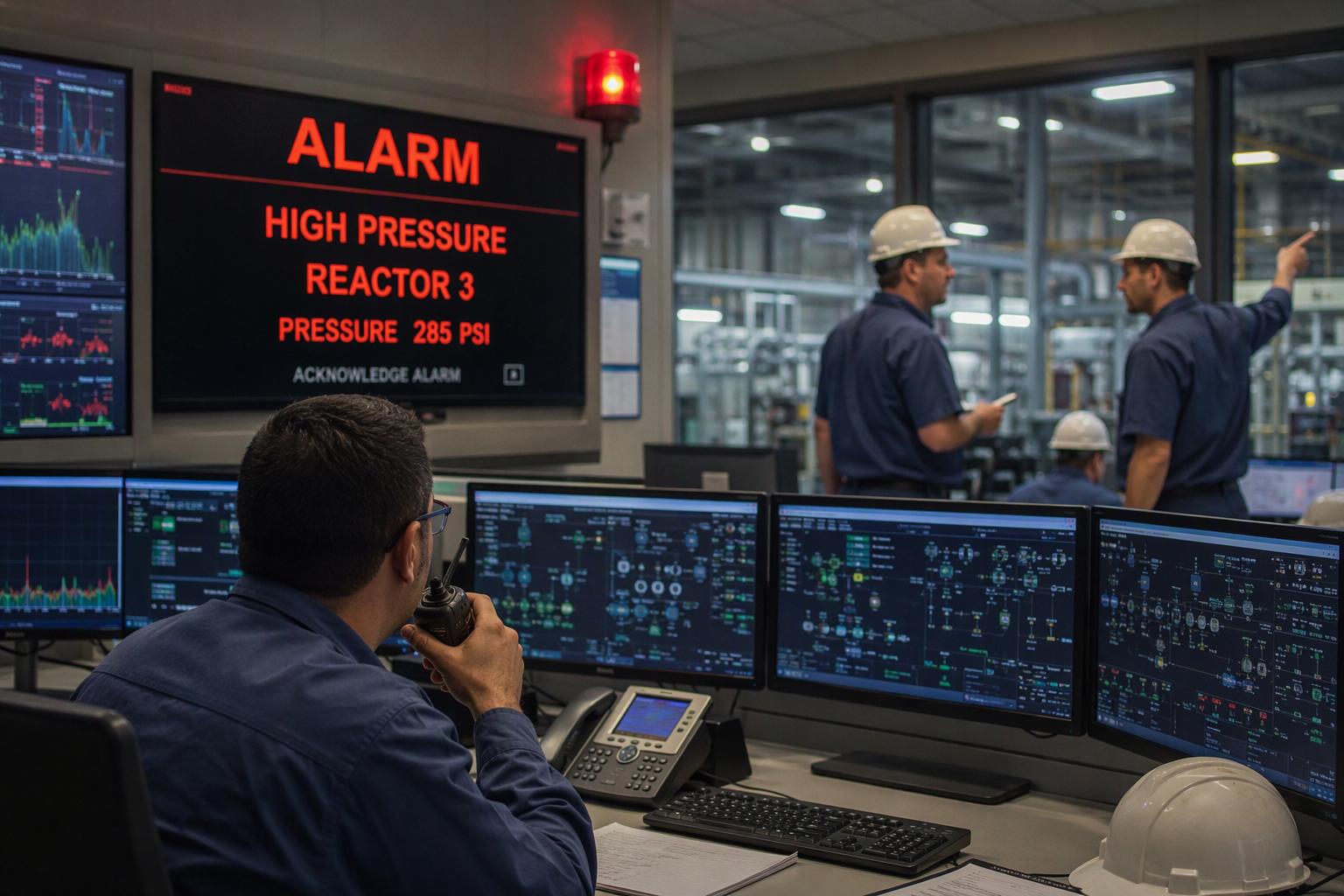
The first minute after an alarm sounds is about control access, not speed. The operator acknowledges the alarm, reads the alarm type and the point name, and checks the control panel for related alarms before touching anything. That first step prevents the most common error: acting on one alarm while a more serious alarm event develops elsewhere. If the alarm indicates danger to people, the operator calls emergency services and the plant response team first, then works the response plan. Calm, ordered action in the first minute sets up everything that follows. Alarm response security guards typically handle building alarm checks by systematically assessing the alarm's details, verifying its legitimacy, and communicating with onsite response teams. They focus on controlling the situation, ensuring accurate information flow, and coordinating appropriate actions based on the alarm's severity.
Acknowledge, Assess, Act: The Core Response
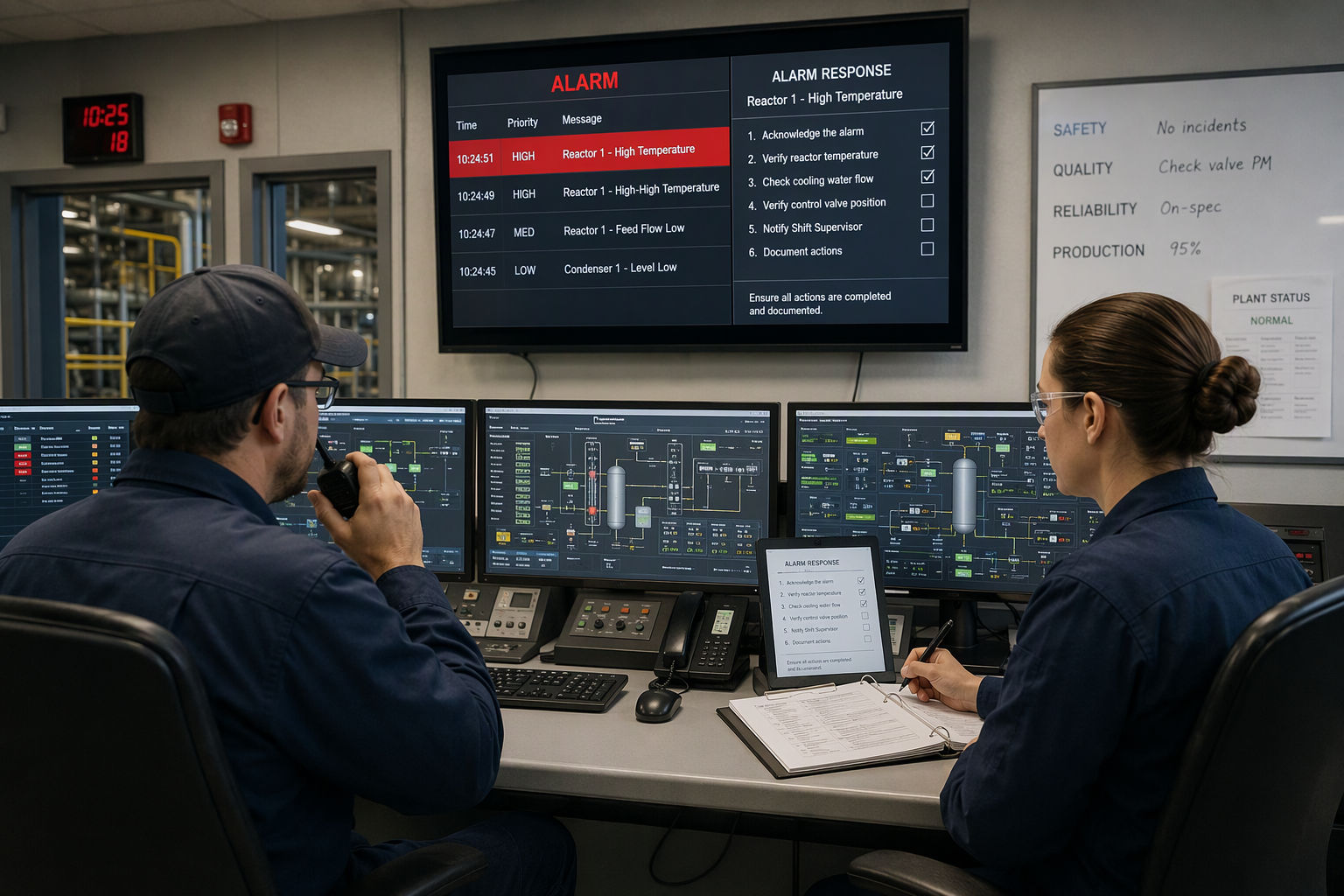
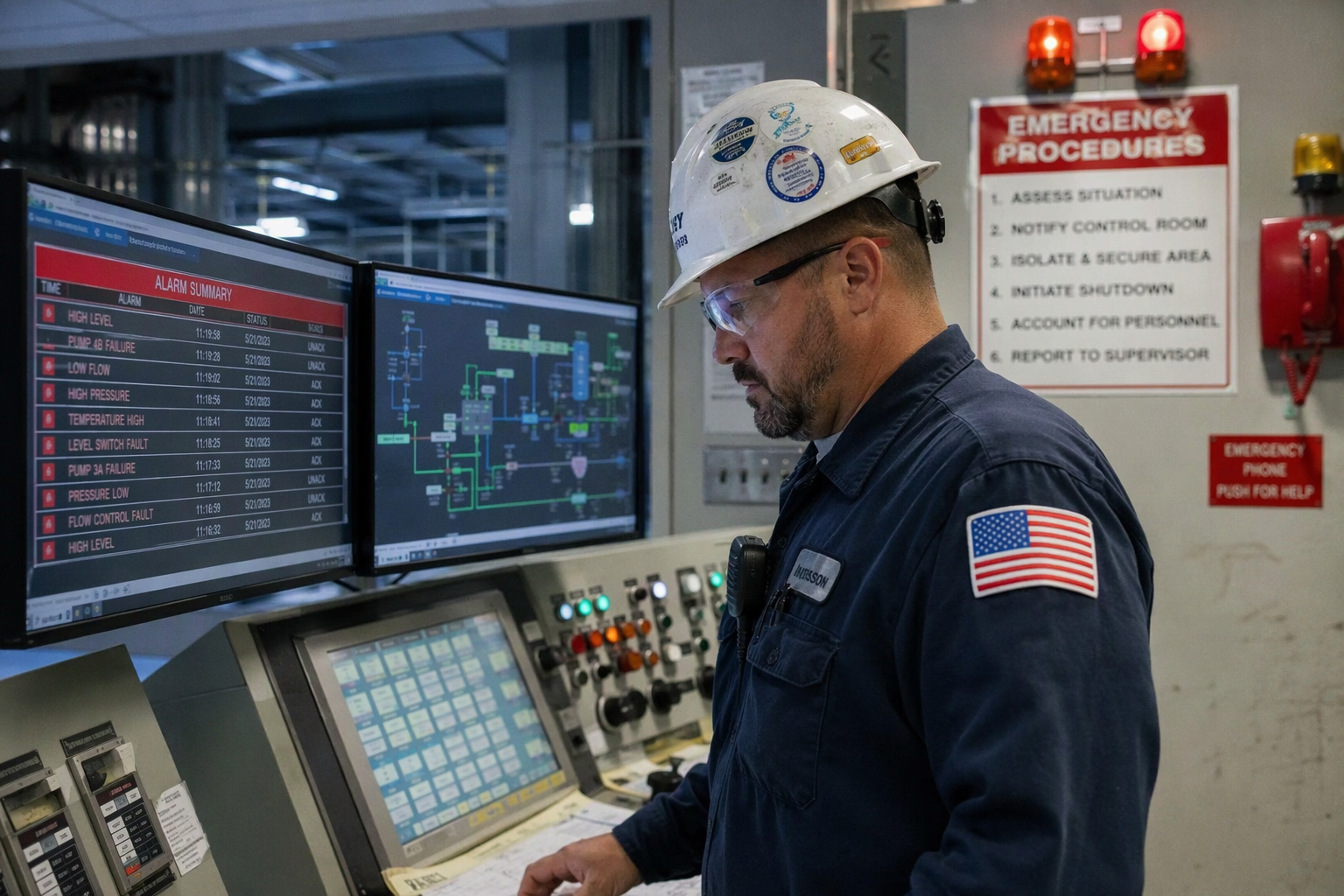
Every effective alarm response means following the same three steps. First, acknowledge the alarm so the control panel stops flashing and the team knows someone owns it. Second, assess: check the alarm type, the process value, and nearby readings to judge whether this is a real event, a faulty sensor, or a false alarm. Third, act on the response plan for that alarm type, whether that means adjusting a valve, starting a standby pump, or escalating while also confirming the city’s official alarm permit information. A different response for each type of alarm keeps the action matched to the risk.
Reading the Alarm: What the Operator Checks First
Before acting, the operator checks the alarm's source and context, including security cameras. Read the point description, the current value, the setpoint, and the trend: is the value rising fast or drifting slowly? Check whether related alarms, such as carbon monoxide alarms, are active, because a single root cause often trips several points at once. Confirm whether the instrument is healthy or showing a faulty sensor pattern, such as a frozen reading or a sudden spike. This check takes less than a minute and prevents a wrong response to a bad signal. When responding to fire alarms, security guards should first verify the alarm source and ensure it is not a false alarm, reviewing security cameras if necessary. They should review related alarms, check sensor status, and assess whether evacuation or emergency protocols need to be initiated based on the information provided by the operator.
Different Alarm Types, Different Responses
Not every alarm type deserves the same response. A high-priority process alarm needs immediate action, while a low-priority advisory alarm may need only a log entry and a later check. Each alarm type carries a different priority, and the alarm response service plan should say what that priority means: who acts, how fast, and what happens if the first action fails. Continuous access control matching the response to the type of alarm keeps operators focused on what matters and stops low-priority noise from delaying a critical response.
When to Escalate an Alarm
Escalation is not failure; it is part of the response plan. Escalate when the alarm stays active after the first action, when the cause is unknown, when more than one unit is affected, or when anyone's safety is in doubt. The escalation rule should name who gets called next: the shift supervisor, the maintenance lead, or emergency services. When in doubt, escalate early and ask for emergency assistance rather than waiting for proof that the situation is serious. A fast escalation costs little; a late one can cost a great deal. To ensure safety, secure doors and assess the area before taking further action. If a security alarm activates during after-hours, businesses should quickly assess the situation and follow escalation procedures outlined in their response plan. This typically involves contacting designated personnel such as the shift supervisor or emergency services. For a secure plan, you may want to build a free quote to assess your options, ensuring no one enters the premises until the cause of the alarm is determined, and prioritizing safety above all else.

Working With Emergency Services and the Response Team
Plant emergency response works best when each team handles a different part of the response, which may include signals from a door contact system. Operators contain the process and give a clear situation report; maintenance isolates equipment; the plant's emergency response team handles rescue and medical care; and outside emergency services take over when the incident grows beyond the plant's capability. Agree in advance who calls whom, what information the call must include, and where responders meet on site to ensure broader coverage during the emergency. A professional response depends on that coordination, not on improvisation.
False Alarms: Responding Without Ignoring
False alarms still deserve a response, just not a panicked one. Acknowledge the alarm, confirm it is false by checking the instrument and the process, and log it as a false alarm with its cause, including any relevant dispatch request information. Never assume the next identical alarm is also false; faulty sensors fail in patterns, and a real event can hide behind a history of false alarms. If one point produces repeated false alarms, raise it for maintenance instead of teaching operators to ignore it. An effective alarm response treats every alarm as real until proven otherwise, often involving an authorized security responder.
Commercial alarm response procedures often involve a formalized protocol that includes notifying security personnel or external responders, thorough investigation, and compliance with regulatory requirements. Private alarm response, in contrast, may be handled more directly by the individual or household, typically involving personal verification and sometimes contacting local authorities if necessary. The main difference lies in the scale and formality of the response process, with commercial settings requiring more structured actions and documentation compared to private procedures.
Documenting Every Alarm Response
Documentation turns a response into a record the plant can learn from. Log the alarm event, the time it sounded, what the operator found, the available verification details of what action was taken, and when the alarm cleared. A complete record shows whether the response plan worked and whether the alarm type needs a different response next time. Review logs weekly to spot repeat alarms and faulty sensors before they become a pattern. Without records, the same alarms get answered the same uncertain way, shift after shift.
Shift Handover: Passing Alarms to the Next Crew
Handover is where alarm responses succeed or fail. The outgoing operator must pass on every standing alarm, every alarm that was acknowledged but not yet cleared, and enough information for the incoming crew to act without asking twice. This includes details about any observed damaged lock situations. Use a written handover sheet, not memory, and walk the control panel together for the entire shift change to ensure a continuous presence of information. A clean handover means the next crew starts informed, not surprised.
Training Operators on Response Procedures
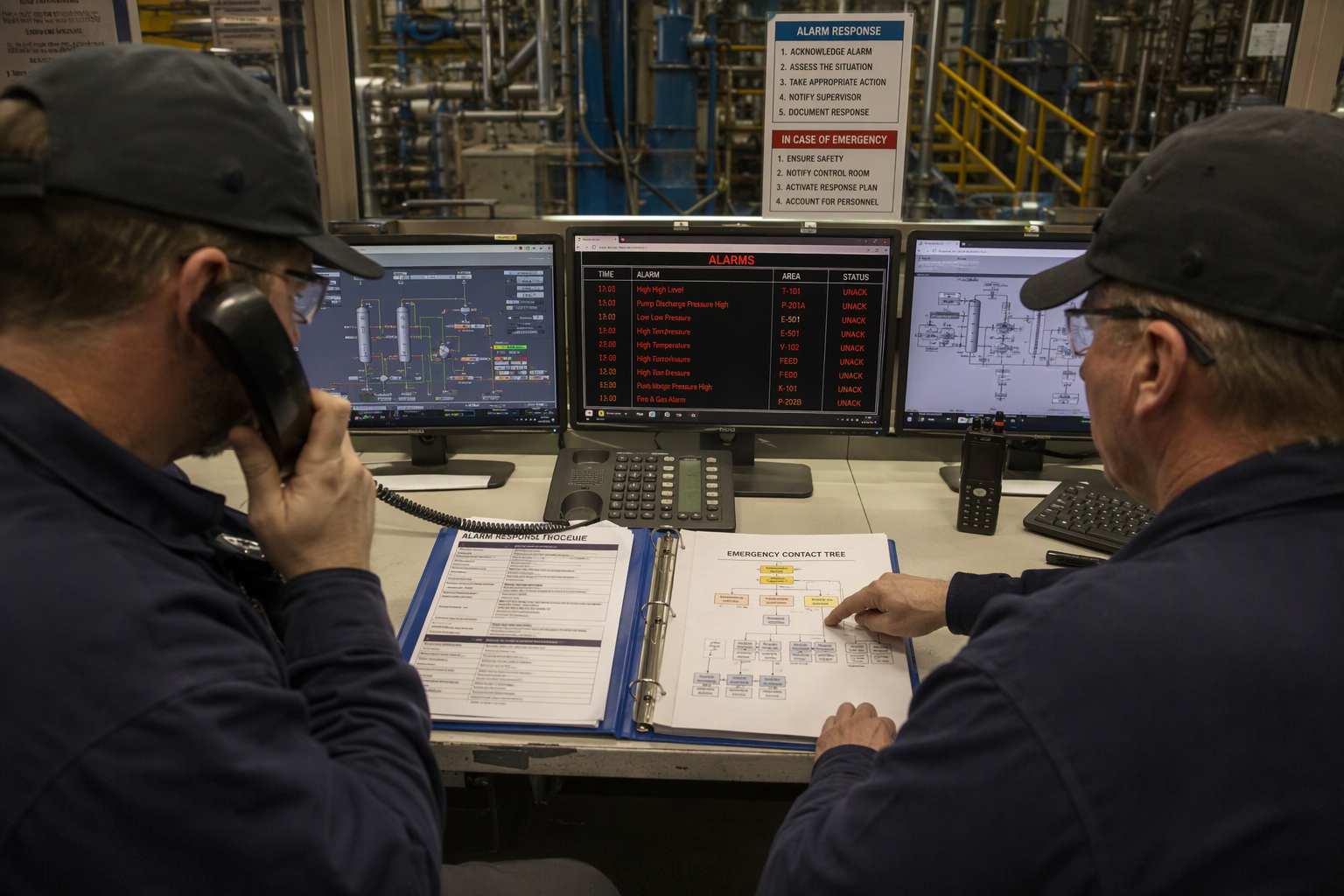
Training must use the real control panel and the real response plan, not just slides. New operators practice acknowledging alarms, reading the alarm type, and working the response steps for the alarms they will actually face, including clear dispatch instructions for contacting the designated alarm provider. Include the contact tree: who to call, in what order, and what to say, including the designated alarm provider contact. Refresh training after any major change to alarm systems, and test operators with unannounced drills so the procedures become habit, not homework.
Drills That Keep Responses Sharp
Drills keep alarm responses sharp. Run a drill each quarter that simulates a real alarm event: the operator acknowledges, assesses, acts, and escalates while the team watches the clock. Afterward, review what worked and what did not, and update the monitored security provider security system response plan where the drill exposed gaps. Give every role clear responsibilities during a drill, so nobody wonders who calls emergency services or who isolates the equipment. Drills also reveal whether the contact tree is current.
Common Mistakes in Alarm Response
One common mistake is clearing an alarm without checking the process, which hides the symptom and keeps the risk for alarm users. Another is escalating too late because the operator wanted to be sure first. A third is poor documentation, so the next shift inherits an alarm with no history. Avoid these by checking before clearing, escalating early when in doubt, and logging every alarm response with its cause and action while involving a monitoring provider. A response that is not written down did not happen as far as the plant is concerned.
A Worked Example: A Night-Shift Alarm Response
During a night shift, a high-level alarm sounded on a feed tank while the unit ran at reduced rates. The operator acknowledged the alarm, checked the trend, and found the level rising faster than the feed pump could handle. Following the dispatchable response plan, the operator reduced feed, called the shift supervisor, and started the standby pump. The level stabilized within ten minutes, and the operator logged the alarm event, the actions, and the outcome for the next crew. The response worked because the procedure was written, trained, and followed with an authorized manager's oversight.

How Do Alarm Response Procedures Protect a Plant?
They protect a plant by making every alarm response fast, consistent, and safe at a designated property. When operators follow the same procedures, real events get handled before they escalate, false alarms get logged instead of ignored, and the next shift inherits a clear record. Good alarm response procedures turn alarms into routine actions, unlike electronic monitoring which focuses on signal processing.
Acknowledge every alarm, assess the risk, and act on the response plan without delay.
Never silence an alarm you do not understand, and never leave a real alarm unanswered.
The operator's first step is to confirm the alarm event, not to clear it.
When in doubt, escalate: a false alarm costs minutes, a missed event costs far more.
Document the response before moving on.
A final note: every alarm activation should be traceable in the control system, and the response should protect people first, then prevent injury and property damage, then restore production. When an event grows beyond the plant, notify the appropriate authorities with a clear situation report, following an effective alarm response protocol.
What Happens After an Alarm Response Is Closed?
Closing a response does not end the work: alarm response procedures should require a short review of what happened, what was found, and what will change, so the same upset is easier to handle next time. Alarm response procedures are only as good as their records, including the approved contact tree, so file the log, update the procedure if a step was unclear, and hand over any standing condition to the appropriate responder next crew. When alarm response procedures are reviewed after every serious event, the plant builds a clearer picture of its risks and keeps operators ready for the next call.
You might also like