Designing Alarm Displays Operators Can Actually Read
This seems like too much? : r/alarmdotcom
Designing alarm displays that operators can easily read is crucial for efficiency and safety. Overly complicated displays can lead to confusion and delays in response. Simplifying information presentation enhances clarity, allowing operators to quickly assess situations and make informed decisions, ultimately improving operational effectiveness in alarm management.
https://gwsecurityusa.com/product/gw809702m-8mp-ip-poe-2-8mm-fixed-lens-turret-security-camera-human-vehicle-detection-face-recognition-two-way-audio-color-night-vision-poe/
https://gwsecurityusa.com/product/gw869701t-8mp-4k-ip-poe-2-8mm-fixed-lens-turret-smart-dual-light-active-deterrence-security-camera-human-vehicle-detection-face-recognition-smart-ai-analytics-built-in-mic/
https://gwsecurityusa.com/product/gw809802m-8mp-ip-poe-2-8mm-fixed-lens-black-turret-security-camera-human-vehicle-detection-face-recognition-smart-ai-analytics-built-in-mic/
https://gwsecurityusa.com/
https://gwsecurityusa.com/product/32-channel-nvr-security-camera-system-with-32-8mp-4k-ip-2-8mm-fixed-lens-turret-security-camera-active-deterrence-human-vehicle-detection-smart-ai-analytics-two-way-audio-poe/
https://gwsecurityusa.com/product/16-channel-nvr-security-camera-system-with-12-8mp-4k-ip-2-8mm-fixed-lens-black-bullet-security-camera-taa-compliant-active-deterrence-human-vehicle-detection-smart-ai-analytics-two-way-audio/
https://gwsecurityusa.com/product/64-channel-nvr-security-camera-system-with-64-8mp-4k-ip-2-8mm-fixed-lens-black-bullet-security-camera-taa-compliant-active-deterrence-human-vehicle-detection-smart-ai-analytics-two-way-audio/
https://gwsecurityusa.com/collections/
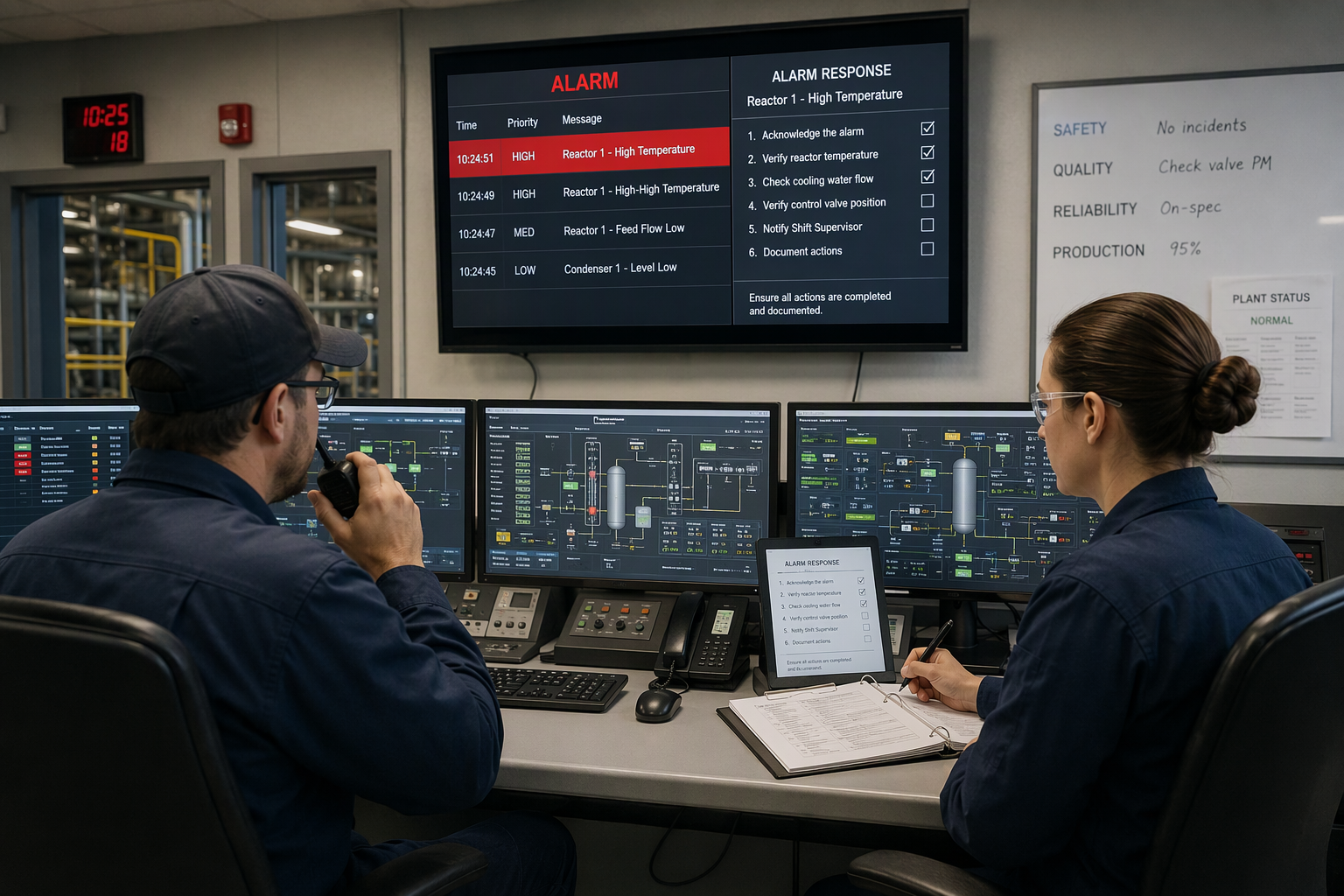
In a plant, the alarm display is the operator's window into the process. When an alarm sounds, the operator looks at the display first, and what it shows in the next few seconds decides how fast the response begins. Good alarm displays make the critical alarm stand out, show the cause and the action at a glance, and hide nothing the operator needs, particularly in terms of intrusion detection alerts. Poor displays bury urgent alarms under false alarms, stale alarms, and clutter, so the operator wastes minutes finding what matters. Designing displays operators can actually read is a layer of protection. A projection alarm clock display works by using a built-in projector to cast the time and alarm information onto a wall or ceiling. This allows the operator, or user, to easily view the critical information at a glance, even from a distance or while lying in bed, similar to the way a plant's alarm display shows important alerts clearly.
Why Alarm Displays Matter in a Plant
Displays matter because operators cannot act on what they cannot read. In an upset, the control room fills with alarms, and the display is the only tool that turns that flood into a clear picture of what is wrong. A well-designed display shows the most urgent alarm first, with its value, its limit, and its trend, so the operator grasps the situation in seconds. A poor display shows everything at once and forces the operator to hunt for meaning while the process drifts. The display is not decoration; it is the operator's instrument. When it comes to bedrooms, the most popular alarm and smoke detectors display designs are typically simple digital displays that clearly show the time, alarm status, and sometimes temperature or date. These displays prioritize legibility and convenience, often featuring large numbers and minimal clutter to make them easy to read when waking up.
What Makes an Alarm Display Readable
A readable display answers three questions at a glance: what is wrong, how bad is it, and what should the operator do. It uses large text for the alarm name and value, and reserves strong colors for alarms that need rapid response. It groups related alarms, hides acknowledged alarms, and keeps a consistent layout on every screen, so operators build a habit of where to look. It fits the unique needs of each unit: a distillation column needs trends, while a packaging line needs counts with all the bells and whistles. When the display matches the job, operators act faster. Alarm wire screens provide both display and security by presenting clear information while restricting access to critical functions. The wire screens allow visibility of alarm details, so operators stay informed, but also act as a physical barrier, preventing unauthorized interactions and ensuring only trained personnel can respond to or silence alarms, thus maintaining safety and integrity of the system.
The Alarm List: The Operator's First View
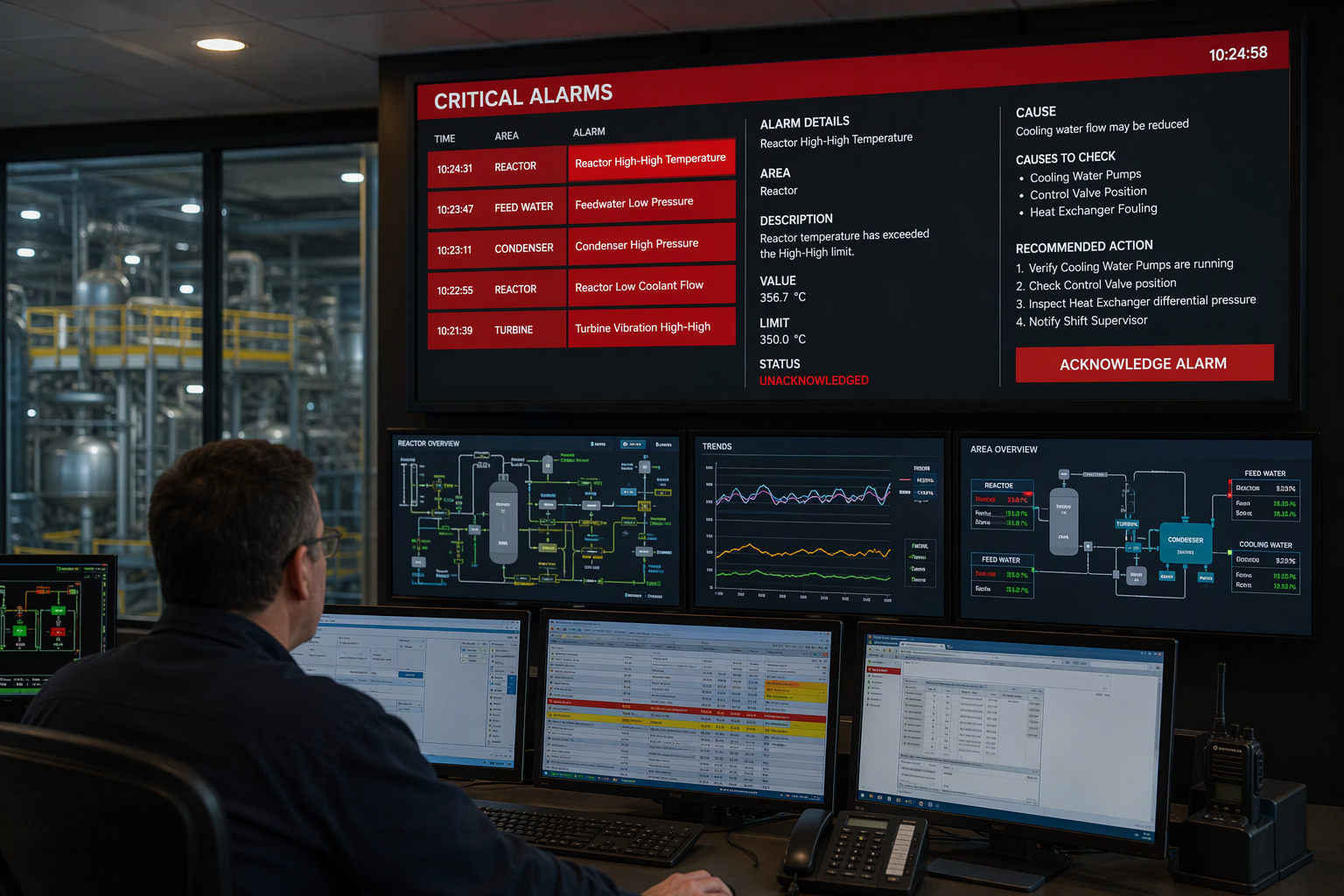
The alarm list is the first view operators check, and it must earn that trust. Sort it by priority, not by time alone, so the newest critical alarm jumps to the top instead of hiding under older, lesser alarms. Show each alarm's name, value, setpoint, time, and state in one row, so the operator reads across without clicking for details. Keep the list short by shelving stale alarms and grouping repeats, because a list of five hundred alarms is no list at all. In the central monitoring station, the alarm list is the picture every operator works from, supported by comprehensive security solutions. Alarm display options are available for windows or security screens, allowing operators to monitor alarms directly on these interfaces alongside the main alarm list. These options can be configured to suit the needs of the facility, providing flexibility for both stationary and mobile security monitoring setups.
Priority Colors That Mean Something
Color should tell the operator how urgent an alarm is at a glance. Reserve red for alarms that need action now, amber for alarms that need attention soon, and a muted grey for status information that needs no action. Never use more than four colors on one display, because too many colors teach operators to ignore them all. Keep the same color meaning on every screen and every unit, and write it into the display standard. Test colors for color-blind operators, and pair color with shape or text, never color alone. Alarm screens typically refer to the entire interface or page dedicated to presenting alarms, including their overall layout and grouping, while alarm displays are the visual elements or components within those screens that show individual alarm information. The design of both alarm screens and alarm displays should consistently use priority colors, including the integration of a special alarm mesh, so operators can quickly assess urgency across the system.
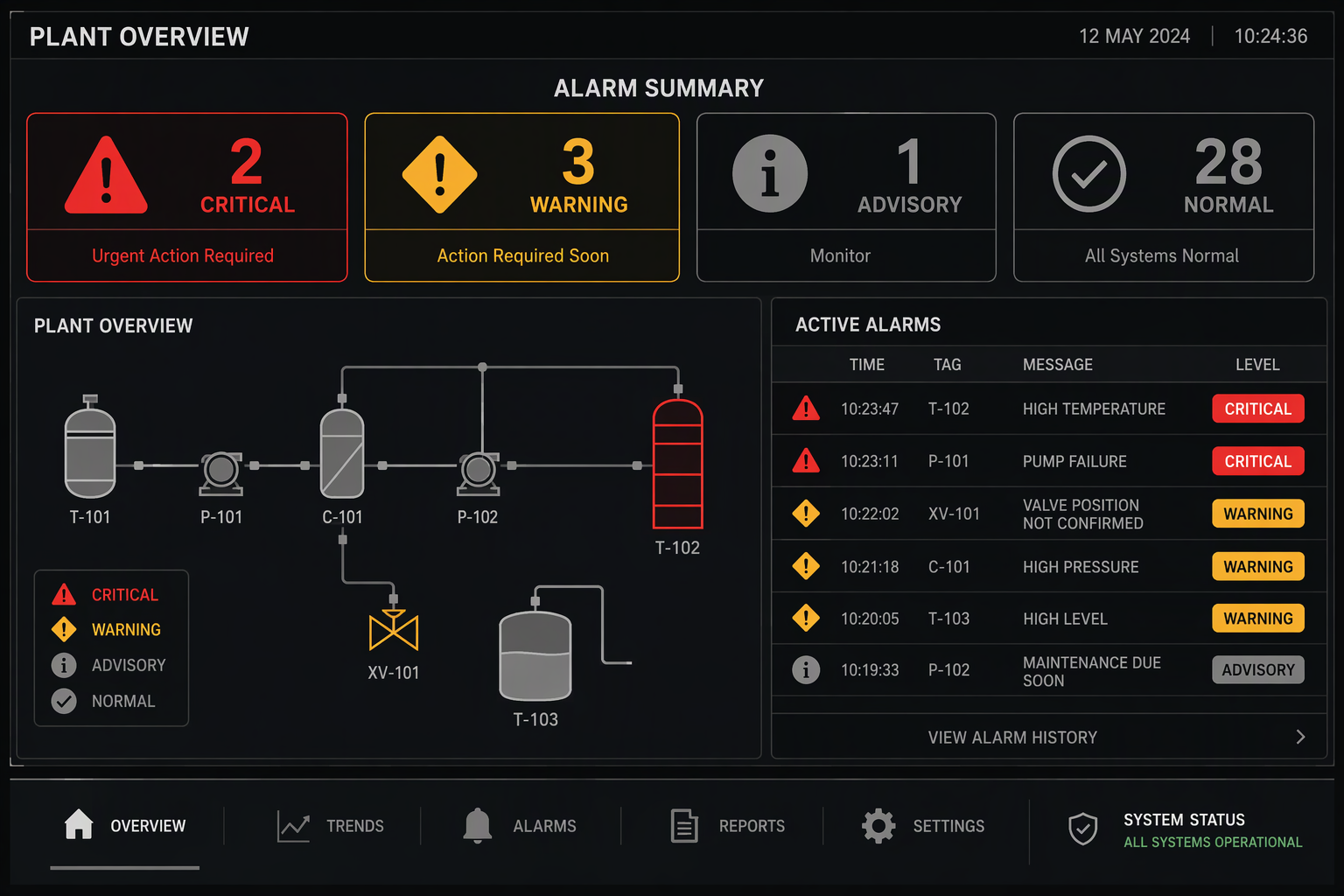
Grouping Alarms by Unit and System
Group alarms by the unit and system they belong to, so the operator sees one problem instead of twenty alarms. A feed pump trip, a level alarm, and a flow alarm from the same unit are one event, and the display should show them together under a single group heading. Grouping also helps during floods: the operator opens the worst group first instead of scrolling through hundreds of lines. Let operators expand a group for detail. Groups should match how the plant is organized, by unit, train, and system, not by the tag database. In home security systems, the main types of alarm displays typically include grouped visual panels, touchscreen interfaces, and individual indicator lights. These displays often organize alerts by zones or types of sensors, such as motion, fire, or entry alarms, incorporating analytics to help homeowners easily identify the source of an alert and respond quickly.
Showing the Right Information First
Show the information the operator needs first, and push the rest one click away. The alarm row should carry the alarm name, the current value, the setpoint, and the time it started, because those four facts frame every decision. Put the recommended action next to the alarm, not buried in a manual the operator must open mid-upset. Hide engineering units and tag numbers unless the operator asks for them, because extra data slows reading without improving decisions. When the first screen answers the first question, the operator moves to action instead of hunting for facts. A digital alarm clock display differs from an analog alarm display in the way information is presented. Digital displays typically use numbers and text to show the exact time and alarm details, whereas analog displays use hands that point to numbers around a dial, making it less precise for quickly reading information. Choosing the right display type can help ensure operators are not hunting for facts and can immediately see what matters most, including the security feature that could integrate interwoven detection wires in future alarm systems.
Alarm Text Operators Understand
Write alarm text the way operators speak, not in tag codes. A good alarm message names the equipment, the problem, and the action in words: 'Feed tank high level, reduce feed or start the standby pump.' A poor message shows only a tag number and a code, which forces the operator to look up what it means. Keep messages short, use the same words for the same equipment everywhere, and test every message with the operators who will read it. If an operator detects suspicious activity, they cannot explain an alarm message to a new hire, rewrite it.
Font Size and Legibility in the Control Room
Use large, high-contrast text that operators can read from the back of the control room, not just from a chair at the desk. A font that looks fine on a laptop fails on a wall display viewed from ten feet away in dim light. Test every display at the distance operators actually stand, under the lighting they actually work in, and with the oldest eyes on the team. Avoid thin fonts, low contrast, and grey text on grey backgrounds. When an operator squints, the display has already failed, no matter how complete its data is, especially when monitoring from video cameras.
Reducing Clutter on the Screen
Clutter kills readability faster than any other display flaw. Every extra box, logo, trend, and status light competes for the operator's eyes, even when using a smartphone, and during an upset that competition costs time. Remove everything that does not help the operator act: decorative graphics, duplicate values, and alarms that have been standing for days without action. Use white space to separate groups, and keep the most urgent information in the top-left, where eyes land first. A clean screen is not empty; it is edited, so what remains earns its place.
Shelved and Standing Alarms on Display
Shelved alarms and standing alarms need their own place on the display, or they poison the main list. A shelved alarm is one the team has paused, and it should sit in a separate shelved panel with its return date, not vanish. A standing alarm is one that has stayed active for days, and it should show its age beside its name, so operators see which alarms have gone stale and are effective in preventing theft. Review both lists weekly, and clear or fix what no longer deserves attention. When the main list holds only live alarms, operators trust it.
Trends and Graphics Beside Alarms
Put a trend beside every critical alarm, so the operator sees direction, not just a number. A rising level trend tells a different story than a falling one, even when both sit at the same value. Keep trends short, and mark the setpoint line clearly, so the operator judges at a glance whether the process is heading toward the limit or away from it. Use graphics for equipment state: a running pump, a closed valve, a tank level bar, and window sensors. Graphics must match the plant's symbols, or they confuse more than they help.
Alarm Banners and Annunciators
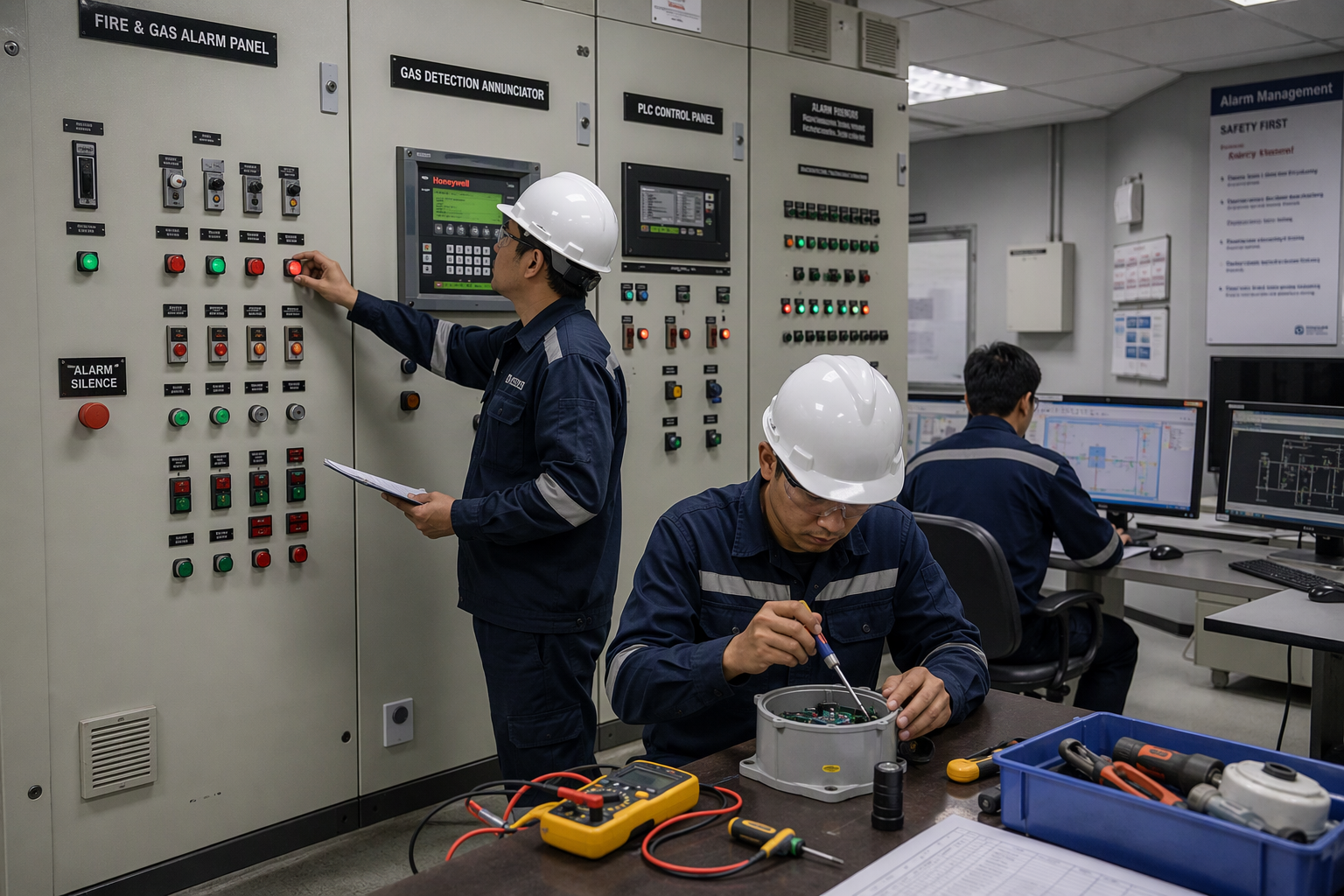
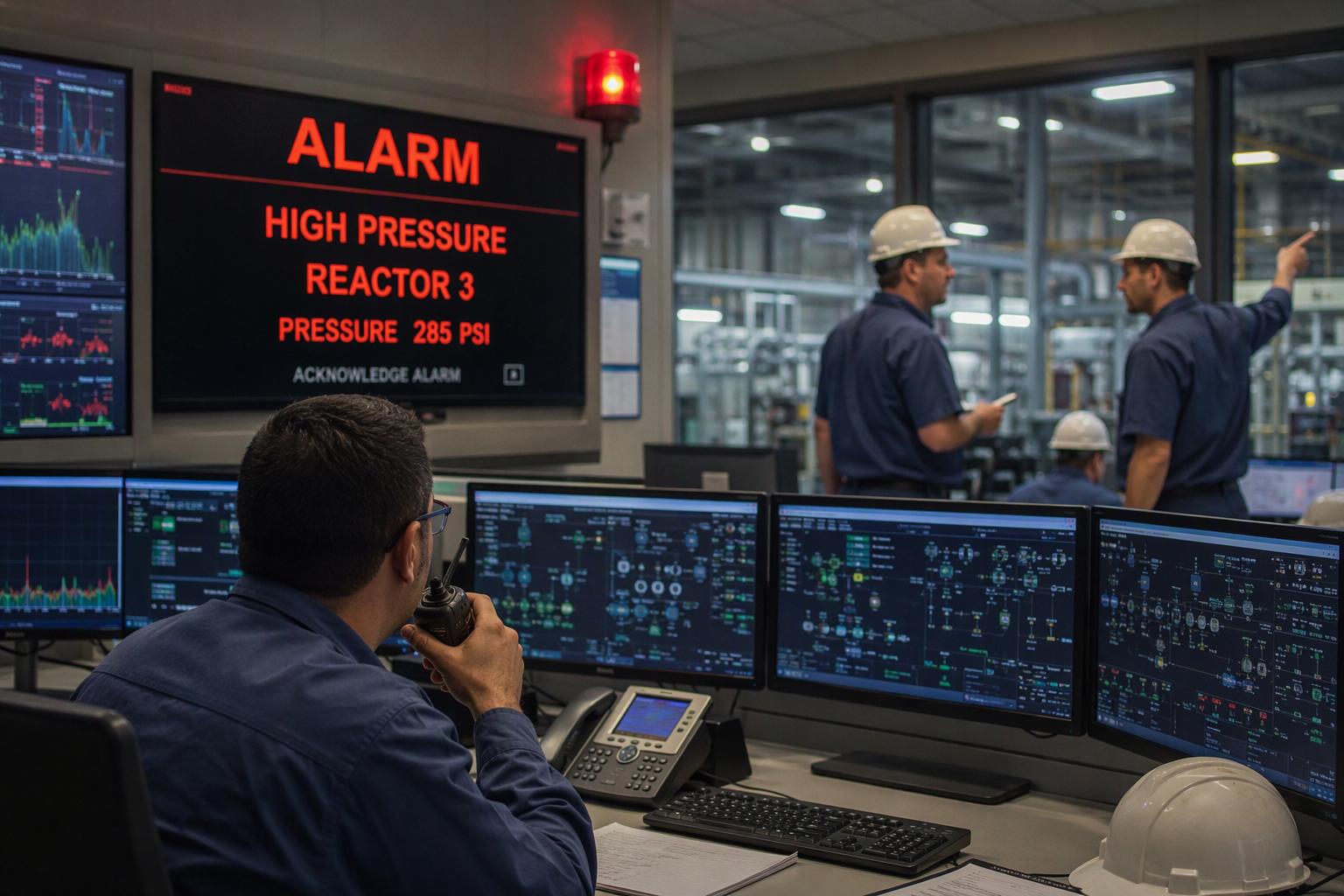
Banners and annunciators are the display's loudest voice. A banner across the top of the screen should carry the single most urgent alarm, warning occupants, and clear the moment the operator acknowledges it. Annunciator panels, the labeled lights above the desk, should mirror the same priorities, so the operator's eyes find the same alarm in both places. Never let a banner show a low-priority alarm while a critical alarm waits below, and never leave a banner up after its alarm clears. A banner that cries wolf trains operators to ignore every banner.
Sound and Flash: When to Use Them
Use sound and flashing only for alarms that need action now, because every beep and flash that fires for a low-priority alarm teaches operators to tune them out, creating a noticeable alert for passersby. Reserve the horn for critical alarms, and silence it on acknowledgment, so the room stays calm. Flashing should mark new, unacknowledged alarms only, and stop once the operator has seen them. Never let a display flash for an alarm that has been standing for hours. When sound and flash are rare, operators react to them instantly; when they are constant, operators stop hearing them.
Displays for Different Operating Modes
Displays must change with the operating mode, because a startup screen that shows the same alarms as a steady-state screen misleads the operator. During startup, hide alarms for equipment that is not yet running, and highlight the sequence steps that matter now, which is an important aspect of your security operations. During shutdown, show drain, purge, and isolation states first. During an upset, collapse the normal displays and show only the alarms tied to the event. Build a mode table that maps each display to each mode, and test the switch with operators, so the screen always matches the plant's actual state.
Mobile and Remote Alarm Displays
Mobile displays let supervisors and on-call engineers see alarms away from the control room, but they must never replace the main display. A phone screen shows one alarm at a time, so it should show only the most urgent alarms, with a path back to the control room for detail. Keep mobile layouts simple, with large text and no clutter, because a supervisor reading on a small screen in a noisy plant needs the same clarity as an operator at the desk. Secure mobile access, and test it on the devices the team carries, similar to how retail stores manage their security systems effectively.
Testing Displays With Operators
Test displays with the operators who will use them, not just with the engineers who built them. Sit operators at the desk, run a simulated upset, and watch where their eyes go and where they hesitate. Ask them to find the most urgent alarm, read its value, and state the action, and time each step to prevent any confusion that might allow intruders. Fix every point of confusion before the display goes live, because a display that confuses in a drill will confuse in a real event. Repeat the test after every major display change, and after new operators join the team.
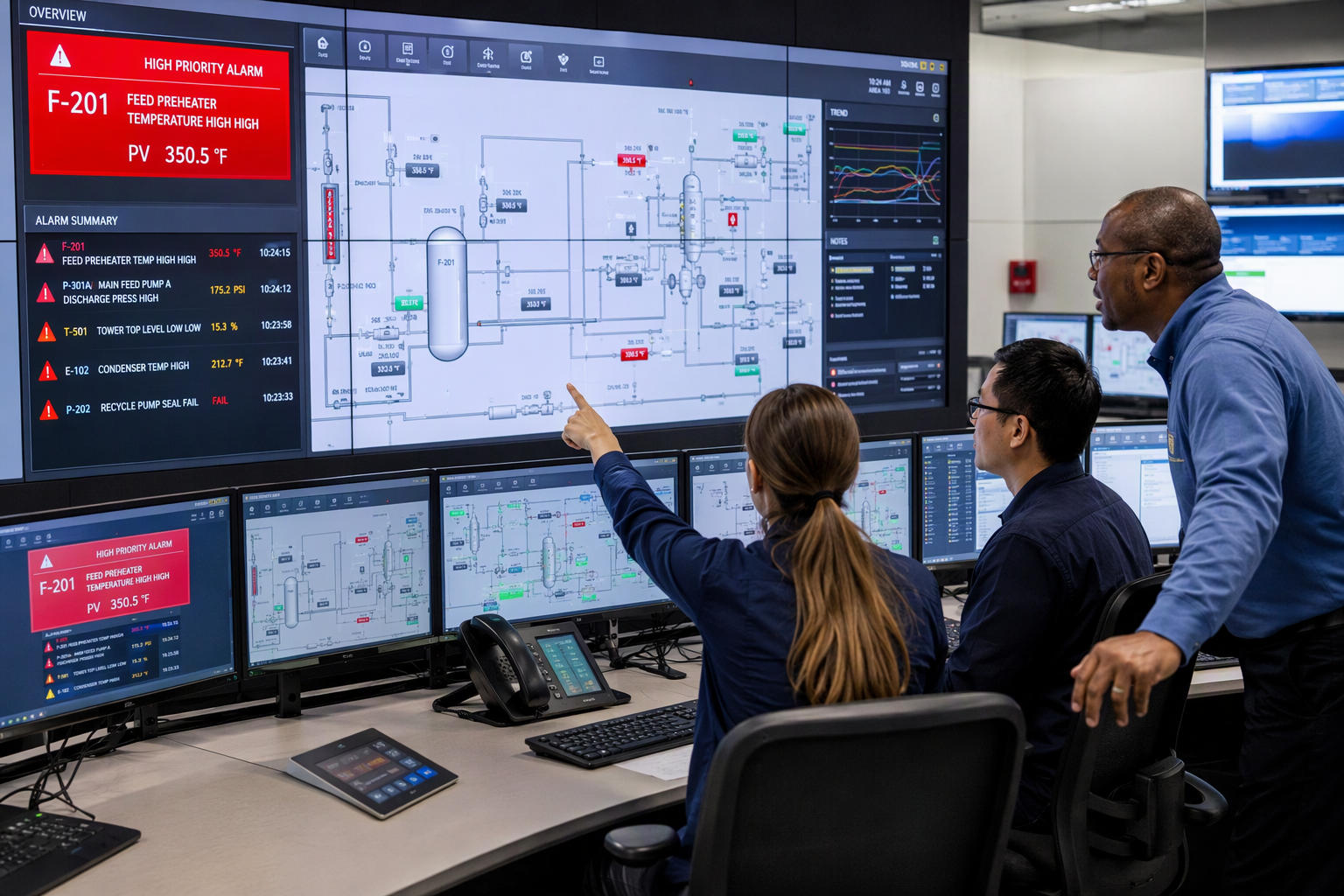
Common Display Mistakes to Avoid
One common mistake is showing every alarm at the same priority, which teaches operators that nothing is urgent. Another is cramming the screen with trends, logs, and video feeds until the alarms disappear into decoration. A third is using red for routine information, so real emergencies blend into the background. Avoid these by ranking alarms honestly, reserving the top of the screen for action items, and using strong colors only for strong reasons, as emphasized by a professional security provider. Review the display with operators each quarter, and remove whatever they say they ignore.
A Worked Example: Redesigning a Control Room Display
A chemical plant redesigned its control room display after operators complained they could not find urgent alarms during floods. The team sorted the alarm list by priority, grouped alarms by unit, and reserved red for critical alarms only, integrating features akin to home automation systems. They added a trend beside each critical alarm and moved shelved alarms to a separate panel. Within three months, the average time to acknowledge a critical alarm fell from four minutes to under one minute, and operators reported that the display finally matched how they actually worked. The redesign used no new hardware, only clearer choices.
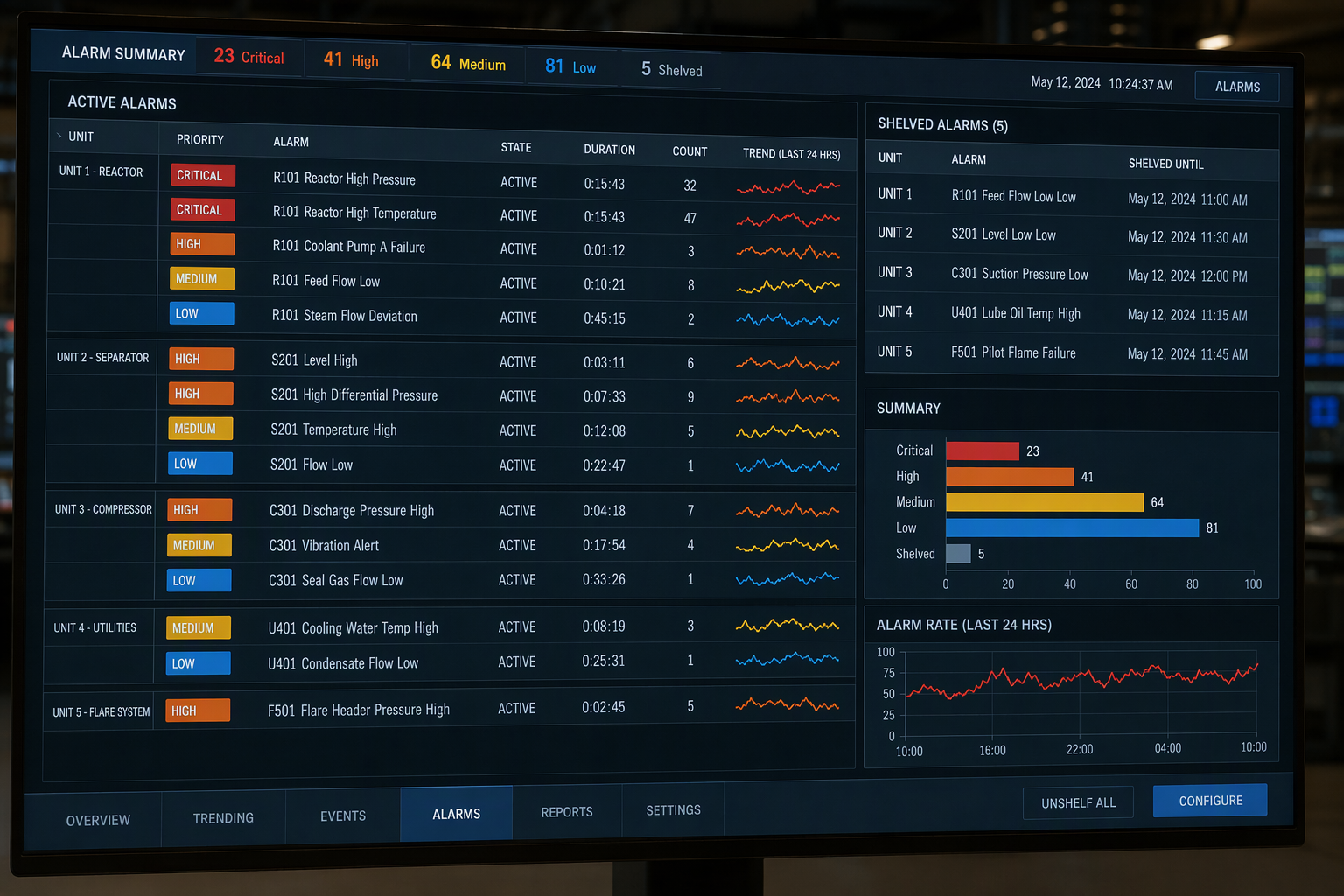
Reviewing Display Performance Over Time
Review display performance the way you review alarm performance: with numbers, not impressions. Track how long operators take to acknowledge critical alarms, how many alarms sit unacknowledged past their window, and how often operators ask for a display change. A display that worked last year may fail today, especially in commercial properties, because the process changed, the team changed, or the alarm load grew. Hold a short display review each quarter with operators and engineers, and treat every complaint as data. Small, steady display improvements beat a rare, large redesign.
Alarm Display Standards Worth Following
Standards give display design a tested starting point, so teams do not reinvent good practice. ISA 18.2 covers alarm management for process plants, including how alarms, including smoke detectors, should appear, sound, and rank on the control panel. IEC 62682 offers similar guidance for alarm systems, and human-factors guides cover legibility, color, and layout. Treat standards as a floor, not a ceiling: adapt their rules to the plant's units, its operators, and its risks, and document where the plant's display standard differs and why. A standard the team helped write is one the team will follow.
Getting Operator Feedback on Displays
Ask operators what works on the display, because they are the ones who read it under pressure. Run short feedback sessions after upsets, after display changes, and once a quarter, and ask one question: what slowed you down? Record every answer, fix the problems operators name most often, and tell them what changed regarding access control. When operators see their feedback change the display, they keep giving it, and the display keeps improving. A feedback loop turns the display from an engineering product into a shared tool that operators trust.
How Do Alarm Displays Help Operators Respond Faster?
They help operators respond faster by showing the most urgent alarm first, with its cause and the action to take, all at a glance. When operators see priority, cause, and action together, they act in seconds instead of searching the screen, and the plant stays safer with motion detectors in place.
Show the alarm, its cause, and the action, all at a glance.
If operators cannot read it fast, the display has failed.
Test displays with real operators.
Monitoring, Alerts, Sensors and Automation on the Display
Good alarm displays can show multiple notifications at once, but they must rank them: alarm displays should list the highest priority first, group related points by unit, and keep acknowledged points in a separate view so the new event is never lost. Alarm displays that stay readable in the dark use high contrast, a dim mode for night shifts, and large text, so operators in a dim control room can still read the priority, the value, and the action. When alarm displays are tested in low light with real operators, the team learns whether the colors, the font size, and the layout work under the conditions where alarm displays are actually used, similar to how leading smart home systems, like those that integrate with Amazon, function effectively.
You might also like