
Exploring Advanced Technologies Behind AGVs
Exploring Advanced Technologies Behind AGVs
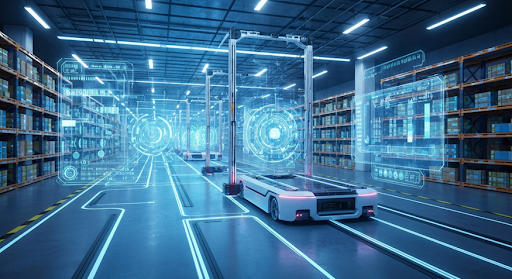
Key Highlights
- An automated guided vehicle (AGV) is a mobile robot that transports materials without a human operator.
- Modern AGVs use an advanced navigation system, such as laser or vision guidance, to move through facilities.
- Recent battery advancements, including lithium-ion technology, enable continuous operation and faster charging.
- Integrated safety features like sensors and emergency stops ensure effective collision avoidance.
- Key AGV applications include material handling in warehouses, manufacturing plants, and distribution centers.
- Different types of AGVs are designed for specific tasks, from towing carts to handling pallets.
Introduction
Have you ever wondered how large warehouses and manufacturing plants move materials so efficiently? The answer often lies in an automated guided vehicle (AGV). These remarkable machines are transforming material handling by automating the transport of goods, components, and finished products. As industries seek greater productivity and safety, AGV solutions are becoming essential tools. This guide explores the advanced technologies that power AGVs and how they are revolutionizing operations across various sectors.
Overview of Automated Guided Vehicles (AGVs)
An automated guided vehicle is a self-guided mobile robot used to move materials within a controlled environment. Unlike manual vehicles, they operate without direct human intervention, following predefined paths or using advanced navigation to travel through a facility. There are many types of AGV, each designed for a specific purpose.
These vehicles rely on a central control system to receive instructions and coordinate movements. This allows them to handle repetitive transport tasks with precision and reliability, making them a cornerstone of modern automation. Next, we will explore what an AGV is in more detail and its key components.
Defining AGVs and Their Role in Modern Industry
At its core, an automated guided vehicle is a system designed to automate material handling tasks that would traditionally rely on forklifts, carts, or conveyor systems. These autonomous vehicles transport goods within manufacturing facilities, warehouses, and distribution centers without a human driver. Their primary role is to move materials from one point to another efficiently and safely.
By automating these transport duties, you can significantly reduce the potential for human error. This leads to fewer workplace accidents and less product damage. AGVs ensure a consistent and reliable flow of materials, from raw goods arriving at a receiving dock to finished products heading to shipping areas.
This automation is vital for maintaining an uninterrupted production process. In modern industry, where speed and accuracy are critical, AGVs help streamline operations, boost productivity, and support the seamless function of your entire supply chain.
Key Components of an AGV System
A complete AGV system is more than just the vehicle itself; it’s an integration of several key components working together. These parts enable the vehicle to navigate, operate safely, and perform its designated tasks. Understanding these components is crucial for appreciating how AGVs enhance material flow.
The primary elements of an AGV system include advanced sensors, a power source, and a control unit. These work in concert with navigation technologies to guide the vehicle accurately through your facility. The system also includes load handling equipment tailored to the materials being transported.
Here are some of the essential components:
- Navigation System: The "brain" of the AGV, using technologies like LIDAR, laser scanners, or magnetic tape to determine its location and path.
- Drive Unit: Electric motors that power the wheels and provide the necessary torque and speed for movement.
- Power Supply: Rechargeable batteries, typically lithium-ion or lead-acid, that provide the energy for operation.
- Control System: An onboard computer that processes sensor data, communicates with fleet management software, and executes commands.
Core Technologies Powering AGVs
The effectiveness of AGVs hinges on a set of core technologies that enable them to operate autonomously and efficiently. These technologies are what separate mobile robots from simple carts, allowing them to navigate complex environments and integrate seamlessly with other warehouse systems. The most critical technologies relate to navigation, communication, and control.
These systems ensure that AGVs can follow routes, avoid obstacles, and receive tasks in real time. As we look closer at these technologies, you will see how they come together to create a powerful and flexible automation solution. Let’s start by examining the navigation methods and sensors that guide these vehicles.
Navigation Methods and Sensors
The navigation system is what allows an AGV to find its way around a facility. There are several navigation methods available, each with its own strengths. Simpler systems use physical guides like magnetic tape or wires embedded in the floor, which the AGV follows using a sensor. This method is reliable for fixed routes but lacks flexibility.
More advanced navigation methods give AGVs greater autonomy. Laser navigation, for example, uses a laser scanner on the vehicle that detects reflective targets mounted on walls or columns. By measuring the distance and angle to these reflectors, the AGV can calculate its precise position.
Other technologies include optical navigation, which follows painted lines, and inertial navigation, which uses gyroscopes to track movement from a known point. These advanced sensors and systems are key to enabling AGVs to operate in diverse and dynamic industrial environments.
Wireless Communication and Connectivity
For an AGV to function as part of a larger automated system, it needs to communicate. Wireless communication is the link that connects individual vehicles to a central control system. This connectivity allows the fleet manager to assign tasks, monitor status, and optimize routes in real time.
Typically, AGVs use Wi-Fi to connect to the central network. This enables seamless integration with other essential software, such as warehouse management systems (WMS) or an enterprise resource planning (ERP) platform. Through this connection, the AGV can receive instructions like "pick up a pallet from location A and deliver it to location B."
This constant stream of data also allows the system to coordinate traffic between multiple vehicles, preventing congestion and ensuring a smooth material flow. Without reliable wireless communication, an AGV would simply be an isolated machine rather than part of an intelligent, coordinated fleet.
Advanced Navigation Systems in AGVs
As AGV technology evolves, so do the navigation systems that guide them. Modern AGVs are moving away from fixed paths toward more dynamic and intelligent methods of finding their way. These advanced systems give mobile robots the flexibility to adapt to changing layouts and operate in more complex environments.
Technologies like laser guidance, vision-based navigation, and natural feature mapping are leading this transformation. These systems allow AGVs to navigate with greater precision and without the need for extensive infrastructure modifications. Let's explore some of these cutting-edge navigation technologies in more detail.
Laser-Based Navigation
Laser-based navigation, also known as laser guidance, is one of the most popular and reliable advanced navigation methods. An AGV equipped with this technology uses a rotating laser scanner that emits beams of light. These beams bounce off reflective targets strategically placed throughout the facility, such as on walls, racks, or columns.
The navigation system on the AGV measures the time it takes for the laser to return and calculates its exact position based on the angles and distances to multiple reflectors. This triangulation method is incredibly accurate, allowing the AGV to navigate with precision down to the millimeter.
Because it doesn't rely on floor-based guides, laser navigation is highly flexible. It is ideal for large, open spaces like distribution centers and helps minimize the risk of product damage by ensuring precise movements, even in busy areas.
Vision-Guided Navigation
Vision-guided navigation represents a significant leap forward in AGV autonomy. Instead of relying on reflectors or magnetic tape, these AGVs use cameras to "see" their surroundings. The system captures images of the facility and compares them to a pre-recorded map to determine its location and navigate along a programmed path.
This technology allows AGVs to recognize features in their environment, such as walls, racking, and machinery. This makes them highly adaptable to changes in the workplace. If a pallet or cart is temporarily blocking a path, a vision-guided AGV can often navigate around it, enhancing the overall efficiency of material handling processes.
The onboard cameras also contribute to collision avoidance, as they can detect unexpected obstacles. This makes vision-guided systems a powerful tool for improving warehouse management and safety in dynamic environments.
Natural Feature (SLAM) Navigation
Natural feature navigation, often referred to as SLAM (Simultaneous Localization and Mapping), is one of the most advanced navigation technologies available. AGVs using SLAM do not require any external infrastructure like reflectors or tape. Instead, they use sensors like LIDAR to build a map of the facility in real time while simultaneously determining their own location within it.
This technology allows AGVs to navigate by recognizing permanent structural features of a building, such as walls, columns, and permanent fixtures. Because the AGV is constantly updating its map, it can easily adapt to dynamic environments where things are frequently moving or changing.
SLAM is an excellent choice for facilities that require maximum flexibility. It enhances workplace safety by enabling AGVs to navigate around people and unexpected obstacles without being confined to a fixed route, making it a truly autonomous solution.
Power Supply and Battery Advancements
An AGV is only as effective as its power source. Reliable power is essential for ensuring continuous operation and maximizing uptime. Fortunately, significant battery advancements have transformed how AGVs are powered, making them more efficient and cost-effective than ever before.
Modern batteries offer longer runtimes and faster charging capabilities, which helps you achieve lower costs by reducing downtime and maintenance needs. These innovations are crucial for keeping your automated fleet running smoothly around the clock. Let's look at the different battery types and charging solutions available for AGVs.
Types of Batteries for AGVs
The two most common types of batteries used in AGVs are lead-acid and lithium-ion. Lead-acid batteries have been the traditional choice due to their lower initial cost. However, they require longer charging times, regular maintenance, and designated charging rooms for battery swapping.
In contrast, lithium-ion batteries are becoming the preferred option for modern AGVs. Although they have a higher upfront cost, they offer a longer lifespan, faster charging times, and require no maintenance. Their ability to handle heavy loads and support opportunity charging makes them ideal for demanding applications in distribution facilities that require continuous operation.
Choosing the right battery depends on your operational needs, but the trend is clearly moving toward more efficient and flexible power solutions.
| Feature | Lead-Acid Batteries | Lithium-Ion Batteries |
|---|---|---|
| Charging Time | 8-10 hours | 1-2 hours |
| Lifespan | 1,500 Cycles | 3,000+ Cycles |
| Maintenance | Requires regular watering and equalization | Maintenance-free |
| Efficiency | Lower energy efficiency | Higher energy efficiency |
| Opportunity Charging | Not recommended | Ideal for frequent, short charges |
Automated Charging and Opportunity Charging Solutions
To maximize uptime, modern AGV systems utilize automated charging solutions that eliminate the need for manual battery swaps. With automated charging, an AGV will navigate itself to a charging station when its battery level is low. This ensures the vehicle is always ready for the next task without human intervention.
A popular method is opportunity charging, which allows AGVs to charge during short periods of inactivity throughout the day. For example, an AGV might dock at a charging station for a few minutes while waiting for a load. This strategy keeps the battery level consistently high and enables continuous, 24/7 operation.
These automated solutions improve operational efficiency and enhance safety by removing the manual handling of heavy batteries, which can prevent workplace accidents. The ability to manage power in real time ensures that your AGV fleet remains productive and reliable.
AGV Vehicle Types and Configurations
AGVs are not a one-size-fits-all solution. They come in many different forms, each designed for a specific set of tasks and environments. The main types of AGV include models for towing, lifting, and carrying individual loads. Common configurations include tugger AGVs, forklift AGVs, and unit load AGVs.
Understanding the different vehicle types helps you select the right solution for your unique material handling needs. Whether you need to move small totes or heavy pallets, there is likely an AGV configuration that fits the job. Let’s examine some of the most common AGV models.
Towing AGVs and Tugger Models
Towing AGVs, also known as tugger AGVs, are designed to pull a train of non-motorized carts. This configuration is highly efficient for transporting multiple loads simultaneously over long distances within a facility. Think of them as an automated locomotive for your internal logistics.
These vehicles are commonly used in manufacturing and assembly environments to deliver raw materials and components to production lines. For example, a tugger AGV can follow a complex route, making stops at various workstations to drop off parts, a process known as a "milk run."
By automating the movement of multiple loads at once, tugger AGVs are a cornerstone of lean manufacturing and just-in-time material handling. They ensure that production areas are consistently supplied without the need for manual transport.
Forklift AGVs and Pallet Handling
Forklift AGVs are designed to automate the tasks traditionally performed by human-operated forklifts. These vehicles are equipped with forks to lift, transport, and stack pallets, crates, and other large containers. They are a powerful solution for automating pallet handling in warehouses and distribution centers.
These AGVs can pick up heavy loads from the floor, place them on racking in storage areas, and retrieve them for shipping. Some models are even capable of loading and unloading trucks. They use advanced sensors and navigation to perform these tasks with high precision and safety.
By automating repetitive lifting and transport tasks, forklift AGVs reduce labor costs and minimize the risk of accidents associated with manual forklift operation. They are ideal for high-volume operations that require consistent and reliable movement of palletized goods.
Unit Load and Custom Platform AGVs
Unit load AGVs are designed to carry a single load, such as one pallet, tote, or large container, directly on the vehicle's platform. These AGVs often feature a lift deck or conveyor top to automatically transfer the load to and from stands or other conveyor systems.
They are incredibly versatile and are used for a wide range of material handling tasks, from moving goods between production stages to transferring finished products to storage. Because they handle individual units, they are perfect for point-to-point transfers in a variety of industrial settings.
For highly specialized needs, many manufacturers offer custom AGVs. These can be built with unique load-handling attachments, different dimensions, or specific control features to provide a flexible solution for nearly any application. This customization ensures you can find an AGV that perfectly matches your workflow.
Sensor Integration and Safety Features
Safety is the top priority when integrating automated vehicles into a workspace shared with people and equipment. AGVs are equipped with a sophisticated array of advanced sensors and safety features designed to prevent accidents. These systems enable reliable collision avoidance and ensure the vehicle can react to its environment instantly.
From obstacle detection scanners to physical bumpers and emergency stop buttons, these safety layers work together to create a secure operating environment. Let's take a closer look at how AGVs detect obstacles and the safety protocols that govern their operation.
Obstacle Detection and Collision Avoidance
One of the most critical safety functions of an AGV is its ability to detect and avoid obstacles. AGVs use various sensors, such as LIDAR, laser scanners, and ultrasonic sensors, to constantly monitor their path for unexpected objects, including people, forklifts, or misplaced materials.
When a sensor detects an obstacle, the AGV's control system immediately instructs the vehicle to slow down or come to a complete stop. This prevents collisions and ensures a safe material flow throughout the facility. Once the path is clear, the AGV will automatically resume its programmed route.
This intelligent collision avoidance capability not only protects your employees and equipment but also reduces the risk of damage to the goods being transported. It is a fundamental feature that makes the co-existence of humans and robots on the factory floor possible.
Safety Protocols and Emergency Stop Mechanisms
In addition to automated obstacle detection, AGVs are built with multiple layers of safety features and protocols to comply with strict industry standards. These systems provide redundant protection to handle any potential failure or emergency, minimizing the risk of human error.
These safety mechanisms are designed to be foolproof, ensuring that the vehicle can be stopped immediately if a hazardous situation arises. This multi-layered approach to safety is what makes AGVs a reliable choice for busy industrial environments.
Key safety features include:
- Physical Bumpers: These are contact-sensitive bumpers located on the vehicle. If a bumper touches an object, it triggers an immediate emergency stop.
- Emergency Stop Buttons: AGVs have easily accessible "E-stop" buttons that allow anyone nearby to halt the vehicle instantly in an emergency.
- Audible Alarms and Warning Lights: The vehicle uses sounds and flashing lights to signal its presence, direction of travel, and status to nearby workers, enhancing workplace safety.
Fleet Management and Traffic Control Software
A single AGV can improve efficiency, but a fleet of them working in concert can transform your entire operation. This coordination is made possible through powerful fleet management and traffic control software. This central system acts as an air traffic controller for your AGVs, optimizing their movements and tasks in real time.
This software integrates with your warehouse management system to orchestrate a seamless flow of materials. It ensures that the right vehicle is assigned to the right job at the right time. Now, let’s examine how this software provides monitoring and optimization capabilities.
Real-Time Monitoring and Route Optimization
Fleet management software gives you a complete, real-time view of your entire AGV fleet. From a central dashboard, you can see the location, status, and battery level of every vehicle. This visibility allows supervisors to monitor performance and quickly address any issues that may arise.
Beyond just monitoring, the software is constantly performing route optimization. It analyzes all active tasks and calculates the most efficient path for each AGV, taking into account factors like facility traffic, vehicle proximity to a task, and priority levels. This ensures that vehicles don't get stuck in congestion and travel distances are minimized.
By integrating with warehouse management systems, the software can anticipate material needs and proactively dispatch AGVs. This level of coordination significantly boosts operational efficiency and throughput.
Centralized vs. Decentralized Traffic Management
There are two primary approaches to managing AGV traffic: centralized and decentralized. In a centralized management system, a single control system makes all the decisions. It assigns tasks, plans routes, and controls intersections to prevent collisions. This model is common in facilities with predictable workflows and provides a high level of control.
A decentralized management system, on the other hand, gives more autonomy to individual AGVs. Each vehicle can make its own routing decisions based on information it shares with other nearby vehicles. This approach is more flexible and can adapt well to dynamic environments where conditions change frequently.
The choice between these two systems depends on your operational complexity. For example, large distribution centers with many vehicles might benefit from a centralized control system to optimize overall flow, while smaller, more agile operations might prefer a decentralized approach.
Major Industrial Applications of AGVs
The versatility of AGVs has led to their adoption across a wide range of industries. Wherever there is a need for repetitive material transport, AGVs can provide a powerful solution. Major AGV applications are found in distribution centers, automotive assembly plants, and general manufacturing facilities.
From moving raw materials to transporting finished goods, these automated vehicles are streamlining processes and boosting productivity in many sectors. Let’s explore two of the most common industrial settings where AGVs are making a significant impact.
AGVs in Warehousing and Logistics
Warehousing and logistics are perhaps the most well-known applications for AGVs. In these environments, AGVs are used to automate the movement of goods from receiving to storage, and from storage to picking and shipping areas. This is essential for modern warehouse management.
AGVs can transport goods on pallets, in totes, or as individual items, integrating seamlessly with other warehouse systems like conveyors and automated storage and retrieval systems (AS/RS). By automating these repetitive transport tasks, you can significantly reduce your reliance on manual labor and lower overall labor costs.
In large-scale fulfillment centers, fleets of AGVs work around the clock to ensure that orders are processed quickly and accurately. This level of automation is critical for meeting the demands of e-commerce and maintaining a competitive edge.
Use of AGVs in Manufacturing and Assembly Lines
In manufacturing, the use of AGVs is focused on improving production efficiency and ensuring a smooth material flow. AGVs are perfect for just-in-time delivery of parts and components to assembly lines. They can be programmed to follow a specific schedule, delivering the right materials to the right workstation at the exact moment they are needed.
This synchronized delivery eliminates line-side clutter and reduces the need for large inventory buffers at each workstation. Some AGVs are even designed to function as mobile assembly platforms, moving a product from one station to the next as it is being built.
By automating material delivery, manufacturers can reduce production bottlenecks, increase throughput, and create a safer, more organized work environment. AGVs help ensure that the assembly process runs smoothly and without interruption.
AGVs vs. Autonomous Mobile Robots (AMRs)
As you explore automation, you will likely encounter another term: autonomous mobile robots (AMRs). While AGVs and AMRs are both mobile robots used for material transport, they differ fundamentally in how they navigate. Understanding this difference is key to choosing the right technology for your needs.
AGV technology typically relies on fixed paths, whereas AMRs use more advanced onboard intelligence to navigate freely. While their use cases can overlap, these different types of robots are suited for different environments and tasks. Let’s compare them more closely.
Functional Differences and Overlapping Use Cases
The primary difference between AGV technology and AMRs lies in their navigation. AGVs follow predefined routes, guided by wires, magnetic tape, or lasers reflecting off targets. They are like a train on a virtual track. If an obstacle blocks their path, they stop and wait for it to be cleared.
AMRs, on the other hand, navigate more like a car with a GPS. They use technologies like SLAM to build a map of the facility and can dynamically plan the best route to their destination. If an obstacle is in their way, they will safely maneuver around it. This makes mobile robots like AMRs more flexible in dynamic environments.
Despite these differences, their use cases can overlap in the supply chain.
- AGVs excel in repetitive, point-to-point transport in stable environments.
- AMRs are better suited for complex environments where routes may change or where they need to work closely with people.
- Both can be used for transporting goods, but the choice depends on the predictability of your workspace.
Choosing Between AGV and AMR for Your Facility
So, how do you decide between an AGV and an AMR? The choice depends largely on your facility's environment and your need for flexibility. If your operations involve highly repetitive tasks with fixed routes in a controlled environment, AGV solutions may be the most cost-effective and reliable choice.
However, if you operate in dynamic environments where layouts change, or if your vehicles need to navigate around people and other equipment frequently, an AMR is likely a better fit. Their ability to adapt to changes makes them a more flexible solution for complex workflows.
Ultimately, it’s about matching the technology to your specific needs. Consulting with a trusted partner who specializes in automation can help you evaluate your facility and determine whether an AGV or AMR is the right choice to optimize your operations.
Conclusion
As we explore the fascinating world of Automated Guided Vehicles (AGVs), it's clear that these advanced technologies are revolutionizing industries by enhancing efficiency and safety. From sophisticated navigation systems to powerful battery advancements, AGVs are designed to streamline operations while minimizing human intervention. Understanding these technologies equips businesses with the knowledge to make informed decisions about adopting AGVs in their facilities. Whether you're in warehousing, manufacturing, or logistics, the potential applications are vast and varied. Embracing AGVs can lead to significant improvements in productivity and operational performance. If you have more questions about integrating AGVs into your business, feel free to reach out for further insights!
Frequently Asked Questions
What considerations affect the cost of AGV implementation?
The cost of an AGV system depends on several factors, including the number and types of AGV purchased, the complexity of the navigation technology, and software integration needs. While the initial investment can be high, AGVs often lead to lower costs over time by reducing labor expenses and improving supply chain efficiency.
What factors should be evaluated before purchasing an AGV system?
Before selecting AGV solutions, evaluate your facility's layout, payload requirements, and workflow. Consider the different types of AGV and navigation methods available. Assess compatibility with your existing warehouse systems and your desired level of operational efficiency to ensure you choose the right system for your needs.
Who are the leading AGV manufacturers in the United States?
Several leading AGV manufacturers in the U.S., such as Savant Automation, Inc., RedViking, and Oceaneering Mobile Robotics, offer a wide range of AGV types. These companies are a trusted partner for businesses in many industries, providing advanced material handling solutions for distribution centers and manufacturing plants.