The Role of SCADA in Industrial Data Management
The Role of SCADA in Industrial Data Management
Key Highlights
Here are the key takeaways about SCADA's role in industrial data management:
- A SCADA system is a type of control system used to monitor and manage industrial processes from a central location.
- It performs supervisory control and data acquisition to collect real-time information from equipment.
- Industries like energy, water treatment, and manufacturing rely on SCADA for operational efficiency.
- The system uses hardware like PLCs and RTUs, along with software, for data collection and analysis.
- SCADA helps improve safety, reduce costs, and ensure regulatory compliance.
Introduction
In the world of industrial automation, managing complex processes efficiently and safely is a top priority. This is where Supervisory Control and Data Acquisition (SCADA) systems come into play. A SCADA system is a powerful tool that combines hardware and software to give operators the ability to monitor equipment, collect real-time data, and execute control functions from a central point. It has become essential for modern industries, helping them streamline operations, reduce downtime, and make smarter, data-driven decisions.
Understanding SCADA Systems in Industrial Settings
A SCADA system serves as the central nervous system for many industrial processes. It provides a high-level view of operations, enabling supervisory control and data acquisition from equipment that might be spread across vast distances. This industrial control system allows operators to see what's happening at a glance and make necessary adjustments.
Through its interface, you can issue control actions to machinery, such as starting or stopping pumps, opening or closing valves, and adjusting settings. This capability is crucial for maintaining stability and efficiency in complex industrial environments. Let's explore the definition, history, and modern role of this technology.
What Is SCADA? Definition and Core Concepts
SCADA stands for Supervisory Control and Data Acquisition. At its core, it's a control system architecture that uses computers, networked data communications, and graphical user interfaces for high-level process supervision. Its primary function is to monitor and control industrial equipment and processes locally or at remote locations.
The "supervisory control" aspect means that the system allows you to oversee and manage operations from a central station. This gives you a comprehensive view of the entire process rather than just individual components.
Meanwhile, "data acquisition" refers to the system's ability to collect process data from sensors and other field devices. This data acquisition system gathers information like temperature, pressure, and flow rates, which is then processed and presented to the operator in an easy-to-understand format, enabling informed decision-making and control.
Brief History and Evolution of SCADA Technology
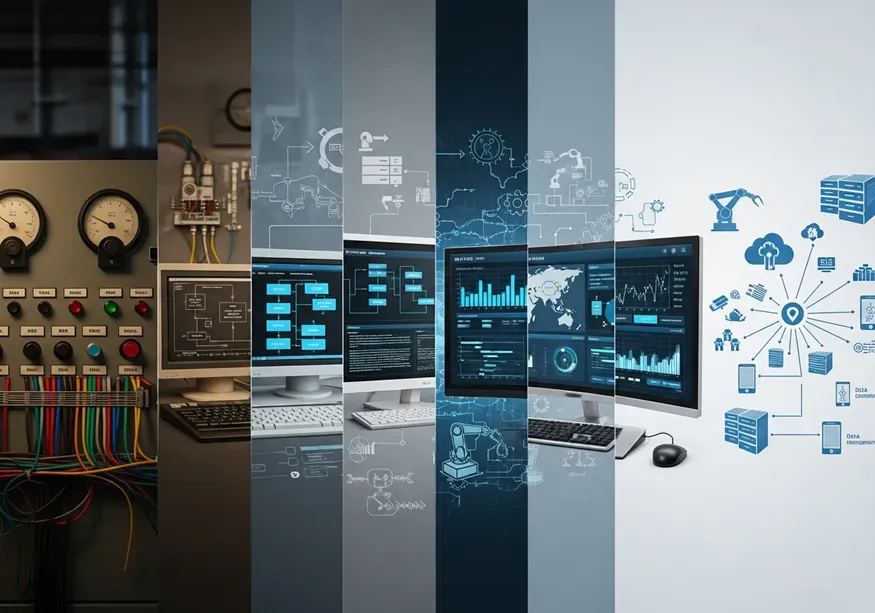
SCADA technology has a long history, with its origins in the 1960s. At that time, industries needed a way to automate and monitor processes over large distances, which was a challenge for traditional manual methods. The first systems were often large, self-contained monolithic SCADA systems that relied on mainframe computers.
As technology advanced through the 1980s and 1990s, SCADA systems evolved. The introduction of programmable logic controllers (PLCs), smaller computers, and network-based communications made these systems more distributed, flexible, and accessible. This shift allowed for greater scalability and easier integration with existing equipment.
Today, modern SCADA systems have embraced cloud computing and advanced analytics. This evolution helps organizations not only collect real-time and historical data but also use it to meet industry regulations, predict maintenance needs, and optimize operations in ways that were once impossible.
Role of SCADA in Modern Industrial Automation
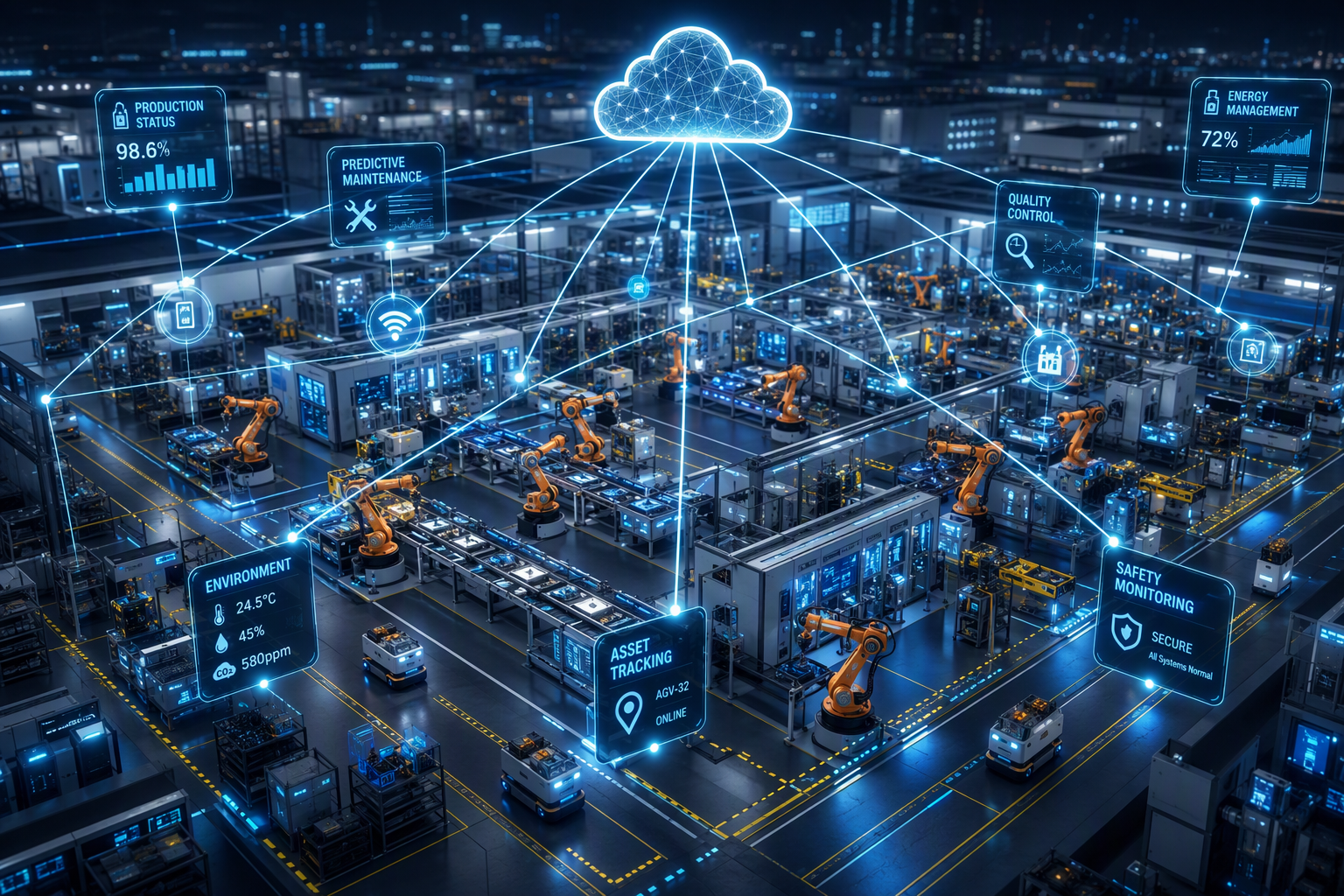
In today's world of industrial automation, SCADA plays a critical role in enhancing process control and operational efficiency. It acts as a centralized hub, gathering data from various sources and providing operators with the insights needed to make smarter decisions quickly. This ability to monitor and manage complex operations in real time is invaluable.
By automating routine tasks and providing a clear view of performance, SCADA systems help organizations minimize downtime, improve safety, and ensure consistent product quality. They are the backbone of modern industrial control, allowing for a level of precision and responsiveness that manual oversight cannot match.
The key contributions of SCADA to industrial automation include:
- Real-Time Monitoring: Providing instant access to process data.
- Increased Efficiency: Optimizing process control and automating tasks.
- Enhanced Safety: Monitoring critical systems and alerting operators to potential hazards.
- Data Logging: Recording information for analysis and compliance reporting.
Fundamental Components of SCADA Architecture
A SCADA system is comprised of several essential system components that work together to monitor and control industrial processes. These main components form a cohesive architecture that enables data to flow from field devices at remote sites to a centralized control system where an operator can take action.
At the heart of this architecture are supervisory computers, remote terminal units (RTUs), and programmable logic controllers (PLCs). These are connected through a communication network that ensures reliable data transmission. We'll now look closer at each of these key pieces.
Supervisory Computers and Human-Machine Interface (HMI)
Supervisory computers are the core of the SCADA system, processing the data collected from the field. These computers run the SCADA software components that allow operators to manage the entire system. They act as the central brain, communicating with devices and executing commands.
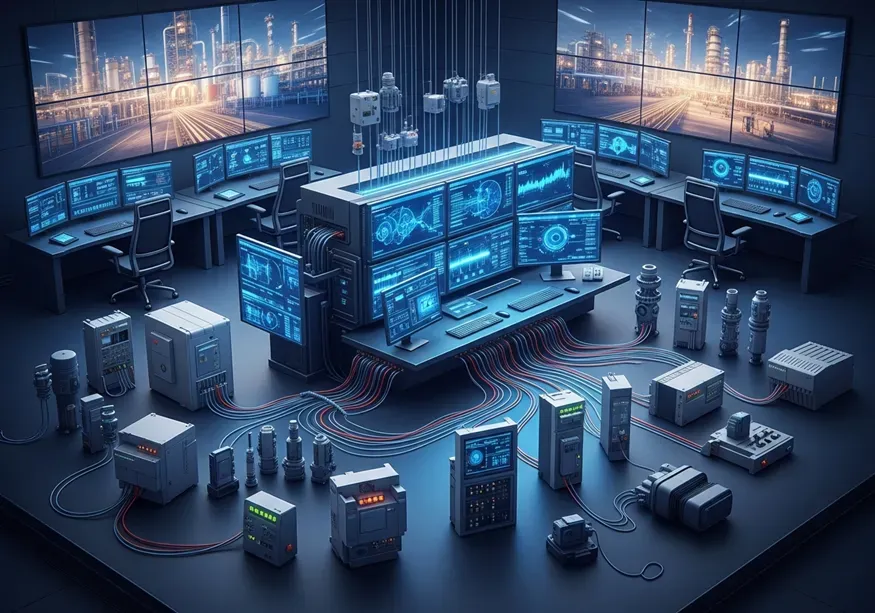
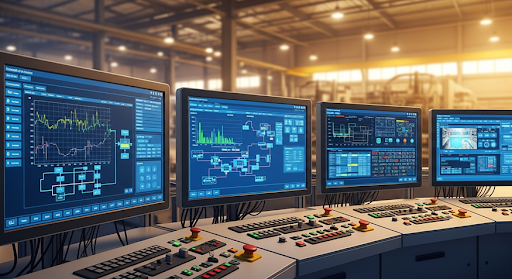
The most visible part of the system is the Human-Machine Interface (HMI). This user interface is the central interface where operators interact with the SCADA system. It presents complex process data in a graphical format, using charts, diagrams, and alarms, making it easy to understand the status of operations at a glance.
Through the HMI, operators can monitor real-time data, acknowledge alarms, and send control commands to the field equipment. This graphical display is crucial for effective supervisory control, as it translates raw data into actionable insights, helping you visualize and manage your processes efficiently.
Remote Terminal Units (RTUs) and Programmable Logic Controllers (PLCs)
Remote Terminal Units (RTUs) and Programmable Logic Controllers (PLCs) are the workhorses of a SCADA system. These microcomputers are installed in the field, where they connect directly to sensors and other industrial equipment. Their job is to collect data and transmit it to the supervisory computer.
RTUs are specifically designed for remote locations and can operate independently. They gather data from sensors and send it back to the central system. PLCs, on the other hand, are typically used for localized control tasks. They can execute predefined logic to automate machinery and processes right on the factory floor.
Both RTUs and PLCs can receive control commands from the central SCADA system. For example, if an operator decides to shut down a pump, the command is sent from the HMI to the appropriate PLC or RTU, which then executes the action on the physical equipment.
Networking, Communication Protocols, and Field Devices
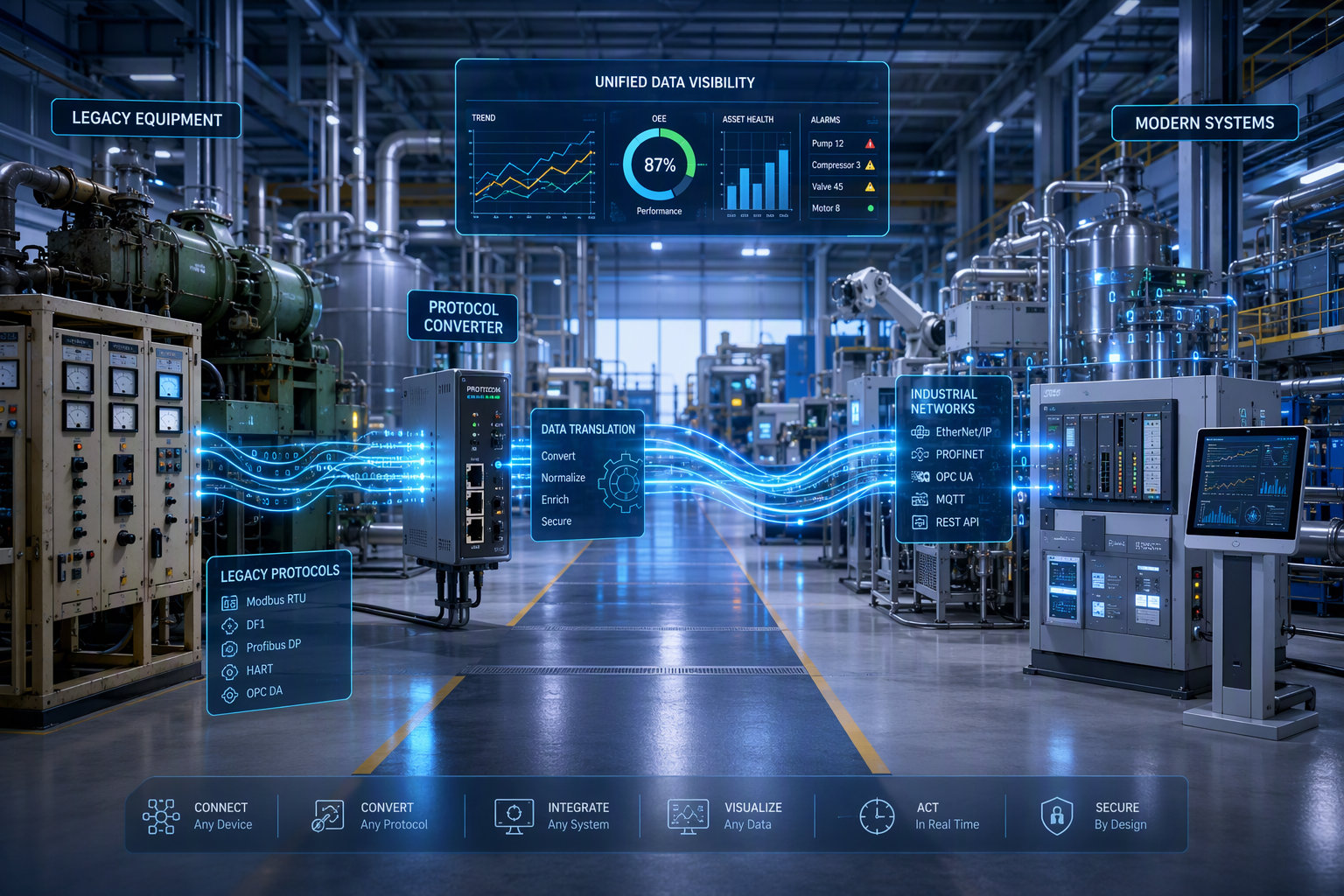
For a SCADA system to function, its components must communicate effectively. This is achieved through a communication infrastructure that connects field devices, RTUs, PLCs, and the central supervisory computer. This network can use various technologies, including wired connections like Ethernet or wireless options like radio frequencies for data transmission over long distances.
Specific communication protocols standardize how data is formatted and exchanged, ensuring all parts of the system can understand each other. This reliable data flow is essential for real-time monitoring and control. To enhance security, network segmentation is often used to isolate the SCADA network from other corporate networks.
Field devices are the sensors and actuators that interact directly with the industrial process. They measure physical variables and execute control actions.
| Device Type | Function |
|---|---|
| Sensors | Measure process variables like temperature, pressure, flow |
| Actuators | Control equipment, such as valves, motors, and pumps |
| Gateways | Connect field devices to the communication network |
How SCADA Systems Work in Data Collection and Process Control
A SCADA system excels at data collection and process control by providing a continuous, real-time feedback loop. This industrial control system gathers data from sensors in the field, processes it, and displays it for operators, who can then make informed decisions to manage the process. This cycle is fundamental to industrial process automation.
The ability to see live data and react instantly allows for precise control over operations. This not only improves efficiency but also enables strategies like predictive maintenance, where data trends can signal potential equipment issues before they cause a failure. Let's examine how SCADA handles monitoring, control, and event management.
Monitoring Real-Time Data and Process Visualization
One of the primary functions of a SCADA system is to monitor real-time process data. Through its data acquisition capabilities, the system constantly collects information from field devices. This could include everything from the temperature of a furnace to the pressure in a pipeline or the tank levels in a water treatment facility.
This information is then sent to the central control station, where SCADA software organizes and presents it through process visualization. Instead of looking at rows of raw numbers, operators see intuitive graphical displays, such as dashboards, charts, and diagrams that represent the industrial process.
This visual representation allows you to quickly understand the state of your operations. You can see at a glance if everything is running smoothly or if a variable is approaching a critical threshold. This immediate feedback is essential for maintaining control and making timely adjustments.
Automated Control, Alarming, and Event Management
Beyond monitoring, SCADA systems provide powerful automated control and event management features. Operators can issue control commands directly through the HMI, but the system can also perform control actions automatically based on predefined conditions. For example, if a tank level gets too high, the system can automatically shut off an inflow valve.
Alarming is a critical feature that alerts operators to abnormal situations. When a process variable exceeds a set threshold, the system triggers an alarm, drawing immediate attention to the potential problem. This allows for quick intervention before the issue escalates, preventing damage and reducing maintenance costs.
Effective event management is also key. SCADA systems log all events, alarms, and operator actions, creating a detailed historical record. This is valuable for troubleshooting, analyzing performance, and ensuring regulatory compliance. Key features include:
- Automated Control: Executes control commands based on real-time data.
- Intelligent Alarming: Notifies operators of deviations from normal operating conditions.
- Event Logging: Records all system activities for later review and analysis.
SCADA Applications Across Major Industries in the United States
Across the United States, SCADA systems are the backbone of many critical infrastructure industries. From power plants managing power distribution to municipalities ensuring clean water treatment, these systems are essential for managing complex operations, especially those spanning large geographical areas and remote locations. The energy sector, in particular, relies heavily on SCADA.
The versatility of SCADA allows it to be adapted for a wide range of applications, helping organizations improve efficiency, safety, and reliability. Below, we'll explore its specific uses in utilities, manufacturing, and other key sectors.
Utilities: Energy, Water, and Wastewater Management
In the utilities sector, SCADA systems are indispensable. The energy sector uses them to monitor and control power generation, transmission, and distribution networks. This allows operators to manage the flow of electricity across the grid, respond to outages, and ensure a stable supply of power to homes and businesses.
Similarly, water treatment facilities and wastewater collection systems depend on SCADA. These systems monitor water quality, control pumps and valves, and manage tank levels throughout the treatment process. This ensures that water is safe for consumption and that wastewater is treated effectively before being released back into the environment.
For these industrial plants, SCADA is crucial for meeting strict regulatory standards. The system provides the detailed data logging and reporting capabilities needed to demonstrate compliance, helping utilities avoid penalties and maintain public trust.
Manufacturing, Oil & Gas, and Smart Infrastructure
The applications of SCADA extend deep into manufacturing, oil & gas, and the development of smart infrastructure. In manufacturing, SCADA systems monitor production lines, track machine performance, and control various production processes. This helps manufacturers identify bottlenecks, prevent equipment failures, and optimize output speed.
The oil & gas industry uses SCADA for the remote management of operations that often cover large geographical areas. It allows companies to monitor well pressure, pipeline flow, and tank levels from a central location, improving safety and reducing the need for on-site technicians.
Smart infrastructure projects, such as smart cities, also leverage SCADA for managing public services. This technology is used for:
- Controlling traffic light systems
- Monitoring public power consumption
- Managing wastewater treatment and water distribution
- Optimizing resource usage across the community
Conclusion
In conclusion, SCADA systems play a pivotal role in modern industrial data management by seamlessly integrating various components to ensure efficient monitoring and control. From real-time data collection to automated process management, SCADA enhances operational efficiency across multiple industries, including utilities, manufacturing, and smart infrastructures. Understanding the fundamental concepts and applications of SCADA technology equips businesses to harness its full potential, leading to improved productivity and informed decision-making. Embracing SCADA can ultimately empower industries to adapt to evolving challenges while ensuring reliable performance. If you're interested in implementing SCADA solutions in your organization or seeking expert guidance, reach out to us for a free consultation!
Frequently Asked Questions
How is SCADA different from DCS and PLC systems?
A SCADA system is designed for high-level supervision over large areas, while a Distributed Control System (DCS) manages processes within a single geographic location. Programmable Logic Controllers (PLCs) are ruggedized computers that automate specific machines or tasks. SCADA often uses PLCs and RTUs as part of its broader industrial control system architecture.
What types of data does a SCADA system typically manage?
A SCADA system manages various data types, including real-time process data like temperature and pressure, control data for issuing commands, and historical data for analysis and reporting. It also handles alarm logs and operator actions, which are crucial for tracking system performance and can contain sensitive information about operations.
What are key security considerations for SCADA systems in industry?
Key SCADA security considerations include protecting against cyberattacks through measures like network segmentation, securing remote access points, and implementing strong access controls. Adhering to industry regulations for critical infrastructure protection and providing regular employee training are also essential to safeguarding these vital systems from threats.
You might also like