
developer-tool-apis Madison Wi
developer-tool-apis Madison Wi

Key Highlights
In the fast-paced world of software development,developer-tool-apis (Application Programming Interfaces) have become essential tools that enable developers to create innovative solutions and streamline workflows. As we dive into the realm of developer tool APIs, it’s important to understand not just their definition and role in modern software development, but also how they can enhance your projects and elevate your productivity. In this blog, we'll explore the various types of developer tool APIs available, the advantages they offer, and best practices for selection and integration. Whether you're a seasoned developer or just starting out, understanding these tools can empower you to build more effective applications and stay ahead in an ever-evolving tech landscape. Let’s get started!
Introduction
Modern software development depends on fast, reliable connections between tools, platforms, and services. That is where developer tools and developer-tool-apis become essential. They help you automate tasks, exchange data, and speed up api development without rebuilding the same features from scratch. If you work with web applications, mobile applications, or cloud services, the right API can save time and reduce errors. To choose well, you need to understand the main API types, tools, and best practices that shape daily work.
Understanding Developer Tool APIs
At the center of many workflows is the application programming interface, a structured way for different software applications to communicate. In software development, these connections support data exchange, automation, and smoother collaboration across tools you already use.
When you send api requests from one system to another, you rely on clear rules, formats, and responses. Developer tool APIs turn those rules into practical workflows for testing, monitoring, deployment, and documentation. The next sections explain what they do, where they fit, and why they matter.
Definition and Role in Modern Software Development
An application programming interface is a set of rules, protocols, and tools that tells different software components how to interact. In software development, it acts like a contract. It defines what requests can be made, what data is exchanged, and what responses come back. That structure helps different systems work together, even when they use different programming language stacks or platforms.
In daily api development, developer tools make this contract easier to use. They help you send requests, inspect responses, check authentication, and review logs. Good api documentation reduces guesswork and helps team members work faster because the expected behavior is clearly described.
This is why developer tool APIs make daily tasks easier for software developers. They reduce manual effort, support reuse, and connect external services without exposing internal complexity. You spend less time decoding systems and more time building useful features.

Common Use Cases for Developer Tool APIs
Developer tool APIs support many practical use cases across the development process. They help teams connect software applications, pull data from external services, automate testing, and manage documentation. If you are choosing the best developer-tool-apis in 2024, the strongest options are usually the ones tied to testing, version control, observability, and cloud computing.
You can see their value in everyday work:
- Sending api requests during testing to confirm endpoints behave as expected
- Connecting version control platforms with deployment or review workflows
- Generating or updating documentation for internal and public APIs
- Monitoring response times, traffic, and error rates after release
Another common use case is integration between different systems. Teams often rely on API gateways, management platforms, or browser tools to move data cleanly between services. That makes features easier to ship and easier to maintain as software applications grow.
Advantages of Integrating Developer Tool APIs
Using developer tool APIs gives you a simpler integration process and a more connected workflow. Instead of building every feature from the ground up, you can plug into existing services for testing, documentation, security, and monitoring. That saves time and supports better consistency across projects.
The biggest benefits usually include:
- A wider range of features without adding heavy custom code
- Faster releases through reusable services and automation
- High performance improvements through caching, scaling, and traffic controls
- Better visibility through logs, analytics, and monitoring tools
These advantages also support best practices in software teams. You can standardize common steps, reduce repeated tasks, and improve reliability. For developers, that means daily work becomes easier because tools handle authentication, testing, and reporting in a structured way instead of forcing manual checks every time.
Key Types of APIs for Developers
Not every API works the same way, so choosing the right style matters. In software development, api design affects performance, flexibility, learning curve, and the way systems exchange data. That is why developers often compare REST API patterns, GraphQL, and older protocols before starting api development.
Each approach supports different goals. Some are simple and familiar. Others are better for precise queries or enterprise workflows. The following sections break down the main API types developers use most often and where each one fits best.
RESTful APIs
A REST API is one of the most common choices in modern software applications. It uses standard HTTP requests such as GET, POST, PUT, and DELETE to handle resources in a predictable way. Because it follows familiar web patterns, many teams find it easier to design, test, and maintain.
For api testing, REST works well with popular tools because requests and responses are usually straightforward. This simplicity also helps when reviewing documentation. If you are looking at API documentation tools, focus on clear endpoint descriptions, request and response examples, authentication details, error handling, and ease of use for testing flows.
RESTful APIs are especially useful when you want consistency and broad support across tools and frameworks. They fit many web applications, mobile applications, and cloud services. For teams that value readable interfaces and fast onboarding, REST remains a practical starting point.

GraphQL APIs
GraphQL offers a different approach to data exchange. Instead of relying on many fixed endpoints, it gives the api developer a flexible query language for requesting exactly the data needed. This can make software development more efficient when applications need complex or changing data models.
That flexibility is why GraphQL is often considered among the best developer-tool-apis in 2024, especially for teams building rich front-end experiences. It can reduce unnecessary data transfer and give developers more control over how information is fetched and shaped for the client.
At the same time, GraphQL requires thoughtful design. Since clients can request data in many combinations, teams need clear schemas, strong validation, and good monitoring. When used well, it supports cleaner data access and can simplify work across software applications with evolving requirements.
SOAP and Other Protocols
SOAP remains important in some enterprise settings where strict messaging rules and XML-based communication are needed. It is often used to connect software components across different systems, especially where formal contracts and stable processes matter more than speed of iteration.
Alongside SOAP, teams may also work with streaming APIs, partner APIs, and gateway-based services. API gateways help control authentication, traffic management, and routing between cloud services and backend systems. These tools are useful when multiple services need one controlled entry point.
When choosing API development tools for these protocols, follow a few best practices: check compatibility with existing systems, confirm support for industry standards, review security features, and make sure monitoring is included. The right choice depends on your environment, not just what is newest.
Essential Developer Tools with API Support
A strong API workflow depends on more than the API itself. You also need developer tools that support testing, debugging, documentation, design, and api deployment. These tools help reduce mistakes and give teams a clearer path from planning to release.
Some are built into the browser. Others focus on requests, automation, or generated docs. Together, they support a smoother development process and a better user experience for both internal teams and outside developers. Let’s look at the essential categories you are most likely to use.
Browser Developer Tools for API Debugging
Browser developer tools help you inspect network activity directly in the browser while an application runs. This makes them useful for checking requests, responses, headers, and failures without leaving the page. If you are working with web applications, they provide quick insight into how APIs behave in real conditions.
They are especially helpful for tracking:
- Response times for each request
- Error rates tied to broken endpoints or bad payloads
- Status codes, headers, and cached resources
- Front-end behavior linked to api performance issues
So how do browser developer tools help with working with APIs? They give you immediate visibility into what the browser sends and receives. Chrome DevTools, for example, is excellent for live network debugging, while dedicated API development tools go further with automation, collections, and broad api testing workflows.
API Testing Tools (e.g., Postman, Insomnia)
API testing tools help you validate functionality, performance, and security before release. They let you send requests, inspect responses, automate checks, and simulate real scenarios. For many teams, the most popular tools developers use for api testing include Postman, Insomnia, SoapUI, JMeter, and Swagger Inspector.
Postman stands out because it supports collaboration, workflows, and broad api development needs in one place. Insomnia is also widely used for testing and design tasks. Some teams prefer open source options or combine several tools depending on project size and testing goals.
| Tool | Main strength | Notes |
|---|---|---|
| Postman | Broad api testing and team collaboration | Popular for collections, automation, and documentation support |
| Insomnia | Clean request testing workflow | Useful for developers who want a focused interface |
| SoapUI | Strong testing for structured services | Often used in enterprise testing scenarios |
| JMeter | Load and performance testing | Helpful when measuring traffic and scalability |
| Swagger Inspector | Fast endpoint checks | Good for quick validation and exploration |
API Documentation Generators
API documentation generators help teams create clear reference material without writing every page by hand. They can describe endpoints, request formats, response examples, authentication methods, and errors. In practice, that improves api design because developers can review the interface as a shared contract.
If you are asking what features to look for in API documentation tools, start with completeness and ease of use. Good tools should present detailed information clearly, include examples, support interactive exploration, and stay aligned with the current API version. Accuracy matters as much as appearance.
From a best practices view, documentation should be easy to update and simple to understand. Tools such as Swagger, Redoc, Apiary, Slate, and ReadMe are often used because they support consistency. Better docs reduce confusion, shorten onboarding, and improve the experience for every API consumer.
Popular Developer Tool APIs in 2024
In 2024, many teams rely on well-known platforms that offer mature developer-tool-apis, strong documentation, and broad integration support. These are often considered the most popular developer-tool-apis because they connect easily with software applications and fit real business workflows.
You may hear a lot about google maps api, notion api, and stripe api, especially in cloud computing and product development. Yet developer-focused platforms also matter just as much. The next examples show how major ecosystems help with exploration, version control, and api management.
Google APIs Explorer
Google developer-tool-apis Explorer lets you try google apis directly from the browser. It is useful when you want to understand request formats, parameters, and responses before writing code. In software development, that can shorten setup time and help you confirm how a service behaves.
If you are wondering how to use Google APIs Explorer for your development workflow, start by testing endpoints interactively. You can review expected inputs, examine returned data, and compare different requests. This is especially helpful for services such as google maps api, where request structure and returned fields matter.
Another advantage is early validation. Before connecting an API to your application, you can confirm that the endpoint, authentication path, and result format match your needs. That reduces guesswork and supports faster, cleaner implementation when you move into code.
GitHub Developer APIs
GitHub developer-tool-apis are among the best developer-tool-apis in 2024 because they support workflows teams already depend on. They connect directly with version control processes, making it easier to manage repositories, automate actions, and work across collaborative environments.
For many teams, the value comes from visibility and coordination. A github developer can use these developer-tool-apis to access repository data, review user profiles, and connect tools that support issue tracking or deployment steps. When paired with strong api documentation, these tasks become easier to automate and standardize.
This kind of integration improves team productivity without changing core habits. Since version control sits at the center of modern software development, APIs that extend GitHub often provide immediate payoff. They help teams move faster while keeping work structured and traceable.
Microsoft Azure API Management
Microsoft Azure API Management is a strong choice for organizations that need central control over many services. It supports api management across the lifecycle, giving teams tools for publishing, securing, monitoring, and maintaining developer-tool-apis in one environment.
Its value grows when you work with cloud services at scale. With features tied to api gateways and traffic management, teams can route requests, apply policies, and manage access from a single layer. That is useful when many internal or external consumers rely on the same backend services.
For that reason, Azure is often listed among the best APIs for developer tools in 2024. It is not just about exposure of endpoints. It is about governance, reliability, and visibility across distributed systems, which are all essential in larger modern environments.
Features to Look for in Developer Tool APIs
Choosing a developer tool API is easier when you know what matters most. A broad range of features may look impressive, but you still need the basics to work well: security measures, flexibility, and dependable api performance.
It also helps to think beyond launch day. Can the API adapt as your needs grow? Will it show useful logs and analytics? The next sections cover the features that deserve close attention before you commit to a tool or platform.
Customization and Extensibility
Customization and extensibility matter because no two teams work exactly the same way. A useful API should let you adapt flows, connect extra services, and support new requirements without forcing a full rebuild. That balance between advanced features and ease of use is important for long-term value.
When reviewing tools, look for:
- Support for adding new resources or workflows over time
- Flexible integration with other services or management platforms
- Versioning that protects existing users during changes
- Interfaces that stay simple even as features grow
These points also connect to documentation quality. If you are asking what features to look for in API documentation tools, make sure the docs explain extension options clearly. Good documentation should show how to authenticate, customize behavior, handle changes, and keep integrations stable as the API evolves.
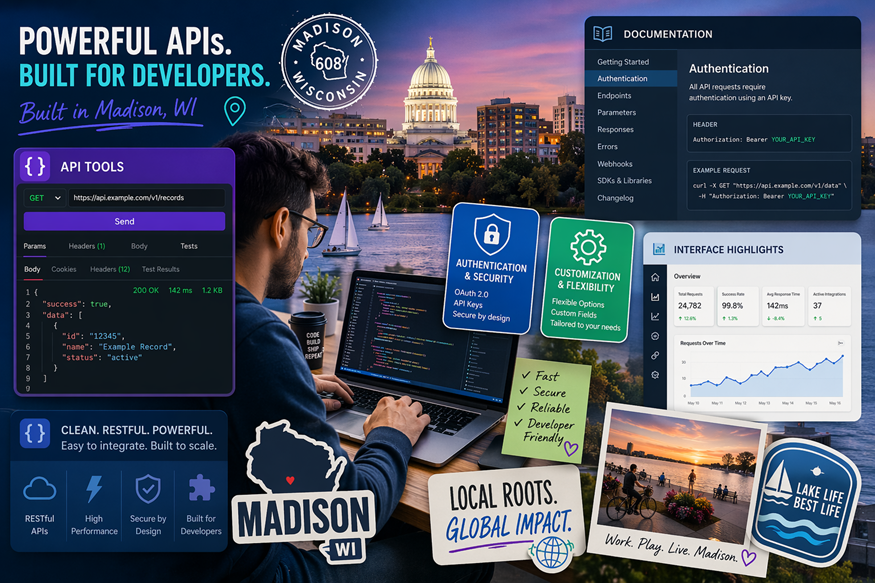
Security and Authentication Options
Security should be one of the first things you review in any developer tool API. APIs often expose sensitive data and critical systems, so weak controls can create serious risk. Strong authentication and clear access rules protect both your platform and the user experience.
Key security features to look for include:
- Authentication options such as API keys, JWT, or OAuth
- HTTPS for secure communication
- Role-based access control for protected resources
- Rate limiting to reduce abuse and protect performance
Documentation is important here too. Good API documentation tools should explain authentication steps, permissions, error messages, and rate limiting rules in a clear way. If developers cannot understand the security model quickly, adoption slows and implementation errors become more likely.
Monitoring, Analytics, and Logging
Monitoring, analytics, and logging help you understand how an API behaves after deployment. Without them, it is hard to spot slow endpoints, repeated failures, or unusual usage. Good visibility supports faster fixes and better planning as traffic grows.
At a practical level, teams need metrics such as api performance, response times, traffic patterns, and error rates. Logging adds the detail behind those numbers by capturing requests, payloads, headers, and status codes. This makes debugging much easier because problems can be traced back to their source.
These features also influence documentation quality. Useful API documentation tools should explain available metrics, common errors, and troubleshooting steps. When docs and observability work together, teams can diagnose issues faster and improve reliability without wasting time on guesswork.
Best Practices for Choosing and Using Developer Tool APIs
The best API is not always the one with the longest feature list. In practice, best practices start with checking compatibility, support quality, and how well the tool fits your integration process. A simple tool that works cleanly with your stack can outperform a bigger platform that adds friction.
It is also smart to compare open source and commercial solutions based on your team size, budget, and support needs. The next sections break down both decisions so you can choose with more confidence.
Assessing Compatibility and Integration
A reliable integration process starts with compatibility. Before choosing any tool, check whether it works with your current frameworks, deployment setup, data sources, and security model. This avoids painful workarounds later and helps the API fit naturally into your development process.
Useful checks include:
- Support for your existing services, languages, and hosting setup
- Alignment with industry standards for requests, authentication, and versioning
- Ability to work with api gateways or management platforms already in place
- Clear migration paths if the API changes over time
These are some of the most important best practices when choosing API development tools. You want a tool that connects cleanly, scales with demand, and supports future changes. A quick trial or prototype can reveal integration problems early, before the API becomes part of critical workflows.
Comparing Open Source vs. Commercial Solutions
Many teams compare open source and commercial solutions before committing to a platform. Open source tools can be appealing when you want flexibility, lower entry cost, or community-driven development. Commercial solutions often provide managed support, polished workflows, and a broader range of features.
If you are asking whether there are open-source collections of API developer tools you can use, the answer is yes. Examples from common API workflows include Gravitee, Kong, and DreamFactory’s open-source version. These can work well if your team is comfortable handling setup, maintenance, and the learning curve.
| Option | Strengths | Trade-offs |
|---|---|---|
| Open source | Flexible, customizable, lower upfront cost | Setup can be harder, support may be limited |
| Commercial solutions | Managed support, polished workflows, more built-in features | Higher cost, less flexibility in some cases |
Your choice depends on resources, urgency, and the kind of support your team needs day to day.
Conclusion
In conclusion, developer tool APIs are essential in today's software development landscape, offering a multitude of advantages that streamline processes and enhance productivity. From understanding the various types ofdeveloper-tool-apis to recognizing the key features that make them effective, it's clear that leveraging these tools can significantly impact your projects. Remember to assess compatibility, prioritize security, and stay informed about the latest popular APIs to get the best out of your development endeavors. By doing so, you not only simplify your workflow but also ensure that you remain competitive in this fast-paced environment. If you're ready to take your development skills to the next level, don't hesitate to reach out for a free consultation today!
Frequently Asked Questions
Where can I find a marketplace for developer tool APIs?
You can usually find a useful api marketplace through major cloud services and API management platforms. These hubs help software development teams compare developer tools, review documentation, and start the integration process faster. They are especially helpful when you want ready-made services instead of building everything in-house.
What are the differences between Chrome DevTools and other API development tools?
Chrome DevTools is built for live browser inspection, so it is great for checking requests, responses, and front-end issues during software development. Other api testing tools focus more on api development workflows such as saved collections, automation, collaboration, and repeatable testing. The user experience is different because the goals are different.
Are there open-source collections of API developer tools available?
Yes, there are open source options available for the api developer, including tools such as Gravitee, Kong, and DreamFactory’s open-source version. These support software applications with a useful range of features for management, integration, and api testing, though setup and maintenance may require more internal effort.
You might also like