How Industrial Automation Solutions Enhance Productivity
How Industrial Automation Solutions Enhance Productivity
Key Highlights
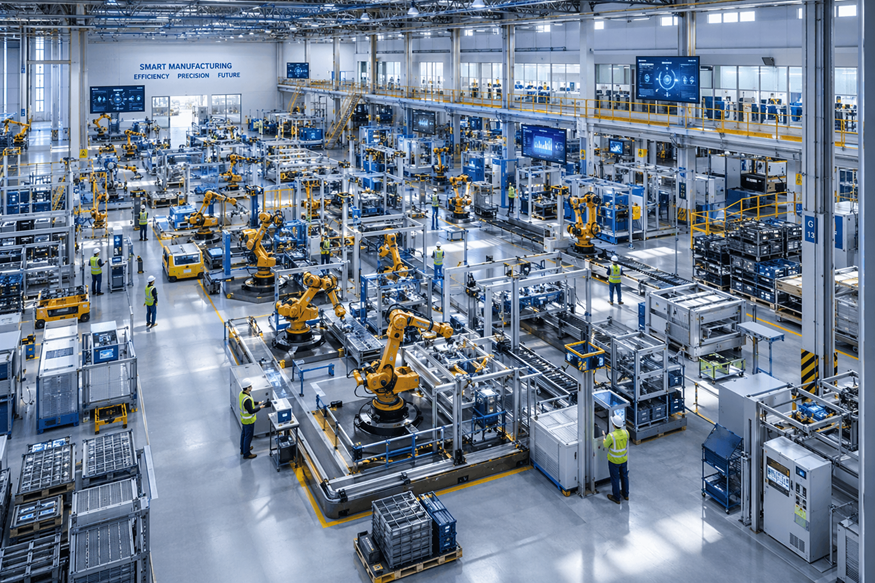
- Industrial automation uses control systems, software, and machines to improve productivity with less manual effort.
- Smart automation solutions help production lines run longer, faster, and with fewer slowdowns.
- Better quality control comes from consistent machine performance and reduced human error.
- Real-time data from connected equipment supports faster decisions and steadier output.
- Predictive maintenance helps you catch issues early and avoid costly downtime.
- Different automation types let you match flexibility, scale, and speed to your operation.
Introduction
Industrial Automation Solutions is changing how manufacturers improve productivity without adding more strain to their teams. Instead of depending on manual steps for every task, automation solutions use machines, software, and connected systems to keep work moving with greater speed and consistency. That means fewer delays, better output, and stronger day-to-day performance. If you want to understand how this works in real operations, the sections below break down the biggest ways automation supports better results.
Ways Industrial Automation Solutions Enhance Productivity
At the most basic level, Industrial Automation Solutions improve productivity by reducing delays, increasing consistency, and helping industrial processes run with less manual effort. Machines can handle repetitive steps for longer hours, which helps the manufacturing process move faster and with fewer interruptions.
Just as important, the benefits of automation go beyond speed alone. You also gain better quality, clearer data, lower waste, and more dependable uptime. In manufacturing, those gains add up quickly. The next sections show the main ways automation supports stronger performance across the floor.
1. Streamlining Manufacturing Processes with Industrial Automation Solutions
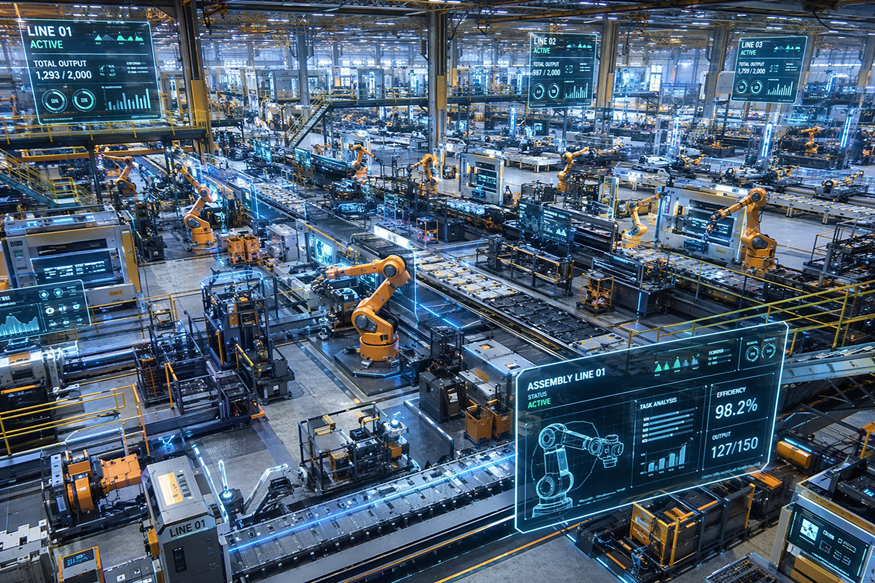
One of the clearest ways Industrial Automation Solutions help is by simplifying the manufacturing process. Instead of relying on people to repeat the same motion all day, companies use machines to complete repetitive tasks with steady timing. That removes slow handoffs and helps work flow more smoothly from one step to the next.
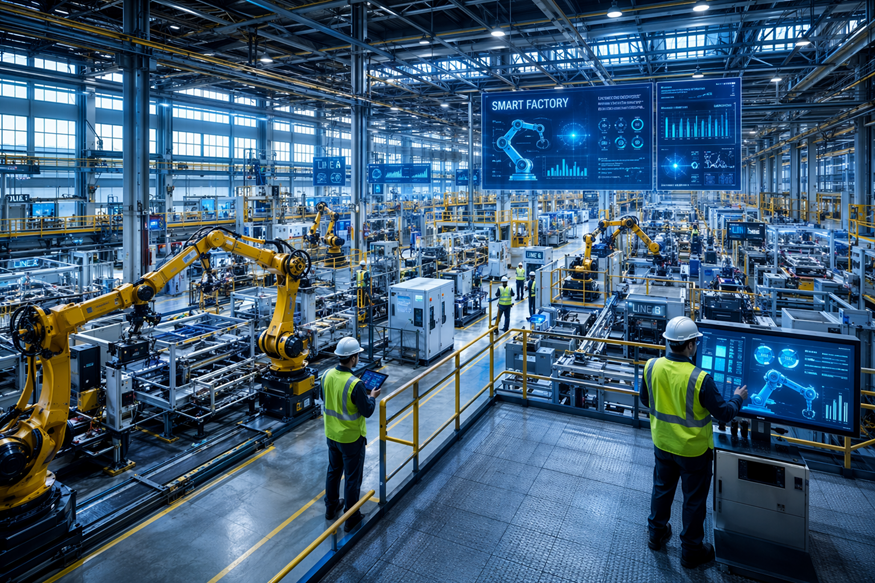
On busy production lines, industrial robots can weld, paint, move parts, or install components without fatigue. Because they stay on task with consistent performance, output becomes more predictable. This is a major reason the benefits of automation show up so quickly in plants focused on efficiency.
For you, that means less waiting between stages and fewer bottlenecks that drag down performance. When each step connects better to the next, the whole line becomes easier to manage, faster to run, and more capable of meeting demand.
2. Reducing Human Error and Increasing Accuracy
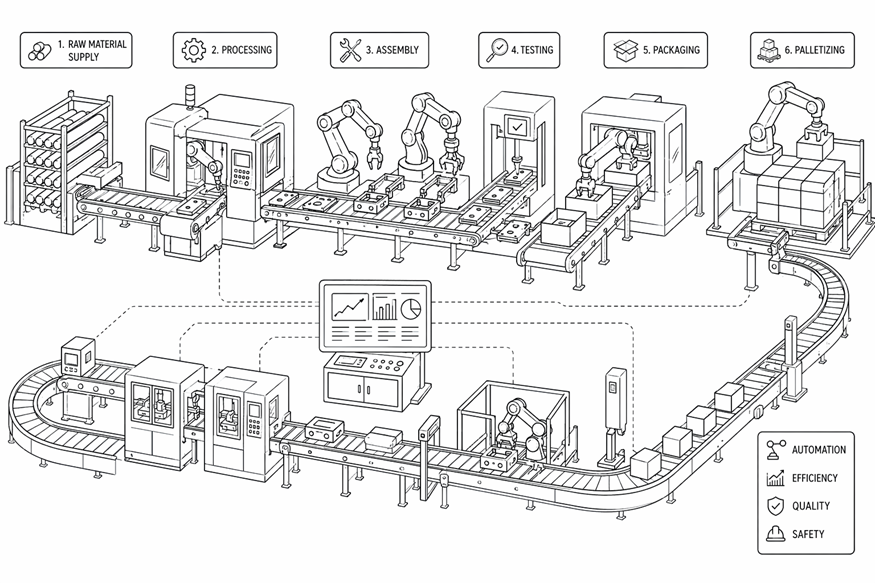
Industrial automation solutions work through a simple loop. Sensors detect conditions, control systems process the information, and machines respond based on those signals. This reduces the need for constant human action and keeps tasks moving with much tighter precision.
That matters because human error is common in repetitive work. People get tired, distracted, or inconsistent, especially over long shifts. Automated systems do not face that same fatigue. They repeat the same programmed action again and again, which raises accuracy across the line.
The result is stronger quality control and better product quality. In one example from manufacturing, a task once done by hand had an error rate of 1 to 1.5 percent, while automated machinery cut that rate to 0.00001 percent. If you want fewer defects, automation gives you a clear path.
3. Improving Production Speed and Output
Speed is a major reason companies invest in automation technology. Automated equipment can keep production processes moving around the clock, which helps you increase output without relying on extra shifts. For plants trying to meet steady demand, that constant pace makes a real difference.
In mass production environments, assembly lines benefit the most. Machines are built to repeat exact motions at high speed, whether they are welding car parts, filling containers, or placing components on boards. Because those steps happen quickly and predictably, the line produces more in less time.
You also avoid many of the pauses that come with manual work. Machines do not need holidays, breaks, or shift changes. While maintenance is still necessary, the overall gain is clear: faster cycle times, stronger throughput, and a better chance of hitting production targets.
4. Real-Time Data Monitoring and Analytics
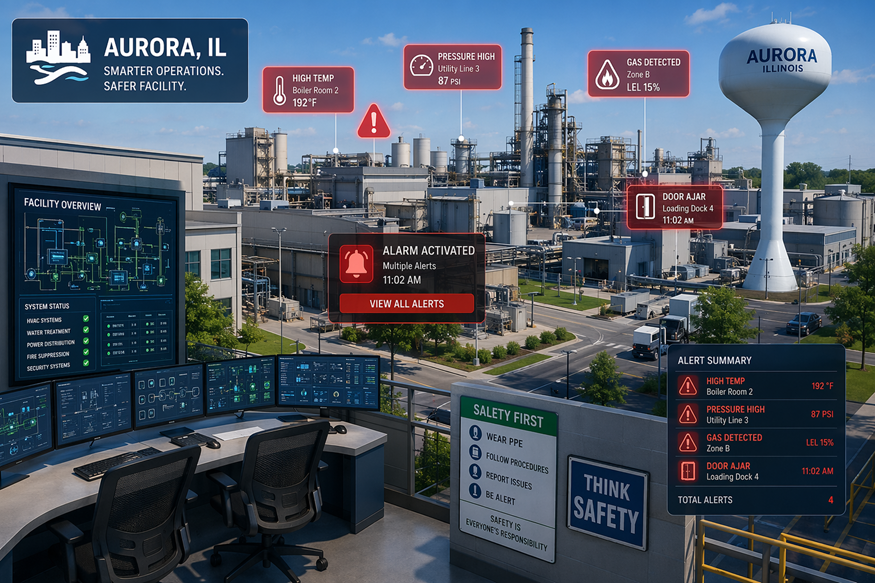
Today’s automation systems do more than run equipment. They also track what is happening in real time. Sensors and IoT devices collect process data from machines, lines, and material flow, giving you a live view of performance as work happens.
That information becomes useful when controllers and software turn it into action. Data analytics helps spot patterns, identify waste, and show where output is slipping. At the same time, control signals can adjust machine behavior automatically to keep operations closer to target conditions.
If you are comparing options, this is one of the key features to look for in industrial automation solutions. Accurate data collection, fast visibility, and responsive controls help you make better decisions. You reduce guesswork, improve consistency, and react before small issues become expensive ones.
5. Lowering Operational Costs
While the upfront investment can be high, Industrial Automation Solutions often reduce operational costs over time. They improve operational efficiency by cutting the need for constant manual labor, lowering waste, and supporting longer run times. For many manufacturers, those savings build month after month.
You can see cost savings in several areas:
- Fewer labor-related expenses tied to routine manual labor
- Lower scrap and waste from more consistent production
- Reduced repair disruptions because automated systems fail less often
There is also a productivity effect. When equipment runs more steadily, you get more output from the same floor space and workforce. That means stronger efficiency without adding the same level of ongoing labor expense. Over time, better use of resources helps offset the original cost.
6. Enhancing Product Quality and Consistency
Quality problems often come from variation. When different people perform the same task in different ways, results can drift. Automation reduces that variation by following the same instructions every cycle, which helps protect product quality and maintain consistency across long runs.
This is where industrial robots shine. They can repeat detailed actions with steady precision, whether they are assembling parts, applying coatings, or handling materials. Because they do not tire, they support stronger quality control at every stage of production.
For manufacturers, that is one of the biggest benefits of automation. You are not just making more units. You are making them to the same standard each time. Better consistency reduces rework, supports customer expectations, and helps your operation build trust through dependable output.
7. Minimizing Downtime with Predictive Maintenance
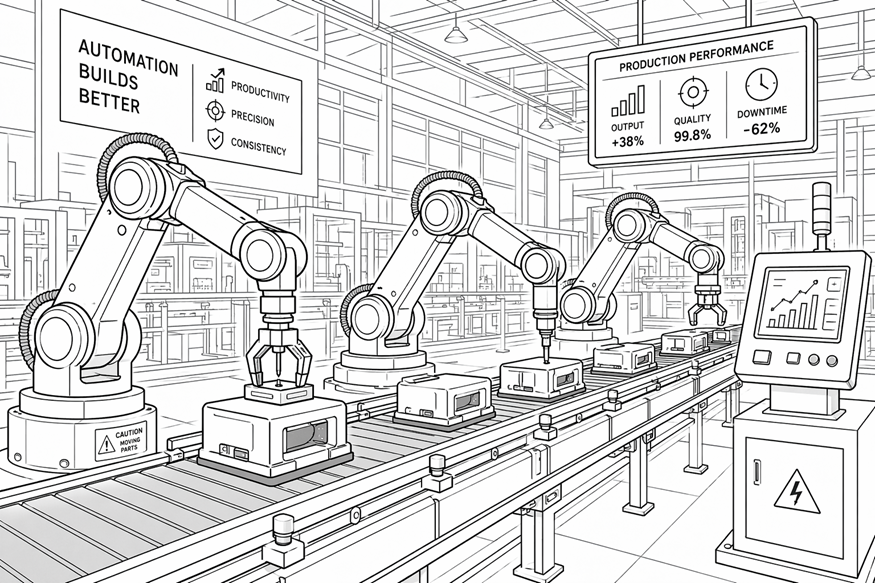
Downtime is expensive, especially when it happens without warning. Industrial automation helps reduce that risk through predictive maintenance. Instead of waiting for a breakdown, connected systems monitor equipment conditions and flag issues before they stop production.
This approach uses predictive analytics and advanced process control to spot unusual patterns in machine behavior. That gives maintenance teams time to act early, which can prevent larger failures and extend equipment life. Fewer surprise shutdowns mean a steadier schedule and less stress across the plant.
Still, there are challenges. Predictive maintenance depends on the right technology, technical support, and trained staff. Businesses also need to plan for cybersecurity and upfront investment. Even so, when these systems are set up well, the reduction in downtime can deliver strong long-term value.
8. Enabling Flexible and Scalable Operations
Not every operation makes the same product all the time. That is why flexible automation and programmable automation are so useful. They allow equipment to be adjusted for new tasks, new batches, or changing demand without rebuilding the whole system.
For you, this supports scalability. A company can increase output, add product variations, or change workflows with less disruption than in a fixed setup. Some production lines can switch between jobs through software changes, while others use reprogrammable machines to handle updated requirements.
This is one reason industrial automation fits such a wide range of industries. Fixed systems work well for stable, high-volume work. Programmable and flexible options support changing products and more adaptable schedules. The right choice depends on how often your process, volume, or product mix shifts.
Key Types of Industrial Automation Solutions
There are four main types of industrial automation: fixed, programmable, flexible, and integrated. Each option is a different kind of industrial automation system, designed to match a specific production need. Some are best for stable, high-volume output, while others support frequent changes.
Choosing between these automation solutions depends on your goals, product mix, and process demands. Understanding how each automation technology works makes it easier to decide what fits your plant. The sections below explain where each type works best and what it offers.
Fixed (Hard) Automation Systems
Fixed automation, also called hard automation, uses specialized equipment to perform the same task repeatedly. It works best when the process stays the same for long periods. In these setups, control systems direct machines through a set sequence with very little need for adjustment.
You often see fixed automation in assembly lines built for mass production. Automotive manufacturing is a strong example. A product moves from station to station, and each machine handles one specific step such as welding or painting. This delivers speed and efficiency, but it is not built for frequent product changes.
| Feature | Fixed Automation |
|---|---|
| Best use | High-volume, repetitive output |
| Flexibility | Very low |
| Common setting | Assembly lines |
| Main strength | Speed and efficiency |
| Limitation | Hard to change once installed |
If your production is stable and standardized, fixed automation can be a strong fit.
Programmable Automation Systems
Programmable automation is designed for batch production, where product runs change from time to time. Instead of locking machines into one task forever, you can reprogram them to handle a new item or updated workflow. That gives you more room to adapt than fixed systems.
A key part of programmable automation is the use of programmable logic controllers. These controllers help manage machine actions, monitor conditions, and respond to changes in the production environment. CNC machines and programmable industrial robots are common factory examples tied to this approach.
This setup is useful when you produce different items in moderate volumes. It offers more flexibility than hard automation, though changeovers still take time. If your operation needs some adaptability but not the full speed of constant switching, programmable systems can be a practical middle ground.
Flexible (Soft) Automation Systems
Flexible automation, often called soft automation, is built for faster changeovers and higher adaptability. These systems can handle different products with less downtime, making them useful when market demand changes quickly or when customization matters.
Unlike more rigid systems, flexible automation can adjust to shifts in product design or workflow with less interruption. It often uses robots, sensors, and smart software to support these quick changes. In some cases, machine learning also helps systems improve how they respond to new conditions over time.
This type is a good fit for operations that need variety and responsiveness. Consumer goods manufacturing and small-batch environments often benefit from it. If you make different products and need to switch between them often, flexible automation gives you a way to stay efficient without losing agility.
Integrated Automation Systems
Integrated automation connects multiple machines, stations, and software tools into one coordinated setup. Instead of separate islands of equipment, the whole process works together through shared control systems and communication across the plant.
This model often includes industrial control systems, SCADA systems, sensors, and internet of things devices that exchange information in real time. As data moves through the network, the system can monitor performance, support operator visibility, and help production respond faster to changing conditions.
If you are reviewing solutions, integration is a feature worth close attention. A connected setup can reduce downtime, improve consistency, and support growth more smoothly. The tradeoff is that integrated automation usually needs more upfront investment and technical expertise to implement successfully.
Choosing the Right Industrial Automation Solution Provider
Choosing an automation solution provider starts with your actual production needs. Not all industrial automation companies specialize in the same systems, industries, or levels of complexity. Some focus on fixed production, while others are stronger in integrated or flexible environments.
You should also look at how well automation companies support planning, setup, training, and long-term service. In the industrial automation industry, the best fit is not just about equipment. It is about whether the provider can help you build a reliable system that delivers lasting value.
Evaluating Experience and Industry Expertise
Experience matters because automation is not one-size-fits-all. Different industries face different issues, from labor shortages to quality variation to throughput limits. When you review industrial automation companies, ask whether they understand the production demands in your space.
Strong industry expertise helps a provider recommend practical automation solutions instead of generic ones. A company with a background in your kind of operation is more likely to understand common bottlenecks, safety needs, and system requirements. That can make planning smoother and reduce costly missteps.
As for leaders in the automation industry, the most useful answer is this: look for providers with proven success in the type of automation you need. A well-matched partner with relevant knowledge is often more valuable than a big name that lacks direct experience in your environment.
Assessing Technology Offerings and Support Services
A provider should offer automation technology that fits both your current needs and future plans. That includes core equipment, software visibility, system integration, and room to grow. Since industrial automation often evolves over time, it also helps if the provider understands new technologies such as AI, IoT, and predictive tools.
When comparing technology offerings, look for:
- Systems that match your production volume and level of change
- Clear support services for training, maintenance, and troubleshooting
- Compatibility with connected devices, data tools, and control platforms
-
Support matters just as much as hardware. Advanced systems require skilled setup and ongoing care. If a provider cannot help after installation, your results may suffer. The right partner gives you both capable tools and dependable guidance, so the system keeps delivering value after launch.
Conclusion
In conclusion, embracing industrial automation solutions is pivotal for businesses aiming to enhance productivity. By streamlining manufacturing processes, reducing human error, and providing real-time data analytics, these solutions make a substantial difference in operational efficiency. Moreover, they help lower costs, improve product quality, and minimize downtime through predictive maintenance. As you explore the various types of automation systems available, it’s essential to choose a provider that aligns with your specific needs and goals. If you're ready to take the next step in optimizing your operations, reach out for a free consultation to determine the best industrial automation solutions for your business.
Frequently Asked Questions
What are common examples of industrial automation solutions in factories?
Common examples of industrial automation in factory automation include industrial robots for welding or assembly, SCADA systems for monitoring operations, and CNC machines for precise cutting and shaping. You may also see conveyors, sensors, and programmable controllers working together to automate production steps.
How does factory automation differ from other types of industrial automation?
Factory automation is one part of industrial automation and focuses on production inside manufacturing facilities. It often centers on assembly lines, machine control, and material flow. Other types of industrial automation can also support warehouses, logistics, or broader integrated systems beyond the factory floor.
What challenges might businesses face when implementing industrial automation?
Businesses can face several challenges during implementation, including high upfront cost, employee training needs, cybersecurity risks, and the need for technical support. Industrial automation also changes human involvement, so teams may need reskilling as automation solutions take over repetitive tasks and create more technical roles.
You might also like