Discover the Benefits of AGVs in Modern Industry
Discover the Benefits of AGVs in Modern Industry
Key Highlights
- An automated guided vehicle (AGV) is a driverless robot used for material handling in industrial settings.
- The main types of AGVs include automated guided carts, forklift AGVs, and towing AGVs.
- AGVs rely on a navigation system, such as magnetic tape or lasers, to move along predefined paths.
- Key benefits of these automation solutions are improved efficiency, enhanced workplace safety, and lower operational costs.
- AGVs are different from autonomous mobile robots (AMRs), which can navigate more freely in dynamic environments.
- They are widely used in manufacturing, warehousing, and even healthcare for various transportation tasks.
Introduction
In today's fast-paced industrial world, companies are constantly looking for ways to improve how they move things around. That's where automated guided vehicles, or AGVs, come in. These mobile robots are transforming material handling by taking over repetitive transport tasks. As powerful automation solutions, they help streamline operations, reduce errors, and make workplaces safer. If you're curious about how these driverless vehicles are making a significant impact across various industries, you've come to the right place.
Understanding Automated Guided Vehicles (AGVs)
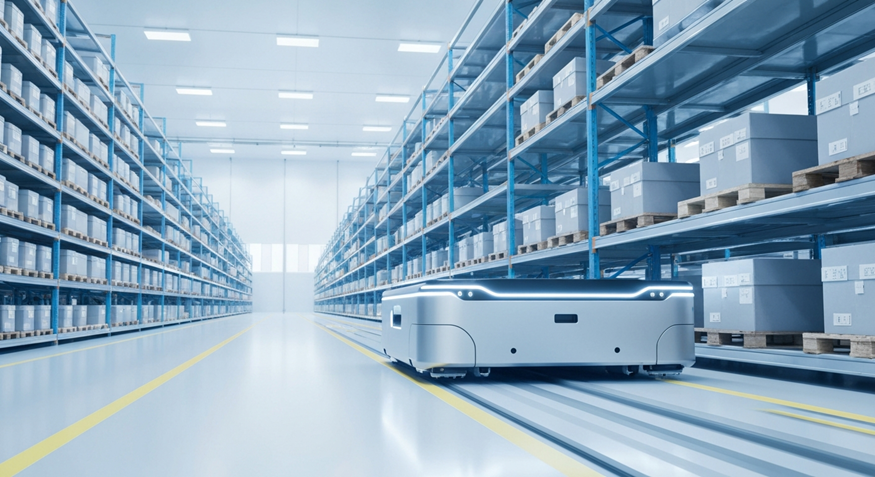
Automated guided vehicles streamline material handling in various industrial environments. Utilizing advanced navigation technologies, these robots transport goods without the need for manual labor, significantly reducing labor costs and the risk of workplace accidents. AGVs operate using different guidance systems, such as magnetic tape and laser navigation, making them ideal for complex environments like distribution centers and manufacturing plants. They excel in repetitive tasks, ensuring a continuous flow of materials, optimizing production lines, and enhancing overall operational efficiency through minimal human intervention and sophisticated control software.
Definition and Core Features of AGVs
Automated guided vehicles (AGVs) are mobile robots designed to transport materials and goods in various industrial environments. Core features include advanced navigation systems, such as laser navigation and magnetic tape guidance, which allow these vehicles to operate efficiently with minimal human intervention. AGVs excel in tasks like order picking, material transport, and inventory management, significantly reducing labor costs and enhancing operational efficiency. Equipped with safety features like collision avoidance systems and advanced sensors, AGVs ensure a safer workplace while streamlining workflows across manufacturing facilities and distribution centers.
Brief History of AGV Development
The journey of automated guided vehicles (AGVs) began in the 1950s when they were primarily used for material transport in manufacturing facilities. Early AGVs relied on magnetic tape and simple guidance systems to navigate, minimizing human intervention. Over the decades, advancements in technology led to the integration of laser navigation and sophisticated control software, enhancing safety features and operational efficiency. Today, AGVs are crucial in various industries, adapting to dynamic environments, and streamlining complex material handling tasks within warehouses and distribution centers.
How AGVs Operate in Industrial Settings
Automated guided vehicles (AGVs) play a vital role in enhancing efficiency within industrial settings. Utilizing navigation systems like magnetic tape and laser navigation, these vehicles transport goods seamlessly while minimizing manual labor. In dynamic environments such as manufacturing facilities and distribution centers, AGVs manage material handling tasks with precision, ensuring the smooth flow of products and raw materials. With advanced sensors and intelligent control software, AGVs can safely navigate complex layouts, avoid collisions, and adapt to varying workloads. This technology dramatically improves operational efficiency while reducing labor costs and workplace accidents.
Types of AGVs Used in Modern Industry
Not all AGVs are created equal. Different types of AGVs are designed to handle specific material handling needs, making them incredibly versatile for industrial automation. From small carts to heavy-duty carriers, there’s a solution for nearly any transportation task.
The choice of AGV depends on factors like the load size, the complexity of the route, and the environment it will operate in. Understanding the various options can help you determine which is best suited for your facility's unique requirements. Let's look at some of the most common types of AGVs used today.
Automated Guided Carts (AGCs)
Automated guided carts, or AGCs, are one of the simplest and most common types of AGVs. These compact vehicles are designed to transport smaller loads, like totes, bins, or individual components. They often follow magnetic tape on the floor, making them easy to install and reconfigure.
AGCs are excellent for improving material flow along production lines. For example, an AGC can be used to deliver parts to assembly stations just in time, reducing the need for workers to leave their posts. Boeing famously uses AGCs in its aircraft manufacturing facilities to move components and materials, speeding up their processes.
Thanks to their straightforward navigation technologies and smaller size, automated guided carts are a flexible and cost-effective solution for many applications. They are particularly useful in environments where routes may need to be changed periodically to adapt to new production demands.
Forklift AGVs
Forklift AGVs are exactly what they sound like: automated versions of the traditional forklifts you see in warehouses. These powerful vehicles are designed to lift and transport heavy loads, such as pallets and large containers. They can autonomously handle tasks like stacking pallets in racks, loading and unloading trucks, and moving goods between storage systems.
One of the major advantages of forklift AGVs is their ability to handle tasks that would otherwise require a human operator and a manual forklift. They can operate around the clock, increasing productivity and ensuring consistent performance. Because they are based on standard forklift models, many can also be switched to manual control if needed.
These vehicles significantly contribute to workplace safety by reducing the risk of accidents associated with manual forklift operation. With advanced sensors and precise controls, forklift AGVs can navigate tight spaces and interact safely with human workers, making them ideal for handling heavy loads in busy environments.
Towing and Tugger AGVs
Towing and tugger AGVs specialize in pulling a train of non-powered carts. Think of them as small, autonomous locomotives for your warehouse or factory floor. These AGVs can tow multiple carts at once, making them highly efficient for material transport over longer distances within a facility.
Tugger AGVs are commonly used to supply production lines, move finished goods to shipping areas, or assist with order picking. A single towing AGV can move a significant amount of material in one trip, which is much more efficient than using multiple vehicles or manual methods to transport individual loads.
This type of AGV is perfect for applications that require a steady flow of goods between different zones. For instance, an autonomous tugger can follow a set loop, dropping off full carts and picking up empty ones at various stations. This creates a reliable and predictable material delivery system.
Unit Load and Heavy Load Carriers
Unit load and heavy load carriers are built to handle the biggest and bulkiest materials. These AGVs are designed to transport single, large items such as pallets, rolls of paper, or engine blocks. They typically move items directly from one station to another, such as from a conveyor belt to a storage location.
These automated solutions are often equipped with lift decks, conveyor tops, or specialized fixtures to securely handle their specific type of load. For example, a unit load AGV might drive under a stationary stand, lift the load, transport it, and set it down at its destination. This makes them essential for many warehouse operations.
Because they are designed for heavy loads, these AGVs play a critical role in industries like automotive manufacturing and paper production. They automate the movement of items that would be difficult or dangerous for humans to handle manually, improving both safety and efficiency in the process.
Key Technologies Powering AGVs
The "magic" behind AGVs lies in the sophisticated technology that powers them. Their ability to move autonomously and safely depends on a combination of guidance systems, control software, and advanced sensors. These technologies work together to ensure the vehicles know where they are, where they need to go, and how to get there without issues.
From following simple magnetic tape on the floor to using complex laser navigation, the technology determines an AGV's flexibility and intelligence. Understanding these core components is key to appreciating how AGVs can be integrated into different industrial environments.
Navigation Methods: Magnetic, Laser, and Vision-Based Guidance
An AGV’s navigation system is its internal compass, telling it which path to follow. There are several methods used to guide these vehicles, each with its own strengths. The choice of navigation often depends on the complexity of the environment and the need for flexibility.
Some of the most common navigation methods include:
- Magnetic Tape Guidance: The AGV follows magnetic strips laid on the floor. This method is reliable and cost-effective but less flexible, as changing the path requires physically moving the tape.
- Laser Navigation: The AGV uses a rotating laser to detect reflective targets placed throughout the facility. It calculates its position based on the angles and distances to these targets, allowing for more flexible and easily adjustable routes. This is also known as natural feature navigation.
- Vision-Based Guidance: Using cameras and advanced artificial intelligence, the AGV "sees" its environment. It can follow painted lines, recognize landmarks, or create a map of its surroundings to navigate, offering a high degree of adaptability.
These technologies enable AGVs to move accurately and reliably. As vision systems and AI become more advanced, AGVs are gaining even more flexibility to operate in dynamic and changing industrial settings without fixed infrastructure.
Control Systems and Communication Protocols
While navigation tells an AGV where to go, the control software tells it what to do. This central system is the traffic controller for the entire fleet, managing tasks, optimizing routes, and preventing logjams. It receives orders, assigns them to available vehicle systems, and monitors their progress in real time.
Communication protocols, typically based on Wi-Fi, are essential for keeping the AGVs connected to the control software. This constant communication allows the system to send new instructions, receive status updates, and manage the fleet efficiently. For example, if a path is blocked, the control system can redirect an AGV to an alternate route.
These automation solutions also allow AGVs to communicate with other equipment in the facility. They can signal for doors to open, interact with conveyor belts, or coordinate with production machinery. This level of integration ensures that the entire automated process runs smoothly and without interruption.
Integration with Warehouse Management Systems (WMS)
Yes, AGVs can and should be integrated with existing warehouse management systems (WMS). This integration is crucial for creating a truly seamless and automated workflow. A WMS is responsible for managing all aspects of warehouse operations, including inventory management, order processing, and tracking the location of goods.
When the AGV's control software is connected to the WMS, the system can automatically generate transport orders. For example, when the WMS registers that new raw materials have arrived, it can send a request to the AGV system to move the pallets from the receiving dock to a specific storage area. This eliminates the need for manual data entry and reduces the chance of errors.
This synergy between warehouse systems transforms how a facility operates, linking inventory management directly with material transport. The table below shows how this integration works.
| WMS Function | AGV Control Software Action |
|---|---|
| Receives a new shipment | Creates a task for an AGV to move goods from receiving to storage. |
| Processes a customer order | Generates a transport order for an AGV to retrieve items for picking. |
| Detects low stock on a production line | Instructs an AGV to replenish materials from the warehouse. |
| Updates inventory location | Logs the AGV's movement and confirms the new location of the pallet. |
AGVs vs. Autonomous Mobile Robots (AMRs)
Understanding the distinction between automated guided vehicles (AGVs) and autonomous mobile robots (AMRs) is essential for optimizing material handling operations. AGVs typically follow fixed paths using navigation systems like magnetic tape or magnetic strips, making them ideal for repetitive tasks such as transporting goods in manufacturing plants or distribution centers. In contrast, AMRs are equipped with advanced sensors and artificial intelligence, enabling them to navigate complex environments and adapt to dynamic surroundings without human intervention. This flexibility allows AMRs to handle various tasks, enhancing operational efficiency across numerous industries.
Fundamental Differences Between AGVs and AMRs
Automated Guided Vehicles (AGVs) are designed for specific tasks like transporting heavy loads along predetermined paths, often relying on magnetic tapes or predefined routes. In contrast, Autonomous Mobile Robots (AMRs) boast advanced navigation systems, utilizing artificial intelligence to adapt to dynamic environments, making them more versatile. While AGVs excel in structured settings such as manufacturing facilities and distribution centers, AMRs thrive in complex environments where they can make real-time decisions. Their ability to navigate around obstacles without human intervention offers enhanced operational efficiency, streamlining material handling processes in various industries.
Choosing AGVs or AMRs for Your Operation
Understanding the needs of your operation is key when deciding between automated guided vehicles (AGVs) and autonomous mobile robots (AMRs). AGVs excel in material handling tasks that require fixed routes, making them ideal for production lines and storage areas. In contrast, AMRs offer flexibility in dynamic environments, allowing for real-time adjustments and navigation around obstacles. Consider factors such as operational efficiency, safety features, and the types of tasks involved. Evaluating these elements will help you select the best automation solution that complements your material flow and streamlines warehouse operations.
Main Benefits of AGVs in Industrial Automation
Integrating AGVs into your operations can bring a host of powerful benefits. As a key component of industrial automation, they do more than just move materials; they fundamentally improve how a facility runs. From boosting operational efficiency to reducing labor costs, the impact can be significant.
Beyond the numbers, AGVs also contribute to a safer and more predictable work environment. By taking over repetitive and sometimes hazardous tasks, they help reduce the risk of accidents and allow employees to focus on higher-value activities. Let's examine these advantages in more detail.
Enhanced Efficiency and Productivity
One of the most significant benefits of AGVs is the dramatic boost in efficiency and productivity. These vehicles can operate 24/7 without breaks, which is something manual labor simply cannot match. This continuous operation ensures that material handling tasks are completed consistently, eliminating the bottlenecks that often occur during shift changes or employee breaks.
By automating repetitive material transport, AGVs streamline operations. They follow optimized routes and perform tasks with precision, reducing travel time and minimizing errors. This leads to a faster and more reliable flow of goods through the facility, which in turn increases overall handling capacity.
According to the American Society of Mechanical Engineers (ASME), AGVs have the potential to increase efficiency by 50-70%. This impressive improvement allows organizations to get more done in less time, freeing up human workers to focus on more complex, value-adding activities instead of simple material handling tasks.
Improved Workplace Safety
Improving workplace safety is another huge advantage of implementing AGVs. Industrial environments can be hazardous, and manual material handling often leads to accidents and injuries. AGVs are equipped with advanced safety features specifically designed to navigate safely around people and obstacles.
Features like laser scanners, sensors, and collision avoidance systems allow AGVs to detect potential hazards in their path and react accordingly. They can slow down, stop, or, in some cases, reroute to prevent collisions. This predictability greatly reduces the risk of accidents compared to manually operated vehicles, which are prone to human error.
By taking over physically demanding or dangerous tasks, such as lifting heavy loads or operating in congested areas, AGVs help protect employees from strain and injury. This creates a safer working environment for everyone and can lead to lower costs associated with workplace accidents and product damage.
Lower Operational Costs Over Time
While the initial investment in AGVs can be significant, they lead to lower operational costs over the long term. One of the biggest savings comes from reduced labor costs. With manually controlled vehicles, labor can account for around 80% of the total operating expenses. AGVs automate material transport, reducing the need for human operators for these tasks.
Beyond labor, these automation solutions improve operational efficiency, which also saves money. AGVs minimize errors, which means less product damage and fewer costly mistakes. Their precise movements and optimized routes also reduce wear and tear on facility floors and equipment.
Experience shows that the investment in an AGV system often pays for itself quickly. The combination of saved staffing costs, increased productivity, and fewer accidents makes AGVs a financially smart choice for many businesses looking to make their material transport more cost-effective.
Flexibility and Scalability for Growing Businesses
AGVs offer a surprising amount of flexibility and scalability, making them a great choice for businesses that are planning for growth. An AGV system can be easily expanded as your needs change. If you need to increase your transport capacity, you can simply add more vehicles to the existing system without a major overhaul.
This scalability is a key advantage of industrial automation. Unlike fixed conveyor systems, which are difficult and expensive to modify, an AGV system can be adapted with minimal effort. If you need to change routes or add new destinations, many modern AGV systems, especially those with laser or vision guidance, can be reprogrammed quickly.
This allows businesses to start with a smaller implementation and scale up as their operations grow. The ability to adapt the system to changing production demands or facility layouts provides the flexibility needed to stay competitive in a dynamic market.
Popular Applications of AGVs Across Industries
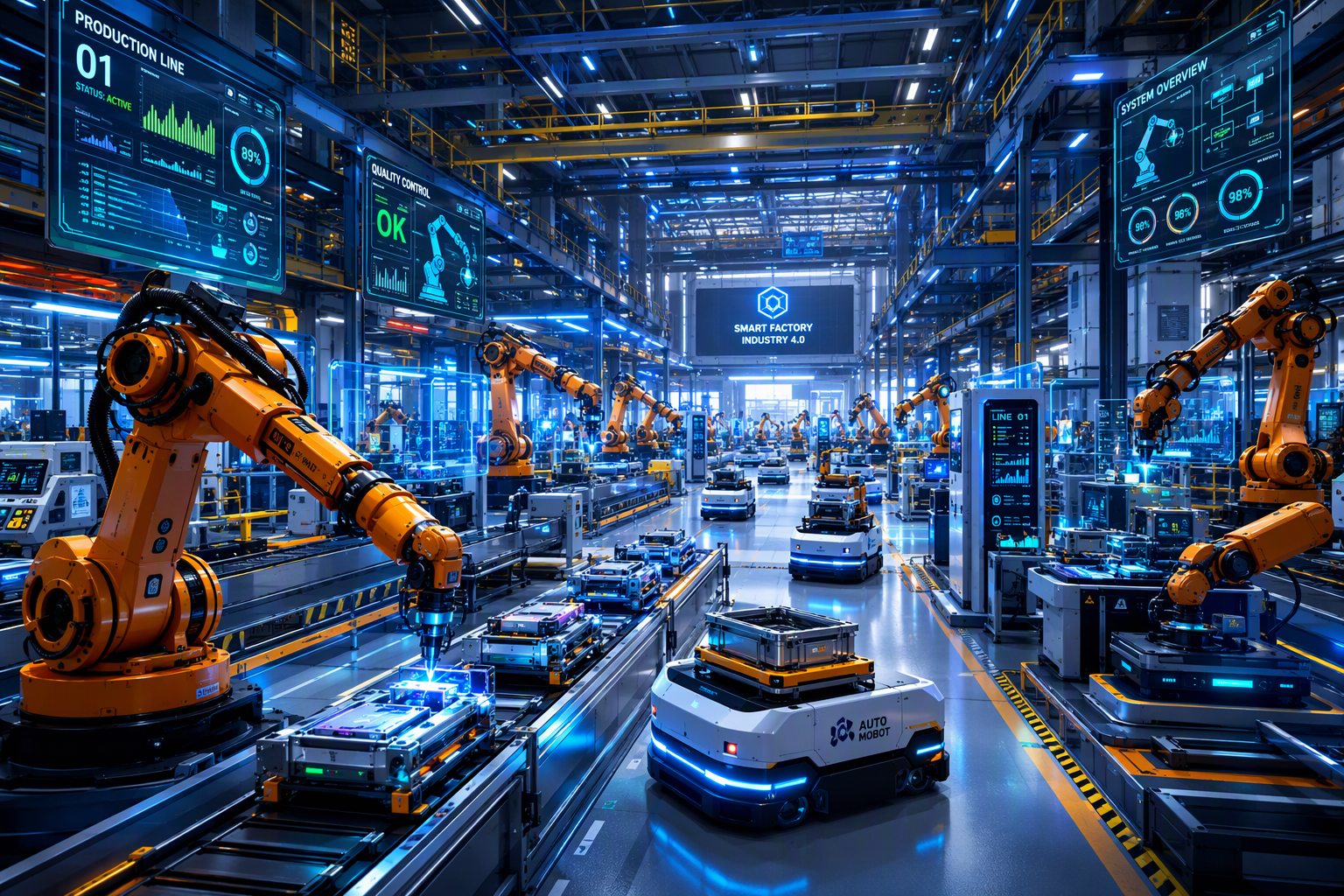
AGVs are not limited to one type of business; they are used in various industries to streamline logistics. From bustling manufacturing facilities to large distribution centers, these automated vehicles are proving their worth everywhere. They handle tasks ranging from transporting raw materials to moving finished goods.
The versatility of AGVs allows them to be adapted for many different applications. You'll find them in automotive plants, warehouses, and even hospitals, each using them to solve unique logistical challenges. Let's explore some of the most popular applications across these sectors.
Manufacturing and Assembly Lines
In manufacturing plants, AGVs are essential for maintaining a smooth and continuous material flow to and from assembly lines. They play a crucial role in "just-in-time" delivery, transporting parts and components to workstations exactly when they are needed. This prevents delays and keeps production lines running efficiently.
AGVs can be programmed to follow specific routes, dropping off raw materials and picking up finished or semi-finished products. For example, a towing AGV might deliver a train of carts with different components to various points along an assembly line, ensuring each station has the parts it requires.
By automating this transport, manufacturing companies can reduce manual handling, minimize errors, and improve the overall pace of production. Companies like General Motors and Nissan use large fleets of AGVs in their automotive plants to optimize their logistics and production processes.
Warehousing and Distribution Centers
Warehousing and distribution centers are perhaps the most common environments for AGVs. These facilities rely on efficient material handling to manage inventory, process orders, and ship goods. AGVs automate many key warehouse operations, from receiving and put-away to picking and shipping.
Forklift AGVs are often used to move pallets from receiving docks to storage areas or to retrieve them for outbound shipments. Other types, like unit load carriers, can transport full pallets between different zones in the warehouse. This automation is critical for large-scale operations like those at Amazon and Walmart.
By integrating with a Warehouse Management System (WMS), AGVs can receive tasks automatically, ensuring that goods are moved to the right place at the right time. This improves inventory accuracy, speeds up order fulfillment, and reduces reliance on manual labor for repetitive transport tasks.
Healthcare and Hospital Logistics
The healthcare industry has also started to embrace AGVs for hospital logistics. In a hospital, timely and reliable material transport is critical. AGVs can be used to deliver meals, linens, medical supplies, and lab specimens throughout the facility, freeing up nurses and other staff to focus on patient care.
These automation solutions are an ideal fit for the structured environment of a hospital. They can navigate hallways, use elevators, and deliver items to specific departments or rooms on a set schedule or on demand. This ensures that supplies are always where they need to be, improving overall efficiency.
By automating these routine delivery tasks, hospitals can reduce the physical strain on their staff and minimize the risk of delays or errors in material transport. This application shows just how versatile AGVs can be, adapting to the unique demands of healthcare logistics.
Essential Safety Features in Modern AGVs
Safety is a top priority when it comes to automated vehicles, especially when they operate alongside people. Modern AGVs are equipped with a comprehensive suite of safety features designed to prevent accidents and ensure safe operation in busy industrial environments. These systems use advanced sensors to monitor the vehicle's surroundings at all times.
From automatic collision avoidance to manual emergency stop buttons, these safeguards are built in to protect both workers and assets. They allow AGVs to navigate complex spaces confidently and reliably. Let's take a closer look at these essential safety components.
Obstacle Detection and Collision Prevention
The cornerstone of AGV safety is its ability to detect and avoid obstacles. AGVs are fitted with a variety of advanced sensors, such as laser scanners and cameras, that continuously scan the area around the vehicle. These sensors create a virtual "bumper" or safety field that extends in front of and around the AGV.
When the obstacle detection system identifies an object or person within this field, it triggers a response. If the object is far away, the AGV might simply slow down. If it's closer, the vehicle will come to a complete stop to ensure collision prevention. This allows the AGV to share pathways safely with pedestrians and other vehicles.
These laser scanners and sensors are highly reliable and can detect objects from many meters away, giving the AGV plenty of time to react. This intelligent system is what makes it possible for AGVs to work seamlessly and safely in dynamic human environments.
Emergency Stop, Sensors, and Other Safeguards
In addition to automatic obstacle detection, AGVs are equipped with multiple layers of safety safeguards. One of the most important is the emergency stop button. These buttons are clearly visible and easily accessible on the vehicle, allowing anyone nearby to halt the AGV instantly in case of an unforeseen situation.
AGVs also often feature audible and visual warnings, such as flashing lights and beeping sounds, to alert people to their presence and intended movements. This is particularly important in noisy environments or at blind corners where workers might not see the vehicle approaching. These signals help prevent workplace accidents.
The combination of different types of sensors, intelligent control logic, and manual overrides creates a robust safety system. These multiple safeguards work together to ensure that AGVs operate reliably and predictably, minimizing risks and making the workplace safer for everyone.
Frequently Asked Questions (FAQ)
Understanding AGVs often involves tackling some common questions from curious minds. Users frequently wonder about their operational efficiency—AGVs effectively streamline material transport tasks and improve warehouse operations while minimizing labor costs. Another popular query revolves around safety features; advanced sensors and guidance systems are incorporated to prevent workplace accidents and ensure smooth navigation. As interest in automation solutions grows, many also ask if custom AGVs can handle specific needs—absolutely! Tailored designs are available to optimize workflows across various industrial environments. Keep the questions coming!
Are AGVs suitable for small and medium-sized businesses?
Absolutely. While large corporations were the first to adopt them, modern AGV systems offer the flexibility and scalability that make them a great fit for small businesses. These automation solutions can be implemented on a smaller scale to automate specific material handling tasks, providing a quick return on investment.
How do AGVs compare in cost to traditional material transport?
AGVs have a higher initial purchase cost compared to manual transport options like hand pallet trucks. However, they significantly reduce long-term operational costs by lowering labor costs associated with manual labor. These automation solutions pay for themselves over time through increased efficiency and reduced errors.
Can AGVs be customized and integrated into existing systems?
Yes, customization and integration are key strengths of modern automation solutions. Custom AGVs can be designed for specific tasks, and their control software can be integrated with existing warehouse systems like a WMS. This allows for seamless communication and a fully automated workflow tailored to your needs.
Conclusion
In summary, Automated Guided Vehicles (AGVs) are transforming modern industry by enhancing efficiency, improving workplace safety, and reducing operational costs. With various types suited for different applications and advanced technologies powering their operations, AGVs are an invaluable asset in sectors ranging from manufacturing to healthcare logistics. As businesses grow and evolve, the flexibility and scalability of AGVs make them a compelling choice for future automation needs. Embracing AGVs can streamline processes and optimize productivity, ensuring your operation stays competitive in a rapidly changing industrial landscape. If you're interested in exploring how AGVs can benefit your business, don’t hesitate to reach out for a consultation!
You might also like