How to Set Alarm Limits and Setpoints
How to Set Alarm Limits and Setpoints
A good alarm limit gives operators time to act before a problem becomes serious.
Setting alarm limits and setpoints is crucial for effective process control and safety management. To establish these parameters, follow these steps:
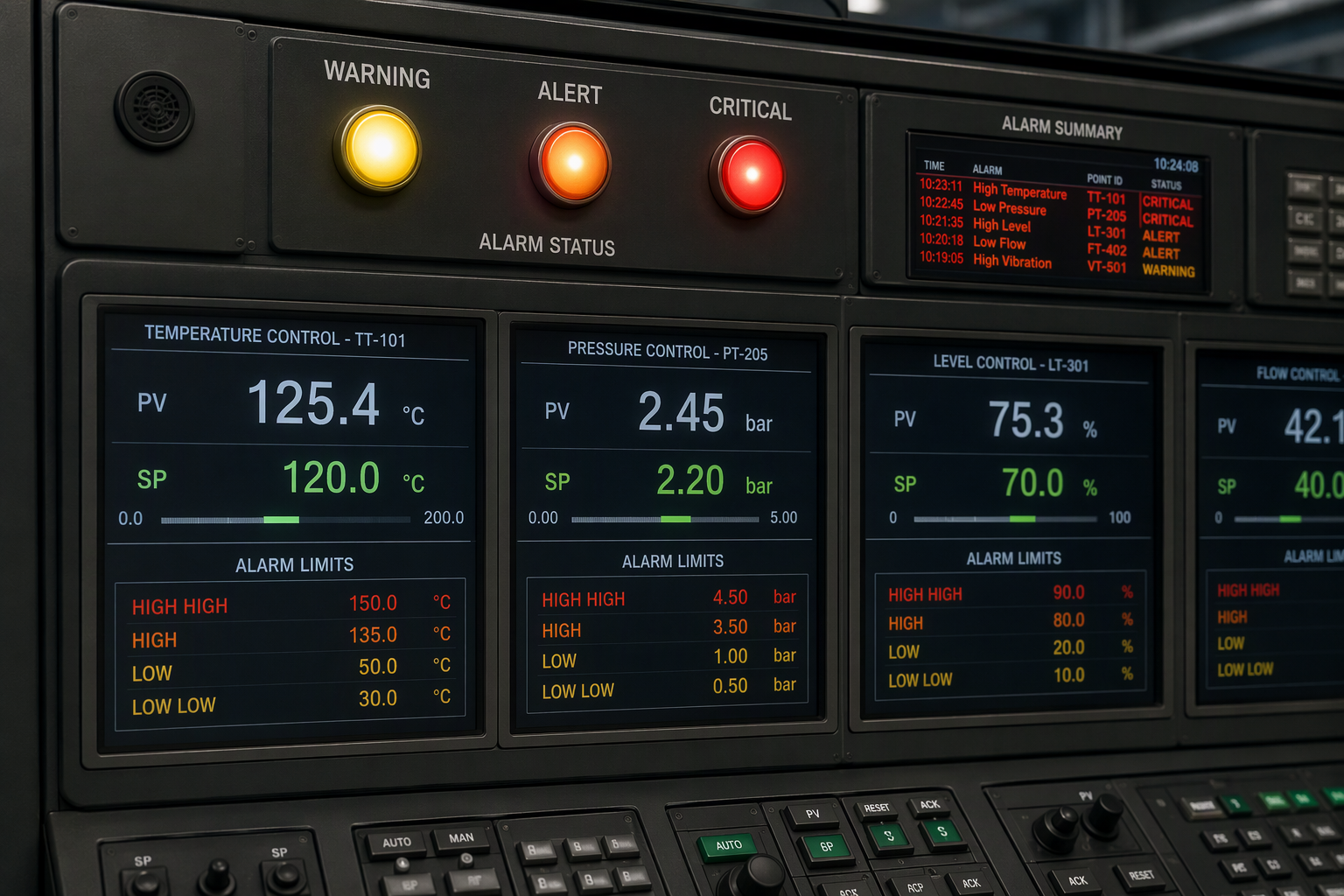
Define Alarm Levels: Establish three distinct alarm levels: warning, alert, and critical. Each level should indicate increasing urgency and response needs, with verification procedures including functional testing using calibration gas.
Define Alarm Levels: Establish three distinct alarm levels: warning, alert, and critical. Each level should indicate increasing urgency and response needs.
Setpoint Determination: Define the desired operational setpoints based on performance metrics. These are the optimal values for system efficiency.
What alarm limits and setpoints do
Alarm limits and setpoints serve as critical indicators for operators in managing system performance and safety. They function as early warning systems, allowing personnel to detect deviations from normal operations.
Monitoring Deviations: Alarm limits trigger notifications when system parameters fall outside predefined thresholds, enabling timely intervention to prevent escalation into more severe issues.
Operational Efficiency: Setpoints guide the system's optimal functioning by ensuring that processes operate within ideal ranges. This helps maximize efficiency and productivity while minimizing resource wastage.
Start from the process, not the instrument
When setting alarm limits and setpoints, it's essential to begin with a comprehensive understanding of the processes involved rather than focusing solely on the instruments used to measure them. This approach ensures that alarm notification parameters are relevant and aligned with operational realities.
Process Mapping: Begin by mapping out the entire process flow to identify critical steps where deviations could lead to safety risks or inefficiencies. Understanding the properties of the interactions among various components will highlight where alarm limits should be placed.
Data Collection: Gather historical data on system performance, including past incidents and variations in normal operations.
Use operating data to choose limits
and setpoints that reflect real-world scenarios. Historical performance metrics provide insight into typical operating ranges and potential thresholds for alarm limits.
Statistical Analysis: Utilize statistical methods to analyze the collected data. Techniques such as standard deviation, control charts, or histograms can reveal the natural variability within the process, guiding the establishment of realistic and effective alarm limits.

Consult Stakeholders: Collaborate with operators, engineers, and safety personnel to incorporate their expertise and insights into setting alarm limits. Their hands-on experience provides valuable context that can fine-tune your approach and improve overall system understanding.
High, high-high, low, and low-low alarms
are distinct levels of notifications that should be clearly defined based on the process requirements. High alarms indicate a condition requiring immediate attention, while high-high alarms signify an emergency situation needing instant action to prevent catastrophic failures. Similarly, low alarms warn of conditions approaching a critical threshold, including the presence of hydrogen, and low-low alarms trigger intervention before safety limits are breached.
Defining Alarm Categories:
High Alarms: Establish thresholds that necessitate quick responses but allow for some corrective actions to be taken without panic.
Set deadbands to prevent chatter
and unnecessary alarm fatigue. A deadband is the range of values that must be reached before an alarm is triggered or reset, providing operators with a buffer against minor fluctuations that could cause frequent disturbances without significant impacts on safety or performance, especially in monitoring gases like methane.
Low Alarms: Set boundaries to indicate when conditions are nearing critical levels but do not require immediate action. These alarms serve as early-warning signals for detecting combustible gas, allowing for proactive measures to maintain operational integrity.
High-High Alarms: Define these thresholds carefully, as they indicate situations where conditions have escalated to dangerous levels.
Account for startup, shutdown, and abnormal modes
to ensure that high-high alarms are not triggered during normal operational fluctuations, particularly those caused by sensor degradation. These situations often occur during system transitions and must be evaluated separately to maintain alarm integrity without causing unnecessary disruption.
Low-Low Alarms: Establish these limits as a last line of defense, indicating when conditions have deteriorated to untenable levels. The thresholds should trigger immediate corrective action, ensuring that personnel are alerted to act swiftly before a critical failure occurs, in accordance with NIOSH guidelines.
Incorporating Alarm Limits into your System:
Collaborative Input
Involve operators in limit setting
and seek their insights based on daily operational experiences. Their firsthand knowledge can provide invaluable context, ensuring that alarm limits are practical and correspond to real-world scenarios., including scenarios involving propane.
Data Analysis
Utilize historical data to inform your decisions. By analyzing past incidents and their impacts, you can set alarm limits that are not only realistic but also informed by trends and patterns within system performance.
Establish a routine for reviewing alarm limits. Conditions change over time—be it through equipment wear, process modifications, or regulatory updates. Regular assessments will ensure that alarm thresholds remain relevant and effective in mitigating risks.
Test limits before you put them in service
and ensure they function as intended. Conduct simulations or controlled tests to observe system behavior under various scenarios, confirming that alarm thresholds activate appropriately without causing nuisance alarms. This step is crucial to verify that the setpoints align with operational realities and contribute effectively to safety protocols.
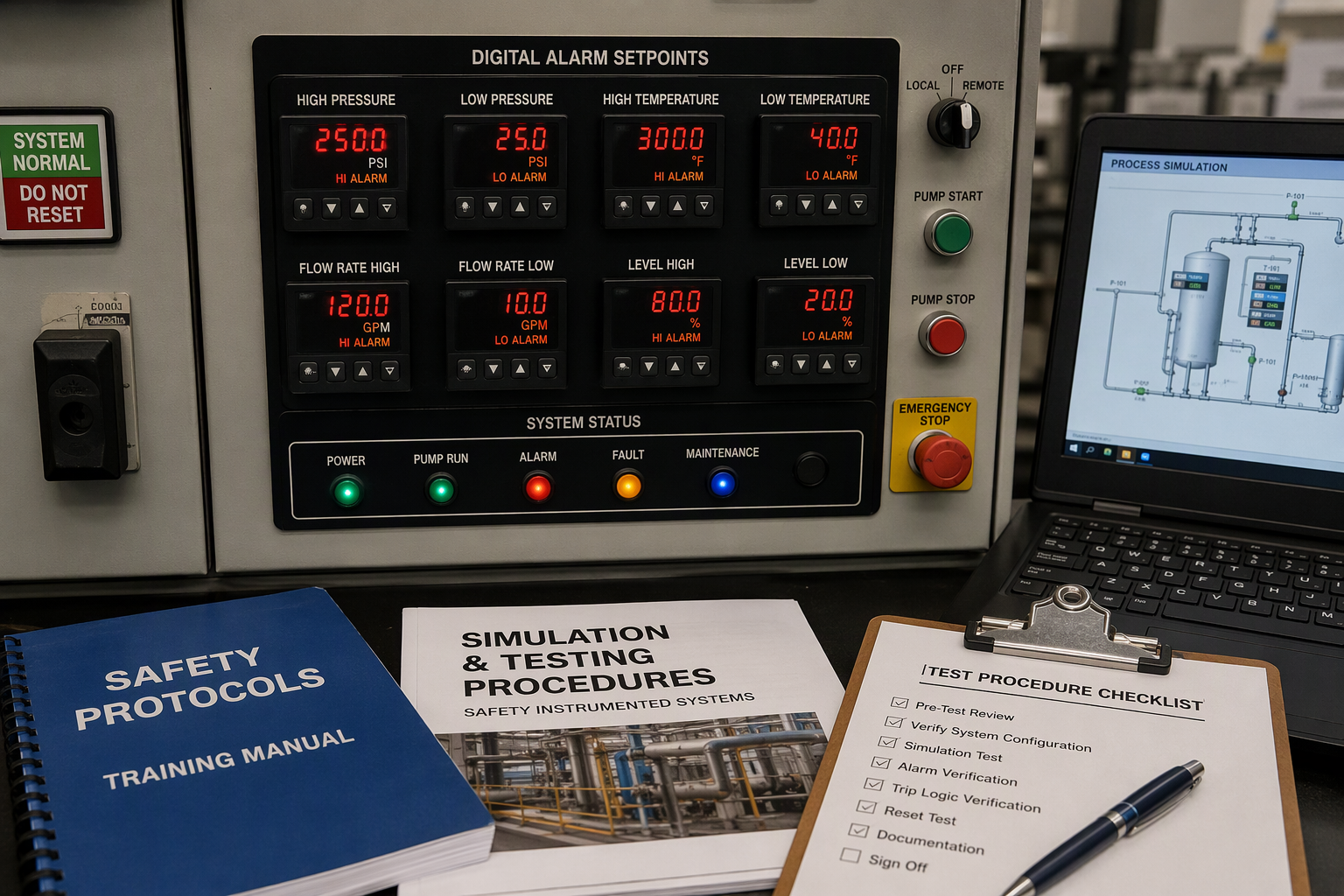
Document the alarm limits and settings comprehensively, detailing the rationale behind each threshold. Clear records will aid in understanding alarm functions during audits and training sessions. Additionally, conduct training for operators and personnel on the importance of these alarm limits. Equip them with knowledge on recognizing alarm conditions, their implications, and the appropriate response actions.
When to Change a Limit
Recognizing when to modify alarm limits is essential for maintaining an effective safety net. Begin by monitoring the performance of your alarms closely. If alarms are frequently triggered without corresponding adverse events—a situation known as nuisance alarms—it may signal that the setpoints are too sensitive and require adjustment.
Additionally, consider significant changes in operational conditions, such as upgrades in equipment or alterations in raw materials. These shifts can alter acceptable operating ranges and necessitate a reassessment of existing alarm thresholds.
How to Set Alarm Limits and Setpoints Effectively in Mitigating Risks
Setting alarm limits and setpoints is a foundational practice for ensuring safety in any operational environment. These thresholds serve as critical indicators, alerting personnel to potential issues before they escalate into significant risks.
Testing Limits Before Implementation
Before integrating alarm limits into your system, rigorous testing is imperative. Conduct simulations or controlled tests to observe how the system behaves under various scenarios. This ensures that the alarm thresholds activate correctly without causing nuisance alarms—a common pitfall that can desensitize operators to genuine threats.
How to Set Alarm Limits and Setpoints Effectively in Mitigating Risks
To maximize the effectiveness of alarm limits, it is crucial to equip personnel with the knowledge needed to recognize alarm conditions and understand their implications. Ensure that team members are trained not only on how to respond but also on why these alarms exist. Foster a culture where employees feel empowered to question alarm triggers and provide feedback on their experiences.
Recognizing Alarm Conditions and Appropriate Responses
Alarm conditions arise when monitored parameters exceed predefined thresholds.
You might also like