Industry 4.0 In Manufacturing PDF
Industry 4.0 in Manufacturing pdf
Key Highlights
As we stand on the brink of a new era in manufacturing, it’s hard not to feel excited about the possibilities that Industry 4.0 brings to the table. Often referred to as the fourth industrial revolution, this transformative wave is reshaping how goods are produced and redefining what it means to be competitive in today's fast-paced market. But what exactly does Industry 4.0 entail? How does it differ from its predecessors, and what technologies are at its core? This blog will take you through a comprehensive exploration of Industry 4.0 in manufacturing—its evolution, key drivers, essential technologies, and practical applications—ultimately revealing how businesses can harness its power for enhanced efficiency, productivity, and profitability. Buckle up as we dive into the future of manufacturing!
Introduction
The fourth industrial revolution is changing the manufacturing environment in a practical way. Instead of relying on isolated machines and delayed reports, companies now connect equipment, software, and data to support digital transformation. That shift is what people mean when they talk about Industry 4.0. It helps manufacturers respond faster, improve productivity, and create more flexible operations. If you want a simple view, think of it as manufacturing that becomes smarter, more connected, and easier to manage in real time.
Defining Industry 4.0 in Manufacturing
In simple terms, Industry 4.0 means using connected digital tools to run manufacturing better. It is the latest stage of the industrial revolution, built around digital transformation in the manufacturing environment. Machines, sensors, software, and people share information so factories can respond faster and make smarter decisions. This creates more visibility across production, maintenance, and supply activities.
What makes Industry 4.0 different is not one single technology. It is a connected stack that includes automation, data analytics, cloud computing, artificial intelligence, and the industrial internet of things. These tools help companies monitor equipment, improve output, reduce delays, and support smarter manufacturing. So if you are wondering what Industry 4.0 means, it is really about turning factories into connected, intelligent operations. To understand that shift, it helps to look at how industrial revolutions evolved.
Evolution of Industrial Revolutions
The first industrial revolution began with water and steam power. In the late 1700s and early 1800s, mechanized production moved work away from handcrafted methods and into factories. That was the first big shift in industrial processes.
Next came the second industrial revolution. Electricity, new materials, and the assembly line made mass production possible on a much larger scale. This stage changed how goods were produced and helped businesses increase output with more consistency.
Then the third industrial revolution introduced electronics, computerized systems, and information technology. The fourth industrial revolution goes further by connecting machines, sensors, data, AI, and cloud systems. That is the key difference. Earlier eras improved production step by step, but Industry 4.0 links physical systems with digital intelligence for real-time action. This leads directly to a useful comparison between Industry 3.0 and Industry 4.0.
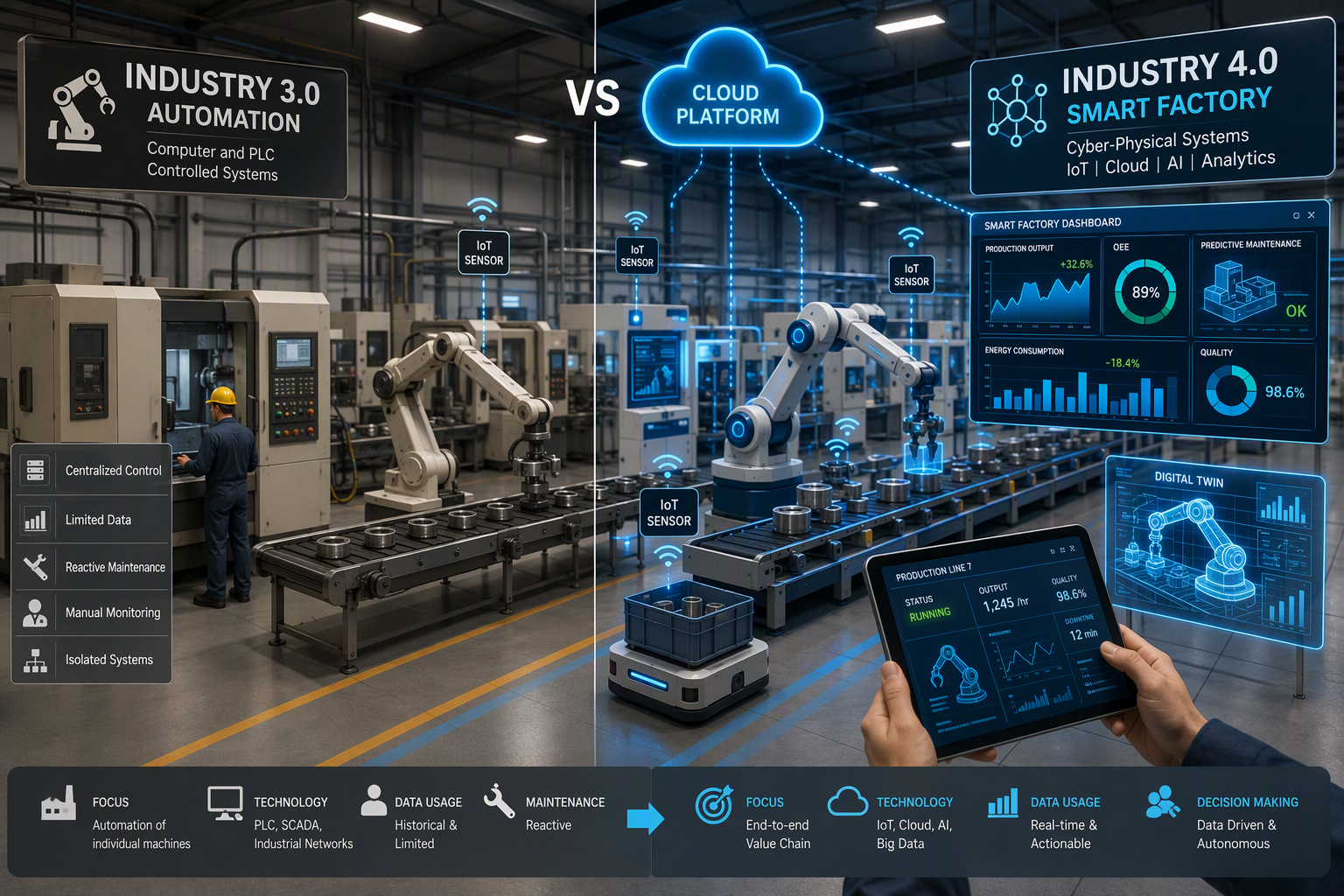
Key Differences Between Industry 3.0 and Industry 4.0
The third industrial revolution focused on digitization and automation of individual processes. Factories used computers, electronics, and information technology to automate work, but many systems still operated separately. Data often stayed inside one machine, one department, or one production line.
Industry 4.0 builds on that base. It connects equipment, sensors, software, and people across operations. That means more shared data, better visibility, and smarter responses. Tools like the digital twin also let manufacturers test changes before touching physical equipment.
| Area | Industry 3.0 | Industry 4.0 |
|---|---|---|
| Focus | Automation of individual processes | Connected, intelligent operations |
| Data | Limited and siloed | Real time and shareable |
| Decision-making | Centralized and human-led | Analytics-supported and more decentralized |
| Maintenance | Scheduled or reactive | Condition-based and predictive |
Core Concepts of Industry 4.0 for Manufacturers
At its core, Industry 4.0 gives manufacturers a more connected way to run operations. Smart manufacturing depends on systems that can collect data, share it, and turn it into action. Instead of treating equipment, software, and teams as separate parts, Industry 4.0 links them into one operating model.
Several ideas sit at the center of this change:
- IoT devices gather live information from machines and production assets.
- Big data analytics helps teams spot patterns and make better decisions.
- Cyber-physical systems connect software with physical equipment.
- Autonomous systems can adjust or respond within set limits.
Just as important, people remain part of the system. Technical assistance tools, alerts, and dashboards help workers act faster and more safely. Human judgment still matters, especially for quality, safety, and compliance. Once you understand these concepts, the main drivers of Industry 4.0 become much easier to see.
The Main Drivers of Industry 4.0
Industry 4.0 is driven by connected technologies that improve how factories operate, learn, and respond. The biggest forces include the industrial internet of things, artificial intelligence, robotics, analytics, cloud computing, and digital twin models. Each one adds a layer of speed, visibility, or flexibility.
Together, these tools do more than improve one machine. They help link the factory floor to business systems and even the supply chain. That broader connection is what makes modern manufacturing smarter. The next sections break down the major drivers and show how each one supports real factory performance.
Industrial Internet of Things (IIoT)
The industrial internet of things is one of the foundations of Industry 4.0. It applies internet of things technology to industrial settings such as factories, warehouses, utilities, and transportation networks. In simple terms, IIoT connects machines, sensors, controllers, and software so they can share information.
On the factory floor, IoT sensors support data collection from equipment, production lines, and operating conditions. Smart factories use this constant flow of information to monitor performance, detect issues, and improve asset reliability. Instead of waiting for manual updates, teams can see what is happening as it happens.
That matters because data analytics becomes much more useful when the data is current and broad. IIoT gives manufacturers the raw information needed for automation, predictive maintenance, and better planning. Without this connected layer, Industry 4.0 would lose much of its visibility and responsiveness.
Artificial Intelligence and Machine Learning
Artificial intelligence helps manufacturers make sense of complex operations. When factories generate big data from machines, quality systems, inventory tools, and partners, AI can find patterns that people may miss. That supports faster and more informed decisions.
Machine learning is especially useful because it improves by learning from operating data. It can help forecast demand, detect defects, optimize processes, and identify signs of equipment failure before breakdowns happen. In other words, data analysis turns raw numbers into action you can use.
Generative AI also has a role in manufacturing. It can help workers retrieve technical knowledge, summarize maintenance records, draft work instructions, and review unstructured information. These tools should support human expertise, not replace it. With strong data and clear oversight, AI becomes a practical part of Industry 4.0.
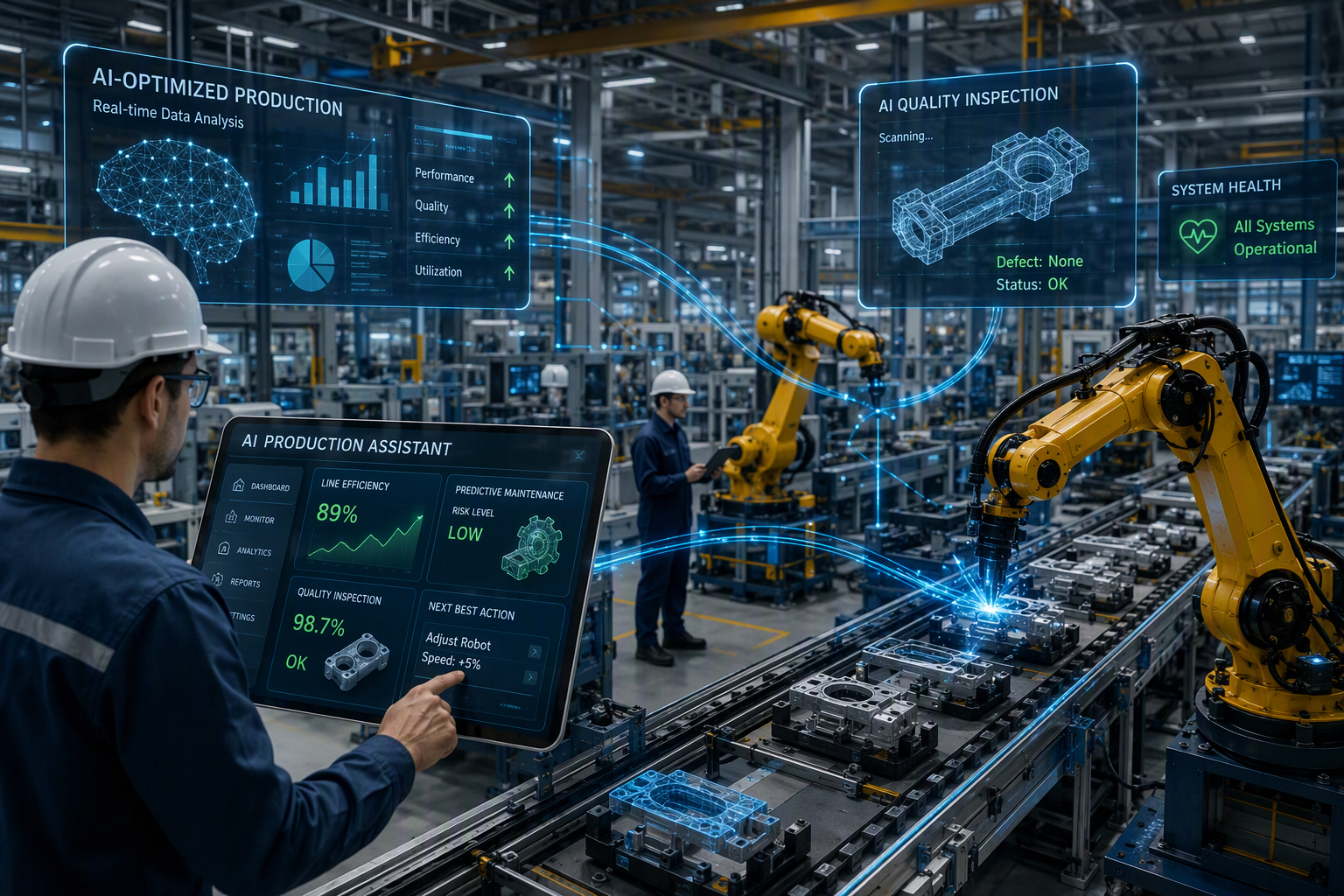
Robotics and Automation
Robotics and automation are central to modern industrial operations. Robots can handle repetitive tasks, hazardous work, and highly precise actions with steady performance. That improves speed, consistency, and worker safety across many production processes.
Still, automation is broader than robotic arms. It also includes control systems, software-driven scheduling, machine-to-machine communication, and automated quality checks. Smart machines can use production data to respond to changes in demand, equipment condition, or product configuration.
Industry 4.0 also reaches beyond the line itself. Connected systems support new uses in logistics and movement, including links to autonomous vehicles in wider industrial settings. The key point is simple: automation in Industry 4.0 is not just about replacing manual work. It is about creating connected, adaptable operations that can respond with less delay and better accuracy.
Essential Technologies Powering Industry 4.0
Industry 4.0 runs on a mix of advanced technologies rather than a single tool. Big data, IoT technology, cloud platforms, analytics, and connected physical systems work together to create visibility and control. Each layer contributes something different, from data capture to faster decision-making.
What matters most is the way these tools connect. When manufacturers combine digital and operational capabilities, they can improve maintenance, production, and planning at the same time. The following technologies show how that connected model works in practice.
Big Data and Advanced Analytics
Modern factories generate big data from machines, sensors, quality systems, production lines, and enterprise software. On its own, that volume of information can feel overwhelming. The value appears when manufacturers organize it and connect it to daily operations.
Big data analytics helps teams study trends, identify patterns, and understand what is affecting production processes. Through data collection and data analysis, companies can make stronger choices about staffing, scheduling, capacity, inventory, and equipment health. That leads to better planning across operations.
It also supports a shift from reacting to problems toward anticipating them. When data from production is combined with sales, warehousing, and supply chain information, decisions become more complete. This is why analytics plays such a major role in Industry 4.0. It gives manufacturers the insight needed to act with more speed and confidence.
Cyber-Physical Systems
Cyber-physical systems connect physical systems like machines and equipment with software, sensors, communication networks, and analytics. They form the bridge between what is happening on the factory floor and what digital systems can understand and manage.
Because of that connection, smart technology can monitor operating conditions and respond to changes in real time. A machine can share status data, trigger alerts, or support automated adjustments within set boundaries. This creates a more responsive and coordinated production environment.
These systems also support tools like the digital twin. By creating a virtual model of equipment or a process, manufacturers can test conditions, examine bottlenecks, and plan changes before applying them to the real asset. That reduces uncertainty and helps teams make better operational decisions with less disruption.
Cloud Computing in Manufacturing
Cloud computing gives manufacturers scalable space to store, process, and share large amounts of industrial data. As IoT technology spreads across equipment and facilities, that flexibility becomes essential. Companies need systems that can support production, maintenance, engineering, and logistics together.
In practice, cloud-based digital platforms can connect factory operations with enterprise tools. That makes it easier to support supply chain management, visibility across departments, and access to shared dashboards. Teams can review information from multiple systems without depending on disconnected records.
Cloud tools also support a broader business model for digital transformation. Manufacturers can place workloads where performance, security, cost, and compliance make sense. In real factories, that helps connect production data with planning, inventory, and service functions. The result is a more unified operation, not just a better storage option.
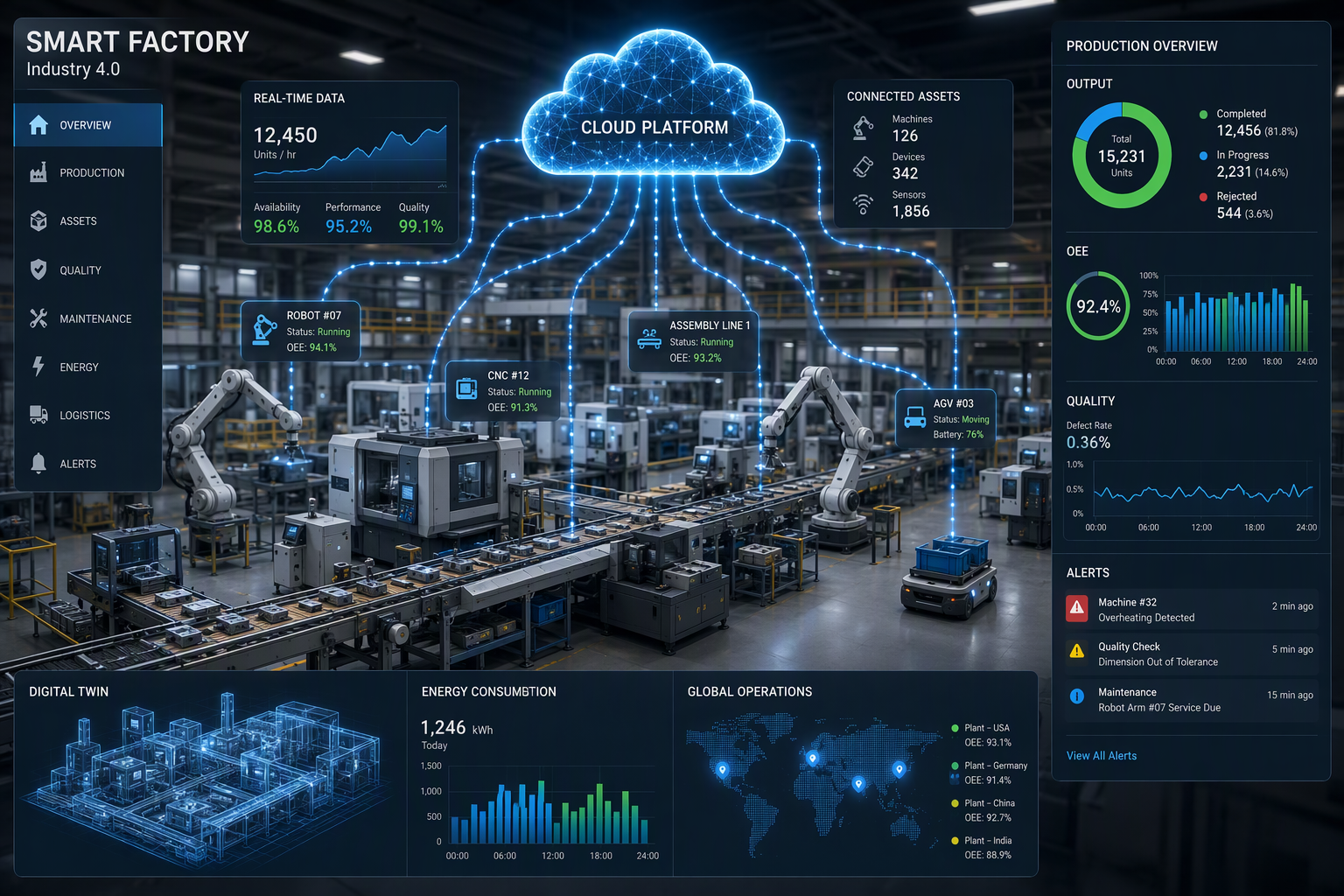
The Smart Factory Explained
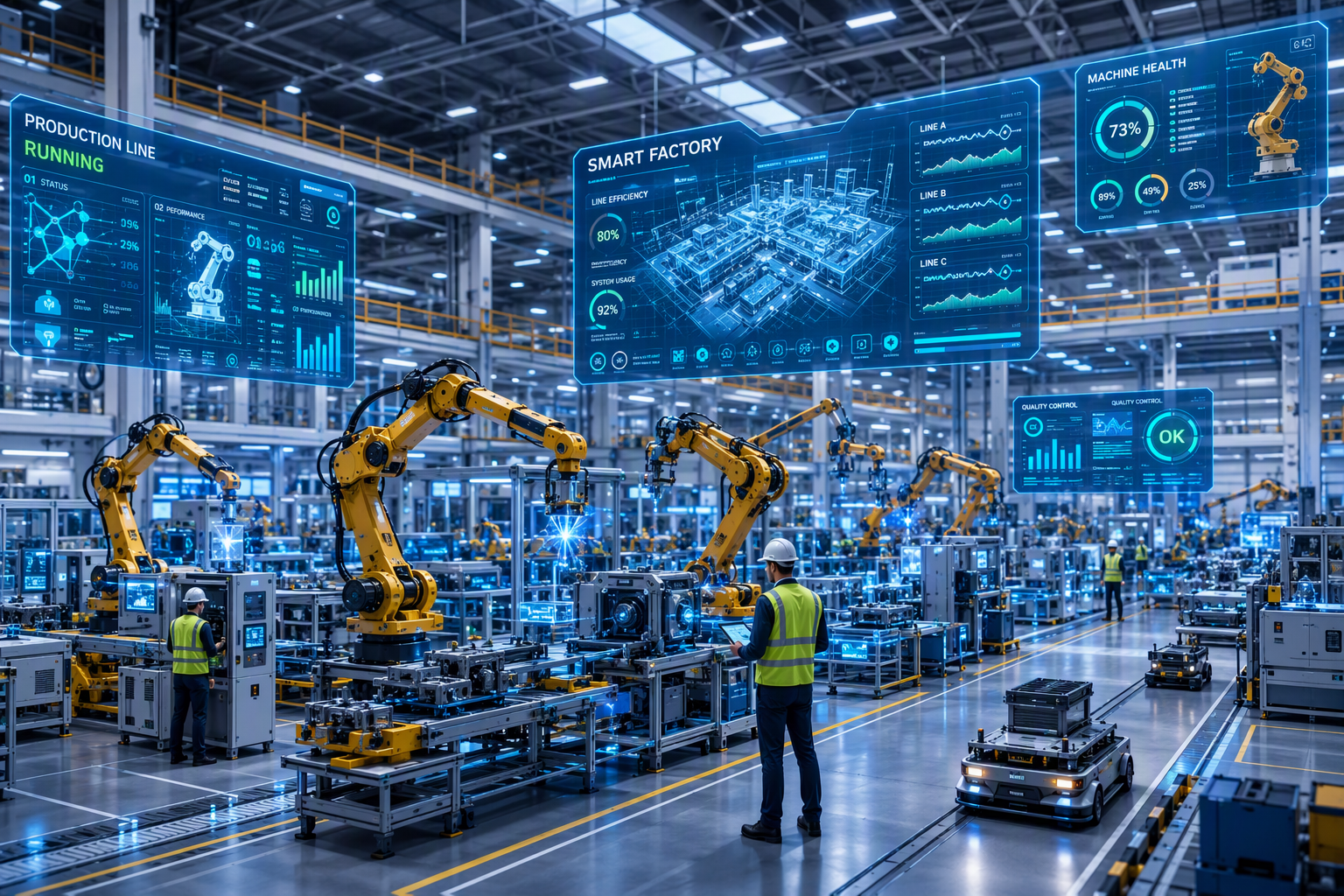
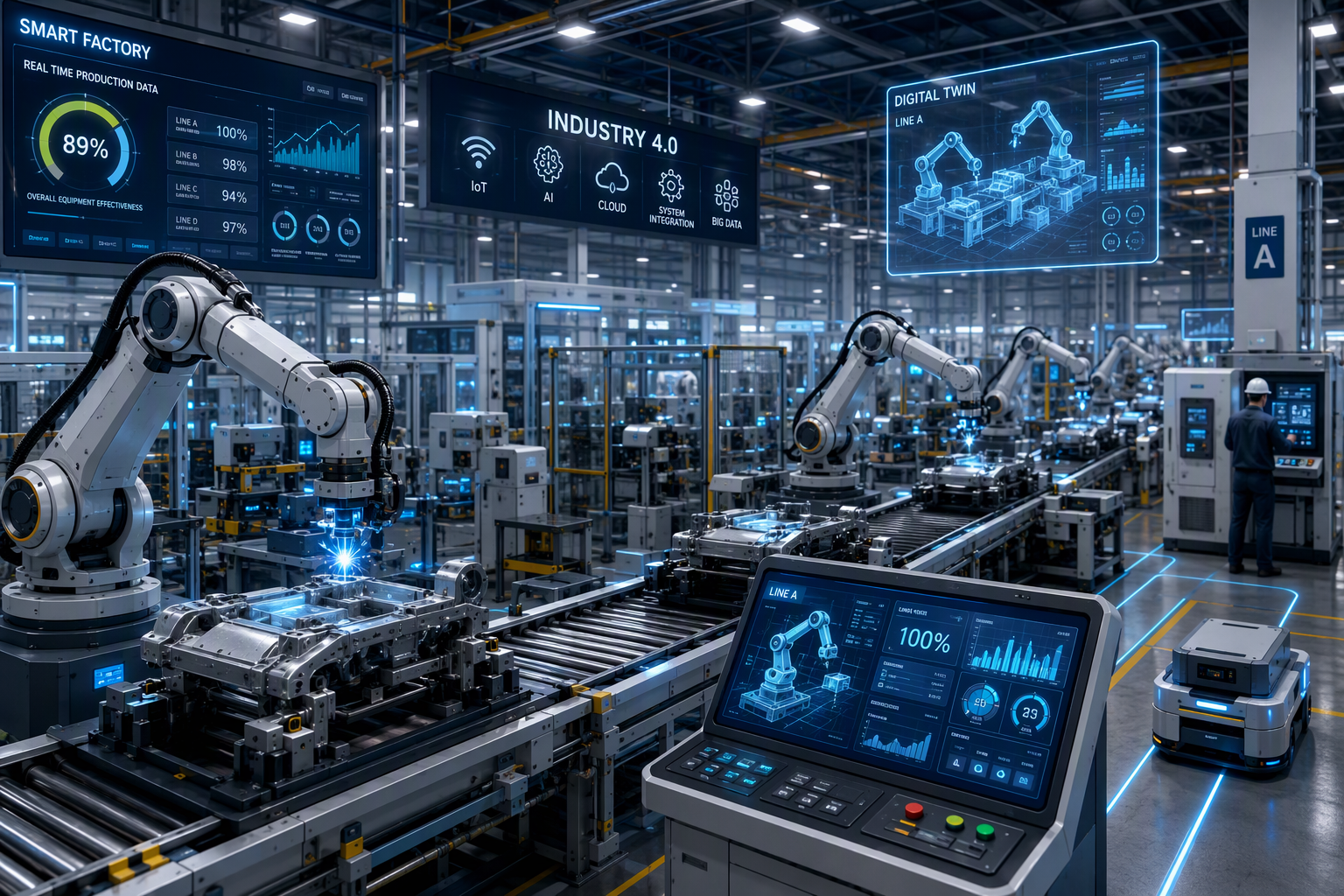
A smart factory is a modern production facility built around Industry 4.0 technologies. It combines sensors, embedded software, robotics, connected systems, and data collection to create a more visible and responsive operation. In smart manufacturing, smart machines do not just perform tasks. They also generate information that helps teams understand performance, quality, and maintenance needs.
This matters for the future of manufacturing because digital transformation becomes part of everyday factory work. A smart factory links operational technology with business systems so decisions can happen faster and with better context. It can support predictive maintenance, improved quality checks, and more flexible production. In short, the smart factory shows what Industry 4.0 looks like in action. To see that more clearly, it helps to examine automation, monitoring, and system integration inside the plant.
Manufacturing Process Automation
Process automation improves how work moves through a factory. Instead of relying on manual steps for every action, manufacturers use software, machines, and control systems to manage routine activity with more consistency. This supports better speed and less variation.
On an assembly line, automation can guide sequencing, quality checks, material flow, and machine coordination. It does not only mean robots doing tasks. It also covers software-driven scheduling and machine communication that keeps physical processes aligned from one step to the next.
The benefit is stronger operational efficiency. Automated systems can respond faster than manual methods when conditions change, especially when they are linked to live production data. In real factories, this means smoother production, fewer interruptions, and more reliable output. Process automation is one of the clearest examples of how Industry 4.0 becomes practical on the shop floor.
Real-Time Data Collection and Monitoring
Real time visibility is one of the biggest changes in Industry 4.0. Instead of waiting for reports at the end of a shift, manufacturers can use IoT sensors for continuous data collection from equipment, lines, and operating conditions. That makes monitoring more immediate and useful.
With better monitoring, teams can identify anomalies, track machine health, and see how production is moving from moment to moment. Data analytics turns this constant stream into usable insight. Managers and operators can detect problems earlier and make adjustments before small issues become costly ones.
This approach also supports planning beyond the machine itself. When live factory information is connected to maintenance or business systems, decisions improve across operations. Real-time monitoring is not just about seeing more data. It is about acting sooner, with better information and less guesswork.
Integration of Digital and Physical Systems
Industry 4.0 changes manufacturing by linking digital tools with physical systems. In smart factories, machines, sensors, software, and enterprise applications work together instead of operating in isolation. That connection improves visibility and helps manufacturers understand how one part of the operation affects another.
A digital twin is a strong example of this integration. It creates a virtual representation of equipment, a process, or even a supply network using operating data. Manufacturers can test changes, study performance, and predict maintenance needs before making changes to the real asset.
This does not remove human intervention completely. People still guide safety, quality, and compliance decisions. What changes is the level of support they receive from information technology and connected systems. The future of manufacturing becomes more responsive because digital and physical operations are no longer treated as separate worlds.
Practical Applications of Industry 4.0 in Manufacturing
Industry 4.0 is not just a theory. It shows up in real world use cases across the manufacturing process, where connected tools improve maintenance, planning, and output. The strongest examples usually combine sensors, software, and data analytics to solve everyday factory problems.
You can see this in predictive maintenance, supply planning, and flexible production. These applications help manufacturers reduce waste, improve uptime, and respond faster to changing needs. The next examples show how Industry 4.0 creates practical value inside real factories.
Predictive Maintenance
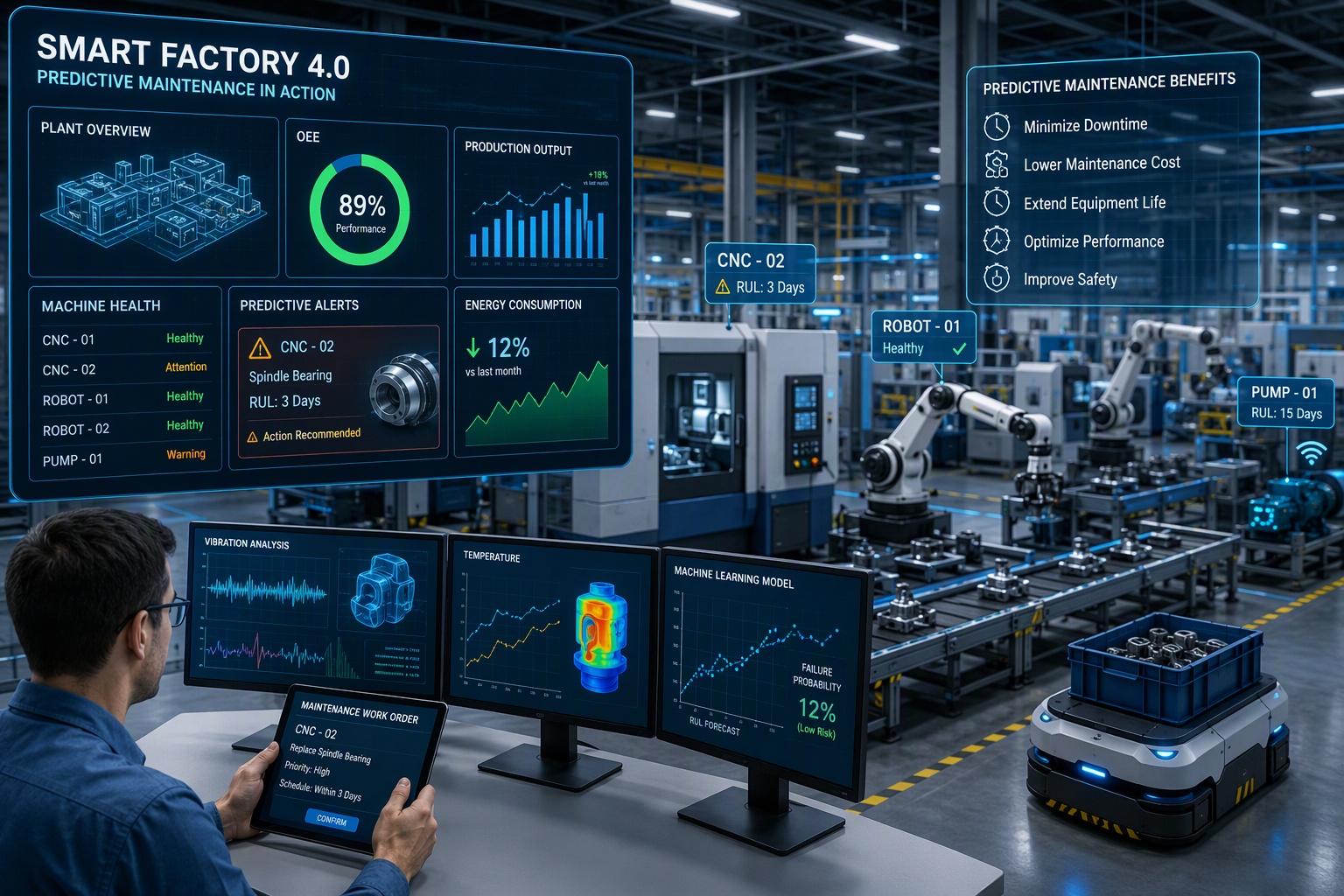
Predictive maintenance is one of the most common Industry 4.0 applications. Instead of fixing equipment only after failure or following a rigid schedule, manufacturers use connected data to estimate when service is actually needed. That creates a smarter maintenance approach.
IoT sensors gather information such as vibration, temperature, pressure, runtime, and other operating signals. When that information is combined with big data and machine learning, patterns linked to emerging failure become easier to spot. Teams can then act before a breakdown stops production.
The payoff is better operational efficiency and fewer costly interruptions. Predictive maintenance also supports more accurate work orders, spare parts planning, and technician scheduling when integrated with maintenance systems. For many factories, this is one of the clearest examples of how connected data can turn into direct business value.
Supply Chain Optimization
Industry 4.0 improves the supply chain by making manufacturing data easier to share across partners and systems. Smart factories can connect production status with supplier, logistics, and inventory information, helping teams plan materials with better timing and fewer surprises.
Data analytics plays a major role here. When operations combine factory information with transportation, retailer, and even weather data, forecasting becomes stronger. That supports better supply chain management, delivery scheduling, and inventory control across the entire supply chain.
Cloud computing helps make this possible by supporting shared access to connected systems and digital platforms. If a production issue hits an assembly line, manufacturers can reroute or delay deliveries to avoid material buildup and waste. This kind of visibility shows how Industry 4.0 affects manufacturing far beyond the factory floor.
Customization and Mass Personalization
For a long time, manufacturers had to choose between efficiency and customization. Standardized equipment worked well for volume, but smaller runs or niche products were harder to produce at a reasonable cost. Industry 4.0 helps change that balance.
By using digital platforms, automation, simulation tools, and additive manufacturing, companies can support customization on the production line with better control. That makes smaller batches of specialized products more practical without giving up too much efficiency.
This shift supports mass personalization, where manufacturers can meet more specific customer needs while still using connected systems and streamlined processes. It also expands the value of industry by making production more flexible. Instead of one fixed model, factories can adapt to varied demand with a more responsive operating approach.
Business Benefits of Embracing Industry 4.0
The business benefits of Industry 4.0 come from better visibility, faster decisions, and stronger control across operations. When companies connect machines, software, and data, they can improve business processes in ways that support daily performance and long-term planning.
That often leads to higher operational efficiency, better product quality, and fewer disruptions. It can also help manufacturers manage downtime, inventory, and even energy consumption more effectively. The following sections explain how these gains appear in practical terms.
Increased Efficiency and Productivity
One of the clearest benefits of Industry 4.0 is stronger operational efficiency. Connected systems reduce delays between what happens on the line and what teams know about it. That helps manufacturers keep production processes moving with fewer slowdowns and less guesswork.
Automation plays a big part in this improvement. Routine actions can be handled faster and more consistently, while real time data helps systems and workers respond to changing conditions. Human intervention still matters, but it becomes more focused on oversight, quality, and exception handling.
Productivity improves because decisions happen with better timing and context. Instead of reacting after a problem spreads, teams can identify issues sooner and adjust operations before output suffers. For businesses, that means a more efficient plant and a better use of people, equipment, and time.
Enhanced Product Quality and Consistency
Industry 4.0 helps improve product quality by making factory performance easier to observe and analyze. In smart factories, sensors and connected systems create a steady stream of operating data. That gives teams better insight into conditions affecting output and consistency.
Data analytics helps manufacturers identify trends and detect anomalies earlier. If a machine begins drifting from target settings, the issue can be seen sooner. This strengthens quality control and lowers the chance that defects move too far through production before anyone notices.
A digital twin adds another advantage. By modeling equipment or processes virtually, manufacturers can test adjustments before changing real operations. That reduces risk and supports more stable performance. Better visibility, earlier detection, and smarter testing all work together to raise product quality and keep output more consistent.
Reduced Downtime and Operational Costs
Unplanned downtime is expensive because it interrupts output, adds stress to schedules, and can create waste across the factory floor. Industry 4.0 helps reduce that risk by improving how teams monitor equipment and respond to early warning signs.
Predictive maintenance is a major part of this. Using connected asset data and data analytics, manufacturers can detect patterns linked to wear or failure before a machine stops working. That allows maintenance teams to schedule service with better timing and fewer emergency disruptions.
Lower downtime often leads to lower operational costs as well. Companies avoid some repair emergencies, reduce lost production time, and improve planning for labor and parts. The result is not only a smoother factory operation but also a more cost-aware way to manage assets and maintenance resources.
Conclusion
In summary, Industry 4.0 represents a transformative shift in manufacturing, leveraging advanced technologies to create smart factories that are more efficient and flexible. Understanding the core concepts, essential technologies, and practical applications of Industry 4.0 is crucial for manufacturers looking to stay competitive in a rapidly evolving landscape. By embracing these innovations, businesses can benefit from increased productivity, enhanced product quality, and optimized operations. As the manufacturing industry continues to evolve, it’s important to adapt and harness the potential of Industry 4.0 for long-term success. If you're ready to explore how these changes can impact your business, reach out for a consultation to get started on your journey.
Frequently Asked Questions
What challenges do manufacturers face in adopting Industry 4.0?
Manufacturers adopting Industry 4.0 can face potential issues such as connecting older equipment with new information technology, managing more complex systems, and protecting connected environments. Digital transformation also requires training, since human intervention still matters for safety, quality, oversight, and getting value from new tools.
How is Industry 4.0 shaping the future of US manufacturing?
Industry 4.0 is shaping US manufacturing by encouraging smart factories that use smart technology and advanced technologies to improve speed, flexibility, and visibility. It also supports a more connected business model, where production, maintenance, and supply planning work together instead of staying in separate systems.
What is the difference between Industry 4.0 and Industry 5.0?
Industry 4.0 focuses on connected automation, data, and digital transformation in smart factories. Industry 5.0 is expected to build on that foundation while placing greater emphasis on people, sustainability, and resilience. In simple terms, Industry 4.0 connects systems, while Industry 5.0 gives more weight to human intervention and broader outcomes.
You might also like