Discover Innovative Industrial Automation Solutions Today
Key Highlights
- Industrial Automation Solutions uses control systems, robots, and software to reduce human labor in industrial processes.
- Modern automation solutions improve operational efficiency by running production longer, faster, and with fewer stoppages.
- Advanced technologies such as AI, machine learning, and the internet of things support smarter factory decisions.
- Many factories use automation to raise product quality and lower human error on repetitive tasks.
- Automotive, food, electronics, and material handling operations rely on industrial automation every day.
- Providers also offer integration, support, maintenance, and upgrade services to keep systems performing well.
Introduction
Industrial Automation Solutions is changing how companies run industrial processes. Instead of relying only on manual work, businesses now use automation solutions, control tools, and connected software to improve speed, safety, and consistency. That shift matters if you want better output without adding more strain to your team. From assembly lines to packaging and data tracking, industrial automation helps companies stay productive and flexible. To see where it fits best, it helps to start with the basics.
What Are Industrial Automation Solutions?
Industrial Automation Solutions use control systems, software, sensors, and machines to run a production process with less human intervention. They are designed to handle repetitive tasks, monitor conditions, and respond in real time.
In practical terms, these advanced technologies help
manufacturing companies improve speed, consistency, and safety. They also support better data collection, fewer errors, and smoother operations across the production process. The next sections break down what that looks like inside manufacturing.
Defining industrial automation solutions for manufacturing
At its core, industrial automation means using machines and software to perform work that once needed constant human attention. In manufacturing automation, this often includes PLCs, robotics, sensors, HMIs, and other control systems that guide equipment through each step.
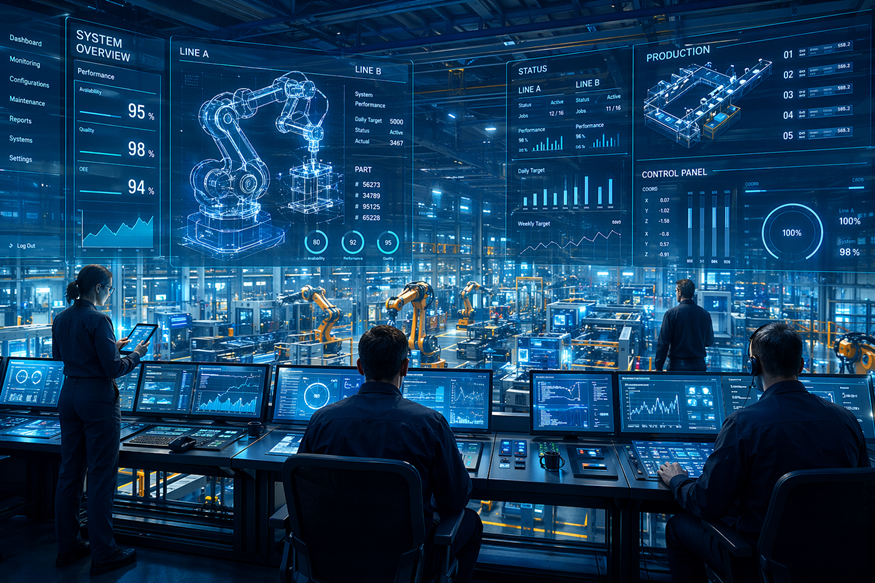
These tools create an automation process built on feedback. Sensors detect conditions on the production line, controllers process the information, and actuators or robotic systems carry out the response. That setup helps production continue with less human intervention while keeping operations more stable.
For manufacturing companies, that translates into practical value. Industrial Automation Solutions can reduce human error, support quality control, improve safety in hazardous environments, and keep output moving across the entire production line. It also gives your team better visibility into the manufacturing process through accurate, real-time information.
How Industrial Automation Solutions transform factory operations
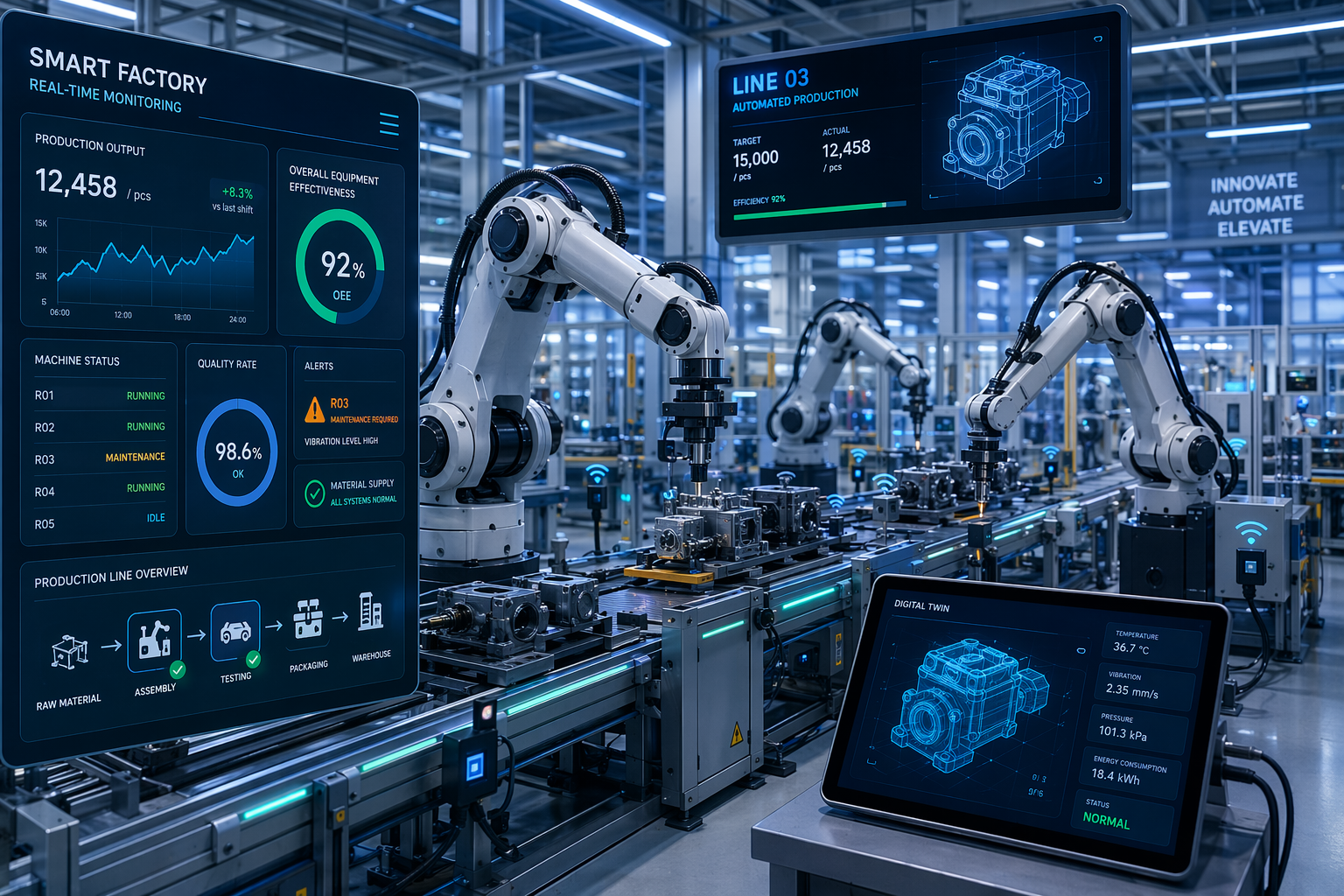
Factory operations change quickly when Industrial Automation Solutions replace manual steps with connected automation technology. Instead of depending on human labor for every movement, machines can run longer, respond faster, and hold tighter process consistency. That improves operational efficiency without forcing teams to work more shifts.
You can usually see the biggest gains in a few areas:
- Higher product quality through reduced human error and more consistent output
- Cost savings from lower labor costs and less waste
- Better safety when machines handle hazardous environments
- Increased throughput with fewer unplanned shutdowns
There is still an initial investment, and teams may need training. Even so, the long-term impact can be strong. Many factories use automation solutions to improve flexibility, reduce downtime, and maintain better product quality while using human labor where it adds the most value.
Common Industries Using Industrial Automation
Industrial automation appears across the manufacturing industry wherever companies need speed, accuracy, and reliable output. An automation system is especially useful in industrial processes filled with repetitive tasks, tight quality demands, or safety concerns.
You will often find it in automotive plants, food and beverage processing, electronics assembly, and warehouse or material handling operations. These sectors use automation to keep production steady, reduce human error, and support higher output. Two of the clearest examples are automotive and food processing.
Automotive manufacturing innovations
Automotive manufacturing has long been one of the strongest users of Industrial Automation Solutions. That makes sense because vehicle production depends on speed, repeatability, and strict control across large assembly lines. Even small mistakes can affect quality and output.
Today, advanced technologies such as robotic arms, automated guided vehicles, and connected Industrial Automation Solutions support tasks like welding, painting, and part installation. Industrial control systems coordinate these steps so machines, sensors, and software stay in sync across the production process.
The result is a more consistent operation with lower error rates and stronger product quality. In one example from engine assembly,
automated systems perform piston installation with far greater precision than manual methods. For automotive plants, automation helps maintain quality, improve safety, and keep assembly lines moving with fewer interruptions.
Food and beverage processing advancements
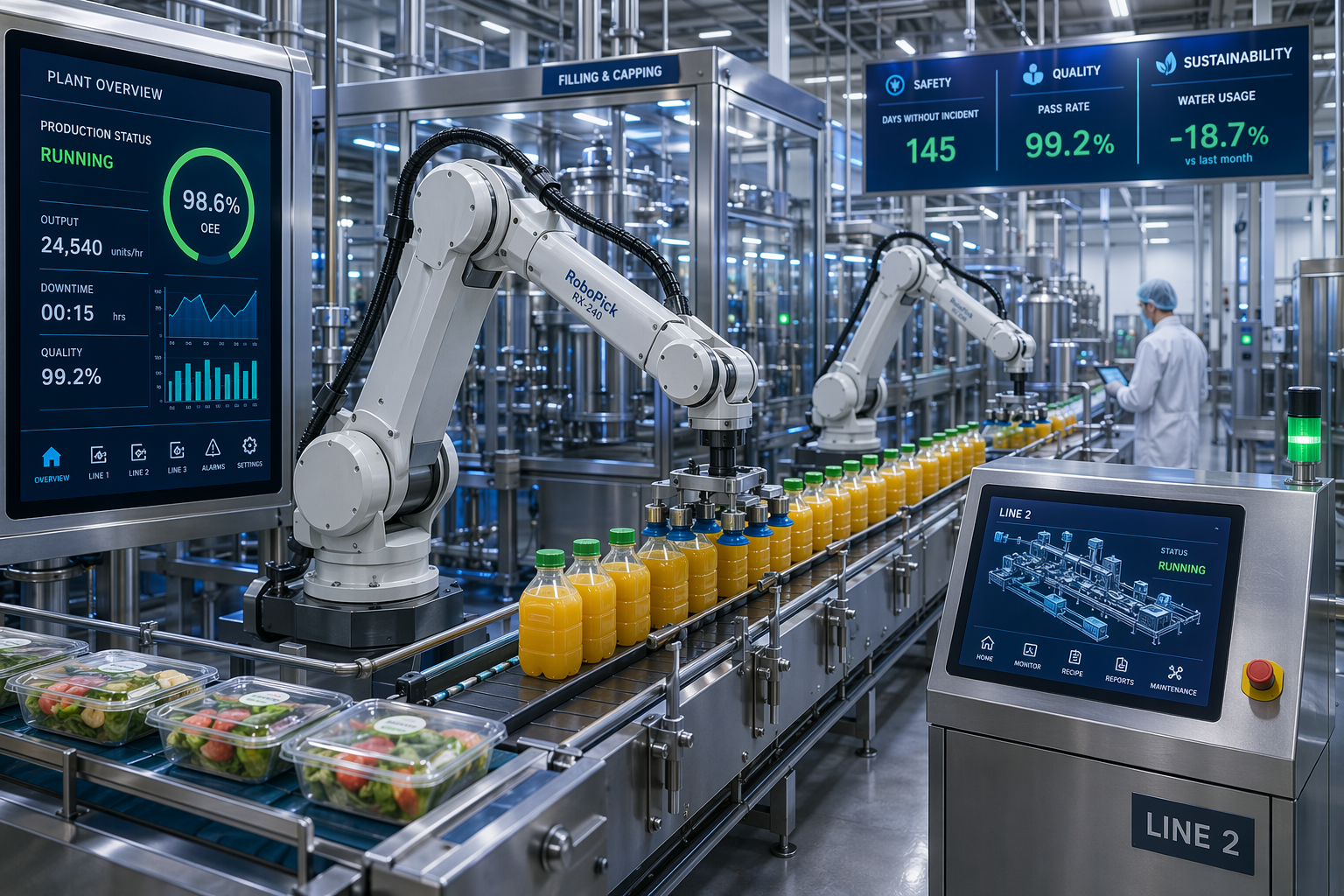
Food and beverage processing depends on consistency, cleanliness, and speed. That is why process automation plays such a large role in this sector. Automated filling, mixing, capping, and packaging systems help plants manage large volumes while protecting quality control and meeting safety standards.
In many facilities, automation technology also improves how production data is tracked. Sensors and computerized systems help operators spot issues early, reduce waste, and keep each batch closer to target. This is useful when facilities need to produce different products without slowing the line too much.
Common benefits include:
- Better quality control across filling and packaging
- More reliable compliance with safety standards
- Higher output with less waste and fewer manual checks
For food and beverage processing, automation supports both efficiency and dependable product handling.
Leading Providers of Industrial Automation Solutions
The automation industry includes large providers with broad industrial automation system capabilities and specialized firms that focus on specific production needs. Providers generally help businesses plan, build, connect, and maintain Industrial Automation Solutions across factories and processing sites.
Some companies deliver full platforms with software, integration, and workflow support. Others focus on controls, robotics, or industry-specific automation services. The right choice depends on your production goals, system complexity, and whether you need general expertise or a provider built around your market.
Major automation companies in the United States
In the United States, major automation companies and providers often support Industrial Automation Solutions through software, controls, workflow tools, and project expertise. Based on the compiled information, some names appear in connection with automation, manufacturing workflow, and industrial process improvement.
Here is a simple text table showing examples mentioned in the source material:
| Provider | Focus Area Mentioned |
|---|---|
| Sure Controls | Industrial automation support, integration guidance, control-focused manufacturing help |
| HighGear | Workflow automation, business process management, no-code tools, integrations, reporting |
Each provider serves a different role within the automation industry. Some concentrate on industrial control systems and factory support, while others emphasize workflow visibility, data handling, and process management. If you are comparing major automation companies, start by matching provider strengths to your plant’s needs, scale, and existing systems.
Specialized solution providers for different industries
Not every facility needs the same type of support. Some plants need help with process automation in food production, while others need robotics for automotive work or flexible systems for electronics. That is where specialized providers can be useful.
These companies or service teams focus on specific needs instead of trying to cover every possible application. They may build automation services around batch production, quality control, material handling, industrial processes, or system upgrades. In many cases, that narrower focus helps them respond better to industry-specific requirements.
If your operation has strict safety demands, changing product designs, or a complex production process, specialized providers may be the better fit. They can often recommend the right
type of automation, support faster integration, and shape a solution around the way your facility already works.
Core Technologies in Modern Industrial Automation
Modern Industrial Automation Solutions depends on a mix of advanced technologies that help machines sense, decide, and act. Instead of operating as isolated equipment, today’s systems share data and respond faster to changing conditions on the floor.
Key tools include robotics, machine learning, artificial intelligence, and the internet of things. Together, they support smarter monitoring, better control, and improved production decisions. If you want to understand how automation works in real facilities, robotics and IIoT are two of the clearest places to start.
Robotics and intelligent machines
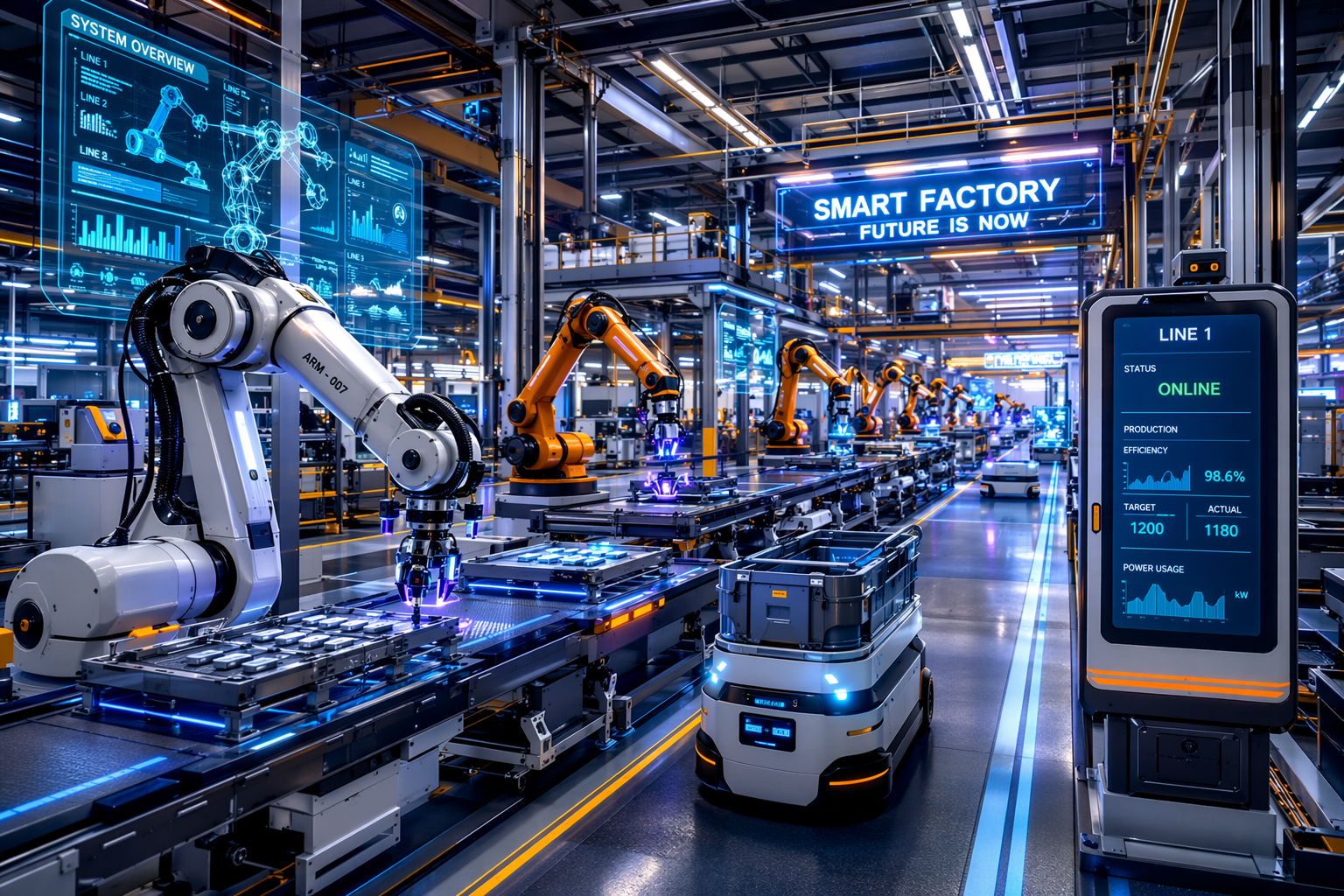
Robotics is one of the most visible parts of Industrial Automation Solutions. Industrial robots handle repetitive tasks such as welding, painting, packaging, and part placement with speed and consistency. That makes them useful in environments where precision matters every minute.
Intelligent machines go a step further by responding to data from sensors and control systems. Instead of simply repeating one movement, they can support quick adjustments, improve accuracy, and keep production efficiency steady across long shifts. This reduces fatigue-related mistakes that often happen with manual work.
For your operation, robotics can improve output while helping workers move away from routine or hazardous jobs. Industrial robots do not replace every role, but they can take on demanding tasks so people can focus on supervision, programming, maintenance, and other higher-value work.
Industrial Internet of Things (IIoT) and smart sensors
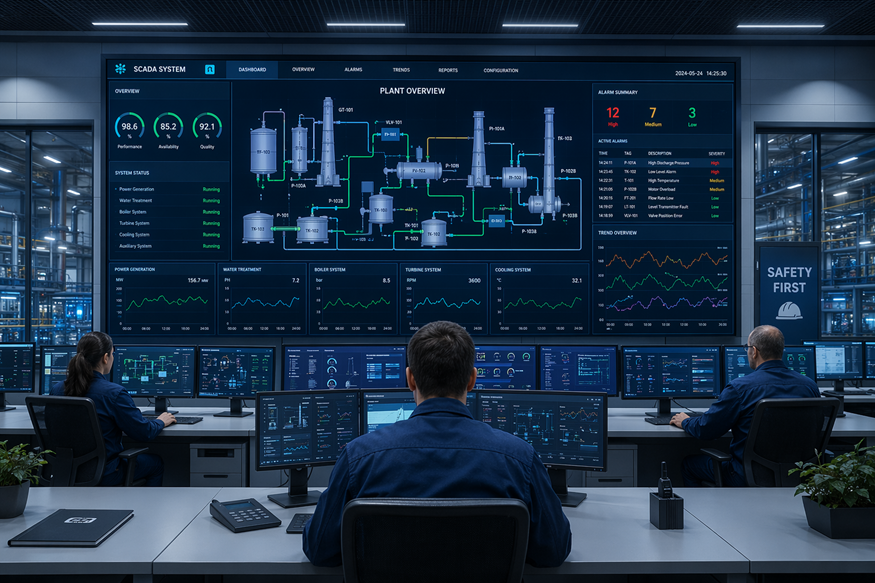
The internet of things has become a major part of Industrial Automation Solutions because it connects machines, sensors, and software across the plant. With IIoT, equipment can share real time updates about performance, output, and system conditions instead of waiting for manual checks.
Smart sensors are the foundation of that connection. They support data collection by detecting temperature, pressure, motion, position, and other operating conditions. Controllers then use that information to make decisions, trigger responses, or alert operators before problems grow into significant downtime.
IIoT and smart sensors help by:
- Improving real time visibility across machines and the production line
- Supporting better data collection for maintenance and process decisions
That means your team gets more accurate information, faster issue detection, and stronger control over everyday operations.
Essential Services Offered by Industrial Automation Providers
Industrial automation providers do more than sell equipment. They usually offer a range of services that help businesses plan, connect, and maintain automation solutions across the full life of a project.
These automation services often include system design, integration, customization, support, upgrades, and help with industrial control systems. Some also assist with training, workflow improvements, and deployment planning. To understand what you are really paying for, it helps to separate buildout work from long-term support.
Systems integration and customization
Systems integration is the work of connecting machines, software, sensors, and control platforms so they operate as one industrial automation system. Without that step, even strong equipment can behave like isolated tools instead of a coordinated production solution.
Customization matters because every plant has different tasks, layouts, and production demands. A provider may adjust controls, reporting, interfaces, or workflows to match specific tasks on your line. That is especially important in process automation, where timing, sequencing, and data flow must fit your exact operation.
Good systems integration helps reduce disruption during rollout and improves the value of your investment. It also supports better communication between old and new equipment. If your facility handles changing products, unique process steps, or complex scheduling, customization can make the system far more practical to use.
Support, maintenance, and upgrade solutions
After installation, support becomes just as important as the original setup. Automation services often include troubleshooting, routine maintenance, software updates, and repair help. These services keep systems stable and reduce the chance of production interruptions.
Maintenance also affects operational costs. Automated equipment usually has lower ongoing labor-related expense, but advanced systems still need skilled care. Providers may help with inspections, replacement planning, and training so your team can manage equipment more effectively between service visits.
Upgrade solutions matter when your production changes or your existing setup starts limiting output. A provider can improve performance, expand capacity, or connect new tools without rebuilding everything from scratch. That approach helps control costs while lowering the risk of significant downtime during future changes.
Conclusion
In conclusion, embracing innovative industrial automation solutions is not just a trend; it’s a necessity for businesses looking to thrive in today's competitive landscape. By understanding the key technologies and services that define modern automation, companies can significantly enhance their operational efficiency and productivity. From robotics to the Industrial Internet of Things, the possibilities are endless. Remember that selecting the right automation provider is crucial to ensuring that your business maximizes the potential of these technologies. Start your journey towards transformation today, and discover how these solutions can elevate your operations to new heights. For personalized guidance, reach out to us for a free consultation!
Frequently Asked Questions
What factors should a company consider when choosing an industrial automation provider?
A company should look at its specific needs, current production process, system complexity, and budget. The right industrial automation provider should match the facility’s goals, explain the initial investment clearly, and offer services that fit both current operations and future expansion plans.
How do automation systems integrators support industrial projects?
Automation systems integrators connect machines, software, sensors, and controls so they work together during automation projects. They support process automation by reducing compatibility issues, improving setup quality, and helping facilities reach better operational efficiency with less disruption during implementation.
Can you explain what an industrial automation company does in simple terms?
An industrial automation company helps businesses use machines, software, and control systems to run industrial processes with less human intervention. It can improve how a production line works by making tasks faster, more consistent, and easier to monitor across day-to-day operations.
You might also like