Industrial Automation Solutions: Trends to Watch in 2024
Industrial Automation Solutions: Trends to Watch in 2024
Key Highlights
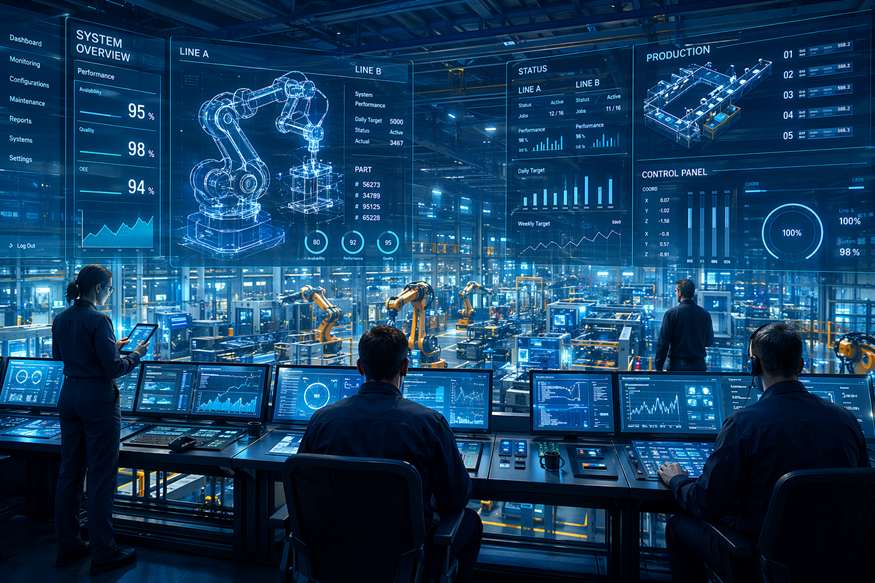
- Industrial automation uses connected control systems to run production with less manual effort.
- Modern Industrial Automation Solutions combine software, sensors, and industrial robots for faster output.
- Artificial intelligence and machine learning are improving decisions, maintenance, and process accuracy.
- The internet of things links machines and devices for better visibility and real-time action.
- New tools like cobots, edge computing, and digital twins are shaping smarter factories.
- These trends help manufacturers improve safety, quality, flexibility, and cost control.
Introduction
Industrial automation is changing how you manage the manufacturing process from start to finish. Instead of depending heavily on manual work, businesses now use Industrial Automation Solutions such as sensors, software, robots, and controllers to keep operations moving with better speed and consistency. That shift matters in 2024 because manufacturers face pressure to improve quality, reduce waste, and stay flexible. If you want a clearer view of what is next, the trends below show where industrial automation is headed.
Industrial Automation Solutions: Top Trends to Watch in 2024
Industrial automation relies on Industrial Automation Solutions that connect sensors, software, machines, and control systems into a feedback loop. Sensors detect conditions, controllers process data, and actuators or robots respond. This helps industrial automation run industrial processes with less human involvement and more consistent results.
In 2024, the industrial automation industry is pushing ahead with new technologies that improve visibility, speed, and flexibility. These trends matter because they shape the future of industrial automation, from smarter decisions to safer operations. Let’s look at the developments having the biggest impact right now.
1. Artificial Intelligence and Machine Learning Integration
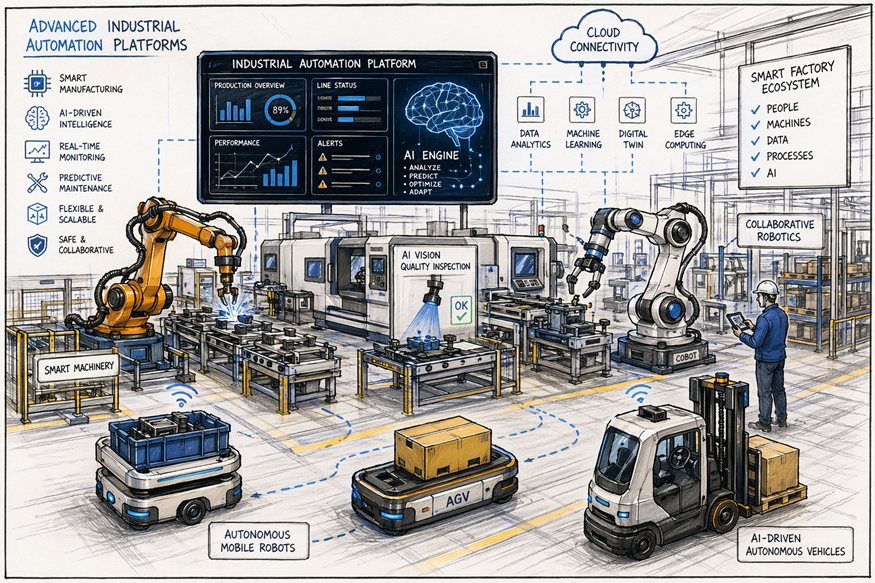
Artificial intelligence is becoming a practical part of Industrial Automation Solutions, not just a future concept. In industrial settings, AI helps systems detect patterns, improve object detection, and support better decisions during production. When paired with strong control systems, it can respond faster than manual processes.
Machine learning adds even more value because it learns from process data over time. That means systems can adjust to changing conditions, improve accuracy, and support better scheduling and maintenance planning. Data analytics is what makes that possible. It turns large volumes of operating information into useful actions.
You may also wonder which companies lead this space. The compiled information points to names such as Rockwell Automation and other industrial automation companies that build advanced platforms, while firms developing AI-driven vehicles and robotics are also pushing the market forward. The real leaders are the ones combining intelligence with reliable control.
2. Industrial Internet of Things (IIoT) Expansion
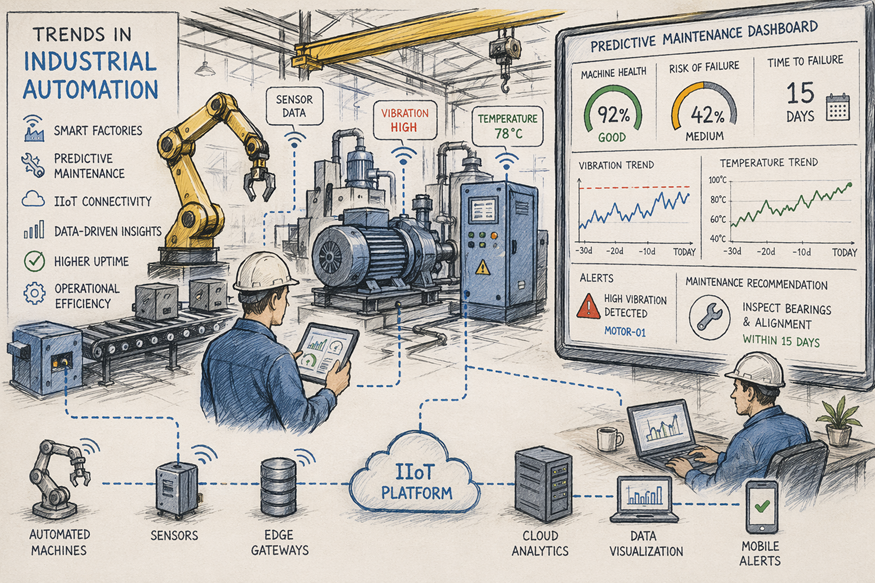
The internet of things is expanding across factories because connected equipment gives you a clearer picture of what is happening at every stage. IIoT devices gather signals from machines, lines, and material flow. Those devices then share information through communication networks that support faster decisions.
This matters because industrial automation works best when machines can monitor conditions and react in real time. Instead of waiting for a problem to become obvious, connected systems can flag issues early, track throughput, and improve coordination across the floor. That helps reduce waste and tighten production control.
So how do industrial automation solutions improve productivity and efficiency? They reduce delays, support better data accuracy, and keep processes running with fewer interruptions. When equipment, software, and operators all see the same live information, you can move faster and make stronger day-to-day decisions.
3. Edge Computing for Real-Time Processing
Edge computing is gaining attention because it handles process data closer to where work happens. Instead of sending every signal elsewhere first, systems can analyze information on or near the machine. That speeds up responses and supports real time control in busy production environments.
For industrial processes, that faster response can make a real difference. Machines can adjust quickly, detect issues sooner, and keep operations stable without delays. In settings where timing matters, edge computing strengthens Industrial Automation Solutions by helping them react right away to changing conditions.
What types of automation technologies fit here? The compiled information highlights programmable automation, flexible automation, integrated automation, PLC-based control, robotics, sensors, and connected software. Edge computing does not replace those tools. It enhances them by making industrial automation more responsive, especially where quick decisions are critical.
4. Advanced Robotics and Collaborative Robots (Cobots)
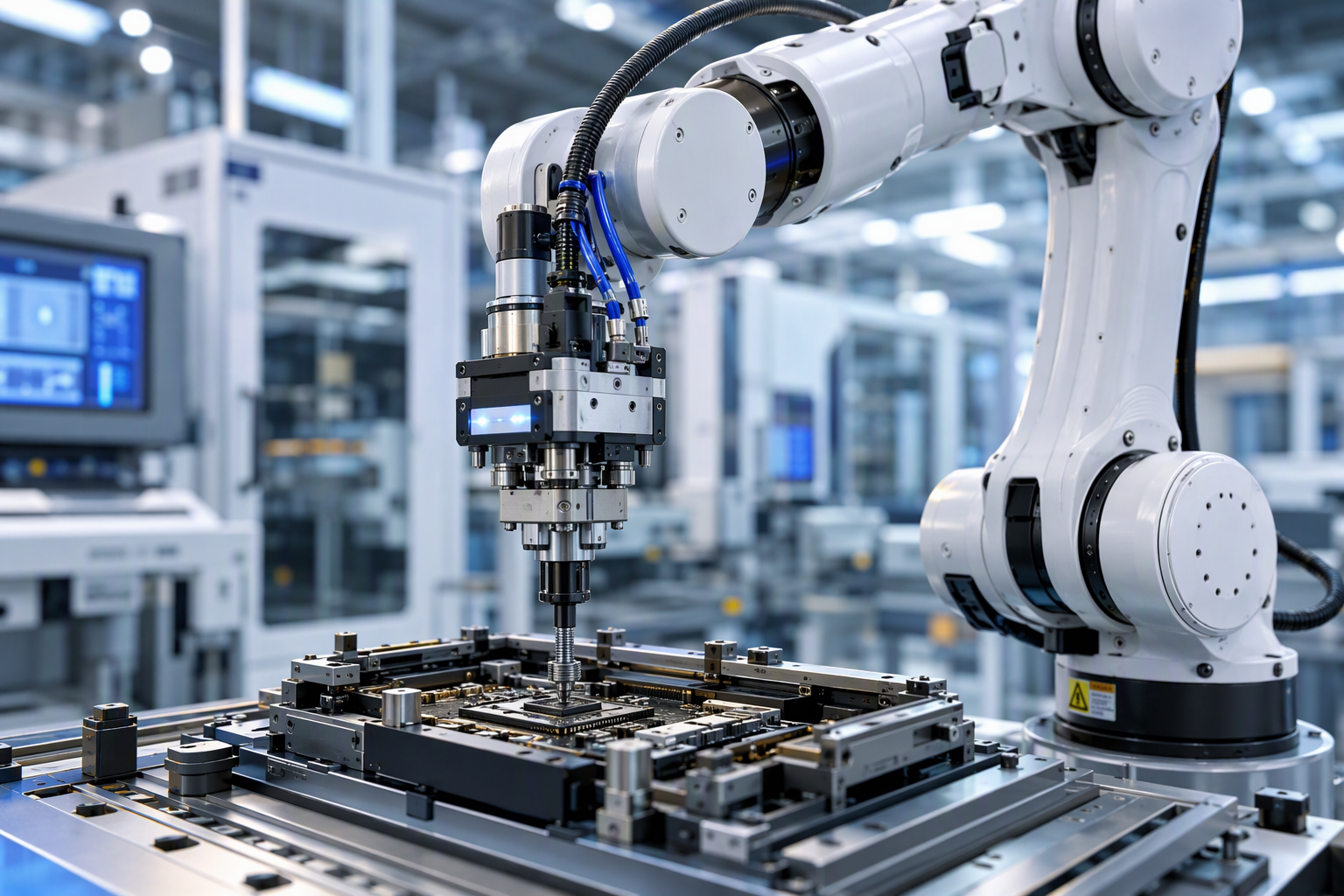
Advanced robotics remain one of the clearest signs of change in manufacturing. Industrial robots already handle welding, painting, assembly, and material movement with strong precision. In 2024, collaborative robots are becoming even more important because they are designed to work alongside people instead of fully replacing human intervention.
Cobots are especially useful when you need support for repetitive tasks that cause fatigue or slow down the line. They help teams stay productive while shifting human labor toward higher-value work. This is why they fit well in flexible automation and smart factories.
Common industrial automation systems used in factories include:
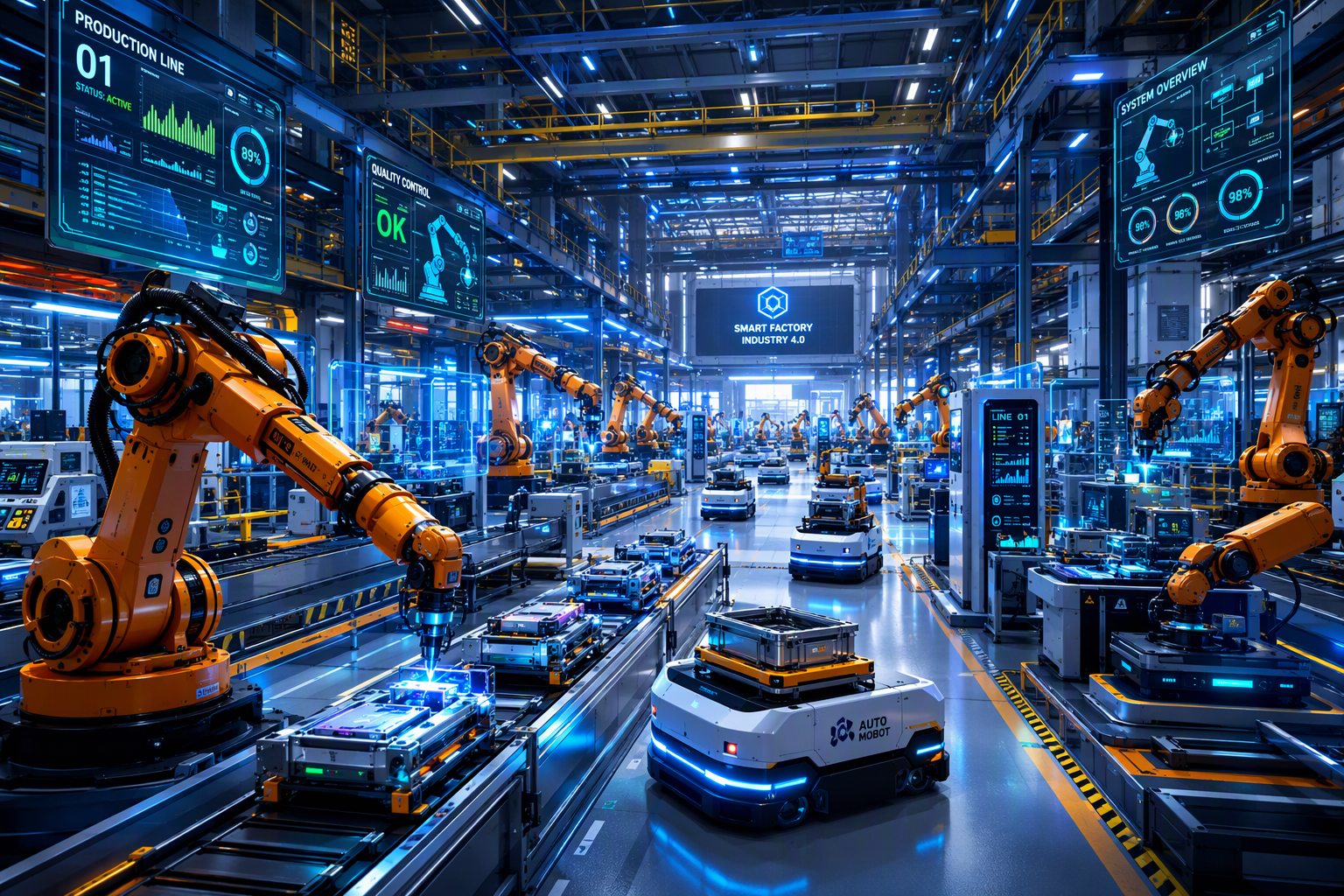
- Robotic arms on an assembly line for welding, painting, and part installation
- Cobots that assist workers with repetitive tasks and support safer workflows
- Autonomous mobile robots and AGVs for warehouse and material handling
- PLC-driven equipment that controls machines, sensors, and production sequences
5. Predictive Maintenance Powered by Data Analytics
Predictive maintenance is becoming a major focus because it helps you fix problems before they stop production. Instead of waiting for equipment to fail, an automation system can use data analytics to track performance, detect abnormal behavior, and signal when service may be needed.
That approach supports stronger control systems and longer equipment life. It also helps reduce unplanned shutdowns, which are expensive and disruptive. When machines stay in better condition, operations become more stable, and companies can also support efficient energy use by avoiding poorly performing equipment.
There are challenges, though. Businesses often face high initial costs, training needs, and ongoing technical support demands when implementing industrial automation. Still, predictive maintenance helps offset those concerns over time because it lowers the impact of breakdowns and improves the return you get from connected machinery.
6. Cybersecurity Enhancements for Industrial Systems
As factories become more connected, cybersecurity is no longer optional. Industrial control systems depend on steady data flow, trusted devices, and protected communication. If a system is exposed, bad actors can disrupt control signals, interfere with operations, or create costly downtime.
That is why cybersecurity enhancements are now central to automation solutions. Businesses need stronger protections around networks, devices, and software that support SCADA systems, PLCs, and connected equipment. The more integrated your environment becomes, the more important it is to secure every point where data enters or moves.
What should you look for in industrial automation solutions? Based on the compiled information, key features include reliable control systems, strong feedback and monitoring, accurate data collection, real-time visibility, and secure communication between devices. In today’s market, solid cybersecurity belongs on that list from the start.
7. Digital Twins and Virtual Commissioning
Digital twins are virtual replicas of physical assets or workflows. They let you test ideas in a digital setting before making changes on the floor. That makes them useful for process automation, especially when you want to improve layouts, equipment settings, or product flow without adding risk.
Simulation is the core value here. With digital twins, teams can explore different scenarios, support quality control, and refine product design decisions before launch. Virtual commissioning also helps confirm whether a new setup will work as expected, which can reduce startup problems and save time.
Factory automation often centers on discrete steps such as assembly, packaging, or material handling. Process automation in other industries may focus more on continuous flows, formulas, or batch-based operations. Digital twins can support both, but the way they model movement, timing, and controls will differ by environment.
8. Cloud-Based Automation Platforms
Cloud-based automation is growing because businesses want more visibility across sites, teams, and systems. These platforms can help collect production information, support monitoring, and improve coordination without keeping every tool isolated at one location. For industrial automation, that broader view is a major advantage.
This type of automation technology works best when communication networks are reliable and data is organized in a useful way. With stronger access to operating information, businesses can track performance, compare sites, and support better decisions. It also helps managers and engineers stay aligned without relying on scattered reports.
How can you choose the right provider? Start with fit. The best partner will understand your production goals, recommend suitable control systems and automation solutions, and offer the support needed for setup, maintenance, and training. A provider should help you improve operations, not just sell equipment.
Key Benefits of Industrial Automation Solutions in Manufacturing
The main benefits of industrial automation in the manufacturing process are clear: higher output, better consistency, safer operations, and stronger flexibility. Automation solutions reduce dependence on manual labor for repetitive work and help plants run longer with fewer interruptions.
You also gain cost savings over time, more accurate production information, and better product quality. Those benefits of automation matter even more when labor shortages, quality demands, and downtime pressures are already affecting performance. The next sections break down these gains in a more practical way.
Increased Productivity and Operational Efficiency
If your goal is higher productivity, automation is one of the most direct ways to get there. Machines can run longer hours, repeat tasks with steady precision, and keep output moving without the fatigue that affects manual work. That leads to better operational efficiency across the plant.
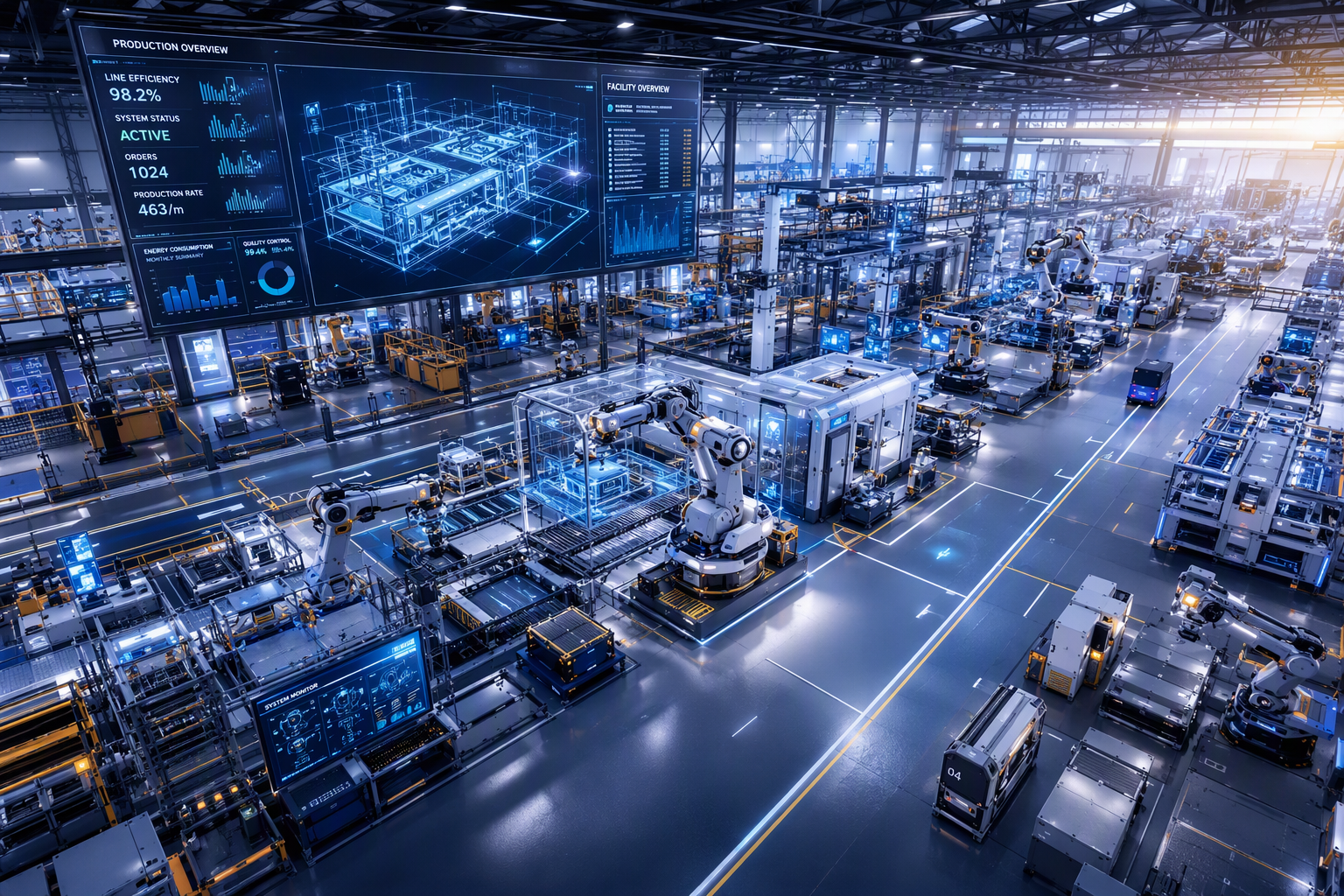
Smart factories take this further by connecting equipment, software, and data into one working system. Instead of isolated machines, you get coordinated production processes that react faster and create fewer bottlenecks. This helps teams spend less time correcting issues and more time improving performance.
Industrial automation solutions improve productivity and efficiency by:
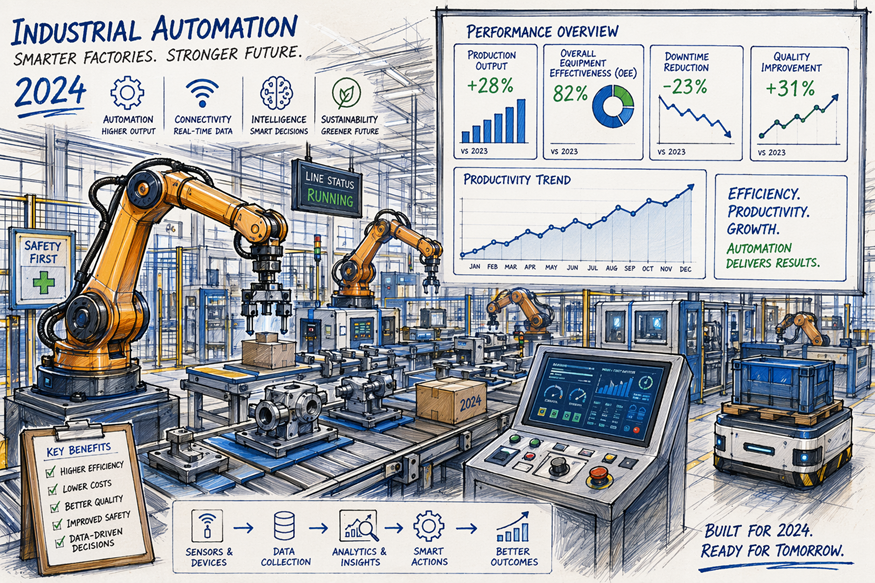
- Reducing delays in repetitive tasks across the production line
- Supporting longer operating hours with fewer interruptions
- Lowering waste and rework, which improves cost savings
- Giving teams better data so they can act faster and plan better
Improved Product Quality and Consistency
One of the strongest reasons to invest in automation solutions is better product quality. Automated equipment performs the same motion, sequence, or measurement again and again with far less variation. That makes it easier to hold standards across long production runs.
Quality control also becomes more reliable when data is gathered automatically. Instead of relying only on manual checks, systems can monitor conditions throughout industrial processes and identify issues much earlier. That helps reduce scrap, improve consistency, and protect customer expectations.
So what features matter most here? Look for solutions with accurate sensing, dependable control systems, real-time feedback, and solid process visibility. These features help reduce human errors and support stable output. When quality matters every shift, consistency is just as important as speed.
Enhanced Workplace Safety and Reduced Downtime
Industrial automation improves workplace safety by moving dangerous or physically demanding work away from human labor. Robots and automated machinery can take on tasks in hazardous conditions, around moving vehicles, or in places where repetitive strain is a concern. That creates a safer environment for your team.
Another major gain is reduced downtime. Automation systems can run continuously, react quickly to changes, and support maintenance planning before failures happen. That lowers the chance of long shutdowns that slow output and hurt delivery schedules.
Even so, implementation comes with challenges. Businesses may need to manage upfront cost, technical training, and change within the workforce. Yet when safety risks and lost production are already hurting performance, industrial automation often becomes the practical answer rather than an optional upgrade.
Leading Technologies Transforming Industrial Automation
The future of industrial automation depends on the technologies that keep machines connected, controlled, and adaptable. Today’s leading automation technologies include PLCs, SCADA systems, industrial robots, autonomous vehicles, sensors, and integrated software that turn process data into action.
These tools support different production needs, from mass production to flexible automation and batch production. They also answer a common question: what types of automation technologies are available for industrial applications? The next two sections cover two of the most important categories in practical terms.
Programmable Logic Controllers (PLCs) and SCADA Systems
Programmable logic controllers are a core part of industrial automation because they receive signals from sensors, make decisions, and send commands to machines. They are especially useful in programmable automation, where equipment needs to follow set logic with speed and consistency.
SCADA systems add another layer by giving operators visibility into production and equipment status. They help collect process data, monitor system behavior, and support quick responses when something changes. Together, PLCs and SCADA systems are among the most common control systems used in factories.
Here is a simple comparison:
| Technology | Main Role in Industrial Automation | Typical |
|---|---|---|
| Programmable Logic Controllers | Execute logic, receive signals, and control machine actions | Assembly equipment, conveyors, machine control |
| SCADA Systems | Monitor operations, display data, and support oversight | Plant-wide visibility, alarms, performance tracking |
Autonomous Mobile Robots and AGVs
Autonomous mobile robots and AGVs are changing material handling inside factories and warehouses. These industrial robots move products, parts, or supplies between stations with limited human direction. That makes them useful for repetitive tasks that do not require constant judgment from operators.
So how do these automation solutions work? They use software, sensors, and communication systems to follow routes, react to conditions, and complete assigned transport jobs. In a broader automation setup, they connect with other systems that manage traffic, workflow, and production timing.
Their value shows up in production processes where material movement slows everything else down. By automating transport, businesses can free up workers for higher-value tasks, improve flow between stations, and support safer operations. In facilities dealing with labor shortages, that can be a very practical win.
Conclusion
As we look ahead to 2024, the landscape of industrial automation solutions continues to evolve rapidly. Embracing trends like AI integration, IIoT expansion, and advanced robotics can significantly enhance productivity and operational efficiency while ensuring workplace safety. By staying informed about these developments, businesses can position themselves to leverage technology effectively and maintain a competitive edge in the market. The future is bright for those willing to adapt and innovate. If you're ready to explore how these trends can benefit your operations, don't hesitate to reach out for a free trial or consultation and take the first step toward transforming your industrial processes.
Frequently Asked Questions
What are the main challenges businesses face when implementing industrial automation solutions?
The biggest challenges in industrial automation implementation are high upfront cost, employee training, technical support needs, and cybersecurity risk. Some businesses also worry about how automation solutions will affect human operators. Still, long-term cost savings, better uptime, and stronger consistency often justify the investment.
How can a company choose the right industrial automation solution provider?
Factory automation usually focuses on discrete tasks along a production line, such as assembly, packaging, or material handling. Process automation often manages continuous flows or batch production in other settings. Both are important types of industrial automation, but they differ in how equipment, timing, and workflows are controlled.
You might also like