Introduction to Robotics: Understanding Key Subsystems Today
Key Highlights
- The field of robotics integrates computer science, mechanical engineering, and technology to create machines that assist humans. Originating in the early 20th century, robotics began with automated machines in manufacturing and gradually evolved through innovations in mechanical engineering and computer science. Over time, the field of robotics has grown to encompass complex systems with advanced sensing, actuation, and artificial intelligence capabilities. Understanding the main components, such as power, actuation, and sensing, is key to grasping how robots function.
- Understanding the main components, such as power, actuation, and sensing, is key to grasping how robots function.
- Artificial intelligence and machine learning are expanding robotic capabilities, leading to new applications across many industries.
- Robots are improving efficiency, productivity, and safety in sectors from manufacturing to healthcare.
- Effective control systems are essential for managing robot actions, from simple repetitive tasks to complex decision-making.
Introduction
Welcome to the exciting world of robotics! From the cars we drive to the devices in our homes, robots are becoming more integrated into modern society than ever before. These intelligent machines are no longer just concepts from science fiction; they are actively shaping our daily life, making tasks easier, safer, and more efficient. This article will guide you through the fundamental building blocks of robotics, exploring the key subsystems that bring these amazing machines to life.
The Importance of Robotics in Today’s World
The role of robotics in today's world is growing at an incredible pace. Thanks to advancements in artificial intelligence, intelligent machines are capable of performing complex tasks that were once reserved for humans. This has opened the door for new applications in almost every industry, from manufacturing and healthcare to agriculture and disaster response. If you are a beginner interested in learning more about robotics, some recommended resources include the book "Robotics, Vision and Control" by Peter Corke, "Robotics: Modelling, Planning and Control" by Siciliano et al., and online platforms like Coursera and MIT OpenCourseWare, which offer introductory robotics courses. These resources provide a solid foundation for understanding both the theory and practical applications of robotics.
This article will break down what makes these machines so vital. We will explore how robots contribute to innovation, improve safety, and what core components allow them to function.
Defining Robotics and Its Relevance
So, what is robotics and why is it important in today's world? Robotics is an interdisciplinary field that combines technology, computer science, and engineering to design and build machines that can replicate or substitute human actions. These machines, or robots, are programmed to handle a variety of functions, especially repetitive tasks that require high precision.
The integration of artificial intelligence has propelled the field forward, allowing robots to learn, adapt, and make decisions. This capability has expanded their use far beyond the assembly line, where industrial robots have long been a staple. Now, robots can understand human language, interpret emotions, and operate with increasing autonomy.
The future of robotics promises even greater integration into our lives. As these technologies continue to evolve, their relevance in making work safer, boosting productivity, and solving complex societal challenges will only grow. From assisting in surgery to exploring other planets, the possibilities are nearly endless.
Core Contributions of Robotics Across Industries
Robotics has become a game-changer across numerous industries by automating processes and enhancing human capabilities. Industrial robots have revolutionized manufacturing, while mobile robots are streamlining logistics in warehouses. What are some common real-world applications of robotics? You can find them everywhere.
In healthcare, robots assist with surgeries, transport medical supplies, and help dispense medications, allowing healthcare workers to focus more on patient care. The use of machine learning algorithms helps these machines perform with incredible precision. Key contributions include:
- Manufacturing: Assembling products, sorting items, and maintaining factory equipment.
- Healthcare: Aiding in complex surgeries, managing hospital logistics, and transporting supplies.
- Agriculture: Automating tasks like planting, harvesting, and pest management.
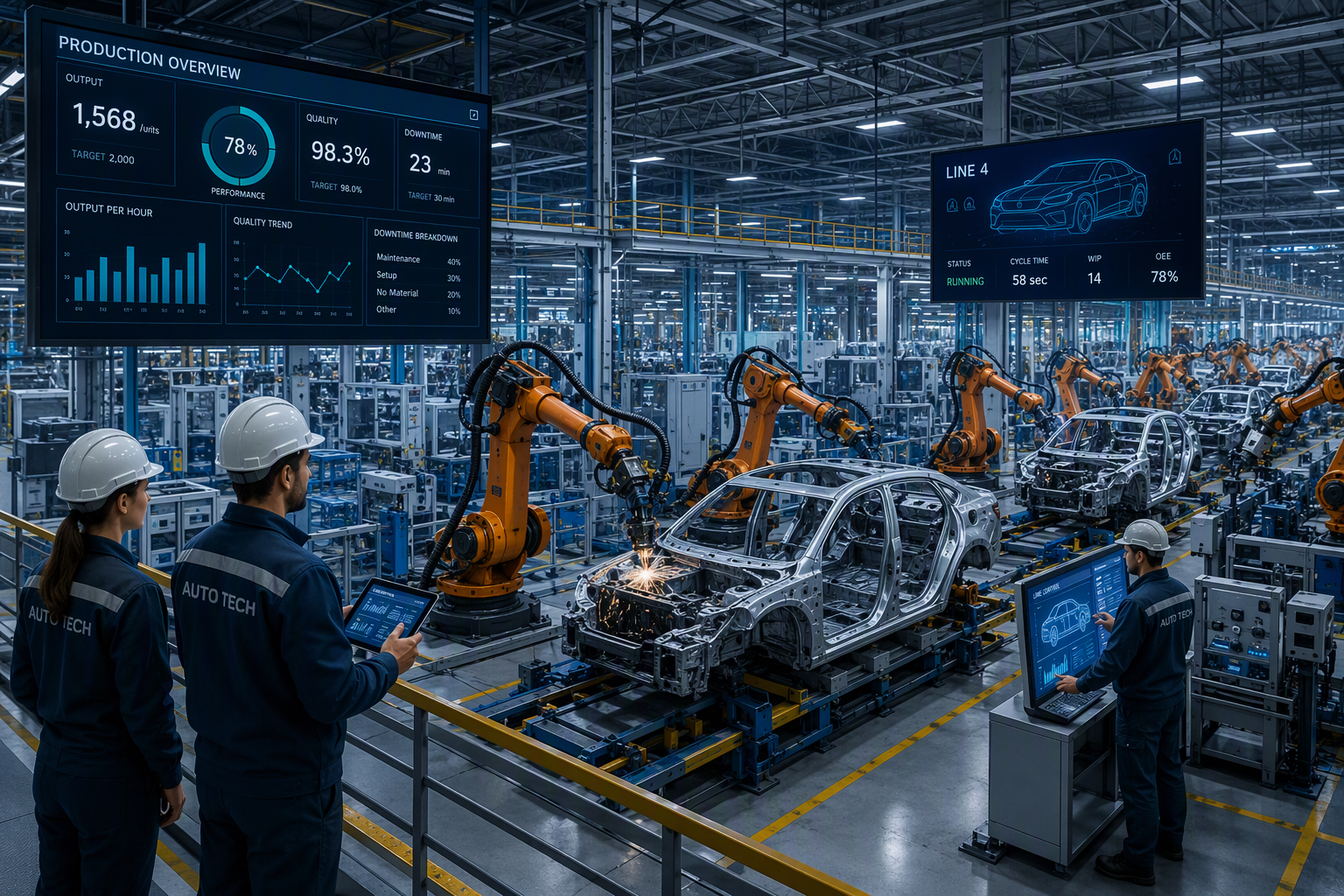
A primary benefit of integrating robots is improved workplace safety. By taking over dangerous jobs, robots protect human workers from hazardous environments and physically demanding tasks, leading to fewer injuries and a more efficient workflow.
Why Robotics Is Vital for Innovation and Society
Robotics is a powerful engine for innovation, pushing the boundaries of what technology can achieve. By creating intelligent systems that can perform tasks with greater speed and accuracy, we open doors to solving some of society's most pressing challenges. Why is robotics vital for society? It drives progress in fields from medicine to space exploration.
The integration of artificial intelligence has also led to the development of social robots designed for companionship, education, and assistance for people with disabilities. However, this progress brings ethical considerations to the forefront. Issues like data privacy, security risks, and the potential for job displacement require careful thought and planning to ensure a harmonious coexistence.
Ultimately, robotics presents both opportunities and challenges. As we continue to develop more advanced machines, it's essential to address the societal impact and establish ethical standards. Balancing innovation with responsibility will be key to harnessing the full potential of robotics for a better future
Main Components of a Basic Robot
Every robot, no matter how simple or complex, is built from a set of core components. These subsystems work together to enable a robot to move, sense its environment, and perform its designated tasks. Understanding this robotic hardware is the first step toward appreciating the ingenuity behind these machines.
From the mechanical structures that form their bodies to the advanced sensors that act as their eyes and ears, the integration of robotics relies on these fundamental parts. In the following sections, we will explore each of these subsystems in more detail.
Overview of Robotic Subsystems
What are the main components that make up a basic robot? Robotic systems are composed of several key subsystems that must work in harmony. These include a power source, actuators for movement, sensors for perception, a manipulator for interaction, and a way to move from one place to another. A central processing unit acts as the brain, coordinating everything.
These control systems take input from sensors and send commands to the actuators, allowing the robot to perform its functions. The design of these components often draws heavily from fields like mechanical engineering and electronics. For example, the power subsystem is critical, as it supplies the energy needed for all other parts to operate.
Each subsystem plays a unique and indispensable role. Here is a quick breakdown of their functions:
| Subsystem | Role |
|---|---|
| Power | Provides the necessary energy for the robot to operate. |
| Actuation | Converts energy into physical motion, enabling movement. |
| Sensing | Gathers information about the robot's environment and internal state. |
| Manipulation | Allows the robot to interact with objects using end effectors. |
| Locomotion | Enables the robot to move from one location to another. |
| Processing | Acts as the robot's brain, making decisions and controlling actions. |
Mechanical Structures and Engineering Foundations
The physical body of a robot is a product of mechanical engineering. This discipline provides the foundation for designing and building the robot's frame, joints, and limbs. How does mechanical engineering relate to the field of robotics? It determines the robot's physical capabilities, such as its strength, stability, and range of motion.
A key concept in this area is degrees of freedom, which refers to the number of ways a robot or its parts can move. For instance, a simple robotic arm might have several joints, each providing a degree of freedom that allows it to pivot or extend. This mechanical design is what allows the robot to position its tools or grippers accurately.
While computer science provides the intelligence, mechanical engineering gives the robot its physical form and function. The synergy between these fields is what makes modern robotic technologies possible, enabling the creation of everything from stationary industrial arms to dynamic humanoid robots.
End Effectors and Grippers in RoboticsIntegration of Electronics, Programming, and Mechanics
A robot arm is only as useful as the tool at its end. In robotics, this tool is called an end effector. It is the part of the robot that interacts directly with objects in the environment. Think of it as the robot's hand. The end effector is what allows a robot to pick up parts, weld seams, or handle delicate materials.
One of the most common types of end effectors is the gripper. As the name suggests, grippers are designed to grasp and hold objects. However, there are many different ways to grip something. We’ll explore several distinct types of robotic grippers and other end effectors next.
Integration of Electronics, Programming, and Mechanics
How does robotics combine programming, electronics, and mechanics? The true power of robotics lies in the seamless integration of these three distinct fields. Mechanics provides the physical structure, electronics supply the power and control circuits, and programming gives the robot its "brain" to execute tasks and make decisions.
This multidisciplinary approach is essential for creating functional and intelligent machines. The electronics act as the nervous system, connecting the mechanical parts to the central processor where the programming resides. This allows a robot to receive sensory input, process it, and respond with physical actions.
Consider these practical examples of integration in robotics:
- A robotic arm: Mechanics form the arm's joints and links, electronics power the motors in those joints, and programming calculates the precise movements needed to grab an object.
An autonomous vacuum:
Mechanics include the wheels and brushes, electronics manage the sensors and battery, and programming helps it navigate a room without bumping into furniture.
Exploring Robotic Subsystems: Power
Just like any machine, a robot needs energy to function. The power subsystem is the heart of a robot, providing the electricity needed to run its motors, sensors, and processors. Without a reliable power source, even the most advanced robot is just a static sculpture. The choice of power source can significantly impact a robot's capabilities, including how long it can operate and where it can be deployed.
From common batteries to more advanced options like solar panels and fuel cells, the power subsystem must be carefully selected to meet the demands of the robot's intended tasks. This is true across a variety of sectors, whether it's a warehouse robot needing to run all day or a space rover that relies on the sun. We’ll now look at this crucial component in more detail.
Role of Power in Robotic Systems
How do robots get their power? The power subsystem is responsible for supplying and managing the energy that a robot needs to operate. This involves more than just a battery; it includes the entire system for storing, converting, and distributing electrical energy to all the other components, from motors to the central computer.
The effectiveness of this subsystem directly influences a robot's performance. The choice of energy sources determines a robot's operational duration, its payload capacity, and the environments it can work in. For example, a heavy-duty industrial robot might be plugged into the grid, while a mobile exploration robot might need a long-lasting, portable power source.
As robotic systems find new applications in remote or challenging locations, the development of efficient and reliable power solutions becomes even more critical. Innovations in energy storage and generation are constantly expanding what is possible for robotic deployment and autonomy.
Example Power Subsystems: Batteries, Solar Panels, Fuel Cells
Robots use various power sources depending on their design and purpose. The most common solution is batteries, especially for mobile robots, due to their portability and reusability. However, other technologies offer unique advantages for specific applications.
Solar panels are an excellent option for robots that operate outdoors for extended periods, such as agricultural bots or planetary rovers. They convert sunlight into electricity, allowing the robot to recharge itself without human intervention. Fuel cells, which generate electricity through a chemical reaction, can offer longer runtimes than batteries and are being explored for various robotic uses.
Here are some examples of power subsystems and their strengths:
- Batteries: Highly portable and rechargeable, making them ideal for most mobile robots, from household vacuums to warehouse assistants.
- Solar Panels: Provide a renewable energy source for long-term, autonomous operation in outdoor environments.
- Fuel Cells: Offer high energy density for extended missions where recharging or refueling is infrequent.
Understanding Actuation Subsystems
If the power subsystem is the heart, the actuation subsystem is the muscle of a robot. Actuators are the components responsible for moving and controlling a robot's mechanisms. They convert stored energy—typically electrical, pneumatic, or hydraulic—into physical motion. This is what allows a robotic arm to lift an object, a wheel to turn, or a leg to take a step.
Different types of actuators, such as electric motors, pneumatic actuators, and hydraulic systems, offer distinct advantages in terms of strength, speed, and precision. The choice of actuator is a critical part of designing robotic hardware that can perform effectively, especially in dynamic environments where a robot must adapt its movements in real-time.
How Robots Move: Actuation Explained
How do robots achieve movement? The answer lies in actuation. In robotics, actuation is the process of generating motion by converting energy into mechanical force. This is accomplished by components called actuators, which are the "muscles" that drive a robot's joints and limbs.
The most common actuators are electric motors, which use electricity to create rotational motion. This rotation can then be used to turn wheels or move the joints of a robotic arm. Other types, like pneumatic actuators, use compressed air to produce linear or rotary motion, often providing quick movements.
The principles of mechanical engineering are fundamental to designing actuation systems. Engineers must consider factors like torque, speed, and precision to select the right type of actuator for a given task. This ensures the robot can move with the required strength and control to accomplish its goals.
Examples: Motors, Pneumatic Actuators, Hydraulic Actuators
Actuators come in several forms, each suited for different tasks. Electric motors are the most widespread, found in everything from small hobby robots to large industrial machines. They offer excellent control and precision.
Pneumatic actuators, powered by compressed air, are valued for their speed and relatively low cost. They are often used in "pick and place" industrial robots where quick, repetitive motions are needed. For tasks requiring immense strength, hydraulic actuators are the top choice. They use pressurized fluid to generate massive force, making them perfect for heavy-lifting applications in construction or manufacturing.
Here’s a look at their primary applications:
- Electric Motors: Used for precise movements in mobile robots, collaborative robots, and robotic arms.
- Pneumatic Actuators: Ideal for fast, repetitive tasks in automated assembly lines.
- Hydraulic Actuators: Employed in heavy-duty industrial robots that need to lift and move very large loads.
Sensing Subsystems in Robotics
For a robot to operate intelligently and safely, it must be able to perceive the world around it. The sensing subsystem gives a robot this ability, using advanced sensors to gather data about its environment and its own internal state. These sensors are the robot’s eyes, ears, and sense of touch, providing the crucial information needed for navigation, interaction, and decision-making.
The integration of AI allows robots to interpret this sensory data in sophisticated ways, enabling them to recognize objects, avoid obstacles, and adapt to changing conditions. In applications like disaster response, effective sensors can mean the difference between success and failure, allowing a robot to navigate rubble or detect signs of life.
Sensors and Their Functions in Robots
How do robots sense the world around them? They do so using a variety of sensors that mimic and, in some cases, exceed human senses. These advanced sensors collect data—like light, sound, distance, and temperature—which is then sent to the robot's processing unit for analysis. This process is fundamental to a robot's ability to interact with its surroundings.
With the help of AI, a robot can interpret this data to build a map of its environment, identify objects, and detect changes. For autonomous mobile robots, this sensory input is essential for navigating without bumping into walls or people. The ability to "see" and "feel" allows a robot to perform its tasks safely and effectively.
In real-world applications, sensors enable robots to do everything from inspecting infrastructure for cracks to assisting in delicate surgical procedures. The type and quality of a robot's sensors directly determine its level of autonomy and its capability to handle complex, unstructured environments.
Examples: Infrared Sensors, Ultrasonic Sensors, Cameras
Robots are equipped with a wide array of sensors to perceive their environment. Cameras are one of the most common, providing rich visual data that, with the integration of AI, allows intelligent machines to recognize faces, read text, and identify objects.
Infrared (IR) sensors are often used for simple obstacle detection or for tracking heat signatures. Many robotic vacuum cleaners use IR sensors to avoid falling down stairs. Ultrasonic sensors work similarly but use sound waves instead of light, emitting a high-frequency chirp and measuring the time it takes to bounce back to calculate distance.
Here are some examples of common sensor types and their uses:
- Cameras: Provide visual data for object recognition, navigation, and inspection in nearly all types of robots.
- Infrared (IR) Sensors: Used for proximity detection, line following, and thermal imaging.
- Ultrasonic Sensors: Excellent for measuring distance and detecting obstacles in the path of mobile robots.
Manipulation Subsystems (End Effectors)
The manipulation subsystem is what allows a robot to physically interact with objects in its environment. At the heart of this subsystem is the end effector—the "hand" or tool attached to the end of a robotic arm. This could be anything from simple grippers to complex tools like welders or drills. The end effector is what enables a robot to perform its primary function, whether that's picking up a part, tightening a screw, or painting a car door.
Designing and controlling these end effectors is a key challenge in robotics. The control systems must be incredibly precise to manage the force, orientation, and movement required for complex tasks. As robots are asked to do more, the variety and sophistication of their end effectors continue to grow.
Introduction to Robotic End Effectors
What are robotic end effectors and why are they important? An end effector is the device at the end of a robotic arm that is designed for interaction. Think of it as the robot's hand. Its importance cannot be overstated, as it is the component that directly performs the work, whether it's gripping, lifting, welding, or painting.
The versatility of robots comes from the ability to swap out end effectors. A single robotic arm can perform many different jobs simply by changing its tool. Common examples include grippers for holding objects, drills for making holes, and welding tools for joining metal parts. This adaptability makes robots invaluable in modern manufacturing processes.
These tools must be controlled with high precision to execute tasks correctly. The design of an end effector is tailored to a specific application, ensuring it can handle the required objects or materials with the necessary force and delicacy.
Example Manipulators: Grippers, Suction Cups, Welding Tools
The world of robotic manipulators is vast and varied, with tools designed for nearly every imaginable task. The most common type is grippers, which function like a human hand to grasp and hold objects. They can have two, three, or even five fingers, depending on the complexity of the objects they need to handle.
Suction cups are another popular end effector, particularly for handling flat, smooth surfaces like glass or sheet metal. They use a vacuum to create a secure hold that is gentle yet strong. For more specialized industrial robots, end effectors can be complex tools, such as welding tools that join metal parts on an assembly line with perfect accuracy.
Here are a few examples of manipulators and their uses:
- Grippers: Used in logistics and manufacturing for "pick and place" operations.
- Suction Cups: Ideal for handling fragile items like electronic components or panes of glass.
- Welding Tools: A staple in the automotive industry for assembling car bodies.
Locomotion Subsystems
Mobility is a critical feature for many robots, and the locomotion subsystem is what makes it possible. This subsystem is responsible for moving the robot from one point to another. The method of locomotion—whether it's wheels, legs, or tracks—is chosen based on the environment the robot will operate in. A smooth factory floor calls for a different solution than a rocky, outdoor terrain.
Designing a robust locomotion system is essential for robots that need to navigate dynamic environments. The system must provide stability, maneuverability, and efficiency to ensure the robot can complete its mission. As we'll see, each type of locomotion offers a unique set of advantages and disadvantages.
How Robots Achieve Mobility
How do robots move around in different environments? They achieve locomotion through various mechanical solutions designed to traverse specific surfaces. The goal is to provide stable and efficient movement, whether the robot is performing household chores on a carpeted floor or navigating a cluttered warehouse.
Wheeled locomotion is the most common and efficient method for flat surfaces. It's used in everything from autonomous vehicles to robotic vacuum cleaners. For uneven or soft terrain, tracks—like those on a tank—offer better traction and stability by distributing the robot's weight over a larger area.
Legged locomotion, inspired by animals and humans, is the most complex but also the most versatile. It allows mobile robots to step over obstacles and climb stairs, giving them access to environments that are inaccessible to wheeled or tracked robots.
Locomotion Examples: Wheels, Legs, Tracks
The choice of locomotion directly impacts a robot's ability to navigate its surroundings. Wheels are the simplest and most energy-efficient option for smooth, hard surfaces. They are the standard for most indoor mobile robots, including many industrial robots used in factories and warehouses.
Legs provide the greatest mobility in complex and dynamic environments. Robots with legs can cross gaps, climb stairs, and maneuver over rubble, making them ideal for search and rescue or exploration. However, they are mechanically complex and require sophisticated control software to maintain balance.
Tracks offer a middle ground, providing excellent stability and traction on soft or uneven ground like sand, mud, or snow. They are often used for outdoor robots in agriculture, construction, and military applications.
- Wheels: Best for speed and efficiency on flat surfaces like floors and roads.
- Legs: Offer unparalleled mobility in cluttered and uneven terrain.
- Tracks: Provide superior traction and stability on soft or loose surfaces.
Processing Subsystems and Human-Robot Interaction
The processing unit is the "brain" of the robot, where all the decision-making happens. It takes data from sensors, runs it through software programs, and sends commands to the actuators. Closely related to this is human-robot interaction—the way people communicate with and control these machines.
This can range from a simple joystick to advanced methods like speech recognition or touch interfaces. The effectiveness of a robot often depends on how well it can be controlled and how seamlessly it can work alongside people. We'll now examine the processing unit and the different ways we interact with robots.
Role of Processing Units in Robot Function
What are the main controllers in a robot? The central processing unit (CPU), or controller, is the core of a robot's intelligence. This component, which is essentially a computer, executes the software that governs the robot’s behavior. It processes inputs from sensors, performs calculations, and makes decisions about what actions to take.
For intelligent systems, the processing unit is where AI and machine learning algorithms run. This allows the robot to learn from experience, adapt to new situations, and perform complex decision-making without direct human command. In robotic process automation, the processor executes pre-programmed rules to handle repetitive digital tasks.
The power and speed of the processing unit directly limit a robot's capabilities. A more powerful processor can handle more sensor data and run more complex algorithms, enabling higher levels of autonomy and more sophisticated behaviors.
Human-Robot Interaction Methods: Manual Control, Speech Recognition, Touch Interfaces
How do people interact with robots? Human-robot interaction encompasses all the ways we communicate with and control robotic systems. The methods vary widely depending on the robot's purpose and complexity. The simplest form is direct manual control, such as using a remote or joystick.
More advanced robots, especially social robots, use natural language interfaces. Speech recognition allows a user to give verbal commands, making the interaction feel more intuitive and conversational. Touch interfaces, like tablets or built-in screens, provide a graphical way to program or guide a robot through its tasks.
The goal is to make interaction as seamless as possible. Here are some common methods:
- Manual Control: Using joysticks or remotes for direct operation, common in teleoperated robots.
- Speech Recognition: Allowing users to control a robot with voice commands.
- Touch Interfaces: Using graphical displays for intuitive programming and control.
Navigation Sensors: GPS, Gyroscopes, LIDAR
How do robots navigate and orient themselves? They rely on a suite of specialized navigation sensors. For outdoor navigation, the Global Positioning System (GPS) is a key tool, allowing a robot to determine its location anywhere on Earth with reasonable accuracy.
For orientation and stabilizing movement, gyroscopes are essential. They measure a robot's rotation, helping it maintain balance and travel in a straight line. For detailed mapping and obstacle avoidance, especially indoors, Light Detection and Ranging (LIDAR) is a popular choice. LIDAR uses laser beams to create a precise 3D map of the surroundings, allowing autonomous mobile robots to navigate complex spaces safely.
These sensors work together to give a robot a clear sense of its position and environment.
- GPS: Provides location data for outdoor autonomous vehicles.
- Gyroscopes: Measure orientation and angular velocity to help with balance and direction.
- LIDAR: Creates detailed 3D maps for indoor navigation and obstacle avoidance.
Levels of Autonomy in Robot Control Systems
What does autonomy mean in robotics? Autonomy refers to a robot's ability to perform tasks and make decisions without human intervention. This exists on a spectrum, from robots that are fully remote-controlled to those that can operate completely on their own. The level of autonomy is determined by the sophistication of its control systems and software.
Different classification systems exist, but they generally describe a progression from human-operated to fully autonomous. As a robot gains more autonomy, it can handle more complex situations and find new applications in fields where constant human supervision is impractical.
Achieving higher levels of autonomy raises the importance of ethical standards, as the robot must be trusted to make safe and appropriate decisions. Here is a common breakdown of autonomy levels:
Level 1: Direct Human Control: The robot has no autonomy and is fully teleoperated.
Level 2: Human-Assisted: The robot can perform simple, pre-programmed tasks but requires constant oversight.
Level 3: Supervised Autonomy: The robot can operate on its own for extended periods but a human monitors its progress and can intervene.
Level 4: Full Autonomy: The robot can make its own decisions and complete its mission without any human involvement.
Conclusion
In conclusion, understanding the key subsystems of robotics is essential for grasping how these remarkable machines operate and contribute to various industries. From power sources that fuel their movements to sophisticated sensors that enable them to perceive their surroundings, each component plays a pivotal role in ensuring efficiency and functionality. By exploring actuation systems, manipulation tools, and locomotion methods, we gain insight into the incredible versatility of robots. Moreover, the processing subsystems highlight the importance of human-robot interaction and the advancements in autonomy levels. As you delve deeper into the world of robotics, remember that mastering these concepts can pave the way for innovation and discovery. If you're eager to get started on your robotics journey, don't hesitate to explore hands-on projects and educational resources available today!
Frequently Asked Questions
What skills are essential to learn robotics?
To get started in robotics, a blend of skills is helpful. A strong foundation in math and science is key, along with proficiency in programming. Knowledge of mechanical engineering, computer science, and electronics is also essential. An interest in problem-solving and artificial intelligence will serve you well in this exciting field.
How does mechanical engineering relate to robotics?
Mechanical engineering is fundamental to the field of robotics. It governs the design and construction of a robot's physical structure, including its frame, joints, and manipulators. This discipline ensures the robot is strong, stable, and capable of performing its intended physical tasks, especially in the manufacturing industry.
How are robotics concepts taught in academic courses?
Academic courses in robotics, like those at Stanford University, often combine theory with hands-on projects. Students learn programming, explore the evolution of robotics, and study the integration of robotics subsystems. These courses emphasize a multidisciplinary approach, covering mechanics, electronics, and artificial intelligence to prepare students for real-world challenges.
You might also like