Intro Robotics II: Mastering Degrees of Freedom
Key Highlights
Here are the key takeaways from our exploration of advanced robotics concepts: Degrees of freedom (DoF) are crucial for defining a robot's range of motion and are fundamental to robotic design. In an Intro Robotics II course, students typically cover topics such as advanced kinematics, robot dynamics, control systems, motion planning, sensor integration, and programming for autonomous behaviors. These topics build on foundational principles and equip students with deeper knowledge in robotics.
- Degrees of freedom (DoF) are crucial for defining a robot's range of motion and are fundamental to robotic design.
- Understanding yaw, pitch, and roll is essential for programming movements within 3D space using coordinate frames. Robot arms vary in complexity and DoF, which determines their suitability for specific tasks in manufacturing or research. In Intro Robotics II, student performance is typically assessed through a combination of hands-on lab assignments, coding projects involving coordinate frames, and written exams that test understanding of key concepts such as yaw, pitch, roll, and robot kinematics.
- Robot arms vary in complexity and DoF, which determines their suitability for specific tasks in manufacturing or research.
- End effectors, including various types of grippers, are the tools robots use to interact with their environment.
- Introductory robotics courses build foundational knowledge by exploring sensors, programming, and real-world applications.
Introduction
Welcome to the exciting world of advanced robotics! If you've ever been curious about how robots move and interact with the world so precisely, you're in the right place. This guide builds on introductory concepts to explore the mechanics that give robots their dexterity. We will look at core principles like degrees of freedom, the function of different robot arms, and the specialized tools they use, known as end effectors. Get ready to understand the engineering that brings these amazing machines to life, from their internal sensors to their complex coordinate frames.
Core Concepts of Degrees of Freedom in Robotics
In the field of robotics, "degrees of freedom" (DoF) is a term you'll encounter frequently. It refers to the number of independent ways a robot or its parts can move in three-dimensional space. Each degree of freedom represents a specific axis of motion, like moving forward, rotating, or bending a joint.
Understanding DoF is vital because it directly impacts a robot's capabilities and how it is designed. The more degrees of freedom a robot has, the more complex its movements can be. Next, we’ll explore this concept in more detail and break down the primary types of rotational motion. For those interested in deepening their understanding, recommended resources for studying Intro Robotics II include textbooks such as 'Introduction to Robotics: Mechanics and Control' by John J. Craig and 'Robotics, Vision and Control' by Peter Corke, as well as online lecture materials from MIT OpenCourseWare and Coursera.
Definition and Importance in Robot Design
Degrees of freedom (DoF) define the specific, independent directions a rigid body can move. A simple object in open space has six degrees of freedom: it can move along the X, Y, and Z axes (translation) and rotate around each of those axes (rotation). This concept is fundamental to robotics because it dictates a machine's mobility and dexterity.
When designing a robot, engineers must decide how many degrees of freedom are necessary for its intended tasks. A simple robotic arm on an assembly line might only need three or four DoF to pick and place objects in a limited workspace. In contrast, a more advanced robot designed to mimic a human arm might require seven or more to navigate complex environments.
This decision is a trade-off. More DoF allows for greater flexibility and ability to avoid obstacles, but it also increases the complexity of the control systems and the computational power required. The use of advanced sensors helps the robot process its position and interact precisely with its surroundings, making the management of its degrees of freedom possible. An Intro Robotics II course often builds upon basic concepts by introducing the complex mathematics, like kinematics, needed to control robots with higher DoF.
Distinguishing Between Yaw, Pitch, and Roll Motions
To fully grasp how robots move in 3D space, it's essential to understand the three primary types of rotational movement: yaw, pitch, and roll. These terms describe how an object rotates around its principal axes within its coordinate frames. Imagine an airplane in flight to help visualize these motions.
Each movement corresponds to rotation around a specific axis. Think of these as the fundamental building blocks of a robot's ability to orient itself or its tools.
- Yaw: This is a side-to-side rotation around the vertical (Z) axis. For the airplane, this is like turning left or right while staying level.
- Pitch: This is an up-and-down tilting motion around the transverse (Y) axis. This is like the plane's nose pointing upward to climb or downward to descend.
- Roll: This is a tilting rotation around the longitudinal (X) axis. This is when one of the plane's wings dips lower than the other.
In robotics, programming these motions allows a robot arm to position its end effector at almost any angle. Programming languages like Python or C++ are commonly used in Intro Robotics II to implement algorithms that control these precise movements.
Robot Arms and Their Degrees of Freedom
Robot arms are one of the most common applications you'll see in the world of robotics. From manufacturing plants to space exploration, these manipulators perform tasks with strength and precision. The versatility of a robot arm is directly defined by its degrees of freedom, which dictate the reach and flexibility of its movements.
Each joint in the arm typically adds one degree of freedom, allowing it to pivot or rotate. The combination of these joints enables the arm to position its end effector accurately. We will now compare two different types of robot arms and see how their designs influence their use in the real world.
Comparing Two Different Robot Arm Types
Robot arms come in many shapes and sizes, each designed for specific functions. Their structure and number of degrees of freedom determine their capabilities. Let's compare a simple 3-DoF arm with a more complex 6-DoF articulated arm, which you might work with in a hands-on project in an Intro Robotics II class. A 3-DoF arm, like a Cartesian robot, moves linearly along the X, Y, and Z axes. It's great for simple pick-and-place tasks on a flat plane.
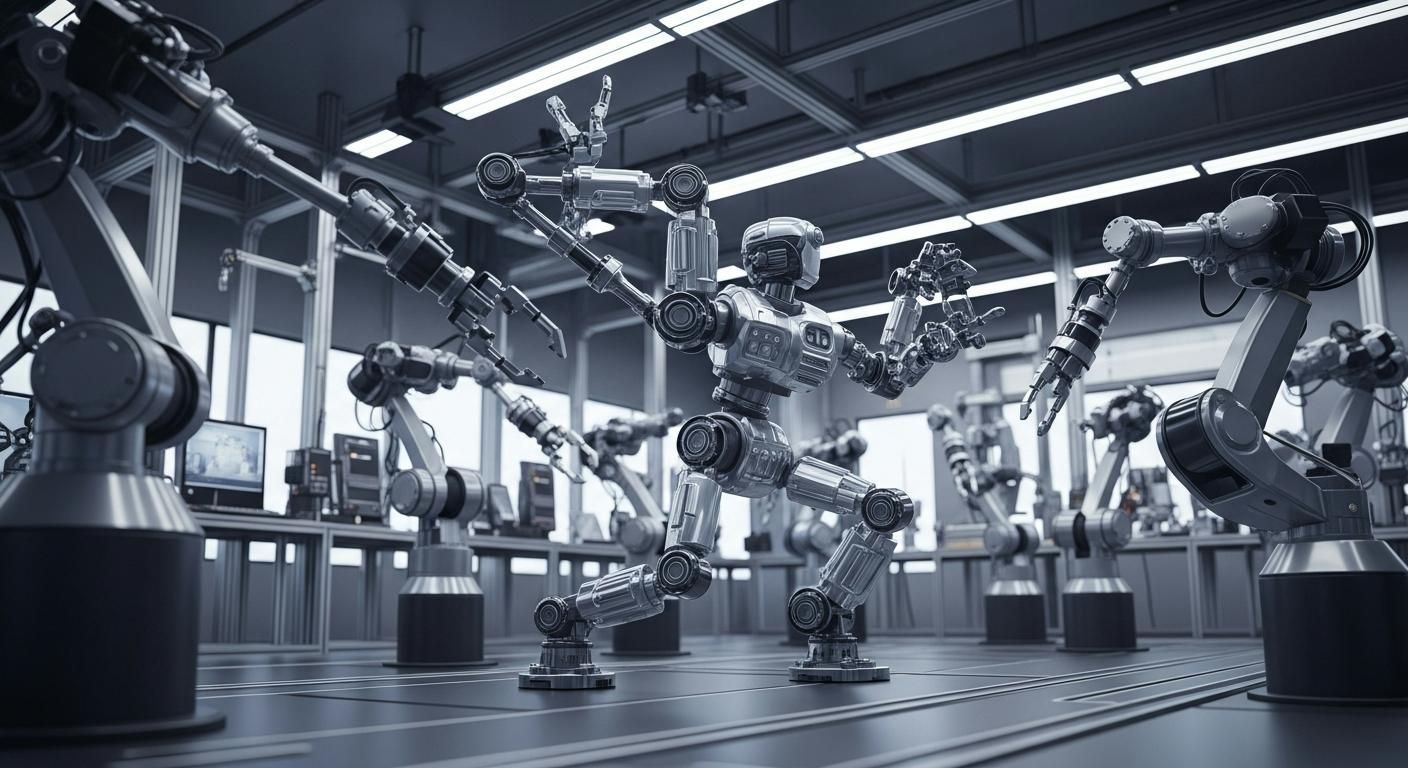
In contrast, a 6-DoF articulated arm mimics the movement of a human arm, with multiple rotating joints. This allows it to reach around obstacles and orient its end effector in any direction. This added complexity requires more sophisticated control algorithms and sensors but offers far greater flexibility for intricate tasks like welding or assembly.
Here’s a simple comparison of their characteristics:
| Feature | 3-DoF Cartesian Robot Arm | 6-DoF Articulated Robot Arm |
|---|---|---|
| Movement | Linear motion along X, Y, and Z axes. | Rotational motion at multiple joints. |
| Workspace | Typically a rectangular or box-shaped area. | A complex, spherical-like workspace. |
| Complexity | Simple to control and program. | Complex kinematics and control systems. |
| Applications | Pick-and-place, dispensing, 3D printing. | Welding, painting, complex assembly, machine tending. |
Real-World Applications of Various Robot Arms
The principles of robotics are not just theoretical; they are actively shaping industries around the world. Robot arms, equipped with various sensors and programmed for specific tasks, are at the forefront of this technological revolution. Their applications are diverse, ranging from large-scale manufacturing to delicate medical procedures.
The specific design of a robot arm, including its degrees of freedom and payload capacity, determines where it can be most effective. You can see them performing tasks that are too repetitive, dangerous, or precise for humans. Students in an Intro Robotics II course often use robotics kits to build and program arms for similar, smaller-scale tasks.
Here are a few real-world applications where different robot arms excel:
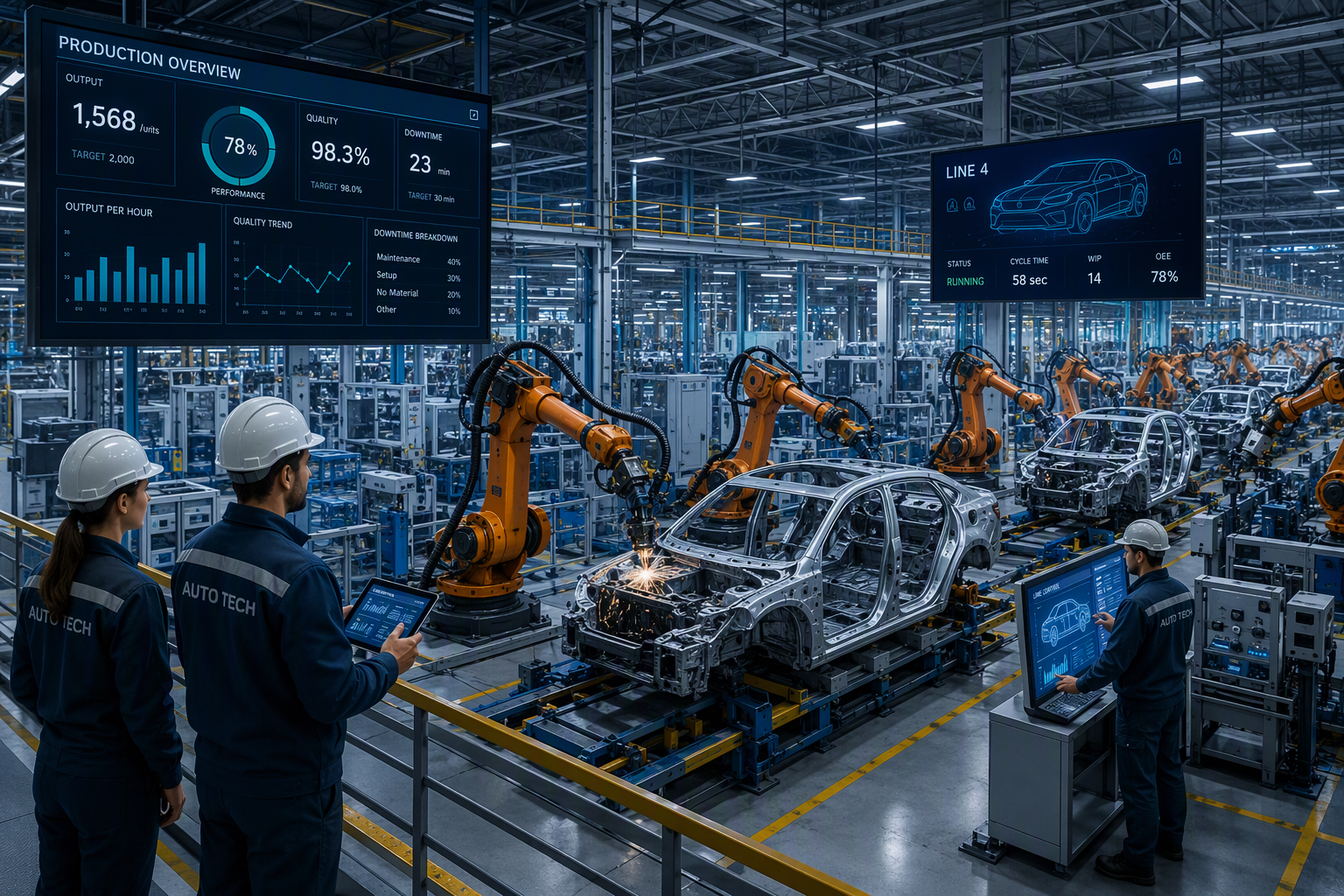
- Automotive Manufacturing: Articulated robots with 6 or 7 DoF are used for welding, painting, and assembling car bodies with high speed and consistency.
- Electronics Assembly: Smaller, highly precise SCARA robots are used to place tiny components onto circuit boards.
- Food and Beverage: Delta robots, known for their high speed, are used to pick and package items on fast-moving conveyor belts.
- Surgery: Highly specialized robotic systems assist surgeons in performing minimally invasive procedures with enhanced precision.
End Effectors and Grippers in Robotics
A robot arm is only as useful as the tool at its end. In robotics, this tool is called an end effector. It is the part of the robot that interacts directly with objects in the environment. Think of it as the robot's hand. The end effector is what allows a robot to pick up parts, weld seams, or handle delicate materials.
One of the most common types of end effectors is the gripper. As the name suggests, grippers are designed to grasp and hold objects. However, there are many different ways to grip something. We’ll explore several distinct types of robotic grippers and other end effectors next.
Types of Robotic Grippers: Impactive, Ingressive, Astrictive, Contigutive
Robotic grippers are essential end effectors that allow robots to interact with and manipulate objects. They are not one-size-fits-all; instead, they are categorized by how they make contact and hold onto an item. Before taking an Intro Robotics II course, it's helpful to have a basic understanding of mechanical principles, as this will help you appreciate the different gripper designs.
These designs use various physical principles to secure objects, from direct force to surface adhesion. Each type is suited for handling different kinds of materials and shapes, and they often rely on sensors to provide feedback on grip strength and object presence.
Here are four main types of robotic grippers:
- Impactive: These are the most common grippers, using jaws or fingers to apply a direct force to hold an object. A simple two-finger pincer is a classic example.
- Ingressive: These grippers physically penetrate the surface of an object to lift it, using tools like pins, needles, or micro-spines. They are used for materials like textiles or foam.
- Astrictive: This type uses non-contact forces to hold an object. Suction cups using vacuum pressure and magnetic grippers are common examples of astrictive end effectors.
- Contigutive: These grippers rely on direct surface contact and the principles of adhesion or surface tension to hold an object, such as using a sticky adhesive.
FAQs (Frequently Asked Questions)
(Instructions: 40-60 words, 1 paragraph, NLP terms: coordinate frames, robotics, sensors, robot arms, coding skills, AI questions: "What programming languages are commonly used in Intro Robotics II?", "Is Intro Robotics II suitable for middle or high school students?")
Intro Robotics II courses are typically designed for college-level students or advanced high schoolers with a strong foundation in math and physics. These courses build on introductory concepts and often use programming languages like Python or C++ to teach the coding skills needed to control robot arms and navigate coordinate frames using data from sensors.
Conclusion
In conclusion, understanding the degrees of freedom in robotics is essential for appreciating how robots operate and interact with their environments. By grasping the fundamental concepts of yaw, pitch, and roll, as well as the specific movements allowed by different types of robot arms, we can better comprehend their versatility and applications. Additionally, knowing about various end effectors, like robotic grippers, enhances our perspective on how these machines perform tasks in real-world scenarios. If you're eager to delve deeper into robotics and explore its exciting possibilities, don’t hesitate to get in touch for a free consultation!
Are there any intro to robotics courses? : r/AskRobotics
Yes, there are numerous introductory robotics courses available, including online platforms like Coursera and edX. These courses typically cover fundamental concepts, programming basics, and hands-on projects. Intro Robotics II specifically builds on these foundations, offering deeper insights into complex systems and applications in robotics technology.
You might also like