Automation in Business: How It Transforms Operations
Automation in Business: How It Transforms Operations

Key Highlights
- Automation in business uses technology to handle tasks with minimal human help, boosting operational efficiency.
- Key types include robotic, industrial, and business process automation, each designed for specific needs.
- The main benefits of automation are increased productivity, reduced errors, and significant cost savings.
- Process automation streamlines repetitive tasks, allowing your employees to focus on more strategic work.
- While it presents challenges, automation is transforming industries and creating new job opportunities.
- The future of automation lies in integration with AI and IoT for even smarter, more efficient systems.
Introduction
In today's fast-paced world, businesses are constantly looking for ways to work smarter, not just harder. Have you ever wondered how some companies seem to do so much with such precision? The answer often lies in automation technology. This powerful approach involves using machines and software to perform tasks that once required significant human intervention. By embracing automation, you can streamline your operations, reduce errors, and unlock new levels of operational efficiency that drive growth and success.
Understanding Automation in Business Operations
At its core, automation is the application of technology to create automated systems that manage processes with minimal human intervention. Think of it as giving routine or complex tasks to a machine or software program that can execute them flawlessly every time. This frees up your human workers to concentrate on more creative and strategic initiatives.
An effective automation system doesn't just replace manual effort; it enhances your entire operation. By understanding how these systems work and the key differences between various tech concepts, you can better see how automation will fit into your business. Let's explore what automation really is and how it functions within an organization.
What is automation?
So, what is automation in simple terms? It is the use of technology to perform tasks that would otherwise require manual effort, ensuring they are completed with minimal human intervention. This isn't just about robots on an assembly line; it's a broad concept that applies to both physical and digital processes.
The goal of process automation is to make your operations faster, more reliable, and more efficient. By setting up automated systems, you can ensure that tasks are performed according to pre-set rules and logic, 24/7, without breaks or fatigue. This consistency is something manual processes often struggle to achieve.
Essentially, automation is a strategic tool. It allows you to assign specific activities to intelligent systems, from managing data to controlling production lines. This use of technology helps reduce operational costs, improve productivity, and deliver higher-quality products and services to your customers.
How automation works in organizational processes
Automated systems function through a combination of hardware and software designed to monitor and control organizational processes. The process typically starts with sensors, which are devices that collect data from the environment, such as temperature, motion, or pressure. This information serves as the input for the system.
Once data is gathered, it’s sent to a controller, like a Programmable Logic Controller (PLC). This controller is the "brain" of the operation, making decisions based on pre-programmed instructions. It analyzes the data and determines the appropriate action to take, all without direct human involvement for that specific step.
Finally, the controller sends a signal to an actuator, which carries out the physical action. This could be anything from a robotic arm moving a part to a valve opening or a software script running a report. These control systems work in a continuous loop, constantly monitoring and adjusting to keep routine tasks running smoothly and efficiently.
Key differences between automation and artificial intelligence
It's common to hear automation and artificial intelligence (AI) used interchangeably, but they are two distinct concepts. Understanding the difference is key to knowing what technology best suits your needs. Automation is about making systems follow a set of pre-programmed rules to perform tasks.
Artificial intelligence, on the other hand, is about creating systems that can simulate human intelligence. AI, often powered by machine learning, can learn from data, recognize patterns, and make decisions or predictions. It doesn't just follow rules; it can adapt and think.
Think of it this way: automation is about doing, while AI is about thinking and learning. Here are a few key distinctions:
- Task Execution: Automation executes repetitive tasks based on explicit instructions. AI, however, can handle more complex and dynamic tasks.
- Decision-Making: Automation follows a pre-defined path. AI can make its own decisions based on analysis and learned data.
- Flexibility: An automated system requires new programming to change its behavior. An AI system can adapt on its own with new information, requiring less human intervention over time.
Core Types of Automation Used in Modern Business
When you decide to implement business automation, you'll find there isn't a one-size-fits-all solution. Different types of automation are designed to tackle different challenges, from simple data entry to complex decision-making. These advanced technologies can be tailored to fit the unique needs of your organization.
Understanding the core types of automation is the first step toward choosing the right tools for your business. Whether you need to streamline back-office tasks or automate entire business processes, there's an automation technology that can help. Let's look at some of the most common forms used today.
Robotic process automation (RPA)
Robotic Process Automation, or RPA, uses software "bots" to mimic human actions and automate rule-based, repetitive tasks. These bots interact with digital systems just like a person would—clicking, typing, and navigating through applications to complete their work.
Think of RPA as a digital workforce that can handle high-volume jobs like data entry, form filling, and processing invoices. Because these bots follow a strict set of rules, they can perform these tasks faster and with greater accuracy than a human, making them a powerful tool for business process automation.
RPA is especially popular for back-office and IT automation. It helps reduce errors, speed up workflows, and free up employees to focus on tasks that require more critical thinking. Companies like UiPath and Automation Anywhere provide RPA solutions that are widely adopted across many industries.
Business process automation (BPA)
While RPA focuses on individual tasks, Business Process Automation (BPA) takes a broader approach. BPA is about automating an entire business process from start to finish, which often involves multiple tasks and departments. It aims to optimize entire workflows for maximum efficiency.
The goal of BPA is to streamline operations, reduce manual effort, and improve coordination across your organization. It's a key part of business process management, where you analyze and improve your core processes. This form of process automation ensures that everything flows smoothly with minimal bottlenecks.
Workflow automation solutions, such as those offered by Kissflow and Nintex, allow businesses to design, execute, and manage these automated processes. From handling document approvals to onboarding new employees, BPA can transform how your entire organization operates, creating a more agile and efficient workplace.
Cognitive automation and its applications
Cognitive automation represents the next level of automation technology, integrating artificial intelligence and machine learning to handle complex tasks that normally require human cognitive abilities. Unlike rule-based systems, cognitive automation can analyze unstructured data, understand context, and learn from its experiences.
This advanced form of automation uses technologies like natural language processing (NLP) to understand human language and computer vision to interpret images. This allows it to make judgments and decisions that go beyond simple, repetitive actions. For example, it can analyze emails to determine their intent or review medical scans to assist in diagnoses.
In healthcare, IBM's Watson Health uses cognitive automation to analyze medical data and help doctors make more informed treatment decisions. In customer service, it powers intelligent chatbots that can understand and resolve complex customer issues. Cognitive automation is paving the way for systems that can think, learn, and adapt.
Major Industries Leveraging Automation
The impact of automation technology is felt across various industries, from the factory floor to the financial sector. Business automation is no longer a niche concept but a fundamental driver of efficiency and innovation. Companies everywhere are adopting industrial automation and process automation to stay competitive.
Each industry applies these technologies in unique ways to solve its specific challenges. By examining how different sectors are using automation, you can gain a clearer picture of its transformative potential for your own business. Let's explore some of the major industries that are leading the way in automation adoption.
Manufacturing sector and industrial automation
The manufacturing sector has long been a pioneer in industrial automation, using technology to revolutionize its production processes. Automation here is all about enhancing precision, maximizing resource efficiency, and increasing production rates. Robotic arms on production lines are a common sight, performing tasks like welding and assembly with incredible speed and accuracy.
By automating manufacturing processes, companies can maintain consistent quality control and reduce the risk of human error. For example, automated systems can inspect products for defects far more reliably than the human eye. This leads to higher-quality goods and less waste.
Collaborative robots, or "cobots," are also changing the game by working alongside human employees to assist with heavy lifting or intricate assembly. This synergy between humans and machines is making production lines safer and more productive than ever
| Automation Application | Description |
|---|---|
| Assembly | Robotic arms assemble products with speed and precision, reducing manual labor. |
| Quality Control | Automated vision systems inspect products for defects, ensuring consistency. |
| Packaging | Robots package finished goods, preparing them for shipment efficiently. |
| Material Handling | Automated guided vehicles (AGVs) transport materials around the factory floor. |
Finance and banking automation
The finance and banking industry relies heavily on process automation to manage a wide range of tasks, from back-office operations to customer-facing services. Automation systems are crucial for handling the massive volume of transactions and data that banks process daily.
In this sector, Robotic Process Automation (RPA) is widely used to streamline repetitive tasks like data entry, compliance checks, and invoice processing. Financial institutions like JPMorgan Chase use RPA to reduce manual errors and shorten processing times, leading to significant efficiency gains.
Beyond the back office, automation is also enhancing customer service. AI-powered chatbots provide instant support to customers, answering queries and resolving issues 24/7. This improves the customer experience while allowing human agents to focus on more complex problems, transforming how the banking industry operates.
Retail and ecommerce automation
In the competitive worlds of retail and ecommerce, automation has become essential for survival and growth. Automated systems are used to manage everything from inventory in warehouses to the customer's online shopping experience, driving both efficiency and customer satisfaction.
Ecommerce giants like Amazon have transformed their warehouses with robotic fulfillment centers. These automated systems use autonomous robots to move inventory, optimize storage, and speed up order fulfillment, ensuring that your package arrives on time.
In physical stores, retail automation is also making an impact. Cashier-less stores, like Amazon Go, use computer vision and sensors to allow shoppers to simply pick up items and leave. These innovations not only enhance customer convenience but also streamline store operations, showing how automation is reshaping the entire retail landscape.
Process Automation: Significance and Examples
Process automation holds immense significance for any business looking to improve how it operates. It involves using advanced technologies to streamline and manage entire workflows, not just isolated tasks. By implementing workflow automation, you can create a more cohesive and efficient operational environment.
The real power of process automation lies in its ability to connect different steps in a process, ensuring a smooth flow of work from start to finish. Looking at some real-world automation examples can help illustrate its impact. Let's examine how it works to streamline tasks and optimize business operations.
Streamlining repetitive tasks with automation
One of the most immediate benefits of automation is its ability to handle repetitive tasks that are often time-consuming and prone to error when done manually. Tasks like data entry, generating reports, or sending standard email responses can be easily automated, requiring minimal human input.
When you automate these mundane tasks, you free up your employees to focus on work that requires creativity, strategic thinking, and complex problem-solving. This not only boosts their job satisfaction but also adds more value to your business. The need for human intervention in these routine jobs is greatly reduced.
By taking over these jobs, automation dramatically increases efficiency. Processes that once took hours can be completed in minutes with greater accuracy. This allows your business to accomplish more in less time, directly contributing to higher productivity and a stronger bottom line.
Case studies in workflow optimization
Real-world case studies clearly demonstrate the power of workflow optimization through process automation. Many leading companies have embraced this digital transformation to boost their operational efficiency and gain a competitive edge. These examples show what's possible when technology is applied strategically.
For instance, in manufacturing, automation has revolutionized production. Tesla's Gigafactories use a high degree of automation to assemble electric vehicles, which significantly increases production rates while maintaining strict quality standards. This allows them to meet high consumer demand.
In other sectors, the impact is just as profound. Here are a couple of examples:
- JPMorgan Chase: This financial giant uses RPA to automate thousands of repetitive back-office tasks, which has helped reduce manual errors and free up thousands of employee hours for more valuable work.
- Amazon: Its use of autonomous robots in fulfillment centers is a prime example of workflow optimization. These robots speed up order fulfillment, reduce physical strain on workers, and optimize warehouse storage space.
Digital transformation through process automation
Process automation is a cornerstone of digital transformation for any modern business. It's about fundamentally rethinking how your organization uses technology, people, and processes to change business performance. Automation technology is the engine that drives much of this change.
By implementing business process automation, you can move away from outdated, manual workflows and embrace more agile, digital-first operations. This transformation affects every corner of the business, from customer service to IT operations. It's not just about doing the same things faster; it's about finding entirely new and better ways of working.
Automating IT processes, for example, helps maintain the health of your technology infrastructure and ensures smooth functioning with less manual oversight. This allows your IT team to focus on innovation rather than just maintenance. Ultimately, process automation enables your business to become more responsive, efficient, and prepared for the future.
Benefits of Implementing Automation in Business
The benefits of automation are compelling and far-reaching, making it one of the most impactful investments a business can make. By implementing process automation, you can significantly improve efficiency, drive cost reduction, and enhance the overall product quality. These advantages contribute directly to a stronger, more competitive business.
Adopting automation is more than just a technological upgrade; it's a strategic move that can transform your operations from the ground up. Let's explore some of the key benefits that you can expect when you integrate automation into your business processes.
Improved efficiency and productivity
One of the most significant advantages of automation is the dramatic boost in efficiency and productivity. Automated systems can operate 24/7 without breaks, allowing your business to achieve more in a shorter amount of time. This continuous operation accelerates workflows and increases output.
By automating routine tasks, you also reduce the chance of human errors. This precision leads to smoother operations and less time spent correcting mistakes. When your processes run without interruption or error, your overall operational efficiency soars.
This also has a positive impact on your human workers. With mundane tasks handled by automation, your employees are free to focus on more complex issues that require critical thinking and creativity. This shift not only makes their work more engaging but also allows them to contribute more value to the company.
Enhanced accuracy and consistency
Automated systems execute tasks with a level of accuracy and consistency that is difficult to achieve with manual labor. Since they follow pre-programmed instructions precisely every time, the output is uniform and reliable. This is especially important in areas where quality control is a top priority.
Imagine an assembly line where every part is placed in the exact same spot, or a financial report where every calculation is perfect. This is the power of automation. It eliminates the variability that comes with human intervention, where factors like fatigue or distraction can lead to mistakes.
This enhanced consistency helps build a reputation for quality and reliability with your customers. Whether it's the quality of a manufactured product or the accuracy of a customer service response, automated systems ensure that your standards are met every single time, without fail.
Cost reduction and resource optimization
While there can be an upfront investment, automation ultimately leads to significant cost reduction and better resource optimization. By taking over repetitive tasks, automation lessens the need for manual labor for those specific roles, directly cutting down on labor costs over time.
Furthermore, automation helps optimize the use of your resources. In manufacturing, for example, precise automated processes can reduce material waste. In office environments, smart building automation systems can improve energy efficiency by controlling lighting and temperature, lowering utility bills.
This focus on efficiency translates into savings across the board. Here are a few ways automation helps with cost reduction:
- Lower Labor Costs: Reduces the hours needed for manual, repetitive tasks.
- Improved Resource Utilization: Minimizes waste of materials and energy.
- Reduced Downtime: Predictive maintenance capabilities in automated systems prevent costly equipment failures.
Challenges Faced by Companies When Adopting Automation
Adopting automation technology is a transformative step, but it's not without its challenges. Companies often face significant hurdles when trying to integrate new systems, manage the impact on human workers, and ensure data security. These obstacles can slow down or even derail an automation initiative if not addressed properly.
Being aware of these potential pitfalls is the first step toward overcoming them. By planning for integration issues, supporting your employees through the transition, and prioritizing security, you can navigate the complexities of automation successfully. Let’s look at some of the most common challenges.
Integration hurdles and legacy system issues
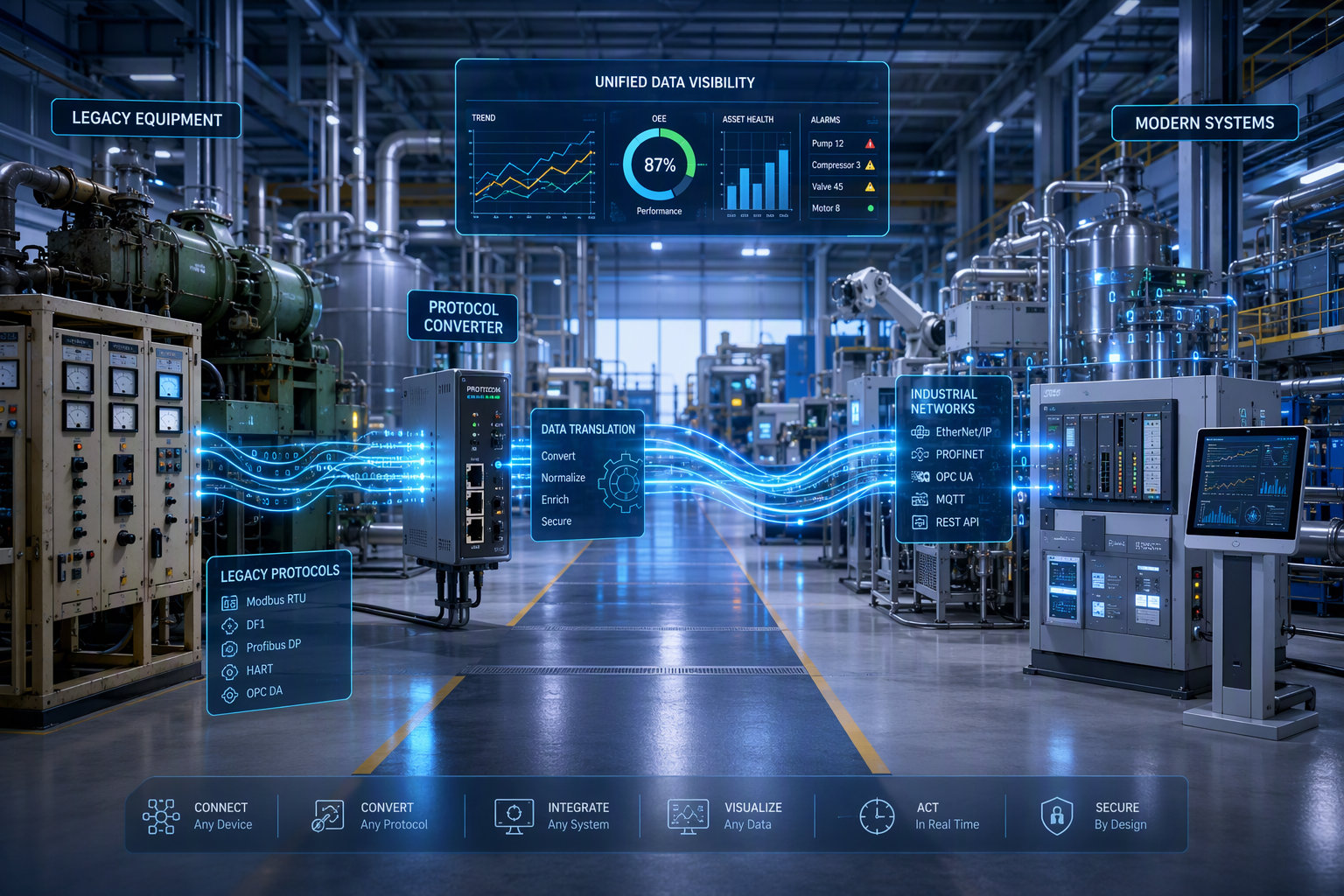
A major challenge in adopting automation is the integration of new systems with existing legacy systems. Many businesses rely on older software and hardware that weren't designed to communicate with modern automation platforms. Making these different technologies work together can be complex and costly.
These integration hurdles can disrupt IT processes and negatively impact operational efficiency if not managed carefully. A poorly integrated automation system might create more problems than it solves, leading to data silos, system crashes, and frustrated employees.
To overcome this, a clear integration strategy is essential. This may involve using specialized software to bridge the gap between old and new systems or a phased approach to gradually replace legacy systems. Proper planning is key to ensuring that your new automation systems enhance, rather than hinder, your operations.
Change management and employee adaptation
Technology is only one part of the automation equation; the human element is just as important. A significant challenge is change management and ensuring smooth employee adaptation. Human workers may feel anxious or resistant to automation if they fear it will make their roles obsolete.
Effective business process management during this transition requires clear communication and support. It’s crucial to explain how automation will change roles, not just eliminate them. The focus should be on how technology will augment human capabilities, freeing employees from tedious work to focus on more valuable, strategic tasks.
Providing training and resources is essential to help employees develop the new skills they'll need to work alongside automated systems. By investing in your people and managing the change process thoughtfully, you can foster a positive environment where both human workers and technology thrive together.
Data security and compliance concerns
As you increase process automation, you also introduce new potential risks related to data security and compliance. Automated systems often handle sensitive customer and company data, making them a potential target for cyberattacks if not properly secured.
Ensuring the security of your information technology infrastructure is paramount. This includes protecting the automation software itself, as well as the data it accesses and processes. A breach in an automated system could have far-reaching consequences, from financial loss to reputational damage.
Furthermore, many industries are subject to strict compliance regulations regarding data handling. When you reduce human intervention in these processes, you must ensure that your automated systems are designed to meet all legal and regulatory requirements. This involves careful planning and validation to ensure your automation efforts are both secure and compliant.
The Impact of Automation on Workforce Dynamics
The rise of automation is undeniably changing workforce dynamics. As technology takes on more tasks that once required human involvement, job roles are evolving. This shift naturally raises questions and concerns about the future of work and the stability of certain jobs.
However, the impact of automation is not just about job elimination; it's about job transformation. The focus is shifting toward retraining and upskilling the workforce to meet new demands. Let's explore how job roles are changing and what opportunities this transformation creates for employees.
Evolving job roles and skills requirements
As automation becomes more widespread, the nature of many job roles is fundamentally changing. Tasks that are repetitive, predictable, and manual are increasingly being handled by machines. This means that the skills requirements for the modern workforce are shifting.
Instead of focusing on manual execution, future job roles will demand skills that machines can't easily replicate. These include critical thinking, creativity, emotional intelligence, and complex problem-solving. Human workers will be needed to design, manage, and optimize the automated systems themselves.
This evolution means that the workforce must adapt. The emphasis is moving from performing routine tasks to overseeing processes and handling exceptions. This shift requires a new mindset and a commitment to continuous learning to stay relevant in an increasingly automated world.
Addressing concerns about job displacement
The fear of job displacement is one of the most common concerns surrounding automation. It's true that some jobs, particularly those involving manual and repetitive tasks, may be reduced or eliminated. However, history shows that technological advancements often create more jobs than they destroy.
This phenomenon is sometimes called the "paradox of automation." While automation can displace human workers from certain tasks, it also drives economic growth, which in turn creates new demands and new job opportunities in the labor market. A 2020 report from the World Economic Forum suggested that while 85 million jobs could be altered, 97 million new ones could be created.
To navigate this transition, the focus must be on supporting workers. Here's how businesses can help:
- Invest in retraining programs to equip employees with new skills.
- Redesign job roles to focus on collaboration between humans and machines.
- Foster a culture of lifelong learning to help the workforce adapt to changes.
Opportunities for retraining and upskilling
The shift brought on by automation creates incredible opportunities for retraining and upskilling your workforce. Instead of viewing automation as a threat, you can see it as a catalyst for workforce transformation. This is a chance to invest in your human workers and prepare them for the jobs of the future.
Upskilling involves training employees in new, advanced skills to help them master their current roles as they evolve with technology. Retraining, on the other hand, prepares employees for entirely new job roles within the company. Both are crucial for adapting to the changing demands of the labor market.
By providing these learning opportunities, you not only support your employees' career growth but also build a more skilled and adaptable workforce for your business. This proactive approach to workforce transformation ensures that your company and your people are ready to thrive in an automated future.
The Future of Automation Technology in Business
The future of automation technology is incredibly bright and full of potential. Driven by advanced technologies and emerging business trends, automation is set to become even more intelligent, integrated, and indispensable. We are moving beyond simple task automation toward creating truly smart and autonomous systems.
As these technologies continue to evolve, they will reshape how businesses operate in profound ways. The integration of AI, IoT, and a greater focus on sustainability will define the next wave of automation. Let's look at some of the key trends that are shaping the future of automation.
Emerging trends: AI, IoT, and smart systems
The future of automation is closely tied to the integration of other powerful technologies, particularly artificial intelligence (AI) and the Internet of Things (IoT). These emerging trends are creating smart systems that are more capable and autonomous than ever before.
AI and machine learning are enabling automation systems to learn from data, make independent decisions, and handle complex, unpredictable situations. Meanwhile, IoT integration connects a vast network of devices and sensors, allowing for real-time data exchange and control. This creates a seamless, interconnected environment where systems can communicate and collaborate.
Together, these technologies are driving several exciting trends:
- Hyperautomation: Expanding automation across as many business processes as possible.
- Intelligent Process Automation: Combining AI with RPA and BPA for more sophisticated workflows.
- Collaborative Robots (Cobots): Robots designed to work safely alongside humans, enhancing productivity in industrial settings.
Sustainable practices and automation
As the world becomes more focused on sustainability, automation is emerging as a key tool for promoting environmentally friendly practices. Automation can help businesses optimize their energy usage and reduce waste, contributing to a greener future.
In industrial processes, for example, automation systems can monitor and control energy consumption with incredible precision. Smart building automation can adjust lighting and HVAC systems based on occupancy and time of day, significantly cutting down on wasted energy. This not only helps the planet but also lowers operational costs.
By fine-tuning processes to use resources more efficiently, automation helps minimize the environmental footprint of industrial and commercial operations. The ability to optimize energy usage and reduce waste makes automation a powerful ally in the push for more sustainable practices across all industries.
Conclusion
In conclusion, automation is not just a trend; it’s a transformative force reshaping the way businesses operate. By streamlining processes, improving efficiency, and reducing costs, automation empowers organizations to focus on innovation and growth. However, it's essential to navigate the challenges that come with adopting new technologies, such as integration and workforce adaptation. As we look to the future, embracing automation will not only enhance productivity but also open doors to new opportunities for job retraining and skill development. If you're ready to explore how automation can revolutionize your business operations, get in touch for a free consultation and discover the potential that awaits you!
Frequently Asked Questions
What are the main benefits of business automation?
The main benefits of automation include increased efficiency and productivity, significant cost reduction through lower labor needs, and enhanced accuracy by minimizing human errors. Process automation also frees up employees from repetitive tasks, allowing them to focus on more strategic work that adds greater value to the business.
Can automation lead to job loss?
While automation can cause job displacement in roles that are repetitive, it often leads to a workforce transformation rather than mass job loss. It creates new roles that require different skills, and history shows that technological advances tend to generate more jobs than they eliminate in the long run.
How does automation differ from artificial intelligence?
Automation involves creating automated systems that follow pre-set rules to perform tasks with minimal human intervention. Artificial intelligence, powered by machine learning, goes a step further by enabling systems to learn from data, make decisions, and adapt, simulating human-like intelligence rather than just following instructions.
You might also like