
AGVs Explained: Revolutionizing Warehouse Operations
AGVs Explained: Revolutionizing Warehouse Operations
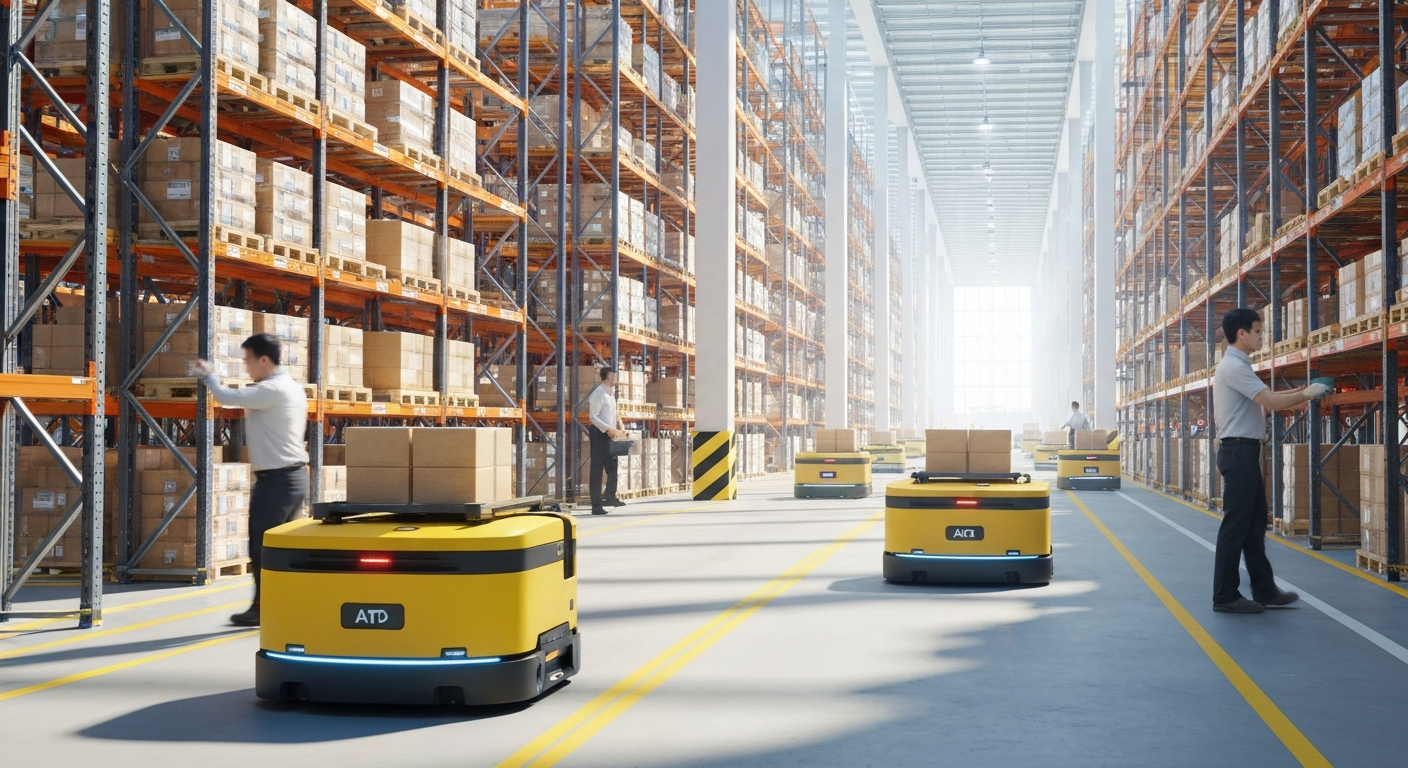
Key Highlights
Here's a quick look at what we'll cover in this guide to automated guided vehicles (AGVs):
- An automated guided vehicle (AGV) is a driverless transport vehicle used for material handling in warehouse operations.
- AGVs navigate using various systems, including magnetic tape and advanced laser navigation.
- Implementing an AGV system can significantly reduce labor costs and improve workplace safety.
- These vehicles come equipped with robust safety features like obstacle detection and emergency stops.
- AGVs streamline the supply chain by automating repetitive transport tasks, boosting overall efficiency.
Introduction
Automated Guided Vehicles (AGVs) are transforming the way warehouses operate, making material handling tasks smoother and more efficient. These innovative vehicles use sophisticated technologies like navigation systems and guidance systems to transport goods with precision. By automating repetitive tasks, AGVs help reduce labor costs and minimize the risk of workplace accidents. They seamlessly integrate into various operational environments, from distribution centers to manufacturing plants, ensuring an effective flow of goods. As industries continue to evolve, the adoption of AGVs is becoming a key factor in optimizing warehouse management and enhancing overall productivity.
Discover the Benefits of AGVs in Modern Industry
Understanding Automated Guided Vehicles (AGVs)
Automated guided vehicles, commonly referred to as AGVs, play a pivotal role in the efficiency of modern warehouses. These innovative machines streamline material handling tasks, from inventory management to the transportation of raw materials across complex industrial environments. With advanced navigation technologies such as laser guidance and magnetic tape, AGVs can navigate storage areas and production lines with ease. By minimizing the need for human intervention, they significantly reduce labor costs while enhancing safety features, thereby contributing to smoother workflows and optimized material flow within distribution centers and manufacturing facilities.
Definition of AGVs and Their Role in Modern Warehouses
Automated guided vehicles, or AGVs, are crucial tools in today’s warehouses, designed to streamline material handling processes. These vehicles autonomously transport goods, minimizing the reliance on manual labor and enhancing efficiency. By utilizing sophisticated navigation technologies, such as laser navigation and magnetic tape, AGVs navigate complex environments with ease. Their role extends beyond simple load transport; they optimize inventory management and improve the flow of goods throughout distribution centers. As a result, AGVs significantly contribute to workplace safety while reducing operational costs by limiting human intervention in repetitive tasks.
Key Components of an AGV System
An AGV system comprises several key components that work in harmony to streamline warehouse operations. At its core, guidance systems, such as magnetic tape or advanced laser navigation, help the vehicles navigate their designated paths. These systems also include robust control software to manage traffic and ensure proper load handling. Complementing these are safety features like emergency stop buttons and collision avoidance technologies, which protect both human operators and equipment. The integration of advanced sensors further enhances efficiency by enabling real-time monitoring of material flow, making AGVs an invaluable asset in modern industrial environments.
Brief History and Evolution of AGVs
The journey of automated guided vehicles began in the early 1950s, initially focusing on simple material transport tasks within manufacturing plants. As technology advanced, these vehicles evolved from basic systems using magnetic tape for navigation to sophisticated platforms equipped with advanced sensors and laser navigation. Over the decades, the adoption of AGVs expanded into various industries, notably in distribution centers and warehouses, streamlining material handling processes. Today's AGVs are integral to efficient warehouse operations, enhancing productivity and safety while reducing labor costs and minimizing workplace accidents. This evolution demonstrates their pivotal role in modern supply chain management.
How AGVs Function in Warehouse Environments
Automated guided vehicles play a crucial role in streamlining warehouse operations. These efficient machines utilize advanced navigation systems, such as magnetic tape and laser navigation, to move safely within storage areas and production lines. Each AGV is equipped with guidance systems and control software that allow for precise material transport while avoiding obstacles, ensuring workplace safety. By handling repetitive tasks like order picking and inventory management, AGVs help reduce labor costs. Their ability to operate continuously in complex environments minimizes human intervention, drastically improving the flow of goods and enhancing overall operational efficiency in various industries.
Basic Operational Principles of AGVs
Automated guided vehicles (AGVs) operate by seamlessly integrating advanced navigation systems and control software to facilitate the efficient transport of goods. These intelligent systems utilize various guidance technologies, such as magnetic strips and laser navigation, to move throughout complex industrial environments, including warehouses and manufacturing facilities. By automating material handling tasks, AGVs reduce the need for manual labor, thereby optimizing labor costs and improving workplace safety. Their sophisticated obstacle avoidance features ensure a smooth flow of goods while minimizing the risk of accidents, making them an invaluable asset in modern warehouse operations.
How AGVs Move and Handle Loads
Automated guided vehicles utilize advanced navigation technologies to efficiently transport loads throughout warehouses. Equipped with guidance systems such as magnetic tape or laser navigation, these vehicles can accurately follow predetermined paths while maintaining safety and avoiding obstacles. The design of AGVs allows them to handle various types of loads, from raw materials to finished products. With their ability to operate continuously in complex environments, they significantly streamline material handling processes, reducing reliance on manual labor and minimizing operational costs. This efficiency makes them invaluable in enhancing the flow of goods within distribution centers and manufacturing plants.
Communication and Control within an AGV System
Effective communication and control are the backbone of an automated guided vehicle (AGV) system. These vehicles rely on advanced sensors and guidance systems to ensure seamless navigation throughout warehouses. They communicate with warehouse management systems to optimize the flow of goods and enhance inventory management, ensuring precision in material transport. With real-time data exchange, AGVs can interact with other equipment, like conveyor belts and forklifts. Their control systems are designed for quick responses, allowing for obstacle avoidance and safety features that minimize workplace accidents, making operations smoother and more efficient in industrial environments.
Types of AGVs Used in Warehouses and Factories
Not all AGVs are created equal. There are many different types of AGVs, each designed for specific material handling tasks. From small carts that shuttle components to production lines to heavy-duty vehicles that move entire pallets, there's a solution for nearly every need in modern warehouse operations and distribution centers.
The right choice of AGV depends on factors like the type and weight of the load, the complexity of the environment, and the specific application. Understanding these differences is key to selecting the perfect automated solution for your facility. Let's explore some of the most common types you'll encounter.
Automated Guided Carts (AGCs) and Their Capabilities
Automated guided carts, or AGCs, are one of the simplest and most common types of AGVs. These compact vehicles are designed to transport smaller loads, such as totes, bins, or individual items, often by towing a series of connected carts. They are a popular choice for light-duty material handling in both distribution centers and manufacturing plants.
AGCs excel at tasks like supplying parts to production lines or moving finished goods from assembly to a storage area. Their small size allows them to navigate tight spaces and busy environments with ease. For example, Boeing uses AGCs to move components and materials along its aircraft assembly lines, improving precision and speeding up the building process.
By automating these repetitive transport tasks, automated guided carts help maintain a consistent material flow and free up employees for more value-added work. Their flexibility and relatively low cost make them an excellent entry point into automation for many companies looking to streamline their operations.
Forklift AGVs for Pallet Handling
When it comes to pallet handling, forklift AGVs are the go-to solution. These vehicles are essentially automated versions of traditional forklifts, designed to pick up, transport, and place pallets without a human operator. They are a common sight in warehouse operations where goods are stored on pallets in racks or floor-level storage areas.
Forklift AGVs come in various forms, including automated pallet stackers, reach trucks, and counterbalanced forklifts. Pallet stackers are ideal for transporting loads and stacking them at low to medium heights, while reach trucks can access much higher racking. This makes them perfect for a wide range of material transport tasks, from receiving goods to putting them away in high-bay storage.
The use of forklift AGVs automates one of the most common and labor-intensive tasks in a warehouse. They can operate 24/7, increasing throughput and reducing the risk of product or rack damage that can occur with manual forklifts.
Towing AGVs for Heavy Load Movement
For moving heavy loads over longer distances, towing AGVs, also known as tow tractors or tuggers, are the ideal choice. These powerful vehicles are designed to pull a train of one or more carts, allowing them to transport a large volume of material in a single trip. This makes them highly efficient for material transport in large manufacturing facilities and distribution centers.
Towing AGVs are often used to supply production lines in industrial companies or to haul waste away from assembly areas. For instance, a tugger can pull a series of carts loaded with parts from the warehouse to various points along an assembly line, dropping off full carts and picking up empty ones on its return trip.
Some models, like the Linde P-MATIC, can tow loads of up to 5,000 kilograms (over 11,000 lbs). By handling such heavy loads, these AGVs reduce the need for manual labor and forklift traffic, improving both safety and efficiency in demanding environments.
Advanced AGV Types and Custom Solutions
Beyond the common types, the world of AGVs includes more advanced and specialized models. Unit load AGVs, for example, are built to carry single, large items, while hybrid AGVs offer the flexibility of both automated and manual operation. These advanced solutions are designed to tackle unique challenges in complex environments.
Furthermore, many providers offer custom AGV design, tailoring vehicles to meet very specific requirements. This could involve modifying the size, payload capacity, or integrating specialized tools. Let's look at some of these advanced types and emerging trends.
Unit Load AGVs for Diverse Applications
Unit load AGVs are designed to transport individual, large loads such as pallets, rolls, or large bins. Unlike towing AGVs that pull carts, unit load vehicles carry the load directly on their chassis. This makes them highly versatile for a variety of material handling applications, from manufacturing to warehousing.
These vehicles are often equipped with lift decks, conveyor belts, or rollers to automatically transfer their loads to and from stands or other equipment. You can find them moving goods between assembly lines, transferring finished products to stretch wrappers, or delivering pallets to shipping docks. Amazon, for example, uses unit load AGVs in its fulfillment centers to move pallets of products efficiently.
Compared to other different types of AGVs, unit load models are excellent for point-to-point transfers and play a key role in automated inventory management. Their ability to handle diverse loads makes them a flexible and powerful tool for streamlining logistics.
Hybrid and Specialized AGVs
As automation needs become more specific, hybrid and specialized AGVs are gaining popularity. Hybrid AGVs are standard industrial trucks, like forklifts or pallet stackers, that have been automated but can still be operated manually. This dual-functionality provides incredible flexibility, allowing an operator to take control for unexpected tasks or in areas not set up for automation.
Specialized AGVs are custom solutions designed for unique material handling tasks. For instance, General Motors uses over 75 custom AGVs in its manufacturing plants to deliver bulk materials for the body shop and general assembly. These vehicles are tailored with specific features, advanced sensors, and functionalities to meet the precise demands of the application.
This might involve adapting the AGV's size, payload capacity, or navigation technology. These custom solutions demonstrate how AGV technology can be adapted to solve even the most complex material handling challenges, providing an optimized workflow that standard models might not achieve.
Emerging Trends in AGV Design
The field of AGV design is constantly evolving, driven by advancements in technology and the growing demands of industrial automation. One of the most significant emerging trends is the integration of more sophisticated artificial intelligence (AI) and machine learning algorithms. This is making AGVs smarter, more adaptable, and capable of making decisions in real-time.
Navigation technologies are also becoming more advanced. While traditional methods are still widely used, there is a clear shift towards systems that offer greater flexibility and require less infrastructure, such as vision-based and LiDAR navigation. This allows AGVs to operate more effectively in dynamic and changing environments.
Here are some key emerging trends in AGV design:
- AI Integration: AGVs are becoming smarter, using AI to optimize routes, manage tasks, and adapt to changing conditions on the fly.
- Enhanced Navigation Technologies: A move towards infrastructure-free navigation like LiDAR and vision guidance for greater flexibility.
- Increased Modularity: AGV designs are becoming more modular, allowing for easier customization, maintenance, and upgrades.
- Improved Safety Systems: Integration of more advanced sensors and predictive analytics to further enhance workplace safety.
AGV Navigation and Guidance Technologies
How does an AGV know where to go? The answer lies in its navigation and guidance systems. These technologies are the "eyes and ears" of the vehicle, allowing it to follow paths and move safely through a facility. The type of AGV navigation used can range from simple, fixed methods to highly flexible, intelligent systems.
Early AGVs relied on wired guidance, but today's options are far more advanced and include magnetic tape, laser navigation, and even vision-based systems. Each method has its own strengths, and the right choice depends on the complexity of the environment and the need for flexibility. Let's explore some of the most common technologies.
Magnetic Tape and Spot Navigation
One of the most common and reliable methods for AGV navigation is the use of magnetic tape. In this system, magnetic strips are laid down on the floor to create a defined path for the AGV to follow. The vehicle is equipped with sensors that detect the magnetic field from the tape, keeping it on track.
This method is relatively simple to install and modify compared to older wired systems. If you need to change the route, you can just pull up the old magnetic tape and lay down a new path. This makes it a cost-effective choice for environments where routes are fixed but may need occasional adjustments to optimize material flow.
Magnetic spot navigation is a variation where small magnetic pucks are embedded in the floor at key points. The AGV travels from one puck to the next, using them as reference markers. While less common for continuous paths, this approach is useful for specific positioning tasks within a larger navigation system.
Laser, LiDAR, and Vision-Based Navigation
For environments that require more flexibility, laser, LiDAR, and vision-based navigation are the leading technologies. Laser navigation, often called natural feature navigation, uses a laser scanner to map the surrounding environment. The AGV compares this real-time map to a pre-loaded map of the facility to determine its exact position without needing any physical guides on the floor.
LiDAR (Light Detection and Ranging) is a similar technology that creates detailed 3D maps of the vehicle's surroundings. This provides a rich set of data points, enabling precise localization and superior obstacle avoidance. Vision systems use cameras and advanced image processing to identify landmarks, lines, or other visual cues to navigate.
These advanced navigation methods offer several key advantages:
- Flexibility: Routes can be changed easily through software, without any physical alterations to the facility.
- Accuracy: These systems provide highly precise positioning.
- Obstacle Avoidance: The advanced sensors used for navigation also excel at detecting and avoiding unexpected obstacles.
- Quick Implementation: Mapping can be done quickly, allowing for faster deployment of the AGV system.
Wired and RFID Navigation Systems
Wired guidance is one of the oldest forms of AGV navigation. In this method, a wire is embedded in the floor, which emits a low-frequency radio signal. The AGV is equipped with an antenna that detects this signal and follows the wire's path. While very reliable and immune to most interference, this method is also the most rigid. Installing the wires requires cutting into the floor, and changing the path is a major undertaking.
For this reason, wired guidance is less common today but may still be used in environments where routes are permanent and unlikely to change. It's a robust solution for very specific and stable material handling tasks.
RFID navigation uses RFID (Radio-Frequency Identification) tags embedded in the floor. The AGV reads these tags as it passes over them to verify its position and receive instructions, such as to turn, stop, or change speed. While not a primary continuous guidance system on its own, RFID is often used in conjunction with other guidance systems to provide precise location data at key decision points within the AGV system.
Safety Systems and Features in AGVs
Safety is paramount in any environment where humans and machines work together. AGVs are equipped with a comprehensive suite of safety features designed to protect workers, equipment, and the materials being transported. These systems range from advanced collision avoidance sensors to simple but effective emergency stop buttons.
The goal of these features is to ensure high levels of workplace safety by minimizing the risk of accidents. By combining obstacle detection, clear warning signals, and compliance with industry standards, AGVs can operate reliably in even the busiest facilities. Let’s examine these critical safety components.
Collision Avoidance and Obstacle Detection
A key safety function of any AGV system is its ability to detect and avoid collisions. AGVs are equipped with multiple advanced sensors, such as lasers, LiDAR, and infrared sensors, that constantly scan the area around the vehicle for obstacles. These obstacles could be people, other vehicles, or misplaced items.
When an obstacle is detected in the AGV's path, the system will automatically slow down or come to a complete stop to prevent an accident. The detection field is often divided into zones. An object in the outer "warning" zone might cause the AGV to slow down, while an object in the inner "stop" zone will trigger an immediate halt.
This proactive approach to obstacle detection significantly reduces the risk of accidents compared to manually operated vehicles. Systems like Cyngn’s Virtual Bumper use a network of sensors to create a protective field around the vehicle, enabling it to automatically stop or change course to prevent collisions, making the entire AGV system safer for everyone.
Emergency Stop Mechanisms and Alarms
In addition to automatic collision avoidance, AGVs are outfitted with safety features that allow for immediate human intervention if needed. The most prominent of these are the large, easily accessible emergency stop buttons located on the vehicle. Pressing one of these buttons will instantly cut power to the drive system, bringing the AGV to a rapid and safe stop.
AGVs also use audible and visual alarms to alert nearby workers of their presence and operational status. These alarms can include flashing lights, beepers, or even pre-recorded voice messages. For example, an AGV might beep when it is backing up or play a jingle as it moves through an intersection to enhance workplace safety.
Common mechanisms and alarms include:
- Emergency Stop Buttons: Prominently placed buttons that allow anyone to stop the vehicle instantly.
- Warning Lights: Flashing or rotating lights to make the AGV more visible.
- Audible Alarms: Beeps, horns, or chimes that signal the vehicle's movement or a change in direction.
Compliance with Industry Safety Standards
To ensure reliable and safe operation, AGV manufacturers and users must adhere to strict industry safety standards. These guidelines dictate the design, operation, and maintenance of the AGV system to maximize workplace safety. Compliance with these standards is not just a best practice; it's often a requirement for deploying AGVs in a commercial or industrial setting.
In North America, the primary standard is ANSI/ITSDF B56.5, which covers safety for driverless, automatic guided industrial vehicles. In Europe, standards like EN 1525 provide similar guidelines. These documents outline requirements for everything from control systems and braking performance to the safety features we've discussed, like sensors and emergency stops.
Adhering to these industry guidelines ensures that every aspect of the AGV system has been designed with safety in mind. This commitment to compliance helps build trust and ensures that the technology can be integrated into the workplace without compromising the well-being of employees.
- Standard
- Region/Scope
- Key Focus Areas
- ANSI/ITSDF B56.5
- North America
- Design, operation, and maintenance of AGVs, including braking systems, controls, and markings.
- EN 1525 / ISO 3691-4
- Europe
- Safety of industrial trucks, specifically focusing on driverless trucks and their systems. Covers hazard identification and risk reduction.
Core Benefits of Using AGVs in Warehouses
Integrating AGVs into warehouse operations offers a wealth of benefits that can transform a business. At the forefront of these advantages are significant gains in efficiency and productivity. By automating repetitive material handling tasks, AGVs free up your workforce for more complex, value-added activities, which can lead to a reduction in overall labor costs.
Furthermore, these automated vehicles improve the consistency and predictability of your material flow, enhancing safety along the way. Let's break down these core benefits and explore how AGVs can make a tangible impact on your bottom line and operational excellence.
Boosting Efficiency and Productivity
One of the most compelling reasons to adopt AGVs is the dramatic boost they provide to efficiency and productivity. Unlike human workers, AGVs can perform material handling tasks 24/7 without breaks, fatigue, or shift changes. This capability for continuous operation means your material flow never has to stop, significantly increasing your facility's overall handling capacity.
AGVs execute their tasks with a high degree of precision and consistency. They follow optimized routes and perform actions exactly as programmed, which minimizes errors and reduces wasted time. Whether it's transporting goods for order picking or supplying a production line, AGVs complete their work at a steady, predictable pace.
Here are a few ways AGVs boost efficiency:
- 24/7 Continuous Operation: AGVs can run around the clock, maximizing throughput.
- Reduced Travel Time: Optimized routing software finds the most efficient paths for every task.
- Fewer Errors: Automation eliminates mistakes that can occur with manual handling, like delivering goods to the wrong location.
- Increased Predictability: Consistent cycle times make planning and scheduling more reliable.
Reducing Labor Costs and Human Error
Implementing an AGV system can lead to substantial savings in labor costs. With manually operated vehicles, staffing can account for a large portion of the overall operational costs. By automating repetitive transport tasks, AGVs reduce the reliance on manual labor for these non-value-adding roles.
This doesn't necessarily mean replacing employees. Instead, it allows you to reallocate your valuable human resources to more complex and engaging tasks that require critical thinking and problem-solving skills. This shift can lead to a more skilled and satisfied workforce, as employees are freed from monotonous and physically demanding jobs.
Furthermore, automation significantly reduces the potential for human error. Mistakes in manual material handling, such as picking the wrong item, causing product damage, or creating a safety hazard, can be costly. An AGV system follows its programming with precision, minimizing these errors and the associated costs.
Enhancing Safety and Predictability
Improving workplace safety is another major advantage of deploying an AGV system. Manual vehicles like forklifts are a common source of accidents in warehouses. AGVs, with their advanced safety features, controlled speeds, and predictable movements, significantly reduce the risk of accidents involving both personnel and infrastructure.
The control software ensures that AGVs follow designated paths and adhere to traffic rules, while onboard sensors detect and react to unexpected obstacles. This controlled environment is far more predictable than one with manually driven vehicles, where human behavior can be unpredictable. The result is a safer workplace for everyone.
This enhanced safety also leads to lower costs associated with damage to goods, racks, and buildings. The precision of an AGV system means fewer collisions and mishaps, leading to less product loss and lower repair bills. This creates a more stable and predictable operational environment.
Common Applications and Industries for AGV Deployment
AGVs are incredibly versatile, finding applications across a wide range of industries far beyond traditional warehousing. From bustling manufacturing facilities to sterile healthcare environments, these automated vehicles are streamlining material handling and optimizing the supply chain in many different sectors.
Their ability to be customized for specific tasks makes them a valuable tool for any business that relies on the efficient movement of goods. Let's look at some of the key industries where AGVs are making a significant impact and explore some real-world examples of their deployment.
Manufacturing, Automotive, and Aerospace
The manufacturing sector, particularly automotive and aerospace, was one of the earliest adopters of AGV technology and continues to be a primary user. In these fast-paced manufacturing facilities, AGVs are essential for maintaining the continuous flow of parts and materials needed to keep production lines running without interruption.
In automotive manufacturing, an AGV system is often used for "lineside" delivery, where vehicles transport components from a warehouse directly to the specific point on the assembly line where they are needed. Companies like Nissan and General Motors deploy fleets of AGVs to boost efficiency and reduce congestion in their plants.
Similarly, in aerospace, companies like Boeing use AGVs for various material handling tasks, such as moving large aircraft components and tools. The precision and reliability of AGVs are crucial in these industries where parts are often heavy, expensive, and need to be handled with care.
Warehousing, Distribution, and E-commerce
Modern warehousing, distribution centers, and e-commerce fulfillment operations are perhaps the most visible users of AGVs today. The explosive growth of e-commerce has put immense pressure on these facilities to process orders faster and more accurately than ever before. AGVs are a key technology helping them meet this demand.
In these environments, AGVs are used for a multitude of warehouse operations. They transport incoming goods from receiving docks to storage areas, move inventory for replenishment, and bring picked items to packing stations. Companies like Amazon and Walmart have heavily invested in warehouse automation to optimize their material flow.
Common applications in this sector include:
- Pallet Transport: Moving pallets of goods around the facility.
- Goods-to-Person Picking: Bringing shelves or pallets of items to a stationary worker for order picking.
- Trailer Loading: Automatically loading finished orders onto trailers for shipment.
- Inventory Management: Assisting with cycle counting and stock movement.
Healthcare and Food & Beverage Sectors
The use of AGVs extends into specialized industries like healthcare and food & beverage, where unique handling requirements are common. In hospitals, AGVs are used for the material transport of items like meals, linens, medical supplies, and waste. This frees up clinical staff to focus on patient care.
In the food & beverage industry, AGVs play a crucial role in moving raw materials, packaging, and finished products. These environments often require hygienic handling and adherence to strict regulations, and AGVs can be designed with stainless steel surfaces and other features to meet these standards. They ensure a smooth and clean supply chain from production to storage.
Whether it's delivering sterile supplies in a hospital or moving pallets of soda in a bottling plant, AGVs provide a reliable and efficient solution. Their ability to operate cleanly and consistently makes them an ideal fit for these highly regulated sectors.
AGVs vs. Autonomous Mobile Robots (AMRs)
Understanding the distinctions between AGVs and AMRs can greatly influence operational efficiency in warehouses. While both serve to enhance material handling processes, AGVs often rely on defined pathways, like magnetic tape or laser navigation, to transport goods. In contrast, AMRs utilize advanced sensors and artificial intelligence, allowing them to navigate dynamic environments autonomously. When considering automated solutions, it’s essential to evaluate the specific requirements of your operations. For repetitive tasks in structured settings, AGVs are ideal, whereas for flexible navigational needs, AMRs prove beneficial in adapting to varying workflows.
Key Differences in Technology and Workflow
Automated guided vehicles (AGVs) and autonomous mobile robots (AMRs) serve distinct roles in modern warehouses, particularly in their technology and workflow. AGVs typically follow predefined paths using magnetic strips or laser navigation, ensuring efficient material transport within structured environments. In contrast, AMRs navigate dynamically, adapting to obstacles and changes in their surroundings without fixed routes. This flexibility allows AMRs to enhance warehouse operations further by streamlining processes such as order picking and inventory management. Understanding these differences is vital for selecting the right solution to optimize material handling tasks in various industrial settings.
When to Choose an AGV or AMR Solution
Selecting between an AGV and an AMR solution depends on your specific warehouse needs. For environments prioritizing consistent material transport, AGVs excel with their reliable guidance systems and predictable paths. On the other hand, AMRs thrive in dynamic settings where flexibility and adaptability are key. If your operations involve complex material handling tasks or the need for human intervention is minimal, AMRs might be the way to go. Consider your workflow, inventory management, and the types of goods to determine which option enhances efficiency and safety for your facility.
Maintenance, Integration, and Cost Considerations
Implementing an AGV system is a significant investment, and it's important to consider the long-term aspects of ownership. This includes routine maintenance to keep the vehicles running smoothly, the process of integrating the AGV system with your existing software, and a clear understanding of all the operational costs involved.
Proper planning in these areas is crucial for maximizing your return on investment. A well-maintained and seamlessly integrated system will deliver reliable performance for years to come. Let's explore what's involved in keeping your AGV fleet in top shape and the factors that influence cost.
Routine Maintenance and AGV Lifespan
Just like any other piece of machinery, an AGV system requires routine maintenance to ensure a long and productive lifespan. Regular checks and preventative care help minimize unplanned downtime and keep your operational efficiency high. Most maintenance plans include inspections of mechanical parts, electrical systems, and safety features.
A typical maintenance schedule involves daily checks that can be performed by on-site staff, as well as more in-depth weekly, monthly, and annual inspections by trained technicians. Having a ready supply of common spare parts, such as wheels, batteries, and sensors, can also help reduce downtime when repairs are needed.
Key maintenance tasks usually include:
- Battery care: Checking battery health, cleaning contacts, and ensuring proper charging.
- Component inspection: Examining wheels, motors, and lifting mechanisms for wear and tear.
- Sensor cleaning and calibration: Ensuring all navigation and safety sensors are clean and functioning correctly.
- Software updates: Keeping the vehicle and control software up to date.
With proper maintenance, the typical AGV lifespan can be 10-15 years or even longer, making them a durable long-term investment.
Integrating AGVs with Existing Systems and Cost Factors
A major consideration when implementing AGVs is their integration with your existing facility systems. For maximum efficiency, the AGV control software should communicate seamlessly with your Warehouse Management System (WMS) or Enterprise Resource Planning (ERP) system. This integration allows for the automatic dispatch of transport orders, creating a fully automated workflow.
The cost of an AGV system is influenced by several factors. The initial investment includes the price of the vehicles themselves, the control software, and any necessary infrastructure changes, such as installing magnetic tape or reflectors. The complexity of the application and the size of the fleet are the biggest cost drivers.
However, it's important to look beyond the upfront price and consider the total operational costs and return on investment. While there are ongoing costs for maintenance and energy, these are often quickly offset by savings in labor, reduced product damage, and increased productivity. Experience shows that the investment in an AGV system often pays for itself very quickly.
Conclusion
In summary, Automated Guided Vehicles (AGVs) represent a transformative force in warehouse operations. By enhancing efficiency and productivity while minimizing labor costs and errors, AGVs are becoming indispensable tools in modern logistics. With various types available, including forklift AGVs and towing AGVs, businesses can find tailored solutions that meet their specific needs. As technology advances with emerging trends in navigation and safety features, AGVs will continue to evolve, ensuring safe and effective operations across diverse industries. Embracing this technology not only boosts your warehouse's performance but also prepares your business for the future. If you're considering integrating AGVs into your operations, don't hesitate to reach out for expert advice on the best solutions for your needs.
Frequently Asked Questions
What are the most common safety features in AGVs?
The most common AGV safety features include laser scanners and sensors for obstacle detection and collision avoidance, prominent emergency stop buttons for immediate manual override, and audible and visual alarms to alert nearby workers. These features work together to ensure a high level of workplace safety in environments where humans and robots coexist.
How do companies decide if AGVs are a good fit?
Companies determine if an AGV system is a good fit by analyzing their material handling workflows, facility layout, and operational costs. If processes are repetitive and routes are stable, AGVs are often ideal. The decision also involves weighing the initial investment against long-term savings in labor and increased supply chain efficiency.
What maintenance is needed for AGV systems?
Routine maintenance for an AGV system includes daily battery checks, regular cleaning of sensors, and periodic inspection of mechanical parts like wheels and motors. Following a preventative maintenance schedule and keeping common spare parts on hand is key to ensuring a long AGV lifespan and consistent operational efficiency.
You might also like