Top Industrial Automation Solutions for Modern Industries
Key Highlights
- Industrial automation uses connected machines and control systems to improve the manufacturing process with less human intervention. Modern automation solutions support better operational efficiency, stronger quality control, and faster real time decision-making. Globally, leading industrial automation companies include Siemens, ABB, Rockwell Automation, Schneider Electric, and Mitsubishi Electric, all of which are recognized for their advanced automation solutions and innovative control systems that enhance manufacturing processes.
- Modern automation solutions support better operational efficiency, stronger quality control, and faster real time decision-making.
- Factories use different systems, including fixed, programmable, flexible, and integrated automation, based on production needs.
- Key tools include robotics, programmable logic controllers, sensors, and industrial internet of things devices.
- Many sectors adopt automation to improve workplace safety, reduce errors, and support consistent output.
- Upgrades can also lower costs, reduce waste, and strengthen long-term performance.
Introduction
Industrial automation is changing how businesses run modern production lines. Instead of relying on people for every step, companies now use smart machines, software, and connected devices to handle repetitive work with greater speed and consistency. This shift supports digital transformation across the manufacturing industry and beyond. If you want better output, fewer slowdowns, and safer operations, automation can make a real difference. The sections below explain what these systems do, where they fit, and why they matter.
What Are Industrial Automation Solutions?
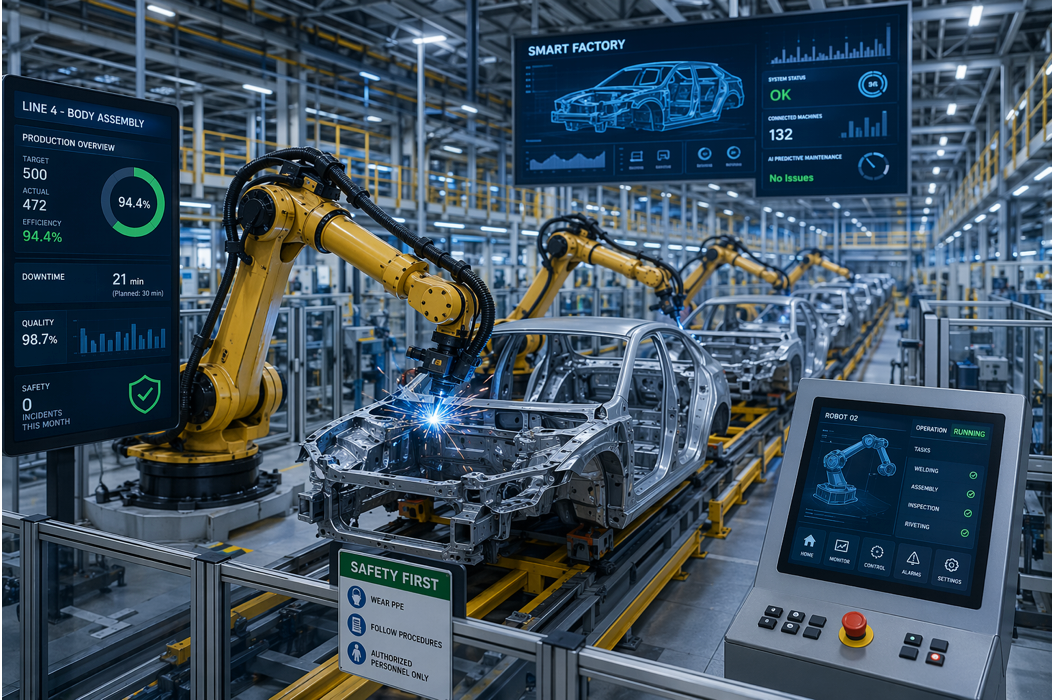
Industrial automation refers to the use of advanced technology and machinery to run industrial tasks with reduced human intervention. In the manufacturing industry, these automation solutions connect machines, sensors, software, and industrial control systems to handle production processes more efficiently.
For you, the value is practical. These systems can improve speed, quality, safety, and consistency while helping reduce errors, waste, and unplanned downtime. That is why industrial automation has become central to modern operations.
Defining Industrial Automation Systems
At its core, industrial automation is the shift from people directly operating every machine to machines handling much of the work themselves. An automation system uses computer-controlled equipment, software, and connected devices to manage industrial processes with minimal manual input.
In a typical manufacturing process, industrial control systems monitor what is happening, compare that information to set targets, and trigger the right response. This creates a feedback loop that helps machines adjust in real time. As a result, production becomes more stable and easier to manage.
For manufacturing companies, the benefits are clear. Industrial automation can increase productivity, improve product quality, support workplace safety, and reduce human error. It also helps businesses scale output without depending on more human labor for every added task.
Core Components and Technologies Used
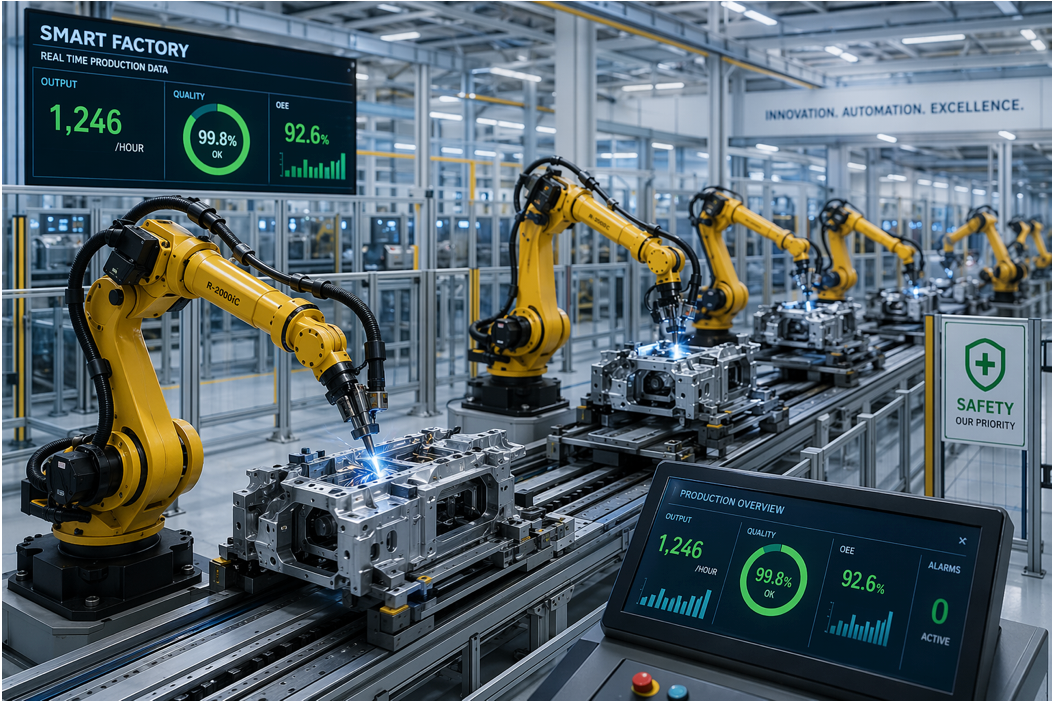
Every automated setup depends on a few essential parts working together. Control systems collect information, make decisions, and send commands. This is what lets a factory respond to changing conditions without constant operator action.
Some of the most common technologies include:
- Programmable logic controllers that manage equipment logic and sequence tasks on production lines.
- Sensors that track temperature, position, movement, and other operating conditions.
- Robotics that take on repetitive tasks, precise assembly, or hazardous tasks.
- Industrial internet of things devices that connect assets and support data sharing across communication networks.
When these technologies are combined, you get a more responsive and reliable operation. That means better visibility, smoother production, and stronger quality control across the manufacturing process.
How Automation Transforms Modern Operations
A modern facility no longer has to depend on manual checks and constant supervision. Automation solutions help machines monitor conditions, react to feedback, and keep work moving with fewer interruptions. That is a major part of digital transformation.
On busy production lines, this shift leads to higher operational efficiency. Systems can run around the clock, maintain a steady pace, and support faster decision-making through real time data. Businesses also gain more flexibility when they need to switch tasks or adjust production environments.
There is another important change as well. Automation improves consistency, reduces bottlenecks, and gives teams better insight into equipment health and output. Instead of simply doing more work, you can run operations with more control and less waste.
Main Types of Industrial Automation Systems
Not every factory needs the same setup. The main types of industrial automation are fixed, programmable, flexible, and integrated systems. Each one supports different manufacturing systems, depending on volume, product variety, and how often a process changes.
Some are built for nonstop, repetitive output. Others are better for batch production or facilities that handle different products. Understanding these options helps you choose the right fit, so the next sections break down how each
type of automation works.
Fixed Automation in Manufacturing
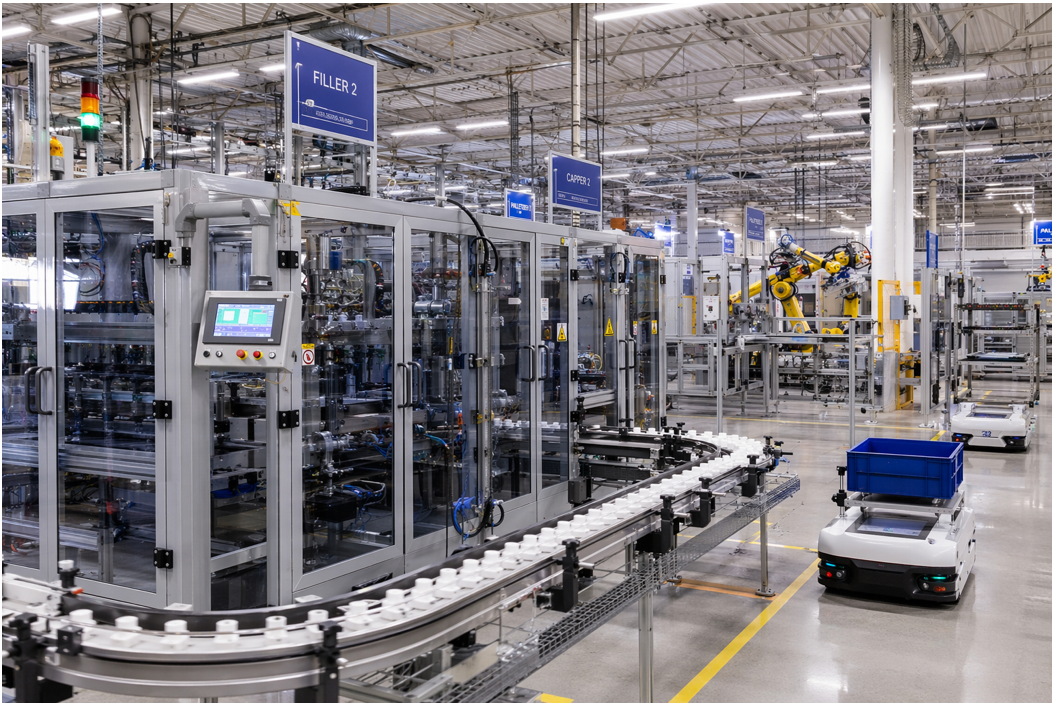
Fixed automation is the oldest and most established form of automation technology. It uses specialized equipment built for one defined job, making it ideal for repetitive tasks that do not change often. Think of it as a system designed for consistency over flexibility.
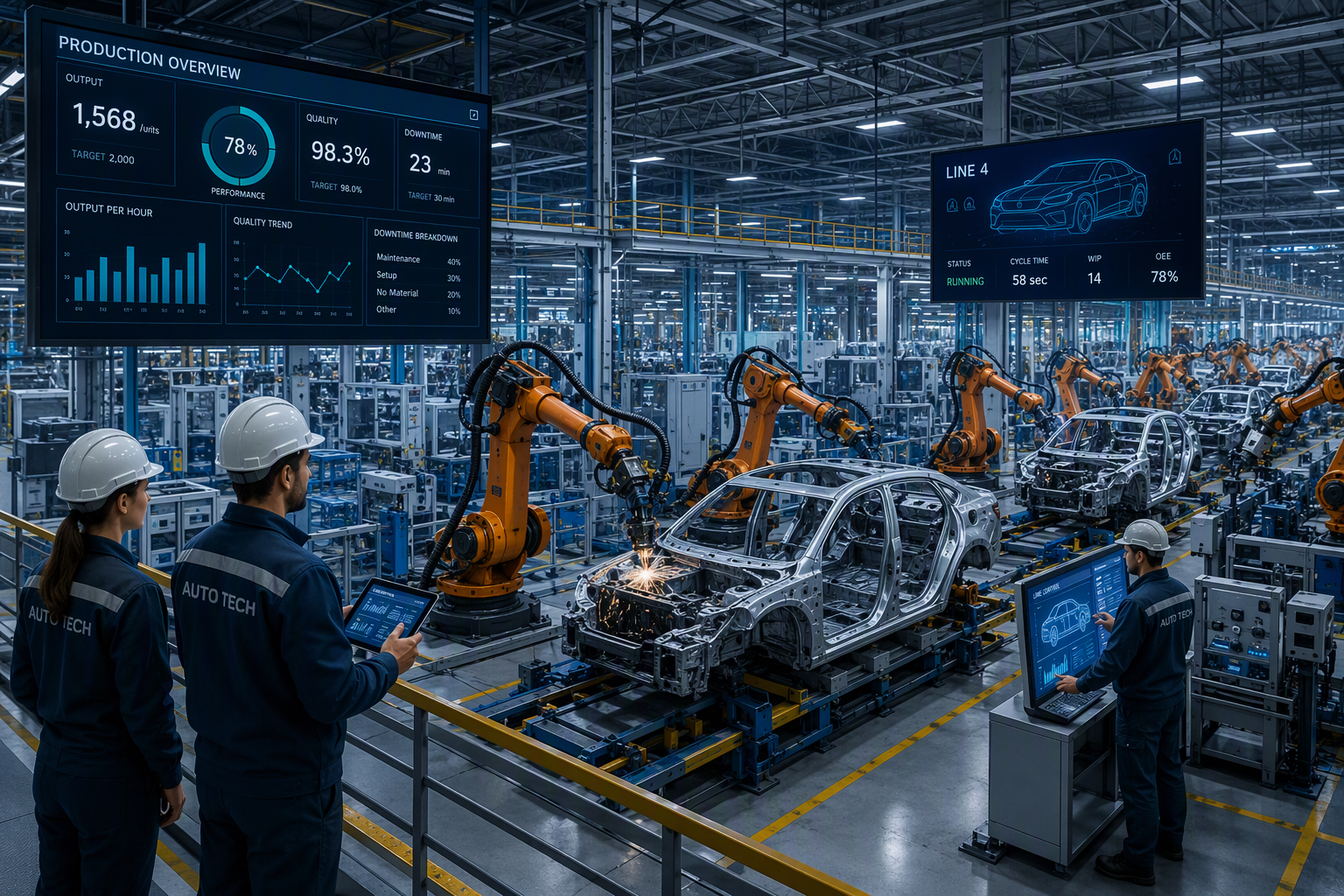
This model works especially well in mass production. In automotive plants, for example, the manufacturing process is split into stages. As a vehicle moves through assembly lines, each machine performs one specific task, such as welding or painting, at high speed.
If your operation makes the same product in large volumes, fixed automation can deliver strong throughput and lower costs over time. The tradeoff is that these systems are not easily reprogrammed, so they fit stable production environments best.
Programmable Automation for Flexibility
Programmable automation gives you more room to adapt. Instead of being locked into one task, machines can be reprogrammed to handle different jobs. That makes this approach useful for production environments where change happens from time to time.
This type works well for batch production and low-volume, high-variety work. Electronics manufacturers, for instance, can use programmable automation to make different product models in separate runs. Programmable logic controllers play a major role by helping equipment respond to new instructions.
Compared with fixed systems, programmable automation offers more flexibility. It is still structured, but it can support changing product demands without rebuilding the whole line. For many manufacturing systems, that balance makes it a smart middle-ground option.
Integrated and Flexible Automation Solutions
Flexible automation is designed for operations that need quick changeovers and higher adaptability. These systems use advanced robotics, software, and reconfigurable equipment to support different production processes with less delay between tasks. They are useful when customer demand shifts often.
Integrated automation takes things further by combining fixed, programmable, and flexible automation into one connected platform. This supports digital transformation because multiple systems work together instead of operating in isolation.
Common examples include:
- Smart factories that coordinate machines, software, and data in real time.
- Computer-integrated manufacturing systems that unify process automation across departments.
- Adaptive assembly lines that can handle different products with fewer disruptions.
If you want connected operations, integrated and flexible automation solutions offer the broadest control.
Key Technologies Powering Industrial Automation
Industrial automation depends on advanced technologies that work together across the plant floor. These tools help control systems monitor activity, process data, and trigger the right response at the right moment.
The most important technologies include robotics, programmable logic controllers, and connected sensing devices. Each one plays a specific role in automation solutions, from motion and material handling to decision-making and data acquisition. To see how this works in practice, it helps to look at the core technologies behind modern factories.
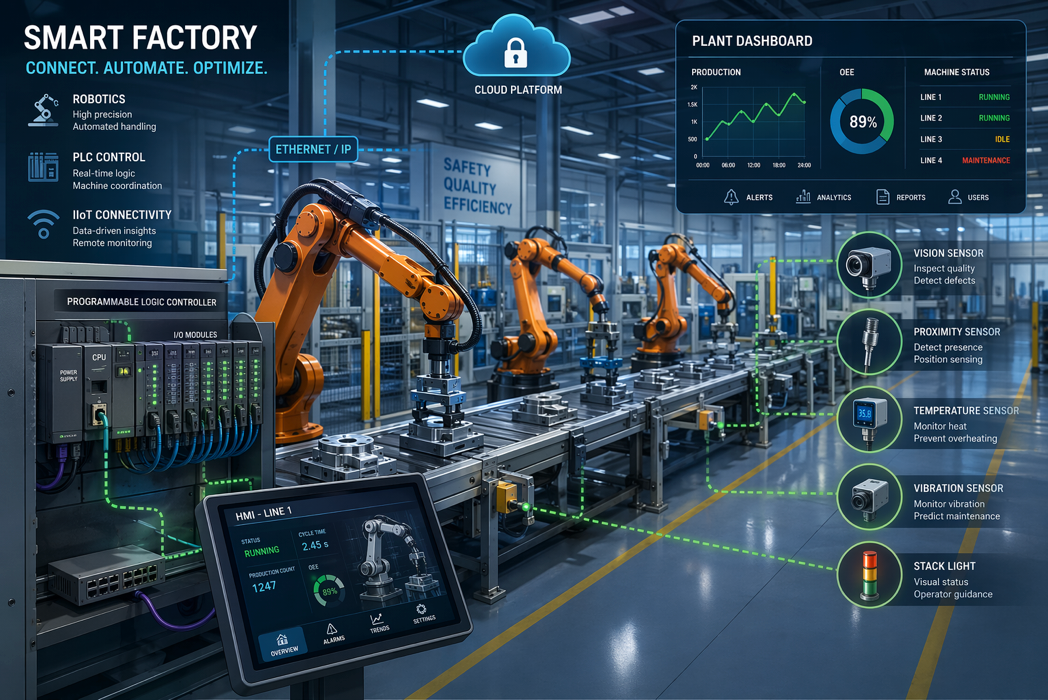
Robotics and Cobots in Industrial Settings
Industrial robots are now a familiar part of many factories. They are used for repetitive tasks that require speed, precision, and consistency. In automotive and electronics settings, robotic automation can weld, assemble, paint, and move components with very low error rates.
A newer category is collaborative robots, often called cobots. These systems are designed to work alongside human operators instead of replacing every manual role. They are especially useful when jobs are physically demanding or require close support on the line.
You often see robots and cobots used for:
- Repetitive tasks on assembly lines
- Hazardous tasks in unsafe production environments
- Material handling between workstations
- Support roles that reduce strain on human operators
This mix improves output while making work safer and more manageable.
Programmable Logic Controllers (PLCs)
Programmable logic controllers are one of the most important parts of industrial automation. These compact devices act as the brain behind many control systems, receiving signals from machines and deciding what should happen next. They are central to programmable automation.
On production lines, PLCs help manage timing, sequencing, and equipment response. They can monitor the status of components, detect changes in the environment, and trigger actions without waiting for constant operator input. That makes automation solutions faster and more reliable.
If you need a system that can be updated for different tasks, PLCs are a strong fit. They support flexibility while keeping industrial processes organized, repeatable, and easier to scale as your operation grows or changes.
Sensors, Actuators, and Industrial IoT Devices
Sensors are the starting point for real time automation. They detect what is happening on a machine or line, such as speed, position, pressure, or temperature. That information is then used for data acquisition and system response.
Actuators handle the physical side of the job. Once control systems process incoming data, actuators, motors, and related devices carry out the action. This could mean moving a conveyor, adjusting a valve, or guiding industrial machinery through a specific task.
Industrial internet of things devices connect all of this through communication networks. With that connection, operators can view performance, monitor conditions, and make informed decisions faster. The result is a more visible, responsive, and connected production environment.
Leading Industries Utilizing Automation Solutions
Automation solutions are used across a wide range of sectors, not just one corner of the manufacturing industry. Businesses adopt them to improve speed, consistency, and safety in demanding production environments.
Common users include automotive, aerospace, food and beverage manufacturing, pharmaceuticals, healthcare, logistics, mining, consumer goods, and supply chain operations. While the goals differ by sector, the reason is similar: companies want stronger control over output, better quality standards, and more efficient industrial processes.
Automotive and Aerospace Applications
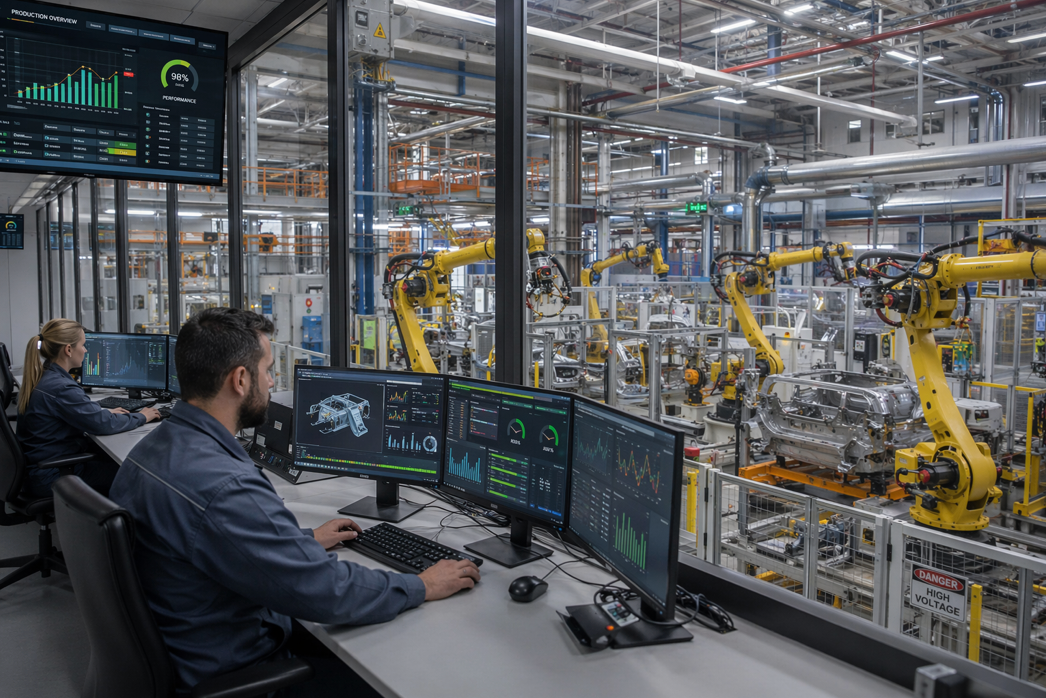
Automotive and aerospace were among the early adopters of industrial automation. These sectors depend on precision, repeatability, and tightly controlled production lines, which makes automation technology a natural fit.
In automotive plants, machines often handle specialized stages of vehicle production. Aerospace uses similar systems for exacting tasks where consistency matters. Because both industries manage complex builds, automation helps reduce variation and keep work moving.
Typical uses include:
- Welding and painting on automotive assembly lines
- Coordinated part handling across production lines
- Precision-driven processes in aerospace manufacturing
For these industries, automation is not just about speed. It also supports dependable quality, safer workflows, and tighter control over the full manufacturing process.
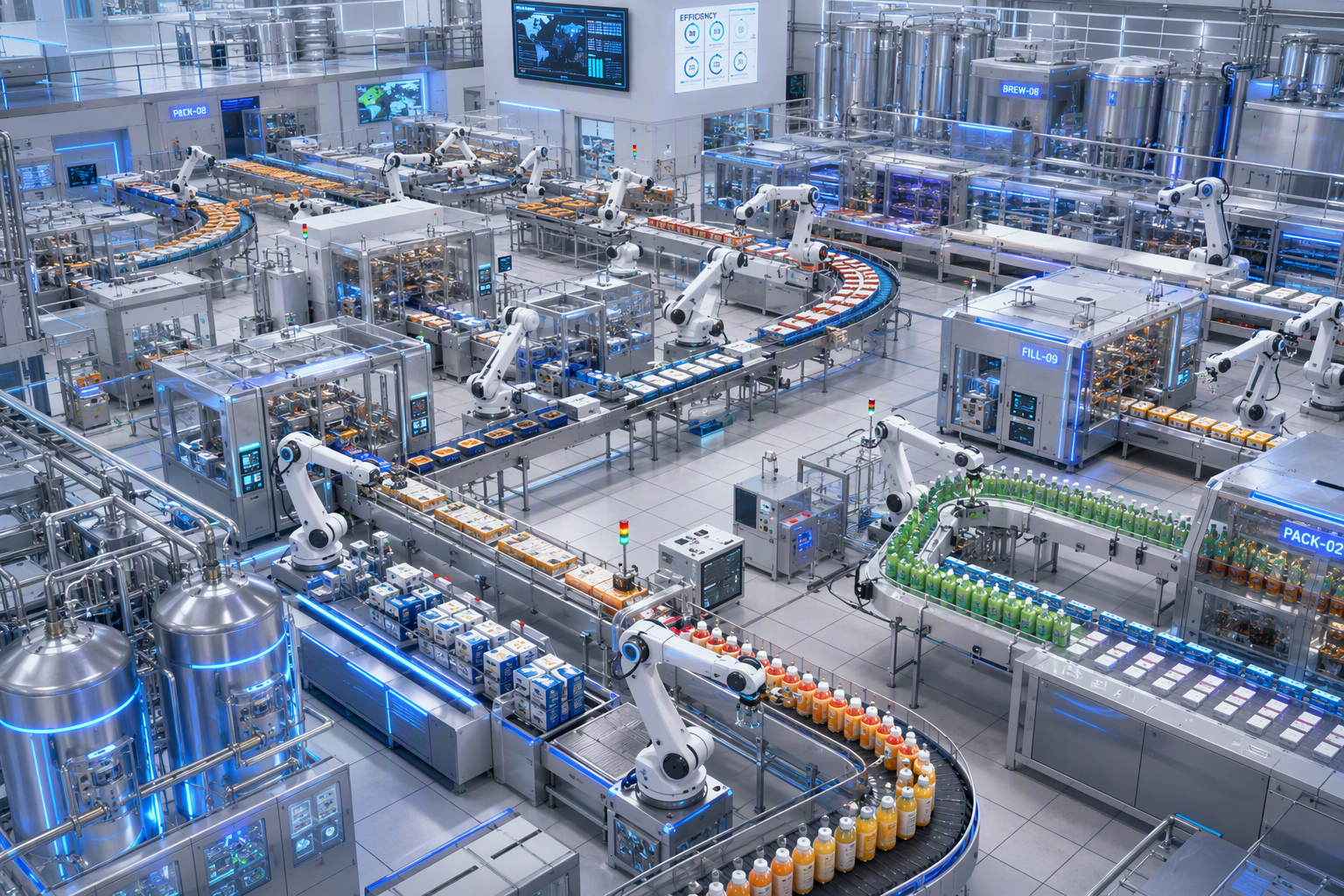
Food and Beverage Manufacturing
Food and beverage manufacturing relies on speed and consistency. That is why process automation is widely used for mixing, filling, packaging, and similar tasks. Automated systems can handle large volumes while helping businesses maintain stable output.
Another major advantage is quality control. Computerized systems and sensors help ensure that bottles, cans, and packaged goods meet set requirements with less variation. This also helps reduce waste, which matters in high-volume operations.
For companies in this space, automation solutions support both productivity and reliability. They make it easier to repeat the same process accurately, respond to demand, and keep product quality aligned with operational goals across the line.
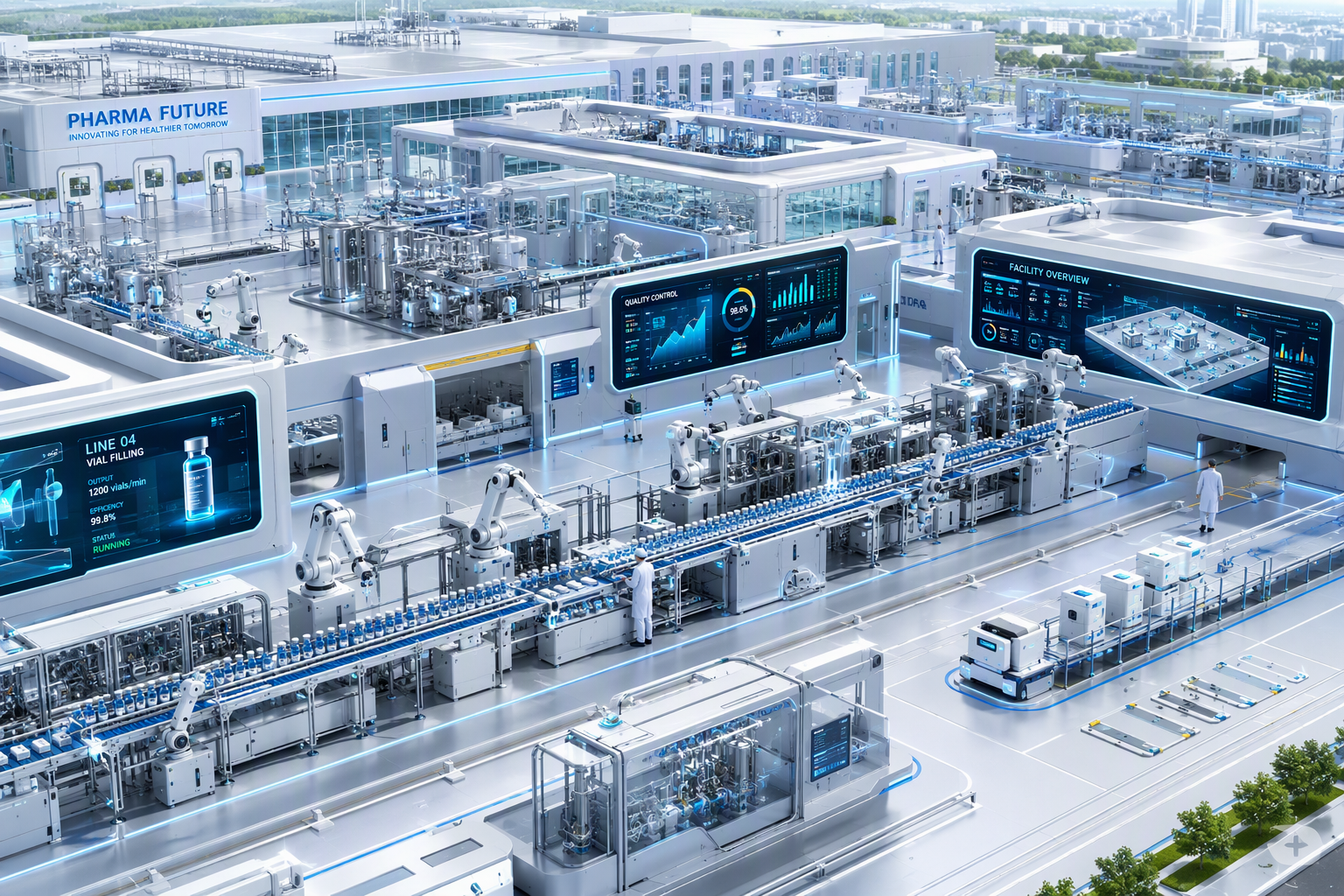
Pharmaceuticals and Healthcare
Pharmaceuticals and healthcare use automation where control and consistency are essential. In these industries, even small variations can affect quality standards, so automated systems help reduce risk across critical industrial processes.
Automation solutions support repeatable workflows, cleaner execution, and more dependable monitoring. That matters when products must be made with careful oversight and uniform results. Connected systems also help facilities track output more closely over time.
Common benefits in pharmaceuticals and healthcare include:
- Better adherence to strict quality standards
- More consistent execution of industrial processes
- Reduced manual handling in sensitive production steps
If your operation requires precision and traceable performance, automation can provide a strong operational foundation.
Real-World Examples of Industrial Automation in Action
Industrial automation shows its value most clearly when you look at how it works on the floor. In real settings, automation solutions help companies move materials, assemble products, and maintain quality control with less delay and fewer mistakes.
You can see these gains on production lines, in automated warehouses, and in packaging operations. Each example highlights a practical outcome, such as faster throughput, better product quality, or safer handling of repetitive work. The following cases make those benefits easier to picture.
Case Study: Automated Assembly Line
Automated assembly lines remain one of the clearest examples of industrial automation in action. In automotive manufacturing, a vehicle moves through different stages while machines perform fixed tasks such as welding or painting. Each station is built to do one job well.
This structure cuts production time because equipment works at a steady pace without the fatigue that affects human labor. It also supports real time coordination, since each machine performs its function in sequence as the product moves forward.
For companies, the result is consistent output and smoother flow across assembly lines. When the same process repeats at scale, automated systems help maintain speed, accuracy, and dependable quality while reducing unnecessary delays.
Improving Logistics with Automated Warehouses
Warehousing is another strong example of automation at work. In busy facilities, automated warehouses use smart systems to move goods with less manual effort. This improves material handling and helps speed up supply chain operations.
Some facilities now use autonomous mobile robots and self-driving industrial vehicles for repetitive transport routes. These systems can take commands, travel to stations, stop, start, and adapt to changes in workflow or layout. That flexibility makes them useful in evolving environments.
You may see automated warehouses using:
- Autonomous mobile robots for internal transport
- Conveyor systems for continuous movement of goods
- Fleet management tools for monitoring and control
These tools reduce strain on workers and support faster, more organized logistics.
Enhanced Packaging and Quality Control
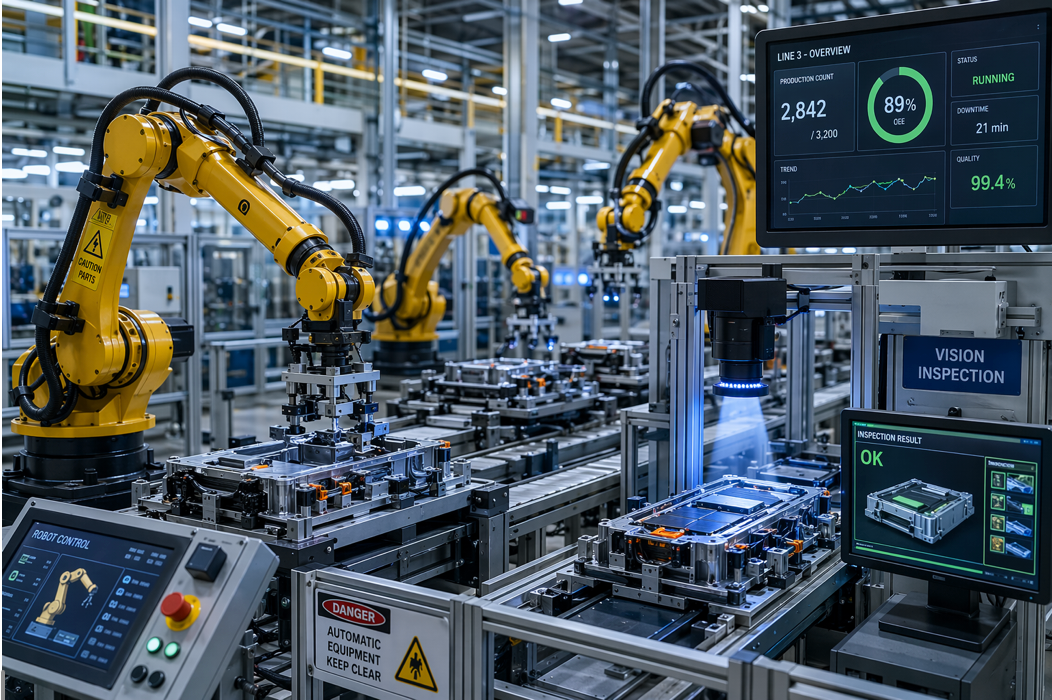
Packaging lines benefit greatly from manufacturing automation because they repeat the same actions at high speed. Machines can fill, seal, label, and sort products more consistently than manual processes in many production environments.
That consistency supports quality control. Automated systems reduce variation caused by fatigue, distraction, or uneven manual performance. In the compiled information, one example showed that automated machinery in automotive work reached a far lower error rate than a hand-operated process.
For your operation, the takeaway is simple. Industrial automation helps protect product quality while keeping output steady. When packaging and inspection are automated, it becomes easier to meet standards, reduce waste, and deliver more reliable results.
Benefits of Upgrading to Automated Manufacturing Systems
Upgrading to automated manufacturing systems can improve far more than speed. Businesses often adopt automation solutions to strengthen operational efficiency, lower waste, and gain better control over production processes.
The biggest advantages include higher productivity, fewer errors, better workplace safety, and measurable cost savings. Automation can also help companies deal with labor shortages and reduce unplanned downtime. The next sections explain how these benefits show up in day-to-day operations and why they matter for long-term performance.
Boosting Productivity and Efficiency
One of the clearest reasons to invest in automation is improved efficiency. Automated systems can run longer, move faster, and complete repetitive work without the drop in pace that often comes with manual production.
Because automation solutions reduce the need for constant human intervention, facilities can increase throughput and keep lines moving more steadily. This improves operational efficiency and helps teams focus on higher-value work instead of routine handling.
Common productivity gains include:
- Faster cycle times across production processes
- Higher throughput without adding the same level of labor
- More stable output during long operating hours
If bottlenecks are slowing you down, automation often provides a direct path to better performance and more predictable daily results.
Reducing Errors and Improving Safety
Manual work can lead to inconsistency, especially when tasks are repetitive or physically demanding. Automation technology helps reduce human error by standardizing how work is completed. That makes quality control easier and results more uniform.
Safety is another major benefit. Many facilities use automation to remove workers from dangerous tasks, such as jobs around moving vehicles, heavy equipment, or high-risk environments. This supports better workplace safety and lowers the likelihood of avoidable accidents.
There is a human benefit here too. When machines take on hazardous or exhausting work, employees can shift into roles that are less stressful and often more valuable. That can support retention while also improving daily working conditions.
Cost Savings and ROI Advantages
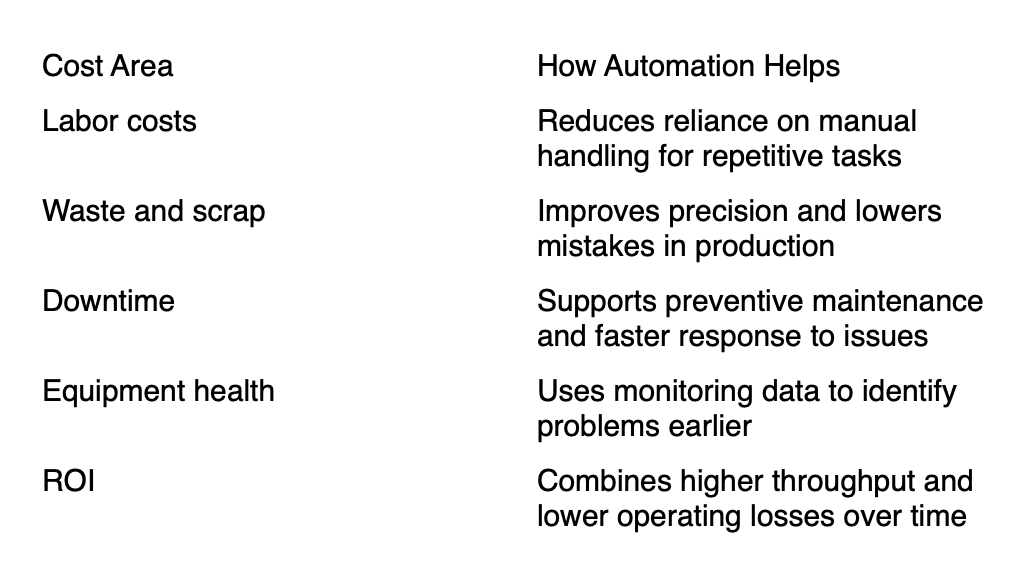
Although automation has a high initial cost, the long-term financial benefits can be significant. Manufacturing automation can lower labor costs, reduce waste, improve consistency, and support better use of raw materials. Over time, those gains strengthen ROI.
Another important factor is equipment health. Automated systems can support preventive maintenance and help teams respond before issues become larger failures. That lowers the risk of costly downtime and keeps production assets working longer.
Here is a simple view of how cost savings can build:
How to Select the Right Industrial Automation Provider
Choosing the right automation provider is about more than buying equipment. You need a partner that understands your goals, your production setup, and your long-term maintenance needs.
Some businesses prefer global leaders with broad capabilities, while others value regional experts with closer support and faster response times. The best choice depends on your facility, budget, and technical requirements. To make that decision easier, focus on experience, service offerings, and how well the provider fits your operation.
Evaluating Experience and Expertise
Start by looking at industry expertise. A provider should understand the demands of your sector, whether that means high-volume manufacturing, batch production, or fast-moving logistics. Experience matters because automation is rarely one-size-fits-all.
You should also assess how well the company handles advanced technologies. Many modern systems involve robotics, industrial internet of things tools, data-driven monitoring, and software that supports digital transformation. A provider needs to connect those parts into a workable solution.
The goal is simple: find a team that can match automation solutions to your real production challenges. If they understand your environment and can explain their approach clearly, you are more likely to get a system that performs well over time.
Understanding Service Offerings and Support
A strong provider does more than install machines. Industrial automation works best when support continues after deployment, especially in demanding production environments where downtime can quickly become expensive.
That is why service offerings matter. You should understand what kind of help is available for setup, reprogramming, troubleshooting, and ongoing maintenance needs. The right support can make adoption smoother and protect system performance over time.
Useful service offerings often include:
- System design and installation
- Programming for programmable logic controllers
- Maintenance support and troubleshooting
- Monitoring tools for equipment and production performance
When support is clear and practical, you can operate with more confidence and fewer surprises after launch.
Comparing Providers: Global Leaders vs. Regional Experts
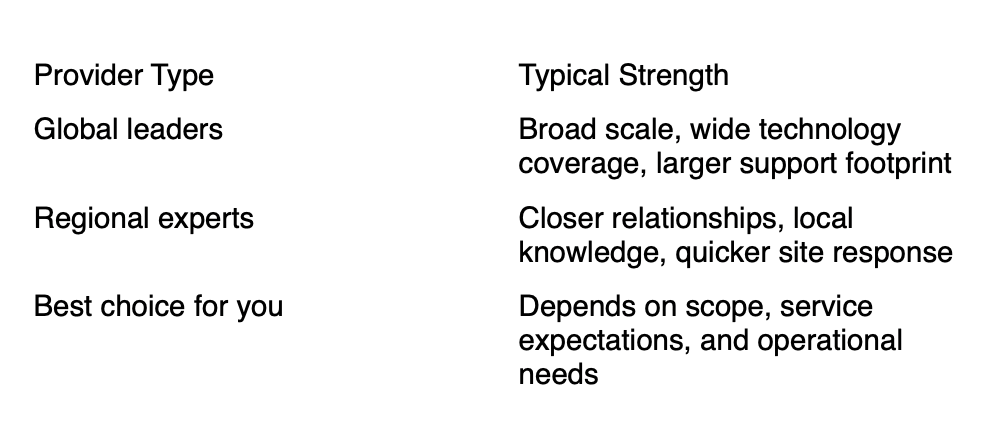
In the industrial automation industry, some companies are known as global leaders because they offer broad portfolios, large service networks, and deep technical resources. Others stand out as regional experts with stronger local relationships and faster on-site support.
Neither option is always better. If your business operates in many locations, global leaders may be appealing. If you need hands-on guidance and local responsiveness, regional experts may be a better fit for your automation solutions.
This comparison can help:
The right provider is the one that aligns with how your facility actually runs.
Sustainability Advantages of Industrial Automation Solutions
Industrial automation can support sustainability in practical ways. When systems use materials, energy, and equipment more effectively, businesses can reduce waste and improve overall resource optimization.
That matters for both cost control and environmental impact. Automation solutions help standardize work, limit unnecessary consumption, and support energy savings through smarter operations. While the main goal is often performance, many companies also gain clear sustainability benefits. The next two sections show where those improvements usually come from.
Resource Optimization and Waste Reduction
One major sustainability benefit of manufacturing automation is tighter control over production processes. When machines work with more precision, companies can use raw materials more efficiently and reduce avoidable losses.
Waste reduction happens because automated systems repeat tasks consistently. Less variation means fewer defects, fewer reworks, and less discarded material. For facilities under pressure to do more with less, that kind of resource optimization creates both environmental and financial value.
Key improvements often include:
- Better use of raw materials during production
- Lower scrap caused by inconsistent manual execution
- More stable workflows that reduce overprocessing
- Stronger tracking of process performance over time
If sustainability is part of your strategy, reducing waste is a strong place to start.
Energy Savings and Environmental Impact
Energy use is another area where automation technology can help. By keeping equipment running more predictably and limiting unnecessary slowdowns or interruptions, process automation can support more efficient operations.
The environmental impact improves when facilities consume less energy and avoid wasteful production patterns. Connected systems also make it easier to monitor performance and identify where processes can be adjusted for better results. That visibility matters when you want measurable improvements.
For many companies, these gains are not separate from business goals. Energy savings, lower waste, and smoother production all work together. That means automation can strengthen sustainability while also improving day-to-day efficiency and long-term operational control.
Conclusion
In conclusion, embracing industrial automation solutions can significantly transform your operations by enhancing productivity, reducing errors, and improving safety. By understanding the various types of automation systems and the technologies that power them, businesses can make informed decisions that align with their unique needs. The benefits extend beyond operational efficiency; they also encompass sustainability advantages that contribute to a greener future. Investing in automation isn't just a trend—it's a vital step towards future-proofing your business in an ever-evolving industrial landscape. If you're ready to explore the potential of automation for your operations, get in touch with our experts to discover tailored solutions that can elevate your business to the next level.
Frequently Asked Questions
What services do industrial automation solution providers offer?
Industrial automation providers usually offer system design, installation, programming, support for programmable logic controllers, troubleshooting, and ongoing service. Many also help improve the manufacturing process on production lines and address long-term maintenance needs so equipment performs reliably after deployment.
How does an industrial automation systems integrator support a manufacturing business?
An integrator connects each part of an automation system so machines, software, and controls work together smoothly. This supports manufacturing automation, strengthens digital transformation efforts, improves quality control, and helps create safer workflows that reduce risk and improve workplace safety.
What are the sustainability benefits of using industrial automation solutions?
Automation solutions support sustainability by improving resource optimization, reducing waste, and helping facilities use energy more efficiently. These changes can lower environmental impact while also improving consistency and operating performance, making energy savings and smarter production goals easier to achieve.
You might also like