Streamline Operations: Best Industrial Automation Solutions
Key Highlights
- Industrial automation includes fixed, programmable, flexible, and integrated automation systems for different production needs. Core automation solutions rely on sensors, control systems, software, robotics, and communication networks. Modern tools such as artificial intelligence and the internet of things support real time decisions and stronger operational efficiency. Globally, leading industrial automation companies include Siemens, ABB, Schneider Electric, Rockwell Automation, Mitsubishi Electric, and Emerson Electric. These companies are recognized for developing advanced automation systems, automation solutions, and services that enhance operational efficiency and enable real time process control through their integration of artificial intelligence, communication networks, and the internet of things.
- Core automation solutions rely on sensors, control systems, software, robotics, and communication networks.
- Modern tools such as artificial intelligence and the internet of things support real time decisions and stronger operational efficiency.
- Manufacturers gain better output, product quality, safety, and lower costs across the manufacturing process.
- Common use cases include assembly lines, smart warehousing, predictive maintenance, and remote monitoring.
- The right provider should match technology, support, and customization to your operational needs.
Introduction
If you want to streamline operations, industrial automation is hard to ignore. Today’s automation systems help businesses handle the manufacturing process with greater speed, consistency, and less human intervention. What does that mean for you? Fewer delays, better output, and stronger control over daily work. From assembly lines to connected factories, automation is now a practical business tool, not a future idea. Understanding how these systems work is the first step toward choosing the right solution for your operation.
Understanding Industrial Automation Solutions
At its core, industrial automation means using advanced machines, software, and control systems to run tasks with minimal manual effort. These automation solutions support the manufacturing process by improving speed, accuracy, and consistency across production environments.
Over time, industrial automation moved from basic mechanization to smart, connected systems. Today, sensors, controllers, robotics, and software work together in real time. To see why this matters, it helps to start with the definition, the evolution, and the main parts inside modern automation systems.
Definition and Evolution of Industrial Automation
Industrial automation is the use of computer-controlled machines, software, and automation systems to run industrial processes with limited human involvement. In simple terms, machines handle repetitive tasks while people guide strategy, oversight, and improvement. For manufacturing companies, this brings faster output, better consistency, lower costs, and safer working conditions.
Years ago, automation focused mainly on mechanizing repetitive tasks on an assembly line. The goal was simple: increase production and reduce manual effort. Over time, the industrial automation industry expanded as businesses wanted more flexibility, better control, and stronger product quality in the manufacturing process.
Now, industrial automation includes robotics, artificial intelligence, machine learning, and connected devices. With Industry 4.0 and smarter software, systems can monitor conditions, respond in real time, and support better decisions. That shift is why automation solutions are now central to modern manufacturing.
Components of an Industrial Automation System
Every industrial setup depends on several connected parts working as one. Automation systems gather information, process it, and trigger action. This closed-loop approach helps control systems maintain stable performance with less reliance on a human operator during routine work.
Most industrial control systems include a few core elements that keep production moving:
- Sensors that detect machine conditions, output, or changes on production lines
- Controllers such as programmable logic controllers that process signals and make decisions
- Actuators, motors, and robots that carry out physical actions
- Software, HMIs, and communication networks that connect devices and show performance data
When these parts work together, you get faster response times and more reliable operations. The human operator still matters, but their role shifts from constant manual action to supervision, adjustment, and improvement. That is a major reason automation solutions benefit manufacturing companies.
Major Types of Industrial Automation Systems
Not every factory needs the same setup, which is why there are different types of industrial automation. Some automation systems are built for one unchanging job, while others are designed to adjust across changing products, volumes, and control systems.
You will usually see four main models discussed in the market: fixed, programmable automation, flexible automation, and integrated automation. Each type of automation fits a different production goal. The next sections break down how these systems work in real factories and where each one adds the most value.
Fixed Automation in High-Volume Manufacturing
Fixed automation is the oldest and most established option. It uses specialized equipment to perform a specific sequence of repetitive tasks with very little change. Because the system is built for one purpose, it works best when the manufacturing process stays the same for long periods.
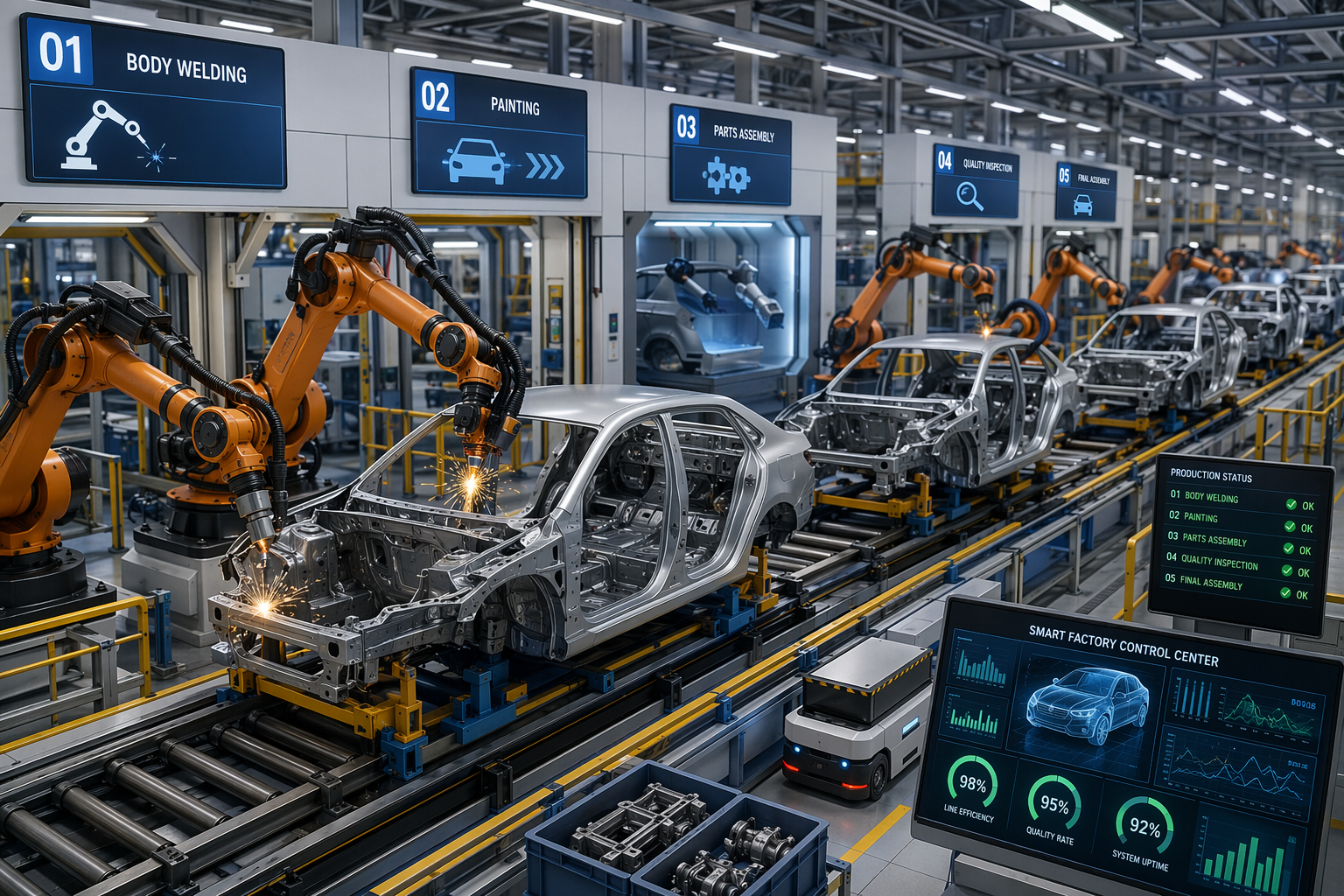
You often find fixed automation on an assembly line in high-volume production lines. Automotive manufacturing is a clear example. A vehicle moves through one stage after another, and each station completes a specific action such as welding or painting. The equipment is designed for speed, consistency, and steady output.
The big advantage is efficiency. Fixed automation can run continuously, produce at high speed, and support mass production with lower human intervention. The tradeoff is flexibility. If your process changes often or you make many different products, this system can be too rigid.
Programmable Automation for Flexible Processes
Programmable automation gives you more room to change tasks when production needs shift. Instead of being locked into one activity, programmable automation systems can be reprogrammed to produce different items or handle updated sequences. That makes them useful when product designs change over time.
This approach is especially effective for batch production. A manufacturer can run one set of products, update the instructions, and then switch to another batch. Control systems and programmable logic controllers are central here because they manage machine behavior and respond to production requirements.
In many manufacturing systems, this balance of efficiency and flexibility is highly practical. You get more adaptability than fixed automation without giving up process control. If your facility handles moderate volumes, varied products, or periodic changeovers, programmable automation is often a strong fit.
Flexible and Integrated Automation Systems
Flexible automation is built for change. These systems can adapt quickly to new requirements, making them useful when facilities need to produce different products with minimal downtime. Unlike simpler models, flexible automation systems are designed to handle frequent adjustments without major disruption.
You might see this in facilities using collaborative robots, autonomous mobile robots, or adaptive assembly tools. These manufacturing systems support quick responses to layout shifts, new workflows, or evolving customer demand. That makes flexible automation a strong option for operations that value customization and fast changeovers.
Integrated automation goes a step further by linking many systems into one coordinated environment. Fixed, programmable, and flexible tools can work together through software, data sharing, and connected controls. In smart factories, integrated automation improves visibility, reduces delays, and creates a more unified production process.
Core Technologies of Modern Automation Solutions
Modern automation solutions are powered by more than one tool. Robotics, programmable logic controllers, software platforms, and sensors all play a role in today’s automation technology. These systems now do far more than repeat motions. They also collect data, communicate status, and support faster decisions.
That progress is closely tied to artificial intelligence, the internet of things, and even the digital twin concept. Together, these technologies help businesses connect machines, monitor conditions, and improve performance. The next sections look at the major technologies shaping industrial automation right now.
Role of Robotics and Cobots in Industry
Industrial robots have changed the way factories handle speed, precision, and repetition. They are widely used for assembly, welding, painting, and material handling. Because robots can work continuously without fatigue, they help manufacturers keep output steady and improve consistency across production environments.
Just as important, collaborative robots are expanding what automation can do. Unlike traditional robots that often work in separated areas, collaborative robots are designed to support people on the floor. They assist with dangerous tasks, repetitive movement, and physically demanding work while the human team stays focused on higher-value duties.
Key benefits stand out clearly:
- Industrial robots improve throughput on repetitive tasks with consistent accuracy
- Collaborative robots support safer workflows by reducing exposure to hazardous tasks
- Robotics help with material handling, especially where lifting, transport, or precision matters
Use of PLCs and SCADA Systems
Programmable logic controllers are a core part of many automated facilities. These controllers receive signals from sensors, process the information, and send commands to machines. In other words, programmable logic controllers act as the decision engine inside many industrial control systems.
SCADA, short for supervisory control and data acquisition, adds a broader layer of visibility and management. It allows operators to monitor equipment, track process conditions, and supervise performance from a central interface. In larger environments, SCADA may connect with remote terminal units to collect data from different areas of the operation.
Together, PLCs and SCADA strengthen control systems in meaningful ways. They improve response speed, help maintain stable output, and give teams a clearer view of production. For manufacturing companies, that leads to stronger process automation, fewer manual checks, and better control over daily operations.
Artificial Intelligence and IoT Integration
Artificial intelligence and the internet of things are pushing automation into a more connected stage. Machines no longer just perform programmed actions. They also gather information, share it, and support better decisions in real time. This is a major reason smart factories are becoming more practical.
The industrial internet of things connects sensors, machines, and software across the production process. Once data starts flowing, machine learning tools can detect patterns, monitor equipment health, and flag issues before they become larger problems. That improves speed, visibility, and responsiveness across industrial processes.
Practical uses include:
- Real time monitoring of machine status and production output
- Machine learning models that support predictive maintenance and maintenance needs
- Connected devices that improve scheduling, tracking, and process adjustments through the industrial internet of things
Key Benefits of Industrial Automation Solutions
Why do so many companies invest in automation solutions? The short answer is simple: measurable performance gains. Industrial automation improves operational efficiency, supports cost savings, and strengthens process automation across daily production. It also helps businesses respond to labor shortages, quality demands, and pressure to scale.
The benefits are not limited to one area. Automation can raise output, improve product quality, reduce risk, and create more stable workflows. In the sections ahead, you will see how these systems increase productivity, improve consistency, and protect people while supporting long-term business growth.
Boosting Productivity and Efficiency
One of the clearest gains from automation is higher output. Automation systems take over repetitive tasks that slow teams down and drain labor hours. Because machines can keep working around the clock, facilities can reduce delays, shorten production time, and improve operational efficiency without simply adding more staff.
There is also a strong cost angle. When equipment handles routine movement, assembly, or inspection, businesses often see lower costs tied to manual labor, errors, and stoppages. This does not remove people from the process entirely. Instead, it lets them focus on work that creates more value.
Main productivity advantages include:
- Faster cycle times and improved throughput across the line
- Better use of labor by shifting workers away from repetitive tasks
- More stable output that supports lower costs and stronger daily efficiency
Improving Quality and Process Consistency
Quality matters because small variations can create waste, rework, and customer complaints. Process automation helps reduce that variation by keeping tasks consistent from one cycle to the next. Machines do not tire, lose focus, or drift from standard instructions the way people can during long shifts.
That consistency improves product quality in a direct way. Automated equipment can repeat the same motion, timing, and settings with high precision. In manufacturing, even a small improvement in repeatability can make a big difference in output, scrap rates, and quality control performance.
Automation also strengthens quality inspection. Sensors and software can detect deviations quickly, which helps teams correct issues before they spread across production. By reducing human error and improving process stability, automated systems create a more reliable path to better quality and stronger customer confidence.
Enhancing Safety and Reducing Operational Risks
Safety is one of the most important reasons to automate. In many facilities, workers face lifting strain, moving vehicles, heat, or repeated exposure to difficult conditions. Automation reduces the need for direct human intervention in those situations, which supports stronger workplace safety and fewer preventable incidents.
This matters in warehouses, manufacturing plants, and transport-heavy sites. Automated equipment can take over dangerous tasks that put people at risk. When systems handle movement, transport, or risky machine interaction, your team can work in a more controlled and less stressful environment.
Key safety gains often include:
- Reduced exposure to hazardous tasks and dangerous tasks
- Less manual interaction with moving equipment or high-risk zones
- Better alignment between operational needs and safer daily workflows
Industrial Automation in Leading U.S. Industries
Industrial automation is not limited to one sector. Across the U.S., companies use automation solutions to improve industrial processes, increase output, and deal with changing market pressure. The manufacturing industry has been a major adopter, but many adjacent fields rely on automation systems as well.
Automotive, food and beverage, pharmaceuticals, chemicals, logistics, and other sectors all use automation in different ways. The goals may vary, yet the pattern stays the same: better control, stronger quality, and more efficient operations. The next examples show where automation delivers value in everyday industry settings.
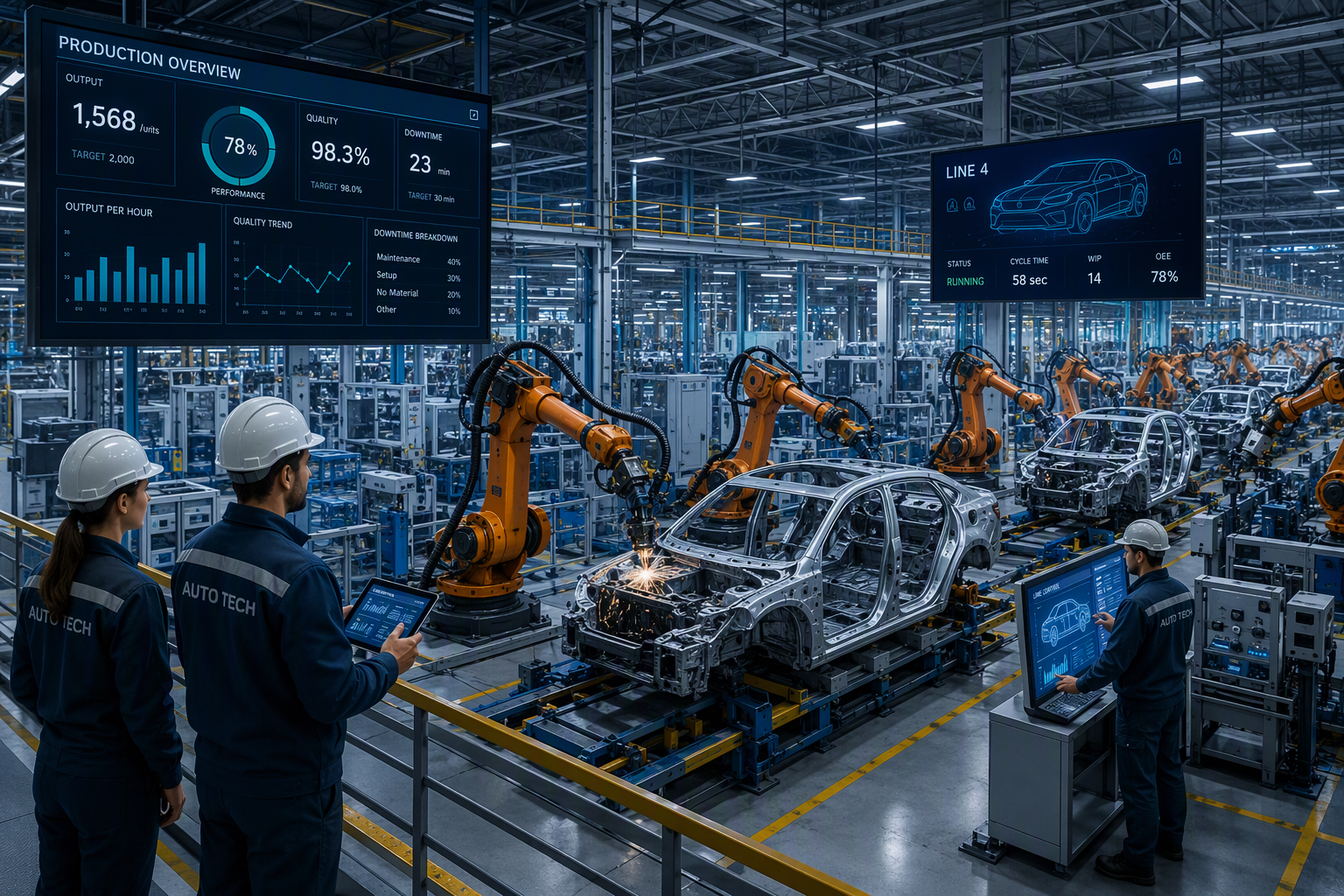
Automotive and Transportation Sectors
Automotive is one of the most recognized users of manufacturing automation. Assembly, welding, painting, and parts installation are often handled by machines designed for speed and repeatability. This helps automotive plants manage high volumes while keeping quality and timing under control.
Transportation operations also benefit from automation beyond the factory floor. Material handling systems, conveyors, and autonomous vehicles can move parts, subassemblies, or finished goods through facilities more efficiently. That helps reduce bottlenecks and keeps production linked with the larger supply chain.
The value is clear when production is divided into stages. Each automated station performs a specific task with consistent timing, allowing the whole process to flow more smoothly. For companies in automotive and transportation, automation supports scale, precision, and better coordination from plant operations to downstream logistics.
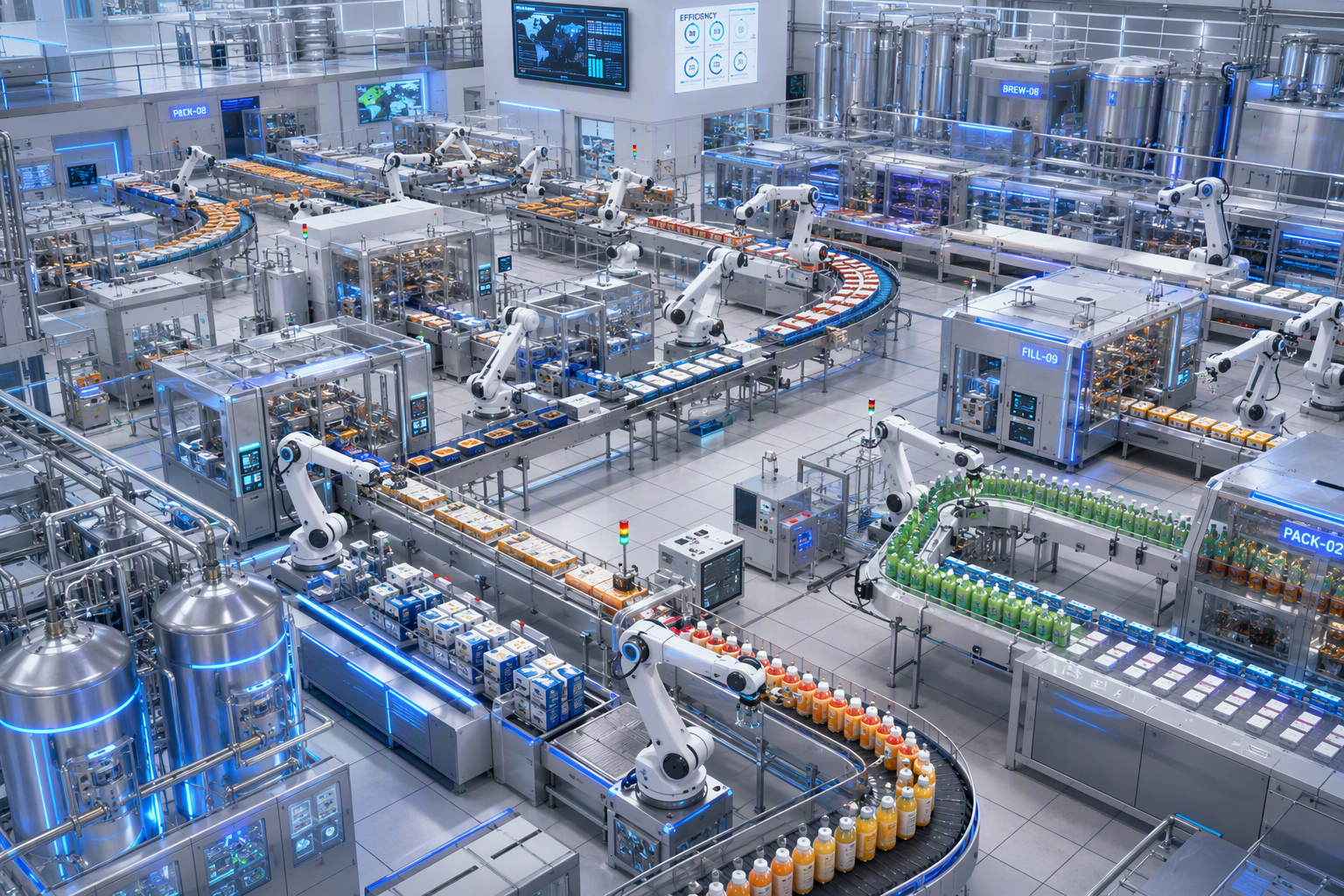
Food and Beverage Processing Applications
In food and beverage operations, consistency and control are essential. Automated systems help manage filling, mixing, packaging, and other industrial processes with steady timing and precision. That makes it easier to maintain output while supporting quality control across high-volume environments.
Automation also helps facilities use raw materials more effectively. When equipment follows exact settings, waste can be reduced and production can stay more predictable. In a fast-moving manufacturing process, that level of repeatability supports both efficiency and better finished goods.
Another advantage is standardization. Automated filling or packaging equipment can handle thousands of units with uniform results, which is hard to match manually. For food and beverage businesses, automation supports safer, cleaner, and more dependable production while helping teams meet performance goals with fewer disruptions.
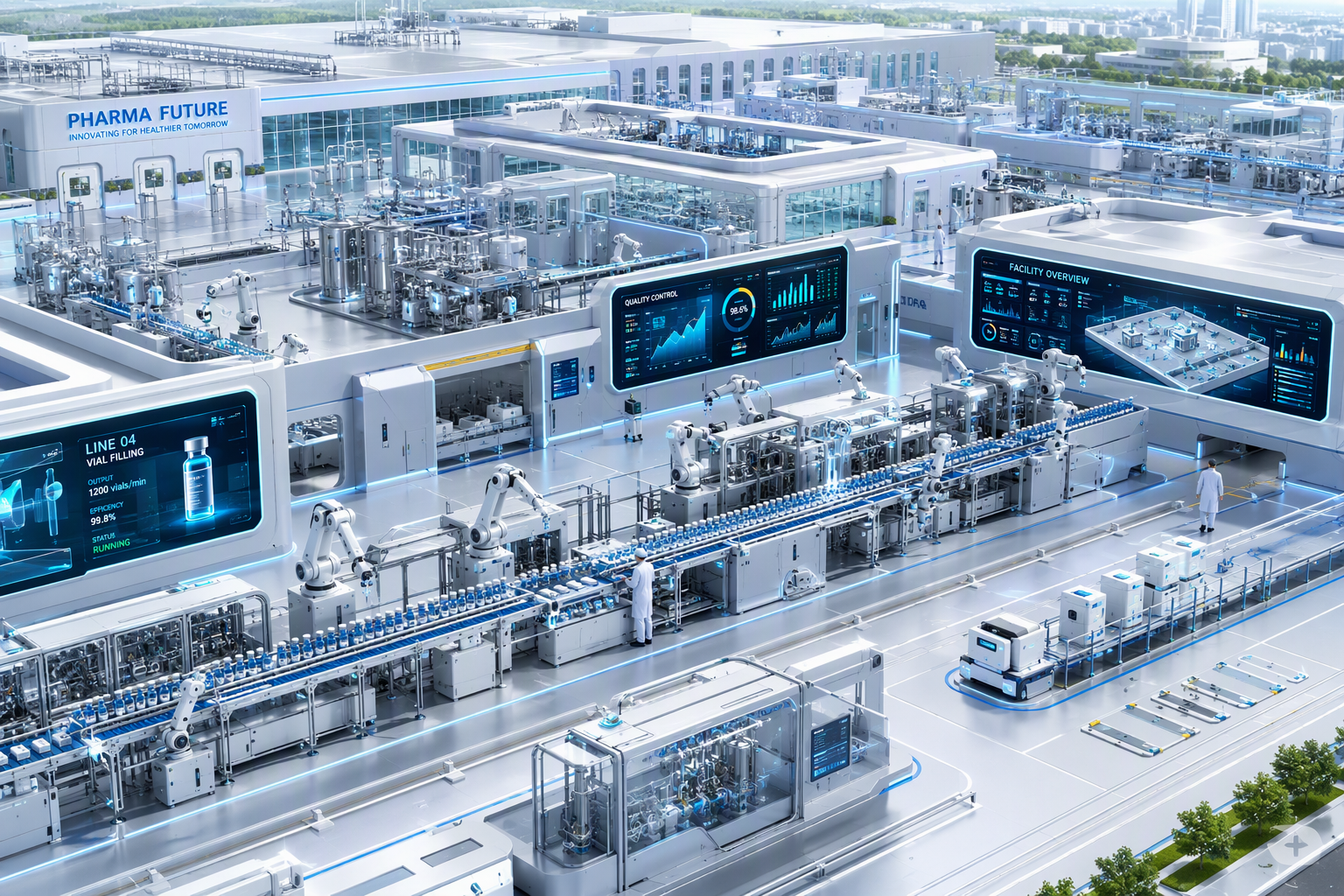
Pharmaceutical and Chemical Manufacturing
Pharmaceutical manufacturing and chemical manufacturing often require careful control over every stage of production. Process automation helps maintain stable conditions, accurate sequencing, and repeatable output. When standards are strict, automated systems give operators more confidence that procedures stay within required limits.
These sectors also benefit from real time visibility. Connected controls and software can track performance, monitor conditions, and flag changes quickly. That supports faster response when an issue appears and helps teams maintain a more stable process across sensitive operations.
Batch production is especially common in these environments. A system may run one formula, switch settings, and then move to another product or batch. Automation makes those transitions more structured and reliable. For regulated or precision-heavy industries, that level of control is a major operational advantage.
Real-World Examples of Automation in Action
It is one thing to define automation and another to see it at work. Real examples make the value of automation solutions easier to understand because they show how automation systems improve output, safety, and control in active facilities. That practical view matters when you are evaluating change.
From manufacturing automation on an assembly line to warehouse movement and real time equipment tracking, automation is already solving day-to-day problems. The following examples show where these systems create clear gains in speed, quality, and reliability across different industrial settings.
Automated Assembly Lines
Automated assembly lines are one of the clearest examples of industrial automation in practice. In these environments, fixed automation handles repetitive tasks at each stage of production. A product moves through stations, and every machine performs a defined function such as welding, painting, fastening, or inspection.
This setup works well on high-volume production lines because the sequence stays stable and output is continuous. Since machines follow the same routine every time, quality control becomes easier to maintain. Human workers still play a role, but they focus more on supervision, support, and problem-solving than on constant manual action.
Here is a simple text table comparing manual and automated lines:
| Area | Manual Assembly Line | Automated Assembly Line |
|---|---|---|
| Task execution | Workers perform most repetitive tasks by hand | Machines complete repetitive tasks with fixed automation |
| Speed | Slower and more variable | Faster and more consistent |
| Quality control | More dependent on individual performance | Easier to standardize and monitor |
| Output | Can vary by shift and fatigue | More uniform across production runs |
Smart Warehousing and Logistics
Warehouses are becoming more automated because movement, tracking, and storage all affect speed and cost. Smart warehousing uses connected tools to improve material handling, order flow, and inventory visibility. Instead of relying only on manual transport, facilities can use machines to move goods with more consistency.
Autonomous mobile robots are especially useful in these environments. They can follow routes, move items between stations, and adapt when workflows change. When software connects vehicles, storage areas, and operations data, teams gain more control over how work moves through the building.
Common smart warehousing benefits include:
- Faster material handling with autonomous mobile robots and automated routes
- More seamless data exchange between systems, operators, and warehouse tools
- Better control over storage and inventory flow, including items with maximum storage duration concerns
Predictive Maintenance and Remote Monitoring
Breakdowns are expensive because they stop output, disrupt schedules, and create avoidable repair pressure. Predictive maintenance helps reduce that risk by using sensors and software to track equipment health over time. Instead of waiting for failure, teams can respond earlier.
Remote monitoring supports that effort by giving operators and managers visibility into machine performance without being physically present at every asset. When systems report temperature, movement, cycle data, or status changes, it becomes easier to spot warning signs and plan action before damage grows.
The result is less unplanned downtime and better control over maintenance needs. This kind of automation is especially useful in facilities where constant uptime matters. By using connected monitoring and data-driven maintenance planning, businesses can protect equipment, reduce disruption, and keep production more stable.
Selecting the Right Industrial Automation Provider
Choosing an automation provider is not just about buying equipment. You need a partner that understands industrial automation, your production goals, and the practical limits of your site. The best automation solutions are the ones that fit your process, not the ones with the longest feature list.
That is why provider evaluation matters. Vendor expertise, support, training, and technology offerings all shape long-term results. In the next sections, you will see what to review before making a decision, from service quality to customization and ongoing operational support.
Evaluating Vendor Expertise and Support
A strong provider should do more than install equipment. The right team understands how automation solutions fit into actual operations and how automation systems perform over time. That experience matters because implementation, troubleshooting, and long-term maintenance needs can be just as important as the initial design.
You should also look closely at support. If a system issue affects output, delays in service can become costly. A provider with solid technical help, training access, and responsive communication is far more useful than one that only delivers hardware and leaves the rest to you.
Key points to evaluate include:
- Proven vendor expertise with relevant production environments and system types
- Reliable support for troubleshooting, upgrades, and maintenance needs
- Clear service structure before, during, and after deployment of automation solutions
Assessing Technology Offerings and Customization
Technology should serve your process, not force your process to change in unrealistic ways. That is why automation technology must be reviewed against your operational needs, production goals, and current setup. A system that works well in one factory may be a poor match in another.
Customization plays a major role here. Some businesses need simple control systems for repeatable tasks, while others need more flexible tools that can support product changes, layout shifts, or broader digital transformation plans. The right provider should be able to explain where standard solutions are enough and where adaptation is necessary.
This assessment is about fit. Look at how the technology handles scale, workflow, and future growth. When control systems and software align with real operational needs, automation becomes far more valuable and much easier for your team to adopt successfully.
Importance of Ongoing Training and Service
Even strong systems need skilled people behind them. Ongoing training helps operators, technicians, and managers use automation solutions with more confidence. It also supports smoother handoffs, better quality control, and fewer avoidable mistakes after launch.
Service matters just as much. Equipment and software may need updates, adjustments, or quick repairs as production changes. Reliable support helps your team keep systems running and prevents small issues from growing into larger disruptions. Good providers understand that long-term value comes from staying involved.
What you want from a provider includes:
- Ongoing training that keeps staff ready for system changes and daily use
- Consistent service for troubleshooting, updates, and performance tuning
- Dependable support that protects uptime and reinforces process stability
Sustainability and Future Trends in Industrial Automation
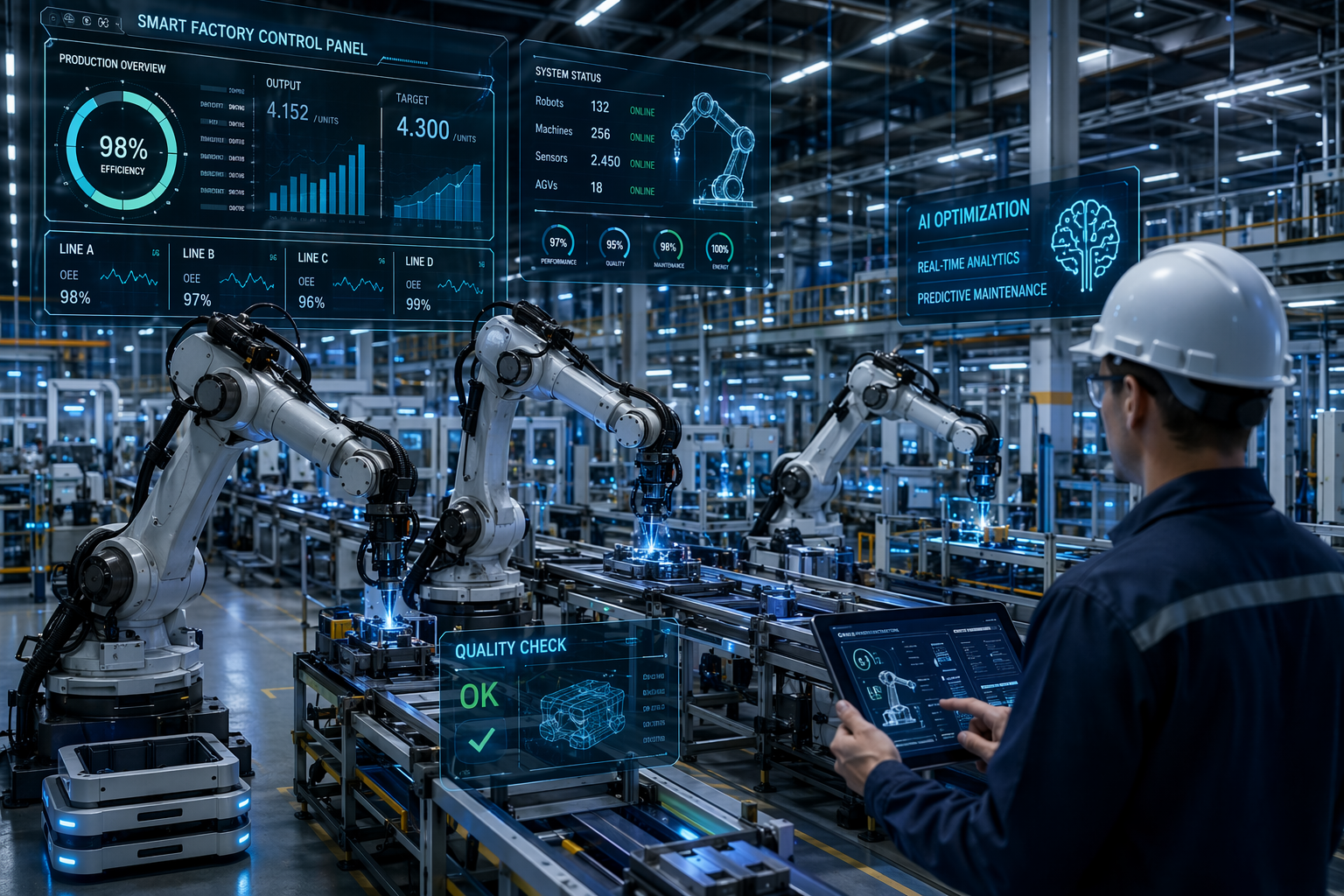
Industrial automation is often discussed in terms of speed and output, but it also supports sustainability goals. Better process control can reduce waste, improve energy efficiency, and strengthen resource optimization across operations. For many businesses, that makes automation useful for both performance and environmental planning.
At the same time, future trends are pushing automation forward. Smarter software, connected assets, and advanced analytics are changing what industrial automation can deliver. The next sections look at how automation supports efficiency today and where emerging technologies are taking it next.
Energy Efficiency and Resource Optimization
Automation can help businesses use energy and materials more carefully. When systems run with tighter control, they reduce unnecessary motion, overuse, and waste. That makes energy efficiency and resource optimization practical outcomes of better process automation, not just side benefits.
This matters because waste affects both sustainability and cost savings. If raw materials, machine time, or power are used more precisely, operations become more efficient and less expensive to run. Automated controls also make it easier to maintain stable settings and avoid excess consumption during production.
Main efficiency gains include:
- Better energy efficiency through more controlled machine operation
- Stronger resource optimization by reducing waste in the production process
- Added cost savings from improved process automation and steadier performance
Sustainable Manufacturing Practices
Sustainable manufacturing depends on using fewer resources while maintaining strong output. Industrial automation supports that goal by making the manufacturing process more precise, more consistent, and easier to monitor. When systems are better controlled, waste and inefficiency become easier to reduce.
This also supports broader sustainable practices. Automation can help manufacturers standardize operations, improve material use, and keep energy consumption more stable. Those gains matter whether the focus is cost, environmental targets, or both. Better control often leads to better sustainability outcomes.
Energy efficiency is part of that picture, but it is not the only factor. Automation also helps reduce errors, rework, and unnecessary use of raw materials. For companies working toward greener operations, automation provides a practical way to align performance with more responsible manufacturing goals.
Emerging Trends in Automation Technologies
The next wave of automation technology is centered on smarter insight and faster response. Businesses want systems that do more than execute tasks. They want tools that can monitor conditions, learn from data, and help improve decisions in real time across the operation.
One important trend is the digital twin. A digital twin is a virtual model of a physical asset or process that helps companies test scenarios and optimize performance before making changes in the real world. This can reduce risk and improve planning during upgrades or process changes.
Machine learning and the industrial internet of things are also shaping the future. Connected devices gather live information, while machine learning helps interpret patterns and predict outcomes. Together, these tools support more responsive automation, better visibility, and stronger control across modern industrial environments.
Conclusion
In conclusion, embracing industrial automation solutions can significantly enhance your operational efficiency and productivity across various sectors. From smart warehousing to predictive maintenance, the right automation strategies can lead to improved quality, safety, and resource optimization. As the industry evolves, staying updated on technology advancements and selecting a knowledgeable provider is crucial for success. If you're ready to take the next step in transforming your operations, don’t hesitate—get in touch with us today for a free consultation to explore how we can tailor automation solutions to fit your unique needs!
Frequently Asked Questions
What services do industrial automation solution providers usually offer?
An automation provider usually offers system design, equipment integration, software support, installation, and service for automation systems and control systems. Many also provide training, troubleshooting, and maintenance support. The goal is to match automation solutions to your manufacturing process and help the system perform reliably over time.
How does an industrial automation systems integrator support a manufacturing business?
A systems integrator helps a manufacturing business connect machines, software, and workflows into one working setup. They support process automation by aligning equipment with production goals, improving system communication, and guiding digital transformation. Their role is to make automation systems practical, connected, and easier to manage.
Are there any sustainability advantages to using industrial automation solutions?
Yes. Automation solutions support sustainability by improving energy efficiency, reducing waste, and helping control the manufacturing process more precisely. That leads to better use of materials and fewer errors. For companies focused on sustainable manufacturing, automation can support both environmental goals and stronger operational performance.
You might also like