A Deep Dive into Automation: History and Future Trends
A Deep Dive into Automation: History and Future Trends

Key Highlights
- Automation uses technology to perform tasks with minimal human involvement, streamlining processes and reducing human error.
- The history of automation began in manufacturing with industrial robots handling repetitive tasks and has evolved with digital transformation.
- Key automation technologies include industrial automation, robotic process automation (RPA), and cognitive automation powered by artificial intelligence.
- The benefits of automation are vast, including increased efficiency, higher accuracy, and significant cost reduction for businesses.
- Automation is transforming various industries, from smart manufacturing and healthcare to finance and everyday home life.
- The future of automation points toward hyperautomation, combining AI and RPA to handle even more complex business processes.
Introduction
Welcome to the world of automation! You've likely heard the term, but what does it really mean for business and our daily lives? Automation is the use of technology to get tasks done without much human help. It's a key part of the ongoing digital transformation, changing how business processes are managed and making operations smoother. From the factory floor to your smart home, automation technologies are reshaping our world, and this article will explore how.
Understanding Automation: Definitions and Core Concepts
At its heart, automation is about using technology to handle tasks that people used to do manually. The main goal is to streamline processes and reduce the need for human intervention. Imagine a computer program that handles repetitive work, allowing you and your team to focus on more creative and strategic challenges.
This can be as simple as an automated email response or as complex as robots on an assembly line. With the rise of artificial intelligence, automation systems are becoming smarter and more capable. Let's look closer at the official definitions and the key elements that make up the different types of automation.
Official Definitions from Leading Industry Sources
Leading industry sources define automation as the use of technology to perform tasks and processes with minimal human input. It's a broad term that covers everything from mechanical robots to sophisticated software. The core idea is to create a system that can operate independently to achieve a specific outcome, making things more efficient.
For instance, business process automation (BPA) focuses on automating entire workflows within an organization, which can involve multiple departments and tasks. This helps to streamline operations and improve overall productivity. Think of it as a digital assistant that manages complex sequences of actions without needing constant supervision.
As technology evolves, definitions often expand to include artificial intelligence. Modern automation isn't just about following pre-programmed rules; it can also involve learning from data and making intelligent decisions. This cognitive layer is what powers some of the most advanced automation solutions available today, pushing the boundaries of what's possible.
Key Elements and Characteristics of Automation
Automation is so important for businesses because it fundamentally changes how work gets done, leading to greater efficiency and accuracy. By taking over repetitive tasks, automation frees up your valuable time and reduces the chance of human error. This is especially crucial in manufacturing, where precision is key to quality.
The primary characteristic of any automation system is its ability to operate with little to no human intervention. Through programming and algorithms, these systems can execute tasks consistently and reliably. This not only speeds up operations but also ensures a uniform quality in the final product or service, which is a major advantage for any business.
Key characteristics that make process automation so beneficial include:
- Repetitive Task Handling: Automates tasks that are tedious and time-consuming for humans.
- Increased Efficiency: Completes work faster and more consistently than manual processes.
- Reduced Human Error: Minimizes mistakes that can occur during manual data entry or operations.
- Scalability: Easily scales up or down to meet changing business demands.
A Historical Perspective: The Evolution of Automation
The story of automation is a long one, starting well before the digital age. The term itself was first coined in 1946 at General Motors to describe the automatic handling of parts on production lines. This early form of industrial automation was all about replacing strenuous human labor with machines to boost factory output.
From those early days of simple machinery, automation has undergone a massive transformation. The introduction of industrial robots, computers, and now artificial intelligence has pushed its capabilities far beyond the factory floor. This evolution is a core part of the wider digital transformation that continues to shape our world. Now, let’s explore some of the key moments in this journey.
Early Automation in Industry and Manufacturing
The roots of modern automation can be traced back to the early days of industrial manufacturing. Before complex robots, simple automation systems like conveyor belts revolutionized factories. These systems were designed to move parts along an assembly line, reducing the amount of physical human labor required and speeding up production significantly.
The primary goal of this early industrial automation was to handle repetitive tasks. In high-volume production environments, consistency and speed were everything. Machines were built to perform a single, specific action over and over again, such as welding a particular joint or painting a car body. This dedication to one task made the process incredibly efficient.
While these early automation systems were a far cry from today's technology, they laid the essential groundwork. They proved that machines could perform certain jobs more effectively than humans, paving the way for more advanced technologies and the highly automated factories we see today.
Key Milestones in Automation Technology
The journey of industrial automation is marked by several key breakthroughs that transformed factories. One of the earliest was the development of numeric control (NC) machines. These could be programmed with specific instructions to perform tasks like cutting or shaping materials, offering more flexibility than fixed machines.
The introduction of industrial robots in the 1960s was another major leap. These robots could be programmed to handle a variety of tasks on the assembly line, from welding to painting. As automation technologies advanced, the integration of artificial intelligence and machine learning allowed for even smarter systems that could adapt and make decisions.
These milestones have completely changed how factories operate, moving from manual labor to highly efficient, automated production lines.
| Milestone | Description |
|---|---|
| Numeric Control (NC) | Allowed machines to be programmed with instructions, increasing flexibility in manufacturing. |
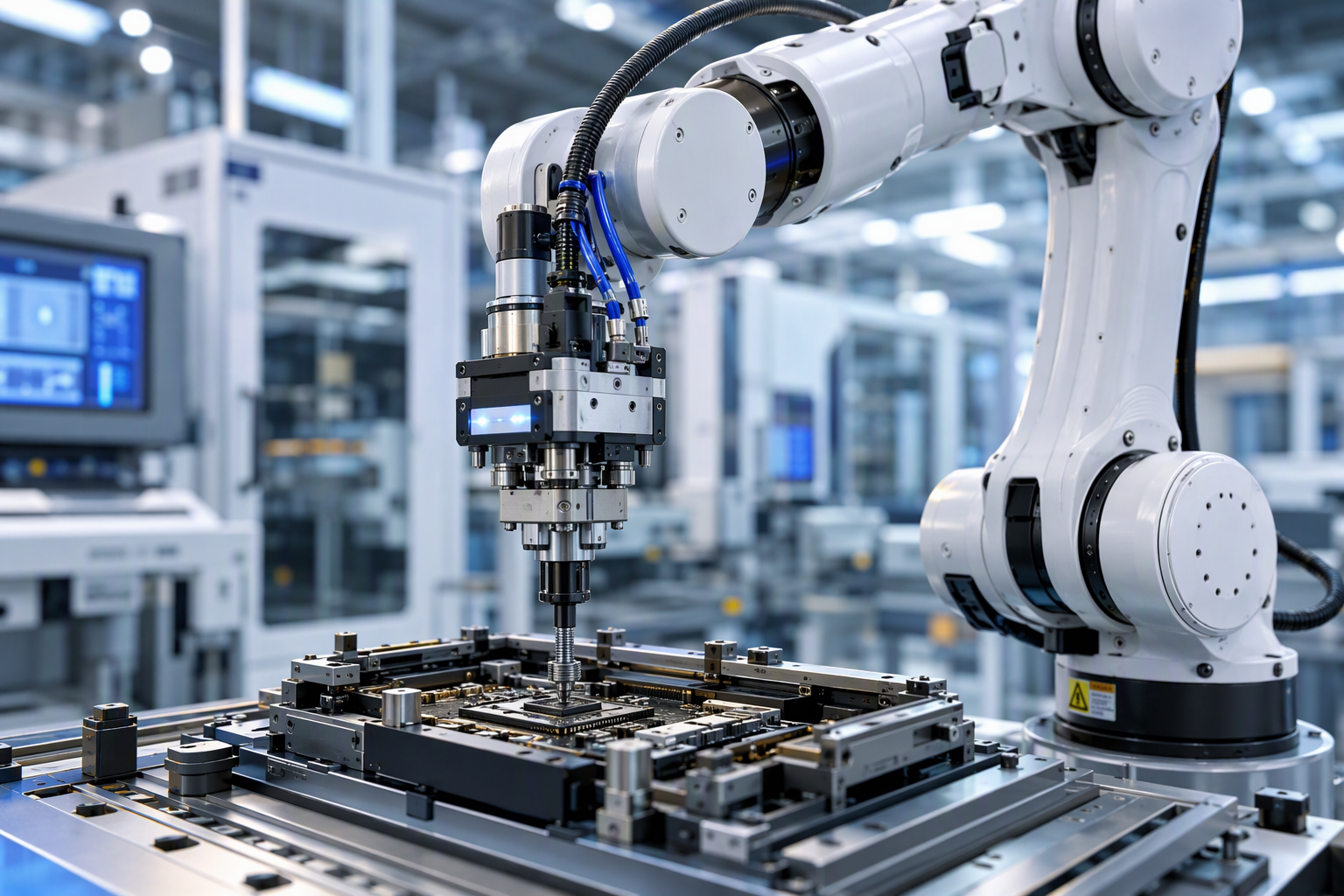
| Industrial Robots | Introduced programmable arms to perform multiple tasks like welding and assembly, boosting production rates. |
| Programmable Logic Controllers (PLCs) | Provided robust control for machinery and processes in industrial settings, improving reliability. |
| AI and Machine Learning | Enabled systems to analyze data, make decisions, and perform predictive maintenance, creating "smart" factories. |
Types of Automation in Today’s World
Automation isn't a one-size-fits-all solution; there are many different types of automation designed for various needs. These technologies range from physical machines in a factory to intelligent software that runs on your computer. Understanding the main categories can help you see where automation might fit into your own work or life.
The major types include industrial automation, which deals with manufacturing processes, and software-based solutions like robotic process automation (RPA). There is also cognitive automation, which uses AI to handle more complex, judgment-based tasks. Below, we'll explore some of these key types in more detail.
Fixed, Programmable, and Flexible Automation
In the world of manufacturing, automation is often broken down into three main categories: fixed, programmable, and flexible. Each type offers different automation solutions depending on the production needs. Fixed automation is used for high-volume production where the tasks don't change.
Programmable automation is more versatile. It's designed for batch production, where machinery can be reprogrammed to handle different product variations. This is ideal when you need to produce a moderate volume of several different items. However, reprogramming can take time, leading to some downtime between batches.
Flexible automation is the most advanced of the three. It allows equipment to switch between different tasks with minimal setup changes, making it perfect for environments with high product variability. This type of system reduces downtime and allows for quick adaptation to new designs, boosting overall productivity.
- Fixed Automation: Best for high production rates of a single product.
- Programmable Automation: Suitable for batch production with varying product needs.
- Flexible Automation: Ideal for high-variety production with minimal downtime between tasks.
Robotic Process Automation (RPA) and Cognitive Automation
Robotic process automation, or RPA, uses software robots (often called 'bots') to mimic human actions on a computer. These bots can perform repetitive, rule-based tasks like data entry, filling out forms, or processing invoices. RPA is perfect for back-office work that doesn't require human judgment, allowing for processes to run with minimal human intervention.
Think of RPA as a digital workforce. Companies like UiPath and Automation Anywhere provide tools that let you build these software robots to interact with applications just like a person would. This helps reduce manual errors, speed up workflows, and free up employees for more valuable activities.
Taking it a step further is cognitive automation, which integrates artificial intelligence and machine learning. Unlike RPA, cognitive automation can handle complex tasks that require judgment, such as analyzing unstructured data or understanding natural language processing. For example, it can be used in healthcare to help analyze medical data for diagnostic purposes.
Automation in Different Industries
Automation technologies are not just for factories anymore. Today, you can find automation solutions making a huge impact in various industries, from healthcare and finance to retail and agriculture. This widespread adoption shows just how adaptable and powerful these tools have become for improving how businesses operate.
The use cases are incredibly diverse. Business process automation can streamline everything from patient data management in a hospital to inventory tracking in a warehouse. Each industry is finding unique ways to leverage automation to increase efficiency, reduce costs, and deliver better services. Let's look at some specific examples of how this is happening.
Industrial Automation in Factories and Smart Manufacturing
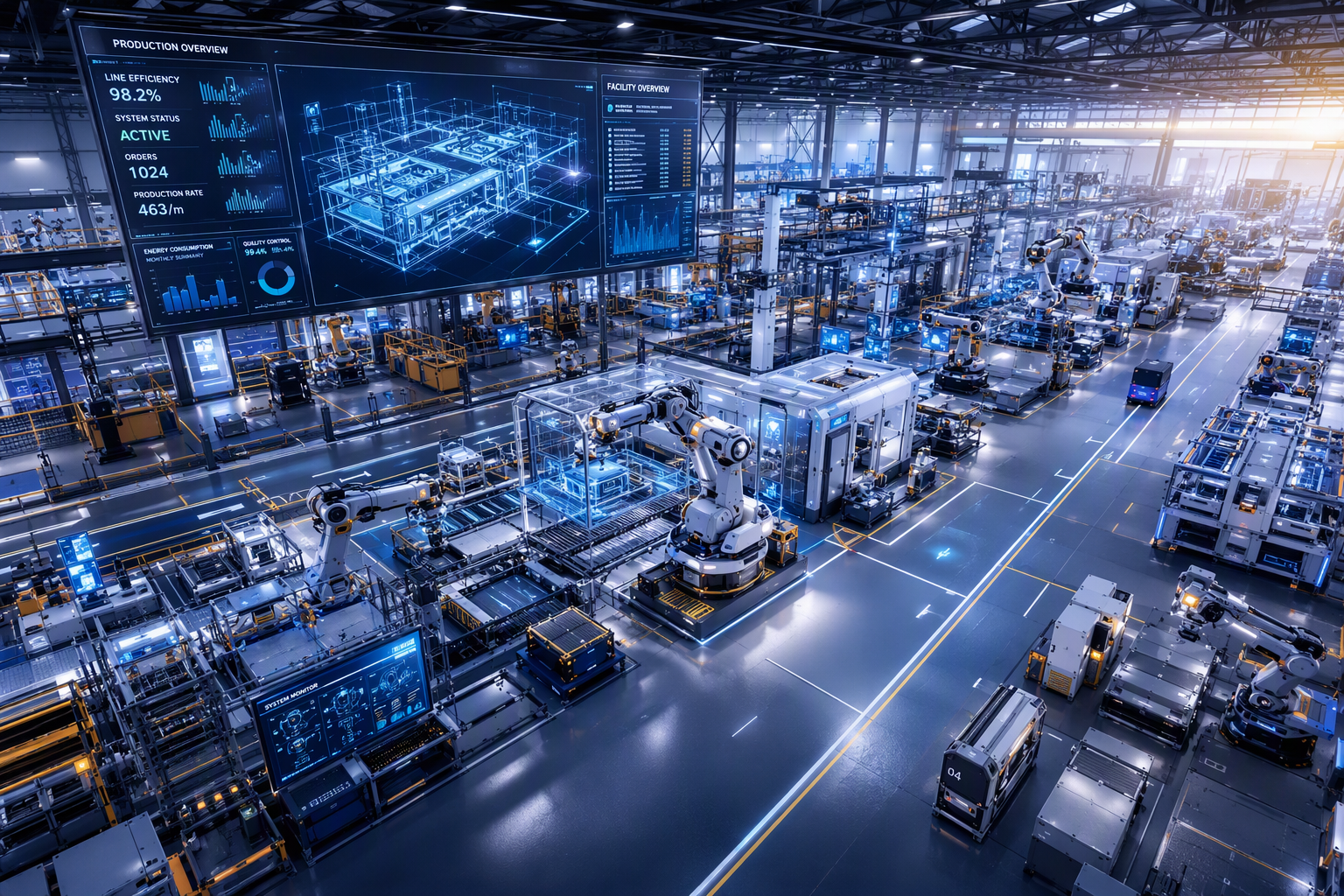
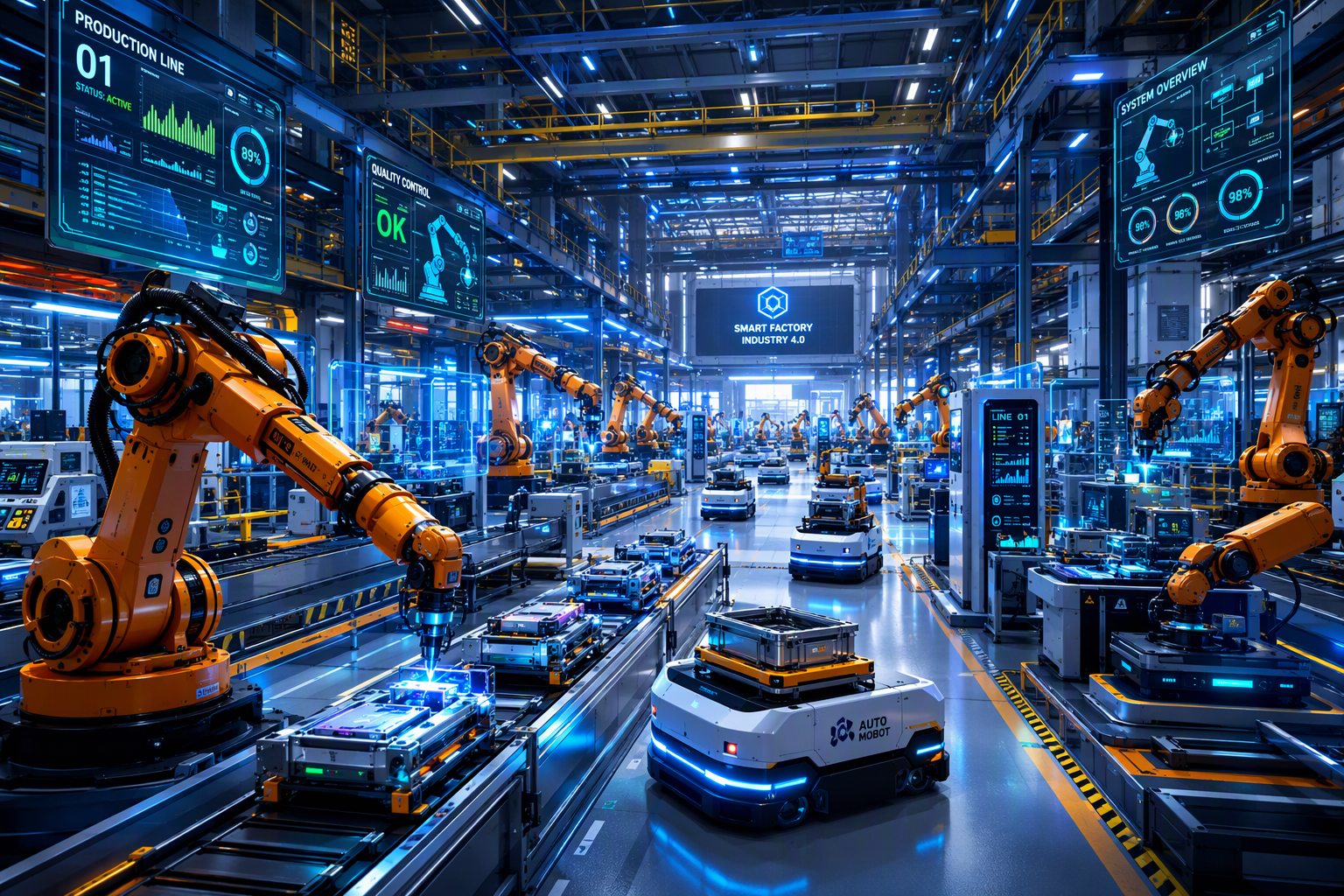
Industrial automation has evolved into what is now called smart manufacturing. This approach integrates advanced technologies like AI and the Internet of Things (IoT) to create a fully connected and intelligent production environment. In a smart factory, machines can communicate with each other and optimize operations in real time.
One of the key features of smart manufacturing is predictive maintenance. By using machine learning algorithms to analyze data from sensors on equipment, factories can predict when a machine is likely to fail. This allows maintenance to be scheduled before a breakdown occurs, preventing costly downtime and improving reliability.
This level of automation also has a major impact on the supply chain. Smart factories can automatically adjust production based on incoming orders and inventory levels, ensuring that resources are used efficiently. Companies like Tesla and BMW are already using these principles to increase production rates and maintain high quality in their facilities.
Automation in Healthcare, Finance, Retail, and Agriculture
Automation is making significant waves far beyond the factory. In healthcare, it's improving diagnostics and patient care. Robotic surgery systems, for example, allow surgeons to perform complex procedures with greater precision and minimal invasion, leading to faster recovery times for patients.
The retail and finance sectors are also being transformed. Retail automation includes everything from self-checkout kiosks to robotic fulfillment centers that speed up order fulfillment. In banking, AI-powered chatbots are improving customer service, while RPA streamlines back-office tasks like data processing and compliance checks, reducing costs and errors.
Even agriculture is benefiting from automation. Autonomous tractors and drones are used for precision farming, helping to plant, water, and monitor crops with incredible accuracy. These advancements are boosting productivity and optimizing resource use across many different fields.
- Healthcare: Robotic surgery and AI-powered diagnostics.
- Finance: Chatbots for customer service and RPA for transaction processing.
- Retail: Automated inventory management and cashier-less stores.
- Agriculture: Autonomous tractors and drones for crop management.
Everyday Examples of Automation
You might be surprised by how much automation you already use in your daily life. It's not just for big businesses; it's also in our homes, offices, and even how we shop. These everyday technologies are designed to make manual tasks simpler and improve our overall experience.
From home automation that controls your lights and thermostat to office automation that handles routine paperwork, these tools work behind the scenes to save you time and effort. The improved customer experience you get from a personalized shopping recommendation or a quick chatbot response is also powered by automation. We'll now dive into some common examples you likely encounter every day.
Home Automation: Smart Devices and Everyday Technology
Home automation is one of the most visible examples of this technology in our daily lives. It involves integrating smart devices and systems within your house to automate tasks like controlling the temperature, lighting, and security. Devices like Amazon Alexa or Google Home act as central hubs for these systems.
These smart devices create a more convenient and energy-efficient living environment. For instance, a smart thermostat can learn your schedule and automatically adjust the temperature to save energy when you're not home. Similarly, you can program your lights to turn on and off at specific times, enhancing both convenience and security.
This level of automation simplifies everyday routines and improves your overall customer experience at home. It’s all about creating seamless, automated workflows that take care of the little things for you.
- Smart Thermostats: Automatically adjust temperature to save energy.
- Smart Lighting: Allows you to control lights remotely or on a schedule.
- Voice Assistants: Control various devices and get information using voice commands.
- Security Systems: Automate locking doors and monitoring your home.
Office, Transportation, and Customer Service Automation
Beyond the home, automation is a powerful force in the office. Office automation tools help manage routine administrative tasks, such as scheduling meetings, processing data entry, and managing documents. Software like Microsoft Power Automate or Zapier can connect different applications to create automated workflows, saving countless hours of manual work.
In transportation, we're seeing the rise of autonomous vehicles. Companies like Waymo are developing self-driving cars that aim to make travel safer and more efficient. In logistics, drones are being tested for last-mile delivery, promising faster shipping times. These automation solutions are set to revolutionize how we move people and goods.
Customer service has also been transformed. AI-powered chatbots are now common on websites, providing instant answers to common questions 24/7. This not only improves service efficiency but also allows human agents to focus on more complex customer issues, leading to a better experience for everyone.
The Benefits of Automation for Businesses and Society
The benefits of automation are far-reaching, offering huge advantages for both businesses and society as a whole. For companies, automation leads to significant cost reduction, improved operational efficiency, and a stronger competitive edge. By streamlining processes, businesses can achieve more with fewer resources, paving the way for sustainable business growth.
Beyond the balance sheet, automation can also lead to better and safer working conditions by taking over dangerous or physically demanding tasks. As businesses become more productive, it can stimulate economic growth and innovation across the board. Let's break down some of these key benefits.
Increased Productivity, Efficiency, and Accuracy
One of the most significant advantages of automation is the dramatic boost in productivity and efficiency. Automated systems can work 24/7 without getting tired, completing tasks much faster than a human ever could. This acceleration of operations allows businesses to increase their output and achieve more in less time.
Process automation also leads to a higher level of accuracy. Since automated systems follow pre-programmed rules exactly, they significantly reduce the risk of human error. This is particularly valuable in tasks that require precision, such as data entry or quality control in manufacturing, where even small mistakes can be costly.
By ensuring consistency and reliability, automation helps maintain a high standard of quality. Whether it's assembling a product or processing a transaction, the automated process will be performed the same way every time.
- Higher Productivity: Systems operate around the clock, increasing overall output.
- Greater Efficiency: Tasks are completed faster, streamlining workflows.
- Reduced Human Error: Minimizes mistakes in repetitive or detailed tasks.
- Consistent Quality Control: Ensures uniform standards across all operations.
Cost Reduction, Innovation, and Competitive Advantage
While there can be an initial investment, automation leads to significant long-term cost savings. By handling tasks that would otherwise require manual work, it helps reduce labor costs. Furthermore, improved efficiency and reduced errors mean less waste and lower operational expenses, contributing to a healthier bottom line.
Automation also fuels innovation. By freeing employees from mundane tasks, it allows them to focus on more creative, strategic, and high-value work. This shift can lead to new ideas, better products, and improved services. Companies that embrace automation solutions often find themselves more agile and inventive.
Ultimately, all these benefits give a business a powerful competitive edge. Tools from companies like Automation Anywhere help businesses streamline complex processes, making them more adaptable to changing market demands. This ability to operate more efficiently and innovate faster positions them as leaders in their industry and drives sustainable growth.
Considering the Challenges of Automation
While automation offers many benefits, it's also important to consider the challenges and potential drawbacks. The transition to automated systems isn't always smooth, and it brings up important questions about the future of work and human involvement. One of the biggest concerns is the impact on the workforce.
Beyond job displacement, there are also technical risks and ethical considerations to address. Implementing new technologies can be complex, and there are always concerns about data privacy and the decisions made by autonomous systems. Let’s take a look at some of these challenges more closely.
Workforce Changes and Skills Evolution
The rise of automation is causing significant workforce changes. As machines take over repetitive and manual labor, some jobs may be altered or displaced. A 2020 report from the World Economic Forum suggested that while millions of jobs could be displaced, even more new roles could be created.
This shift doesn't necessarily mean fewer jobs, but rather an evolution in the types of skills that are in demand. The focus is moving away from manual tasks and toward roles that require critical thinking, creativity, and technological proficiency. This skills evolution is a natural part of any major digital transformation.
To navigate this change, upskilling and continuous learning will be crucial. Workers will need to adapt to new technologies and develop the skills required to work alongside automated systems. This presents both a challenge and an opportunity for individuals and companies to invest in career growth and development.
Addressing Potential Risks and Ethical Considerations
Implementing new automation technologies comes with its own set of risks. Technical issues, such as system failures or cybersecurity threats, can disrupt operations and lead to costly downtime. Integrating new systems with legacy systems can also be a complex and challenging process for many organizations.
Beyond the technical side, there are important ethical considerations to address. For example, who is responsible when an autonomous system makes a mistake? There are also concerns about data privacy and how personal information is used by automated systems to make decisions, such as in marketing or finance.
It's crucial for businesses and developers to approach automation responsibly. This means building safeguards, ensuring transparency in how systems operate, and considering the broader societal impact.
- System Integration: Challenges in making new automation technologies work with older legacy systems.
- Cybersecurity: Protecting automated systems from being hacked or compromised.
- Accountability: Determining responsibility when an AI-powered system makes an error.
- Data Privacy: Ensuring that personal data collected and used by automated systems is handled ethically.
Conclusion
In conclusion, the rise of automation has significantly transformed various aspects of our lives, from manufacturing to everyday conveniences. Understanding its history and the different types of automation allows us to appreciate its value in enhancing productivity, efficiency, and innovation across industries. While the benefits are profound, it is equally important to remain mindful of the challenges and ethical considerations that accompany this technological evolution. As we look to the future, embracing automation responsibly will be key to ensuring that we harness its potential for positive societal impact. Stay informed and prepared to adapt as automation continues to shape our world.
Frequently Asked Questions
What are the main types of automation seen in modern businesses?
Modern businesses use several types of automation. These include fixed, programmable, and flexible automation in manufacturing for production lines. In offices, robotic process automation (RPA) is common for handling repetitive digital tasks, while broader process automation streamlines entire workflows across departments for greater efficiency.
How has industrial automation transformed factories over time?
Industrial automation has revolutionized factories by replacing manual human labor on production lines with robots and machinery. Over time, it has evolved with machine learning to enable predictive maintenance, which reduces downtime. This transformation has led to faster production, higher quality, and the creation of "smart" factories.
What are the most common examples of automation in daily life?
Common examples of everyday technology and automation include home automation with smart devices like thermostats and voice assistants. You also experience it through personalized shopping recommendations, customer service chatbots, and self-checkout kiosks, all of which are automation technologies designed to improve your customer experience.
You might also like