Automation Defined: Key Concepts and Real-World Examples
Automation Defined: Key Concepts and Real-World Examples
Key Highlights
Here’s a quick look at what we'll cover in this guide to automation:
- Automation uses technology to perform tasks with minimal human help, streamlining processes.
- The main types of automation include fixed, programmable, and flexible automation systems.
- Key technologies like artificial intelligence and robotic process automation handle complex and repetitive tasks.
- Business process automation focuses on optimizing entire workflows across an organization.
- From industrial automation in factories to smart devices in your home, its use is widespread.
- The benefits include greater efficiency, fewer errors, and significant cost savings.
Introduction
Have you ever wondered if there's a better way to handle tedious, repetitive tasks? Automation is the answer. It involves using technology to perform jobs that people would typically do, but with minimal human input. The goal of these automation technologies is simple: to make processes more efficient, consistent, and free from human error. From building cars to managing your finances, automation is a quiet but powerful force that is reshaping our world by taking care of routine activities.
Understanding Automation: Setting the Foundation
At its heart, automation is the use of technology to get things done with little to no human intervention. Think of it as programming a machine or computer to handle a job, whether it's a simple, repetitive action or a more complex series of steps. This approach aims to streamline workflows and boost productivity.
Different automation technologies, including artificial intelligence, are used across countless industries. For example, in manufacturing, robots assemble products on a line. In IT, scripts can run system updates automatically. This process automation allows human workers to focus on more strategic and creative challenges.
Official Definitions and Key Terminology
If we look for an official definition, automation is the process of using technology to perform tasks with minimal human involvement. The term was first coined by General Motors in 1946 to describe the automatic handling of parts in their factories. Today, its meaning has expanded far beyond the factory floor.
The core idea remains the same: automation systems are designed to operate without constant manual input. This might involve a physical robot on an assembly line or a software program running in the background. The primary objective is to make business processes smoother and more reliable.
Ultimately, automation is about reducing the need for human hands in certain tasks. This doesn't just speed things up; it also ensures consistency and precision, which can be difficult to achieve with manual effort alone. It's a foundational concept in modern technology and business.
Core Principles that Drive Automation
So, why is process automation so important for businesses today? The driving force behind its adoption is a set of core principles that deliver significant value. It's all about creating smarter, more efficient ways of working by reducing the reliance on manual human labor for certain jobs.
The main goal is to free people from repetitive tasks that are often time-consuming and prone to error. By handing these jobs over to a machine or a software program, you ensure they are done with precision and speed every single time. This consistency is crucial in everything from manufacturing to data entry.
The key principles include:
- Efficiency: Automating tasks speeds up operations, allowing more to be done in less time.
- Accuracy: Systems perform tasks with minimal human intervention, reducing the chance of errors.
- Cost Reduction: Over time, automation lowers labor costs and optimizes resource use.
History and Evolution of Automation
The concept of automation isn't new. Its roots can be traced back to the early days of industrial automation, where machines first began to replace simple human actions. Historical automation was focused on mechanizing physical labor to increase production in factories.
Over the decades, this has evolved dramatically. What started as basic machinery has transformed into sophisticated systems that drive business growth across all sectors. Now, automation can handle not just physical work but also complex digital and cognitive tasks, changing the way we think about work itself. Let's look closer at how we got from there to here.
From Industrial Revolution to Modern Automation
The journey of automation began with the rise of industrial automation. The term itself gained popularity when General Motors started using automatic devices in its factories in the 1940s. This early form of automation was all about using dedicated machinery to perform specific, repetitive tasks on an assembly line.
These early systems were effective but inflexible. Changing a process often meant significant retooling of the machinery. As technology advanced, industrial robots became more common. These robots offered more programmability than the legacy systems they replaced, allowing for greater variety in production.
Today, modern automation has moved beyond the factory. It now encompasses software, data analytics, and artificial intelligence, integrating with business processes in almost every industry. This evolution from purely mechanical tasks to intelligent, data-driven operations marks a significant shift in what automation can achieve.
Major Milestones and Breakthroughs in Automation Technology
The advancement of automation has been marked by several key breakthroughs. Early developments like numerical control (NC) machines allowed for programmable instructions, which was a huge leap forward from fixed machinery. This paved the way for more dynamic and flexible automation solutions.
The rise of computers and software brought another wave of change, leading to new technologies that could automate digital tasks. More recently, the integration of artificial intelligence and machine learning has created systems that can learn, adapt, and make decisions, pushing the boundaries of what's possible.
These milestones show a clear progression from simple mechanical automation to intelligent systems that can handle complex and unpredictable tasks.
| Technology Era | Key Breakthrough | Impact |
|---|---|---|
| Mid-20th Century | Industrial Robots & PLCs | Revolutionized manufacturing with programmable machines. |
| Late 20th Century | Robotic Process Automation (RPA) | Automated rule-based digital tasks in office environments. |
| 21st Century | AI and Machine Learning | Enabled cognitive automation for complex decision-making. |
| Present Day | Hyperautomation | Combines multiple tools to automate entire business processes. |
Main Types of Automation in Today’s World
When people talk about automation, they could be referring to several different things. Today, there are various types of automation, each suited for different tasks and industries. The level of human involvement and the complexity of the tasks are what often distinguish one type from another.
From the fixed machinery on a factory floor to the intelligent software that powers cognitive automation, the spectrum is broad. Understanding these categories, including robotic process automation, helps clarify how this technology is applied in the real world. Let's explore some of the main types you'll encounter.
Fixed, Programmable, and Flexible Automation Explained
Fixed automation, also known as "hard automation," involves using machinery designed for a single, repetitive task. It's highly efficient for high-volume production, like in an automotive assembly line, but is inflexible. Changing the product or process requires significant retooling.
Programmable automation offers more versatility. These automation systems can be reprogrammed to handle different tasks or product variations, making them ideal for batch production. Computer Numerical Control (CNC) machines are a classic example, as they can be instructed to cut materials into various shapes.
Flexible automation is the most advanced of the three, allowing equipment to switch between different tasks with minimal downtime. Robotic arms in a modern factory are a great example, as they can be quickly reprogrammed to assemble, weld, or paint different components, adapting to high-variability production needs.
Robotic Process Automation (RPA) and Cognitive Automation
Robotic Process Automation, or RPA, uses software robots to mimic human actions on a computer. These "bots" are perfect for handling rule-based, repetitive tasks that don't require human judgment. Think of it as a digital workforce that can log into applications, enter data, and process transactions.
Cognitive automation takes this a step further by integrating artificial intelligence and machine learning. Unlike RPA, it can handle more complex tasks that require thinking and decision-making. This type of automation can analyze unstructured data, understand language, and learn from experience.
Here's a simple breakdown:
- RPA is for rule-based, repetitive tasks like data entry.
- Cognitive Automation is for complex tasks requiring judgment, like analyzing medical data.
- RPA follows a script, while Cognitive Automation can make decisions.
- RPA uses software robots, while Cognitive Automation uses AI and machine learning.
Business Process Automation and IT Process Automation
Business Process Automation (BPA) takes a holistic approach by automating entire workflows that may span multiple departments. Instead of focusing on a single task, BPA aims to streamline a whole business process, such as employee onboarding or invoice approval, reducing the need for human intervention.
On the other hand, IT automation (ITPA) is specifically focused on automating tasks within an IT department. This can include anything from system monitoring and software deployment to network configuration and troubleshooting. These automation technologies help ensure IT infrastructure runs smoothly and reliably.
Both BPA and ITPA are crucial for modern organizations. They help improve efficiency, reduce manual errors, and allow employees to focus on more strategic work. They can also integrate with legacy systems, helping to modernize operations without a complete overhaul.
Automation Technologies and Tools
To make process automation a reality, companies rely on a wide range of automation technologies and tools. These platforms provide the framework for designing, deploying, and managing automated workflows. They are essential for any organization undergoing a digital transformation.
From RPA platforms to complex AI-driven systems, these automation tools empower businesses to streamline their operations, reduce costs, and improve accuracy. Let's take a look at some of the popular platforms that are leading the way in this space and how they help companies achieve their goals.
Popular Automation Platforms: Automation Anywhere and More
When it comes to automation tools, platforms like Automation Anywhere and UiPath are leaders in the field. These companies offer comprehensive solutions for Robotic Process Automation (RPA), allowing businesses to build and deploy software robots to handle repetitive digital tasks.
Tools like Automation Anywhere help companies by automating a wide range of business processes. For example, a bank could use it to automate its loan processing system, drastically reducing the time it takes to approve a loan. This not only cuts operational costs but also improves customer satisfaction.
Other platforms, such as Zapier and Microsoft Power Automate, focus on connecting different apps and services to automate workflows without needing to write code. These process automation tools make it easy for anyone to streamline their work, from managing emails to generating reports, boosting productivity across the board.
Integration of Artificial Intelligence in Automation
The integration of artificial intelligence is taking automation to a whole new level. While traditional automation follows pre-set rules, AI-powered automation can think, learn, and make decisions. This allows for the creation of much smarter and more adaptive automation solutions.
Technologies like machine learning, natural language processing, and advanced data analytics are at the heart of this evolution. Machine learning enables systems to identify patterns and improve over time, while natural language processing allows bots to understand and respond to human language.
Here's how AI enhances automation:
- Decision-Making: AI can analyze complex data to make informed decisions without human help.
- Data Analysis: It processes vast amounts of unstructured data to find valuable insights.
- Personalization: AI helps create personalized customer experiences, like recommendation engines.
- Predictive Capabilities: It can predict future outcomes, such as when a machine might need maintenance.
Tools for Smart Manufacturing and Digital Transformation
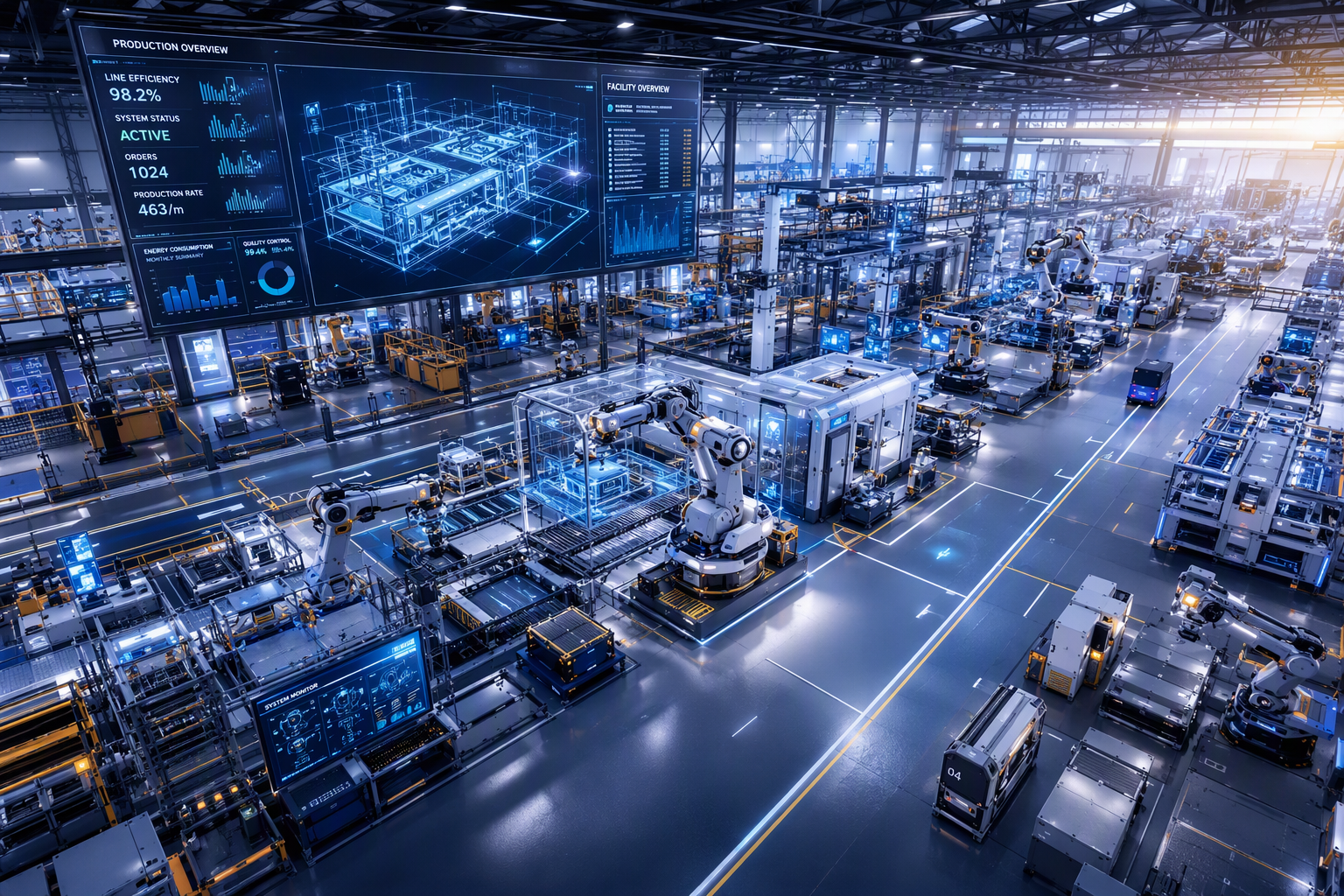
Smart manufacturing represents the next step in the evolution of the factory. It's a key part of the broader digital transformation, where automation technologies are used to create a fully connected and intelligent production environment. This goes beyond simple robots on an assembly line.
In a smart factory, interconnected systems and IoT devices gather real-time data from every stage of the production process. This data is then used to optimize operations, improve efficiency, and enable capabilities like predictive maintenance. Automation is the engine that powers this entire ecosystem.
For example, sensors on a machine can detect when a part is close to failing, automatically scheduling maintenance before a breakdown occurs. This proactive approach, driven by automation, minimizes downtime and maximizes productivity, highlighting the deep connection between smart manufacturing and advanced automation.
Real-World Examples of Automation across Industries
Automation isn't just a concept; it's something you can see in action all around you. The use cases for automation technologies are incredibly diverse, touching nearly all various industries. These real-world automation solutions are changing how we work, shop, and even live.
From the factory floor to the hospital operating room, automation is making processes faster, safer, and more efficient. To help you see how it all comes together, let's explore some specific examples of how this technology is being applied in different sectors.
Industrial Automation: Manufacturing and Smart Factories
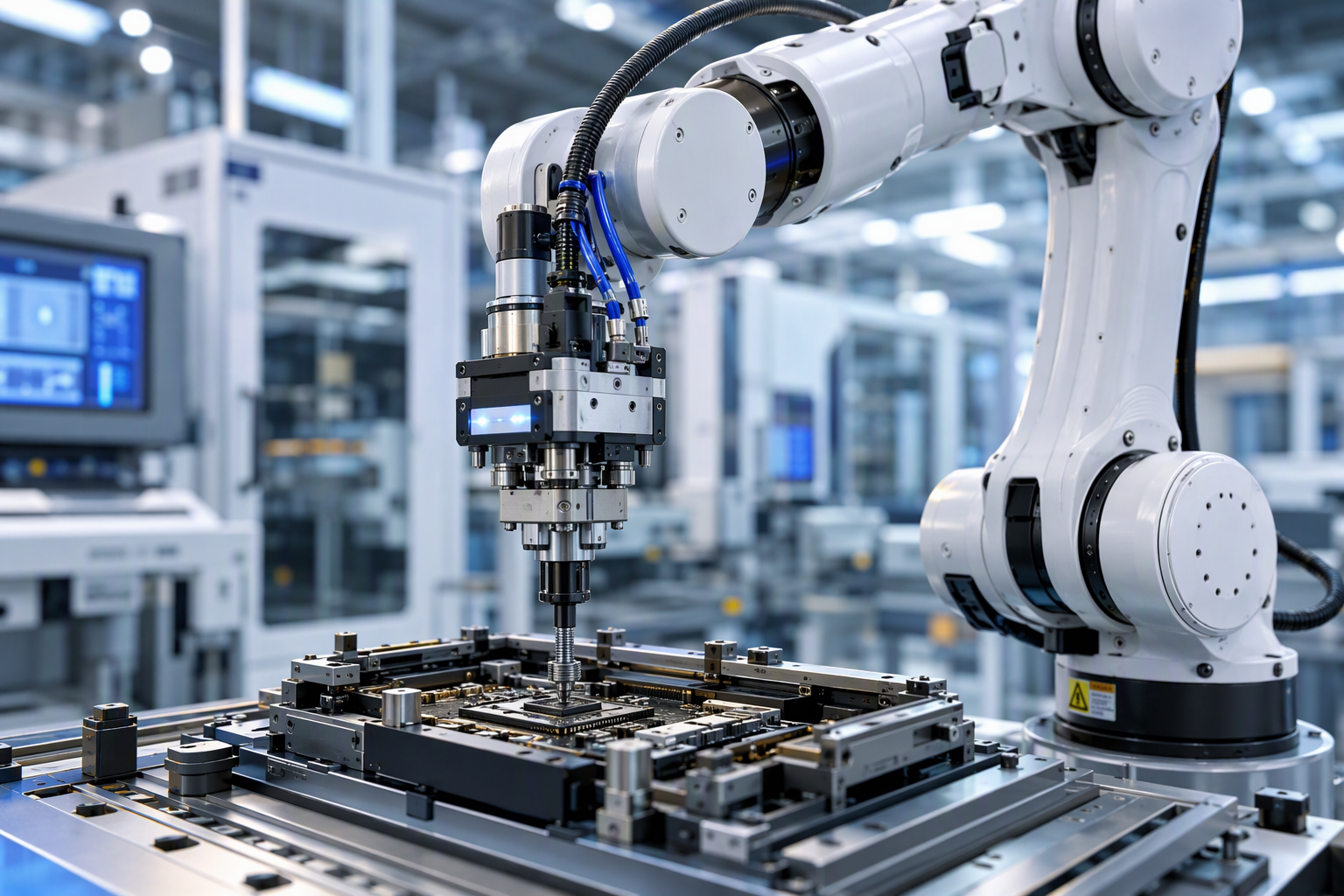
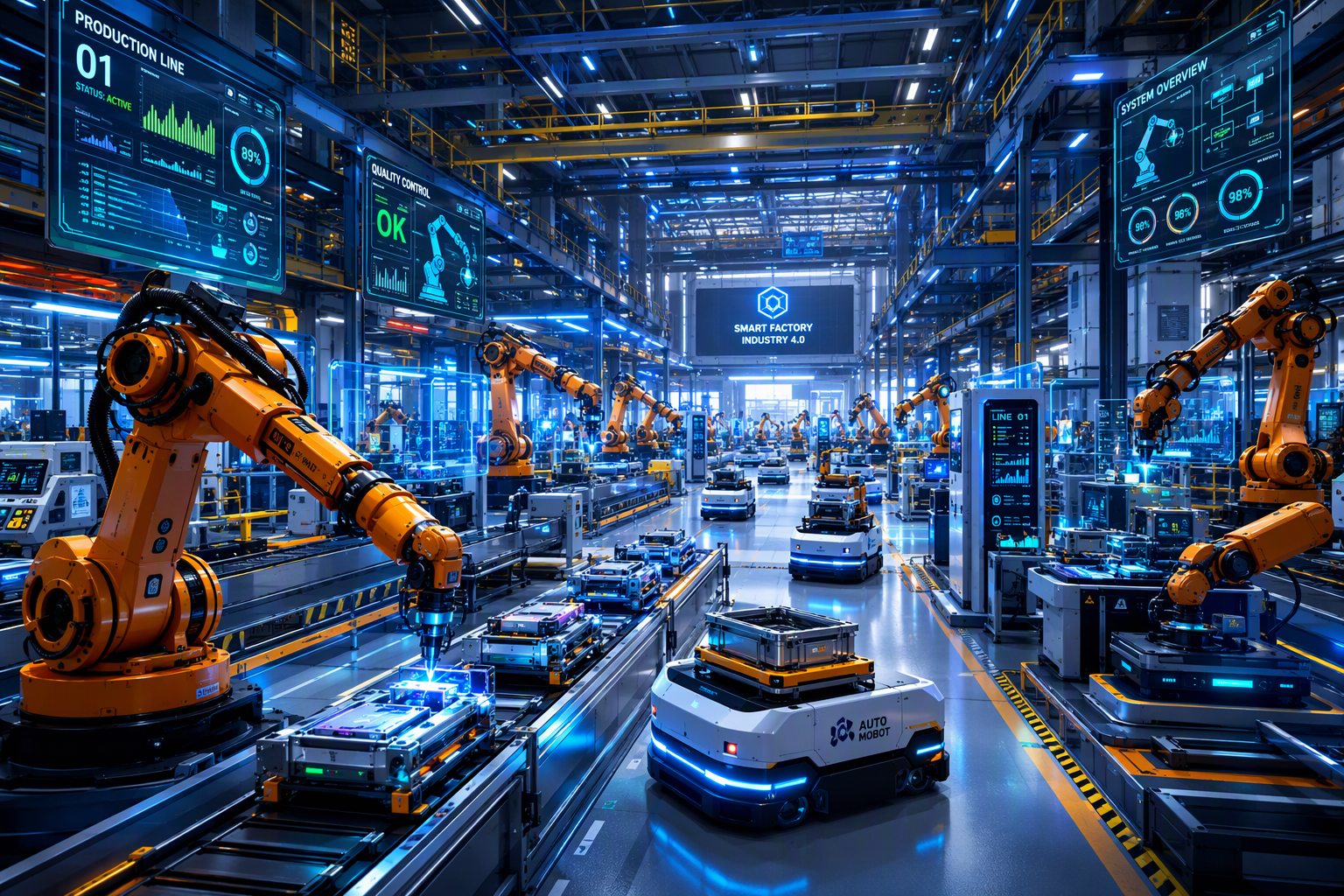
Industrial automation is perhaps the most well-known application, transforming manufacturing and creating the smart factories of today. In these facilities, automation systems control everything from production lines to inventory management, working with incredible speed and precision.
You can see this in car factories like Tesla's Gigafactory, where robotic arms assemble vehicles, apply paint, and transport parts. These automation systems operate around the clock, dramatically increasing production rates and ensuring consistent quality.
Here's how it typically works in a factory:
- Assembly: Robotic arms perform tasks like welding, painting, and assembling components.
- Logistics: Automated guided vehicles (AGVs) move materials and finished products.
- Quality Control: High-speed cameras and sensors inspect products for defects.
- Packaging: Robots pack, stack, and prepare goods for shipment.
Automation in Healthcare, Finance, and Retail
Beyond the factory, automation is making a huge impact in service-oriented industries. Healthcare automation, for instance, is improving patient care with tools like the da Vinci Surgical System, which allows surgeons to perform minimally invasive procedures with robotic precision.
In the finance industry, finance automation is streamlining back-office operations. Banks use RPA for tasks like data entry and invoice processing, reducing manual errors and freeing up employees for more valuable work. AI-powered chatbots are also common, providing instant customer service for routine inquiries.
Meanwhile, retail automation is reshaping the shopping experience. Amazon Go's cashier-less stores use computer vision to let you walk out with your items, while automated warehouses use robots to fulfill orders faster. These examples show how automation is driving efficiency and innovation across different sectors.
Everyday Examples: Home, Transportation, and Agriculture
You don't have to look far to find automation in your daily life. Home automation is a perfect example, with smart devices like Amazon Alexa and Google Home controlling lights, thermostats, and security systems with a simple voice command.
Transportation and logistics automation are also becoming more common. Companies are experimenting with drones for last-mile delivery to speed up order fulfillment. Within warehouses, autonomous robots are a key part of supply chain management, moving inventory and helping to maintain optimal stock levels.
Even agriculture is being automated. John Deere's autonomous tractors can plow fields and plant seeds without a driver, using GPS and sensors for precision. These everyday examples show just how deeply automation is woven into the fabric of modern life.
Advantages and Strategic Importance of Automation
Adopting automation is more than just a trend; it's a strategic move that offers significant advantages. The benefits of automation range from immediate cost savings to long-term gains in operational efficiency. For many businesses, it's the key to staying relevant and competitive.
By streamlining processes and reducing the potential for error, companies can deliver better products and services faster. This gives them a powerful competitive edge in a fast-paced market. Let's break down some of the most important benefits that automation brings to the table.
Efficiency, Scalability, and Competitive Edge
One of the biggest advantages of automation is a dramatic boost in efficiency. Automated systems can work 24/7 without breaks, significantly increasing production rates and output. This allows businesses to get more done in less time, freeing up resources for other priorities.
Automation also provides incredible scalability. When market demands suddenly increase, automated systems can easily scale up operations to meet the new workload. This flexibility is difficult to achieve with a purely human workforce and gives businesses the agility to respond to changing conditions.
These benefits combine to create a strong competitive edge. By being more efficient and scalable, automated businesses can:
- Lower their operational costs.
- Bring products to market faster.
- Improve the quality and consistency of their offerings.
- Adapt quickly to shifts in customer demand.
Automation’s Role in Business Growth and Innovation
Automation is a powerful catalyst for business growth and innovation. When you streamline processes and automate repetitive tasks, you free up your most valuable asset: your people. Employees can then shift their focus from mundane work to creative problem-solving and strategic initiatives.
This newfound capacity for innovation is a game-changer. It allows companies to develop new products, explore new markets, and enhance the customer experience. For example, by using automation systems to gather and analyze data, a business can gain insights that lead to breakthrough ideas.
Ultimately, automation doesn't just make a business more efficient; it makes it smarter. By handling the routine, it creates the space for creativity and strategic thinking to flourish. This fosters a culture of continuous improvement that is essential for long-term business growth in today's competitive landscape.
Conclusion
In conclusion, automation is not just a buzzword; it represents a fundamental shift in how industries operate and innovate. By understanding its key concepts, history, and diverse applications, you can appreciate the transformative power it holds for businesses and everyday life alike. As we embrace automation, we unlock new levels of efficiency, scalability, and competitiveness across various sectors. Whether it's through robotic process automation or smart manufacturing, the benefits are clear: enhanced productivity and streamlined operations. If you're looking to explore how automation can specifically benefit your organization or industry, don’t hesitate to reach out for more information!
Frequently Asked Questions
How does automation impact different industries?
Automation technologies impact industries by boosting operational efficiency. In manufacturing, it increases production rates and improves quality. In retail, it streamlines inventory management and enhances the customer experience. In finance and healthcare, it reduces errors and speeds up processes, allowing professionals to focus on higher-value work.
What are the benefits and challenges of adopting automation?
The primary benefits of automation include reduced labor costs, fewer instances of human error, and increased speed, leading to higher customer satisfaction. The main challenge is the potential displacement of jobs that involve manual labor, which requires a focus on reskilling the workforce for new, more complex roles.
What is smart manufacturing and how is it related to automation?
Smart manufacturing is a core component of digital transformation, where a factory is fully connected and digitized. It is deeply related to automation, as it uses automation technologies and interconnected automation systems to optimize production, enable predictive maintenance, and make data-driven decisions in real-time for maximum efficiency.
You might also like