Trends Shaping the Industrial Automation Sector in 2023
Trends Shaping the Industrial Automation Sector in 2023
Key Highlights
Here are the key takeaways from the trends shaping industrial automation in 2023:
- Industrial automation utilizes control systems, robotics, and software to manage industrial processes with minimal human input.
- The primary benefits of automation technology include enhanced productivity, improved quality, increased flexibility, and a safer workplace.
- Key technologies like artificial intelligence (AI), industrial robots, and the Internet of Things (IoT) are driving the evolution of automation solutions.
- The industrial automation market is experiencing significant growth, driven by the adoption of Industry 4.0 and smart factory initiatives.
- While automation presents opportunities, challenges like high initial costs, legacy system integration, and cybersecurity risks must be addressed.
Introduction
Welcome to the world of industrial automation, a field that is rapidly transforming how things are made. In 2023, we're seeing a major shift from manual labor to smart, self-operating systems. This isn't just about replacing people with machines; it's about optimizing the entire manufacturing process. From control systems that monitor production to advanced robotics that perform complex tasks, industrial automation is redefining efficiency. Let's explore the key trends and technologies that are shaping the future of industrial automation and making the production process smarter than ever before.
Overview of Industrial Automation in 2023
The industrial automation market is booming in 2023, driven by a need for greater efficiency and competitiveness. Companies across various sectors are adopting automation solutions to streamline their operations, improve product quality, and respond faster to market demands.
This surge is not just about staying current; it's a strategic move to overcome challenges like labor shortages and supply chain disruptions. As we look deeper, we'll see how modern automation is defined, what drives its adoption, and the impressive growth projected for the market.
Defining Industrial Automation in the Modern Era
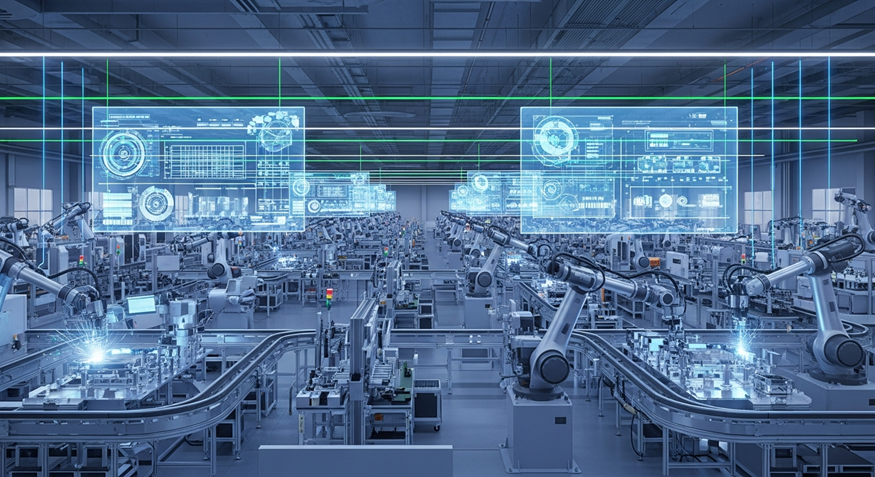
So, what is industrial automation and how does it work in modern industries? At its core, industrial automation is the use of control systems like computers and robots to manage industrial processes without significant human intervention. It represents a move from people operating machines to machines operating themselves, guided by strategic human input.
This technology works through a continuous feedback loop. Sensors collect data from the production line, which is then processed by controllers like PLCs. These controllers make real-time decisions and send commands to actuators and robotic systems, which perform the physical tasks. This closed-loop system ensures that industrial processes run optimally and can adjust automatically to changing conditions.
The result is a system that is not only faster but also more consistent and safer than traditional manual methods. It allows for scalability without a proportional increase in manual labor, making it a cornerstone of modern smart manufacturing and a key component of automation technology.
Key Drivers Behind the Surge in Automation Adoption
What are the main benefits of implementing industrial automation systems that are causing this surge? A major factor is the pursuit of a competitive edge in a global marketplace. Businesses are constantly seeking ways to improve efficiency and reduce operational costs.
Automation solutions directly address these needs by enabling 24/7 operations, minimizing errors, and ensuring consistent quality. Technology advancements, especially in machine learning and robotics, have made automation more accessible and powerful than ever before. These systems can handle repetitive tasks with incredible precision, freeing up human workers for more strategic roles.
The primary benefits fueling this adoption include:
- Improved Quality and Productivity: Automated systems can perform tasks like piston installation in car engines with an error rate of 0.00001%, a massive improvement over the 1-1.5% error rate of manual processes.
- Enhanced Safety: Robots can take over hazardous jobs, creating a safer environment for employees.
- Greater Flexibility: Robots can be reprogrammed for different tasks, allowing manufacturers to adapt quickly to changing product demands without extensive retraining of human operators.
Notable Market Statistics and Growth Projections
The growth of the industrial automation market is not just anecdotal; the numbers speak for themselves. The market is expanding rapidly as more companies invest in automation equipment to modernize their production lines and meet evolving market demands.
How is the industrial automation market expected to grow by 2030 and beyond? Projections indicate substantial and sustained growth. This expansion is driven by the increasing adoption of Industry 4.0 technologies and the push for greater operational efficiency across all sectors.
The global industrial automation market is on a clear upward trajectory, as shown by these projections:
| Metric | Value |
|---|---|
| Estimated Market Value (2026) | USD 261.23 Billion |
| Projected Market Value (2033) | USD 455.26 Billion |
| Compound Annual Growth Rate (2026-2033) | 9.7% |
This data highlights a strong, ongoing investment in automation, underscoring its critical role in the future of manufacturing.
Major Types of Industrial Automation Systems
When diving into industrial automation, it’s helpful to understand that not all systems are created equal. Different production needs call for different types of automation. The choice of an industrial automation system depends on factors like production volume, product variety, and the complexity of the tasks involved.
From rigid systems designed for mass production to highly adaptable ones for custom orders, the automation technology landscape is diverse. Below, we'll explore the main categories: fixed, programmable, and flexible automation, as well as the role of integrated systems that use tools like programmable logic controllers.
Fixed, Programmable, and Flexible Automation Explained
What are the different types of industrial automation systems commonly used? The main types are fixed, programmable, and flexible automation, each suited for different industrial settings. Understanding them helps you see how automation is tailored to specific tasks.
Each type offers unique advantages depending on the production environment. These systems are the building blocks of modern manufacturing, allowing businesses to optimize their processes based on specific needs. Here's a quick breakdown:
- Fixed (or Hard) Automation: This type uses specialized equipment for a single, repetitive task at high volumes. It’s perfect for mass production where the process doesn't change, like on automotive assembly lines.
- Programmable Automation: This system is designed for batch production. The equipment can be reprogrammed to handle different product variations. It offers more versatility than fixed automation and is common in industries with periodic product changes.
- Flexible (or Soft) Automation: This is the most adaptable type, allowing for rapid changes between different products without significant downtime. It’s ideal for industries that need to respond quickly to market demands, like consumer goods or custom manufacturing.
The Role of Integrated Automation in Complex Operations
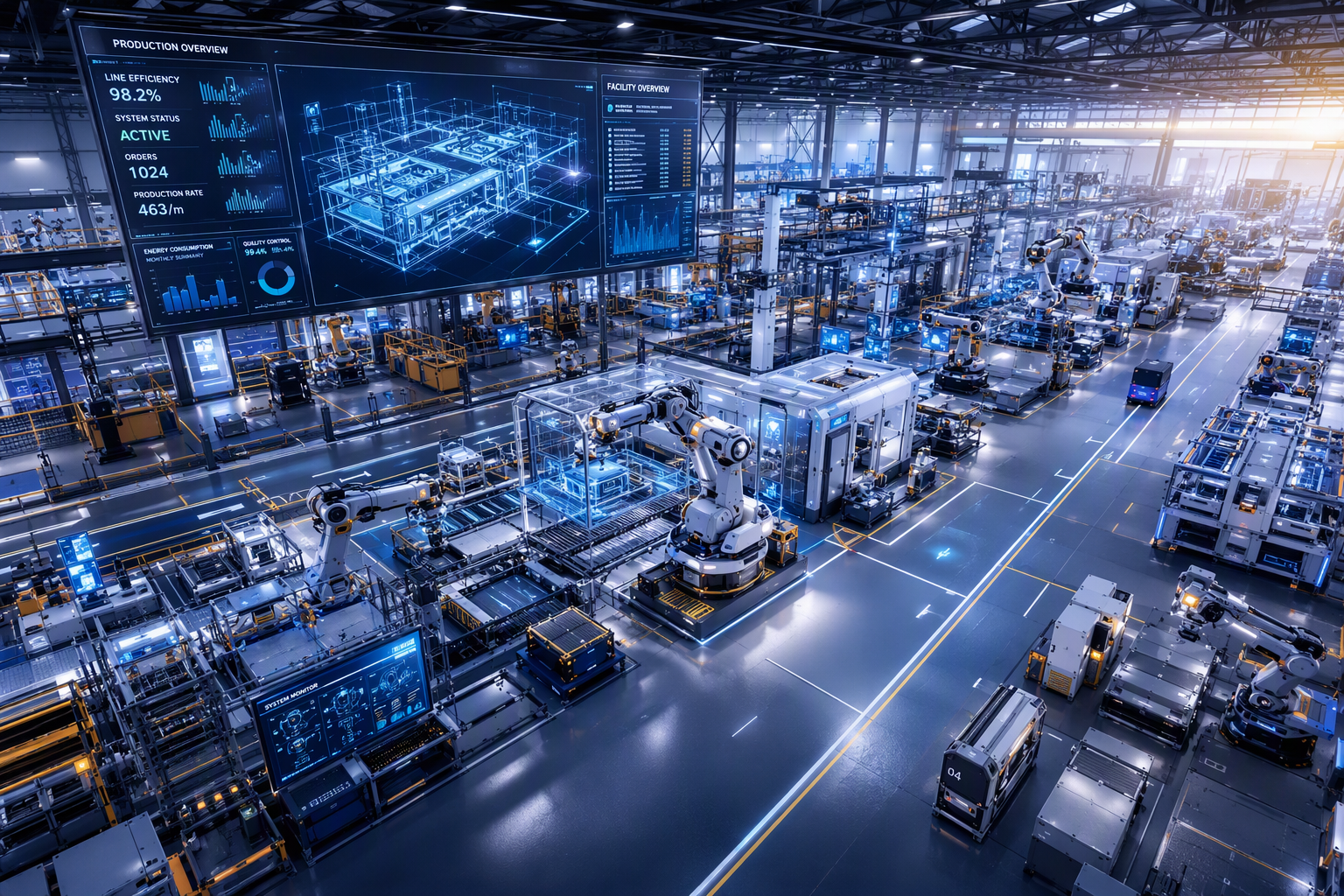
Integrated automation takes things a step further by connecting various machines, processes, and control systems into a single, cohesive unit. Instead of having isolated automation stations, every part of the production line communicates and synchronizes its actions in real time. This is the foundation of the modern smart factory.
One of the main benefits of implementing industrial automation systems in this integrated way is the drastic improvement in efficiency. By using supervisory control and data acquisition systems, operators get a holistic view of the entire operation. This allows for immediate adjustments and optimizations, reducing downtime and improving consistency across complex operations.
While the initial investment and expertise required for integrated automation solutions can be significant, the payoff is substantial. It enables a level of coordination and efficiency that isolated systems cannot achieve, allowing businesses to scale their operations more effectively and maintain a competitive edge.
Technologies Revolutionizing Industrial Automation
The current wave of industrial automation is powered by a host of revolutionary technologies. These innovations are making automation systems smarter, more connected, and more capable than ever before. It's the fusion of physical machinery with advanced digital tools that is truly transforming the factory floor.
We are seeing the convergence of artificial intelligence, advanced robotics, and the Internet of Things (IoT). These technologies, along with edge computing and cloud platforms, enable powerful capabilities like predictive maintenance and real-time data analysis, driving the next generation of automation.
Artificial Intelligence and Machine Learning Applications
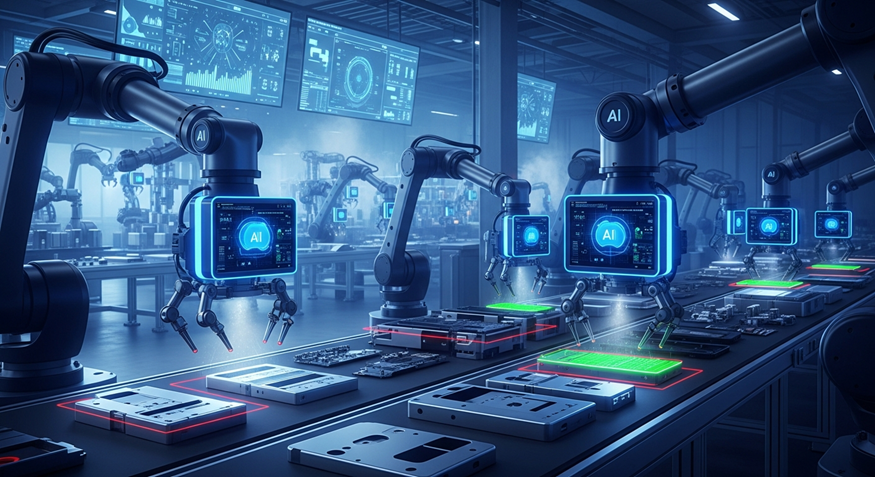
What key technologies are driving the future of industrial automation? Artificial intelligence (AI) and machine learning (ML) are at the forefront. These technologies are giving automation solutions the ability to think, learn, and adapt. Instead of just following pre-programmed instructions, AI-powered systems can analyze data and optimize processes on the fly.
One of the most impactful applications is predictive maintenance. AI algorithms can analyze data from sensors on machinery to predict when a part is likely to fail. This allows maintenance to be scheduled proactively, preventing costly unplanned downtime. This is a huge leap from reactive or even preventive maintenance schedules.
Furthermore, AI and machine learning are transforming quality control. Vision systems equipped with ML algorithms can inspect products with greater speed and accuracy than human inspectors, identifying subtle defects that might otherwise be missed. This ensures a higher level of product quality and reduces waste, making these technologies invaluable automation solutions.
Robotics and Collaborative Robots (Cobots)
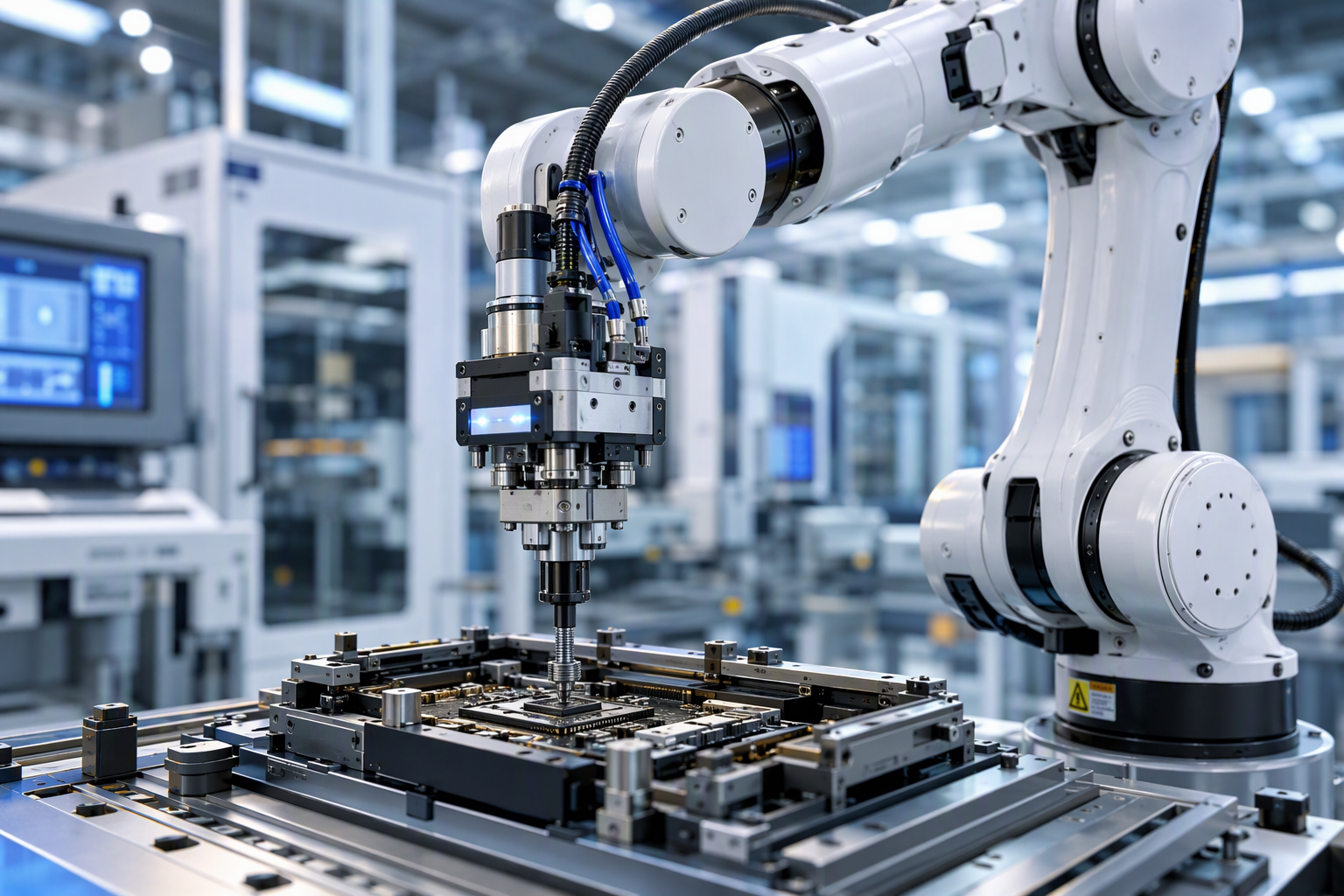
Industrial robots have long been a staple of automation, but recent advancements have made them more versatile and collaborative. Traditional industrial robots are masters of high-speed, high-precision repetitive tasks, such as welding and painting on an assembly line. They are powerful workhorses that have revolutionized mass production.
One of the top automation trends to watch is the rise of collaborative robots, or cobots. Unlike their larger counterparts that operate in caged-off areas, cobots are designed to work safely alongside human employees. This enhances workplace safety and opens up new possibilities for human-robot collaboration.
These automation solutions are changing the factory floor in several ways:
- Flexibility: Cobots can be easily reprogrammed and deployed for various tasks, making them ideal for small-batch production.
- Safety: Built-in sensors allow cobots to stop or slow down when a person gets too close, reducing the risk of accidents.
- Productivity: By handling strenuous or repetitive tasks, cobots free up human workers to focus on more complex or value-added activities.
The Internet of Things (IoT) and Edge Computing
The Industrial Internet of Things (IIoT) is another key technology driving the future of industrial automation. IIoT involves embedding sensors and network connectivity into industrial machinery, allowing them to collect and exchange vast amounts of data. This creates a connected ecosystem where every piece of equipment can communicate its status and performance.
This flood of data, however, presents a challenge: how to process it quickly and efficiently. This is where edge computing comes in. Instead of sending all data to a centralized cloud for processing, edge computing processes data locally, right at or near the source. This reduces latency and allows for real-time decision-making, which is critical for many industrial applications.
Together, IoT and edge computing enable powerful capabilities like remote monitoring and control. Plant managers can track equipment performance from anywhere, receive alerts about potential issues, and even make adjustments without being physically present. This level of connectivity and real-time insight is transforming how industrial operations are managed.
Cloud Platforms, Big Data, and Analytical Tools
While edge computing handles immediate, real-time processing, cloud platforms play a crucial role in managing the big picture. Data acquisition from across the factory floor is aggregated and sent to the cloud, creating a massive repository of information, or big data.
This is where analytical tools come into play. These powerful software applications sift through the big data to uncover trends, patterns, and insights that would be impossible to find manually. One of the main benefits of implementing industrial automation systems is this ability to turn raw data into actionable intelligence for process improvement.
By leveraging cloud platforms and analytical tools, companies can optimize their entire supply chain, improve product design, and make more informed strategic decisions. This data-driven approach is a hallmark of modern automation technology, enabling continuous improvement and giving businesses a significant competitive advantage.
Digital Transformation Initiatives in Manufacturing
The manufacturing sector is in the midst of a profound digital transformation, with industrial automation at its heart. Companies are moving beyond simple automation and are now focused on creating fully integrated, data-driven operations. This shift is often referred to as Industry 4.0.
This transformation involves implementing automation solutions that connect the physical and digital worlds. The goal is to create "smart factories" that are more flexible, efficient, and responsive. Let's look at the impact of these initiatives and some of the key technologies making them possible.
The Impact of Smart Factories and Industry 4.0
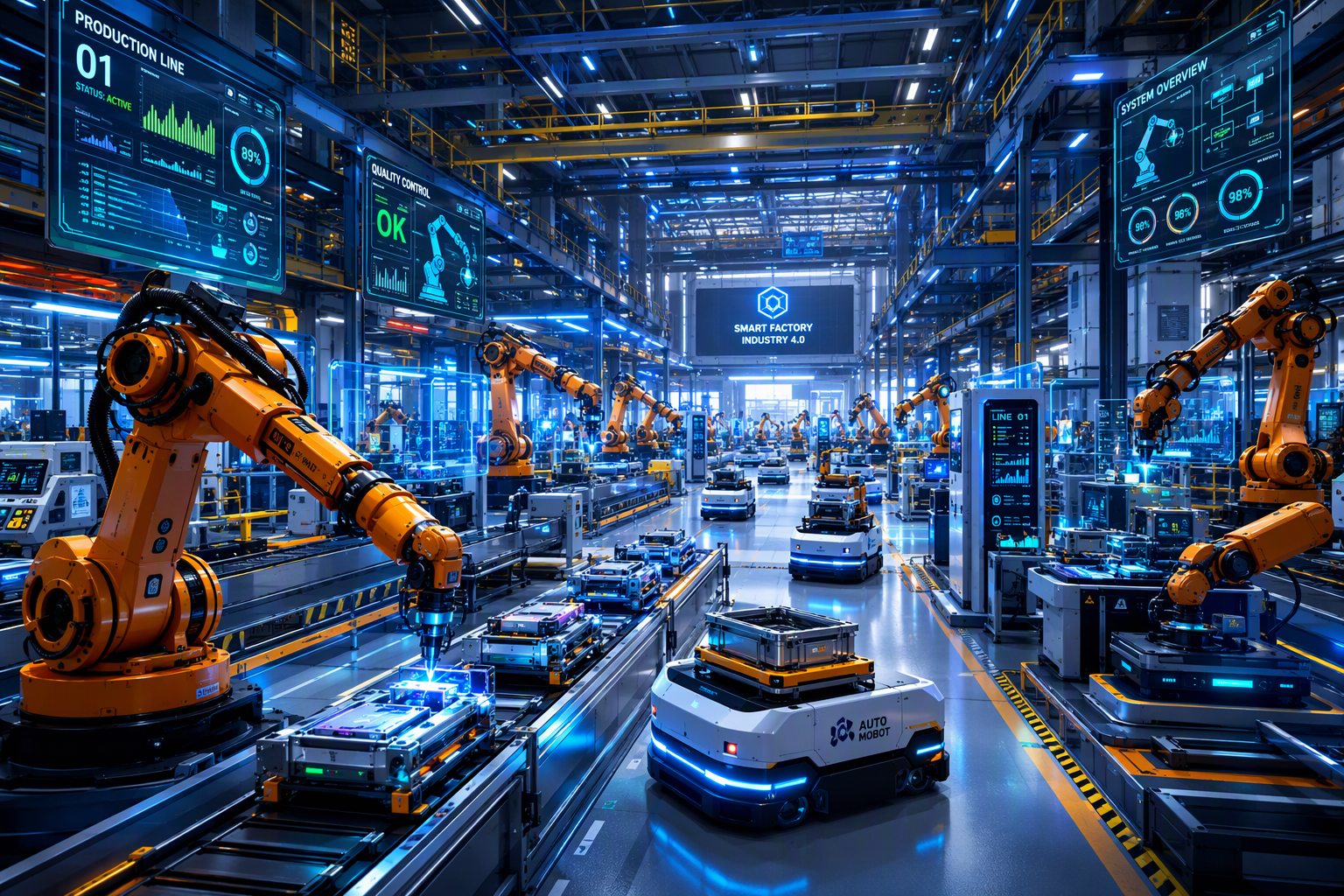
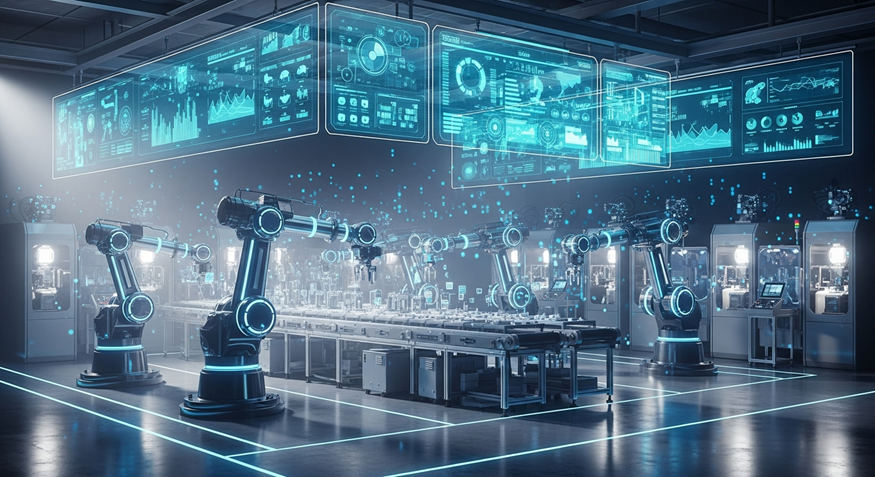
What are the current market trends shaping the industrial automation sector? The move toward smart factories and Industry 4.0 is arguably the biggest. A smart factory is a highly digitized and connected production facility where machinery and systems are linked, allowing them to communicate and make decentralized decisions.
This concept is the core of Industry 4.0, the fourth industrial revolution. It's about integrating Industrial Automation Sector solutions with cyber-physical systems, IoT, and cloud computing to create a manufacturing environment that is intelligent and self-optimizing. This leads to significant improvements in efficiency, quality control, and flexibility.
The impact can be seen in several areas:
- Adaptive Production: Smart factories can adjust production schedules and processes in real time to meet changing production demands.
- Enhanced Quality: Continuous monitoring and data analysis help identify and correct quality issues instantly.
- Increased Uptime: Predictive maintenance, enabled by connected sensors, minimizes unplanned downtime and extends equipment life.
Leveraging Digital Twins and Simulation Models
What key technologies are driving the future of the Industrial Automation Sector? Among the most exciting are digital twins and simulation models. A digital twin is a virtual replica of a physical object or system, such as a machine, a production line, or even an entire factory. This virtual model is continuously updated with real-world data from sensors.
This technology allows companies to run simulations and test "what-if" scenarios without disrupting physical operations. For example, you could simulate how a change in product design or a new workflow would impact the production line before implementing it. This drastically reduces the risk and cost associated with process changes.
Digital twins and simulation models are also invaluable for predictive maintenance and operator training. By simulating wear and tear, you can predict failures more accurately. You can also use the virtual environment to train workers on new equipment or procedures safely and effectively. This application of automation technology is a game-changer for optimizing performance and fostering innovation.
Sustainability Trends in the Industrial Automation Sector
Sustainability is no longer just a buzzword; it's a critical business objective. Industrial Automation Sector is playing a key role in helping manufacturers operate more sustainably. By optimizing processes and reducing waste, automation solutions are contributing to a greener bottom line.
This focus on sustainability is driving new trends in the industry, from improving energy efficiency to enabling circular manufacturing models. Let's explore how automation is helping companies reduce their environmental footprint while also improving their operational performance.
Energy Efficiency Improvements Driven by Automation
How does the Industrial Automation Sector contribute to sustainability efforts in manufacturing? One of the most significant ways is by improving energy efficiency. Industrial processes are notoriously energy-intensive, but automation technology provides powerful tools to reduce consumption.
Industrial Automation Sector solutions can monitor and control energy usage across the entire facility in real time. For example, systems can automatically power down machinery when it's not in use or optimize the speed of motors and pumps to match the exact demand of the production process. This eliminates wasted energy and can lead to substantial cost savings.
By continuously analyzing data from industrial processes, automation systems can identify inefficiencies and opportunities for improvement that would be invisible to human operators. This constant optimization not only reduces the environmental impact of manufacturing but also enhances the overall reliability and performance of the equipment.
Reducing Waste and Advancing Circular Manufacturing
Beyond energy, how else does the Industrial Automation Sector contribute to sustainability? A major contribution is in reducing waste and enabling circular manufacturing. Automation brings a level of precision to the production process that minimizes errors, scrap, and rework, which are all significant sources of waste.
Circular manufacturing is an economic model that aims to eliminate waste by keeping materials and products in use for as long as possible. Automation solutions are critical for making this model a reality. They can help sort materials for recycling, disassemble products for remanufacturing, and optimize resource use throughout the production process.
Here are a few ways automation helps in reducing waste:
- Precision Control: Automated systems ensure that the exact amount of material is used for each product, reducing raw material waste.
- Improved Quality: By catching defects early, automation prevents faulty products from continuing down the line, saving materials and energy.
- Optimized Logistics: Automation can optimize material handling and inventory, reducing the risk of spoilage or damage.
Workforce Evolution and Skill Demands
The rise of automation is inevitably changing the nature of work in industrial environments. As machines take on more repetitive and physically demanding tasks, the roles of human workers are evolving. This shift is creating a demand for new skills and a need for workforce adaptation.
Companies are now focusing on upskilling and reskilling their employees to work alongside new automation solutions. This evolution is not about replacing workers but about augmenting their capabilities and creating new, more valuable roles within the automated factory.
Upskilling and Reskilling in the Age of Automation
What are the main challenges faced by companies adopting Industrial Automation Sector? One of the biggest is managing the transition of the workforce. The fear that automation will replace jobs is common, but the reality is more nuanced. While some manual jobs may be reduced, automation creates new opportunities for human workers in areas like system maintenance, programming, and data analysis.
To bridge this gap, upskilling and reskilling programs are essential. Upskilling involves training employees to enhance their current skills, while reskilling trains them for entirely new roles. These initiatives are crucial for helping workers adapt to the changing demands of an automated workplace.
By investing in training, companies can retain valuable institutional knowledge and empower their employees to take on more complex and strategic tasks. This not only helps workers stay relevant but also gives the company a competitive edge by creating a highly skilled workforce capable of managing sophisticated automation technology.
Changing Workforce Roles in Automated Environments
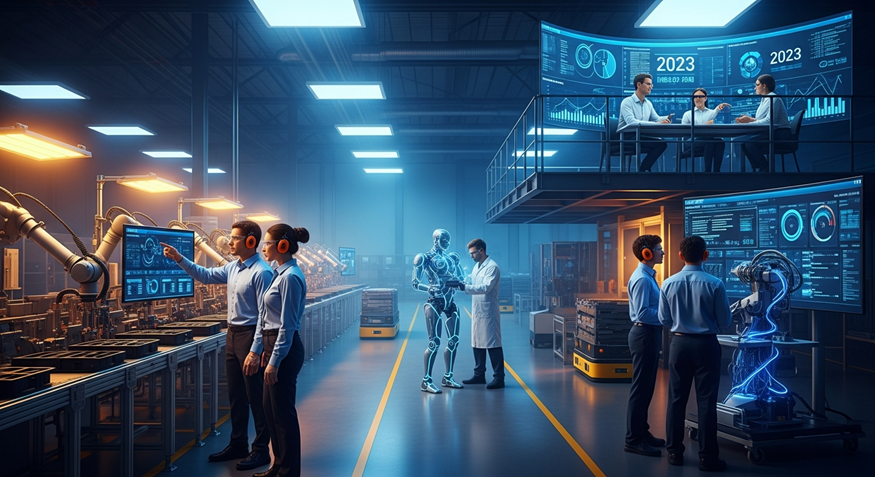
As automation technology becomes more integrated, the roles of human workers are shifting from manual labor to supervision and strategy. Human intervention is still critical, but it's focused on higher-level tasks that require creativity, critical thinking, and problem-solving skills—abilities that machines currently lack.
One of the main benefits of implementing Industrial Automation Sector systems is this elevation of human work. Instead of performing monotonous tasks, employees in automated environments often take on roles as system operators, maintenance technicians, or data analysts. They work with the automation solutions, not in place of them.
Here's how workforce roles are changing:
- From Operator to Supervisor: Workers are increasingly monitoring and managing automated systems rather than operating machines directly.
- New Technical Roles: Demand is growing for people who can install, maintain, and program robots and other automation equipment.
- Data-Driven Decision Makers: Employees are using data from automated systems to make informed decisions about process improvements.
Market Challenges and Adoption Barriers
Despite the clear benefits, adopting industrial automation is not without its hurdles. Companies face several market challenges and adoption barriers that can slow down or complicate the transition. These issues range from high upfront costs to the complexity of integrating new technology.
Understanding these challenges is the first step toward overcoming them. We'll explore some of the most common obstacles, such as dealing with legacy systems and addressing the critical issue of cybersecurity in a newly connected automation system.
Integration Complexity and Legacy Systems
What are the main challenges faced by companies adopting industrial automation? One of the most significant is integration complexity, especially when dealing with legacy systems. Many factories have equipment that is decades old and was never designed to communicate with modern, networked automation systems.
Getting these older machines to talk to new technology can be a massive undertaking. It often requires custom interfaces, specialized software, and a deep understanding of both old and new systems. This integration complexity can lead to delays, budget overruns, and disruptions to the production line.
This challenge extends throughout the supply chain. A fully optimized automation system needs to integrate not just within the factory but also with suppliers and customers. Overcoming these integration hurdles is crucial for realizing the full potential of any automation investment and avoiding bottlenecks in the new automation system.
Addressing Cybersecurity in Automated Operations
Another major challenge faced by companies adopting industrial automation is cybersecurity. As industrial processes become more connected to the internet and internal networks, they also become more vulnerable to cyberattacks. A security breach in an automated operations environment can have devastating consequences.
Potential issues range from data theft and intellectual property loss to the complete shutdown of production. In the worst-case scenario, a malicious actor could manipulate industrial processes, causing physical damage to equipment or even endangering workers. This makes cybersecurity a top priority.
Addressing this requires a multi-layered approach. Companies need to secure their networks, protect their control systems, and train employees on security best practices. As automation technology advances, so too must the strategies to protect it, ensuring that automated operations remain safe, reliable, and secure from external threats.
Real-World Examples of Automation Across Industries
The best way to understand the impact of Industrial Automation Sector is to see it in action. Across various sectors, companies are implementing industrial automation solutions to solve real-world problems and achieve impressive results. These industrial applications showcase the versatility and power of modern automation.
From the high-speed production lines of the automotive industry to the precision required in food and beverage, automation is making a difference. Let's look at some specific case studies and the lessons learned from successful industrial automation projects.
Case Studies in Automotive, Food & Beverage, and Energy
Can you explain some examples of Industrial Automation Sector in real-world applications? Absolutely. Different industries leverage automation in unique ways to meet their specific challenges.
In automotive manufacturing, industrial robots are the stars of the assembly line. They perform tasks like welding, painting, and part installation with a level of speed and precision that humans simply can't match. This has been a key factor in the industry's ability to mass-produce high-quality vehicles.
Here are a few more examples:
- Food & Beverage: Automated systems handle tasks like mixing, filling, and packaging. These industrial automation solutions ensure product consistency, maintain hygienic conditions, and minimize waste.
- Electronics: High-speed pick-and-place machines and robotic arms assemble complex circuit boards, enabling the mass production of consumer electronics.
- Warehousing: Autonomous mobile robots and smart sorting systems manage inventory and material handling, speeding up order fulfillment and improving safety.
Lessons Learned from Successful U.S. Industrial Automation Sector Projects
The success stories from the U.S. industrial automation market offer valuable lessons for any company considering an automation project. One key takeaway is the importance of starting with a clear goal. Successful projects don't just implement automation technology for its own sake; they use it to solve a specific problem, like improving quality or reducing bottlenecks.
Another lesson is the need for a phased approach. Rather than trying to automate an entire factory at once, many successful companies start with a pilot project. This allows them to learn, adapt, and demonstrate a return on investment before scaling up. This approach minimizes risk and builds momentum for broader adoption.
Finally, the most successful automation projects are those that involve employees from the beginning. By communicating the goals of the project and providing training, companies can turn skepticism into support. These success stories consistently show that operational efficiency and cost savings are maximized when people and Industrial Automation Sector technology work together effectively.
Conclusion
As we navigate the exciting trends shaping the industrial automation sector in 2023, it’s clear that technology is propelling this industry forward. Embracing advancements such as AI, robotics, and IoT is not just beneficial; it's essential for staying competitive. The shift towards smart factories and sustainable practices marks a significant evolution, enhancing efficiency while fostering environmental responsibility. Moreover, the evolving workforce dynamics emphasize the need for upskilling to thrive in automated environments. As businesses tackle challenges like integration complexities and cybersecurity, those who adapt will reap the rewards of enhanced productivity and innovation. Stay ahead of the curve—if you’re ready to explore how these trends can benefit your organization, get in touch with our team for a free consultation!
Frequently Asked Questions
What are the main benefits of industrial automation for manufacturers?
The main benefits of Industrial Automation Sector include increased productivity, improved product quality, and significant cost savings. Automation solutions also enhance workplace safety by handling hazardous tasks and give manufacturers a competitive edge by allowing them to respond more flexibly to market demands.
How does Industrial Automation Sector support sustainability efforts?
Automation supports sustainability by improving energy efficiency through optimized machine use and reducing waste by increasing precision in production. This application of Industrial Automation Sector technology helps minimize the environmental footprint of manufacturing, contributing to a greener and more efficient operation.
What challenges do businesses face when adopting industrial automation?
Businesses face several market challenges when adopting Industrial Automation Sector solutions, including high initial investment costs, the complexity of integrating new technology with legacy systems, and significant cybersecurity risks. Overcoming these hurdles is key to a successful automation implementation.
You might also like