Growth Opportunities in the Industrial Automation Sector
Growth Opportunities in the Industrial Automation Sector
Key Highlights
- Industrial Automation Sector utilizes control systems and industrial robots to manage the manufacturing process with minimal human input, driving significant growth in the industrial automation market.
- Key technologies like artificial intelligence and the Internet of Things are making automation systems smarter and more accessible.
- Businesses that adopt automation technology see major benefits, including improved efficiency, higher product quality, and enhanced workplace safety.
- The sector offers various types of automation, including fixed, programmable, and flexible systems, to meet diverse production needs.
- Despite challenges like initial investment, the future of industrial automation is bright, with strong growth expected in sectors like automotive and food processing.
Introduction
Have you ever wondered how modern factories produce goods so efficiently and consistently? The answer often lies in industrial automation. This dynamic sector involves using advanced automation systems, including industrial robots and sophisticated software, to streamline operations. As technology evolves, Industrial Automation Sector is becoming more crucial than ever, reshaping industries and creating exciting new opportunities for growth. It’s a field that’s not just growing; it's revolutionizing how the world manufactures everything around us.
Overview of the Industrial Automation Sector in the United States
In the United States, the industrial automation market is a powerhouse, transforming the manufacturing landscape from coast to coast. Companies are increasingly adopting automation systems to stay competitive, improve their manufacturing process, and meet consumer demands for high-quality products.
This widespread adoption is not limited to just one or two industries. From automotive plants to food processing facilities, industrial automation is becoming a standard practice, signaling a major shift in how American businesses operate and innovate.
Defining the Industrial Automation Sector and Its Importance
So, what exactly is the Industrial Automation Sector? In simple terms, it's the use of technology like control systems and industrial robots to manage and operate a manufacturing process with minimal involvement from human workers. Instead of people performing repetitive tasks, machines handle them with precision and speed.
This technology works through a connected system. Sensors gather data, controllers make decisions based on that data, and machines execute the commands. This closed-loop process allows for continuous, self-regulating operation, which is the core of how automation systems function in today's industries.
The importance of the Industrial Automation Sector cannot be overstated. It moves beyond simple mechanization, enabling smart manufacturing where machines not only perform tasks but also adapt and optimize their own performance. This shift allows human workers to focus on more strategic and creative responsibilities.
How Modern Industries Integrate Automation Systems
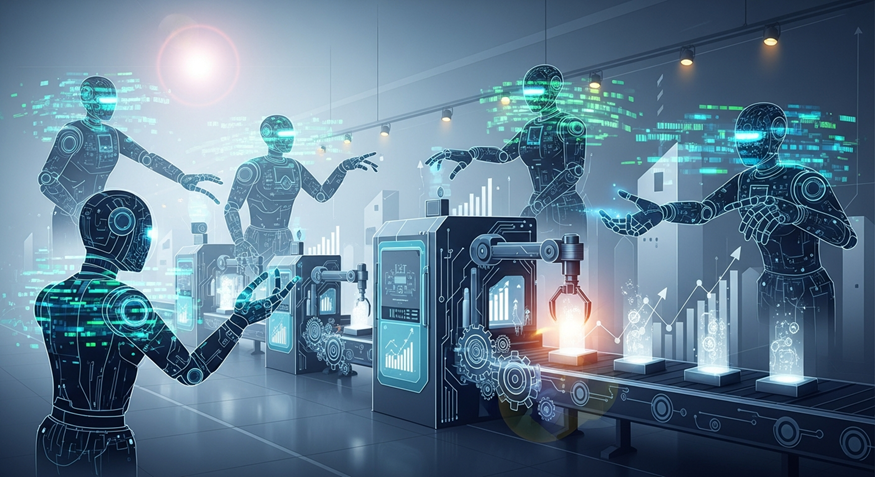
Modern industries integrate automation systems by creating a network of machines, software, and control systems that work together seamlessly. This process automation allows for real-time monitoring and adjustment, which is critical in dynamic industrial environments. The goal is to create a cohesive system where every component communicates and collaborates.
These automation solutions are tailored to specific industrial applications, whether it's a high-speed assembly line or a complex chemical processing plant. The integration is often phased, starting with automating individual tasks and gradually connecting them into a fully integrated operation.
The primary benefits that drive industries to integrate automation systems include:
- Increased Productivity: Automation systems can operate 24/7 without fatigue, leading to a significant boost in output.
- Improved Quality and Consistency: Machines perform tasks with a high degree of precision, reducing errors and ensuring uniform product quality.
- Enhanced Safety: Robots can take over dangerous jobs, creating a safer work environment for employees.
Key Drivers of Growth in the Industrial Automation Sector
The Industrial Automation Sector market is experiencing a significant surge, and several key factors are fueling this expansion. Growing competition and evolving market demands are pushing companies to find more efficient ways to operate. Automation technology offers a powerful solution to these challenges.
Advancements in technologies like the Internet of Things (IoT) are making it easier than ever to connect every part of a manufacturing facility. This interconnectivity allows for smarter, data-driven decisions that boost productivity and efficiency, driving the sector's growth forward.
Market Trends Expanding Opportunities
Current market trends are playing a huge role in creating new opportunities within the Industrial Automation Sector market. One of the biggest trends is the move toward Industry 4.0, or the "smart factory." This involves integrating automation technology with data exchange, creating highly efficient and flexible industrial systems.
Another key trend is the increasing demand for customization. Consumers want personalized products, which requires manufacturers to be more agile. Advanced automation allows companies to quickly switch production lines and meet these changing market demands without sacrificing efficiency.
These trends are pushing businesses to invest in more sophisticated automation solutions. As technologies like AI and IoT become more mainstream, they open up new possibilities for what industrial systems can achieve, from predictive maintenance to real-time process optimization.
Factors Shaping Demand for the Industrial Automation Sector
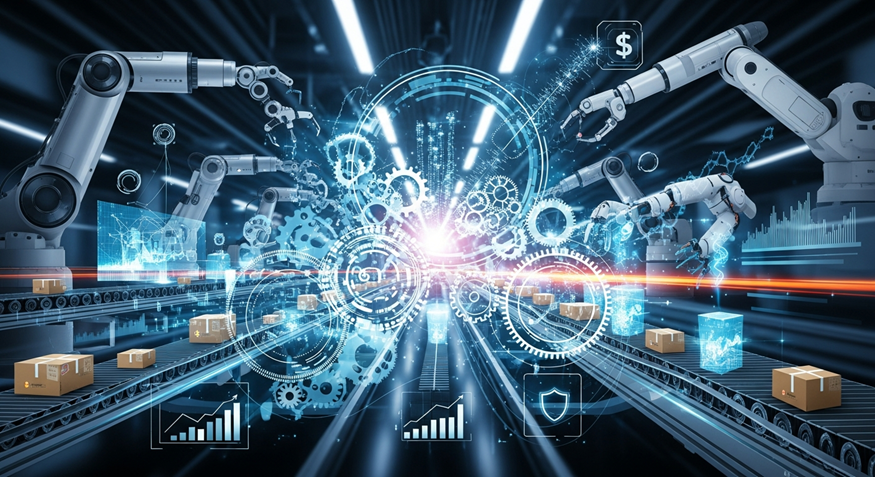
The demand for the Industrial Automation Sector is being shaped by a powerful combination of economic and operational factors. In many industrial settings, rising labor costs and a shortage of skilled human workers make automation systems an attractive alternative. Businesses are looking for ways to reduce operational expenses while maintaining high output.
Furthermore, the need for greater efficiency and precision is a constant pressure. Manual processes are often slower and more prone to errors. Automation systems can perform tasks faster and with a level of consistency that human workers simply can't replicate over long shifts.
Here are some core factors driving demand:
- Cost Reduction: Automation helps lower operating costs by reducing the need for manual labor and minimizing material waste.
- Improved Productivity: Automated systems can run continuously, significantly increasing production capacity and throughput.
- Enhanced Workplace Safety: Deploying robots for hazardous tasks protects human workers from dangerous industrial settings.
Types of Industrial Automation Systems
When it comes to the Industrial Automation Sector systems, there isn't a one-size-fits-all solution. Different production needs require a different type of automation. The most common categories are fixed automation, programmable automation, and flexible automation, each suited for specific tasks and environments.
Understanding these types is key to choosing the right approach for your operations. Whether you need to mass-produce a single item or create a variety of custom products, there's an automation system, often managed by programmable logic controllers, designed to meet that goal.
Fixed, Programmable, and Flexible Automation Systems
Fixed automation, also known as hard automation, is designed for a single, specific task that is repeated at high volume. Think of a dedicated assembly line for one product. While highly efficient, it lacks flexibility and is expensive to reconfigure if the product design changes.
Programmable automation offers more versatility. It uses equipment controlled by programmable logic controllers (PLCs) that can be reprogrammed to handle different products. This makes it ideal for batch production, where a company produces a set amount of one item before switching to another.
Flexible automation, or soft automation, is the most adaptable type. It can handle a variety of products and processes with minimal downtime for changeovers. This system is perfect for industries that need to respond quickly to market shifts or produce customized goods.
| Automation Type | Best For | Flexibility | Key Feature |
|---|---|---|---|
| Fixed Automation | High-volume, repetitive tasks | Low | Specialized equipment for a single task |
| Programmable Automation | Batch production | Medium | Can be reprogrammed for different products |
| Flexible Automation | High product variety, custom orders | High | Easily reconfigurable for quick changeovers |
Integrated Automation Solutions in Practice
Integrated automation solutions take process automation to the next level by connecting various machines, industrial systems, and software into one unified platform. Instead of operating in isolation, every part of the manufacturing process communicates, enabling seamless data exchange and coordination. This is the foundation of the modern smart factory.
In practice, this means that sensors on a production line can send real-time data to a central control system, which can then automatically adjust machine settings to optimize performance or prevent a potential issue. This holistic approach improves the entire operation, not just individual tasks.
Here are a few examples of integrated automation solutions in action:
- Real-Time Monitoring: A central dashboard provides a complete view of the entire manufacturing process, allowing managers to spot bottlenecks instantly.
- Predictive Maintenance: Systems analyze data from machines to predict when maintenance is needed, reducing unexpected downtime.
- Synchronized Production: Robots, conveyors, and other equipment work in perfect sync, ensuring a smooth and efficient flow of materials.
Technologies Powering the Next Generation of Automation
The future of industrial automation is being shaped by several groundbreaking technologies. Artificial intelligence and machine learning are enabling systems to think and learn, while robotics and the use of industrial robots are becoming more sophisticated and collaborative than ever before.
Technologies like the Industrial Internet of Things (IIoT) and edge computing are creating smarter, more connected factories. These innovations are not just improving existing processes; they are unlocking entirely new possibilities for what automation can achieve, paving the way for the next generation of manufacturing.
Role of Robotics and Collaborative Robots (Cobots)
Robotics has long been a cornerstone of Industrial Automation Sector technology, with industrial robots handling heavy-duty and repetitive tasks on assembly lines for decades. These machines are known for their speed, power, and precision in controlled industrial environments, making them perfect for jobs like welding, painting, and heavy lifting.
However, a newer type of robot is gaining popularity: the collaborative robot, or cobot. Unlike traditional industrial robots that are kept in safety cages, cobots are designed to work safely alongside humans. They are typically smaller, more flexible, and easier to program, making them ideal for tasks that require a delicate touch or collaboration with a human worker.
The rise of cobots is expanding the possibilities for automation, especially for small and medium-sized businesses. They can be deployed quickly to handle a variety of tasks, helping companies increase productivity without needing a complete overhaul of their production floor.
Impact of Artificial Intelligence and Machine Learning
Artificial intelligence (AI) and machine learning (ML) are transforming the Industrial Automation Sector from a set of programmed commands into a dynamic, intelligent system. These technologies allow machines to analyze data, learn from it, and make decisions in real time without human intervention. This is a huge leap forward from traditional automation.
When combined with the Industrial Internet of Things (IIoT), which provides vast amounts of data from connected sensors, AI and ML can optimize entire production processes. For example, an AI algorithm can analyze production data to identify inefficiencies and suggest improvements.
Here are some of the key impacts of AI and ML on industrial automation:
- Predictive Maintenance: AI systems can analyze machine data to predict when a part might fail, allowing for maintenance to be scheduled before a breakdown occurs.
- Enhanced Quality Control: Machine learning algorithms can be trained to spot defects in products with a higher degree of accuracy than the human eye.
- Process Optimization: AI can continuously adjust machine settings to improve efficiency, reduce waste, and increase output.
Benefits of the Industrial Automation Sector for Businesses
Adopting industrial automation brings a host of powerful benefits for businesses of all sizes. The most obvious benefits of automation are boosts in efficiency and productivity, but the advantages don't stop there. Automation systems can also lead to significant improvements in product quality and workplace safety.
By automating key parts of the production process, companies can streamline their operations, reduce costs, and gain a competitive edge. We'll explore how these benefits play out in more detail, from boosting efficiency to advancing sustainability.
Improving Efficiency and Productivity
One of the primary goals of implementing automation systems is to improve efficiency and productivity. By automating repetitive tasks, businesses can streamline operations and free up their human workforce to focus on more complex, value-added activities. This allows companies to get more done in less time.
Imagine a production line where robots handle the assembly, packaging, and sorting. These machines can work 24/7 without breaks or fatigue, dramatically increasing the output of the entire manufacturing process. This boost in productivity can help companies meet growing demand and lower costs per unit.
Here's how automation directly contributes to better efficiency:
- Faster Cycle Times: Automated machines can perform tasks much faster than humans, reducing the time it takes to produce each item.
- Continuous Operation: Unlike a human workforce, automation systems can run around the clock, maximizing production capacity.
- Reduced Bottlenecks: Automation can help identify and eliminate bottlenecks in the production line, ensuring a smoother workflow.
Advancing Quality and Sustainability Initiatives
Automation plays a critical role in improving product quality and consistency. Machines perform tasks the exact same way every time, with minimal human input. This reduces the variability and human error that can lead to defects, ensuring that every product meets the same high standards of quality control.
Beyond quality, automation also supports sustainability efforts. By optimizing the manufacturing process, automation systems can reduce material waste and energy consumption. For example, precision machines can cut materials more accurately, leaving less scrap, and smart systems can power down equipment when it's not in use.
Automation helps drive quality and sustainability through:
- Consistent Quality: Robots and automated systems repeat processes with precision, leading to uniform product quality.
- Reduced Waste: Optimized processes and precise material handling minimize scrap and resource consumption.
- Energy Efficiency: Smart automation can manage energy usage across a facility, lowering the overall environmental footprint.
Challenges and Considerations When Adopting Automation
While the benefits are compelling, adopting industrial automation solutions is not without its challenges. One of the biggest hurdles is the high initial investment required for equipment and implementation. Companies must carefully weigh the upfront cost against the long-term savings and productivity gains.
Beyond the financial aspect, there are other potential issues to consider. The shift from manual labor to an automated production process can have a significant impact on the workforce, and it requires careful planning to manage the transition smoothly and address concerns about human labor.
Addressing Implementation Barriers
When implementing automation solutions, companies often face several common barriers. The high initial investment is frequently the most significant hurdle, as purchasing robotic equipment and sophisticated software can be expensive. This cost can be particularly challenging for small and medium-sized enterprises.
Another barrier is the complexity of integration. Making new process automation technology work with existing legacy systems can be a technical nightmare if not planned properly. There are also potential issues with finding the right talent to design, implement, and maintain these advanced systems for various industrial applications.
To overcome these barriers, companies can take several steps:
- Start Small: Begin with a pilot project to prove the return on investment before scaling up to a facility-wide implementation.
- Phased Integration: Gradually introduce new automation solutions to minimize disruption and allow employees to adapt.
- Partner with Experts: Work with an experienced automation provider who can help navigate the complexities of implementation.
Ensuring Workforce Readiness and Skills Development
As industrial automation takes over more manual tasks, ensuring the workforce is ready for this shift is crucial. The focus moves from physical labor to roles that require technical skills, problem-solving, and human intervention in more strategic ways. This means skills development is essential.
Companies have a responsibility to invest in training and reskilling programs for their human workers. This not only helps employees adapt to new roles but also ensures that the business has the internal talent needed to manage and maintain its automation systems effectively. This focus on upskilling can also improve workplace safety.
Here are key strategies for workforce readiness:
- Reskilling Programs: Offer training in areas like robotics, data analysis, and system maintenance.
- Collaborative Roles: Design new jobs that involve humans working alongside automated systems.
- Continuous Learning: Foster a culture of ongoing skills development to keep up with evolving technology.
Market Outlook and Future Opportunities to 2030 and Beyond
Looking ahead, the industrial automation market is poised for continued and rapid growth. The future of industrial automation is incredibly bright, driven by relentless innovation and increasing market demands for efficiency and quality. As companies compete in a fierce global marketplace, the need to optimize industrial processes will only intensify.
This trend creates a wealth of opportunities for businesses that are ready to embrace automation. From emerging technologies to new applications in various sectors, the next decade promises to be a transformative period for the industry.
Sectors Experiencing High Growth Potential
Industrial automation is expanding across various sectors, but some are experiencing particularly high growth potential. These industries are leveraging automation to solve unique challenges and gain a competitive advantage in their respective industrial settings. The flexibility of modern automation makes it adaptable to many industrial applications.
The automotive industry has long been a leader in automation, and it continues to be a major driver of growth. However, other sectors are catching up quickly. Food and beverage, electronics, and pharmaceuticals are all investing heavily in automation to improve quality, ensure compliance, and increase production speed.
Here are some of the sectors with the highest growth potential:
- Automotive: Continued use of robotics for assembly, welding, and painting.
- Electronics: High-speed automation for assembling small, complex components.
- Food and Beverage: Automation for processing, packaging, and quality control to ensure safety and consistency.
Emerging Automation Applications in U.S. Industries
New and exciting applications of automation technology are emerging across U.S. industries. Beyond the traditional assembly line, businesses are finding innovative ways to use industrial automation solutions to solve complex problems and create smarter industrial systems.
In many cases, these new applications are powered by the integration of IoT devices within the manufacturing facility. These connected devices provide a constant stream of data that can be used to optimize processes, predict failures, and improve overall efficiency in ways that were previously impossible.
Some emerging applications include:
- Smart Warehousing: Autonomous mobile robots that manage inventory and fulfill orders with minimal human oversight.
- Digital Twins: Virtual models of a manufacturing facility that use real-time data to simulate and test process changes before implementation.
- AI-Powered Quality Inspection: Using computer vision and AI to detect subtle defects in products on a fast-moving production line.
Real-World Examples of Industrial Automation
To truly understand the impact of industrial automation, it's helpful to look at real-world examples. Many industries have successfully integrated automation solutions into their manufacturing process, using industrial robots and smart systems to achieve remarkable results.
These examples show how automation works in practice, from assembling cars with precision to ensuring food safety. By examining these case studies, you can see how automation delivers tangible benefits like improved efficiency, quality, and real time process control.
Case Study – Automotive Manufacturing
The automotive manufacturing sector is a classic example of industrial automation at its best. For decades, car companies have relied on industrial robots to handle key tasks on the assembly line. This has allowed them to achieve a level of speed and precision that would be impossible with manual labor alone.
In a modern car factory, you'll see a symphony of automation solutions at work. Robotic arms perform tasks like welding car bodies, painting them with a flawless finish, and installing heavy components like engines and windshields. These robots work tirelessly, ensuring that every vehicle on the production process meets strict quality standards.
This heavy reliance on automation has not only revolutionized the production process but has also made cars safer and more affordable. It's a powerful demonstration of how industrial automation can transform an entire industry.
Case Study – Food and Beverage Processing
The food and beverage processing industry is another area where automation systems are making a huge impact. In this sector, consistency, hygiene, and quality control are paramount. Process automation helps companies meet these demanding requirements while also increasing production efficiency.
For example, in a beverage bottling plant, automated systems handle everything from mixing the ingredients in precise ratios to filling, capping, and labeling thousands of bottles per hour. This is a form of batch production where automation ensures every batch is identical.
Sensors and automated inspection systems are used for quality control, checking for contaminants, correct fill levels, and proper sealing. This reduces the risk of product recalls and ensures that consumers receive a safe, high-quality product every time.
Conclusion
In conclusion, the industrial automation sector presents a plethora of growth opportunities driven by technological advancements and evolving market demands. By integrating automation systems, businesses can enhance efficiency, improve quality, and achieve sustainability goals. However, it’s crucial to address the challenges associated with implementation and workforce readiness. As we move toward 2030 and beyond, sectors like automotive manufacturing and food processing will continue to lead the way in innovation and productivity through automation. Embracing these changes not only equips businesses for future success but also positions them as leaders in their respective industries. If you're ready to explore how industrial automation can transform your business, get in touch for a free consultation and start your journey toward a more efficient future!
Frequently Asked Questions
The top trends driving industrial automation growth include the adoption of Industry 4.0, the rise of artificial intelligence, and the increasing use of collaborative industrial robots. As automation technology becomes more accessible, the industrial automation market is expanding to improve the manufacturing process across many sectors.
How does automation support sustainability in manufacturing?
Automation supports sustainability by optimizing the manufacturing process to reduce energy consumption and material waste. Automation systems enhance quality control, leading to fewer defective products and less scrap. This not only improves product quality but also minimizes the environmental impact of production.
What challenges do companies face when implementing automation?
Companies face several challenges when implementing process automation, including the high initial investment for equipment and integration. Other potential issues include managing the transition for human labor, addressing the skills gap, and overcoming technical hurdles when integrating new automation solutions with existing systems.
You might also like