Master Alarm Prioritization: A Guide to Severity
What is Alarm Prioritization? – Types of Alarms
Alarm security systems monitor properties for unauthorized access or emergencies. When a breach occurs, alarm escalation protocols activate, notifying property owners and authorities. These systems ensure rapid response to potential threats, enhancing safety and deterrence against intrusions or disasters, ultimately safeguarding your home or business effectively.
https://www.pioneersecurity.com/how-choose-router-multiple-security-cameras/
https://www.pioneersecurity.com/custom-monitoring-rules
https://www.pioneersecurity.com/calculate-ups-size-for-cctv-nvr-power-backup/
https://www.pioneersecurity.com/ip-ptz-thermal-camera-comparison/
https://www.pioneersecurity.com/thermal-camera-live-monitoring-deployment/
https://www.pioneersecurity.com/ip-camera-live-monitoring-uses/
In a plant, an alarm that no one acts on is worse than no alarm at all, because it looks like the plant is protected when it is not. Alarm escalation is the plan that makes sure every critical alert, particularly those of high alert severity, reaches the right people at the right time, even when the first person paged is busy, away, or already handling another upset, ultimately reducing the risk of business disruption. Good escalation policies cut response times, reduce alert fatigue, and follow best practices that keep operators, equipment, and production safe.
Why Alarm Priorities Matter in a Plant
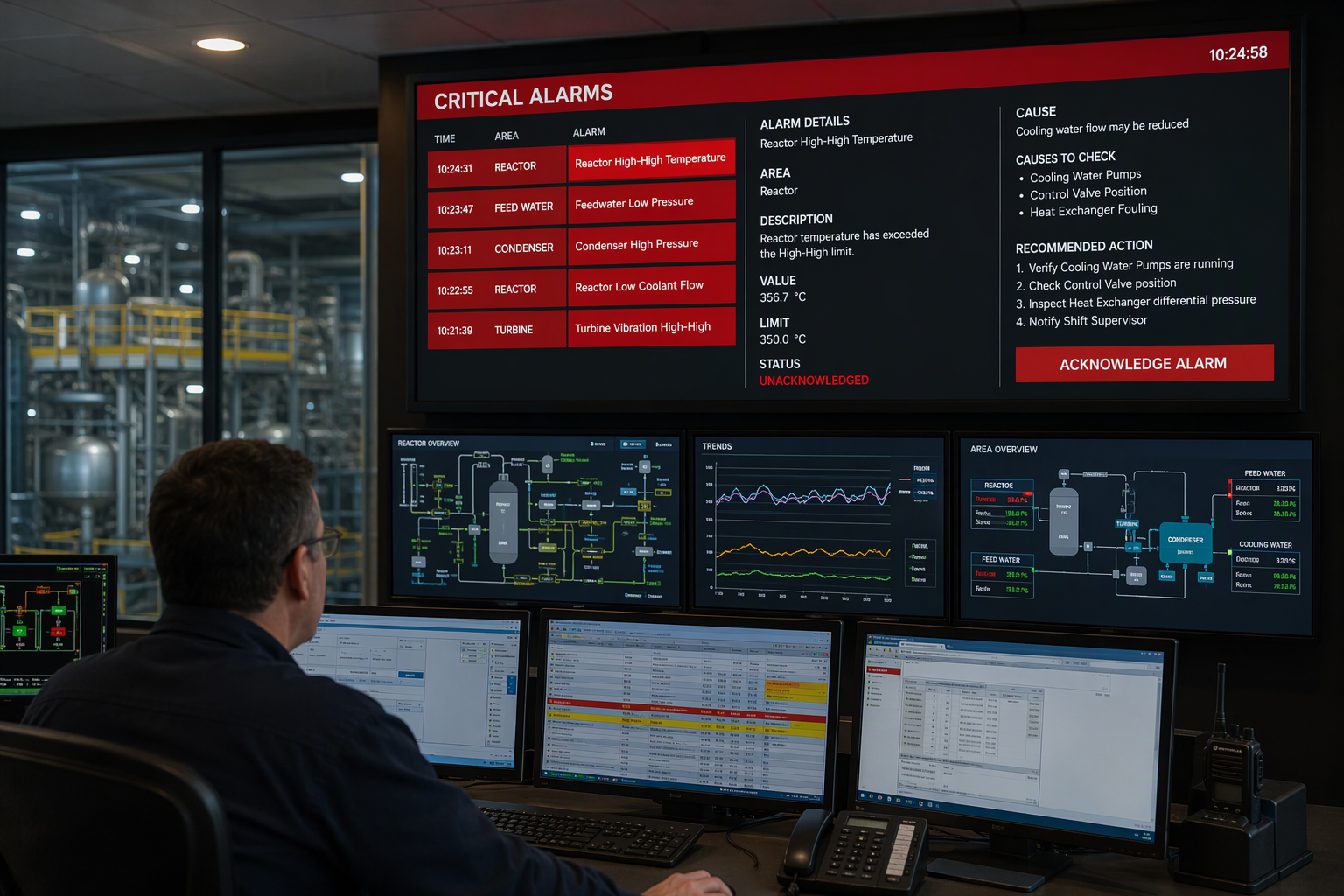
When every alarm looks urgent, none of them is. Operators facing alarm floods and alarm fatigue learn to ignore signals, and a minor alarm can hide a potential future problem. An important part of IT infrastructure monitoring is for a control system to present the most critical issues first, so a level alarm that threatens a vessel gets attention before a filter warning. In process industries, alarm priorities protect the alarm list itself: if the number of alarms stays manageable over a period of time, operators can use operational data and a monitoring tool instead of guessing. Priorities are a safety control, not just a display setting.
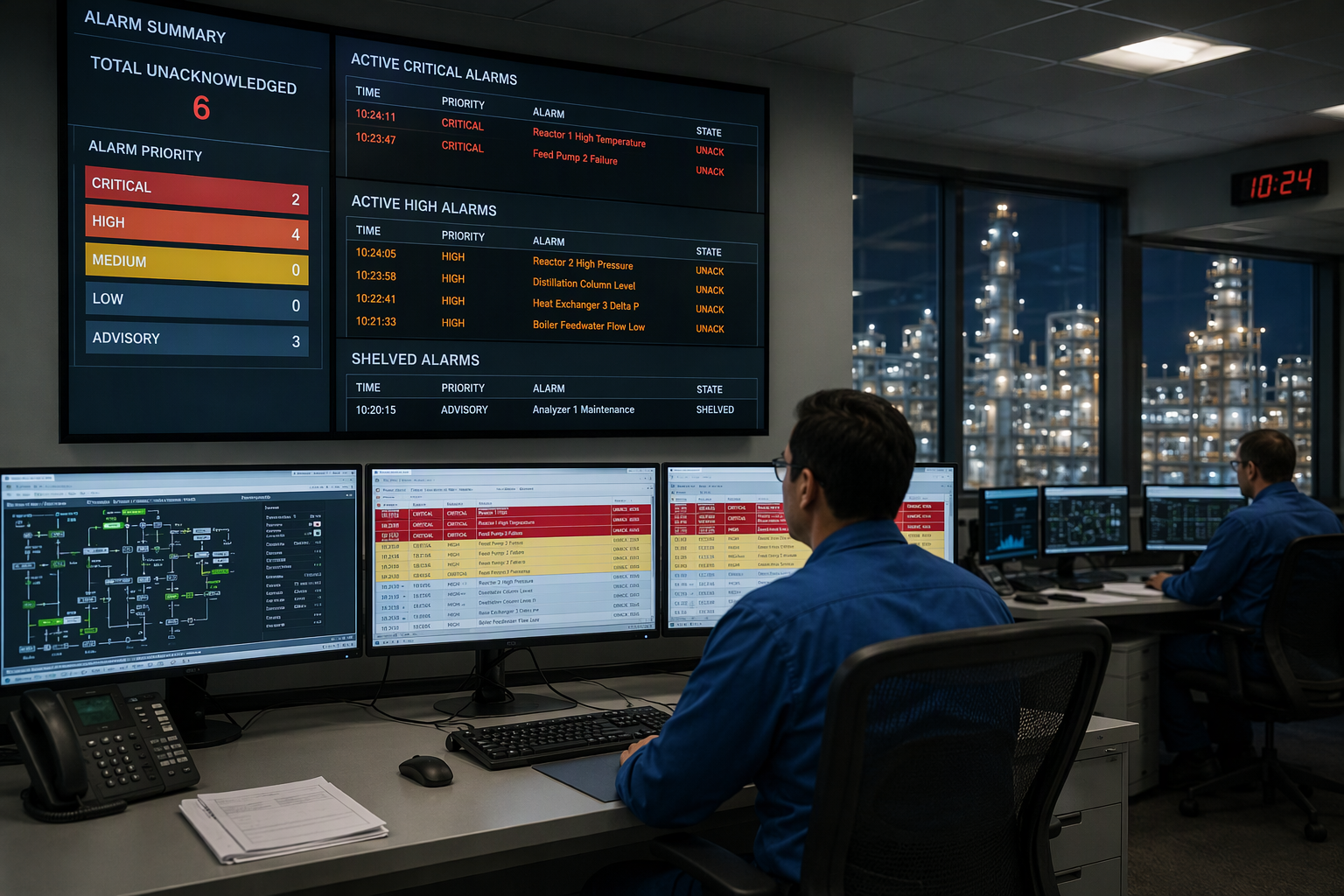
Setting severity levels starts with consequence, not noise. A team should score each alarm by what happens if it is missed for five minutes, for an hour, and for a shift, and by how much time an IT admin operator needs to respond. That response time, the potential business impact, and the risk of equipment damage together set the alarm priority. High priority alarms demand immediate attention, medium priority alarms allow a planned response, and low priority alarms can be logged and reviewed later. Document the reasoning for each alarm priority so the alarm list stays consistent when staff change.
Response time is part of severity: high priority alarms need minutes, medium priority alarms allow hours, and low priority alarms wait for planned work.
How to Rank Alarms in Practice
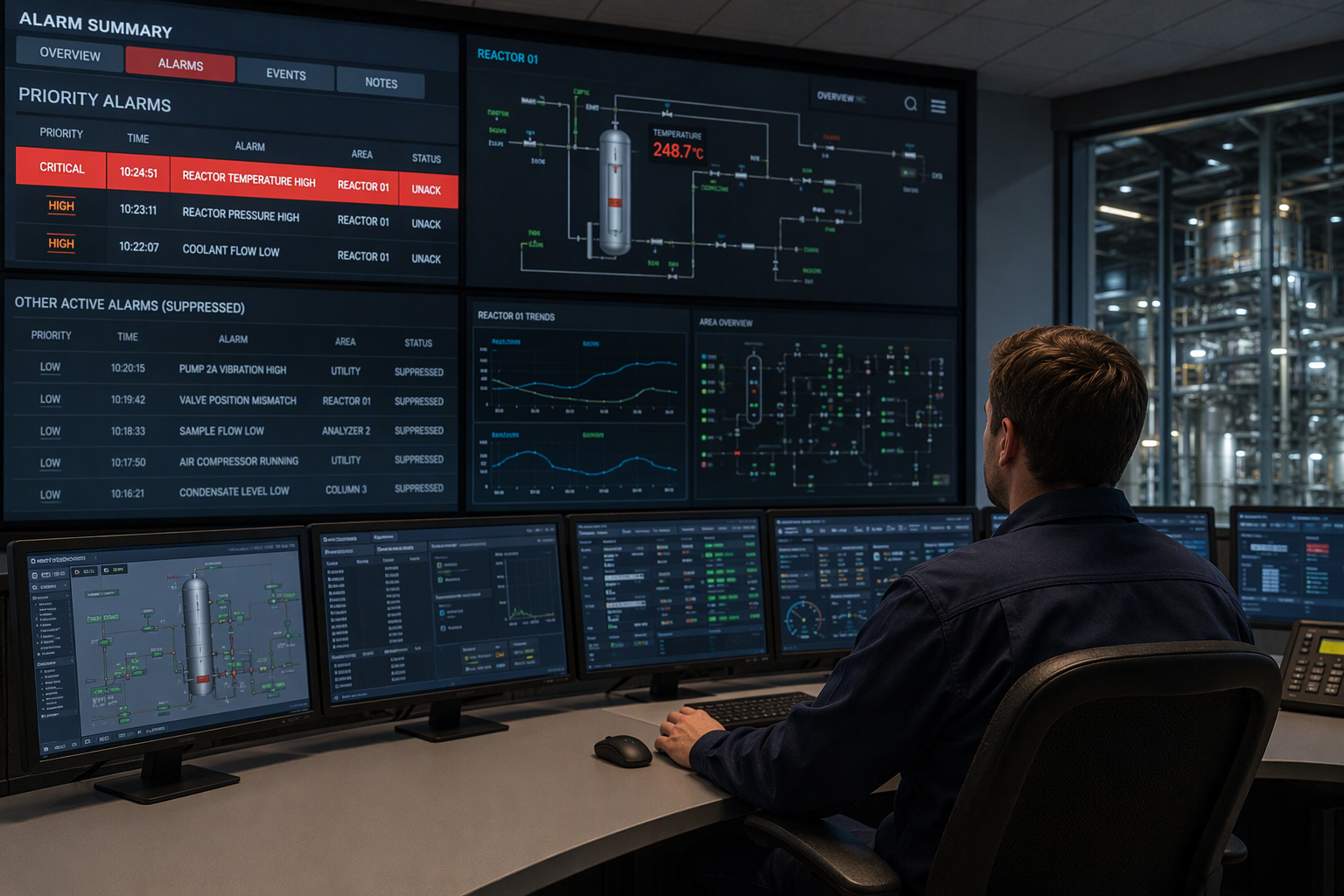
Rank each alarm by consequence first, then by response time. List the process, the equipment, and the worst credible outcome, then assign high priority, medium priority, or low priority accordingly. A level alarm on a reactor, for example, outranks a minor alarm on a utility line, even if both appear on the same alarm list. Use the control system to sort by alarm priority, not by arrival time alone, and review the ranking with operations, maintenance, and safety together, especially in relation to the IT application.
Building a Four-Level Priority Scale
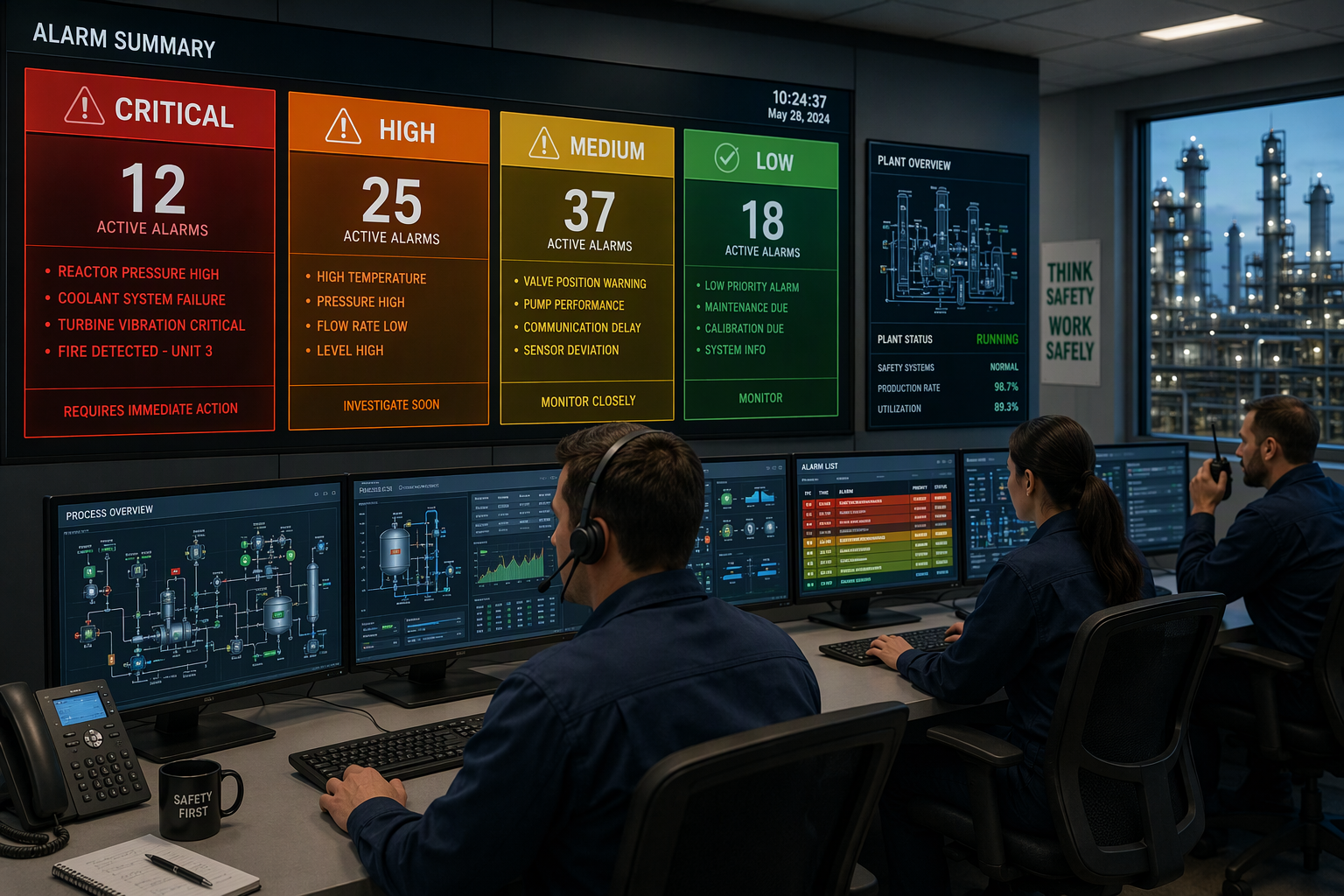
Most plants use four levels: critical, high, medium, and low. Critical alarms need immediate attention and may require a shutdown, high priority alarms need action within minutes, medium priority alarms need action within the shift, and low priority alarms can wait for planned work. Keeping track of the causes of problems is essential to ensure critical alarms are rare; otherwise, they lose meaning. Write the level, the response time, and the first action for each alarm on the alarm list, so any operator can act the same way.
What Operators Do at Each Level
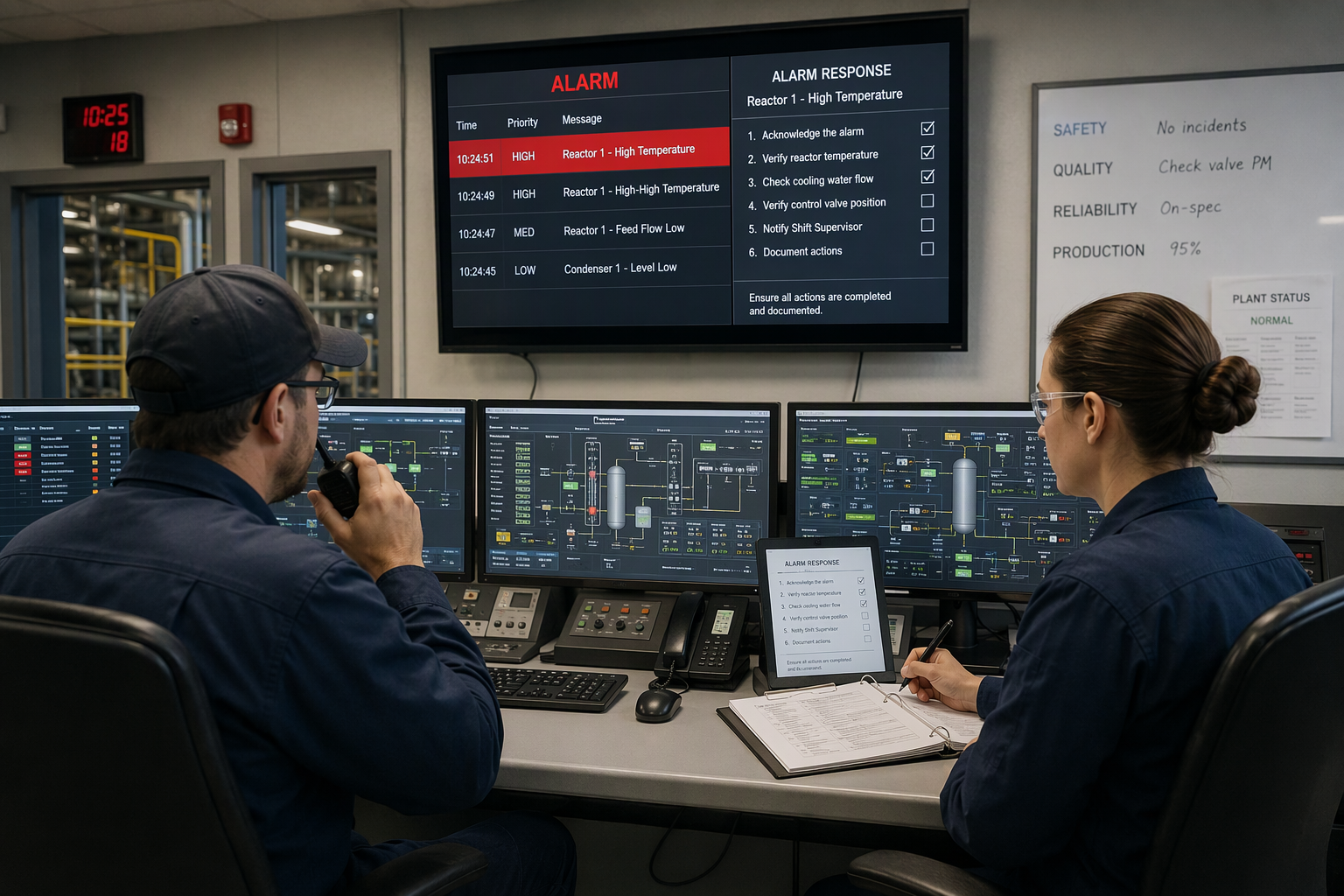
At a critical level, stop and act now, and call for help if needed. At a high priority level, acknowledge the alarm, check the process, and start the written response. At a medium priority level, plan the response within the shift and log the action. At a low priority level, record the alarm and schedule the work, utilizing data analytics, but do not ignore it, because a low priority alarm can become a critical alarm if conditions change.
Keeping High Priority Alarms Rare
If more than one in ten alarms is high priority, the label stops working. Audit the alarm list each month, count nuisance alarms, and move alarms that rarely need action to lower priority levels. Use modern monitoring tools, like eG Enterprise, for plant data, not as a substitute for judgment, and track mean time to respond for a medium level alarm as a check. When high priority alarms are rare, operators trust them again.
Reviewing Alarm Priorities Regularly
Review priorities after every incident, after a process change, and at least once a year. Look at the number of alarms, the highest priority problems, and any alarm that operators ignored. Each alarm provides details of an abnormality, so if a medium level alarm repeatedly becomes urgent, raise its priority, and if a high priority alarm rarely needs action, lower it. Record each change so the alarm list reflects current plant risk.
Common Prioritization Mistakes to Avoid
The most common mistakes are giving every alarm the highest severity, copying priorities from another plant, and never reviewing them. Another mistake is ranking by how often an alarm occurs, rather than by consequence. A nuisance alarm that occurs daily can still be low priority, while a rare alarm with the highest severity can be critical. Use intelligent alarm priority management in the control system to facilitate incident creation, but keep the final decision with people who know the process.
A Worked Example From a Plant
A chemical plant ranked 400 alarms in two weeks. The team found only 12 critical alarms, 60 high priority alarms, and the rest at medium or low priority. The highest priority alarm was a reactor level alarm, while a minor alarm about a cooling fan was set to low priority. After the change, through effective event correlation, the number of alarms per shift fell, alarm fatigue eased, and operators responded faster to the highest priority alarm.
Getting Team Agreement on Priorities
Get operations, maintenance, and safety in one room to agree on each alarm priority. Show the consequence, the response time, and the first action, and ask what could go wrong if the priority is too low or too high. When the team agrees, operators follow the alarm list with confidence, and later reviews are faster because the reasoning is already written down, especially when using modern AIOps platforms to enhance the decision-making process.
Checking Your Priority System Works
Test the system with drills, track how often critical alarms are correct, and ask operators if the alarm list helps them. Look at examples of alarms at a high level, review modern monitoring solutions for plant data, and check incident management systems for plant incidents. If operators still ignore alarms, the priority system needs work, as IT teams handling alarms can't afford to add more alarms.
Start With Your Worst Alarms First
How Does Alarm Prioritization Work in a Plant?
Alarm prioritization works by ranking each alarm by consequence and response time, then sorting the alarm list so critical alarms can be forwarded to an ITSM tool and appear first. Industry standards guide alarm prioritization practices by requiring documented severity levels, regular review, and rationalization of every alarm before it reaches an operator.
Alarm rationalization is the review that removes duplicate alarms, documents each alarm, and confirms alarm prioritization before the alarm list is approved.
Alarm prioritization protects people first and keeps operators focused on real plant risk.
You might also like