Top Industrial Automation Solutions for Modern Enterprises
Key Highlights
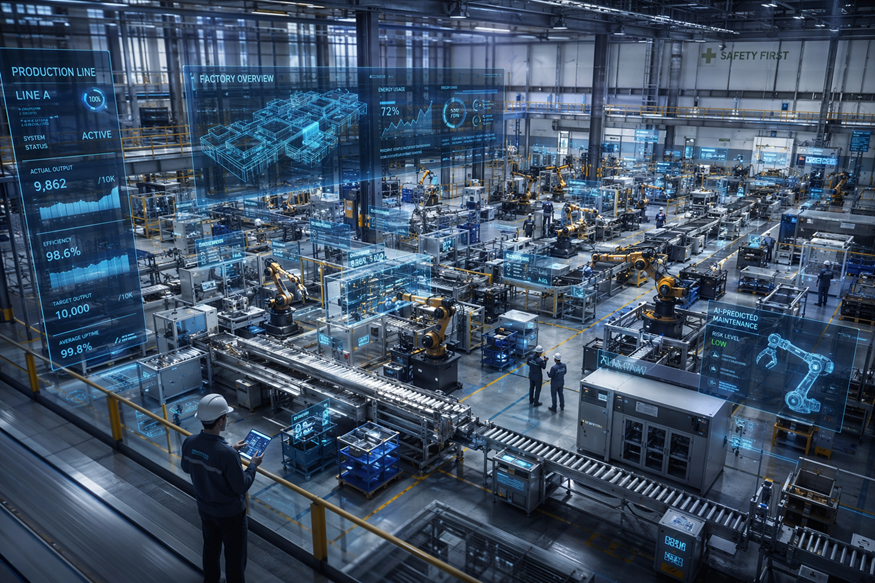
- Industrial Automation Solutions to run a production line with less human input.
- Advanced technologies such as PLCs, robots, and software improve operational efficiency.
- Manufacturers use automation to reduce errors, improve quality, and increase output.
- Better data collection supports faster decisions and long-term cost savings.
- Common tools include SCADA, sensors, IIoT, robotics, and machine learning systems.
- Choosing the right provider helps you match automation solutions to business goals.
Introduction
Industrial automation is changing how modern enterprises run their operations. Instead of relying on constant human intervention, companies now use Industrial Automation Solutions to manage tasks with more speed, consistency, and control. That shift matters if you want better output, safer facilities, and stronger margins. From assembly lines to smart factories, industrial automation helps businesses handle growing demand without adding the same level of manual effort. So, what does that look like in practice? Let’s break it down clearly.
Understanding Industrial Automation Solutions
At a basic level, industrial automation means using machines, software, and control systems to run industrial processes with limited human labor. These automation solutions help manufacturing companies complete work faster and with more consistency.
You see the impact in better product quality, lower error rates, and smoother output across the plant. By shifting repetitive work away from people, industrial automation helps teams focus on oversight, planning, and improvement. The next sections explain what defines these systems and how they developed.
What Defines an Industrial Automation Solution?
An industrial automation solution is a connected setup of hardware and software that controls industrial processes with limited human intervention. It often includes sensors, controllers, networks, interfaces, and machines that work together in a continuous feedback loop. The goal is simple: keep production moving with more speed, accuracy, and consistency.
In practical terms, these automation solutions take over repetitive tasks that once depended on manual labor. Sensors detect conditions, controllers make decisions, and actuators or robotic systems carry out the action. Operators still matter, but their role shifts from doing every step by hand to supervising performance and handling exceptions.
So, what does an industrial automation company do in simple terms? It helps design, install, and support systems that reduce manual work, improve output, and make operations easier to manage. That support becomes even more important as automation technology keeps advancing.
How Industrial Automation Solutions Evolved for Modern Enterprises
Years ago, automation technology focused mainly on boosting output and cutting labor costs. Early systems were built for fixed, repetitive work, especially in high-volume settings. That model still exists, but the evolution of automation has gone much further.
Now, modern enterprises use advanced technologies to improve flexibility, product quality, and decision-making. Artificial intelligence, machine learning, connected sensors, and predictive tools help systems respond in real time. Instead of only repeating one action, newer platforms can adapt to changes in the production process and support smarter operations.
This is where automation systems integrators play a crucial role. They connect machines, software, control systems, and data tools so everything works as one coordinated environment. Their support helps companies move from isolated equipment to more capable, connected, and scalable automation systems.
Key Technologies Behind Industrial Automation
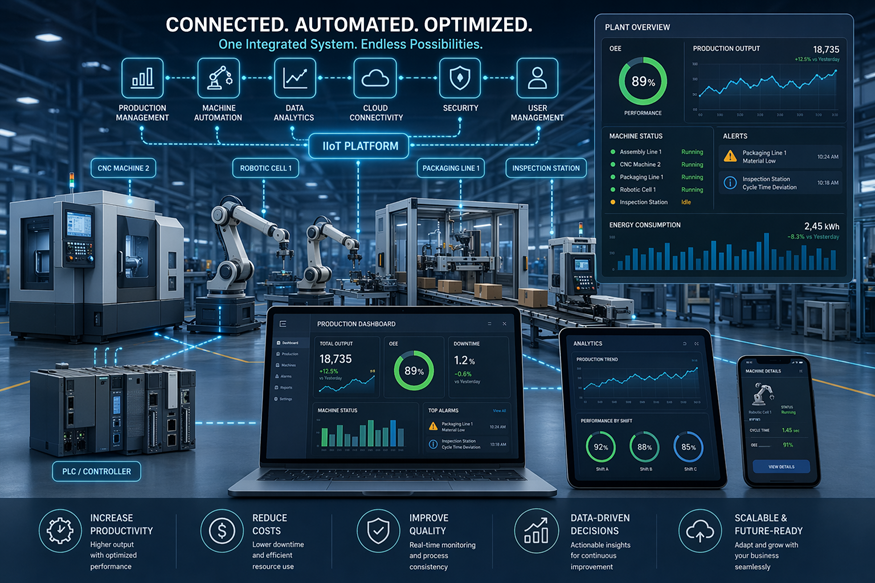
Industrial automation depends on several advanced technologies working together. Common tools include PLCs, SCADA platforms, robotics, sensors, industrial networks, and software that monitors the production process in real time.
The internet of things connects equipment and devices so plants can collect data, track conditions, and improve control. Machine learning and artificial intelligence add another layer by helping teams optimize performance and predict issues earlier. To understand how this works on the floor, it helps to start with PLCs and SCADA.
Role of Programmable Logic Controllers (PLCs) and SCADA Systems
Programmable logic controllers are core parts of an automation system. They receive signals from sensors, process that information, and send commands to machines. In many plants, PLCs act as the decision-making engine behind industrial control systems.
SCADA systems add visibility. They give operators a real time view of equipment status, alarms, and production activity across the facility. When paired with PLCs, they help you monitor performance and respond faster when something changes.
Key roles include:
- Programmable logic controllers manage machine actions and support reliable control systems.
- SCADA systems display real time data for operators and supervisors.
- Together, they improve consistency across an automation system.
- Integrators connect these tools with networks, HMIs, and equipment so projects run as one coordinated setup.
Advancements in Robotics, Sensors, and IIoT Integration
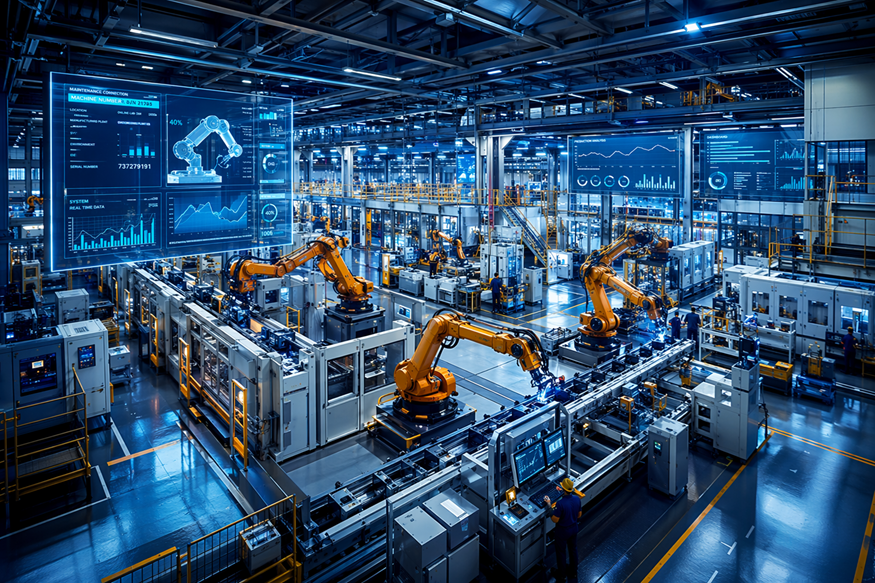
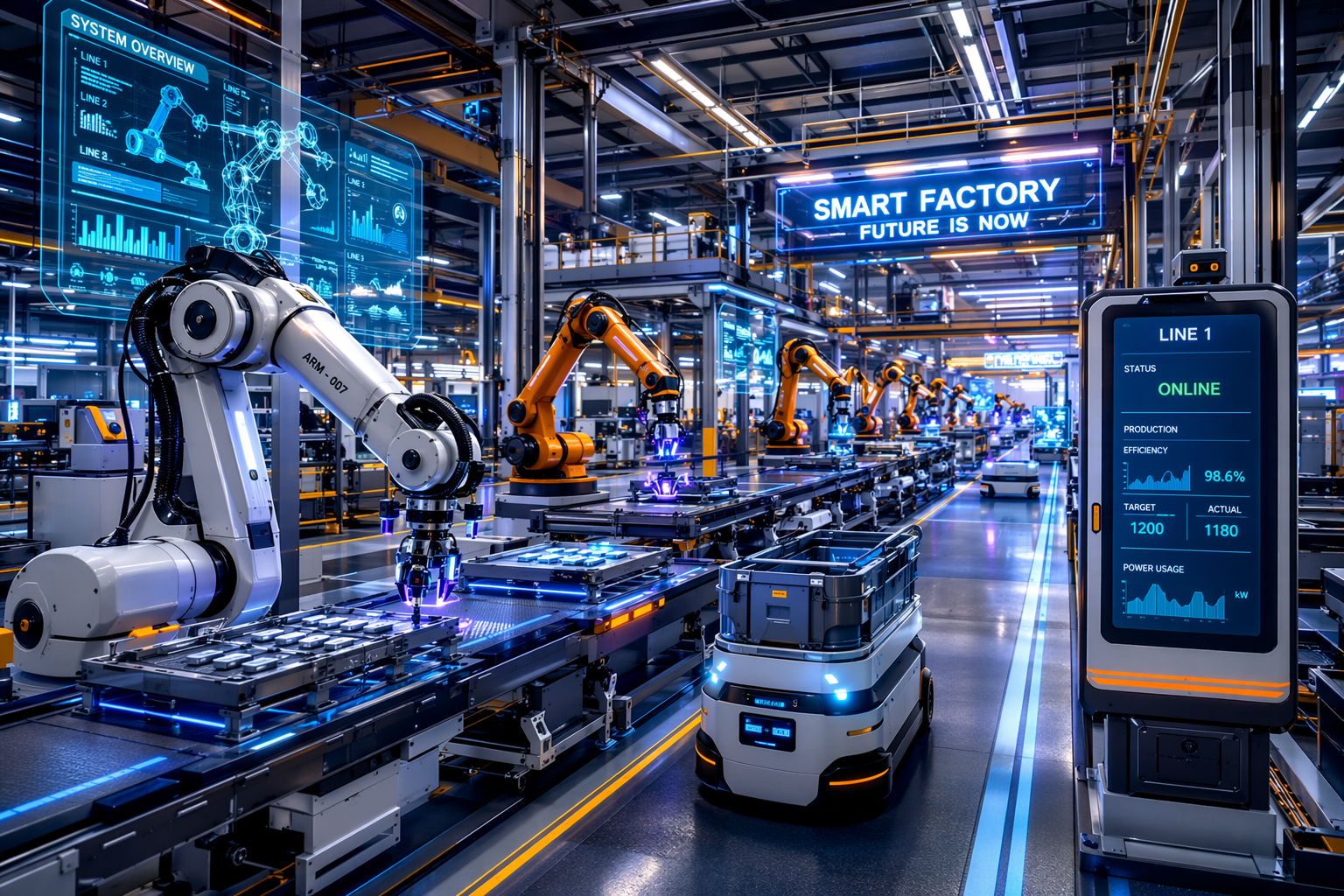
Robotics now plays a major role in modern automation solutions. Industrial robots handle welding, painting, assembly, packaging, and other demanding jobs with high precision. That reduces variation and supports steady output on busy production lines.
At the same time, sensors give machines the awareness they need to react. They detect temperature, position, motion, pressure, and other operating conditions. Machine vision adds another layer by helping systems inspect products and support quality control with more consistency than manual checks.
IIoT ties everything together. Through connected devices and industrial networks, machines share data across the facility in real time. That integration helps companies monitor performance, improve maintenance planning, and make quicker adjustments when demand, product mix, or operating conditions change.
Most Common Industries Using Industrial Automation Solutions
Industrial automation appears in many sectors, but it is especially common in the manufacturing industry. Companies adopt automation solutions when they need better speed, stronger consistency, safer operations, or more flexibility in output.
You see this in automotive plants, food processing, pharmaceuticals, electronics assembly, and warehouse material handling. Some environments rely on mass output, while others need batch production or quick product changeovers. Each industry uses automation differently, which makes the examples below useful for comparison.
Manufacturing and Automotive Sectors
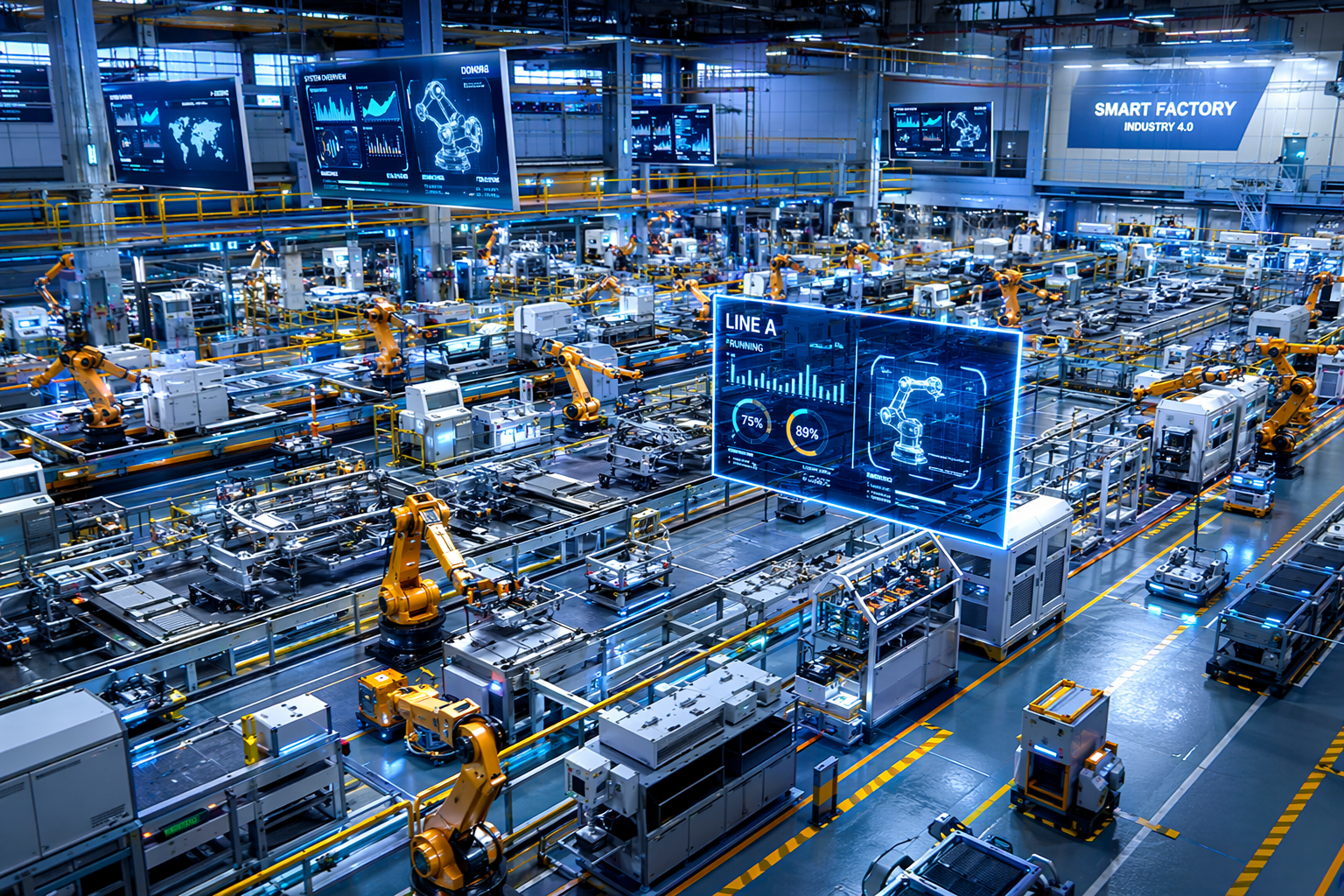
Manufacturing automation is a natural fit for factories that need consistent output and tight process control. Automated systems can run longer hours, reduce variation, and support faster cycle times. That makes them valuable for companies trying to improve throughput without expanding headcount at the same rate.
In automotive manufacturing, this is easy to see. Assembly lines use robotic arms and specialized equipment for welding, painting, and part installation. These tasks are repetitive, precise, and often high volume, which makes automation more reliable than manual methods in many cases.
The benefits in factories include lower labor costs over time, fewer errors, better worker safety, and stronger product consistency. Automation also helps plants respond to bottlenecks, labor shortages, and scaling demands. For industries with strict timing and high output targets, those gains can be hard to ignore.
Food & Beverage, Pharmaceuticals, and Logistics Applications
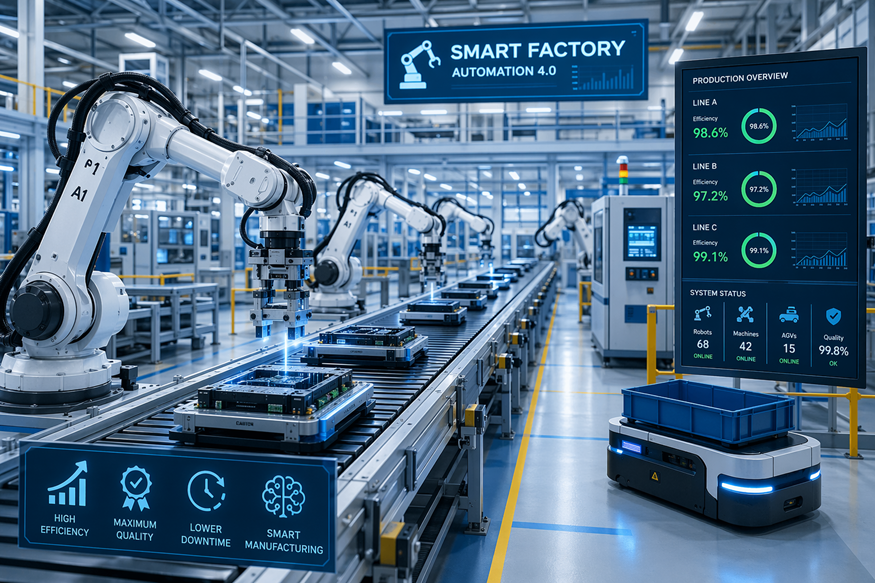
Beyond heavy manufacturing, automation is widely used in food & beverage, pharmaceuticals, and logistics. These sectors need accuracy, traceability, and repeatable performance. In many cases, automated equipment helps maintain quality control while supporting speed and safer handling.
Pharmaceuticals and food processing often rely on programmable or flexible systems because product runs can change. That makes automation useful for batch production, packaging, filling, labeling, and inspection. In logistics, smart sorting, conveyors, and mobile robots improve flow and reduce manual strain.
Common applications include:
- Food & beverage plants using automated filling and packaging lines.
- Pharmaceuticals using controlled systems for batch production and inspection.
- Logistics sites using conveyors and robots for sorting and material movement.
- Warehouses improving quality control and speed through connected handling systems.
Leading Providers of Industrial Automation Solutions in the United States
In the United States, leading providers of industrial automation solutions usually stand out because they deliver more than equipment alone. Strong automation companies combine engineering knowledge, software, controls expertise, and system integration support. That mix helps clients move from basic machine control to connected, plant-wide performance improvements.
The compiled information highlights providers that support workflow automation, industrial control, and manufacturing improvement through a range of services. It also points to specialists that help businesses identify the right technologies, connect systems, and optimize production goals. While provider strengths vary, the most effective partners tend to offer planning, deployment, integration, and ongoing support under one roof.
Overview of Top Automation Companies and Their Specializations
Not every provider focuses on the same part of automation. Some automation companies support plant-floor controls and machine connectivity, while others focus on workflow software, reporting, or process improvement. The best fit depends on your operation, budget, and technical goals.
Based on the compiled information, two named providers stand out for different reasons. One emphasizes industrial automation expertise and implementation support. The other highlights workflow automation and process management for manufacturing environments. Both reflect how providers can specialize in different tasks.
| Provider | Specialization |
|---|---|
| Sure Controls | Supports industrial automation solutions, implementation guidance, and production optimization for manufacturing needs |
| HighGear | Focuses on workflow automation, reporting, no-code process tools, and business process management support |
This comparison shows why enterprise buyers should look beyond brand recognition and examine which provider handles the specific tasks their facility needs most.
Services Offered by Leading Industrial Automation Solution Providers
Most leading providers offer a broad mix of automation services rather than a single product. Their job is to help companies plan, install, connect, and improve systems that support production, quality, and visibility. That often includes both technical delivery and operational guidance.
Some firms focus on plant-floor automation, while others support workflow and reporting platforms. In either case, the range of services usually grows around the client’s process goals, staffing model, and digital maturity. Data analysis is also becoming more important as companies want better insight into waste, downtime, and output.
Typical services include:
- System design, deployment, and system integration for connected operations.
- Workflow automation and process configuration using advanced technologies.
- Real-time monitoring, reporting, and data analysis for decision-making.
- Training, support, and customization based on production and business needs.
Choosing the Right Industrial Automation Solution Provider
Choosing the right partner starts with your specific needs. Are you trying to reduce downtime, improve product consistency, address labor shortages, or support growth? Clear goals help you compare automation solutions in a practical way instead of chasing features you may not need. Good providers should understand your production environment and explain how their approach improves operational efficiency.
There are also important criteria and considerations before you automate an industrial facility. Think about your current bottlenecks, integration requirements, workforce readiness, and long-term scalability. You should also weigh the initial investment against likely gains such as faster cycle times, reduced scrap, and fewer shutdowns. The checklist below can help decision-makers ask smarter questions before moving forward.
Criteria, Considerations, and Questions for Enterprise Decision-Makers
Decision-makers should begin with a needs assessment. Look at where the facility struggles today. Frequent downtime, inconsistent quality, safety risks, scaling limits, and labor gaps are all signs that automation solutions may deliver value. Once those issues are clear, it becomes easier to evaluate providers.
The next step is comparing criteria that affect long-term success. A provider should be able to support integration, training, and practical implementation. You also need to be realistic about the initial investment, because automation often brings strong returns over time but can require major upfront spending.
Helpful questions and considerations include:
- Which specific needs are creating the most operational strain right now?
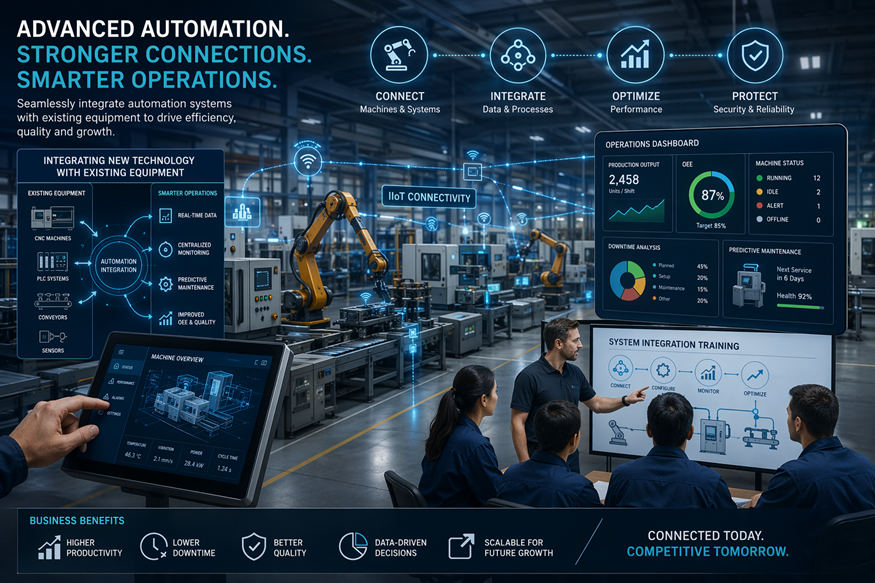
- How will new systems connect with existing equipment and workflows?
- What training and support will teams need after deployment?
- Does the expected payoff justify the initial investment and rollout effort?
Conclusion
In conclusion, embracing industrial automation solutions is essential for modern enterprises looking to enhance efficiency, productivity, and competitiveness. By understanding the key technologies and services offered by leading providers, businesses can make informed decisions that align with their operational needs. Whether in manufacturing, pharmaceuticals, or logistics, automation is revolutionizing industries and paving the way for innovative practices. As you explore the right automation solutions for your enterprise, remember that the right partner can make all the difference. If you're ready to take the next step towards modernization, get in touch with expert providers today to discover tailored solutions that fit your business goals.
You might also like