Maximizing Efficiency with Industrial Automation Solutions
Key Highlights
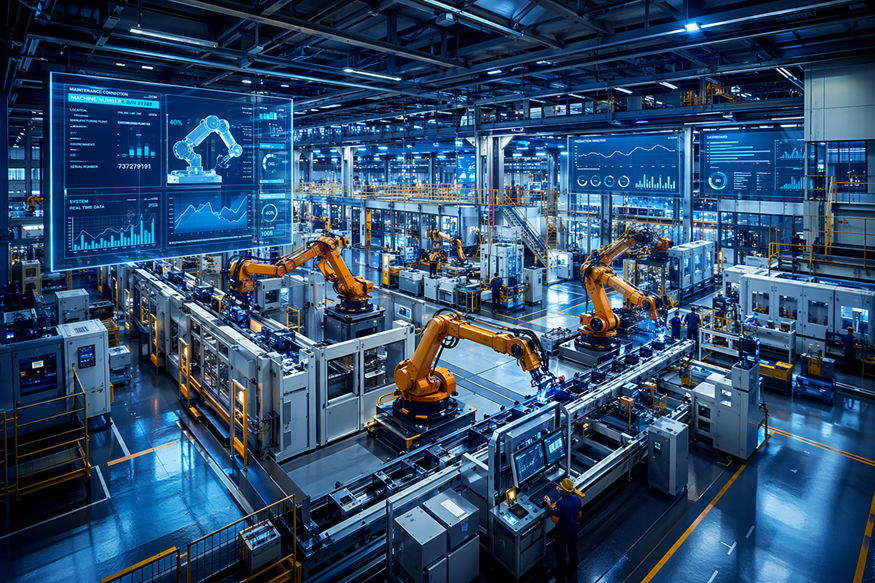
- Industrial Automation Solutions to reduce manual work and improve operational efficiency.
- Modern systems help manufacturers raise product quality while lowering errors in repetitive tasks.
- Advanced technologies like robotics, PLCs, and software keep industrial processes running in real time.
- Many industries use automation to improve safety, output, and consistency across the production line.
- The right provider and integrator can match Industrial Automation Solutions to your specific production goals.
- Data analysis helps you measure results and keep improving performance over time.
Introduction
Industrial Automation Solutions are changing how companies manage the manufacturing process every day. Instead of relying heavily on manual steps, businesses now use Industrial Automation Solutions to improve speed, consistency, and control. That shift matters if you want better output, fewer errors, and stronger performance across your operation. From robots to smart software, Industrial Automation Solutions gives manufacturers practical ways to solve common production problems. To see why it matters, it helps to start with what these systems are and how they work.
Overview of Industrial Automation Solutions
Industrial Automation Solutions refers to the use of computer-controlled equipment, software, and industrial machinery to manage industrial processes with limited human involvement. In the manufacturing industry, these Industrial Automation Solutions support faster, more consistent production by connecting machines, controls, and data.
For manufacturing companies, that means better output, improved product quality, and fewer delays caused by manual handling. These systems also help reduce human error, support real time decisions, and make it easier to scale production when demand changes. The next sections break down the basic functions behind that value.
Definition and Key Functions of Industrial Automation
In simple terms, Industrial Automation Solutions means using machines and software to handle industrial processes with less human intervention. An Industrial Automation Solutions company helps businesses set up these automation solutions so equipment can monitor conditions, process information, and respond automatically.
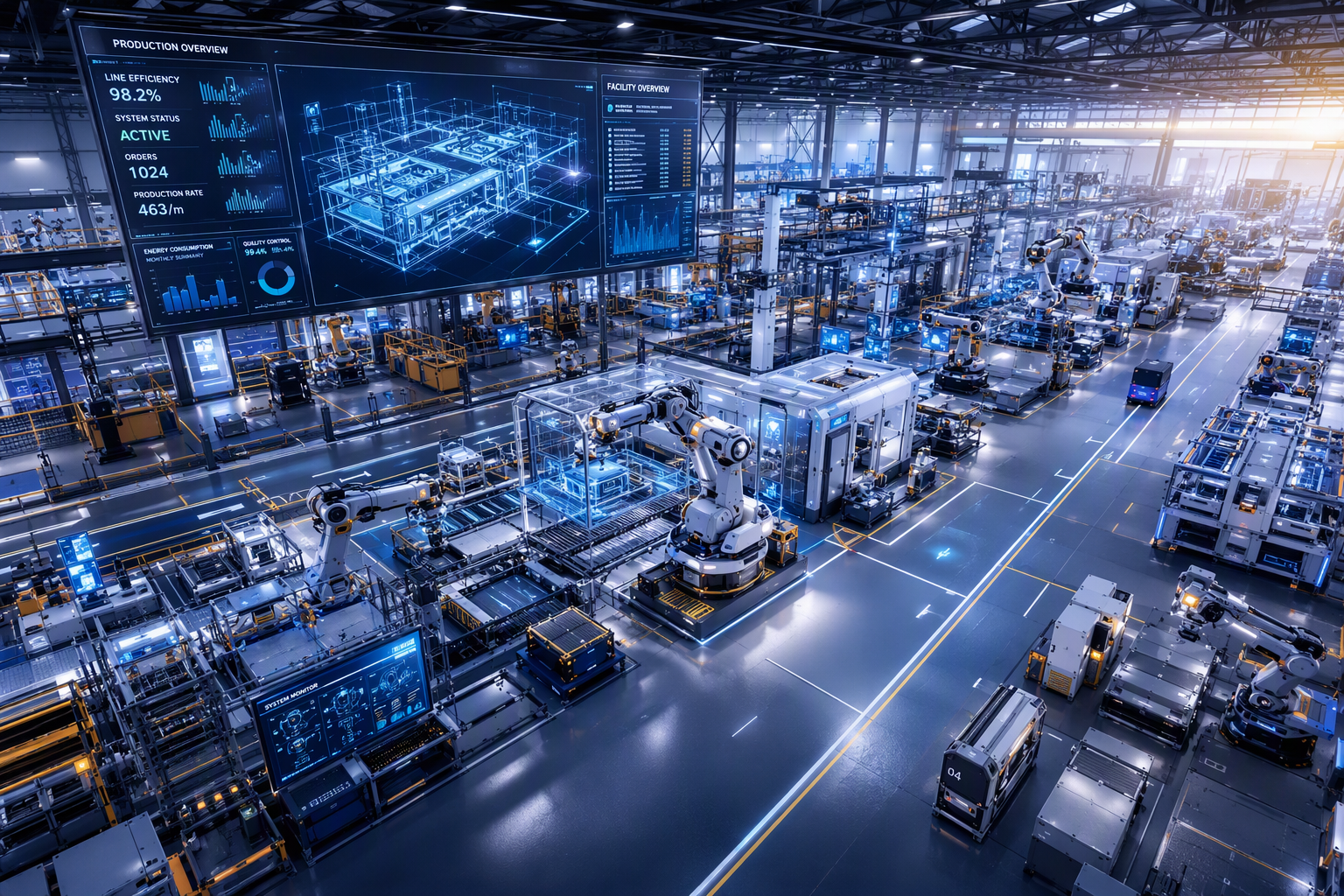
At the center of industrial automation is a feedback loop. Sensors detect what is happening, controllers such as PLCs make decisions, and actuators or robotic systems carry out the action. Software and operator screens then give teams a clear view of performance across the line.
This setup is especially useful for repetitive tasks that slow workers down or create inconsistency. Instead of asking people to repeat the same motions all day, automation solutions let machines manage routine steps while employees focus on oversight, planning, maintenance, and improvement.
How Automation Solutions Drive Efficiency in Manufacturing
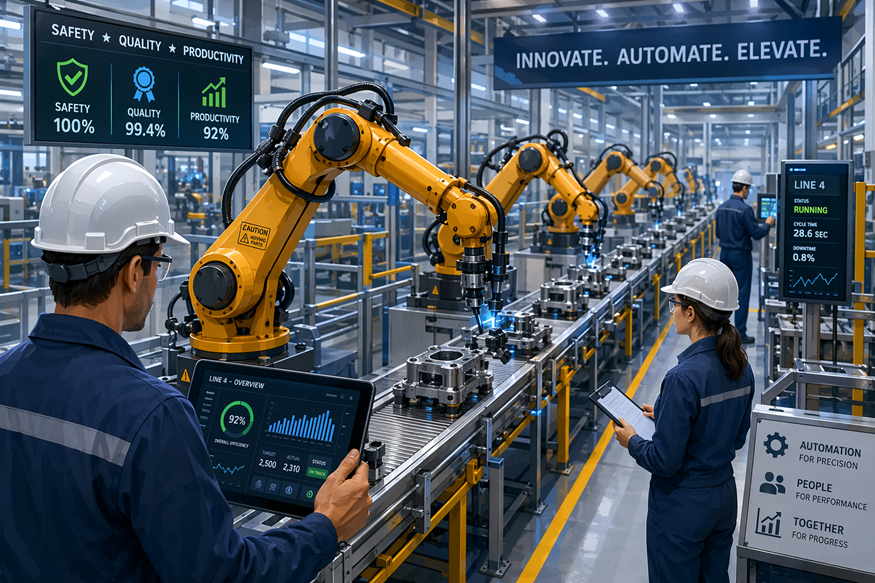
Automation solutions help manufacturers boost productivity by keeping equipment running longer and more consistently than manual labor alone. Systems can work around the clock, reduce stops between tasks, and support smoother flow across the production line.
Just as important, these tools improve operational efficiency by lowering variation and reducing the need for repeated corrections. They also help manage labor costs over time, even though the initial investment can be high.
- Automated systems reduce reliance on manual labor for repetitive tasks.
- They improve product quality by cutting human error and fatigue.
- They increase throughput without adding large numbers of human workers.
When output is steady and waste drops, factories gain both speed and control. That makes automation a practical way to improve day-to-day performance.
Core Components of Industrial Automation Systems
Every industrial automation system depends on connected parts that collect data, make decisions, and trigger actions. Common automation technology includes sensors, controllers, actuators, robots, networks, and software interfaces that guide the production process from start to finish.
When these parts work together, quality control becomes easier and more reliable. You can track conditions, respond to changes in real time, and maintain steady output with less guesswork. To understand the system better, it helps to look at the hardware and interfaces that do the heavy lifting.
Sensors, Actuators, and Programmable Logic Controllers (PLCs)
Sensors, actuators, and programmable logic controllers are some of the most common tools used in automation solutions. Each one has a distinct job, but together they form the backbone of many industrial control systems.
Sensors detect conditions on a machine or production line. They send signals to programmable logic controllers, often called PLCs, which process that information and decide what should happen next. Once the decision is made, actuators perform the physical movement, such as opening, closing, lifting, or positioning.
This chain of action keeps automated equipment responsive and consistent. It also allows companies to make quick adjustments without constant manual direction. In many facilities, these components help stabilize industrial processes, improve accuracy, and support better use of labor and equipment.
Robotics and Human-Machine Interfaces (HMIs)
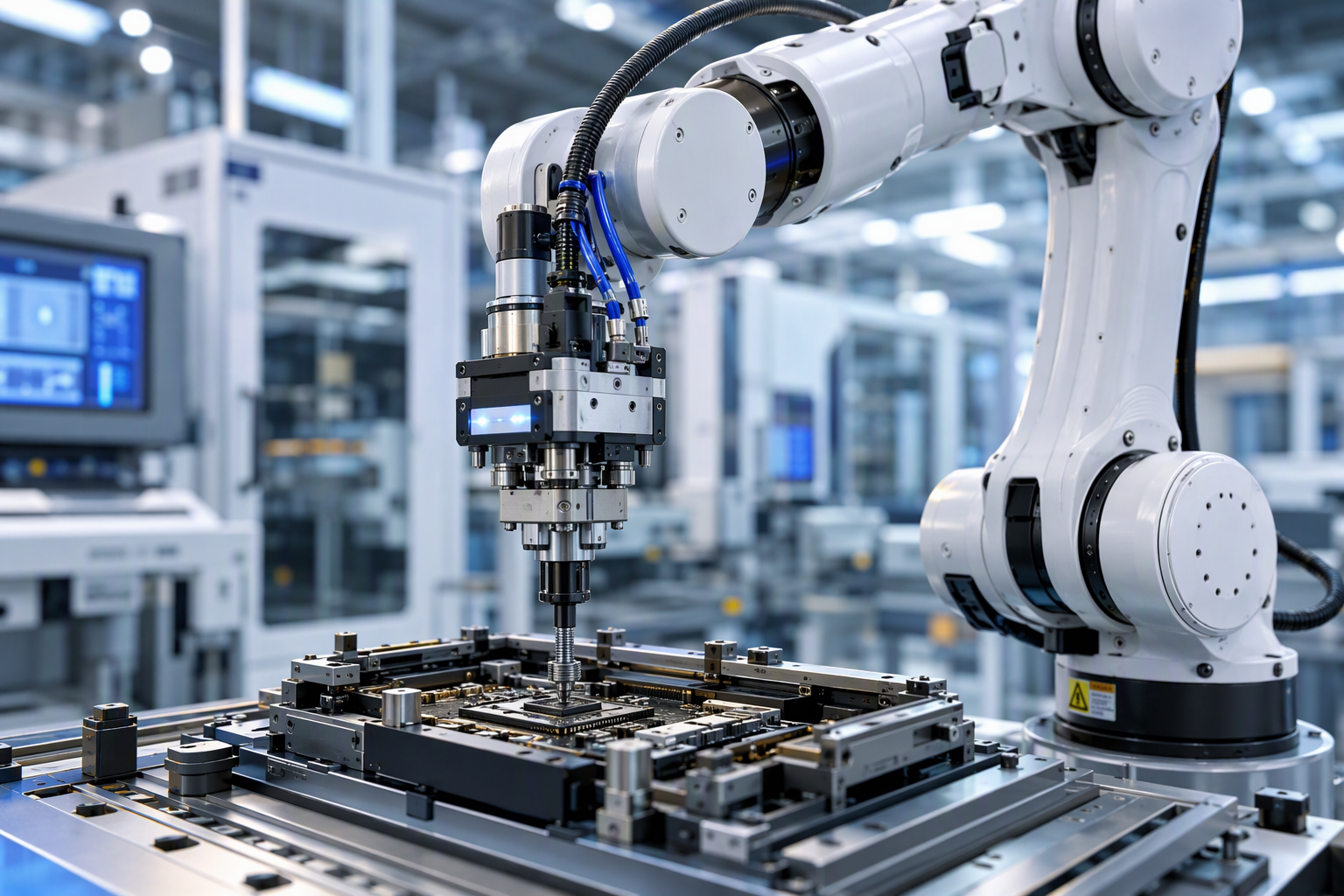
Robotics and human-machine interfaces are also central to a modern automation system. Industrial robots handle physical work with speed and precision, while human-machine interfaces let operators monitor performance and respond when needed.
In many plants, robotics supports tasks that are repetitive, hazardous, or demanding. HMIs give workers a real time view of machines, alarms, and production data so they can keep operations on track without direct manual control of every step.
- Industrial robots are often used for welding, painting, packaging, and assembly.
- Human-machine interfaces help operators view system status and make informed decisions.
- Together, they improve control, consistency, and worker safety.
That combination makes production easier to manage and helps teams stay focused on higher-value work instead of routine adjustments.
Industries Benefiting from Industrial Automation in the United States
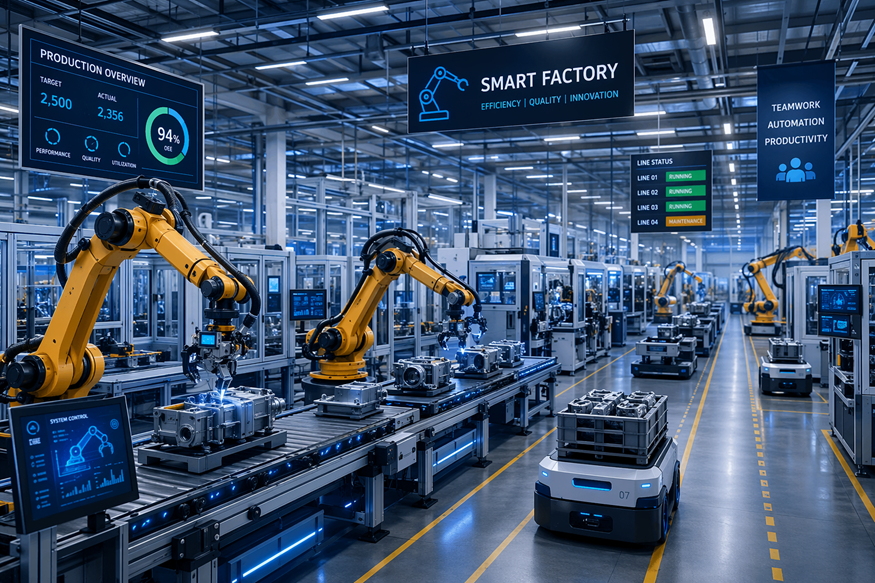
Across the United States, industrial automation supports a wide range of industries that need faster output, stronger consistency, and safer working conditions. Automation solutions are especially common in the manufacturing sector, where companies must manage volume, accuracy, and cost pressure at the same time.
You can see strong adoption in automotive manufacturing, food production, energy, logistics, electronics, and consumer goods. These environments benefit from connected systems that reduce delays, improve quality, and handle repetitive production demands. The following examples show how those benefits appear in real operations.
Automation Use Cases in Manufacturing and Automotive
Automation solutions are widely used in both general manufacturing and automotive manufacturing because these sectors depend on precision, repeatability, and speed. In busy assembly lines, even a small improvement in timing or accuracy can create major gains across the full manufacturing process.
Automotive plants often rely on industrial robots for welding, painting, parts installation, and movement between stations. Fixed systems are useful where the same product is built at high volume, while programmable automation supports batch production and model changes.
Robotics and Human-Machine Interfaces (HMIs)
| Industry Area | Common Automation Use Case | Main Benefit |
|---|---|---|
| General Manufacturing | Automated assembly and packaging | Higher consistency and throughput |
| Automotive Manufacturing | Welding, painting, piston installation | Better precision and lower error rates |
| Assembly Lines | Robotic handling and coordinated movement | Faster cycle times and less manual strain |
These examples show why manufacturers turn to automation when quality and output both matter.
Applications in Food Processing, Energy, and Logistics
Other industries also gain a lot from automation solutions. In food processing, companies use automated systems for mixing, filling, capping, and packaging. These steps require consistency, speed, and dependable quality control, which makes automation a strong fit.
Energy operations use connected equipment and monitoring tools to improve reliability and support better decisions. In logistics, automation helps with material handling, sorting, and inventory flow, especially in warehouses and distribution centers where speed and safety are critical.
- Food processing uses automation for filling and packaging with less waste.
- Energy facilities use smart monitoring to support stable operations.
- Logistics sites use conveyors and autonomous systems for material handling.
When these sectors automate routine tasks, they improve flow, reduce strain on workers, and support better service.
Choosing the Right Industrial Automation Solution Provider
Choosing a provider starts with understanding your goals. Industrial automation projects vary widely, so the best partner is one that can align automation solutions with your production demands, technical setup, and long-term plans. Not all industrial automation companies offer the same depth or flexibility.
You should look closely at the provider’s range of services, experience with system integration, and ability to support implementation over time. A strong fit will help you avoid missteps and build a system that works in real production conditions. Here are the main factors worth comparing.
Factors to Consider When Selecting a Provider
When selecting a provider, start with your specific needs. A company that works well for one plant may not be the right fit for another. Your products, layout, workforce, and production targets should shape the choice.
Cost matters too, but the lowest price is not always the best value. Since manufacturing automation often requires a high initial investment, you want a provider that can build a system with lasting performance, not just a quick installation.
- Look for experience with projects similar to your facility and output goals.
- Check whether the provider supports advanced technologies like robotics, AI, or connected controls.
- Ask about training, maintenance, and long-term technical support.
- Confirm that the solution can adapt if demand, products, or processes change.
A good provider should help you plan wisely and avoid expensive gaps later.
Services Offered by Leading Industrial Automation Companies
Leading industrial automation companies usually offer more than equipment sales. Their automation services often cover planning, design, programming, installation, testing, and ongoing support. That broader approach helps companies move from concept to full operation with fewer setbacks.
Many providers also focus on automation technology that connects machines, controls, and data into one working system. This is where system integration becomes especially important, because separate tools must work together reliably on the plant floor.
- System design and control programming
- Equipment setup, commissioning, and troubleshooting
- Ongoing support, upgrades, and operator training
If a provider can support the full lifecycle of the project, you are more likely to get a system that performs well after launch, not just during installation.
The Role of Automation Systems Integrators
An automation systems integrator helps bring all parts of an industrial automation project together. That includes machines, controls, software, and communication networks that must operate as one coordinated setup. Without strong system integration, even good equipment can fall short.
In manufacturing operations, integrators help reduce complexity by planning how technologies will connect and perform in real conditions. Their work supports smoother deployment, better reliability, and less confusion during startup. To see their value more clearly, look at their role in planning and day-to-day production flow.
Project Planning and Implementation Support
Project success often depends on what happens before installation begins. During project planning, integrators help define system requirements, map workflows, and identify where new equipment must connect with existing operations. That preparation lowers the risk of disruption later.
Once the plan is set, they coordinate implementation by bringing together controls, software, machines, and operator interfaces. This system integration work is important because automated equipment has to communicate clearly and respond correctly under real production pressure.
Many industrial automation companies provide automation services, but integrators focus on how everything functions as a complete system. Their support can make startup faster, reduce errors during deployment, and help teams move from planning to production with more confidence.
How Integration Streamlines Manufacturing Operations
Good integration helps streamline operations by removing disconnects between machines, controls, and data. When systems communicate well, manufacturing operations become easier to monitor, adjust, and scale. That has a direct effect on reliability across the production line.
An automation systems integrator helps create that connection so teams are not stuck managing isolated equipment or repeated manual workarounds. Instead, the full line can run with better coordination and fewer delays.
- Connected systems reduce bottlenecks and support steadier flow.
- Shared data improves visibility across the production line.
- Coordinated controls make it easier to streamline operations and reduce downtime.
If you want automation to perform well beyond installation day, integration is not optional. It is what turns separate technologies into one usable production system.
Technologies Powering Modern Industrial Automation
Modern automation depends on advanced technologies that help systems sense, analyze, communicate, and respond quickly. Today’s automation technology goes beyond basic machine control by using connected data, smart software, and better visibility across the plant floor.
Artificial intelligence, the internet of things, machine vision, and cloud computing all play a role in that shift. These tools help companies monitor equipment in real time, improve decisions, and reduce waste. The next two sections look at how these technologies support smarter and more flexible operations.
Industrial Internet of Things (IIoT) and Artificial Intelligence
The industrial internet of things connects machines, sensors, and other iot devices so they can share data across the production environment. That constant flow of information helps companies monitor performance, detect issues early, and improve how equipment is used.
Artificial intelligence adds another layer of value by analyzing that data and finding patterns people might miss. With machine learning, systems can support better decision-making, improve processes in real time, and help identify maintenance needs before breakdowns happen.
These advanced technologies are a big reason industrial automation keeps growing. They make connected operations more practical and more effective, especially for companies that want higher efficiency, less downtime, and stronger control over changing production demands.
Machine Vision, Cloud Computing, and Connectivity
Machine vision systems help automated equipment inspect products, confirm placement, and spot defects with speed that manual checks cannot match. That makes machine vision useful for quality control in fast-moving environments where accuracy matters on every cycle.
Cloud computing and strong connectivity extend that value by making production data easier to access and analyze. Teams can review performance in real time, compare trends, and respond faster when something starts to drift.
- Machine vision supports inspection and reduces missed defects.
- Cloud computing improves access to production data and reporting.
- Connectivity links devices and systems for better real time coordination.
When these tools work together, manufacturers gain clearer visibility, faster response times, and a more connected approach to running the plant floor.
Maximizing Efficiency Through Customized Automation Strategies
Not every facility needs the same type of automation. The strongest results usually come from automation strategies built around actual production goals, equipment limits, and workforce needs. That customized approach helps improve operational efficiency without creating unnecessary complexity.
It also supports better product quality by targeting the specific tasks that cause delays, waste, or inconsistency. With smart planning and steady data analysis, companies can focus investment where it has the biggest effect. The next sections cover how to set goals first and then track the results.
Assessing Needs and Setting Goals for Automation
Before choosing automation solutions, you need a clear picture of your current operation. Look at where delays happen, where defects appear, and where employees face strain or unnecessary repetition. Those findings help define your specific needs.
Goals should be practical and tied to measurable outcomes. Some companies need stronger quality control. Others want higher output, safer workflows, or less downtime. If hazardous environments are part of the job, worker safety may be the top reason to automate.
- Identify bottlenecks, frequent errors, and repeated manual tasks.
- Set goals for output, quality control, and worker safety.
- Prioritize areas where automation can reduce exposure to hazardous environments.
When planning starts with real operational issues, automation becomes a targeted improvement instead of a vague technology upgrade.
Measuring and Optimizing Performance Outcomes
Once automation is in place, measuring results is what turns improvement into long-term value. You need to track changes in output, downtime, scrap, consistency, and response times to see whether the system is delivering what you expected.
That is where data analysis becomes essential. Automated data collection improves accuracy and gives teams valuable insights into how machines and workflows are performing. It can also show where waste still exists or where settings need adjustment.
Over time, this process helps strengthen operational efficiency and product quality at the same time. Instead of relying on assumptions, you can use real performance information to fine-tune production and keep improving results across the facility.
Frequently Asked Questions (FAQ)
Curious minds often have questions about automation solutions. Common inquiries include how these systems enhance product quality and reduce operational costs. Many wonder about the initial investment required versus the long-term savings associated with automating repetitive tasks. Other concerns highlight the balance between human intervention and automated processes in hazardous environments. Clarifying these points can lead to informed decisions, offering insights into how industrial automation impacts various sectors, including manufacturing and material handling, ultimately driving efficiency and safety in production lines.
What should companies look for in an industrial automation solutions provider?
Companies should look for a provider that understands their specific needs, offers reliable automation solutions, and can support industrial automation from planning through maintenance. Since the initial investment can be significant, it also helps to choose a team with experience in advanced technologies and system integration.
How do industrial automation solutions improve productivity?
Automation solutions boost productivity by taking over repetitive tasks, reducing delays, and keeping the production line running more consistently. They also lower human error and improve coordination between machines, which helps companies increase operational efficiency without depending only on added labor.
What steps are involved in implementing automation in a factory?
Implementation usually starts with assessing the production process and setting goals. From there, companies choose the right automation system, plan system integration, install and test equipment, and monitor results. A strong industrial automation system also includes training, support, and ongoing quality control improvements.
Conclusion
In conclusion, embracing industrial automation solutions is essential for any business aiming to enhance efficiency and productivity in today's competitive landscape. By understanding the core components and applications of automation, companies can leverage cutting-edge technologies to streamline operations and reduce costs. Whether it's through robotics, the Internet of Things, or advanced data analytics, the right automation strategy can lead to significant gains in performance and profitability. Don't miss out on the opportunity to transform your manufacturing processes and position your business for future success. To explore how customized automation strategies can benefit your organization, get a free consultation today!
You might also like