Edge Computing vs Cloud Industrial IoT: Where Should Data Go
Edge Computing vs Cloud Industrial IoT: Where Should Data Go
Key Highlights
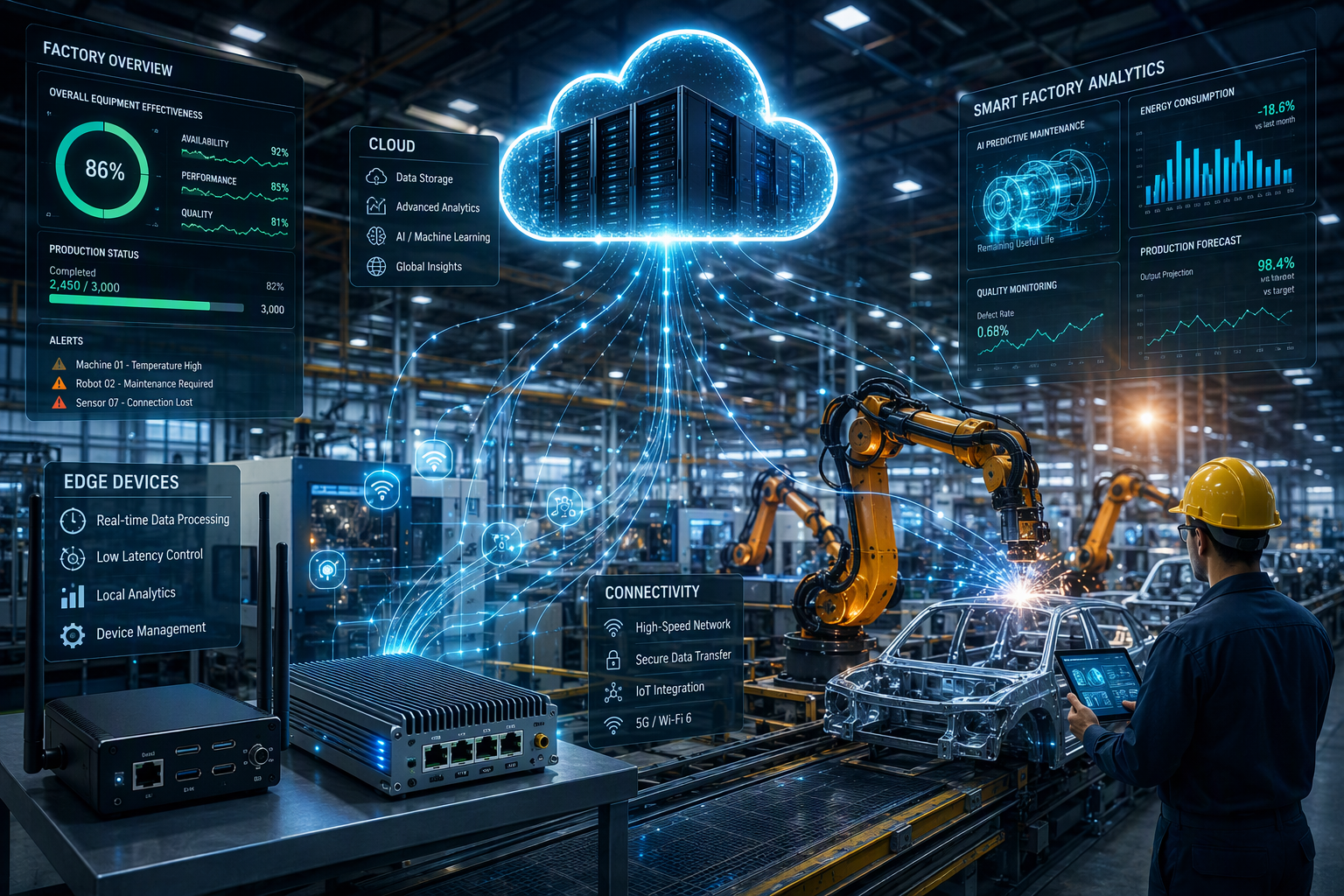
- Edge computing handles data processing near machines, which helps industrial IoT systems support low latency and real-time operations.
- Cloud computing sends information to a remote data center or cloud platforms for large-scale analysis and long-term storage.
- The biggest differences are latency, bandwidth usage, security exposure, and scalability across industrial IoT use cases.
- US manufacturers often use edge for fast control decisions and cloud computing for broader reporting.
- A hybrid model can improve operational efficiency by balancing local speed with centralized insight.
Introduction
Industrial IoT teams in US manufacturing face a simple but important question: should you rely on edge computing, cloud computing, or both? The answer affects speed, uptime, costs, and how well your systems respond on the plant floor. Edge computing brings data handling closer to equipment, while cloud computing supports broader storage and analytics. If you are comparing edge computing vs cloud industrial IoT options, it helps to understand where each model fits and why many manufacturers now combine them.
Understanding Edge Computing and Cloud Computing in Industrial IoT
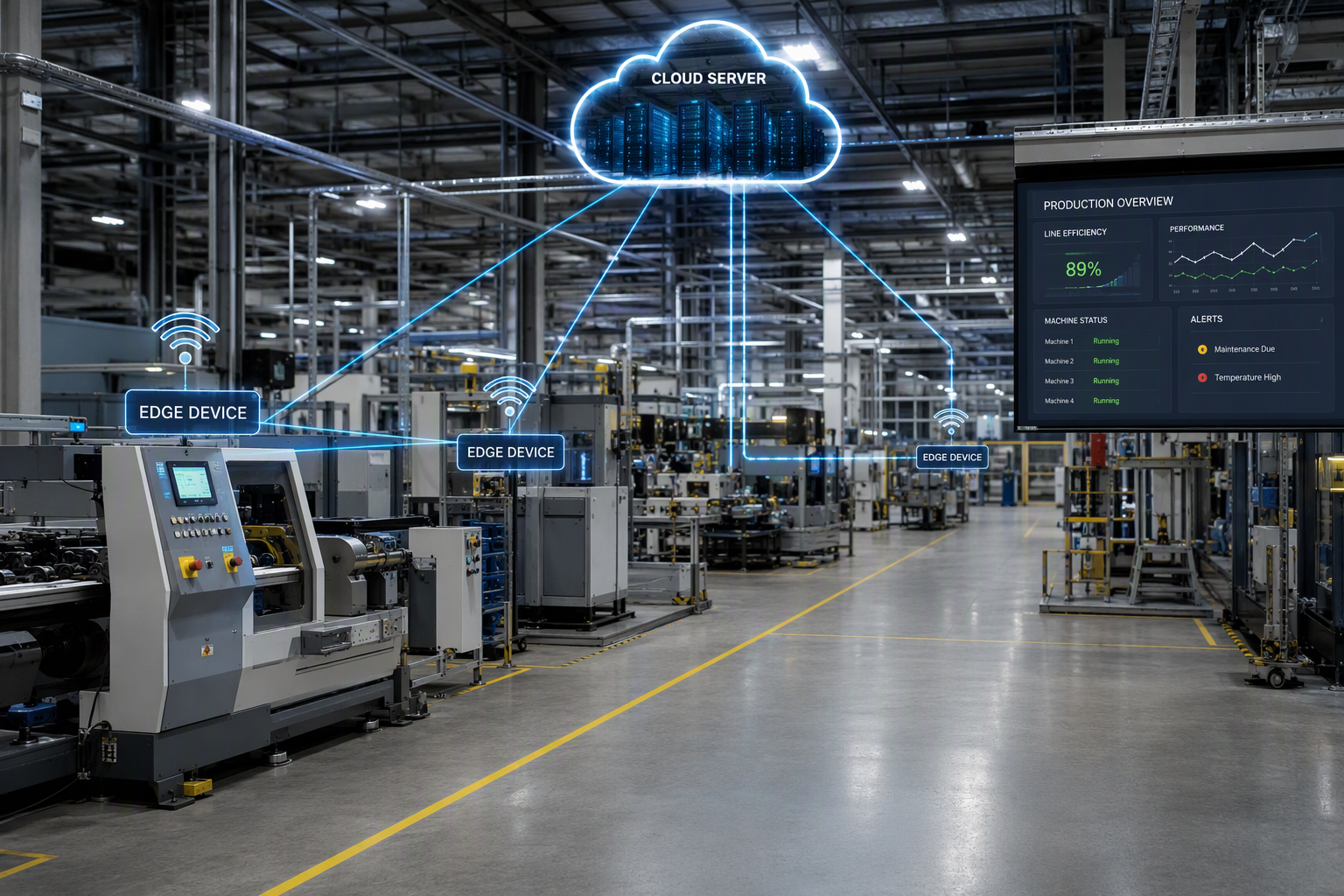
At a basic level, edge computing and cloud computing differ in where data processing happens. In industrial IoT, IoT devices and smart devices generate constant streams of machine and process information.
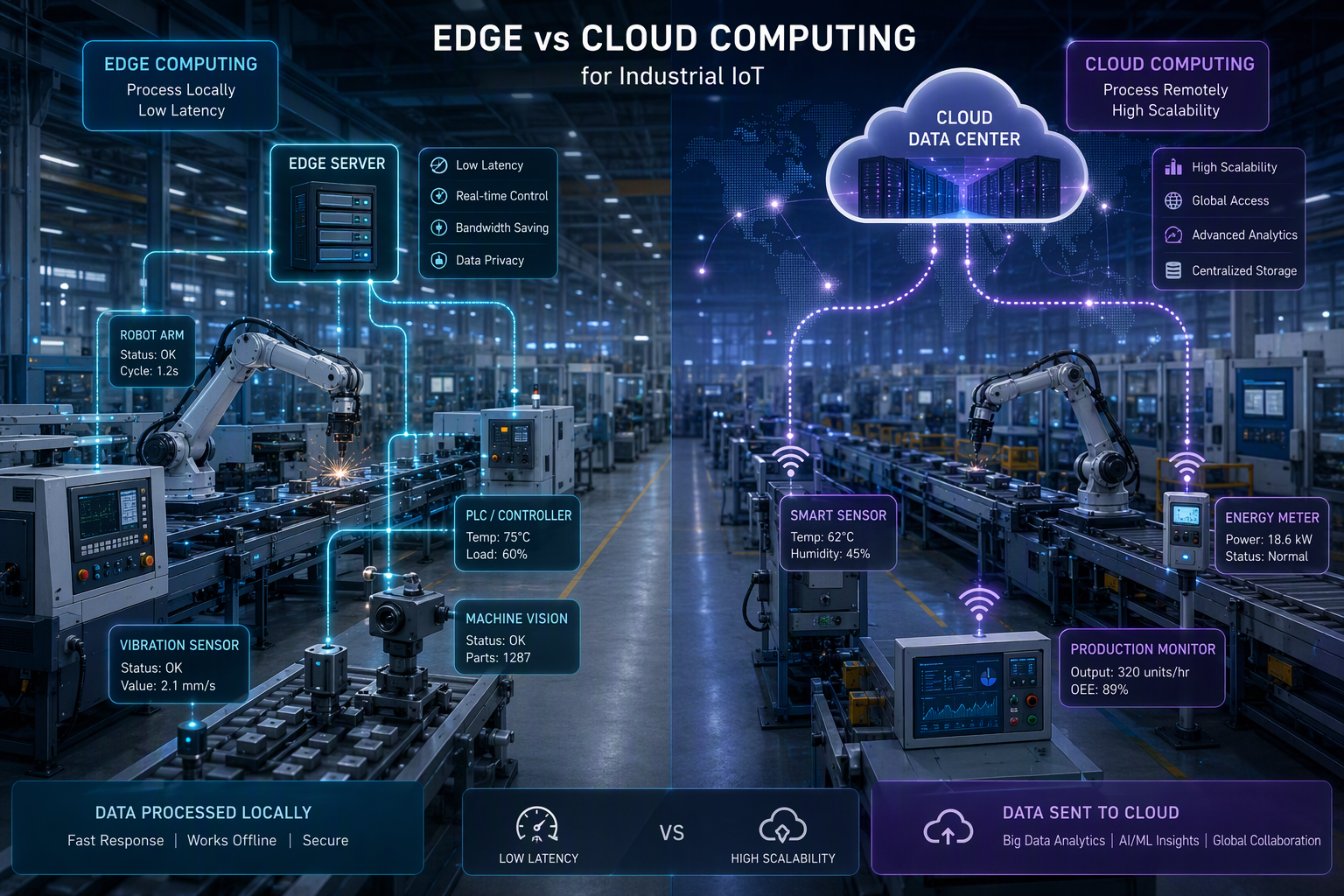
With edge computing, much of that work happens near the source. With cloud computing, data moves to cloud services managed by cloud providers or other service providers for broader data analysis. For industrial IoT applications, this location difference shapes speed, storage, and network needs. The next sections break that down in practical terms for manufacturing environments.
Defining Edge Computing in Industrial Environments
Edge computing is a distributed model that places data processing close to where data is created. In industrial automation, that usually means near production lines, control systems, or connected equipment instead of a faraway server environment.
On a factory floor, edge devices can collect signals from sensors, filter information, and act on it locally. This local processing reduces delays and supports faster machine decisions. A practical edge architecture may include sensors, controllers, industrial IoT gateways, and nearby compute resources working together.
You should use edge computing instead of cloud-only processing when your industrial IoT system needs immediate action, reliable operation during network issues, or reduced traffic to external systems. This is why manufacturers use it for equipment monitoring, line adjustments, and other tasks where time matters. In short, edge fits jobs that cannot wait for a round trip to the cloud.
What Is Cloud Computing for Industrial IoT?
Cloud computing delivers computing resources over the internet from centralized infrastructure. In industrial IoT, that usually means sending IoT data from plants to a remote data center for storage, reporting, and deeper analysis.
Many businesses use cloud services because cloud providers offer flexible capacity without requiring major on-site hardware expansion. Cloud platforms are strong at handling large historical datasets, broad dashboards, and advanced analytics across several facilities or locations.
Compared with edge processing, cloud computing usually involves more travel time for the data. That makes it less suited for split-second plant decisions, but very useful for long-term trends and enterprise visibility. For example, a manufacturer may send aggregated production data to the cloud for benchmarking, planning, and systemwide optimization after time-sensitive tasks are already handled locally.
The Role of IoT Gateways in Edge Architectures
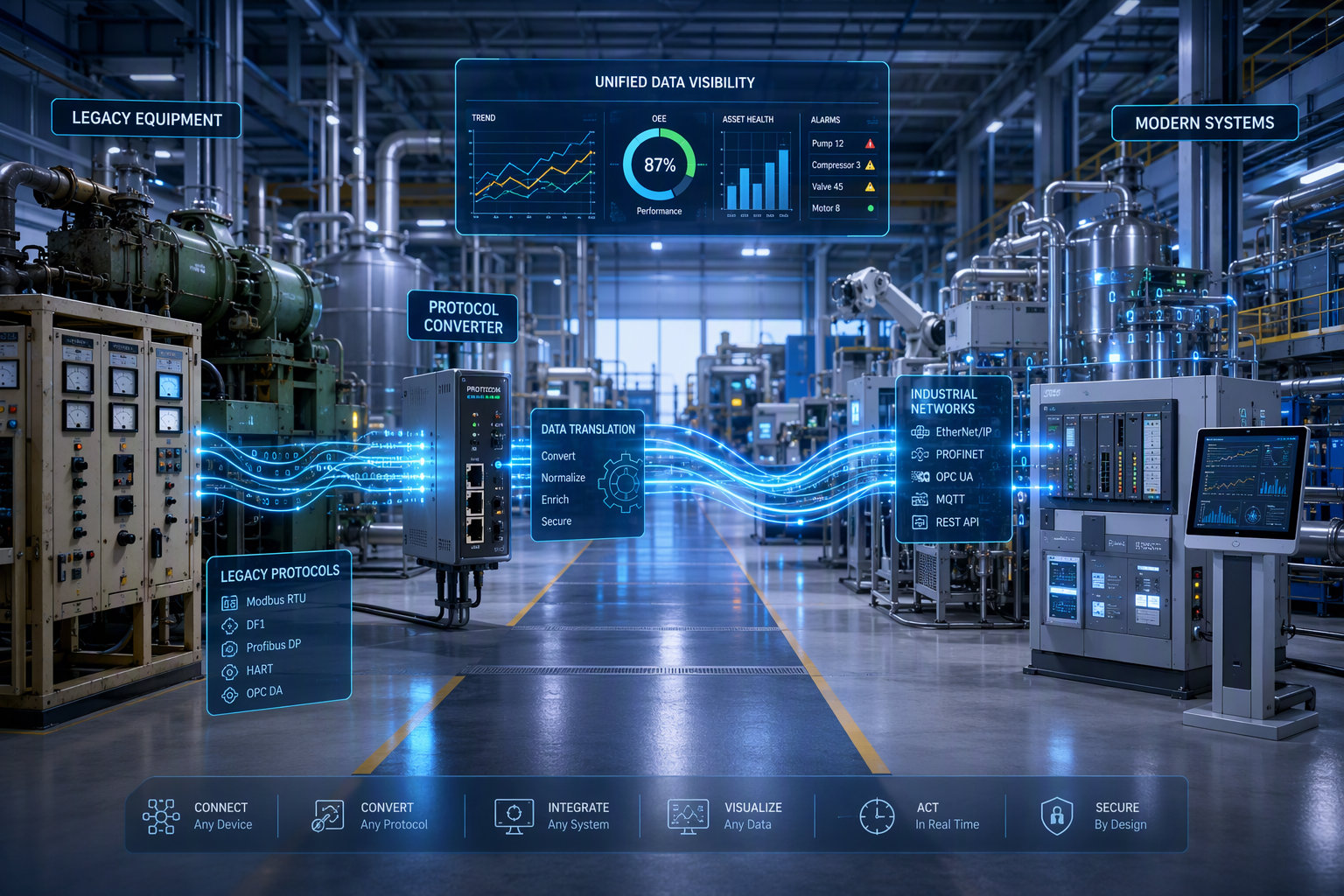
IoT gateways play a central role in edge architecture because they connect machines, sensors, and higher-level systems. In many industrial settings, they act as the bridge between IoT sensors at the data source and the systems that need to use that information.
These gateways can receive inputs from machines, perform filtering, support secure data transmission, and pass only relevant information upstream. They often sit between basic devices and more capable edge nodes or edge servers, which gives manufacturers a practical path to local decision-making without sending everything away.
This setup is especially useful in cases like predictive maintenance, quality monitoring, and line control. If vibration or temperature readings move outside normal limits, an industrial IoT gateway can help trigger a fast local response. That is one reason edge computing is better suited than cloud-only designs for time-critical production environments
Comparing Edge and Cloud Computing: Core Differences
When manufacturers compare edge computing and cloud computing, the key differences usually come down to where data processing happens and how quickly systems respond. That choice affects response times, uptime, and how much traffic moves across your network.
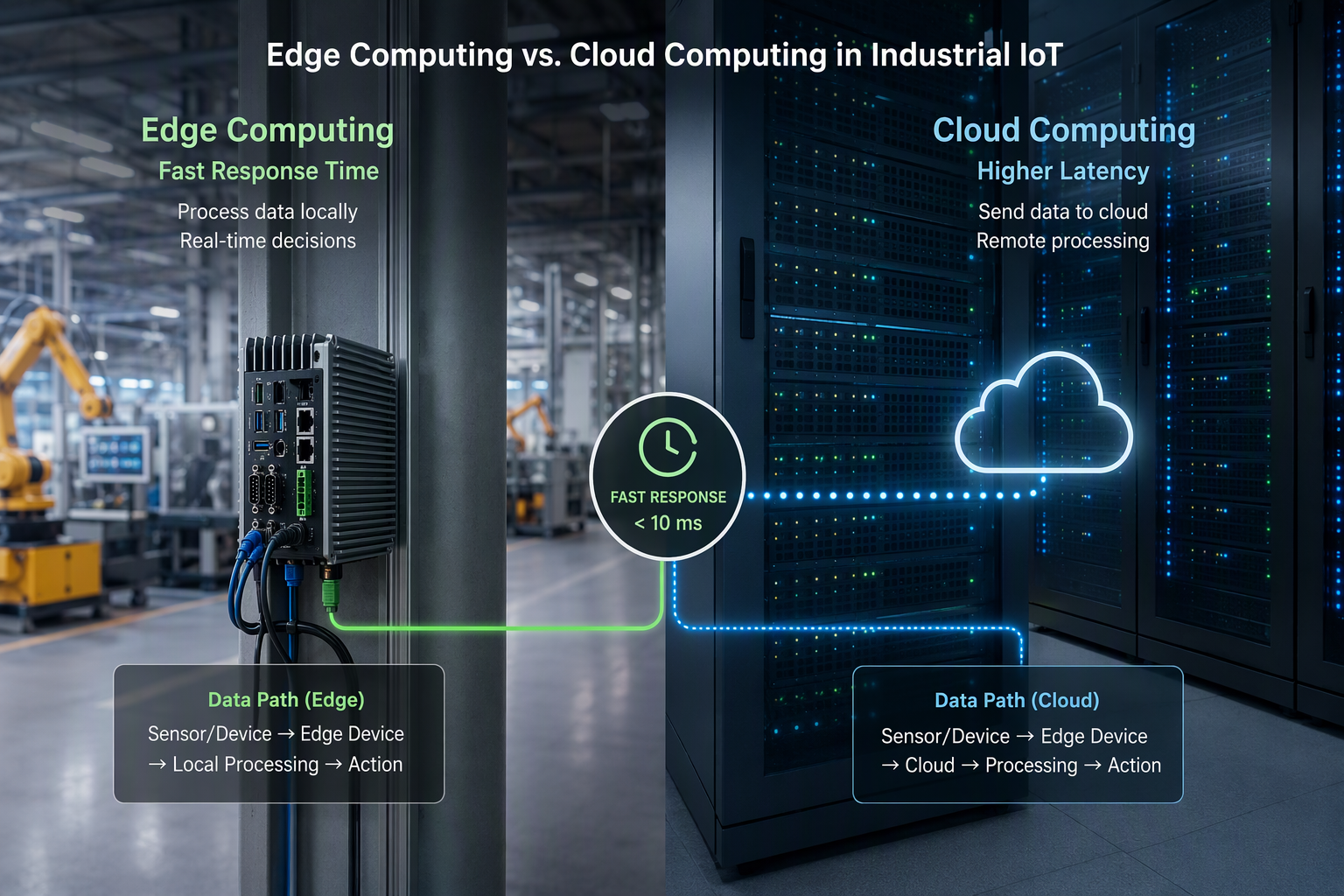
Edge computing supports low latency and immediate action near equipment. Cloud computing supports centralized scale and deeper review across operations. Both can improve operational efficiency, but they do it in different ways. To choose the right fit for industrial IoT, it helps to look at processing, latency, security, network usage, and growth potential one by one.
Data Processing Location and Methods
The most important distinction is location. Edge systems perform data processing near machines and sensors, while cloud models move information to cloud servers for centralized handling. That difference changes how fast you can act and how much information you need to transmit.
For manufacturers, local processing is useful when equipment conditions need quick decisions. Cloud platforms, on the other hand, work well for broad comparisons, historical review, and enterprise reporting. Both methods can support data storage, but they serve different operational needs.
| Factor | Edge Computing | Cloud Computing |
|---|---|---|
| Processing location | Near the machine or device | In remote cloud servers |
| Main method | Local processing and filtering | Centralized processing |
| Best fit | Immediate equipment decisions | Long-term analysis across sites |
| Data storage role | Short-term or selective local storage | Large-scale centralized data storage |
Impact on Latency and Real-Time Operations
Latency matters on the plant floor because some decisions cannot wait. If a machine needs an adjustment now, even a small delay can affect safety, scrap rates, or uptime. That is why low latency is a major reason manufacturers adopt edge systems.
By processing information close to the source, edge designs improve response times and support real-time operations. This is valuable in industrial automation, autonomous vehicles, and other environments where fast reactions are required. A sensor reading can trigger action locally without waiting for outside connectivity.
Cloud-based workflows usually introduce more delay because data has to travel farther. For applications that do not need instant reactions, that is often acceptable. But when time-critical tasks drive operational efficiency, edge computing usually has the advantage. In manufacturing terms, edge helps when milliseconds affect output, while cloud helps when broader insight matters more than immediate control.
Security Considerations for Industrial IoT Data
Security is not a simple edge-wins or cloud-wins question. In industrial IoT, the right approach depends on what data you handle, where it moves, and how your systems are managed. For many manufacturers, data security starts with understanding what should stay local.
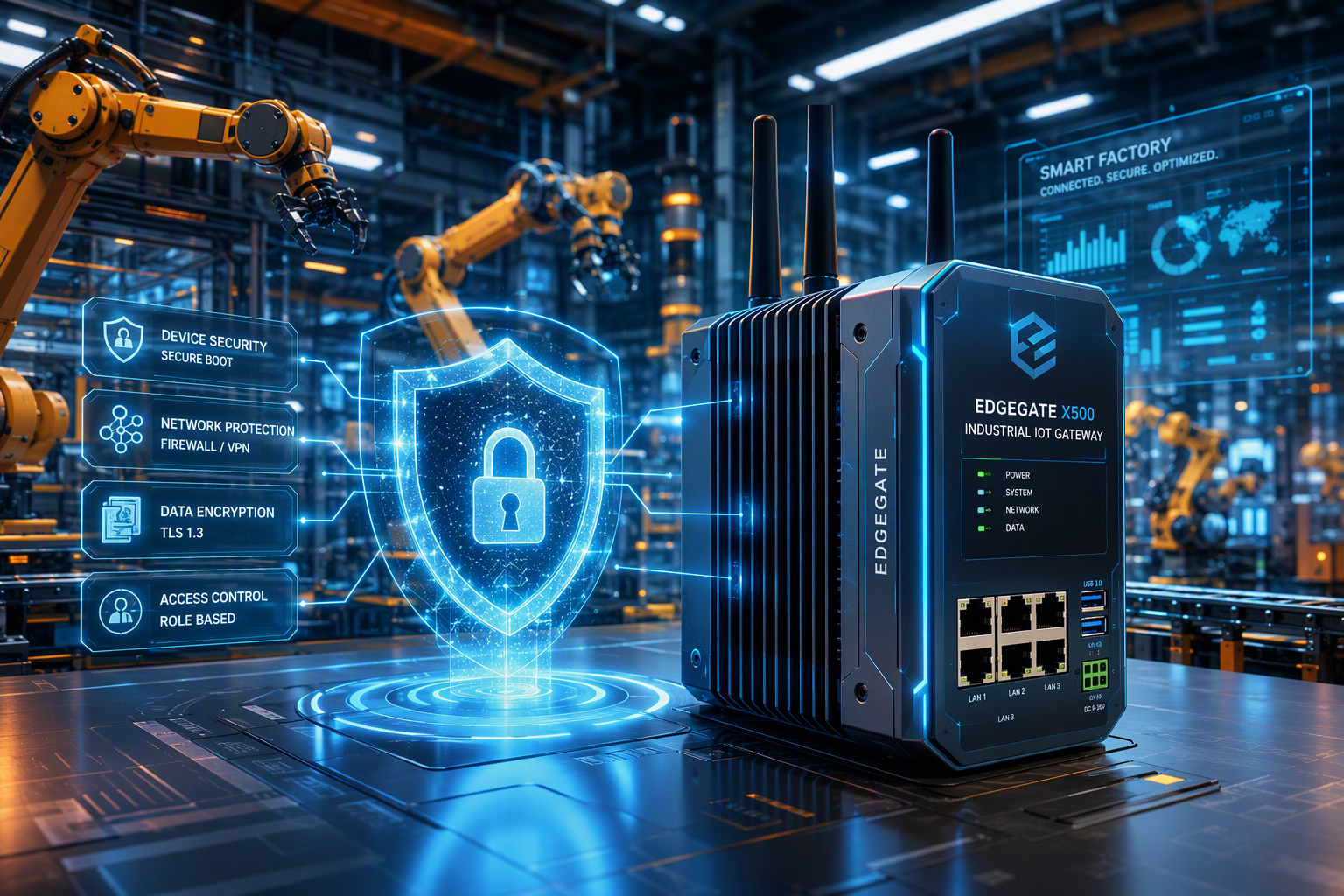
Edge environments can reduce exposure by keeping sensitive data closer to operations. Less transmission over public networks can support data privacy and lower the risk tied to moving sensitive data off-site. That can be useful when machine settings, quality records, or other plant information should remain near the source.
Cloud environments have different strengths. Centralized data management and stronger provider protections can be valuable, but sending information outward may increase concern about data breaches or provider dependence. In practice, manufacturers often keep critical data local and send selected datasets to the cloud. That balance can support both protection and business visibility.
Bandwidth and Network Usage
Industrial IoT systems can create large amounts of data every day. If every sensor reading, image, or equipment event is sent away for processing, network demand rises quickly. That is why bandwidth usage is a major decision point for manufacturers.
Edge computing reduces unnecessary data transfer by filtering information locally. Instead of sending raw feeds all the time, the system can keep routine data near the source and transmit only meaningful events or summaries. This can lower data transmission loads and help sites with limited internet connectivity.
Cloud-first designs usually require more movement of data across the network, especially when centralized analytics depend on complete datasets. That can raise costs and slow performance if connectivity is unstable. When choosing between edge and cloud, ask how much data you create, how often you need it, and whether your network can handle continuous movement without affecting production.
Scalability and Expansion Potential
Growth looks different in edge and cloud environments. Edge deployments expand by adding more hardware close to operations, such as gateways, controllers, or local compute units. That gives you direct control, but it can make scalability more complex across multiple plants.
Cloud providers offer strong expansion potential because resources can grow on demand. For businesses collecting more IoT data over time, cloud services can absorb rising storage and analytics needs without requiring the same level of physical rollout at every site. That is a big reason cloud remains attractive for multi-facility visibility.
Still, edge can create cost savings over time by reducing network traffic and processing only the most useful information locally. The best path often depends on your footprint, software compatibility, and operating system requirements at the plant level. If you need quick scaling for analytics, cloud is strong. If you need controlled local growth, edge may fit better.
Advantages and Disadvantages for US Manufacturing
For US manufacturing, the edge computing versus cloud computing decision is rarely theoretical. It affects line responsiveness, plant connectivity, operational costs, and how well industrial IoT data supports decisions across production and the supply chain.
Edge computing is strong when speed and local control matter most. Cloud computing is strong when data analysis, data storage, and scale matter more. Since many IoT applications share traits with smart cities and connected logistics systems, manufacturers often borrow the same pattern: use cloud platforms for centralized visibility and edge for plant-floor action. The tradeoffs become clearer in the next two sections.
Benefits of Edge Computing in Factory Settings
In factory settings, the benefits of edge computing show up where fast action matters. Edge devices placed near the data source can process equipment signals immediately, which helps teams reduce delays and keep operations moving. That is valuable when systems must react before small issues become downtime.
You can see this clearly in applications that resemble autonomous vehicles or advanced machine control. Local processing helps equipment react in real time without waiting for distant infrastructure. Industrial IoT gateways are often part of this setup, connecting sensors and systems while supporting quick local decisions.
- Faster local response for equipment conditions and alarms
- Lower network traffic because not all data leaves the plant
- Better resilience when outside connectivity is unstable
- Stronger support for time-sensitive automation tasks
The drawback is that more on-site hardware and management may be needed as your deployment expands.
Pros and Cons of Cloud Computing for Industrial Applications
Cloud computing offers clear benefits for industrial applications that depend on wide visibility and historical reporting. When manufacturers want to compare performance across lines, plants, or regions, cloud services make that easier. They also support large-scale big data workflows without the same hardware burden at each site.
Another advantage is flexibility. Cloud providers can scale resources as needs grow, and centralized data storage helps teams retain information for trend analysis. For organizations that do not need every decision made on-site, cloud can simplify management and lower upfront infrastructure demands.
- Easier scaling for analytics and enterprise reporting
- Centralized data storage for long-term history
- Lower initial hardware investment in many cases
- Broad access to shared cloud services
The downside is higher dependence on connectivity, more data movement, and possible increases in operational costs over time if very large data volumes are sent continuously.
When to Use Edge vs Cloud Computing for Industrial IoT
The right model depends on what your IoT systems need to do. If the job requires instant action, strong local control, or operation during network disruption, you should use edge computing. If the job centers on large-scale data analysis and centralized access, cloud services make sense.
Many manufacturers do not choose one or the other for every workload. Instead, they match use cases to the right layer within their edge architecture and cloud platforms. That approach is often the most practical way to balance responsiveness and visibility across a plant network.
Evaluating Manufacturing Use Cases
The best way to decide is to look at real use cases. In industrial IoT, edge is a better fit when signals from IoT sensors need immediate interpretation and response. Manufacturing has many examples where waiting on the cloud is not ideal.
Predictive maintenance is one of the clearest cases. If a machine shows unusual vibration or temperature, local systems can flag it quickly and help prevent failure. Similar logic appears in smart cities and transportation, where fast reactions matter. Artificial intelligence and machine learning can also be used at the edge for local anomaly detection after models are prepared.
- Predictive maintenance on rotating equipment
- Real-time production quality checks
- Fast equipment alerts and line adjustments
- Condition monitoring in network-limited locations
If your process depends on immediate action, edge usually brings more value than cloud-only processing.
Factors Influencing Edge or Cloud Decisions
Several factors should shape your decision. Start with how quickly your system must react, how much information it creates, and whether that information includes sensitive data. For many manufacturers, low latency and data privacy are the first questions to answer.
Then look at network conditions and cost structure. If your plant generates high volumes and has limited connectivity, sending everything away may hurt bandwidth usage and reduce operational efficiency. If your workloads are less time-sensitive, cloud may still be the simpler path for expansion and reporting.
- Need for immediate response or local control
- Volume of plant data and network capacity
- Handling of sensitive data and privacy concerns
- Long-term cost savings versus upfront investment
You may also consider energy consumption and device management overhead. The right answer often comes from matching business priorities to technical constraints, not from choosing the most popular model.
Hybrid Approaches: Combining Edge and Cloud Solutions
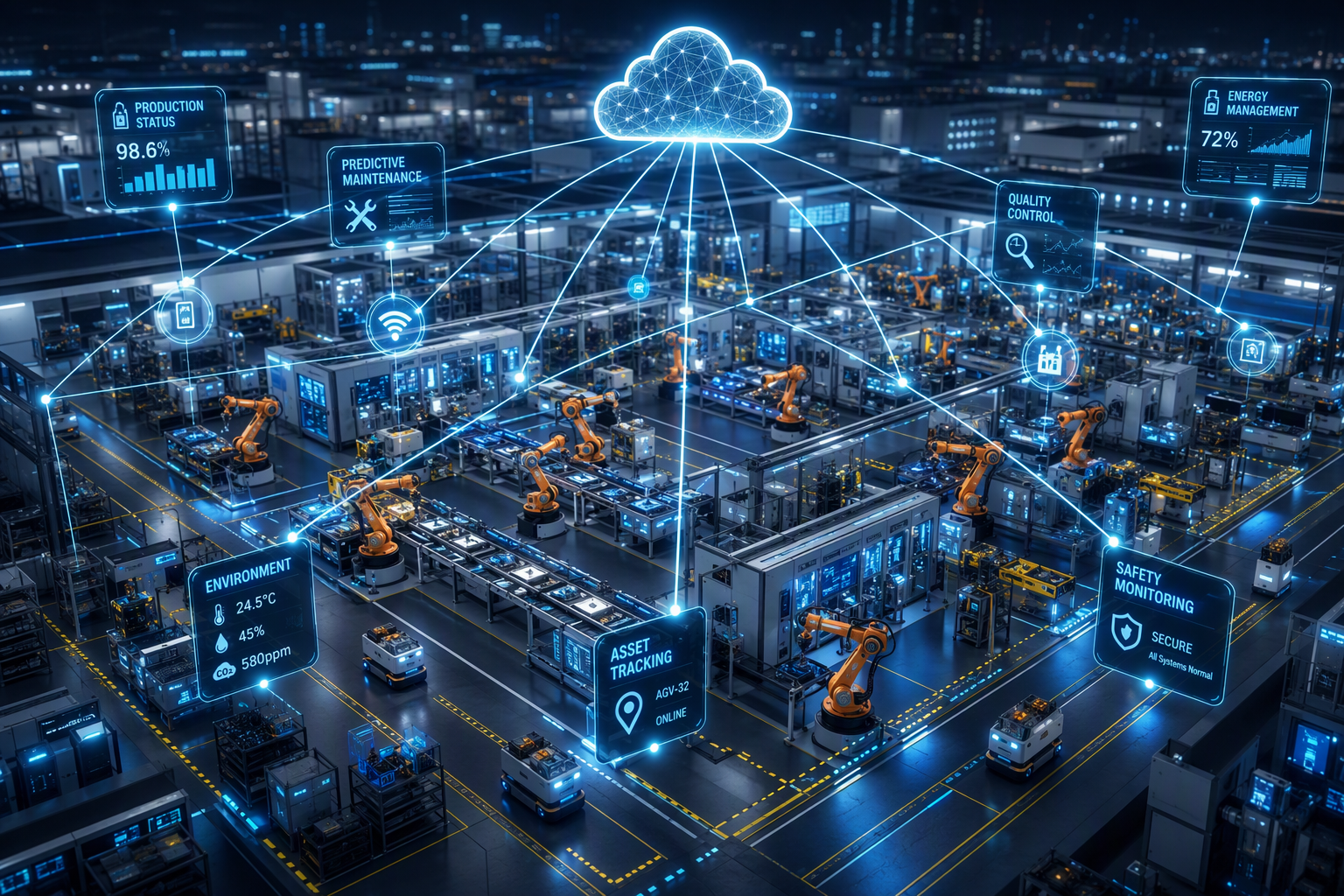
In many industrial environments, hybrid approaches provide the best outcome. Edge systems handle time-sensitive work near machines, while cloud platforms manage broader reporting, coordination, and long-term storage. This gives manufacturers speed on the floor and visibility across the business.
A smart factory is a good example. Local systems can monitor equipment, trigger alerts, and support control decisions in real time. At the same time, selected IoT data moves to the cloud for historical review, plant-to-plant comparisons, and deeper data analytics.
Some architectures also add fog computing between the edge and cloud. That middle layer can support regional processing through gateways or local servers before information reaches central platforms. In practice, hybrid designs are common because they reduce cloud dependency without giving up the advantages of centralized analytics and enterprise management.
Practical Examples in Industrial IoT
Theory matters, but manufacturers usually want proof in action. Industrial IoT use cases show that edge and cloud are not abstract ideas. They shape how plants react to machine conditions, move information, and support operational efficiency.
Two common examples stand out in manufacturing. One is predictive maintenance, where fast local decisions can reduce downtime. The other is remote monitoring, where cloud services help teams review trends across sites. Together, these examples show how IoT devices can process data at different layers for different business goals.
Predictive Maintenance with Edge Computing
Predictive maintenance is one of the strongest examples of edge computing in manufacturing. Machines generate a steady stream of information through IoT sensors that track vibration, heat, and other operating conditions. If that information is reviewed close to the machine, warning signs can be caught early.
That local data processing supports faster response times. Instead of sending every signal away and waiting, the system can identify unusual behavior on-site and alert operators quickly. This can help reduce downtime, prevent costly failures, and improve maintenance planning.
For US manufacturers, this is practical rather than experimental. A line does not have to wait for outside processing to spot a problem that is developing right now. Edge computing is better suited here because the value comes from speed, continuity, and immediate action, not just from building a historical record after the issue has already affected production.
Remote Monitoring and Data Analysis via Cloud Platforms
Remote monitoring is a strong fit for cloud platforms when teams need visibility across facilities. IoT devices can send selected production, condition, or environmental information to centralized systems, where managers and engineers review performance without being on-site.
This model works well for data analysis and long-term data storage. Cloud servers in a remote data center can collect information from multiple plants and make it easier to compare output, identify patterns, and support planning. That is especially helpful for organizations managing several manufacturing sites.
Compared with edge, cloud-based processing is usually slower for machine-level reactions, but stronger for enterprise oversight. In practice, many manufacturers send filtered or aggregated information from plant-floor gateways to the cloud. That allows local systems to protect response speed while cloud systems support broader remote monitoring and historical insight.
Conclusion
In summary, choosing between edge computing and cloud computing in the realm of industrial IoT is a decision that hinges on your specific operational needs. While edge computing offers real-time data processing and reduced latency, cloud computing provides extensive storage and scalability options. Understanding how both technologies can complement each other is vital for modern US manufacturing, particularly as you evaluate use cases and weigh factors such as security and bandwidth. By adopting a balanced approach, you can enhance your manufacturing processes and stay ahead in a competitive landscape. If you're ready to explore these solutions further, consider booking a free consultation to tailor a strategy that best fits your business needs.
Frequently Asked Questions
How do latency requirements impact my industrial IoT setup choice?
If your industrial IoT application needs low latency and instant response times, edge computing is usually the better choice because processing happens near the equipment. Cloud computing is better for workloads that can tolerate delay, such as long-term reporting, historical review, and broader business analysis.
What challenges might manufacturers face with edge computing integration?
Manufacturers may face hardware rollout, device management, and system integration challenges when adopting edge computing. In industrial automation, you also need to align local data processing with existing equipment and workflows. The payoff can be strong operational efficiency, but planning and ongoing support are important.
Are there security tradeoffs between edge and cloud computing for industrial IoT?
Yes. Edge computing can keep sensitive information closer to the source, which may reduce exposure during transmission. Cloud computing offers centralized controls and mature protections, but moving data outward may raise concerns about data breaches. Strong data security practices matter in either model.
You might also like