Industrial IoT Gateways Explained: Connecting Plant Floor to Cloud
Industrial IoT Gateways Explained: Connecting Plant Floor to Cloud
Key Highlights
- An industrial iot gateway links plant equipment with cloud systems.
- It handles communication protocols and protocol conversion between OT and IT.
- Local data processing and edge computing reduce delay and bandwidth use.
- Gateways improve operational efficiency by sending only useful information upstream.
- Built-in security helps protect production data during cloud transmission.
- In manufacturing, they support predictive maintenance, monitoring, and smarter decisions.
Introduction
Industrial iot is changing how manufacturers use the internet of things on the plant floor. Instead of leaving valuable machine data trapped inside PLCs, sensors, and other iot devices, companies can move that information into systems that support digital transformation. An iot gateway is the practical link that makes this possible. In industrial applications, it helps your equipment communicate, share data, and support better decisions without replacing every legacy asset you already depend on.
Understanding Industrial IoT Gateways in Modern Manufacturing
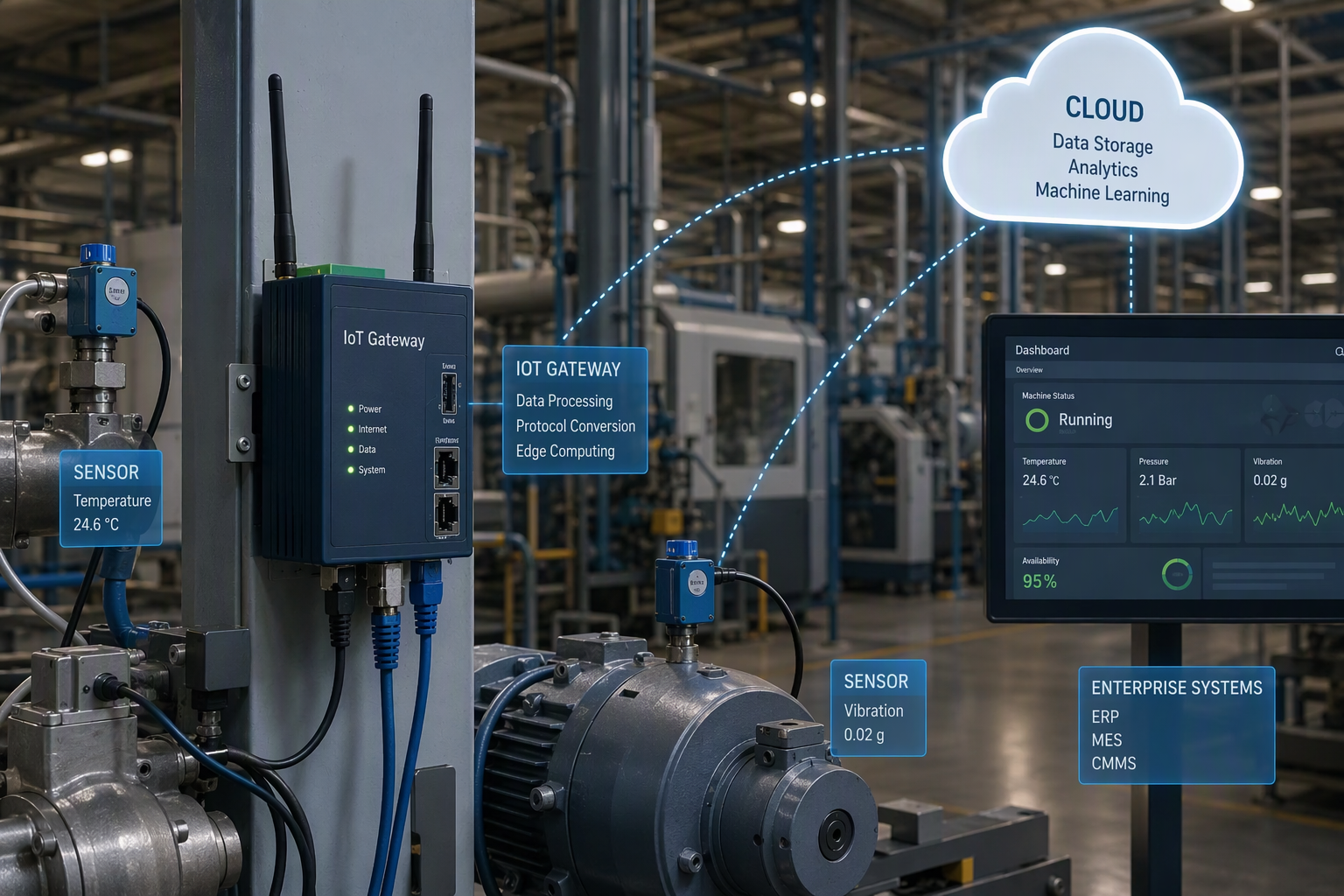
At a basic level, an industrial iot gateway is a rugged device that connects operational technology on the factory floor with business or cloud systems. In industrial settings, that key role matters because most machines do not speak the same digital language.
The industrial internet of things depends on moving data from sensors, PLCs, and SCADA tools into usable systems. Your iot gateway makes that possible by collecting, translating, and forwarding information in a form modern software can understand. The next sections break down what that means on the plant floor.
Defining Industrial IoT Gateways and Their Role on the Plant Floor
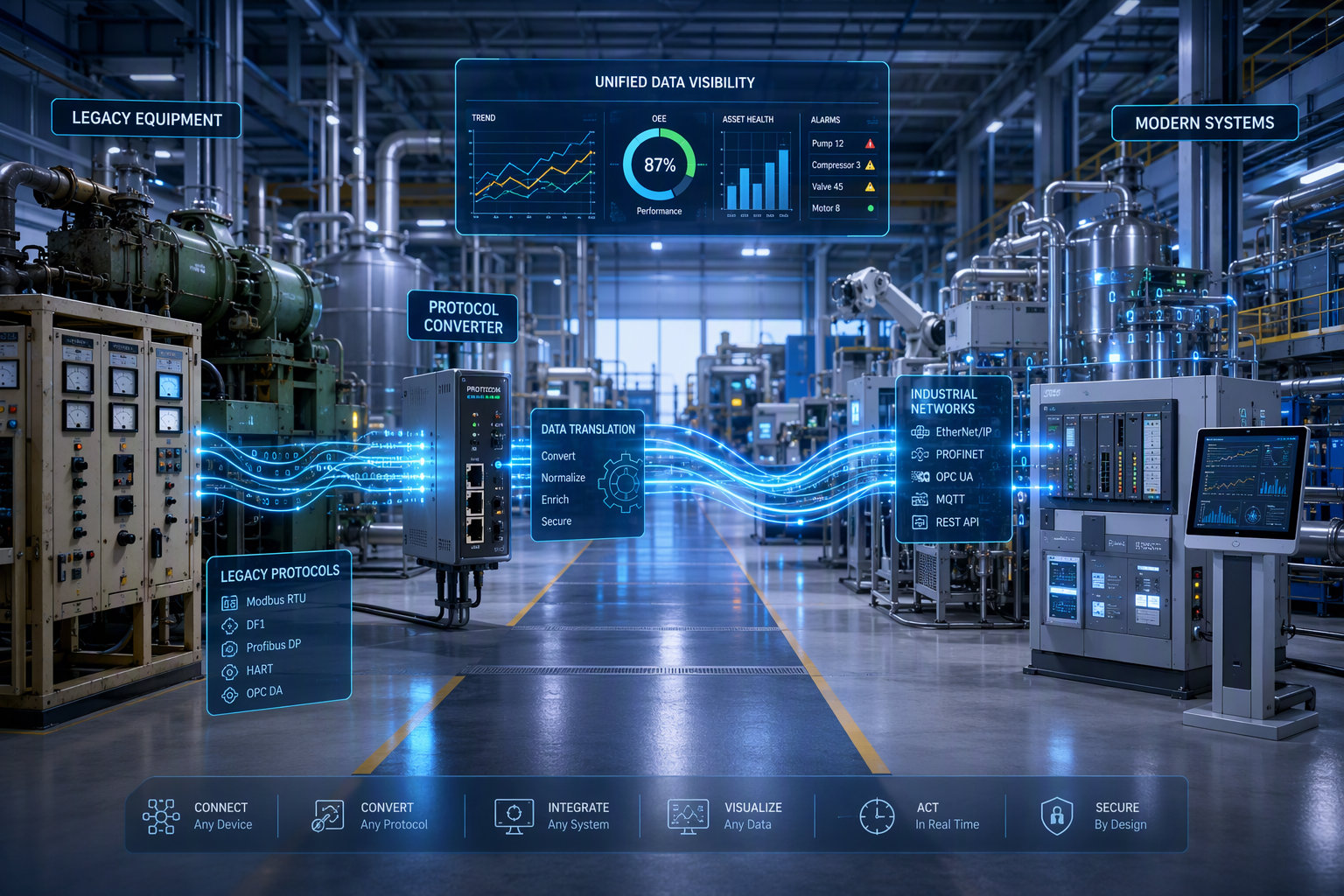
An industrial iot gateway is a localized computing system built for the plant floor. It sits between operational technology and information technology, acting as both a translator and a traffic controller. In simple terms, it gathers signals from machines, sensors, and controllers, then prepares that data for higher-level systems.
On a real production line, equipment often comes from different eras and vendors. One machine may use Modbus, another may feed a SCADA system, and another may rely on wireless sensors. The iot gateway bridges those gaps so industrial applications can use data from all of them together.
That is why it matters in smart manufacturing. Without this link, valuable machine data stays isolated. With it, you can collect operating information, filter noise, and connect old and new assets without ripping out working equipment.
Why Industrial IoT Gateways Matter for Smart Manufacturing and Industry 4.0
Industry 4.0 depends on connected assets, shared data, and fast decisions. Industrial iot supports that shift, but only if data can move reliably from machines to software. That is where iot gateway devices earn their place.
First, they connect legacy equipment to modern platforms. Second, they support digital transformation without requiring a full controls overhaul. Third, they improve operational efficiency by reducing manual data gathering and making equipment status easier to see across lines, cells, or entire plants.
There is also a practical benefit for busy teams. Your gateway can process information close to the machine, then send only meaningful data onward. That lowers bandwidth use, supports quicker responses, and keeps production moving even when internet connectivity is not perfect.
How Industrial IoT Gateways Connect Factory Equipment to the Cloud
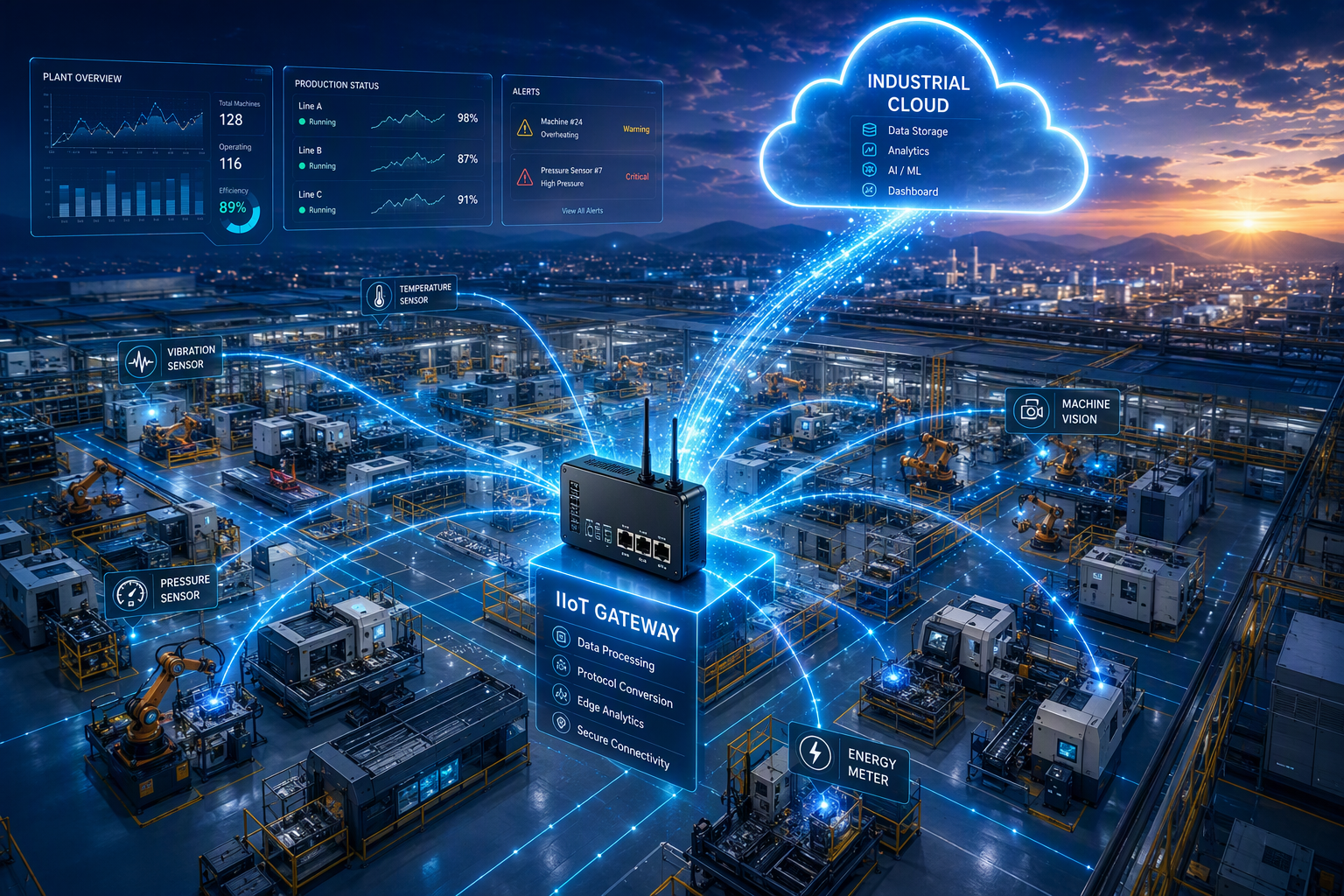
The process starts on the factory floor with data collection. An iot gateway reads signals from sensors, PLCs, and other devices, often across several different protocols. It then performs protocol conversion so those signals can be understood by modern software and cloud tools.
From there, the gateway filters and organizes the information before cloud transmission. Instead of pushing every raw event upstream, it can send selected data that is more useful for dashboards, alerts, and long-term analysis. To understand that flow, start with protocol support.
Communication Protocols Supported by Industrial IoT Gateways
Manufacturing networks rarely run on one standard. That is why industrial gateways are built to handle multiple communication protocols and perform protocol translation between plant assets and IT systems. This is one of the main reasons they are so useful in mixed environments.
On the OT side, gateways may work with older or field-level protocols used by machines and controllers. On the IT side, they convert data into formats that cloud platforms, software, or scada systems can use. Your edge devices stay connected without forcing one protocol across every layer.
Common examples mentioned in industrial gateway deployments include:
- Modbus
- CANbus
- DNP3
- MQTT
- HTTP
- OPC UA
That mix supports protocol conversion between legacy equipment and modern applications. It is also why a gateway can connect old machines to newer analytics systems without replacing the whole control architecture.
Data Collection, Processing, and Secure Transmission to the Cloud
Once connected, the gateway begins data collection from sensors, controllers, and equipment. That can include temperature, pressure, vibration, current, and status signals. Instead of sending all raw values to cloud services, it first evaluates what matters.
This is where data processing helps. The gateway can filter irrelevant information, normalize values, and aggregate readings from multiple sources. Local logic may also trigger alerts or immediate actions when something moves outside expected limits. That reduces delay and cuts the amount of data sent upstream.
After that, the device handles secure transmission to the cloud, SCADA, or enterprise platforms. Good data security practices include encryption, authentication, and protected interfaces. You get visibility into operations while keeping machine data safer as it moves outside the plant.
Key Features of Industrial IoT Gateways for Reliable Operations
If you are comparing industrial iot hardware, the right iot gateway should do more than just pass data along. The most useful systems combine protocol support, local logic, and rugged construction for daily plant use.
Just as important, the key features need to support reliable uptime. That includes robust security, stable communications, and protection for data integrity in harsh operating conditions. The next three sections cover the features controls engineers and plant managers usually focus on first.
Multi-Protocol Interoperability and Device Integration
A strong gateway should support multi-protocol interoperability. In plain English, that means it can connect various devices that speak different languages. On most plant floors, that is not optional. You may have PLCs, sensors, drives, and SCADA interfaces from several vendors.
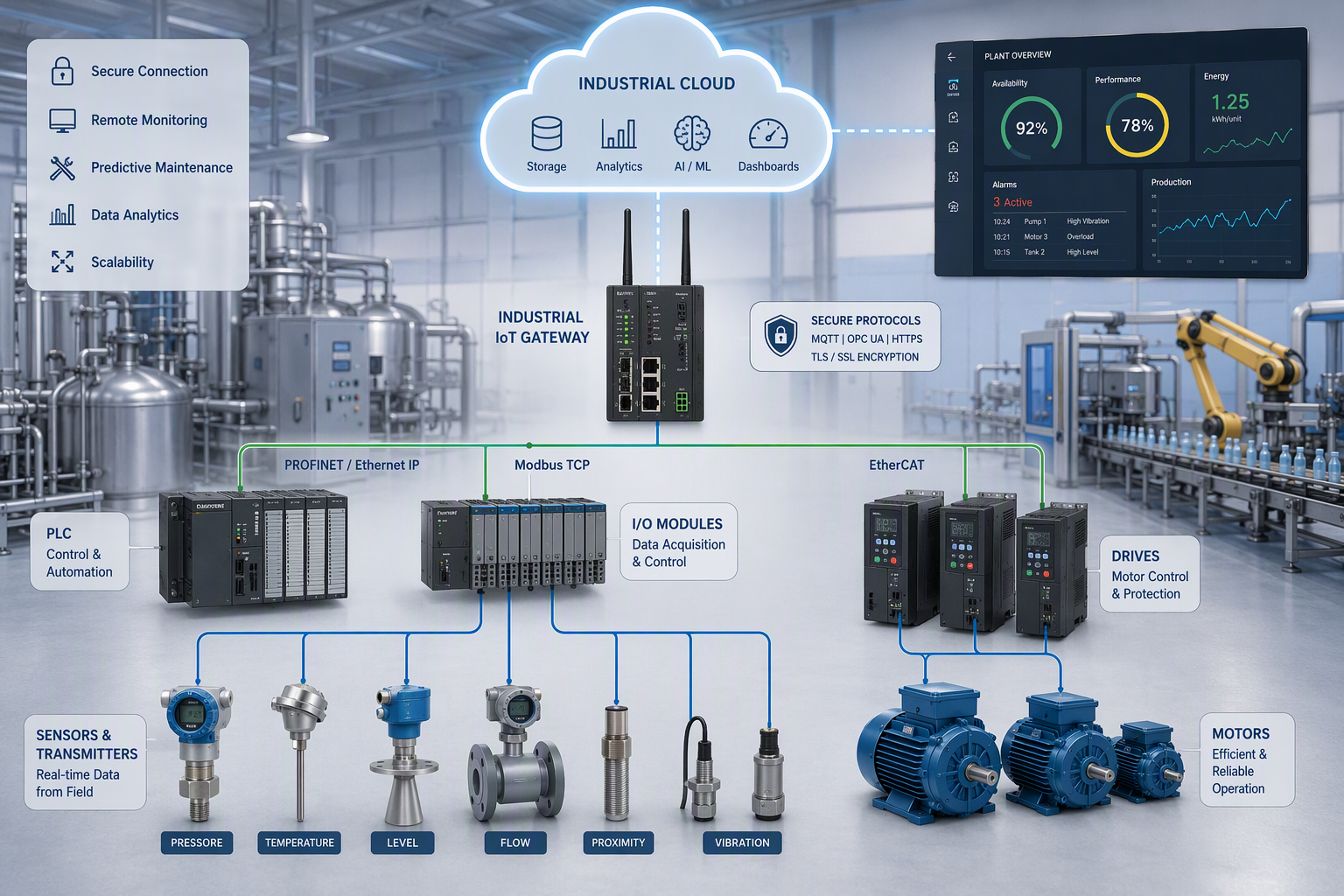
This matters most when legacy systems are still doing important work. A good gateway extends their value by translating data into newer formats. Instead of replacing equipment that still runs well, you create seamless communication between old and new layers of the operation.
Device integration also needs to be practical. Look for a platform that can gather data from various devices, normalize it, and hand it off to higher-level applications without extra complexity. That approach lowers project risk and makes future expansion easier.
Edge Computing Capabilities: Real-Time Data Processing
Edge computing means your gateway does work close to the machine instead of sending everything to a remote server first. In manufacturing, that matters because some decisions cannot wait. If a machine overheats or vibration spikes, local action is often the right action.
With real-time data processing, the gateway can filter inputs, detect abnormal conditions, and trigger alerts immediately. This edge processing reduces latency and avoids flooding the network with unnecessary traffic. It also helps when internet connectivity drops, because local processing can keep critical functions running.
Some platforms also support lightweight machine learning or rule-based logic at the edge. That gives you faster responses for maintenance, safety, and monitoring tasks while cloud systems handle deeper historical analysis over time.
Security Features for Industrial IoT Connectivity
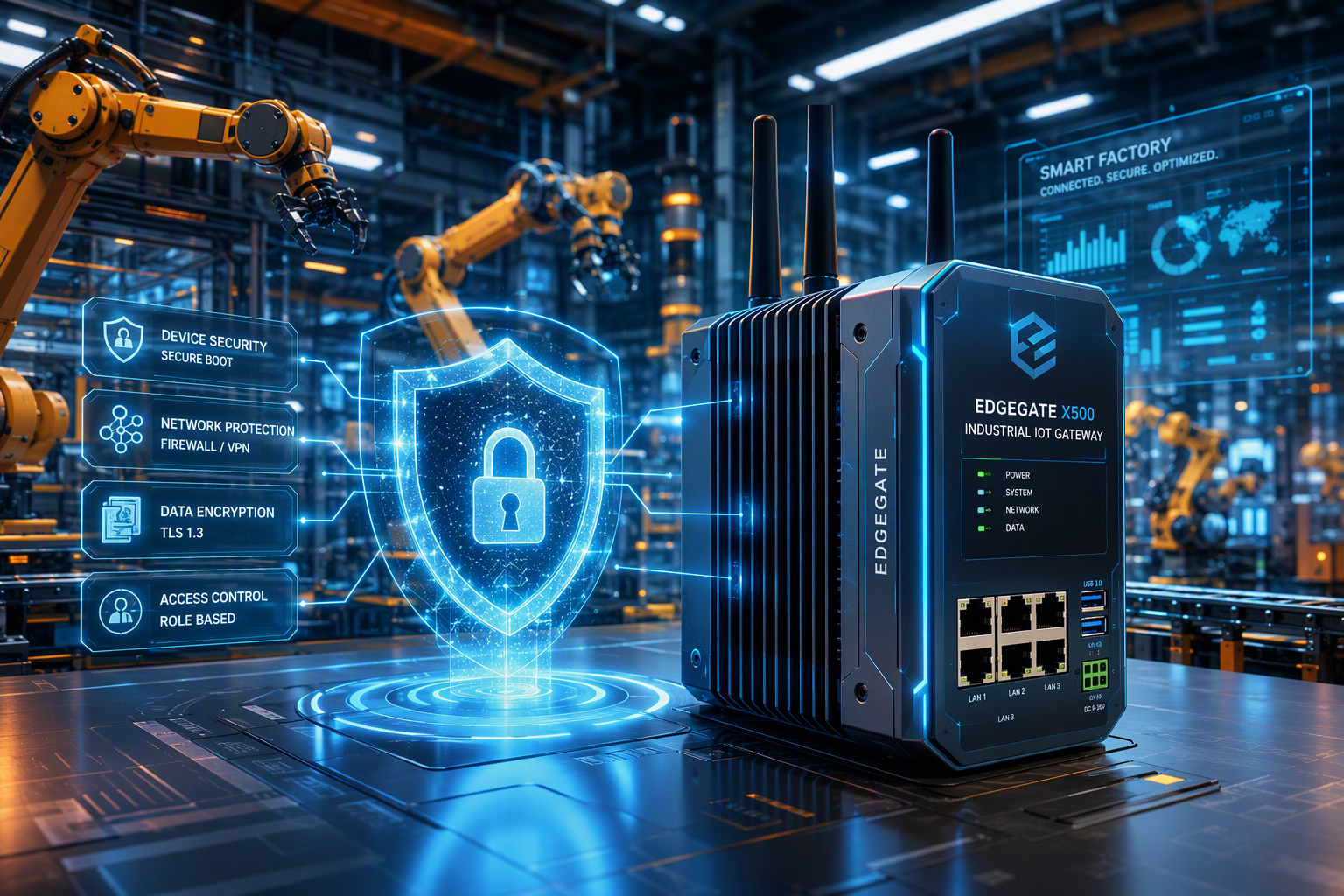
Security cannot be treated as an add-on in connected manufacturing. Your gateway sits between plant assets and outside networks, so it needs to protect sensitive data while keeping production traffic reliable. Strong design helps preserve data integrity and reduce exposure.
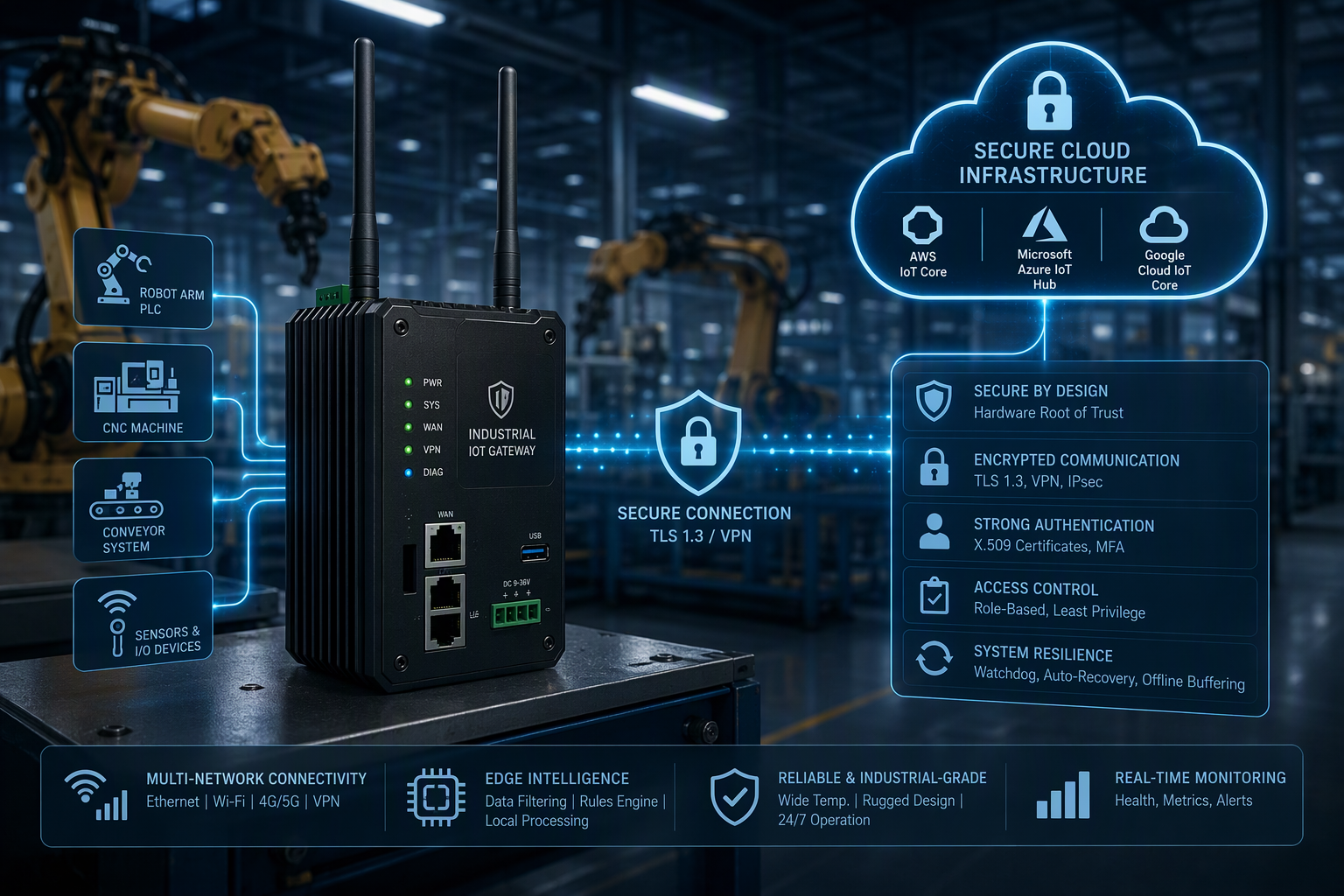
In real deployments, robust security usually combines several layers. That includes protected communication, controlled access, and trusted firmware behavior. These security features create a safer boundary between OT systems and cloud-connected applications.
Common protections include:
- Encrypted communications for data in transit
- Device authentication and role-based access controls
- Secure boot or firmware validation
- Firewall functions and over-the-air update support
These measures improve data security, but the exact feature set depends on the model. When you evaluate a gateway, ask how it protects production data during both normal operation and remote updates.
Top Benefits of Using Industrial IoT Gateways in Manufacturing
The biggest payoff is better visibility. Industrial gateways turn machine signals into actionable insights that teams can actually use for maintenance, monitoring, and planning. That supports predictive maintenance, energy monitoring, and faster troubleshooting.
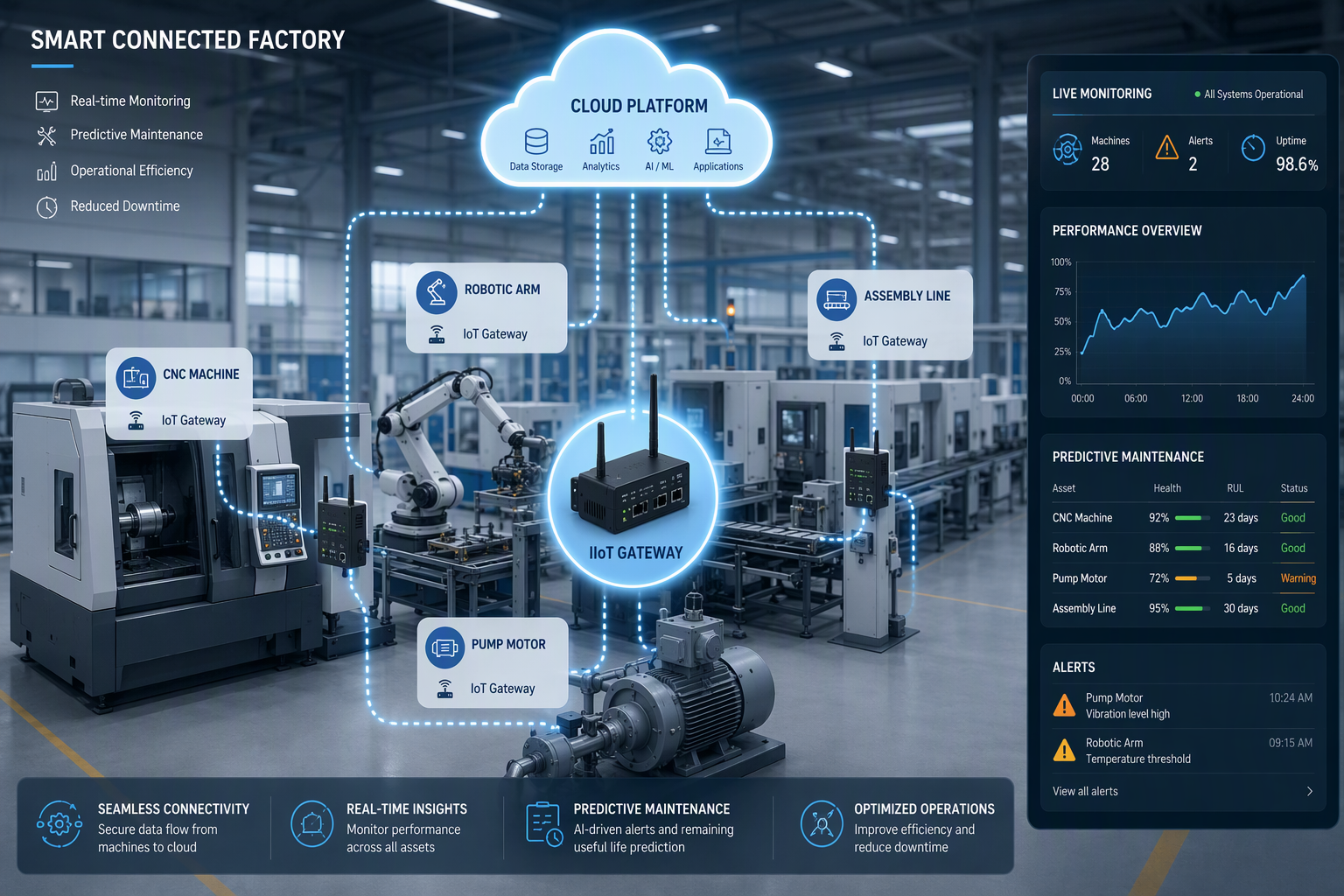
There is also a business impact. Better data flow improves operational efficiency and supports digital transformation without forcing a full replacement of existing assets. For most plants, the value shows up in two areas first: asset health and scalable connectivity across the operation.
Enabling Predictive Maintenance and Energy Monitoring
A common use case is predictive maintenance. Gateways collect raw data from vibration, temperature, current, or pressure sensors, then perform data aggregation so trends are easier to interpret. That helps you move away from reactive maintenance and toward planned intervention before a failure stops production.
Energy monitoring is another practical application. By gathering readings from meters, drives, or monitored loads, the gateway gives your team a clearer view of where power is being used. Once the data is organized, you can compare lines, shifts, or assets more effectively.
Think of it like a simple case study on a packaging line. If one motor starts drawing more current while vibration also rises, the gateway can flag that pattern early. Your maintenance team gets a warning before the machine becomes an emergency repair.
Supporting Scalable Industrial Connectivity in Manufacturing (link to Empowered Automation)
As plants expand connected systems, scalable connectivity becomes a real design issue. One pilot project is easy. Supporting multiple lines, buildings, or remote assets is harder. Industrial gateways help by creating a repeatable foundation for your iot infrastructure.
That foundation usually includes:
- Standardized data collection from mixed equipment
- A path for secure edge-to-cloud communication
- Easier expansion across additional assets or areas
If you are planning broader industrial connectivity in manufacturing, a partner with controls and integration experience can help you avoid rework. Empowered Automation, a Chicago-area systems integrator, supports manufacturers that need practical architectures connecting OT and IT. For a deeper look, see industrial connectivity in manufacturing and how industrial gateways fit into scalable plant strategies.
Beginner’s Guide: How to Implement an Industrial IoT Gateway Solution
Getting started with industrial iot does not have to mean a huge rip-and-replace project. A well-chosen iot gateway can support practical iot solutions using the equipment and networks you already have.
The goal is seamless communication and easy integration. Start with one area, define what data you need, and make sure the gateway fits your protocols, security needs, and future expansion plans. The following steps walk through the setup process in a plant-friendly way.
What You Need to Get Started: Equipment, Network, and Resources
Before you deploy anything, gather the basics. You need a clear list of equipment, available network paths, and the people who will own the project after startup. That keeps the implementation grounded in plant reality.
Your hardware and support needs often include:
- Machines, PLCs, sensors, and other iot devices to connect
- A network path using Ethernet, Wi-Fi, or cellular connectivity
- A target system such as SCADA, cloud platforms, or data centers
- Internal resources from controls, IT, maintenance, and operations
It also helps to define your success criteria early. Are you trying to reduce downtime, improve visibility, or collect energy data? That answer affects gateway selection, data points, and how much local processing you want at the edge.
Step-by-Step Guide to Setting Up an Industrial IoT Gateway
A step-by-step rollout lowers risk. Start small, prove the data path, and expand once the first connection is stable. Most teams get better results when they focus on one machine group or line before scaling.
Next, choose iot gateway devices that match your operational technology environment. Confirm protocol support, edge processing needs, and cloud targets before hardware arrives. If custom logic is needed, plan the software development work early so testing does not become a bottleneck later.
Finally, validate the full iot edge workflow. That means checking device connectivity, local logic, alarm behavior, and secure handoff to higher-level systems. When each piece is confirmed in sequence, your gateway project is easier to manage and more likely to deliver plant value quickly.
Step 1: Assess Your Plant Floor Connectivity and Device Needs
Start by mapping what already exists on the plant floor. Identify the machines you want to connect, the signals available, and the communication methods in use today. This gives you a realistic starting point instead of an assumed one.
Then review connectivity options. Some assets may already sit on Ethernet, while others may need wireless links or a gateway that supports cellular backup. Your device needs should also include which data points matter most, not just which ones are available.
Pay close attention to legacy machines and diverse sensors. A press line, chiller, and packaging cell may each need different handling. If you understand those differences early, you can choose a design that fits the actual operation rather than forcing one template on every asset.
Step 2: Select a Suitable Industrial IoT Gateway and Compatible Devices
Once you know your requirements, select an industrial iot platform that fits them. The right iot gateway should support your current protocols, network options, and environmental conditions. It should also leave room for future growth.
Compatibility matters just as much as features. Check that the gateway can communicate with your PLCs, meters, and various sensors without heavy custom work. If the plant uses mixed systems, protocol translation becomes a must-have rather than a nice extra.
Also think about the operating model. Do you need a simple telemetry path to the cloud, or more local logic at the edge? Some gateway families offer lighter versions for basic monitoring and stronger versions for cellular connectivity and more advanced edge workloads.
Step 3: Integrate the Gateway with Existing Equipment and Networks
Integration is where the design becomes real. Connect the gateway to your selected equipment, verify signal quality, and confirm the gateway can read and organize the expected values. This step should be controlled and documented.
Next, connect it to plant networks and any higher-level systems that will receive data. Keep the setup aligned with site standards for addressing, segmentation, and access control. Good integration work prevents confusion later when you add more assets.
Legacy equipment often needs extra attention here. Some devices may require different polling methods, serial connections, or special handling for older protocols. When done well, the result is seamless communication between assets that were never designed to work together.
Step 4: Configure Data Flows and Enable Secure Cloud Connection
After physical and network integration, define your data flows. Decide what will be collected, how often it will be sampled, where it will be stored, and which values should trigger alerts. This is where solid data management starts.
The next task is deciding what processed data should move upstream. Sending everything is rarely the best choice. Filter noise, aggregate repeated values where useful, and pass on the information that operators, managers, or analytics tools actually need.
Then enable a secure cloud connection to your target platform. That may be SCADA, an enterprise system, or cloud services such as Microsoft Azure. Use protected communications and access controls so the path from the plant to the outside system is visible, controlled, and dependable.
Step 5: Test, Monitor, and Optimize the Gateway Solution
Do not treat commissioning as the finish line. You still need to test normal conditions, alarm scenarios, and communication loss events. That proves the gateway behaves the way your team expects before it becomes part of daily operations.
Once live, monitor performance over time. Check update rates, missed messages, and event handling. If you see poor results, adjust polling, filtering, or network settings. Small improvements here can make a big difference in data integrity and operational efficiency.
Use a simple review table like this during startup and follow-up:
| Check Area | What to Verify |
|---|---|
| Device communications | All target machines and sensors are reporting expected values |
| Edge logic | Local alerts, filtering, and actions work correctly |
| Cloud path | Data reaches dashboards or cloud endpoints without loss |
| Security | Authentication, encryption, and access controls are active |
| Performance | Update rates and bandwidth use match project needs |
Real-World Use Cases and Leading Brands in Industrial IoT Gateways
Industrial iot becomes easier to understand when you look at actual use on the plant floor. IiOT gateways are not abstract devices. They solve day-to-day problems such as hidden machine conditions, delayed alarms, and disconnected systems.
A practical case study mindset helps here. Look at how iot devices, sensors, and existing controls are tied together, then consider which leading brands offer the right fit for your environment. The examples below show where gateways create value and what products are often discussed.
Examples from Predictive Maintenance and Energy Monitoring
One of the strongest use cases is predictive maintenance on rotating equipment. A gateway can collect vibration and temperature data near the machine, then use local data processing to filter noise and identify changes worth investigating. That gives maintenance teams earlier warnings.
Energy monitoring is another strong fit. Plants often have utility data spread across several systems or not collected at all. A gateway can bring those readings together, organize them, and provide actionable insights for managers trying to understand where energy is being consumed.
These examples matter because they are easy to scale. You can begin with a few critical assets, prove the value, and expand to more lines or utilities later. That makes gateways a practical first step for connected manufacturing rather than an all-at-once initiative.
Overview of Notable Industrial IoT Gateway Solutions and Empowered Automation’s Role
Several leading brands and platforms are mentioned often in discussions about industrial iot gateway solutions. The compiled information highlights NCD Enterprise IIoT Gateway options and ACROSSER’s industrial integration platform as examples of systems built for edge-to-cloud work in industrial environments.
Notable examples include:
- NCD Cloud Gateway for direct-to-cloud telemetry
- NCD Enterprise IIoT Gateway Lite for lighter workloads
- NCD Enterprise IIoT Gateway Standard with Cellular, Wi-Fi, and Ethernet
- ACROSSER Industrial IoT Integration with Sarea IoT Platform
Choosing among leading brands is only part of the job. You also need the architecture, controls knowledge, and rollout planning that fit your plant. That is where Empowered Automation can be a useful partner as a Chicago-area systems integrator, helping manufacturers align iot solutions with real production needs.
Conclusion
In summary, industrial IoT gateways play a crucial role in modern manufacturing by seamlessly connecting plant floor operations to the cloud. By enabling real-time data processing, secure communication, and efficient device integration, these gateways support advanced analytics and predictive maintenance, ultimately driving operational efficiency and decision-making. Embracing this technology not only ensures a smoother workflow but also prepares your facility for the future of smart manufacturing. For those looking to delve deeper into industrial connectivity in manufacturing, explore more through this complete guide from Empowered Automation, your trusted partner in the Chicago area for smart manufacturing solutions.
Frequently Asked Questions
What’s the difference between edge gateways and cloud gateways in industrial IoT?
Edge gateways handle data processing close to the machine using edge computing, which helps with low-latency actions and offline reliability. Cloud gateways focus more on sending data upstream for storage and broader analysis. In many plants, the best design uses both, with iot edge logic locally and cloud analytics centrally.
How do industrial IoT gateways improve plant efficiency?
Industrial iot gateways improve plant efficiency by automating data processing and data aggregation from machines, sensors, and controls. That reduces manual checks, speeds up troubleshooting, and gives teams better visibility into equipment conditions. The result is stronger operational efficiency with quicker decisions and less wasted effort.
Are industrial IoT gateways secure for sensitive manufacturing data?
Industrial iot gateways can support sensitive data when they include strong data security controls. Common security features include encryption, authentication, secure firmware behavior, and controlled access. Robust security depends on the specific model and setup, so plants should verify protections before connecting production systems.
Can industrial IoT gateways be upgraded as technology advances?
Yes, many industrial iot gateways are designed to support upgrades as technology advances. That can include firmware updates, over-the-air patches, and expansion to new devices or cloud endpoints. Choosing a platform with easy integration makes it simpler to extend iot solutions without rebuilding the whole architecture.
You might also like