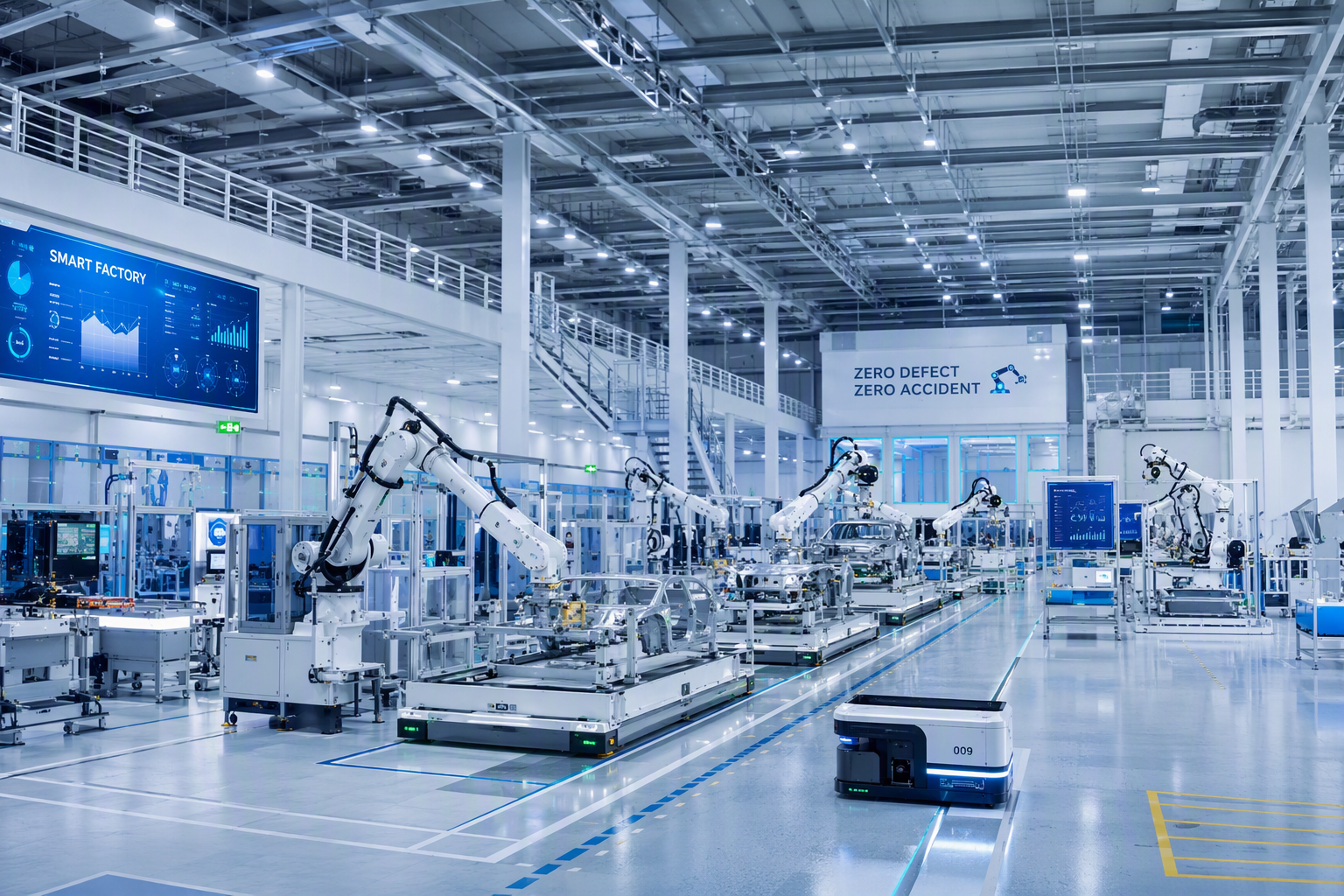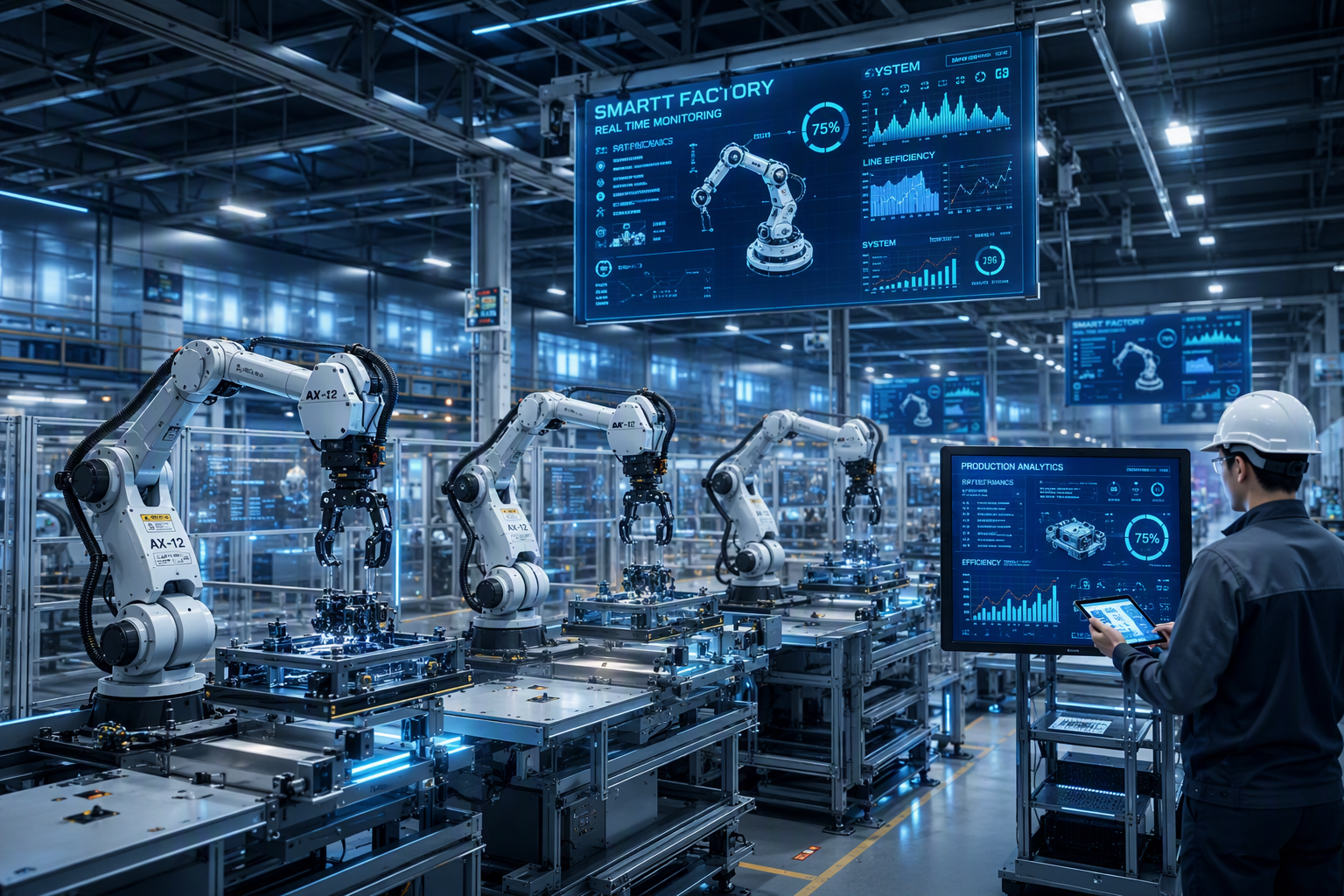
The Role of Robotics in the Industrial Automation Sector
The Role of Robotics in the Industrial Automation Sector
Key Highlights
- Industrial Automation Sector uses control systems and industrial robots to streamline the manufacturing process. Robotics plays a crucial role by performing repetitive tasks, which boosts efficiency and product quality. Different types of industrial robots, including fixed, collaborative, and mobile robots, serve unique functions. Looking ahead, the industrial automation market is expected to experience significant growth by 2034, driven by increasing demand for advanced control systems, higher efficiency in manufacturing process, and the widespread adoption of industrial robots to handle repetitive tasks and enhance product quality.
- Robotics plays a crucial role by performing repetitive tasks, which boosts efficiency and product quality.
- Different types of industrial robots, including fixed, collaborative, and mobile robots, serve unique functions.
- Industrial Automation Sector solutions are being adopted across industries like automotive, electronics, and food and beverage.
- The future of Industrial Automation Sector is shaped by AI, machine learning, and cloud connectivity.
- While robotics offers significant benefits, challenges like initial investment and cybersecurity must be addressed.
Introduction
Welcome to the world of Industrial Automation Sector, a field that is revolutionizing how things are made. By combining advanced technologies like control systems and industrial robots, factories are becoming smarter, faster, and more efficient. Have you ever wondered how your favorite products are made with such precision? The answer often lies in the seamless integration of robotics into the manufacturing floor. This article will explore the vital role robots play in modern industry, transforming production lines and shaping the future of manufacturing.
Understanding Industrial Automation Sector and Robotics
Industrial Automation Sector is the use of technology and machinery to handle processes and tasks with minimal human help. It involves integrating systems like industrial robots, which are programmed to perform repetitive tasks with great accuracy. This frees up human workers for more complex roles. According to the latest statistics, global industrial automation usage continues to rise, with recent industry reports noting that the worldwide market exceeded $190 billion in 2022 and is projected to grow steadily over the next several years. In 2023, robot density in manufacturing reached an average of 151 robots per 10,000 employees, signaling significant adoption across key industries.
The field of robotics is a key component of this, leveraging innovations like machine learning and artificial intelligence to make machines smarter and more adaptable. As we explore this topic, you'll see how these technologies are not just automating tasks but are fundamentally changing industrial environments.
Defining Industrial Automation in the U.S. Manufacturing Sector
At its core, Industrial Automation Sector involves using control systems, computers, and machines to manage a manufacturing process from start to finish. The primary goal is to streamline operations, increase output, and reduce the need for constant human intervention. In the U.S. manufacturing sector, this means deploying technology to handle everything from material handling to final assembly.
This system works by creating a network of machines and sensors that communicate with each other. For example, a sensor might detect that a part is in position, signaling a robotic arm to perform a specific action. This coordinated effort ensures that tasks are completed efficiently and without errors.
The U.S. market is increasingly adopting these technologies to enhance productivity and maintain a competitive edge. This shift toward smart manufacturing is driven by a strong focus on digital transformation and the need for more resilient supply chains, making Industrial Automation Sector a cornerstone of modern industry.
The Evolution of Robotics Within Industrial Environments
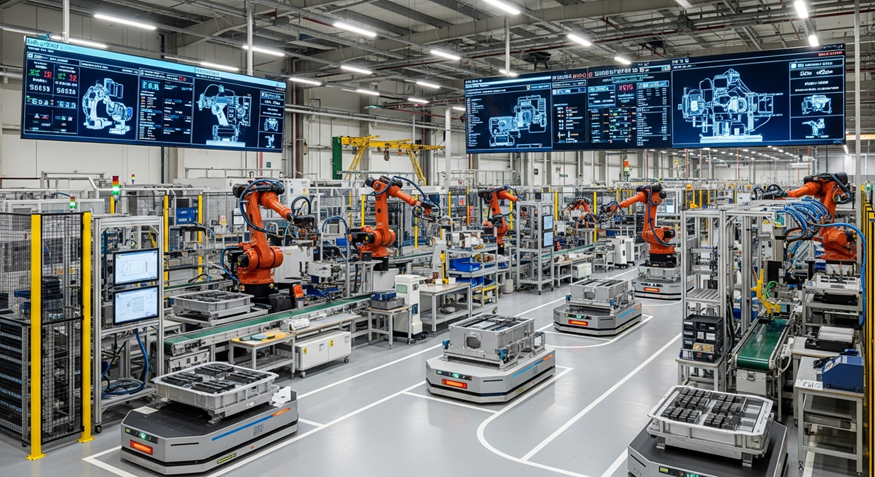
Industrial Automation Sector robots have come a long way from their initial use in simple, repetitive tasks. Early robots were large, stationary machines designed for a single purpose on an assembly line. While effective, they lacked the flexibility needed for more complex operations in the Industrial Automation Sector.
Over the last few decades, advancements in automation technologies have transformed these machines. The integration of artificial intelligence and machine learning has given rise to smarter, more adaptable robots. These modern Industrial Automation Sector robots can learn from data, adjust to new situations, and perform a wider variety of tasks with greater precision.
Looking ahead, this evolution is set to continue. Future robots will be even more connected and intelligent, capable of collaborating with human workers and optimizing processes in real time. This ongoing development is paving the way for fully autonomous systems that will redefine the Industrial Automation Sector landscape.
How Automation and Robotics Work Together in Factories
In a factory setting, automation and robotics are a powerful team. Automation solutions create the overall framework for Industrial Automation Sector processes, while robotics provides the physical "hands" to carry out the tasks. A central control system might coordinate the entire production line, telling different robots when and where to act.
This collaboration is especially effective for handling repetitive tasks that are often tedious or physically demanding for human operators. For instance, a robot can be programmed to pick up heavy components and place them on a conveyor belt with perfect consistency, hour after hour. This not only speeds up the process but also reduces the risk of injury.
By optimizing resource use and minimizing waste, this synergy also contributes to sustainability. Robots can apply materials with high precision, reducing excess usage, and efficient, automated processes often consume less energy than their manual counterparts. This helps factories reduce their environmental footprint while boosting productivity.
Main Types of Robotics in the Industrial Automation Sector
Not all Industrial Automation Sector robots are created equal. Different types of automation technologies are designed to suit specific production processes and factory needs. From large, powerful robots bolted to the floor to smaller, mobile units that navigate the warehouse, each type has a distinct role.
Understanding these different types of Industrial Automation Sector robots is key to appreciating their impact on modern manufacturing. In the following sections, we'll look at fixed robots, collaborative robots (cobots), and autonomous mobile robots (AMRs) to see how they are transforming the factory floor.
Fixed Robots and Their Role on Production Lines
Fixed robots, also known as articulated robots, are the traditional workhorses of the Industrial Automation Sector. These are typically large robotic arms anchored to a specific spot on the factory floor, designed to perform a single, highly repetitive task with incredible speed and precision.
Their specialization is their strength. Because they are dedicated to one job, they can be optimized to perform it thousands of times a day without any decline in performance. This makes them ideal for mass production environments where consistency is crucial for product quality.
You'll often find fixed robots in applications such as:
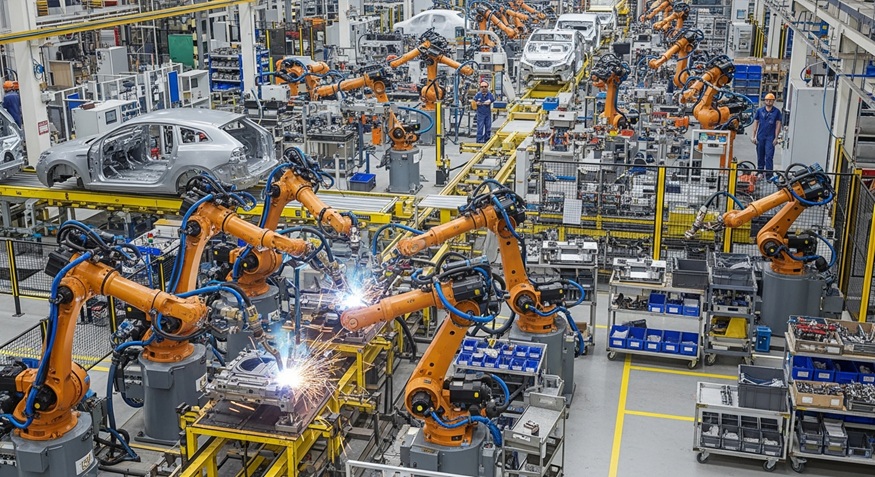
- Welding: Joining car body parts on an assembly line.
- Painting: Applying a uniform coat of paint to products.
- Assembly: Performing specific steps in putting a product together. Their ability to handle these demanding and repetitive tasks helps manufacturers increase throughput and maintain high standards.
Collaborative Robots (Cobots) Improving Human-Robot Interaction
A newer and more flexible addition to the factory floor is the collaborative robot, or cobot. Unlike traditional robots that operate in caged-off areas, cobots are designed to work safely alongside human employees, making direct human intervention in an automation system possible and safe.
These robots are equipped with advanced sensors that allow them to detect the presence of people and stop or slow down to avoid contact, significantly improving workplace safety. This design makes them perfect for tasks that require the dexterity of a human and the endurance of a machine.
Cobots are being used in a variety of ways to augment human capabilities, including:
- Assisting with assembly: Handing tools or parts to a human worker.
- Quality inspection: Holding a part for a worker to inspect.
- Packaging: Lifting and placing finished goods into boxes. By taking on the more repetitive or strenuous aspects of a job, cobots allow employees to focus on higher-value tasks.
Autonomous Mobile Robots (AMRs) for Material Handling
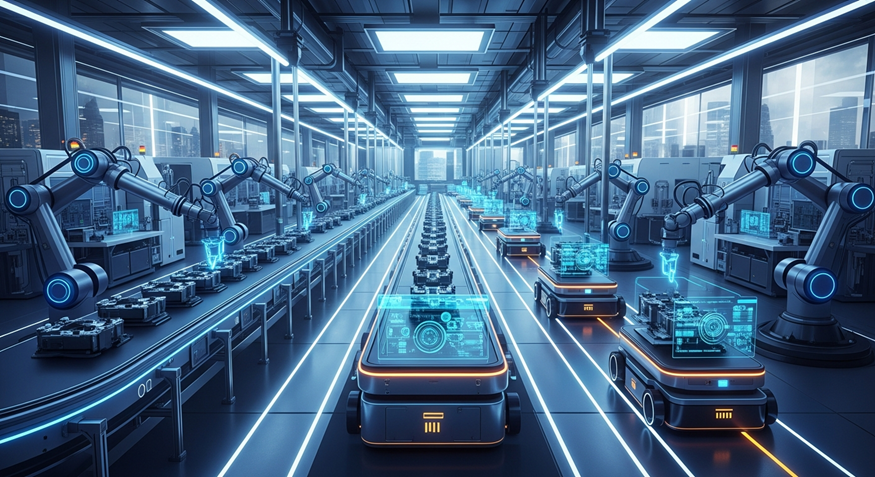
Autonomous Mobile Robots (AMRs) represent a leap forward in industrial automation solutions, particularly for material handling. Unlike fixed robots, AMRs are not tied to one location. They use sensors and onboard intelligence to navigate factory and warehouse environments independently, transporting goods from one place to another.
These robots are a key driver of operational efficiency. They can work around the clock, reducing the time and labor required to move raw materials, work-in-progress, and finished products. This frees up your human workforce to focus on tasks that require more complex decision-making.
Common applications for AMRs include:
- Towing: Pulling carts of materials along a programmed route.
- Picking: Transporting bins to and from picking stations in a warehouse.
- Delivery: Moving finished goods from the production line to the shipping area. AMRs are a flexible and scalable solution for modernizing internal logistics.
Key Industrial Automation Systems Incorporating Robotics
Robots are powerful, but they don't work in isolation. They are integrated into larger industrial automation systems that act as the "brains" of the factory. These control systems coordinate the actions of robots and other machinery to ensure the entire production process runs smoothly and efficiently.
Automation tools like Programmable Logic Controllers (PLCs), SCADA systems, and Distributed Control Systems (DCS) are essential for this integration. Let’s examine how these key systems work with robotics to create a fully connected and intelligent manufacturing environment.
Programmable Logic Controllers and Robotics Integration
Programmable Logic Controllers, or PLCs, are ruggedized industrial computers that form the backbone of many automation solutions. They are designed to control individual machines or a small group of machines on the factory floor. When integrated with industrial robots, PLCs act as the direct supervisor, sending specific commands to the robot.
This integration allows for precise and reliable operation. For example, a PLC can receive a signal from a sensor and, in response, instruct a robot to perform a task like picking up an item. This simple yet powerful connection is fundamental to automating a production line.
The synergy between PLCs and robotics is enhanced by modern technologies:
- Real-time control: PLCs provide the immediate response needed for high-speed robotic actions.
- Flexibility: They can be easily reprogrammed to change a robot's tasks or sequence.
- Edge Computing: Newer PLCs incorporate edge computing capabilities, allowing for faster data processing right at the source. This combination ensures that industrial robots execute their tasks with the required precision and timing.
Supervisory Control and Data Acquisition (SCADA) with Robotic Support
Supervisory Control and Data Acquisition (SCADA) systems provide a higher level of oversight for industrial processes. While PLCs control individual machines, SCADA systems monitor and manage the entire facility from a central location. They gather data from various control systems, including those connected to robots, and present it to human operators in a user-friendly interface.
This centralized view allows for real-time monitoring and control. Operators can use the SCADA system to supervise robotic operations, adjust parameters, and respond to alarms, ensuring smooth data exchange and efficient performance across the plant.
SCADA systems enhance robotic operations in several ways:
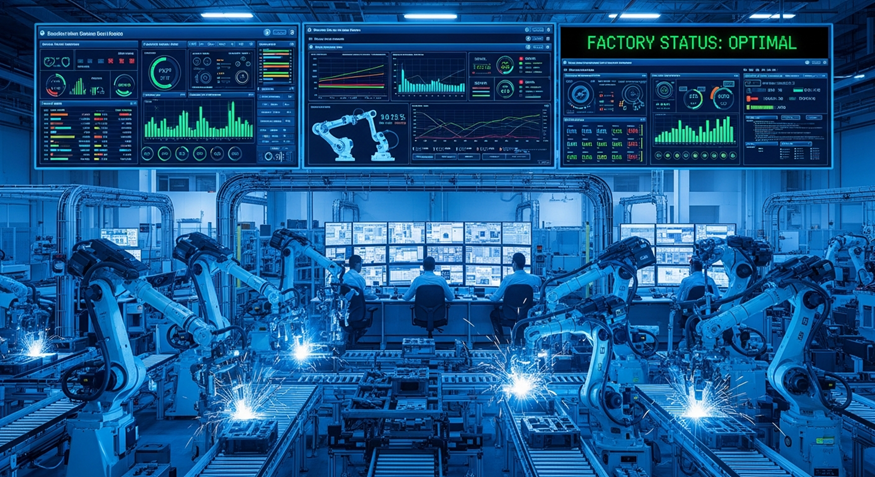
- Process Visualization: Operators can see the status of robots and other equipment at a glance.
- Data Logging: SCADA records historical data, which is crucial for analyzing performance and identifying areas for improvement.
- Remote Management: These systems enable remote monitoring and control, which is increasingly important for managing large or dispersed facilities. By providing this overarching view, SCADA helps optimize the entire production ecosystem.
Distributed Control Systems (DCS) Leveraging Robotic Precision
Distributed Control Systems (DCS) are commonly used in large, continuous, or complex manufacturing processes, such as those in the chemical or energy sectors. Unlike centralized SCADA systems, a DCS distributes control functions across multiple controllers throughout the plant. This architecture provides high reliability and allows for precise management of intricate processes.
When integrated with robotic systems, a DCS can orchestrate complex sequences that require a high degree of precision and coordination. For instance, in a pharmaceutical plant, a DCS could manage a series of robotic arms that handle sensitive materials, ensuring each step is performed with perfect timing and accuracy. This use of automation technologies boosts operational efficiency and product consistency.
A DCS enhances robotic performance by ensuring seamless coordination.
| DCS Feature | Benefit for Robotic Systems |
|---|---|
| Distributed Control | Enhances reliability; a failure in one area does not stop the entire process. |
| Process-Oriented | Manages complex, multi-step robotic sequences with high precision. |
| Integrated Database | Provides a unified data source for all controllers, ensuring consistent operation. |
Leading Sectors Adopting Robotics in the United States
The adoption of industrial automation is not uniform across all sectors. Several key industries in the United States have become frontrunners in integrating robotics into their operations, reaping significant benefits in productivity and quality. From automotive manufacturing to electronics, the impact is widespread.
Sectors like food and beverage are also increasingly turning to automation to meet stringent hygiene standards and consumer demand. In the next sections, we will look closer at how these various industries are leveraging robotics to stay competitive and innovative.
Automotive Manufacturing and Robotic Assembly
The automotive manufacturing industry has long been a pioneer in the use of industrial robots. The sheer scale and complexity of building a vehicle make it a perfect candidate for automation solutions. On modern production lines, robots perform a huge range of tasks with a level of speed and precision that would be impossible for humans to sustain.
From the initial stages of bodywork to the final assembly, robots are integral. They handle heavy lifting, perform thousands of precise welds, and apply flawless coats of paint. This widespread use of automation has been a key factor in improving both the quality and affordability of cars.
Key robotic applications in automotive manufacturing include:
- Body-in-white (BIW) assembly: Robots weld the vehicle's frame and panels together.
- Painting and sealing: Automated sprayers ensure a consistent finish.
- Final assembly: Robots assist in tasks like installing windshields and seats. This deep integration of industrial robots has set the standard for manufacturing excellence.
Food and Beverage Processing Automation
The food and beverage industry is rapidly embracing smart manufacturing and automation to meet growing demands for safety, consistency, and efficiency. In this sector, automation tools are used for more than just speed; they are crucial for maintaining strict hygiene standards and ensuring consistent quality control.
Robots in food processing can handle delicate products without causing damage, perform repetitive tasks like slicing and packaging, and work in environments like freezers that are uncomfortable for human workers. This helps companies increase their output while ensuring that every product meets the highest standards.
Automation is transforming the food and beverage sector in several areas:
- Pick and place: Robots sort and place items like cookies or chocolates into packaging.
- Processing: Automated systems handle tasks like cutting, mixing, and portioning.
- Palletizing: Robots stack finished cases onto pallets for shipping. This adoption of automation is key to feeding a growing population safely and affordably.
Electronics and Semiconductor Production with Robotics
The electronics and semiconductor industries operate on a scale of incredible precision. The manufacturing of microchips and other electronic components requires tasks to be performed in a sterile environment with accuracy measured in microns. This makes industrial robots and automation technologies essential.
In semiconductor fabrication plants, or "fabs," robots handle silicon wafers, moving them between different processing stations in a highly controlled cleanroom environment. This minimizes the risk of contamination from human contact, which could ruin entire batches of chips. The result is higher yields and superior product quality.
Robotics is critical for several key processes in electronics production:
- Wafer handling: Robots transport sensitive silicon wafers between machines.
- Circuit board assembly: Robotic arms place tiny components onto printed circuit boards with high precision.
- Testing and inspection: Automated vision systems inspect finished products for defects. In this industry, automation isn't just an advantage; it's a necessity.
Benefits of Robotics within Industrial Automation
Integrating industrial robots into your operations offers a wealth of advantages. The benefits of automation extend far beyond simply replacing manual labor. They lead to fundamental improvements in operational efficiency, product quality, and workplace safety, giving your company a significant competitive advantage.
From producing more goods in less time to creating a safer environment for your employees, the positive impacts are clear and measurable. Let's dig into some of the specific ways that robotics can transform your factory floor for the better.
Increased Throughput and Efficiency in U.S. Factories
One of the most significant benefits of robotics is the dramatic increase in throughput and operational efficiency. Unlike human workers, robots can operate 24/7 without breaks, fatigue, or shift changes. This continuous operation allows U.S. factories to maximize their production capacity and meet growing market demands.
Automation solutions are designed to perform tasks faster and more consistently than manual methods. By automating bottlenecks in the production process, companies can smooth out their workflow and reduce the overall time it takes to produce a finished product.
This boost in efficiency stems from several factors:
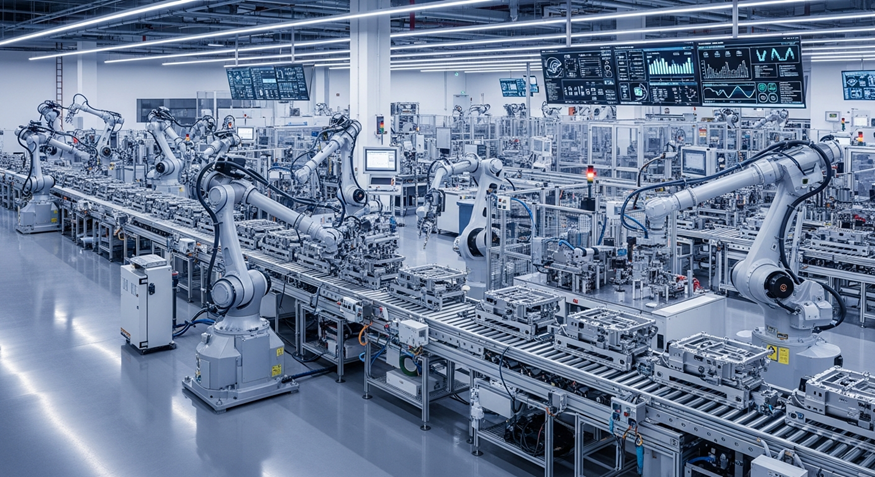
- Higher speed: Robots can perform repetitive motions much faster than humans.
- Reduced cycle times: Automation optimizes the sequence of tasks, minimizing idle time.
- Continuous operation: Robots don't need breaks, allowing for around-the-clock production. These improvements are reshaping the industrial landscape and making American manufacturing more competitive.
Enhancing Product Quality and Consistency
Achieving consistent product quality is a top priority for any manufacturer, and industrial robots are a powerful tool for reaching this goal. Human error is a natural part of any manual manufacturing process, but it can lead to variations in quality. Robots, on the other hand, perform the exact same task in the exact same way every single time.
This unwavering consistency is crucial for quality control. By automating key steps, you can eliminate the variables that lead to defects. For example, a robot programmed to tighten a bolt will apply the same amount of torque each time, ensuring a secure connection without overtightening.
Robotics improves product quality through:
- Precision: Robots can perform tasks with a level of accuracy that is difficult for humans to replicate.
- Repeatability: They execute programmed movements flawlessly, ensuring every product is made to the same standard.
- Reduced errors: Automating tasks minimizes the chance of mistakes that can compromise quality. This focus on consistency ultimately leads to happier customers and a stronger brand reputation.
Workforce Safety and Reducing Workplace Injuries
Improving workplace safety is one of the most important benefits of using industrial robots. Many manufacturing jobs involve tasks that are repetitive, physically strenuous, or take place in hazardous environments. Assigning these dangerous tasks to robots removes human workers from harm's way, significantly reducing the risk of accidents and injuries.
By automating these roles, you protect your workforce from potential long-term health issues associated with repetitive strain or exposure to harmful substances. This not only creates a safer work environment but also can boost morale, as employees are freed up to focus on more engaging and less physically demanding jobs.
Robots enhance safety by taking over tasks such as:
- Heavy lifting: Moving large or heavy objects that could cause strain or injury.
- Working with hazardous materials: Handling chemicals or other dangerous substances.
- Operating in extreme temperatures: Working in environments that are too hot or cold for people. This shift reduces accidents caused by human error and fatigue, making the factory a safer place for everyone.
Trends Shaping Robotics in Industrial Automation for 2030 and Beyond
The world of industrial automation is constantly evolving, driven by powerful new trends and advanced technologies. Looking toward 2030 and beyond, the integration of artificial intelligence, machine learning, and the Industrial Internet of Things (IIoT) is set to redefine what's possible on the factory floor.
These innovations are making robots smarter, more connected, and more autonomous than ever before. From cloud computing to predictive maintenance, the next decade promises a new era of intelligent manufacturing. Let's explore the key trends that are shaping this exciting future.
Artificial Intelligence and Machine Learning Integration
The integration of artificial intelligence (AI) and machine learning (ML) is one of the most transformative trends in robotics today. These technologies are giving robots the ability to "think" and learn, moving them beyond simple programmed tasks. An AI-powered robot can analyze its environment, make decisions, and adapt its actions in real time.
This intelligence is fueled by data analytics. By processing vast amounts of information from sensors, robots can learn to optimize their own performance, identify potential issues before they occur, and even collaborate with other machines more effectively. This is a game-changer for the entire industrial sector.
The impact of AI and ML in robotics includes:
- Adaptive control: Robots can adjust their movements based on variations in a part's size or position.
- Enhanced vision systems: AI helps robots better identify and classify objects.
- Process optimization: ML algorithms can analyze performance data to find more efficient ways to complete tasks.
Predictive Maintenance and Smart Sensors
Unplanned downtime is a major cost for manufacturers. The trend of predictive maintenance, enabled by smart sensors and data analysis, is helping to solve this problem. Instead of waiting for a machine to break down, this approach uses data to predict when an industrial robot or other part of an automation system is likely to fail.
Smart sensors embedded in machinery constantly collect data on factors like temperature, vibration, and performance. This data is then analyzed for patterns that indicate a potential problem. Maintenance can be scheduled proactively, before a failure occurs, minimizing disruption and saving money.
Predictive maintenance offers several key advantages:
- Reduced downtime: Equipment is repaired before it breaks, avoiding costly production stoppages.
- Lower maintenance costs: Maintenance is only performed when it's actually needed.
- Increased equipment lifespan: Proactive care helps machinery last longer. This data-driven approach is making factories more reliable and efficient than ever.
Cloud Connectivity and Real-Time Data Analytics
Cloud connectivity is a key enabler of the ongoing digital transformation in industrial automation. By connecting robots and other factory equipment to the cloud, manufacturers can collect and analyze massive amounts of data in real time. This provides unprecedented insight into their operations.
This stream of real-time data allows for a new level of data analytics. Managers can monitor production from anywhere in the world, compare performance across different plants, and make data-driven decisions to optimize their entire global operation. This centralized intelligence is a powerful tool for improving efficiency and competitiveness.
The benefits of cloud connectivity and real-time analytics include:
- Remote monitoring: Supervise and manage factory operations from any location.
- Centralized data analysis: Gain insights from aggregated data from multiple sources.
- Enhanced collaboration: Share data and insights easily across teams and locations. This trend is connecting the factory floor to the wider enterprise in a way that was never before possible.
Common Challenges in Implementing Industrial Robotics
While the benefits of industrial robots are clear, the path to implementation isn't always smooth. The integration of automation into existing Industrial Automation Sector processes comes with a set of common challenges that companies must navigate. These can range from high upfront costs to the need for new employee skills.
Addressing these hurdles is a crucial part of any successful automation strategy. Understanding potential obstacles like upfront investment, the skills gap, and cybersecurity concerns can help you plan effectively and ensure a positive return on your investment.
Upfront Investment and Integration Costs
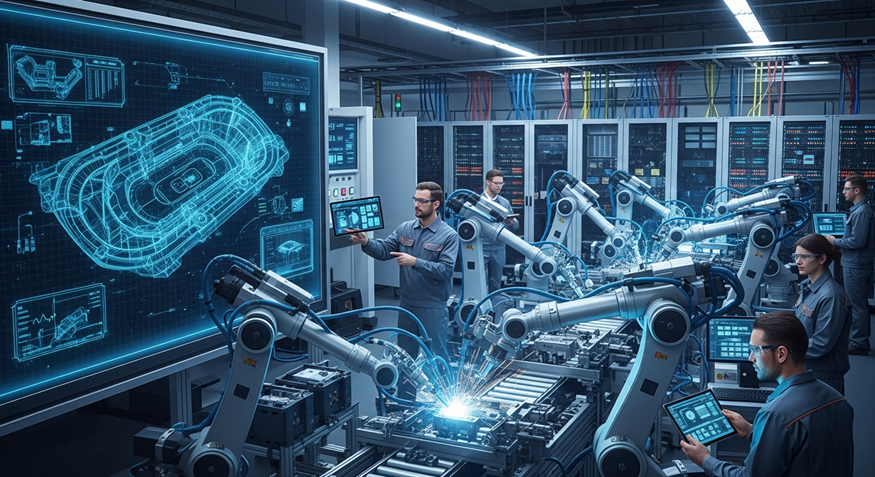
One of the biggest hurdles to adopting automation technologies is the significant upfront investment costs. Purchasing industrial robots, control systems, and other necessary hardware can be expensive. In addition to the cost of the equipment itself, there are also costs associated with integration.
Getting new robots to work seamlessly with existing machinery and software can be a complex and time-consuming process. This often requires hiring specialized integrators, which adds to the overall expense. These costs can be a major barrier, especially for small and medium-sized businesses.
Companies must carefully weigh these initial costs against the long-term benefits:
- Equipment purchase: The price of the robots and associated hardware.
- Integration services: The cost of engineering and programming to make the system work.
- Facility modifications: Potential changes needed to the factory layout to accommodate the new equipment. While these costs are significant, they are often offset over time by savings in labor costs and increased productivity.
Skills Gap in Robotic Operation and Maintenance
Introducing robotics into the workplace creates a demand for a new set of skills. The existing workforce may not have the training needed to operate, program, and maintain these sophisticated machines. This "skills gap" is a major challenge for companies looking to automate.
Finding qualified human operators and maintenance technicians can be difficult. While automation can take over certain jobs, it also creates new jobs that require higher-level technical expertise. Companies must invest in training their current employees or compete for a limited pool of skilled talent.
Addressing the skills gap involves several strategies:
- Employee training: Reskilling and upskilling current workers to take on new roles.
- Educational partnerships: Working with local colleges and technical schools to develop relevant programs.
- User-friendly interfaces: Choosing robotic systems that are easier to program and operate. Closing this gap is essential for the long-term success of any automation initiative.
Ensuring Cybersecurity for Industrial Robotic Systems?
As industrial robotic systems become more connected through the Internet of Things (IoT), they also become more vulnerable to cyberattacks. Ensuring robust cybersecurity is a critical challenge for modern automation solutions. A security breach could not only lead to data theft but could also disrupt production or even cause physical damage.
The constant data exchange between robots, control systems, and the cloud creates multiple potential entry points for attackers. Securing these complex networks requires a multi-layered approach that protects every part of the system, from the individual robot to the central server.
What is the future for automation industry?
The future of the industrial automation sector is promising, driven by advancements in AI, IoT, and robotics. Companies are increasingly adopting smart technologies to enhance efficiency, reduce costs, and improve safety.
As innovations continue to emerge, we can expect greater integration and transformative changes across various industries.
Key cybersecurity considerations include:
- Network security: Protecting the communication channels between devices.
- Access control: Ensuring that only authorized users can access and control robotic systems.
- Regular updates: Keeping software and firmware up to date to patch security vulnerabilities. As automation becomes more widespread, cybersecurity will be an increasingly vital part of industrial operations.
Conclusion
In conclusion, the role of robotics in the industrial automation sector is pivotal for enhancing efficiency, safety, and product quality across various industries. As technology continues to evolve, the integration of advanced robotics solutions—such as collaborative robots and autonomous mobile robots—will redefine how factories operate. Embracing these innovations not only leads to increased throughput but also addresses challenges such as workforce safety and operational costs. By staying informed about trends like AI integration and predictive maintenance, businesses can better prepare for a future where robotics play an even more integral role in manufacturing. If you're interested in exploring robotic solutions tailored to your needs, don’t hesitate to get in touch for a consultation!
You might also like