Innovations in the Industrial Automation Sector You Need
Innovations in the Industrial Automation Sector You Need
Key Highlights
- The global industrial automation market is experiencing significant growth, projected to reach over $504 billion by 2033, driven by the demand for efficiency and precision.
- Key trends shaping the industry include the rise of smart factories, the integration of the Internet of Things (IoT), and the application of artificial intelligence for tasks like predictive maintenance.
- Automation systems are becoming more advanced with technologies like edge computing, which allows for real-time data processing directly on the factory floor.
- From fixed to flexible automation, different systems are available to meet various production needs, improving everything from quality control to operational speed.
- Sustainability is a major focus, with automation helping to create energy-efficient processes and reduce waste in manufacturing.
- Despite challenges like cybersecurity and skill gaps, investment in industrial automation continues to rise, especially in the automotive and manufacturing sectors.
Introduction
Welcome to the world of industrial automation, where technology is transforming how things are made. This field is all about using advanced automation technology to control and manage industrial processes with minimal human input. From building cars to packaging food, automation is making factories smarter, faster, and more efficient. In this guide, we'll explore the latest innovations, from intelligent robots to data-driven insights, that are revolutionizing modern manufacturing. Get ready to see how these advancements can boost productivity and shape the future of industry.
Overview of Industrial Automation Sector in the United States
Industrial automation in the United States is a dynamic and rapidly growing field. American companies are increasingly adopting factory automation to enhance their competitive edge, improve supply chain resilience, and bring manufacturing jobs back home. This involves using sophisticated control systems and robotics to streamline industrial processes.
The push towards smarter manufacturing is fueled by a need for greater productivity and the challenges of rising labor costs. As we explore this topic, you will see how automation is not just about robots on an assembly line but a complete digital transformation of the factory floor.
Definition and Importance in Modern Manufacturing
So, what exactly is industrial automation? It's the use of technology and control systems, like computers and robots, to handle tasks within a manufacturing process that were previously done by people. This minimizes the need for human intervention, especially for repetitive tasks that can be tedious or physically demanding.
The importance of these automation solutions in modern manufacturing cannot be overstated. By automating tasks, companies can operate 24/7, significantly increasing their output. This technology also performs with a level of precision and consistency that is difficult for humans to replicate, leading to higher-quality products and fewer errors.
Ultimately, the Industrial Automation Sector works by integrating machines and software to create a seamless workflow. It allows factories to become more efficient, safer, and more adaptable to changing market demands. This shift is fundamental to staying competitive in today's fast-paced global economy.
Evolution of Industrial Automation Sector Technologies
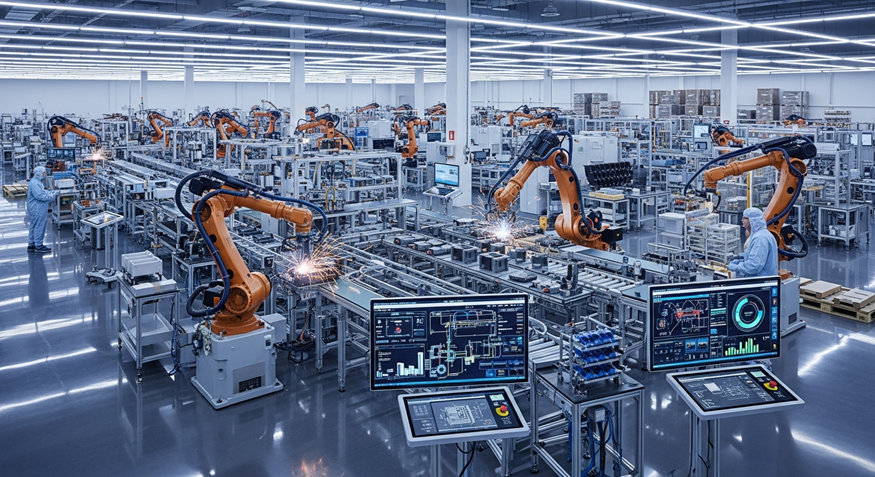
The journey of automation technology has been one of constant innovation. Early forms of automation relied on basic mechanical and electrical control systems to perform simple, fixed tasks. Think of early assembly lines where machines performed one specific function over and over.
Over the decades, the introduction of programmable logic controllers (PLCs) marked a significant turning point. These devices allowed for more flexibility, as operators could reprogram machines for different tasks without a complete mechanical overhaul. This was a major step in the digital transformation of factories, paving the way for more complex operations.
Today, we are in an era defined by advanced technologies like industrial robots, sophisticated sensors, and intelligent software. These modern systems can handle a wide variety of tasks, learn from data, and communicate with each other, representing a massive leap from the rigid automation of the past.
Key Sectors Leading Industrial Automation Adoption
Several key industries have been at the forefront of adopting industrial automation to revolutionize their manufacturing process. These sectors have embraced technology to improve efficiency, ensure quality, and manage complex operations.
The automotive manufacturing sector is a classic example. For decades, car makers have used robots for welding, painting, and assembly, constantly pushing the boundaries of what's possible on the production line. This has helped them achieve high levels of precision and output. Other leading sectors include:
- Electronics: Where tiny components require incredible accuracy.
- Food and Beverage: For high-volume packaging and processing.
- Pharmaceuticals: Ensuring consistency and compliance with strict regulations.
These industries leverage automation not just for physical tasks but also for data analysis to optimize the entire supply chain, from sourcing raw materials to delivering the final product.
Current Trends Shaping Industrial Automation in 2025
As we look toward 2025, several exciting trends are shaping the future of the Industrial Automation Sector. The industry is moving beyond simple robotics and toward fully integrated systems that are smarter, faster, and more connected than ever before. This digital transformation is creating what we now call smart factories.
The core of this evolution lies in harnessing data. New automation technology allows for real-time monitoring and intelligent decision-making, which optimizes every aspect of production. Let's examine some of the key trends driving this change, including IoT integration, artificial intelligence, and edge computing.
Rise of Smart Factories and IoT Integration
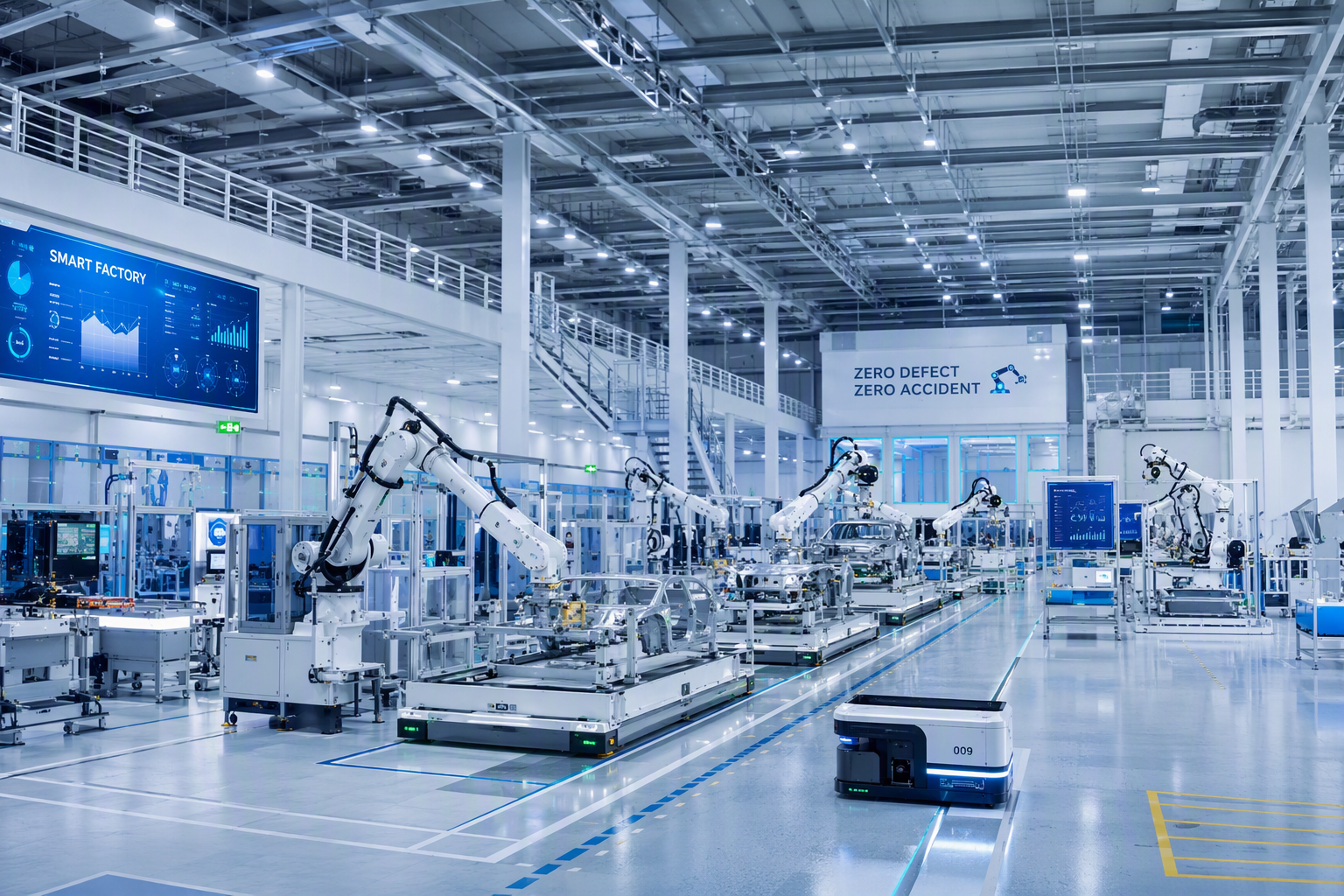
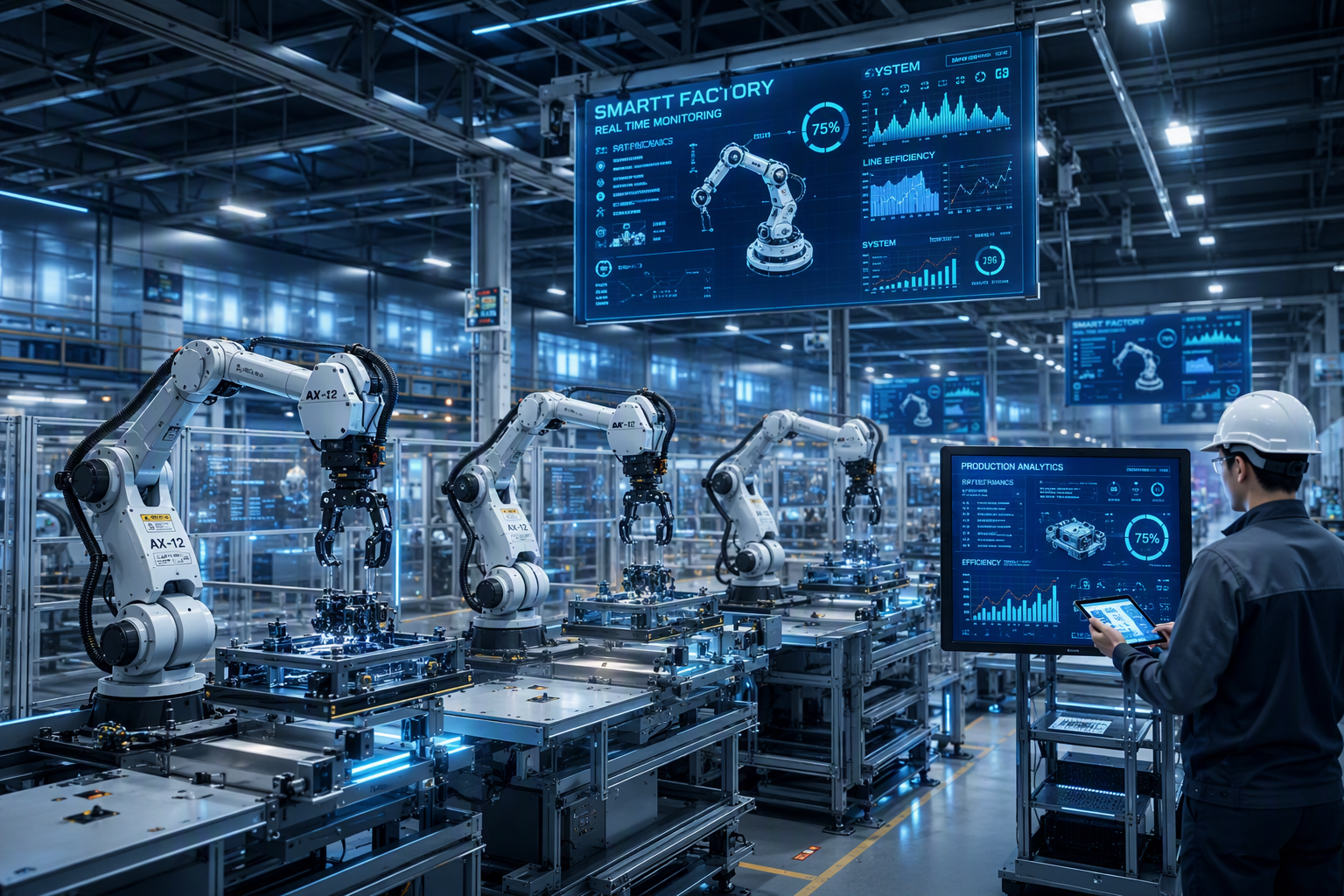
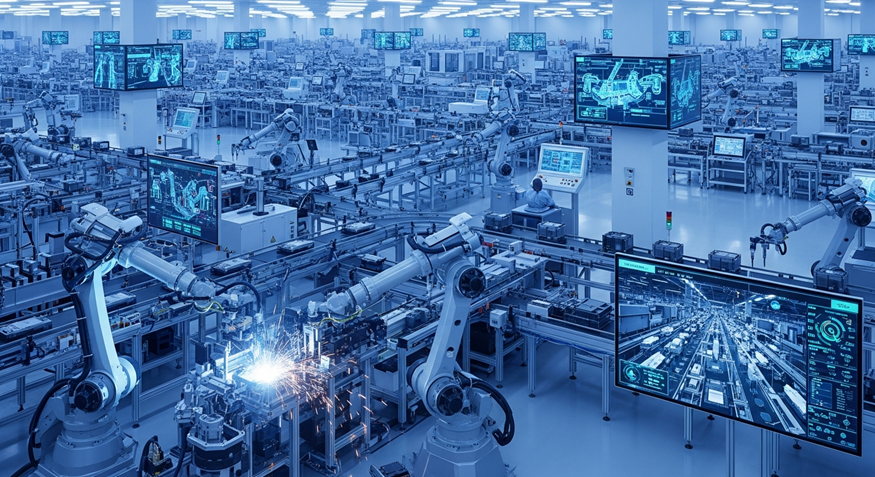
One of the biggest trends today is the emergence of smart factories. These are not your traditional manufacturing plants; they are highly digitized and connected environments where machines, sensors, and systems communicate with each other in real time.
This connectivity is made possible by the Internet of Things (IoT), or more specifically, the Industrial Internet of Things (IIoT). In a smart factory, countless sensors are embedded in machinery and throughout the facility. These sensors collect vast amounts of data on everything from machine health to production speed. This data stream allows for:
- Remote monitoring of equipment
- Predictive maintenance alerts
- Real-time adjustments to production lines
- Improved energy management
This level of factory automation enables unprecedented visibility and control over the entire production process. It transforms a reactive environment into a proactive one, where potential issues are identified and addressed before they cause downtime.
Artificial Intelligence and Machine Learning Applications
Artificial intelligence (AI) and machine learning (ML) are game-changers for the Industrial Automation Sector. These technologies are moving beyond the hype and are now being applied in practical ways on the factory floor to make systems more intelligent and autonomous.
A prime application is predictive maintenance. Instead of waiting for a machine to break down, AI algorithms analyze data from sensors to predict when a component is likely to fail. This allows maintenance teams to schedule repairs proactively, minimizing costly unplanned downtime and extending the life of equipment.
Furthermore, AI is revolutionizing quality control. Machine learning models can be trained to inspect products with a level of accuracy and speed that surpasses human capabilities. By using high-resolution cameras and sophisticated data analysis, these systems can spot even the tiniest defects, ensuring that only perfect products leave the factory.
Edge Computing and Real-Time Data Processing
While cloud computing has been crucial for storing and analyzing large datasets, a new trend is bringing processing power closer to the action: edge computing. Instead of sending all data from smart sensors to a distant cloud for analysis, edge computing processes it locally, right "at the edge" of the network, near the source.
This approach is vital for industrial processes that require immediate feedback. For tasks in process automation where milliseconds matter, waiting for a response from the cloud is simply too slow. Edge computing enables real-time decision-making, allowing machines to react instantly to changing conditions on the factory floor.
For example, a robot arm equipped with an edge device can analyze sensor data on the spot to adjust its grip or movement without any delay. This capability is essential for fast-paced, high-precision tasks and is making industrial automation more responsive and reliable than ever.
Types of Industrial Automation Systems Used Today
Not all automation systems are created equal. Different manufacturing needs call for different types of industrial automation. The choice of system depends on factors like production volume, product variety, and the complexity of the tasks involved.
From rigid systems designed for mass production to highly adaptable ones for custom orders, there is a solution for nearly every scenario. Understanding these categories, such as fixed, programmable, and flexible automation, helps businesses select the right approach for their specific goals, whether it's for continuous flow or batch production.
Fixed Automation Solutions
Fixed automation, often called "hard automation," is a system where the sequence of operations is locked in by the equipment's configuration. It is designed to perform specific tasks repeatedly and efficiently, making it ideal for high-volume production of a single product.
You'll typically find fixed automation on assembly lines where the product doesn't change. Think of a canning factory or a bottling plant. The machinery is custom-built for one job and does it very well, leading to high production rates and low unit costs once the initial investment is made.
The main drawback of hard automation is its inflexibility. If the product design changes, the entire system or its components, like specialized CNC machines, may need to be replaced. This makes it best suited for products with a long life cycle and stable demand.
Programmable Automation Innovations
Programmable automation offers a solution for situations where product variety is a factor. In these automation systems, the equipment is designed to be reconfigured to handle different products. This is achieved by changing the control program that directs the machinery.
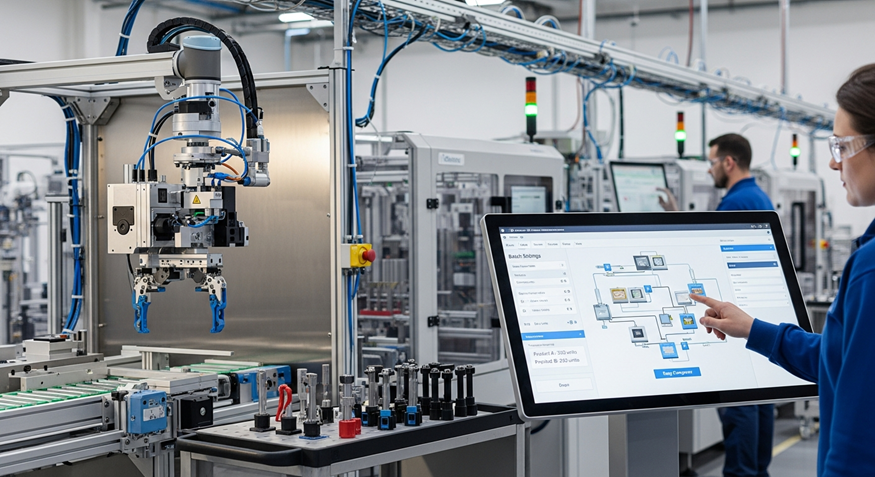
This type of automation is perfect for batch production, where a company produces one product for a period, then switches to another. The changeover might involve reprogramming programmable logic controllers (PLCs) or loading a new program into a numerical control (NC) machine. While there is some downtime during this reprogramming, it provides much more versatility than fixed automation.
Innovations in this area have made programming easier and changeovers faster. Modern interfaces and software allow operators to quickly set up the system for a new batch, making it a cost-effective choice for medium-volume production with some product variation.
Flexible Automation for Manufacturing Adaptability
Flexible automation takes adaptability to the next level. It's an extension of programmable automation that allows a manufacturing process to switch between different products with almost no downtime. This system can produce various parts or products back-to-back without needing a lengthy changeover.
A key feature of flexible automation is that it can automatically identify the different products coming down the production line and perform the correct operations for each. This is often achieved with a central computer system that controls a network of machines and material handling systems. This level of process automation provides incredible adaptability, which benefits the entire supply chain. Key characteristics include:
- The ability to produce customized products in any order.
- Minimal time lost when switching between product types.
This makes flexible automation ideal for businesses that need to respond quickly to customer demands for a wide variety of products. Though the initial investment is high, the ability to produce a mix of products efficiently provides a significant competitive advantage.
Core Components and Technologies Powering Automation
The magic of the Industrial Automation Sector comes from a combination of powerful components and technologies working in harmony. These are the building blocks that make modern factories run, from the physical machines that do the heavy lifting to the intelligent systems that control them.
Core automation technology includes industrial robots, smart sensors, advanced control systems, and the interfaces that allow humans to interact with them. Understanding these fundamental components gives you a clearer picture of how a fully automated system is built and how it operates to achieve such impressive results.
Role of Industrial Robots in Production
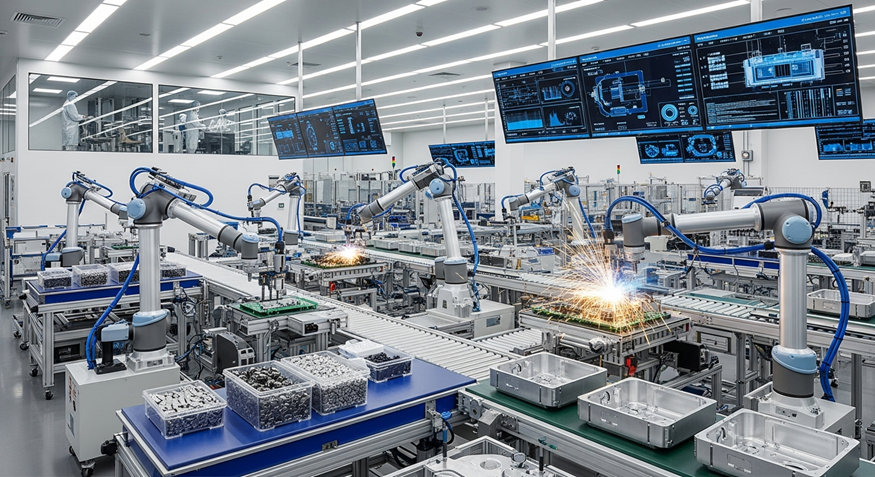
Industrial robots are often the most visible component of an automated factory. These machines are designed to perform a wide range of physical tasks with speed and precision. They excel at repetitive tasks like welding, painting, assembly, and packaging, which can be strenuous or hazardous for human labor.
The capabilities of these robots have expanded dramatically over the years. Early robots were programmed to follow a simple, fixed path. Today's industrial robots can handle much more complex tasks, using advanced sensors and vision systems to adapt to their environment.
A particularly exciting development is the rise of collaborative robots, or "cobots." These are designed to work safely alongside humans, combining the strength and precision of a machine with the flexibility and problem-solving skills of a person. This partnership is opening up new possibilities for automation in tasks that still require a human touch.
Sensors and Industrial Control Devices
If robots are the muscles of automation, then sensors and industrial control devices are the nerves and brain. Smart sensors are the eyes and ears of the factory, collecting real-time data on temperature, pressure, position, and countless other variables. This information is crucial for monitoring and controlling industrial processes.
This data is fed to industrial control devices, such as PLCs and DCS (Distributed Control Systems). These controllers act as the central nervous system, processing the sensor input and sending commands to the machinery to keep everything running smoothly. This closed-loop system allows for precise process automation.
By constantly monitoring and adjusting, these systems ensure that operations stay within desired parameters. This not only improves product quality but also significantly reduces the potential for human error, leading to a safer and more reliable manufacturing environment.
Human-Machine Interface (HMI) Developments
The Human-Machine Interface (HMI) is the critical link between the operator and the automated system. It's the dashboard that allows a person to monitor and control industrial operations. Early HMIs were simple panels with buttons and lights, but they have evolved into sophisticated, user-friendly graphical displays.
Modern HMI developments focus on providing intuitive and powerful tools for managing complex control systems. Touchscreens, high-resolution graphics, and mobile connectivity are now standard. These interfaces give operators a clear, real-time view of the entire production process, from individual machine performance to overall quality control metrics.
As part of the broader digital transformation, HMIs are becoming more intelligent. They can display diagnostic information, suggest corrective actions, and provide detailed analytics. This empowers operators to make better decisions faster, improving both efficiency and safety on the factory floor.
Benefits of the Industrial Automation Sector for Businesses
Why are so many businesses investing in the Industrial Automation Sector? The answer lies in the wide range of benefits it offers. Implementing automation goes far beyond simply replacing manual labor; it fundamentally transforms a company's operational efficiency and competitiveness.
From boosting productivity and achieving significant cost savings to improving workplace safety and ensuring consistent quality control, the advantages are compelling. Let's dig into some of the key benefits that make automation a strategic imperative for modern factories.
Productivity and Efficiency Improvements
One of the most significant benefits of the Industrial Automation Sector is the dramatic increase in productivity. Automated systems can operate around the clock, 365 days a year, without breaks or fatigue. This allows for a much higher production volume compared to a factory reliant solely on human labor.
Automation also improves efficiency by optimizing workflows. Process automation helps to streamline operations from start to finish, eliminating bottlenecks and reducing idle time between steps. By taking over repetitive tasks, automation frees up human workers to focus on more complex, value-added activities that require critical thinking and creativity.
With less human intervention in the core production cycle, processes become more consistent and predictable. This leads to a smoother, faster flow of work through the factory, ultimately reducing the time it takes to get a product from raw material to finished good.
Enhanced Safety and Risk Reduction
Creating a safer working environment is a top priority for any responsible company, and industrial automation is a powerful tool for achieving this. Many industrial tasks involve hazardous conditions or strenuous physical labor that can lead to accidents and injuries.
By deploying automation solutions to handle these jobs, companies can significantly reduce the risk to their employees. This is a key aspect of risk reduction. For instance, robots can be used for:
- Working in extreme temperatures
- Lifting heavy objects
- Handling toxic or dangerous materials
Automated systems also minimize the potential for human error, which is a common cause of workplace accidents. With less direct human intervention in dangerous processes, the factory floor becomes a much safer place. This not only protects workers but also reduces the costs associated with accidents, such as downtime and compensation claims.
Quality Control and Consistency Gains
Achieving consistent product quality is a major challenge in manufacturing. Industrial automation systems excel at this by performing tasks with a level of precision and repeatability that is nearly impossible for humans to match. This consistency is fundamental to effective quality control.
Automated inspection systems, using cameras and sensors, can check every single product on the line for defects, ensuring that nothing substandard makes it to the customer. This is a huge improvement over manual sampling methods, which can miss issues. This attention to detail elevates the overall product quality.
Furthermore, automation contributes to quality by maintaining stable industrial processes. Control systems constantly monitor variables and make adjustments to keep everything within tight specifications. Paired with predictive maintenance, which ensures machines are always in top condition, automation systems create an environment where high quality is the standard, not the exception.
Sustainability and Environmental Impact of Automation
Beyond productivity and profits, the Industrial Automation Sector is also playing a crucial role in promoting sustainability. As companies face increasing pressure to reduce their environmental impact, automation offers practical solutions for achieving greener manufacturing goals.
By optimizing processes, automation helps companies use resources more wisely. This leads to better energy efficiency, less waste, and a smaller carbon footprint. Let's look at how these technologies are contributing to a more sustainable future for the industrial sector.
Energy-Efficient Automation Systems
A key contribution of the Industrial Automation Sector to sustainability is the development of energy-efficient automation systems. Modern robots, motors, and control systems are designed to consume less power than their older counterparts, leading to direct cost savings and a lower environmental footprint.
Smart manufacturing practices, enabled by automation, take this a step further. By analyzing data from across the factory, companies can identify opportunities to reduce energy consumption. For example, systems can be programmed to power down machinery when it's not in use or to schedule energy-intensive processes during off-peak hours when electricity is cheaper and greener.
This digital transformation allows for a holistic approach to energy management. Instead of looking at individual machines, companies can optimize the energy use of the entire facility, making significant strides toward their sustainability targets.
Waste Reduction Through Process Optimization
The Industrial Automation Sector is a powerful ally in the quest for waste reduction. Through precise process optimization, automated systems help minimize the consumption of raw materials and reduce the amount of scrap generated during the production process. This aligns perfectly with the principles of lean manufacturing.
The precision of automated machinery means fewer errors and defects, which translates directly into less wasted material. If a defect is detected, the system can often correct it in real time or stop the process before more resources are consumed. This leads to a more efficient use of materials.
Furthermore, automation helps optimize the entire production flow, which can significantly reduce waste in other areas. Key benefits include:
- Precise material usage: Dispensing the exact amount of material needed for each product.
- Lower scrap rates: Fewer defective products mean less material ends up in the trash.
- Optimized inventory levels: Better forecasting and production planning reduce the risk of overproduction and obsolete stock.
Industrial Automation’s Contribution to Greener Manufacturing
The cumulative effect of these advancements is a significant contribution to greener manufacturing. By making processes more efficient, Industrial Automation Sector helps companies do more with less, which is the cornerstone of sustainability.
Automation solutions allow for a culture of continuous improvement, where data is constantly used to find new ways to reduce environmental impact. For example, by monitoring emissions and resource consumption in real time, companies can make immediate adjustments to stay within environmental limits and identify areas for improvement.
Ultimately, automation provides the tools and insights needed to build a more sustainable industrial model. It allows companies to balance economic goals with environmental responsibilities, proving that productivity and sustainability can go hand in hand.
Market Growth and Investment Insights
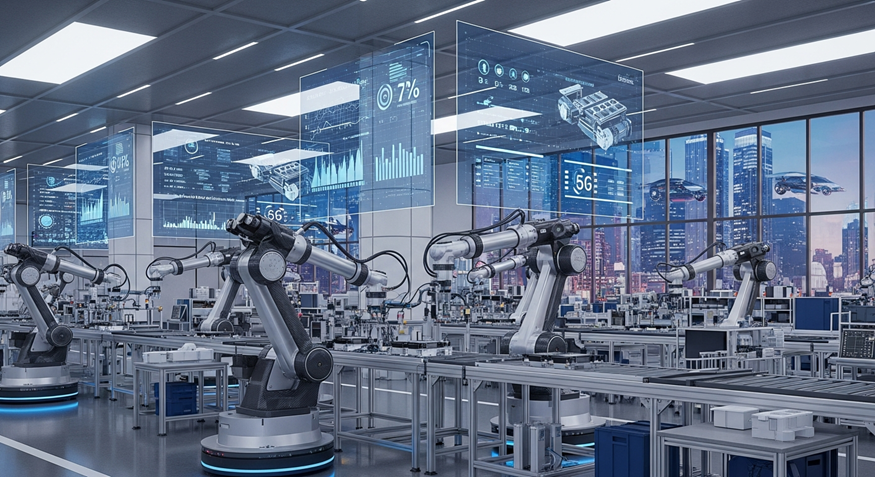
The global Industrial Automation Sector market is not just growing; it's booming. The demand for automation is surging across industries, driven by the need for greater efficiency, precision, and safety. This rapid expansion is reflected in impressive market size projections and strong investment trends.
Understanding these market dynamics is crucial for any business considering a move toward automation. The projected growth indicates a healthy, innovative sector, and analyzing market share and investment patterns can help guide strategic decisions. Let's explore the numbers and factors behind this remarkable expansion.
Global and U.S. Industrial Automation Sector Market Size
The scale of the Industrial Automation Sector market is a clear indicator of its importance. Globally, the market is on a steep upward trajectory, demonstrating widespread adoption and confidence in automation technologies.
In 2025, the global Industrial Automation Sector market size was estimated at $226.76 billion. Projections show this figure is expected to more than double in less than a decade, reaching an impressive $504.38 billion by 2033. This represents a compound annual growth rate (CAGR) of 10.5% from 2026 to 2033, highlighting a period of intense growth. The U.S. market is also forecast to grow at a CAGR of over 10% in the same period, driven by reshoring efforts and a focus on supply chain resilience.
Here is a quick look at the market forecast:
| Year | Projected Global Market Size |
|---|---|
| 2025 | $226.76 Billion |
| 2026 | $250.34 Billion |
| 2033 | $504.38 Billion |
These projections for the global Industrial Automation Sector market influence investment by signaling strong future demand, encouraging companies to allocate capital to automation projects to remain competitive.
Factors Driving Market Expansion
Several powerful factors are fueling the rapid expansion of the industrial automation market. At the core is the ongoing digital transformation of industries worldwide, often referred to as Industry 4.0. Companies are racing to modernize their manufacturing process to stay competitive.
The increasing demand for efficiency, productivity, and consistent quality is a primary driver. As labor costs rise and skilled worker shortages persist, companies are turning to automation technology to fill the gap and improve their bottom line. The development of more accessible and powerful advanced technologies is also making automation a viable option for a wider range of businesses.
Other key drivers include:
- Government Initiatives: Programs like "Make in India" and Europe's "Green Deal" are encouraging investment in modern manufacturing.
- Technological Advancements: Innovations in AI, IoT, and robotics are constantly expanding the capabilities of automation.
- Emphasis on Safety: A growing focus on workplace safety is pushing companies to automate hazardous tasks.
Investment Trends Among U.S. Manufacturers
In the United States, investment trends show a strong and growing commitment to the Industrial Automation Sector. U.S. manufacturers are pouring capital into automation systems to boost their domestic production capabilities, enhance supply chain security, and improve their global competitiveness.
A major focus of this investment is on achieving greater operational efficiency. Companies are adopting technologies like collaborative robots, AI-driven analytics, and IoT platforms to streamline their processes and reduce costs. This is part of a broader push toward digital transformation, where data is leveraged to make smarter business decisions.
The trend of reshoring—bringing manufacturing back to the U.S.—is also fueling investment. To make domestic production economically viable, companies are relying heavily on automation to offset higher labor costs. This strategic investment is seen as essential for long-term growth and resilience in a changing global landscape.
Major Challenges Facing the Industrial Automation Sector
Despite the bright outlook, the path to full industrial automation is not without its obstacles. Companies embarking on this journey face several significant challenges that can complicate implementation and impact the return on investment.
These hurdles range from technical issues, like integrating new technology with legacy systems, to human factors, such as addressing skill gaps in the workforce. Additionally, the increasing connectivity of industrial systems has brought cybersecurity to the forefront as a major concern.
Integration With Legacy Systems
One of the most common challenges in automation projects is dealing with legacy systems. Most established factories have a mix of older equipment and control systems that were never designed to communicate with modern, networked automation technology.
The process of integrating brand-new robots or sensors with decades-old machinery can be complex and costly. These legacy systems often use proprietary communication protocols, making it difficult to pull data from them or connect them to a central control platform. A complete overhaul is often too expensive, so companies must find ways to bridge the old and the new.
Common integration challenges include:
- Compatibility Issues: Ensuring that new and old equipment can "talk" to each other.
- Data Extraction: Finding ways to get useful information from older machines that lack modern sensors.
Solving these integration puzzles is a critical step in any successful digital transformation project.
Skill Gaps and Workforce Adaptation
As factories become more automated, the roles of human workers are changing. The demand for manual labor is decreasing, while the need for employees with technical skills to design, operate, and maintain automated systems is on the rise. This has created significant skill gaps in the workforce.
Finding employees with the right expertise in robotics, programming, and data analysis can be difficult. This requires a major focus on workforce adaptation, including retraining and upskilling current employees to prepare them for the jobs of the future. The transition from manual labor to overseeing complex factory automation requires a different mindset and skill set.
Closing these skill gaps is essential for realizing the full potential of digital transformation. It's not just about installing new technology; it's about empowering people to work effectively alongside it. This shift reduces direct human intervention in repetitive tasks and elevates workers into more strategic roles.
Cybersecurity Concerns and Solutions
The increased connectivity that powers the Industrial Internet of Things (IIoT) also introduces a major vulnerability: cybersecurity threats. As industrial processes become more reliant on networked systems, they become potential targets for cyberattacks that could disrupt production, steal sensitive data, or even cause physical damage.
Protecting these critical systems is a top priority. A successful attack on a power plant, water treatment facility, or large factory could have devastating consequences. This makes robust cybersecurity a non-negotiable component of any modern automation solution.
To address these concerns, companies are implementing a range of security measures, including:
- Network Segmentation: Isolating critical control systems from the broader corporate network.
- Enhanced Monitoring: Using AI-driven tools to detect and respond to suspicious activity in real time.
Major automation providers like Honeywell are also launching advanced cybersecurity tools specifically designed for industrial environments to protect these vital systems.
Real-World Examples of IIndustrial Automation Sector Solutions
To truly understand the impact of Industrial Automation Sector, it helps to look at real-world examples. Across various sectors, companies are using automation technology to solve practical problems and achieve remarkable results on the production line.
These examples bring the concepts we've discussed to life, showing how Industrial Automation Sector solutions are being applied in tangible ways. From building cars to handling packages, automation is making a difference every day. Let's explore a few success stories from different industries.
Automotive Industry Automation Success Stories
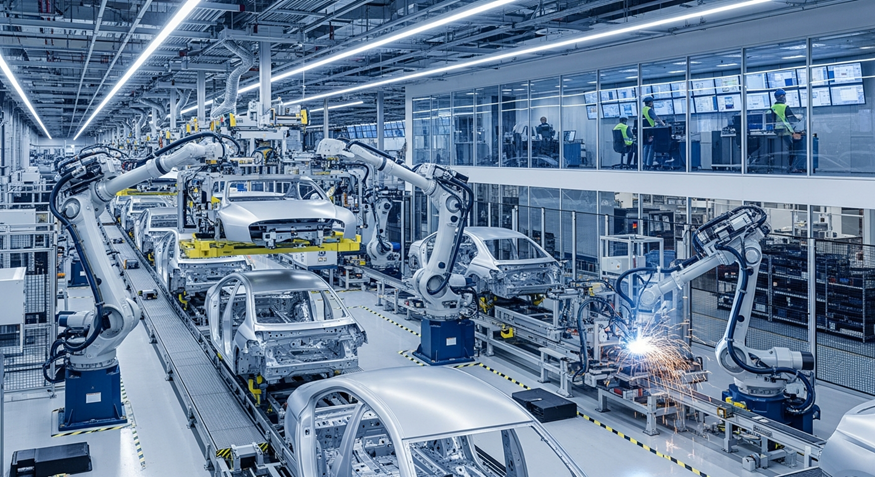
The automotive manufacturing industry has long been a pioneer in industrial automation. For decades, car companies have relied on industrial robots to perform tasks that require high levels of strength, precision, and endurance.
On modern assembly lines, you'll see robots working in perfect coordination to build a car from the ground up. They are essential for tasks like welding the car's frame, which requires thousands of precise welds, and painting the body with a flawless, even coat. These automation solutions have been instrumental in improving both the speed of production and the final product quality.
Key areas where robots excel include:
- Body Shop: Welding and framing the vehicle's structure.
- Paint Shop: Applying consistent coats of paint in a controlled environment.
By automating these critical stages, automotive manufacturers can produce safer, more reliable vehicles at a scale that would be impossible with manual labor alone.
Packaging and Material Handling Innovations
Another area where automation has made huge strides is in packaging and material handling. These are often highly repetitive tasks that are perfect candidates for automation. From warehouses to factory floors, automated systems are streamlining the movement of goods.
Innovations in this space include advanced conveyor systems, robotic palletizers that stack boxes, and vision systems that inspect packages for errors. These automation systems work tirelessly to sort, pack, and prepare products for shipment, improving speed and accuracy throughout the supply chain.
A particularly exciting development is the use of autonomous mobile robots (AMRs). These smart, self-driving vehicles can navigate a warehouse or factory floor to transport materials wherever they are needed. Unlike traditional guided vehicles, AMRs can dynamically adapt their routes, making them a flexible and efficient solution for modern logistics.
Conclusion
In summary, the innovations in the industrial automation sector are not only transforming manufacturing processes but also reshaping the future of various industries. From smart factories utilizing IoT integration to the integration of AI and machine learning, these advancements are enhancing efficiency, productivity, and sustainability. Recognizing the core components like industrial robots, sensors, and HMIs is vital for businesses looking to thrive in this competitive landscape. Embracing these technologies can lead to significant benefits, including improved safety, quality control, and reduced environmental impact. If you're ready to explore how these innovations can benefit your operations, don’t hesitate to get in touch for a free consultation!
Frequently Asked Questions
How do industrial automation systems improve manufacturing processes?
Industrial automation systems improve the manufacturing process by increasing operational efficiency and ensuring consistent quality control. They take over repetitive tasks, operating 24/7 with high precision, which reduces human error, minimizes waste, and boosts overall productivity, leading to faster and more reliable production.
What are the most popular industrial automation technologies in the United States?
Among the most popular industrial automation technologies in the U.S. are industrial robots for physical tasks, programmable logic controllers (PLCs) for machine control, and the integrated systems that create smart factories. Newer technologies like edge computing and AI-driven analytics are also rapidly gaining traction for real-time decision-making.
How does industrial automation support sustainability efforts?
Industrial automation supports sustainability by enabling greener manufacturing practices. Through precise process optimization, it increases energy efficiency and promotes waste reduction by minimizing material scrap and errors. This allows companies to reduce their environmental footprint while improving their bottom line, contributing to a more sustainable industrial future.
You might also like