The Industrial Automation Sector: Key Developments Ahead
The Industrial Automation Sector: Key Developments Ahead

Key Highlights
- Industrial automation sector uses control systems and industrial robots to manage the manufacturing process, improving efficiency and product quality.
- The global industrial automation market was valued at USD 226.76 billion in 2025 and is set to grow significantly.
- Key trends for 2025 include the rise of smart factories, collaborative robots (cobots), and the integration of AI and IoT in automation systems.
- Major sectors benefiting from automation are automotive, food and beverage, and pharmaceuticals.
- Key technologies driving this field are robotics, artificial intelligence, and advanced control systems.
Introduction
Welcome to the world of industrial automation, a game-changer for the modern manufacturing industry. It's no longer a concept from a science fiction movie; it's a reality that's transforming how businesses operate. Industrial automation involves using advanced technologies and machinery to streamline various stages of production, from handling materials to final delivery. This innovative automation technology helps companies optimize their processes, boost safety, and reduce costs, making it a vital part of today's competitive landscape.
Understanding Industrial Automation
So, what exactly is industrial automation? In simple terms, it's the use of technology like industrial robots and sophisticated automation systems to handle industrial tasks with minimal human intervention. This can range from simple programmable automation to complex, integrated systems that manage entire production lines.
The goal is to make processes more efficient, reliable, and safer. By automating tasks, companies can improve their output, maintain consistent quality, and free up their employees for more complex and valuable work. Let's explore the core ideas behind this technology, how it functions in today's industries, and its evolution.
Definition and Core Concepts
Industrial automation sector is the integration of control systems, machinery, and software to manage and monitor industrial processes. It essentially allows machines to perform repetitive tasks that were once handled by people. The primary aim is to streamline operations, enhance productivity, and improve the quality of products.
At its heart, industrial automation relies on feedback and control. Sensors gather data from the production environment, and control systems use this information to make adjustments. This continuous loop ensures that industrial processes run smoothly and efficiently without constant oversight.
This technology is all about creating smart, self-regulating environments. By implementing automation solutions, businesses can tackle everything from simple assembly line work to complex supply chain logistics. This shift not only boosts efficiency but also helps in reducing errors and operational costs, giving companies a significant advantage.

How Industrial Automation Works in Modern Industries
In a modern factory, industrial automation brings the manufacturing process to life with incredible precision. Imagine a production line where industrial robots handle the heavy lifting, welding, and painting with flawless accuracy. These automated systems work tirelessly, moving products from one stage to the next with little to no human intervention.
This process begins with sensors and controllers that monitor every aspect of the operation. From checking the temperature to ensuring parts are correctly aligned, these devices provide real-time data. If an issue is detected, the system can automatically adjust or alert an operator, ensuring quality control is maintained throughout.
The result is a highly efficient and consistent workflow. Tasks that are repetitive or dangerous for humans are managed by machines, which leads to fewer errors and a safer work environment. This integration of technology allows industries to produce goods faster and more reliably than ever before.
Brief History and Evolution of the Industrial Automation Sector
The journey of industrial automation began with simple mechanization, where machines were used to perform basic repetitive tasks on assembly lines. This early form of automation technology was a huge step forward, but it was rigid and couldn't be easily changed for different products.
Over the decades, the evolution of this field has been remarkable. The introduction of computers and programmable logic controllers (PLCs) in the mid-20th century marked a significant turning point. Suddenly, machines could be programmed to perform a variety of tasks, offering more flexibility to manufacturers.
Today, we are in the era of Industry 4.0, where industrial automation is powered by advanced control systems, artificial intelligence, and the Internet of Things (IoT). This has led to the development of smart factories where machines communicate with each other, adapt to changes, and optimize processes on their own, representing a massive leap from the initial, simpler systems.
Types of Industrial Automation Systems
Not all automation is created equal. There are different types of industrial automation systems, each designed for specific needs and production scales. These systems range from highly specialized equipment for mass production to adaptable systems for customized products. Understanding these types can help you see how automation can fit into various industrial settings.
From fixed systems built for one purpose to highly integrated networks that manage entire factories, the options are diverse. We will look at the main categories, including fixed, programmable, flexible, and integrated automation, to understand their unique features and applications, such as their use in batch production.
Fixed Automation
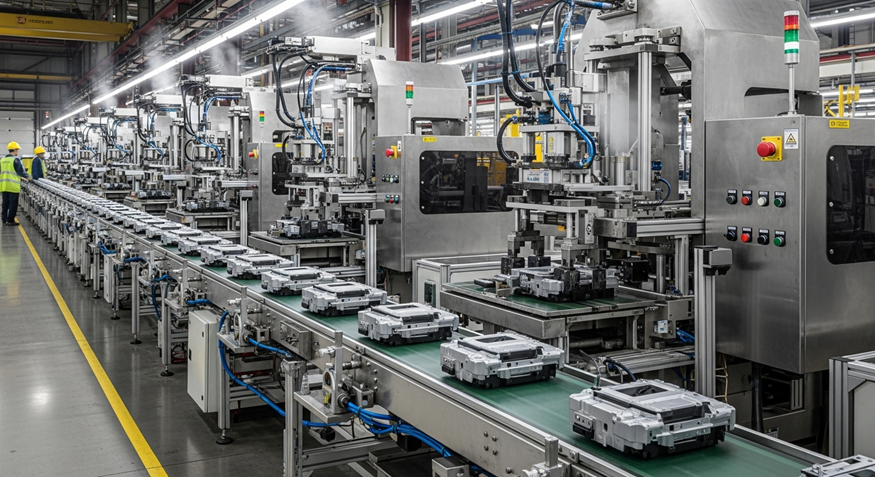
Fixed automation, also known as "hard automation," is the oldest and simplest form of industrial automation. It involves using specialized equipment designed to perform a single, specific task over and over again. Think of traditional assembly lines where each machine has a dedicated function in the production process.
These systems are built for high-volume production where the product design doesn't change often. Because they are custom-built for specific tasks, they can operate at very high speeds, making them extremely efficient for mass manufacturing. For example, in the automotive industry, a machine might be set up just for welding a car door.
The main characteristic of fixed automation is its lack of flexibility. The equipment is configured to perform its job and cannot be easily reprogrammed for different tasks. While this makes it perfect for producing large quantities of identical items, it's not suitable for industries that require product variety or customization.
Programmable Automation
Programmable automation offers more flexibility compared to its fixed counterpart. In this type of system, equipment is controlled by a program of instructions that can be changed to accommodate different products or tasks. This makes it ideal for batch production, where a company produces a set quantity of one product before switching to another.
A key component of programmable automation is the Programmable Logic Controller (PLC). PLCs are industrial computers that can be programmed to control a wide range of automated processes, from material handling to complex machine operations. By simply changing the software instructions, manufacturers can adapt their production lines to new requirements without needing new hardware.
This type of automation allows for greater variety in the products being made. For instance, a CNC (Computer Numerical Control) machine can be programmed to cut different shapes and sizes of metal parts. This adaptability is crucial for industries that need to respond to changing market demands with moderate production volumes.
Flexible Automation
Flexible automation, sometimes called soft automation, represents a more advanced level of adaptability. It combines the benefits of both fixed and programmable systems, allowing for a high degree of customization and quick changeovers between different products with almost no downtime.
This type of automation often uses sophisticated robotic systems and automated guided vehicles (AGVs) that can be easily reprogrammed to handle various tasks. Unlike programmable automation that relies on software changes for batch processing, flexible automation systems often feature hardware that can be quickly reconfigured. This makes them perfect for industries with high product variety and low production volumes.
A great example is the use of collaborative robots (cobots) that work alongside human workers. These automation solutions can adapt to different workflows and production needs on the fly. For instance, a self-driving tugger can be commanded to drive to different stations and adjust its path as the facility layout changes, providing a truly flexible solution.
Integrated Automation
Integrated automation is the most complex and comprehensive approach, bringing together various types of automation systems into a single, cohesive unit. It involves linking fixed, programmable, and flexible automation technologies to create a fully optimized production process from start to finish.
In an integrated system, advanced computer software coordinates all the activities on the production line. This includes managing industrial robots, conveyor belts, and other automation systems to perform complex tasks seamlessly. The goal is to create a "smart factory" where the entire manufacturing process is automated and controlled by a central system.
These systems, such as computer-integrated manufacturing (CIM), represent the pinnacle of automation. They offer unparalleled control over industrial processes, enabling companies to achieve maximum efficiency, quality, and flexibility. By connecting every part of the production process, integrated automation allows for real-time monitoring and optimization of the entire operation.
Key Technologies Driving Industrial Automation
The rapid advancement of the industrial automation sector is fueled by a range of powerful technologies. These innovations are the building blocks of modern smart factories, enabling machines to perform with greater intelligence, precision, and connectivity. From industrial robots on the factory floor to the software that controls them, technology is at the heart of this transformation.
Innovations in artificial intelligence, machine learning, and the Internet of Things (IoT) are particularly influential. These technologies allow industrial control systems to not only execute commands but also to learn, adapt, and make decisions in real time. Below, we'll explore the key automation technology pillars that are shaping the future of the industry.
Robotics and Automation Equipment
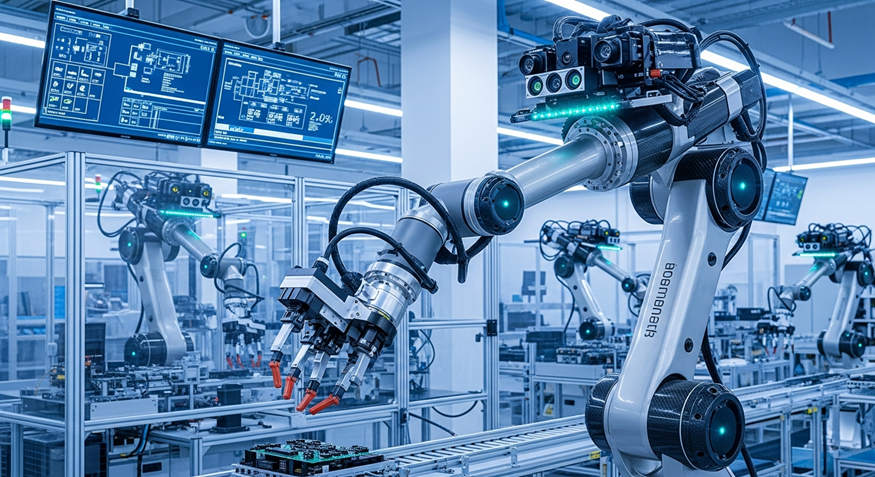
Industrial robots and other automation equipment are the workhorses of the automated factory. These machines are designed to handle a wide array of tasks with speed and precision, transforming assembly lines and production floors. They are especially valuable for performing repetitive tasks that are tedious or physically demanding for humans.
This equipment automates key processes, leading to significant gains in productivity and quality. Common applications include:
- Material handling, where robots move parts and products around a facility.
- Assembly, with robots putting together components with high accuracy.
- Welding and painting, tasks that require consistency and can be hazardous.
- Packaging and palletizing finished goods for shipment.
The use of industrial robots is expanding beyond traditional manufacturing. With advancements in vision systems and sensors, modern robots can perform more complex tasks than ever before. This growing capability makes automation equipment a cornerstone of efficient industrial operations, capable of handling everything from delicate electronics assembly to heavy-duty manufacturing.
Artificial Intelligence and Machine Learning
Artificial intelligence (AI) and machine learning (ML) are bringing a new level of intelligence to industrial automation. These technologies enable systems to learn from data, identify patterns, and make decisions without human programming for every scenario. This is a major leap from traditional automation, which typically follows predefined rules.
One of the most significant applications is predictive maintenance. By analyzing data from sensors on machinery, AI algorithms can predict when equipment is likely to fail. This allows companies to perform maintenance before a breakdown occurs, minimizing costly downtime and extending the life of their assets.
Furthermore, the integration of AI enhances quality control. AI-powered vision systems can inspect products for defects with greater accuracy and speed than the human eye. As AI and machine learning become more embedded in industrial systems, they will continue to drive smarter, more adaptive, and more efficient manufacturing processes.
Internet of Things (IoT) in Manufacturing
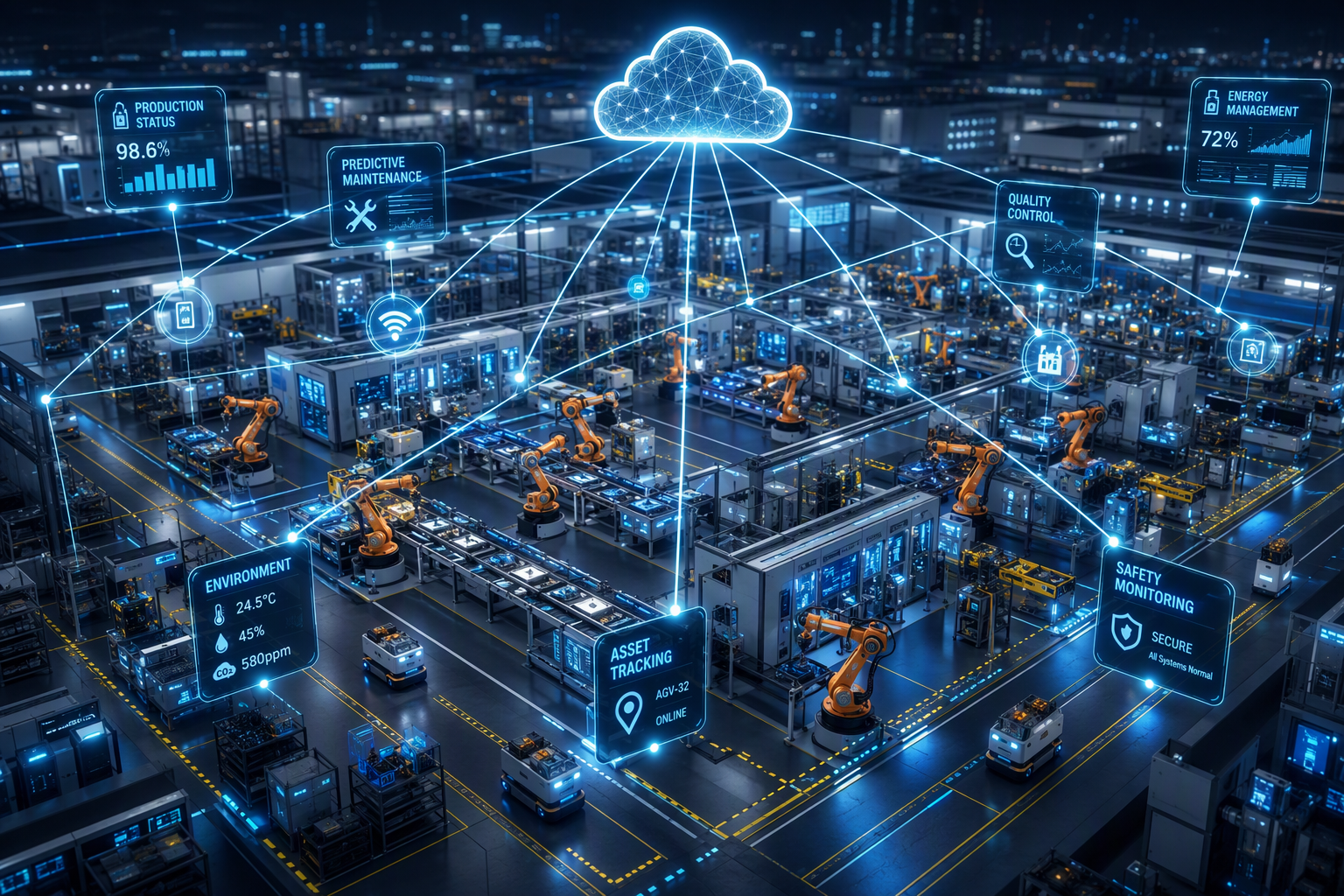
The Internet of Things (IoT), and more specifically the Industrial Internet of Things (IIoT), is revolutionizing manufacturing by connecting machines, sensors, and people. This network of interconnected devices allows for the collection and exchange of massive amounts of data in real time, forming the foundation of smart manufacturing.
Through IIoT, every piece of equipment on the factory floor can communicate its status, performance, and health.
This constant stream of information provides a comprehensive view of the entire production process. Managers can monitor operations remotely and make data-driven decisions to optimize workflows and resource allocation.
The true power of the Internet of Things is unlocked when combined with data analytics. By analyzing the data collected from IoT devices, companies can identify inefficiencies, predict production bottlenecks, and uncover opportunities for improvement. This connectivity is turning traditional factories into intelligent, responsive ecosystems.
Industrial Control Systems: PLC, DCS, SCADA
Industrial control systems are the brains behind the brawn of automation. These systems manage and regulate the behavior of other devices and machines in industrial operations. There are several key types of control systems, each with specific applications.
These core systems ensure that all automated processes run smoothly and efficiently. The main types include:
- Programmable Logic Controllers (PLCs): Ruggedized computers used for automating specific machine processes.
- Distributed Control Systems (DCS): Used to control processes across an entire plant, often in industries like chemical or power generation.
- Supervisory Control and Data Acquisition (SCADA): Systems that collect data from various sensors and provide a centralized interface for monitoring and control, ideal for large-scale infrastructure like water treatment plants or power grids.
Together, these control systems form a hierarchy that manages everything from individual machines to entire facilities. The integration of PLCs for machine-level control, DCS for plant-wide process control, and SCADA for high-level supervision allows for a comprehensive and scalable automation architecture that is essential for modern industry.
Main Trends Shaping the Industrial Automation Sector in 2025
Looking ahead, the industrial automation sector is on the brink of another major transformation. Several key trends, driven by advanced technologies, are set to redefine manufacturing and industrial processes by 2025. These developments are pushing the boundaries of what's possible, leading to more intelligent, connected, and efficient operations.
From the rise of fully autonomous smart factories to the growing use of edge computing and collaborative robots, the landscape is evolving rapidly. These trends are not just futuristic ideas; they are actively being implemented today and will become mainstream in the near future. Let's examine the developments that will shape the industry in the coming years.
Smart Factories and Digital Transformation
The concept of smart factories is at the forefront of the digital transformation in manufacturing. A smart factory is a highly digitized and connected production facility that uses technologies like AI, IoT, and robotics to operate with a high degree of autonomy and efficiency. This shift represents a move from traditional automation to a fully integrated, intelligent system.
Adopting smart factory principles allows companies to gain a significant competitive edge. The benefits are numerous and impactful:
- Real-time data for better decision-making.
- Increased productivity and reduced operational costs.
- Greater flexibility to adapt to market changes.
- Improved product quality and consistency.
Implementing these advanced automation solutions is no longer an option but a necessity for businesses looking to thrive. The digital transformation journey involves upgrading legacy systems and embracing a culture of data-driven operations. This trend is fundamentally changing how products are designed, manufactured, and delivered.
Cloud Computing and Edge Devices
Cloud computing and edge computing are two complementary technologies that are reshaping how data is handled in the industrial automation sector. Cloud platforms provide vast storage and powerful processing capabilities, allowing companies to perform complex data analysis and run sophisticated applications without needing massive on-site infrastructure.
However, for industrial IoT applications that require immediate action, sending data to the cloud and back can introduce delays. This is where edge computing comes in. Edge devices process data locally, right at the source, which enables real-time responses. This is critical for tasks like controlling machinery or detecting safety hazards.
The combination of cloud and edge computing creates a powerful, hybrid approach. Non-critical data can be sent to the cloud for long-term analysis and storage, while time-sensitive data is processed at the edge. This balanced architecture ensures that industrial systems are both intelligent and responsive, maximizing the benefits of data analysis.
Cybersecurity in Industrial Automation Sector
As industrial systems become more connected, cybersecurity has emerged as a critical concern. The same technologies that enable smart factories also create new vulnerabilities. A cyberattack on industrial control systems could disrupt industrial operations, cause significant financial loss, or even pose a threat to worker safety.
Protecting these systems requires a multi-layered approach to cybersecurity. This includes securing networks, controlling access to sensitive systems, and continuously monitoring for threats. Manufacturers are increasingly investing in advanced security solutions designed specifically for operational technology (OT) environments.
Furthermore, data analytics plays a role in enhancing security. By analyzing network traffic and system logs, companies can detect unusual patterns that may indicate a cyber threat. As industries continue their digital transformation, building robust cybersecurity measures into the design of automation systems will be essential for ensuring safe and reliable operations.

Advanced Sensors and Data Analytics
Advanced sensors are the eyes and ears of modern industrial automation sector systems. These devices are becoming smaller, more powerful, and more affordable, allowing them to be deployed throughout the factory floor. They collect a wealth of data on everything from temperature and pressure to vibration and image recognition.
This flood of data is where data analytics comes into play. By applying sophisticated algorithms to the information gathered by advanced sensors, companies can gain deep insights into their operations. This enables powerful applications like predictive maintenance, where potential equipment failures are identified before they happen.
This combination also drastically improves quality control. High-resolution vision sensors paired with AI can spot microscopic defects in products, ensuring that only perfect items leave the factory. The synergy between advanced sensors and data analytics is a key driver of efficiency and quality in the next generation of industrial automation sector.
Expansion of Collaborative Robots (Cobots)
One of the most exciting trends in the industrial automation sector is the rise of collaborative robots, or cobots. Unlike traditional industrial robots that operate in caged-off areas, cobots are designed to work safely alongside human workers. They are equipped with advanced sensors that allow them to detect the presence of people and avoid collisions.
This collaboration between humans and machines is creating a more flexible and efficient production line. Cobots can handle repetitive or physically strenuous tasks, freeing up human workers to focus on more complex, value-added activities that require critical thinking and dexterity. This partnership enhances both productivity and job satisfaction.
The expansion of cobots is also improving workplace safety. By taking over dangerous tasks, they reduce the risk of accidents and injuries. As these automation systems become more intelligent and easier to program, their adoption is expected to accelerate across a wide range of industries, making them a common sight on factory floors.
Industrial Automation Sector Market Size and Growth Outlook
The industrial automation sector market is not just growing; it's booming. The demand for automation products and solutions is surging as industries worldwide recognize the need for greater efficiency, precision, and safety.
This growth reflects a fundamental shift in how manufacturing and production are approached on a global scale.
The market's expansion is driven by various factors, including rising labor costs, a shortage of skilled workers, and the push for digital transformation. As market demands evolve, the global industrial automation sector landscape is set to expand significantly. Let's look at the numbers and regional trends that paint a picture of this dynamic market.
Recent Market Statistics and Projections
The numbers speak for themselves when it comes to the growth of the industrial automation sector market. The global market size was estimated at a substantial USD 226.76 billion in 2025. This figure underscores the widespread adoption of automation technologies across various industries as they seek to optimize their production processes.
Projections indicate that this growth trend is set to continue at an impressive pace. The market is expected to reach USD 504.38 billion by 2033, growing at a compound annual growth rate (CAGR) of 10.5%. This rapid expansion is fueled by increasing market demands for efficiency and the ongoing implementation of Industry 4.0 initiatives.
Here is a quick look at the market forecast:
| Attribute | Details |
|---|---|
| Market Size (2025) | USD 226.76 Billion |
| Projected Market Size (2033) | USD 504.38 Billion |
| CAGR (2026-2033) | 10.5% |
This strong growth outlook highlights the critical role that automation will play in the future of global industry.
Regional Insights: United States Market Focus
The United States holds a significant position in the global industrial automation sector market, accounting for a substantial share of over 28% in North America in 2025. This growth is driven by a strong push for digital transformation, the reshoring of manufacturing, and the adoption of advanced manufacturing practices.
The U.S. market is expected to see the highest growth in the region, with a projected CAGR of over 10% from 2026 to 2033. Factors like rising labor costs and workforce shortages are accelerating the demand for solutions like collaborative robotics and AI-powered predictive maintenance. Key players like Rockwell Automation are major contributors to this expansion.
A particular focus on cybersecurity and data sovereignty is also shaping the market in the United States. This is driving the development of secure and scalable industrial automation ecosystems. The emphasis on innovation and operational agility positions the U.S. as a key driver in the evolving manufacturing sector.
Global Market Comparison
On a global scale, the industrial automation sector market shows diverse trends across different regions. While North America is a major player, the Asia-Pacific region dominated the market in 2025 with a share of over 37%. This is fueled by rapid industrialization, massive manufacturing capacity, and strong government support in countries like China and India.
Europe is also a key market, driven by the adoption of smart manufacturing in sectors like automotive and pharmaceuticals. The region's strong focus on sustainability and energy efficiency is prompting widespread integration of automation solutions. Companies like Schneider Electric are leading the charge with advanced energy management and automation technologies.
The global industrial automation sector landscape is competitive, with companies constantly innovating to meet evolving market demands. The universal push for efficiency, quality, and cost savings ensures that the demand for advanced automation solutions will continue to grow worldwide, making it a truly global phenomenon.
Industries Benefiting Most from Industrial Automation Sector
While industrial automation sector offers benefits across the board, some industries have been particularly transformed by its adoption. From the fast-paced manufacturing industry to sectors requiring high precision and safety, automation solutions are unlocking new levels of operational efficiency and productivity. These early adopters are setting new standards for their respective fields.
The impact of automation is felt deeply in industries where repetitive tasks, stringent quality control, and hazardous environments are common. Let's explore some of the key sectors that are reaping the most significant rewards from integrating industrial automation sector into their operations, revolutionizing the way they work.
Automotive Manufacturing
The automotive manufacturing sector has long been a pioneer in the use of industrial automation. The high-volume, repetitive nature of car production makes it a perfect fit for robotic systems. Industrial robots are a common sight on the automotive production line, handling tasks with speed and precision that humans simply can't match.
Industrial automation sector has revolutionized several key areas in this industry:
- Welding and assembly, where robots ensure strong and accurate connections.
- Painting, providing a flawless and consistent quality finish on every vehicle.
- Material handling, moving heavy parts safely and efficiently.
- Quality inspection, using vision systems to detect even minor defects.
By automating these processes, automotive manufacturers can achieve remarkable efficiency and consistent quality. The use of industrial robots not only speeds up the production line but also improves worker safety by taking over dangerous and physically demanding jobs.
Food and Beverage Processing
In the food and beverage processing industry, hygiene, consistency, and speed are paramount. Automation technology is playing a crucial role in helping companies meet these stringent demands. From sorting and processing raw ingredients to packaging finished goods, automation streamlines the entire production chain.
Automated systems ensure that product quality remains high and consistent. For example, vision systems can inspect produce for ripeness and defects, sorting them with incredible speed and accuracy. On the assembly lines, robots can handle packaging tasks, ensuring that every product is sealed and labeled correctly.
This adoption of automation not only boosts efficiency but also enhances food safety. By minimizing human contact with products, companies can reduce the risk of contamination. As consumer demands for quality and safety continue to rise, automation technology will become even more integral to the food and beverage industry.
Pharmaceuticals and Healthcare
The pharmaceuticals and healthcare industries rely on extreme precision and adherence to strict regulations. Automation systems are essential for achieving the high levels of quality control required in drug manufacturing and medical device production. The healthcare segment is, in fact, expected to see the fastest growth in automation adoption.
In pharmaceuticals, automation is used for tasks like mixing compounds, filling vials, and packaging medications. This ensures that every dose is accurate and free from contamination. Predictive maintenance on manufacturing equipment is also critical to prevent any downtime that could compromise a batch of life-saving medicine.
Beyond manufacturing, automation is transforming healthcare delivery itself. Robotics are used in surgical procedures for enhanced precision, and smart diagnostic systems are improving the speed and accuracy of test results. The role of automation in this sector is vital for ensuring patient safety and improving operational efficiency.
Oil, Gas, and Energy
The oil, gas, and energy sectors often involve industrial operations in harsh and remote environments. Advanced technologies in automation are critical for ensuring the safety of workers and the efficiency of these complex operations. Control systems are used to monitor and manage everything from drilling on an oil rig to the distribution of power in a smart grid.
In these industries, automation helps manage processes that are too dangerous or difficult for humans. For example, distributed control systems (DCS) can manage complex, decentralized operations in renewable energy plants or sprawling oil refineries. This allows for centralized monitoring and control, improving safety and efficiency.
The integration of advanced technologies like AI and IoT is further enhancing these capabilities. Predictive maintenance can prevent equipment failures on offshore platforms, while remote monitoring allows experts to manage assets from thousands of miles away. Automation is key to making the oil, gas, and energy industries safer, more sustainable, and more productive.

Primary Benefits of the Industrial Automation Sector
Implementing industrial automation brings a host of advantages that can transform a business. The benefits go far beyond simply speeding up production. They touch on nearly every aspect of an operation, from cost savings and operational efficiency to workplace safety and sustainability. This technology offers a powerful way to address many of the key challenges facing modern industries.
By reducing the potential for human error and taking over dangerous tasks, automation creates a more reliable and secure work environment. The ability to optimize resource use also contributes to a company's bottom line and its environmental goals. Let’s explore these primary benefits in more detail.
Increased Productivity and Efficiency
One of the most significant advantages of industrial automation is the dramatic boost in productivity and operational efficiency. Automation systems can work 24/7 without breaks or fatigue, leading to a much higher output than is possible with manual labor alone. This allows companies to meet growing demand and shorten lead times.
Automating tasks on the production line leads to several key improvements:
- Faster completion of repetitive tasks.
- Reduced downtime through predictive maintenance.
- Optimized workflows and material flow.
- Lower labor costs for mundane jobs.
By taking over tedious and repetitive work, automation systems free up employees to focus on higher-value activities that require human ingenuity and problem-solving skills. Research has shown that deploying an autonomous vehicle can increase efficiency by as much as 33% and reduce associated labor costs by 64%, showcasing the powerful impact on a company's bottom line.
Improved Quality and Consistency
Manual labor, no matter how skilled, is prone to inconsistency due to factors like fatigue and human error. Industrial automation eliminates these variables, resulting in a remarkable improvement in product quality and consistency. Machines can perform tasks with the same precision and accuracy every single time.
This ensures that every product coming off the assembly line meets the same high standards. For example, automated vision systems can be used for quality control, inspecting products for defects with a level of detail that the human eye might miss. This leads to fewer rejected products and less waste.
By standardizing the manufacturing process, automation provides continuous control and allows for immediate correction of any deviations. This ability to maintain consistent quality is a major competitive advantage, building customer trust and brand reputation.
Enhanced Safety and Working Conditions
Improving workplace safety is one of the most critical benefits of industrial automation. Many industrial environments involve dangerous tasks, such as working with heavy machinery, high temperatures, or hazardous materials. Statistics show that workplace accidents, like those involving forklifts, are unfortunately common.
Industrial robots and other automated systems can take over these high-risk jobs, removing human workers from harm's way. This significantly reduces the number of accidents and injuries on the factory floor. By automating physically demanding tasks, companies can also reduce the stress and fatigue experienced by their employees.
This focus on safety not only protects workers but also creates a more positive and satisfying work environment. When employees are not burdened by dangerous or monotonous work, their morale and job satisfaction can improve. This leads to better employee retention and a healthier company culture.
Sustainability and Environmental Impact
Industrial automation also plays a key role in promoting sustainability and reducing the environmental impact of manufacturing. By optimizing processes, automation solutions help companies use resources like energy and raw materials more efficiently. This leads to less waste and lower energy consumption.
For example, precisely controlled processes minimize material waste, and smart energy management systems can power down equipment when it's not in use. Predictive maintenance also contributes to sustainability by preventing equipment failures that can lead to spills or inefficient operation, further reducing the environmental footprint.
As companies face increasing pressure to adopt greener practices, industrial automation provides practical tools to achieve their sustainability goals. By creating more efficient and less wasteful operations, automation helps businesses become better stewards of the environment while also improving their bottom line.

Conclusion
In conclusion, the industrial automation sector is poised for substantial growth and transformation in the coming years. As key technologies like AI, IoT, and advanced robotics continue to develop, industries will benefit from increased efficiency, safety, and sustainability. Embracing these changes will not only enhance productivity but also pave the way for more innovative manufacturing solutions. By staying informed about market trends and technological advancements, businesses can position themselves at the forefront of this dynamic field. If you have any questions or need further insights into how industrial automation can benefit your organization, feel free to reach out!
Frequently Asked Questions
What are the challenges facing industrial automation today?
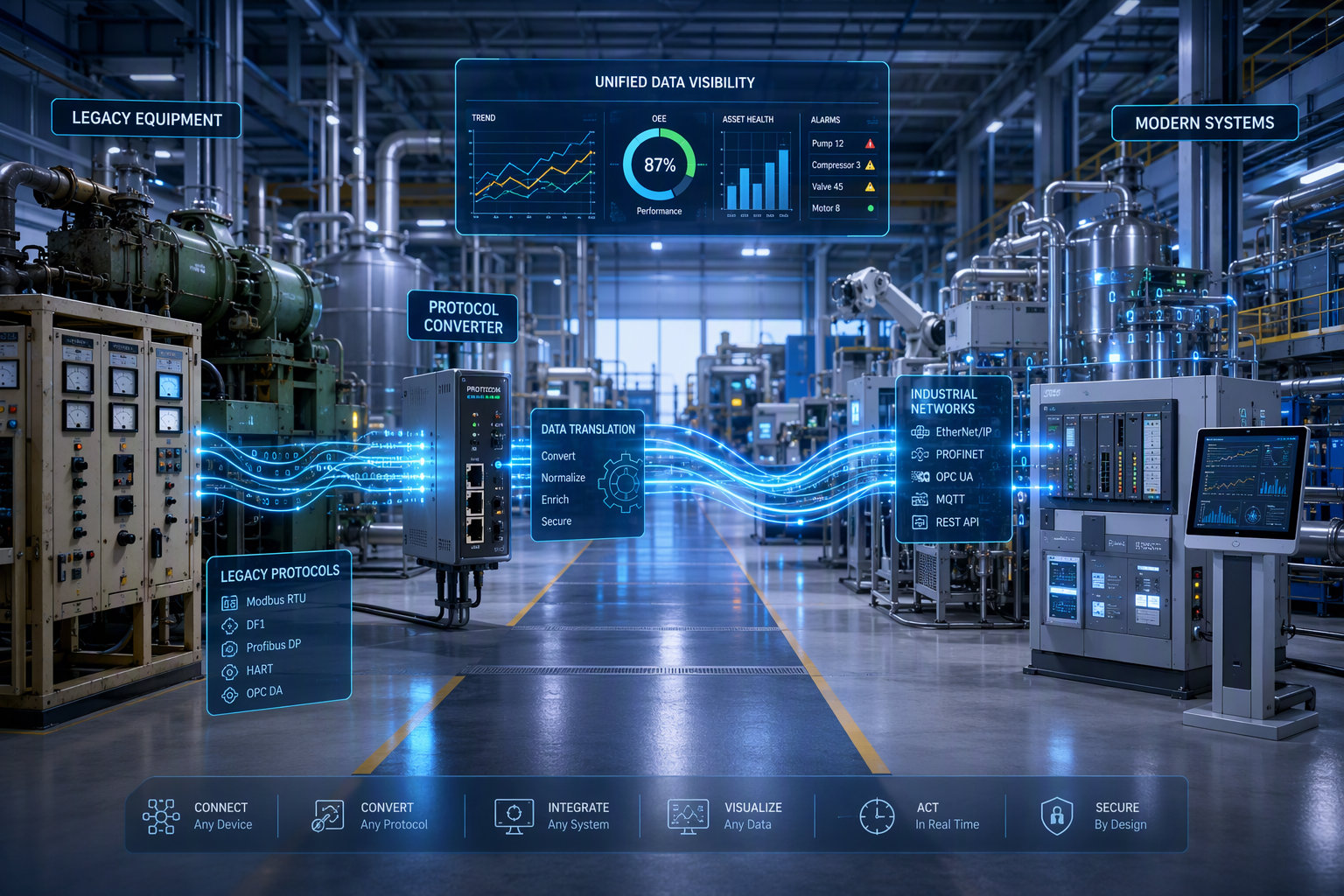
Key challenges in industrial automation include the high initial investment cost for automation systems, the need for a skilled workforce to manage them, and ensuring robust cybersecurity to protect connected systems. Integrating new technology with legacy equipment in the manufacturing process without disrupting operations also remains a significant hurdle.
How will future technological advancements affect industrial automation?
Future automation technology will be smarter and more connected. Advancements in artificial intelligence and the Internet of Things will lead to fully autonomous factories. Edge computing will enable faster, real-time decision-making in control systems, while more sophisticated AI will optimize production with unparalleled efficiency and adaptability.
How does industrial automation support sustainability in manufacturing?
Industrial automation supports sustainability by optimizing the manufacturing process to reduce waste and energy consumption. Techniques like predictive maintenance prevent inefficient equipment operation. By using resources more precisely and minimizing errors, automation helps create a more environmentally friendly and cost-effective production cycle.
You might also like