Trends Shaping the Industrial Automation Sector Today
Trends Shaping the Industrial Automation Sector Today
Key Highlights
Here are the key takeaways about the trends shaping industrial automation today:
- The Industrial Automation Sector market is set for major growth, driven by the need for efficiency and precision in manufacturing. In 2025, one of the latest trends in industrial automation is the deeper adoption of internet of things technologies, which enable better machine-to-machine communication and system monitoring. Smart manufacturing is becoming a reality through the integration of the Industrial Internet of Things (IIoT) and real-time data analytics. Other emerging trends include the expansion of artificial intelligence and machine learning for predictive maintenance, greater use of collaborative robots (cobots), and the implementation of edge computing to process data closer to the source for improved responsiveness.
- Artificial intelligence and machine learning are revolutionizing automation systems, enabling predictive maintenance and smarter decisions.
- Smart manufacturing is becoming a reality through the integration of the Industrial Internet of Things (IIoT) and real-time data analytics.
- Industrial robots, including collaborative models, are increasingly working alongside humans to handle repetitive tasks.
- Automation is not just about productivity; it also plays a key role in promoting sustainability by improving energy efficiency and reducing waste.
Introduction
Welcome to the world of industrial automation! This field is at the forefront of a major digital transformation, changing how industrial processes have been handled for decades. As companies look for ways to become more efficient, safer, and more competitive, automation technology is offering powerful solutions. From smarter factories to more reliable production lines, the impact of the Industrial Automation Sector is massive. Ready to explore the key trends that are currently defining this exciting sector? Let's get started.
Overview of Industrial Automation Sector
The industrial automation sector is all about using technology to manage and control industrial operations with less human input. Think of it as the engine driving modern manufacturing and production. The goal is to make processes faster, more reliable, and more efficient.
By implementing advanced automation systems, companies can boost productivity and ensure consistent quality. This sector is rapidly evolving, with new technologies constantly emerging to meet the demands of various industries. Let’s explore what industrial automation truly means and how it functions.
Defining Industrial Automation
At its core, industrial automation is the use of control systems, like computers and robots, to handle industrial processes that were once performed by people. The primary objective is to minimize the need for human intervention, especially for repetitive tasks that can be tedious or even dangerous.
This involves creating a system where machines and software work together seamlessly. By automating these repetition tasks, businesses can free up their human workforce to focus on more complex, creative, and strategic activities that require critical thinking.
Essentially, industrial automation acts as the central nervous system for a factory or plant. It oversees everything from simple assembly line movements to complex chemical processes, ensuring everything runs smoothly and according to plan. This leads to greater efficiency and precision across all industrial processes.
How Industrial Automation Works in Manufacturing
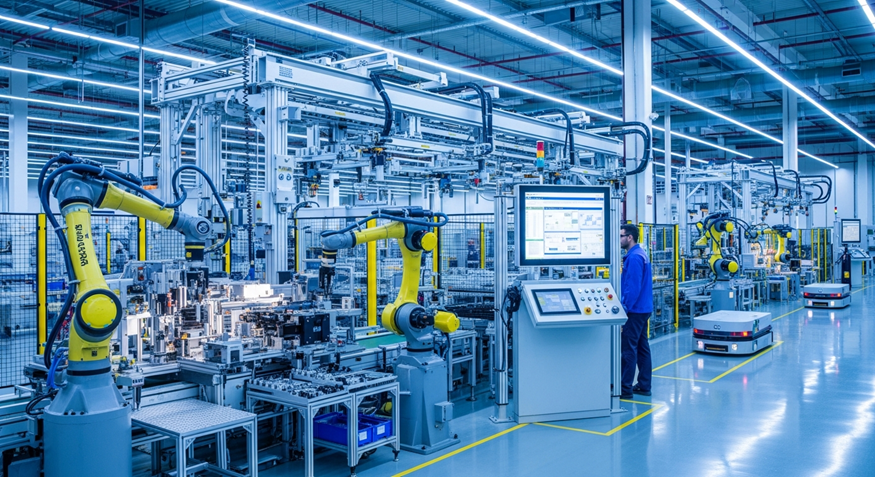
In the manufacturing sector, industrial automation works by integrating technology into the production line to perform specific jobs. This can range from robotic arms assembling parts to automated vision systems that handle quality control inspections. The system is programmed to execute repetitive tasks with incredible speed and accuracy.
This automation technology replaces or assists human labor in various stages of the manufacturing process. For example, instead of a person manually tightening a screw on every product, a machine can do it thousands of times without getting tired or making a mistake. This consistency is crucial for maintaining high standards.
The result is a more streamlined and efficient operation. Automation not only speeds up production but also enhances safety by taking over hazardous jobs. It allows manufacturers to produce more goods, improve quality, and reduce the physical strain on their workers.
Historical Evolution and Milestones
The concept of the Industrial Automation Sector isn't new. The journey began with simple mechanization, but a major leap occurred with the invention of programmable logic controllers (PLCs) in the late 1960s. These rugged computers were designed to withstand industrial environments and allowed for more flexible control over machinery than the old hard-wired relay systems.
Another significant milestone was the rise of industrial robots in the latter half of the 20th century. These machines transformed assembly lines, particularly in the automotive industry, by taking on physically demanding and repetitive jobs like welding and painting. This paved the way for more sophisticated automation systems.
Today, we are in the era of Industry 4.0, which represents the ongoing digital transformation of manufacturing. Modern control systems are now integrated with AI, machine learning, and the Internet of Things (IoT). This evolution has turned factories into smart, connected environments where data drives decision-making and continuous improvement.
Major Types of Industrial Automation Systems
When we talk about the Industrial Automation Sector, it's not a one-size-fits-all solution. There are several major types of automation systems, each designed for different industrial processes and needs. These systems are the building blocks that allow companies to automate everything from a single machine to an entire factory floor.
Understanding these different types can help you see how automation is applied in the real world. Each system has unique capabilities that make it suitable for specific applications, from simple repetitive tasks to complex, large-scale operations. Let's look at some of the most common systems used today.
Programmable Logic Controllers (PLCs)
Programmable Logic Controllers, or PLCs, are the workhorses of industrial automation. They are essentially ruggedized digital computers adapted for controlling manufacturing processes, such as assembly lines, robotic devices, or any activity that requires high-reliability control and ease of programming.
PLCs are highly versatile and are a fundamental component of many an industrial automation system. They are often used in applications involving batch production, where the same sequence of operations is repeated over and over. You can find them managing everything from a single machine to an entire production line.
Their ability to be programmed and reprogrammed makes them incredibly flexible. If a company needs to change its production process, it can simply update the PLC's program instead of replacing expensive hardware. This adaptability makes PLCs a cost-effective and essential tool for modern manufacturers.
Distributed Control Systems (DCS)
For large-scale and complex industrial operations, a Distributed Control System (DCS) is often the go-to automation technology. Unlike a centralized system, a DCS uses a network of controllers distributed throughout a facility, with each controller managing a specific part of the process.
This decentralized approach offers high reliability. If one controller fails, the rest of the system can continue to operate, which is crucial in continuous process industries like oil and gas, power generation, and chemical production. These control systems are designed to manage thousands of data points and control loops simultaneously.
The DCS segment accounted for the largest market share in 2025, driven by the increasing need to reduce unplanned downtime. As industries move toward renewable energy and smart grids, the demand for advanced distributed control systems capable of managing complex, decentralized operations is on the rise.
Supervisory Control and Data Acquisition (SCADA)
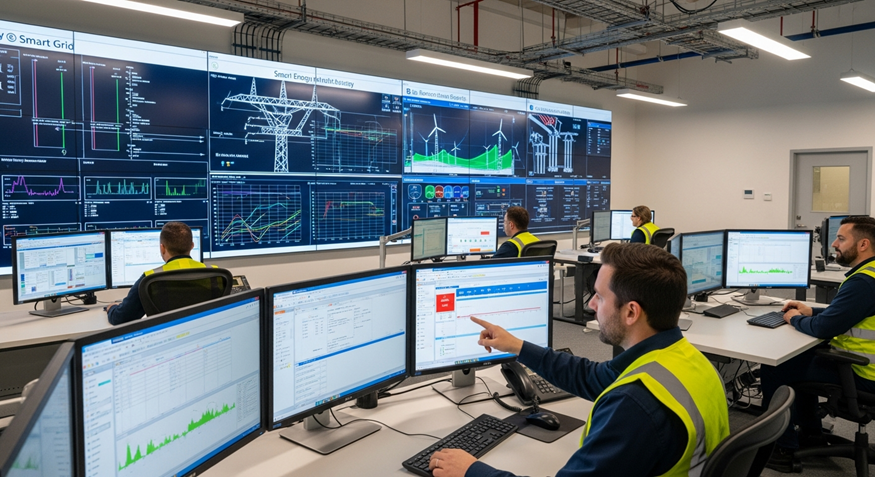
Supervisory Control and Data Acquisition, better known as SCADA, systems are designed for high-level process supervision. These systems allow operators to monitor and control industrial processes from a central location, often over large geographical distances. Think of managing a water utility or an electrical grid.
SCADA systems collect data in real time from remote sensors and equipment and present it to a human operator through a graphical interface. This allows for quick decision-making and remote adjustments, making it a key tool for process automation in critical infrastructure sectors.
The market for SCADA is expected to grow rapidly. This is due to the rising demand for real-time process visualization and remote asset monitoring. Integrating SCADA with cloud platforms and edge computing is enhancing its data analytics capabilities, while a growing focus on cybersecurity is driving the adoption of more secure architectures.
Human-Machine Interface (HMI) Solutions
A Human-Machine Interface (HMI) is the part of a machine that allows a person to interact with it. In the context of industrial automation, HMIs are the dashboards or touchscreens that operators use to control machines, monitor processes, and view data. They are the user-friendly face of complex automation solutions.
Modern HMIs provide graphical visualizations of the manufacturing process, making it easy for operators to see what's happening at a glance. They can display real-time data, alarms, and trends, allowing for quick responses to any issues that may arise on the factory floor, from industrial robots to conveyor belts.
As the Industrial Automation Sector becomes more advanced, the role of the HMI becomes even more critical. They are essential for bridging the gap between human intuition and machine precision, ensuring that workers can effectively manage and collaborate with automated systems to achieve production goals.
Key Trends Impacting Industrial Automation Today
The field of industrial automation is constantly being reshaped by powerful new technologies. Trends like artificial intelligence, machine learning, and the Industrial Internet of Things (IIoT) are not just buzzwords; they are actively transforming factory floors and production lines around the world. These innovations are making automation smarter, more connected, and more capable than ever before.
By embracing these trends, companies can unlock new levels of efficiency, productivity, and insight. From robots that learn on the job to entire factories that operate as a single, connected ecosystem, the future of manufacturing is being built today. Let’s examine these key trends in more detail.
Adoption of Artificial Intelligence and Machine Learning
The integration of artificial intelligence (AI) and machine learning (ML) is one of the most significant trends in the Industrial Automation Sector. This advanced automation technology allows systems to learn from data, identify patterns, and make intelligent decisions without human intervention.
AI and machine learning are revolutionizing several aspects of manufacturing. They enable systems to perform advanced tasks that were previously impossible for standard automation, leading to smarter and more adaptive industrial processes. Some key applications include:
- Advanced process analytics and optimization
- Predictive maintenance to reduce downtime
- Adaptive control for real-time adjustments
- Real-time decision support for operators
This trend is creating substantial growth opportunities as industries seek to improve asset utilization and reduce unplanned operational interruptions. Companies are investing in these technologies to gain a competitive edge and make their operations more resilient.
Rise of Industrial Robotics
Industrial robots are becoming more common and more capable. The industrial robots segment is expected to see the fastest growth from 2026 to 2033, driven by the adoption of smart manufacturing, rising labor costs, and the demand for high-precision production.
A key development in this area is the emergence of collaborative robots, or "cobots." Unlike traditional industrial robots that are kept in cages for safety, cobots are designed to work safely alongside human workers. They can handle repetitive tasks, freeing up people to focus on jobs that require more skill and judgment.
The integration of AI, IoT, and machine vision has made robots more flexible and productive. They can now make real-time decisions and adapt to changing conditions on the factory floor. This is expanding their use across various sectors, including automotive, electronics, and pharmaceuticals.
Integration of Industrial Internet of Things (IIoT)
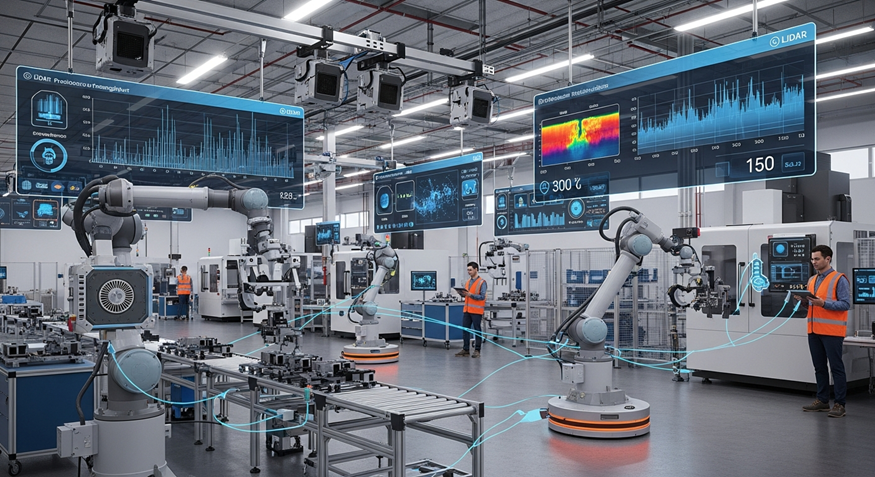
The Industrial Internet of Things (IIoT) is about connecting machines, sensors, and people on a massive scale. This network of connected devices generates a vast amount of data that can be used to monitor, control, and optimize industrial processes.
This connectivity is a cornerstone of the digital transformation toward smart factories. By leveraging IIoT, companies can gain a complete view of their operations, from individual machines to the entire supply chain. This enables better decision-making and more efficient resource management.
Technologies like edge computing are also playing a crucial role. Edge computing allows data to be processed closer to its source, which reduces latency and enables faster, real-time responses. This combination of IIoT and edge computing is helping to create the intelligent and agile manufacturing environments of the future.
Smart Manufacturing and Digital Transformation
The concepts of smart manufacturing and digital transformation are guiding the evolution of the industrial world. This shift involves using data-driven automation systems to create highly efficient and flexible production environments. It’s about more than just adding robots; it’s a complete rethinking of how factories operate.
Process automation is a key part of this transformation, connecting everything from the factory floor to the executive office. This holistic approach allows for greater visibility, control, and optimization across all business functions. Let’s look at how this is being achieved in practice.
Real-Time Data Collection and Analytics
A core principle of smart manufacturing is the ability to collect and analyze data in real time. Modern Industrial Automation Sector technology, equipped with sensors and connected to the IIoT, constantly gathers information about every aspect of the production process.
This continuous stream of data is then subjected to powerful data analysis. Algorithms can identify trends, spot anomalies, and uncover insights that would be impossible for a human to find. This allows for immediate adjustments and optimizations to improve performance.
This capability is transforming traditional production environments into fully connected smart factories. By having access to accurate, up-to-the-minute information, managers can make better-informed decisions, leading to increased productivity, reduced costs, and higher quality products.
Predictive Maintenance Using Automation
One of the most valuable applications of real-time data is predictive maintenance. Instead of waiting for a machine to break down or performing maintenance on a fixed schedule, automation systems can now predict when a failure is likely to occur.
By analyzing data from sensors that monitor factors like temperature, vibration, and energy consumption, algorithms can detect subtle signs of wear and tear. The system can then alert maintenance teams before a problem becomes critical, allowing them to schedule repairs at a convenient time.
This approach to process automation dramatically reduces unplanned downtime, which is a major source of lost productivity and revenue for manufacturers. Predictive maintenance not only extends the life of equipment but also improves overall quality control by ensuring machines are always operating at peak performance.
Connected Factory Ecosystems
The ultimate goal of digital transformation is to create connected factory ecosystems. In these smart factories, every machine, system, and person is interconnected, sharing data and working together seamlessly. This represents a complete overhaul of traditional factory automation.
This high level of integration is made possible by the Internet of Things (IoT). It connects not just the equipment within the factory but also links the factory to the wider supply chain, including suppliers and customers. This creates a transparent and responsive network.
In a connected factory, production can be adjusted on the fly to meet changing customer demands or respond to supply chain disruptions. This agility gives companies a significant competitive advantage, allowing them to operate more efficiently and effectively in a fast-paced global market.
Growth Outlook for the Industrial Automation Sector Market
The future looks bright for the industrial automation market. With a growing emphasis on efficiency, safety, and productivity across all industries, the demand for advanced automation solutions is skyrocketing. This growth is creating numerous investment opportunities for businesses looking to innovate and stay competitive.
From smart factories in Asia to advanced manufacturing in North America, the expansion is global. Let's delve into the specific market projections and the factors influencing this impressive growth.
Market Size and Share Projections in the United States
The U.S.Industrial Automation Sector market is poised for significant expansion, with a projected compound annual growth rate (CAGR) of over 10% from 2026 to 2033. This growth is fueled by a strong focus on digital transformation, advanced manufacturing, and the reshoring of production to enhance supply chain resilience.
Rising labor costs and workforce shortages are also driving robust demand for automation. Companies are increasingly investing in technologies like collaborative robotics and AI-driven predictive maintenance to meet production demands while optimizing their operations. These market size projections signal strong confidence and encourage further investment in the sector.
The following table provides a snapshot of the global market growth, which reflects the trends seen in the U.S. market:
| Metric | Value |
|---|---|
| 2025 Market Size | USD 226.76 Billion |
| 2033 Projected Market Size | USD 504.38 Billion |
| CAGR (2026–2033) | 10.5% |
Global Market Expansion and Trends
The global industrial automation market is on a powerful growth trajectory. It was valued at $226.76 billion in 2025 and is projected to reach $504.38 billion by 2033, expanding at a CAGR of 10.5%. This growth is driven by the global demand for greater efficiency and precision in manufacturing industries.
Asia Pacific currently dominates the market, holding over 37% of the revenue share in 2025, with China being a major player. This region's rapid industrialization and strong government support for smart manufacturing initiatives are key drivers.
Technological advancements in AI, machine learning, and IoT are accelerating the adoption of new automation technology and control systems worldwide. This expansion is transforming industries and creating a more interconnected and efficient global production landscape.
Investment Opportunities and Influencing Factors
The strong growth projections for the Industrial Automation Sector market create a wealth of investment opportunities. As companies strive for a competitive edge, they are increasingly willing to invest in advanced automation solutions that promise greater efficiency and cost savings.
Market size and share projections play a crucial role in influencing these investment decisions. A growing market indicates strong demand and a favorable return on investment, encouraging companies to adopt new technologies. Factors like rising labor costs and a shortage of skilled workers further accelerate this trend.
Governments worldwide are also fueling growth through initiatives that promote industrial modernization. Tax incentives, subsidies, and grants lower the financial barriers for companies to invest in automation, making it an attractive option for businesses of all sizes looking to optimize their operations.
Benefits of Implementing Industrial Automation
Implementing industrial automation brings a host of benefits that can transform a business. Beyond the obvious boost in speed, automation leads to significant cost reduction and a dramatic improvement in product quality. It's about working smarter, not just harder.
By automating key processes, companies can achieve a level of precision and consistency that is simply not possible with manual labor alone. Let’s explore some of the primary advantages that make automation a game-changer for modern industries.
Increased Productivity and Efficiency in Factories
One of the most significant benefits of factory automation is the dramatic increase in productivity. Automated systems can operate 24/7 without breaks, which means production lines can run continuously, leading to a much higher output.
This enhanced operational efficiency comes from the ability to streamline operations. Automation reduces the time it takes to complete tasks, minimizes downtime between processes, and ensures a smooth workflow throughout the factory. Key benefits include:
- Higher production rates due to continuous operation.
- Reduced assembly time per product.
- Better control and management of the production process.
- Minimized downtime for changeovers and maintenance.
By taking over repetitive and time-consuming tasks, automation allows factories to produce more in less time. This boost in productivity is essential for meeting growing consumer demand and staying competitive in a global market.
Enhanced Product Quality and Consistency
Industrial Automation Sector plays a crucial role in enhancing product quality and ensuring consistency across every item produced. Unlike humans, machines can perform the exact same task, in the exact same way, thousands of times without variation or fatigue.
This precision significantly reduces the chance of human error, which is a common cause of defects and quality issues. Automation systems can be programmed to meet precise specifications, ensuring that each product is manufactured to the highest standards.
Furthermore, automated quality control systems, such as machine vision, can inspect products with a level of detail and speed that surpasses human capabilities. These systems can detect even the smallest imperfections, ensuring that only flawless products make it to the customer. This leads to greater customer satisfaction and a stronger brand reputation.
Cost Reduction and Resource Optimization
Implementing automation solutions can lead to substantial cost savings over the long term. While there is an initial investment, the returns are seen in reduced operational expenses. Automating the production process reduces the need for manual labor, which lowers costs associated with wages, benefits, and training.
Resource optimization is another key area where automation delivers savings. Automated systems are incredibly precise, which means they use raw materials more efficiently and generate less waste. They can also be programmed to optimize energy consumption, turning off when not in use and running at the most efficient speeds.
By streamlining workflows and reducing errors, automation also minimizes the costs associated with rework and scrap materials. This combination of lower labor costs, reduced material waste, and improved energy efficiency makes automation a powerful tool for improving a company's bottom line.
Sustainability and Environmental Impact
Industrial automation isn't just about boosting profits; it also has a significant role to play in promoting sustainability. By optimizing processes, automation can help companies reduce their environmental impact, improve energy efficiency, and minimize waste. This makes it a key technology for building a greener industrial sector.
As environmental regulations become stricter and consumers demand more sustainable products, automation provides practical solutions for businesses to meet these expectations. Let’s look at how automation is contributing to a more sustainable future.
Energy Efficiency Enabled by Automation
Improving energy efficiency is a major way that automation technology contributes to sustainability. Automated systems can precisely control industrial processes to ensure they consume the minimum amount of energy required to get the job done.
For example, Industrial Automation Sector can optimize the operation of motors, heating systems, and lighting, ensuring they are only running when needed and at the most efficient levels. This not only reduces a company's carbon footprint but also leads to significant cost reduction on energy bills. Key ways automation helps include:
- Optimizing machine performance to reduce power consumption.
- Implementing smart shutdowns for idle equipment.
Many government initiatives, like Europe’s Green Deal, incentivize the adoption of automation solutions that reduce energy consumption and carbon emissions, further driving this trend.
Waste Minimization Through Advanced Controls
Waste minimization is another critical area where automation makes a big difference. The precision of automated control systems means that raw materials are used much more efficiently, leading to less scrap and waste during production.
Advanced technologies like machine vision and sensors play a key role in this. They can perform real-time quality control, catching defects early in the process before more resources are wasted on a faulty product. This prevents defective items from continuing down the production line.
By ensuring that processes are performed correctly the first time, automation greatly reduces the need for rework, which is a major source of wasted materials, energy, and time. This focus on getting it right from the start is fundamental to sustainable manufacturing.
Role of Automation in Meeting Regulatory Standards
Meeting stringent environmental and safety regulatory standards is a major challenge for many industries. Automation technology provides a reliable way to ensure compliance by providing precise control and comprehensive data logging for industrial processes.
Process automation systems can continuously monitor emissions, energy use, and waste output, ensuring that they stay within legally mandated limits. If a parameter starts to drift out of compliance, the system can automatically make adjustments or alert an operator.
This automated monitoring and quality control creates a detailed, tamper-proof record of a company's operations. This data is invaluable during audits and helps prove compliance with regulatory standards, protecting the company from fines and legal issues while promoting responsible environmental stewardship.
Challenges Facing the Industrial Automation Sector
While the future of industrial automation is promising, the sector is not without its challenges. As factories become more connected and reliant on technology, new risks emerge. Issues like cybersecurity threats, a growing skills gap in the workforce, and difficulties with integrating new technology with legacy systems are all significant hurdles.
Addressing these challenges is crucial for the continued growth and success of the industry. Companies must be proactive in finding solutions to navigate these complex issues. Let’s explore some of the biggest challenges in more detail.
Cybersecurity Risks and Solutions
As industrial automation systems become more connected through digital transformation, they also become more vulnerable to cybersecurity threats. A cyberattack on a factory's control systems could disrupt production, compromise safety, or lead to the theft of sensitive intellectual property.
The increasing integration of IT and OT (operational technology) networks has expanded the attack surface, making it easier for malicious actors to gain access. Securing these complex environments requires a multi-layered approach that goes beyond traditional IT security.
Solutions include implementing robust firewalls, securing network access, regularly updating software, and providing ongoing cybersecurity training for employees. Companies like Honeywell are launching enhanced cybersecurity tools specifically designed for industrial processes to help businesses protect their critical automation systems from these evolving threats.
Skills Gap and Workforce Adaptation
The rapid advancement of automation technology has created a significant skills gap. There is a growing shortage of workers with the necessary expertise to design, implement, and maintain modern automated systems. This gap can slow down the adoption of new technologies.
At the same time, the existing workforce needs to adapt to a changing workplace. As the Industrial Automation Sector takes over more repetitive tasks, human workers will need to develop new skills to work alongside these systems. This requires a major focus on retraining and upskilling programs.
Addressing this challenge involves a collaborative effort between educational institutions, governments, and private companies. By investing in training and creating clear career pathways, we can ensure that the workforce is prepared for the jobs of the future and that companies can find the talent they need to thrive.
Integration Difficulties with Legacy Systems
Many established factories have been operating for decades and rely on legacy systems that are still functional but outdated. Integrating modern industrial automation technology with these older systems can be a major challenge.
Legacy systems often use proprietary communication protocols and lack the connectivity features of modern equipment. This makes it difficult to collect data and incorporate them into a unified process automation strategy. Simply ripping out and replacing everything is often too expensive and disruptive.
The solution often lies in using gateway devices and specialized software to bridge the gap between old and new technologies. While this can add complexity to the initial setup, it allows companies to gradually modernize their facilities and improve operational efficiency without a massive upfront investment.
Conclusion
In conclusion, the industrial automation sector is experiencing transformative changes driven by cutting-edge technologies and innovative practices. From the increasing integration of AI and machine learning to the rise of the Industrial Internet of Things, these trends are reshaping how industries operate, enhancing efficiency, productivity, and sustainability. As companies embrace smart manufacturing and digital transformation, they unlock opportunities for growth while addressing challenges such as cybersecurity and workforce adaptation. Staying informed about these developments is crucial for businesses looking to thrive in this rapidly evolving landscape. If you're interested in exploring how industrial automation can benefit your operations, don't hesitate to reach out for a consultation!
Frequently Asked Questions
What are real-world examples of industrial automation systems?
Real-world examples of the Industrial Automation Sector systems are everywhere. In automotive manufacturing, robots on assembly lines perform welding and painting. In the food and beverage industry, automated systems handle bottling and packaging. Conveyor belts that move products through a factory are also a classic example of automation handling repetitive tasks in the manufacturing process.
How does industrial automation contribute to sustainability in industry?
Industrial Automation Sector contributes to sustainability by improving energy efficiency, enabling waste minimization, and helping companies meet environmental regulations. By optimizing processes, automation reduces resource consumption and lowers a company's overall environmental impact. This makes it a crucial tool for building a greener and more responsible industrial sector.
What are the main statistics about the industrial automation sector globally?
The global Industrial Automation Sector market is booming. The market size was estimated at $226.76 billion in 2025 and is projected to reach $504.38 billion by 2033, growing at a CAGR of 10.5%. This growth is driven by increasing production demands and the widespread adoption of advanced automation systems across industries.
You might also like