Navigating Changes in the Industrial Automation Sector
Navigating Changes in the Industrial Automation Sector
Key Highlights
- Industrial Automation Sector utilizes control systems, robotics, and software to manage processes with minimal human input, forming the core of modern factory automation.
- The primary types of automation systems are fixed (hard), programmable, flexible, and integrated, each serving different production needs.
- Implementing industrial automation sector boosts productivity, enhances quality control, improves workplace safety, and increases manufacturing flexibility.
- Key trends include the rise of Industry 4.0, smart automation, advancements in machine learning, and the use of IoT for predictive maintenance.
- While the initial investment is high, automation delivers a strong ROI through reduced operating costs and increased efficiency.
Introduction
Welcome to the world of industrial automation, where machines are not just tools but partners in progress. This technology uses computer-controlled systems to run industrial processes with very little human involvement, transforming modern manufacturing. It's about letting machines handle the repetitive work so people can focus on strategy and innovation. As industries face growing competition, automation solutions are becoming essential for streamlining operations, boosting productivity, and staying ahead. Let's explore the exciting changes happening in this dynamic sector.
Understanding Industrial Automation Sector in the Modern Era
Industrial Automation Sector is at the heart of today's smart manufacturing, representing a major shift from manual labor to self-operating machines guided by human strategy. This evolution involves using advanced automation technology, including industrial robots and sophisticated control systems, to manage the production line.
By integrating these technologies, factories can achieve a level of efficiency and precision that was once unimaginable. Let's look closer at what industrial automation means, how it functions within the manufacturing process, and the core components that make it all possible.
Defining Industrial Automation Sector
At its core, industrial automation sector is the use of computer-controlled systems like robots and specialized software to manage industrial processes with minimal human intervention. It’s about transitioning from a model where people operate machines to one where machines operate themselves, allowing your team to focus on higher-level strategic decisions.
This technology is designed to handle repetitive tasks that were once performed by people. By automating these actions, you can create a more efficient and reliable workflow. This doesn't just impact the factory floor; it optimizes the entire supply chain by ensuring processes are consistent and predictable.
Essentially, industrial automation sector systems are the building blocks of the modern "smart factory." They enable a seamless flow of operations, from raw material intake to the final packaged product, all while reducing the need for constant manual oversight and adjustment.
How Industrial Automation Works in Manufacturing
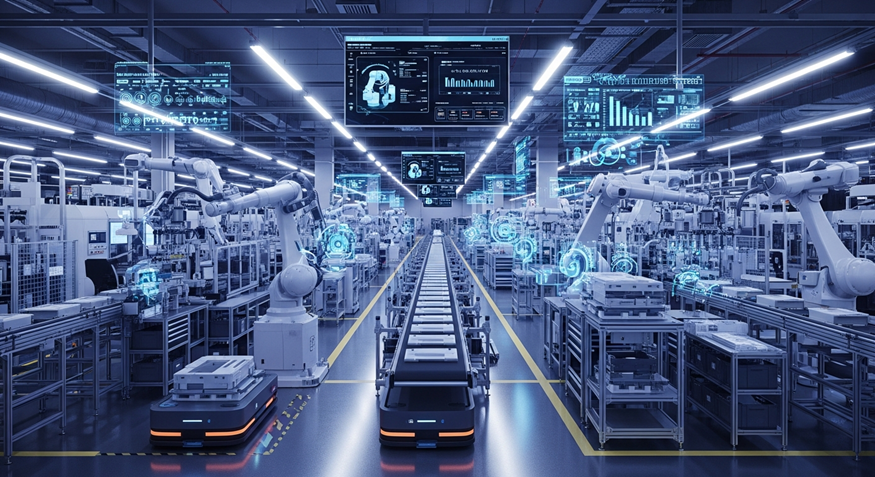
Industrial automation sector operates on a continuous feedback loop. In this system, machines monitor conditions, process data, and respond in real time, allowing them to self-adjust and maintain optimal performance without constant human oversight. This is central to modern factory automation.
The process follows a predictable chain of events. First, sensors detect what's happening on the production line. Then, controllers like PLCs receive this information and make decisions based on pre-programmed logic. Finally, actuators, motors, and robots execute the physical movements or specific tasks required.
This closed-loop system ensures every step of the manufacturing process, whether for mass production or smaller batch production, is faster, safer, and more consistent. Industrial networks connect all these devices, while software provides operators with a real-time view, enabling them to scale operations without relying on more manual labor.
Core Components and Technologies Used
The engine of the industrial automation sector is a combination of powerful hardware and intelligent software. These components work together as part of integrated control systems to manage and execute complex tasks on the factory floor, driving the digital transformation of manufacturing.
The key technologies that make this possible include a range of sophisticated devices and platforms. These tools are the building blocks for creating efficient, self-regulating production environments. They enable everything from simple repetitive motions to complex data analysis at the network's edge.
Here are some of the core components:
- Programmable Logic Controllers (PLCs): These are ruggedized computers that act as the brains of the operation, making decisions based on sensor inputs.
- Industrial Robots: Mechanical arms and other robotic systems perform physical tasks like welding, painting, and assembly.
- Sensors and Vision Systems: These act as the eyes and ears, detecting products, reading codes, and inspecting for quality.
- Human-Machine Interfaces (HMIs): These are the dashboards that give operators a real-time view into production and control over the system.
- Machine Learning and Edge Computing: Advanced software analyzes data right on the factory floor to optimize processes and predict issues.
Evolution and Historical Milestones of Industrial Automation Sector
The journey of industrial automation sector is a story of continuous innovation. It began with simple mechanization and has evolved into the complex, interconnected automation systems we see today. The introduction of industrial robots was a game-changer, but the evolution didn't stop there.
This progression has paved the way for the digital transformation of entire industries. As we explore the key developments and technological turning points, you'll see how past shifts have shaped the powerful automation solutions available now and provided valuable lessons for the future.
Key Developments from the 20th Century to Today
The concept of industrial automation sector has roots stretching back to the 18th century with the first automated flour mill. However, the term "automation" itself was coined at Ford Motor Company in 1946, marking a new era of mechanization in production. This period saw the rise of numerical control (NC) machines, the predecessors to modern CNC machines.
During the latter half of the 20th century, process automation became more sophisticated, particularly for batch production. The development of programmable logic controllers (PLCs) and industrial robots allowed for greater flexibility and precision in manufacturing tasks, moving beyond simple, fixed assembly lines.
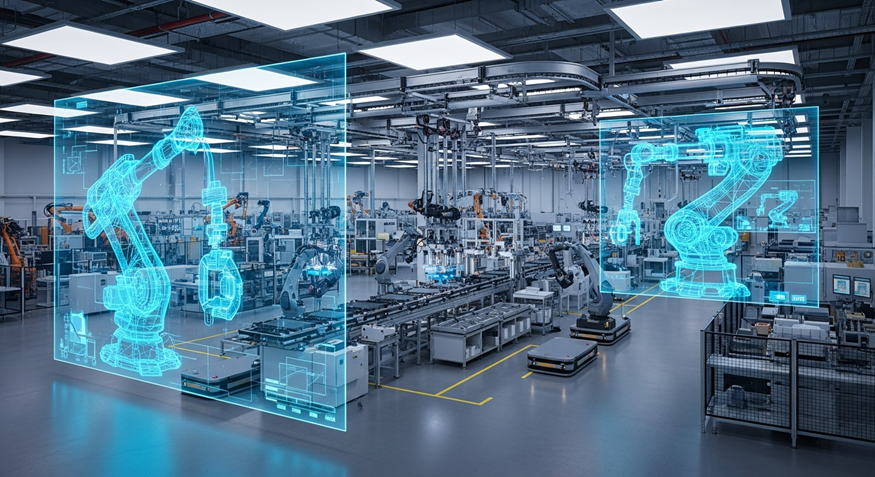
Today, we are witnessing another leap with technologies like the digital twin, which creates a virtual replica of a physical system for testing and optimization. These advancements have transformed industrial automation from a set of standalone tools into a fully integrated and intelligent system, driving efficiency and innovation across sectors.
Impact of Technological Progress
Technological progress has been the primary driver behind the evolution of industrial automation, pushing factories toward the era of Industry 4.0 and smart manufacturing. Early automation focused on productivity and cost reduction, but today's advanced technologies are unlocking new levels of quality, flexibility, and intelligence.
The convergence of several key innovations has been particularly impactful. These technologies don't just improve existing processes; they enable entirely new ways of working, allowing for real-time adjustments, predictive insights, and greater connectivity across the entire production ecosystem.
Here are some of the most influential technological advancements:
- Artificial Intelligence (AI) and Machine Learning: These allow systems to learn from data and optimize processes automatically.
- The Internet of Things (IoT): Connected sensors gather vast amounts of data for better decision-making and performance monitoring.
- Cloud Computing: Provides the power and storage needed to analyze large datasets and manage interconnected systems.
- Robotics: Advanced robots, including collaborative models, are more adaptable and capable of performing complex tasks alongside humans.
Lessons from Major Shifts in the Sector
The history of the industrial automation sector market is filled with valuable lessons. One of the most significant is the challenge of integrating new technologies with legacy systems. Companies that have successfully navigated these shifts understand that a phased approach is often more effective than a complete overhaul, ensuring a smoother transition and minimizing disruption.
Another key takeaway is the importance of continuous improvement. The most successful automation systems are not static; they are designed to evolve. This means building in flexibility and scalability from the start, allowing for future upgrades and adjustments as technology and production needs change. It also requires a commitment to ongoing training and support.
Finally, past shifts have highlighted the need to balance technological advancement with practical considerations like regulatory compliance and the human element. Reducing human error is a major benefit of automation, but it also introduces new needs for skilled workers who can manage, maintain, and optimize these complex systems.
Types of Industrial Automation Sector Systems
Not all automation is created equal. The different types of industrial automation systems are each designed to meet specific production needs, from high-volume, repetitive tasks to highly customized, small-batch manufacturing. Understanding these distinctions is key to choosing the right solution for your operations.
The main categories are fixed or hard automation, programmable automation, and flexible automation, along with integrated systems that combine these elements. Let’s break down what each type entails and where it works best, so you can make an informed decision for your factory.
Fixed automation, also known as hard automation, is designed for high-volume, repetitive production. This system uses specialized equipment configured to perform a single set of specific tasks over and over again. Once it’s set up, it runs continuously with minimal adjustments, making it incredibly efficient for mass production.
Think of assembly lines in automotive manufacturing or the machinery in a soft drink bottling plant. In these environments, the production process remains consistent, and the goal is to produce a large quantity of identical products as quickly and cost-effectively as possible. Hard automation excels here by offering high speed and consistent quality.
While it requires a significant initial investment, fixed automation dramatically reduces the need for human labor in repetitive jobs and lowers the cost per unit produced. However, its lack of flexibility means it's not suitable for products that require frequent changes or customization.
Programmable Automation Adaptations
Programmable automation offers a solution for industries that need more versatility than fixed automation can provide. This type of system is ideal for batch production, where product designs change periodically. The equipment is controlled by a program that can be modified to handle different repetitive tasks or produce various product styles.
When a new batch of products is needed, the system can be reprogrammed. This might involve changing the code in programmable logic controllers (PLCs) or adjusting machine settings. While there is a nonproductive period during this changeover, it provides the flexibility to adapt to shifting production demands without replacing the entire system.
This makes programmable automation a great fit for industries like electronics manufacturing or food processing, where different product models or variants are produced on the same line. It strikes a balance between efficiency for repetitive tasks and the adaptability required for moderate production volumes with product variations.Programmable automation offers a solution for industries that need more versatility than fixed automation can provide. This type of system is ideal for batch production, where product designs change periodically. The equipment is controlled by a program that can be modified to handle different repetitive tasks or produce various product styles.
When a new batch of products is needed, the system can be reprogrammed. This might involve changing the code in programmable logic controllers (PLCs) or adjusting machine settings. While there is a nonproductive period during this changeover, it provides the flexibility to adapt to shifting production demands without replacing the entire system.
This makes programmable automation a great fit for industries like electronics manufacturing or food processing, where different product models or variants are produced on the same line. It strikes a balance between efficiency for repetitive tasks and the adaptability required for moderate production volumes with product variations.
Flexible Automation for Versatility
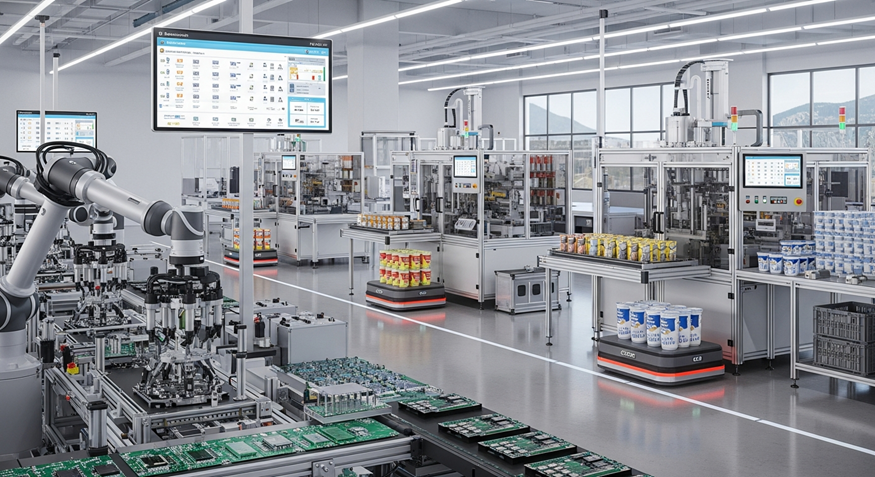
Flexible automation, or soft automation, represents a major step in the digital transformation of manufacturing. It is an extension of programmable automation that allows for rapid changes between different products with almost zero downtime. This makes it perfect for smart factories that need to adapt quickly to market demands.
This system can handle a wide variety of products in sequence without needing to group them into batches. The changeovers happen quickly and automatically, thanks to the use of advanced technologies like industrial robots, sensors, and smart software. This provides an unmatched level of versatility in production.
Flexible automation is particularly beneficial for:
- Custom product manufacturing: Where each item might have unique specifications.
- Industries with high product variety: Such as consumer goods or textiles.
- Just-in-time production: Allowing companies to produce what is needed, when it is needed, with help from tools like collaborative robots.
Integrated Automation Networks
Integrated automation is the pinnacle of modern process automation, bringing together multiple machines, processes, and control systems into one cohesive network. Instead of having isolated automated stations, every part of the production line communicates and works in sync, from robots and sensors to data systems.
This holistic approach is the foundation of today's smart factories. By leveraging the industrial IoT (Industrial Internet of Things), these systems can monitor and adjust production in real time. Data, individual machines, and processes are all unified under a single command system, streamlining communication and eliminating bottlenecks.
Implementing an integrated automation network requires significant upfront investment and expertise. However, the benefits are substantial. It reduces downtime, improves product consistency, and allows operations to scale more efficiently than ever before, creating a truly unified and intelligent production environment.
The world of industrial automation is constantly evolving, with new trends emerging that promise to redefine the factory of the future. By 2025, we can expect automation technology to be even smarter, more connected, and more data-driven than ever before. Key trends include the expansion of smart automation, machine learning, and the Internet of Things (IoT).
These advancements are not just about doing things faster; they're about doing them smarter. From the rise of edge computing to the power of predictive analytics, these trends are set to revolutionize how manufacturers operate. Let's examine some of the biggest shifts on the horizon.v
Smart Automation and Industry 4.0
Smart automation is the central pillar of Industry 4.0, the current phase of the industrial revolution focused on interconnectivity and data exchange. This trend moves beyond simple task automation to create intelligent, self-optimizing systems that form the backbone of smart manufacturing.
These advanced automation solutions are a key part of the broader digital transformation in the sector. They integrate technologies like artificial intelligence and the Industrial Internet of Things to create factories that are not only automated but also adaptive and responsive. This allows for real-time decision-making and continuous process improvement.
A crucial element of this trend is edge computing, which involves processing data closer to where it is generated, rather than sending it to a centralized cloud. This reduces latency and enables faster responses, making production lines more agile and efficient. Smart automation is turning factories into dynamic, interconnected ecosystems.
Advancements in Robotics and Machine Learning
The fields of robotics and machine learning are advancing at a rapid pace, and their impact on the industrial automation sector is profound. Industrial robots are becoming more sophisticated, capable of handling a wider range of tasks with greater precision and speed. The rise of collaborative robots, or "cobots," is particularly noteworthy, as they are designed to work safely alongside humans.
Machine learning algorithms are making automation systems smarter and more autonomous. Instead of just following pre-programmed instructions, these systems can learn from data to improve their own performance over time. This capability is transforming process automation, allowing for real-time optimization and proactive problem-solving.
Together, these advancements are creating automation systems that are more flexible, intelligent, and efficient. Machine learning can analyze sensor data to predict when a robot needs maintenance, while advanced robotics can handle delicate or complex assembly tasks that were previously impossible to automate.
Internet of Things (IoT) in Automation
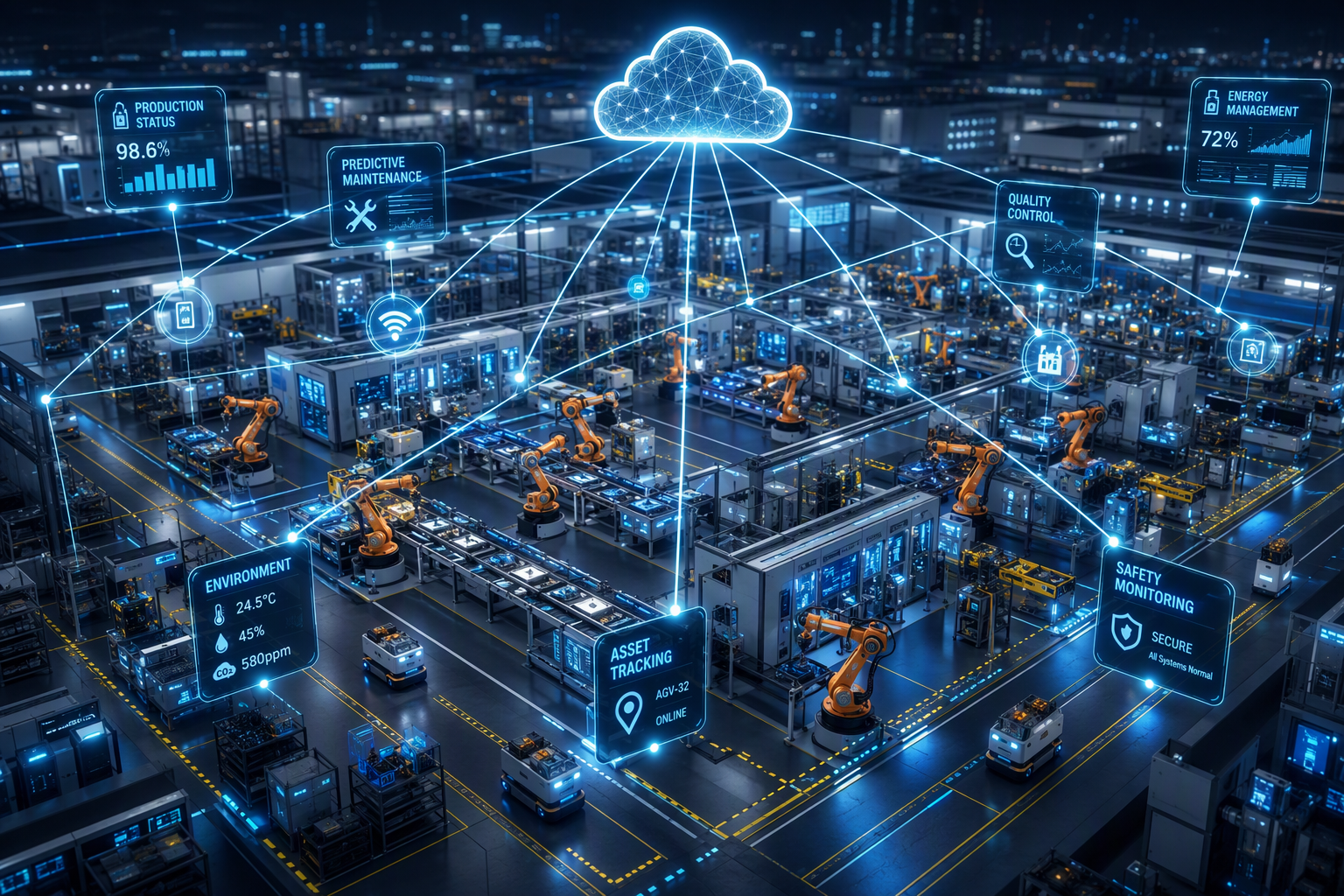
The Internet of Things (IoT), and more specifically the Industrial IoT (IIoT), is a transformative force in automation. It involves embedding sensors and connectivity into machinery and equipment on the production line, allowing them to collect and exchange vast amounts of data in real time.
This constant stream of information provides unprecedented visibility into the manufacturing process. By applying data analysis to this information, companies can gain deep insights into their operations, identify inefficiencies, and make data-driven decisions to improve performance. This is a cornerstone of building smart factories.
The applications of IoT in automation are extensive and continue to grow. Some of the key benefits include:
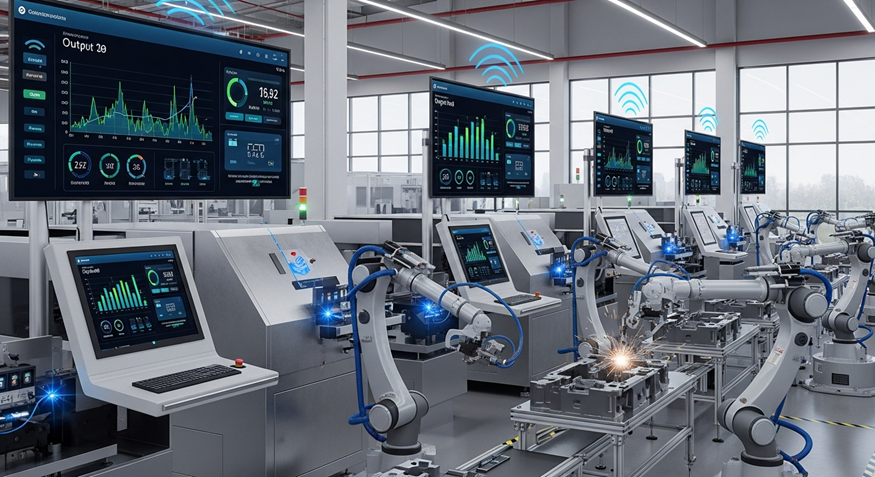
- Real-time monitoring: Tracking machine health and performance instantly.
- Predictive maintenance: Identifying potential equipment failures before they happen.
- Supply chain optimization: Monitoring inventory levels and material flow.
- Enhanced quality control: Using sensor data to detect defects on the production line.
Data Analytics and Predictive Maintenance
One of the most valuable outcomes of a connected factory is the ability to perform advanced data analytics. By analyzing the massive amounts of data generated by sensors and automation systems, manufacturers can uncover hidden patterns, identify root causes of problems, and optimize for greater operational efficiency.
A prime example of this is predictive maintenance. Instead of performing maintenance on a fixed schedule or waiting for a machine to break down, predictive maintenance uses data to forecast when a piece of equipment is likely to fail. This allows maintenance to be scheduled at the most convenient time, minimizing unplanned downtime and extending the life of the machinery.
This proactive approach not only saves money on repairs and lost production but also improves overall quality control. By ensuring that equipment is always running in optimal condition, manufacturers can reduce the likelihood of defects and maintain consistent product quality, making their automation systems even more valuable.
The industrial automation sector market is experiencing robust growth, and this trend is expected to continue. As global competition intensifies, businesses are increasingly turning to automation technology to streamline their production lines, enhance efficiency, and maintain a competitive edge.
This expansion is fueled by several key investment drivers, including the need to reduce costs, improve quality, and respond to rising production demands. Let's dive into the current market statistics, explore global sector insights, and examine the forecasts that are shaping investment in this dynamic field.
Current Market Statistics in the United States
The industrial automation sector market in the United States is a significant and growing sector. In 2021, the global market reached $191 billion and is projected to more than double, hitting an estimated $395 billion by 2029. This rapid growth underscores the increasing reliance on factory automation across various industries.
Key investment drivers in the U.S. include the need to improve the efficiency of the production process, strengthen the domestic supply chain, and combat labor shortages. Companies are investing in automation to enhance productivity, ensure consistent quality, and reduce operational costs, making it a critical component of modern manufacturing strategy.
The table below highlights the key market projections, illustrating the strong upward trend.
| Market Metric | Value/Forecast |
|---|---|
| Global Market Value (2021) | $191 Billion |
| Projected Global Market Value (2029) | $395 Billion |
Global Sector Insights
On a global scale, the industrial automation sector is being reshaped by the adoption of advanced technologies and the push for greater efficiency. The Industrial Internet of Things (IIoT) is a major catalyst, connecting machines and systems to create smarter, more responsive manufacturing environments around the world.
Companies in various regions are implementing automation solutions to gain a competitive edge. In developed economies, automation helps offset high labor costs and address workforce shortages. In emerging markets, it enables manufacturers to scale up production quickly and compete on a global stage with higher quality standards.
The drive for global industrial automation is universal. Whether it's through robotics in Asia, process automation in Europe, or integrated systems in North America, businesses everywhere are recognizing that investing in these technologies is essential for long-term survival and growth in an increasingly competitive marketplace.
Investment Drivers and Forecasts
Strong market growth projections are powerful investment drivers for industrial automation sector. When companies see forecasts predicting a doubling of the market size within a decade, it signals a stable and promising area for capital expenditure. These projections give businesses the confidence to invest in automation solutions, knowing they are aligning with a long-term trend.
The primary motivation behind these investments is the pursuit of tangible benefits. Companies are looking for a clear return on investment, which automation delivers through significant cost savings, improved efficiency, and enhanced product quality. The pressure to meet rising production demands and stay competitive is a major factor pushing businesses toward digital transformation.
Several key drivers are fueling this investment surge:
- Desire for cost savings: Reducing labor expenses and minimizing waste are top priorities.
- Need to meet production demands: Automation allows for 24/7 operation to increase output.
- The push for digital transformation: Companies are modernizing to stay competitive and resilient in a changing market.
Implementing industrial automation offers a wealth of benefits that go far beyond simply replacing manual labor. By introducing automation systems to handle repetitive tasks, companies can achieve significant improvements in operational efficiency, quality control, and overall profitability.
The advantages are clear: from substantial cost savings to a safer work environment, the case for automation is compelling. We will now explore some of the most impactful benefits, including increased productivity, enhanced quality, improved safety, and contributions to sustainability goals.
Increased Productivity and Efficiency
One of the most immediate and significant benefits of industrial automation is a dramatic increase in productivity. Automation solutions allow manufacturing plants to operate 24 hours a day, 7 days a week, without breaks or holidays. This continuous operation leads to a substantial boost in output and overall operational efficiency.
Automated systems are designed to streamline operations by performing tasks faster and more consistently than human labor. While a factory with human workers might run in multiple shifts, it still needs to close for maintenance and holidays. Automation minimizes this downtime, ensuring the production process is as uninterrupted as possible.
By taking over repetitive and physically demanding tasks, automation frees up your workforce to focus on more complex, value-added activities. This optimization of resources—both human and mechanical—is key to achieving a higher level of productivity and throughput in any manufacturing environment.
Enhanced Quality Control
Industrial Automation Sector plays a crucial role in enhancing quality control by significantly reducing the potential for human error. Unlike people, robots and automated machines do not get tired or distracted. They can perform the same task thousands of times with the exact same precision, leading to a much higher level of consistency in product quality.
Advanced technologies like vision systems and sensors are key components of this process. These systems can inspect products at high speeds, detecting even the smallest defects that might be missed by the human eye. This level of automated inspection ensures that only products meeting the highest standards make it off the production line.
Process automation contributes to quality in several ways:
- Consistency: Every action is performed identically, ensuring uniform product quality. For example, automated systems can reduce an error rate of 1-1.5% in manual assembly to as low as 0.00001%.
- Data Analysis: Automated systems continuously collect data, which can be analyzed to identify trends and make proactive adjustments to maintain quality.
- Precision: Automated equipment can perform tasks with a level of accuracy that is simply unattainable for human workers.
Improved Workplace Safety
Improving workplace safety is another major advantage of factory automation. Many industrial environments involve hazardous conditions, such as exposure to toxic materials, extreme temperatures, or heavy machinery. Automation systems can be deployed to handle these dangerous tasks, removing human workers from harm's way.
By automating repetitive or physically strenuous jobs, companies can also reduce the risk of injuries related to strain and fatigue. This not only protects your employees but also reduces costs associated with workplace accidents and lost workdays. The reduction of human error in critical processes further contributes to a safer operating environment.
The introduction of collaborative robots has further enhanced safety. These robots are designed with advanced sensors and safety features that allow them to work alongside people without the need for traditional safety cages. This creates a more flexible and interactive work environment where humans and machines can safely collaborate, combining the strengths of both.
Supporting Sustainability Goals
Industrial automation sector is becoming a powerful tool for companies looking to achieve their sustainability goals. By optimizing processes and improving efficiency, smart factories can significantly reduce their environmental impact. Automation helps in minimizing waste, conserving energy, and making more efficient use of raw materials.
One of the key ways automation supports green initiatives is through precise resource utilization. Automated systems can measure and dispense materials with incredible accuracy, reducing scrap and waste. They can also optimize energy consumption by running machines only when needed and operating them at their most efficient settings.
Automation's contribution to sustainability includes:
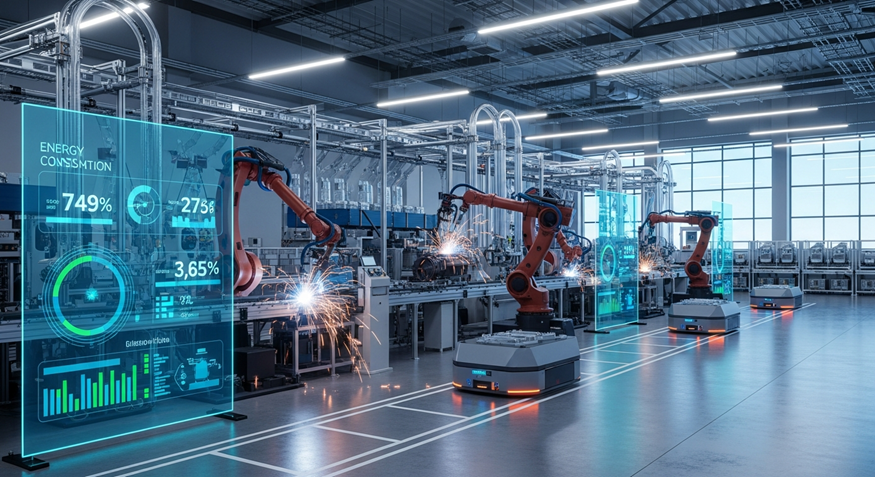
- Reduced Waste: Precise control over the production process means less material is wasted due to errors or inefficiencies.
- Energy Efficiency: Smart systems can power down equipment when not in use and optimize energy usage during operation, lowering the overall carbon footprint.
Challenges Facing the Industrial Automation Sector
Despite its many benefits, the path to implementing industrial automation sector is not without its challenges. Companies must navigate a series of hurdles, from technical integration issues and cybersecurity risks to workforce adjustments and evolving regulatory compliance standards.
Successfully adopting automation technology requires a strategic approach to overcoming these obstacles. Understanding these challenges is the first step toward developing effective solutions. Let's look at some of the key issues facing the sector, including compatibility problems, security threats, and the growing workforce skills gap.
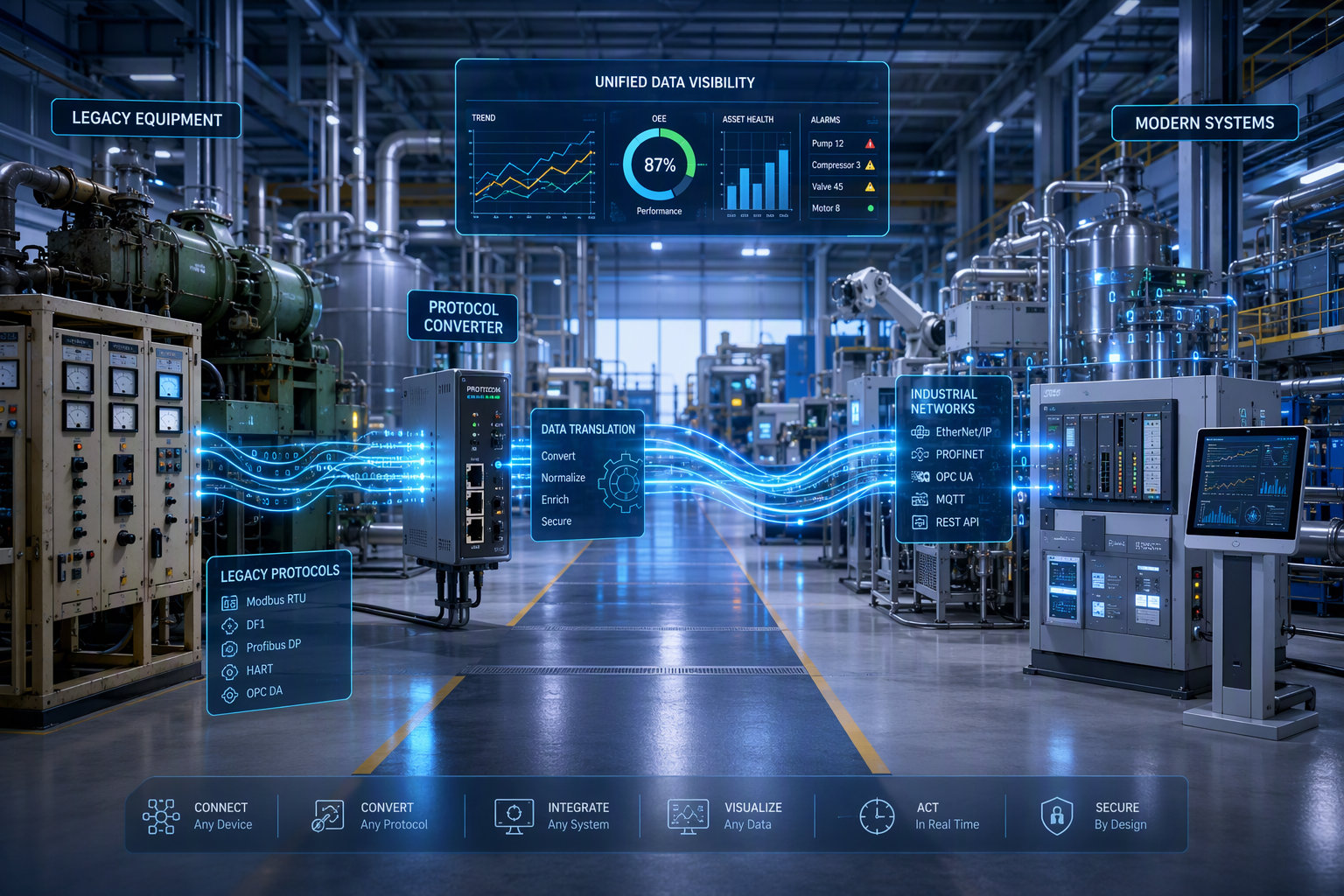
One of the most common challenges in industrial automation sector is dealing with integration and compatibility issues. Many factories have a mix of new and old equipment, often from different manufacturers. Getting these diverse legacy systems and modern control systems to communicate and work together seamlessly can be a complex and costly endeavor.
What Are The Benefits Of Industrial Automation?
The benefits of industrial automation include increased efficiency, reduced labor costs, enhanced precision, and improved safety. Automation streamlines processes, minimizes human error, and allows for 24/7 operation. Additionally, it can lead to higher production rates and better quality control, making operations more competitive in the ever-evolving market.
These integration issues can create bottlenecks in industrial operations, undermining the potential efficiency gains of new automation. A new robot on the assembly line won't deliver its full value if it can't properly sync with an older conveyor system or data management platform.
Effective process automation relies on a cohesive ecosystem where all components speak the same language. Overcoming these compatibility challenges often requires careful planning, custom software development, or the use of intermediary platforms that can translate between different systems. It's a critical step in creating a truly integrated and efficient automated environment.
Cybersecurity Risks and Mitigation
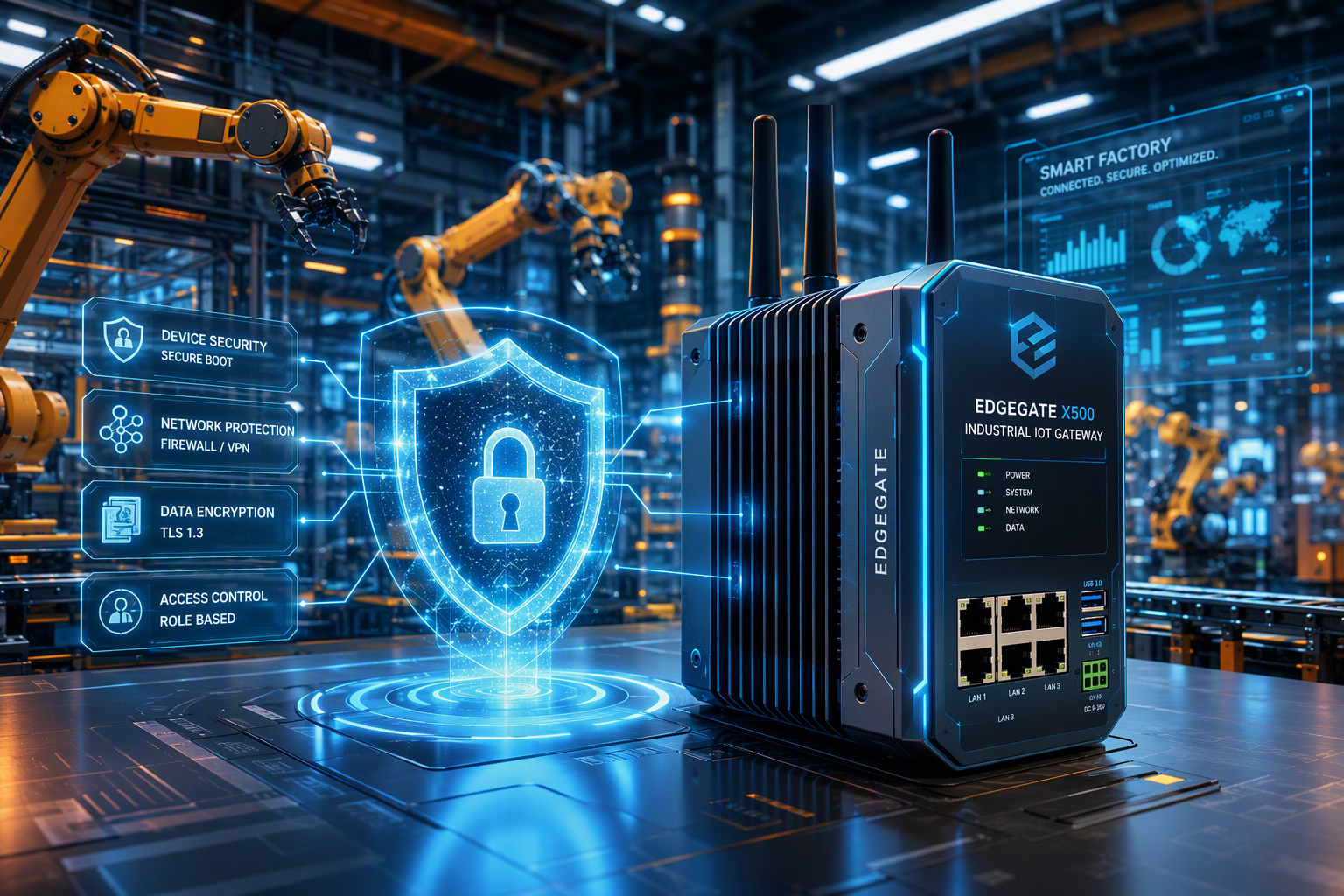
As automation systems become more connected through the Industrial Internet of Things (IIoT), they also become more vulnerable to cybersecurity risks. A cyberattack on a manufacturing plant could disrupt production, compromise intellectual property, or even create physical safety hazards. Securing these highly connected systems is a critical challenge.
The real-time nature of industrial operations means that any disruption, even a brief one, can have significant consequences. Therefore, protecting automation systems from threats like malware, ransomware, and unauthorized access is paramount. This requires a multi-layered approach to security.
Developing robust mitigation strategies is essential. Some key steps include:
- Network Segmentation: Isolating critical control systems from the broader corporate network to limit the spread of any potential breach.
- Regular Security Audits and Updates: Proactively identifying and patching vulnerabilities in software and hardware.
- Employee Training: Educating staff on cybersecurity best practices to prevent phishing attacks and other social engineering tactics.
Workforce Adjustment and Skills Gap
The rapid adoption of factory automation is creating a significant workforce skills gap. While automation may take over repetitive manual tasks, it simultaneously creates a demand for human workers with new, more technical skills. There is a growing need for employees who can design, program, manage, and maintain these sophisticated systems.
This shift presents a major challenge for both companies and the workforce. Many existing employees may not have the necessary training to transition into these new roles, and there is a shortage of new talent with the right combination of technical expertise in areas like robotics, data analytics, and system integration.
Bridging this skills gap is crucial for the successful digital transformation of the industry. It requires a concerted effort from companies to invest in reskilling and upskilling programs for their current employees. This adjustment helps human workers stay valuable and ensures that businesses have the skilled talent they need to operate and innovate in an increasingly automated world.
Regulatory and Compliance Considerations
Navigating the landscape of regulatory compliance is a significant challenge in the industrial automation sector. Regulations can vary widely depending on the industry, country, and even state or province. These rules often cover areas such as workplace safety, environmental impact, data privacy, and product quality standards.
As companies implement new industrial automation and process automation systems, they must ensure that these technologies comply with all relevant regulations. This can be particularly complex for businesses involved in global industrial automation, as they have to adhere to a patchwork of different legal frameworks across multiple jurisdictions.
Failure to meet these regulatory compliance standards can result in hefty fines, legal action, and damage to a company's reputation. Therefore, staying abreast of changing regulations and designing automation systems with compliance in mind from the outset is a critical, albeit challenging, aspect of modernizing industrial operations.
Real-World Examples of Industrial Automation Systems
To truly appreciate the impact of industrial automation, it helps to see it in action. Across countless industries, automation technology is transforming how products are made, managed, and moved. From the high-speed production line of a car factory to the sterile environment of a pharmaceutical lab, automation solutions are everywhere.
These real-world examples showcase the versatility and power of modern automation systems. Whether it's industrial robots performing heavy lifting or sophisticated software optimizing energy grids, these applications highlight the tangible benefits of automation. Let's look at some specific case studies.
Case Studies in Manufacturing Plants
Manufacturing plants provide some of the most classic and compelling examples of factory automation. In these environments, automation solutions are used to boost efficiency, improve quality, and enhance safety across the production line, whether for mass production or smaller batch production runs.
Modern car factories are a prime example. They use thousands of industrial robots for tasks like welding, painting, and assembling vehicle bodies. These robots work with incredible speed and precision, performing tasks that would be difficult, dangerous, and time-consuming for human workers.
Here are a couple of specific examples:
- Electronics Assembly: High-speed pick-and-place machines are used to mount tiny components onto circuit boards far faster and more accurately than any person could, enabling the mass production of complex devices.
- Food and Beverage: Automated filling and packaging systems can process thousands of bottles or containers per hour, ensuring each one is filled to the correct level and sealed properly, maintaining consistency and hygiene.
Automation in Energy and Utilities
The energy and utilities sector relies heavily on process automation to ensure reliable and efficient service delivery. These industries manage vast and complex networks, from power grids to water distribution systems, where even small inefficiencies can have a large impact.
Automation is used to monitor and control these networks in real time. For example, in an electrical grid, automated systems can detect faults and reroute power to minimize outages. In a water treatment plant, automation controls the flow and chemical treatment processes to ensure water quality and manage the supply chain of clean water.
Technologies like SCADA (Supervisory Control and Data Acquisition) systems are central to these operations. They collect data from remote sensors and allow operators to manage the entire system from a central control room. The rise of edge computing is further enhancing this, allowing for faster, localized decision-making to improve operational efficiency and resilience.
Applications in Pharmaceuticals and Food Processing
In the pharmaceutical and food processing industries, quality control and consistency are paramount. Automation technology plays a critical role in meeting the stringent regulatory standards of these sectors. The entire production process, from mixing ingredients to packaging the final product, must be carefully controlled to ensure safety and efficacy.
Automated systems are used to precisely measure and mix ingredients, fill containers, and label packages. Vision systems are widely employed to inspect products for defects, ensure proper sealing, and verify that labels are correct. This level of scrutiny is essential for maintaining product integrity and consumer safety.
Here are some specific applications:
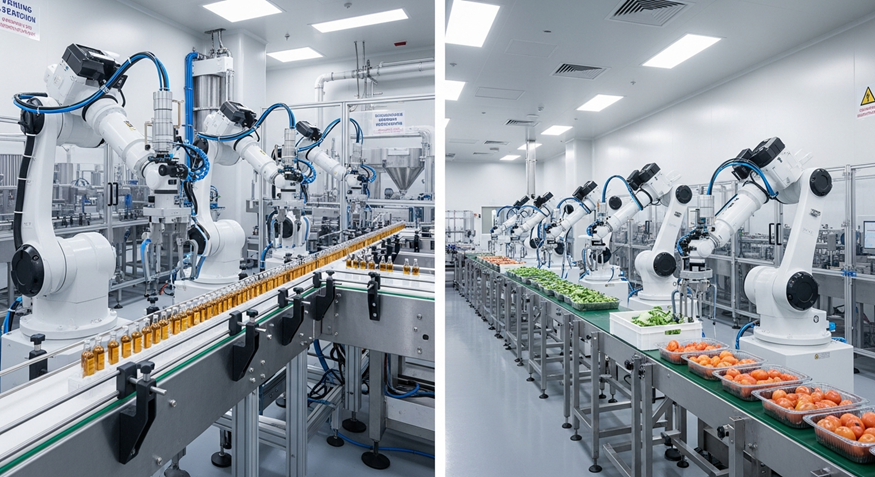
- Pharmaceuticals: Collaborative robots are used in sterile environments to handle sensitive materials and perform tasks like filling vials, reducing the risk of contamination from human contact.
- Food Processing: Automation technology is used for sorting and grading produce, cutting and processing meats, and packaging ready-to-eat meals, ensuring consistency and hygiene throughout the production process.
The Role of Automation in Sustainable Industry
Industrial automation is proving to be a key ally in the push for a more sustainable industry. By optimizing processes and enhancing efficiency, automation helps companies reduce their environmental impact while also improving their bottom line. It's a win-win scenario where good business sense aligns with good environmental stewardship.
From minimizing waste to conserving energy, the applications of industrial automation in supporting green initiatives are numerous. Let's explore how this technology helps reduce environmental footprints, enables more efficient resource utilization, and drives innovations that support a greener future.
One of the most significant contributions of industrial automation to sustainability is its ability to reduce the overall environmental impact of manufacturing. By fine-tuning processes, automation solutions can dramatically decrease waste in all its forms—from raw materials to energy and water.
For example, automated systems can ensure that the exact amount of material needed for a product is used, minimizing scrap. In processes like painting or coating, robotic applicators can apply materials more precisely than human workers, reducing overspray and the release of volatile organic compounds (VOCs).
This focus on precision and efficiency is central to many green initiatives. By optimizing every step of the production cycle, automation helps companies shrink their carbon footprint. This improved resource utilization not only benefits the environment but also leads to significant cost savings, making sustainability an achievable and profitable goal.
Efficient Resource Utilization
Efficient resource utilization is at the heart of how automation contributes to sustainability. Automation systems are designed for precision, ensuring that resources like energy, water, and raw materials are used as effectively as possible, which increases operational efficiency.
For instance, smart automation systems can monitor energy consumption across a factory and make real-time adjustments. They can power down machines that are not in use or optimize the speed of production lines to match production demands, avoiding the energy waste associated with running equipment at full capacity unnecessarily.
This leads to several key benefits:
- Material Savings: Automated cutting and dispensing systems reduce scrap material by calculating the most efficient use of raw stock.
- Energy Conservation: Smart control of motors, lighting, and HVAC systems can lead to significant reductions in a factory's overall energy consumption, lowering both costs and environmental impact.
Innovations Supporting Green Initiatives
The ongoing digital transformation in manufacturing is spawning new automation technology that directly supports green initiatives. As factories become smarter, they gain more tools to monitor, manage, and reduce their environmental footprint. These innovations are making sustainability an integral part of the modern production process.
Smart factories use interconnected sensors and data analytics to create a complete picture of their resource consumption. This allows them to identify opportunities for improvement that would be invisible in a less connected environment. For example, data might reveal that a particular machine is using more energy than it should, indicating a need for maintenance.
Here are some innovations that are making a difference:
- Predictive Maintenance: By keeping equipment running at peak efficiency, predictive maintenance reduces energy waste and prolongs the life of machinery, decreasing the need for new equipment.
- Digital Twin Technology: This allows companies to simulate and optimize processes in a virtual environment before implementing them, ensuring maximum efficiency and minimal waste from day one.
- Optimized Logistics: Automated systems can optimize material handling and transportation within a factory, reducing fuel consumption and emissions.
Frequently Asked Questions (FAQ)
Curiosity often surrounds the industrial automation sector, leading to many common questions. One frequently asked question pertains to how automation technology can enhance production processes. The integration of artificial intelligence and machine learning enables manufacturers to streamline operations, ultimately improving product quality. Another popular inquiry reflects concerns about human intervention—will jobs be lost? In reality, automation solutions are designed to collaborate with human workers, handling repetitive tasks while allowing people to focus on complex tasks. This collaboration results in a more efficient and adaptive production environment, contributing to ongoing digital transformation.
What are the most common types of industrial automation used today?
The most common types of industrial automation are fixed (or hard), programmable, and flexible automation. Fixed automation is for high-volume, repetitive tasks. Programmable automation allows for changes in batch production, while flexible automation offers the most versatility for varied products. These automation systems are often combined into integrated factory automation networks.
How does automation affect factory jobs and workforce development?
Factory automation shifts the nature of jobs rather than eliminating them entirely. It reduces repetitive manual labor but creates a demand for human workers with technical skills to manage and maintain the new systems. This digital transformation highlights a workforce skills gap, making reskilling and training crucial components of modern automation solutions.
How are companies measuring the ROI of industrial automation?
Companies measure the ROI of automation solutions by tracking key performance indicators. This includes direct cost savings from reduced labor and material waste, increased revenue from higher throughput and operational efficiency, and improvements in quality control. The overall value of these new automation systems often provides a clear and compelling return on investment.
You might also like