Exploring the Future of the Industrial Automation Sector
Exploring the Future of the Industrial Automation Sector
Key Highlights
- Here are the key takeaways from our exploration of industrial automation:
- Industrial automation uses control systems, robotics, and software to manage industrial processes with minimal human input, driving the digital transformation of manufacturing.
- The main types of automation systems include fixed, programmable, flexible, and integrated, each serving different production needs.
- Trends like artificial intelligence, innovative robotics, and the Industrial IoT are reshaping factories, making them smarter and more efficient.
- Implementing automation offers major benefits, including increased productivity, better quality control, enhanced safety, and greater sustainability.
- The industrial automation market is set for significant growth, driven by the need for efficiency and technological advancements.
- Challenges such as high initial costs, cybersecurity risks, and workforce adaptation need careful consideration.
Introduction
Welcome to the future of manufacturing! The world of industrial automation is rapidly evolving, changing how products are made and how factories operate. It’s no longer just about simple machines doing simple tasks. Today, advanced technologies are transforming the entire manufacturing process, from the assembly line to the supply chain. This guide will walk you through what industrial automation is, how it works, and the exciting trends shaping its future. Let's explore how these innovations are creating smarter, faster, and more efficient industries.
Understanding Industrial Automation in the Manufacturing Sector
At its core, industrial automation is about using technology to control and monitor industrial processes. In the manufacturing sector, this means replacing manual labor with automated systems to improve efficiency, quality, and safety. It's a fundamental shift from people operating machines to machines operating themselves.
As factories become more complex, automation solutions are no longer a luxury but a necessity. Let's take a closer look at what industrial automation really means, how it functions within a factory setting, and the key components that make it all possible.
Defining Industrial Automation
Industrial automation, often called factory automation, is the use of computer-controlled systems, like industrial robots and specialized software, to manage tasks within a production process. The goal is to minimize human involvement, allowing machines to handle repetitive or complex jobs while people focus on strategy and oversight.
Think of it as the next step after simple mechanization. Instead of just using machines to help workers, automated systems take on the operational role themselves. This represents a major evolution in how modern manufacturing facilities operate.
At its heart, industrial automation is about creating a self-sufficient production environment. These automated systems can run continuously, leading to more predictable and efficient outcomes, which is a cornerstone of smart manufacturing today.
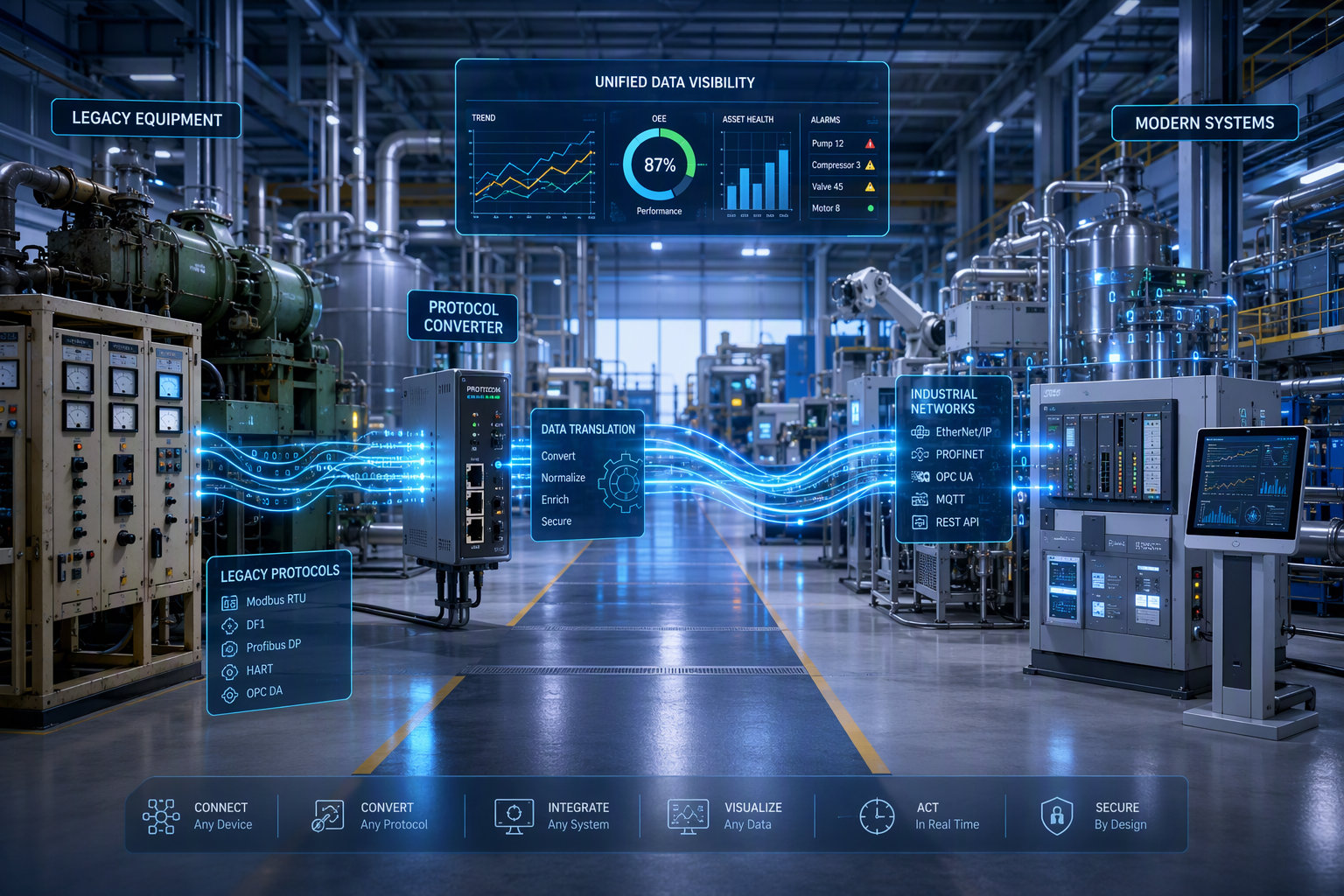
How Industrial Automation Works in Factories
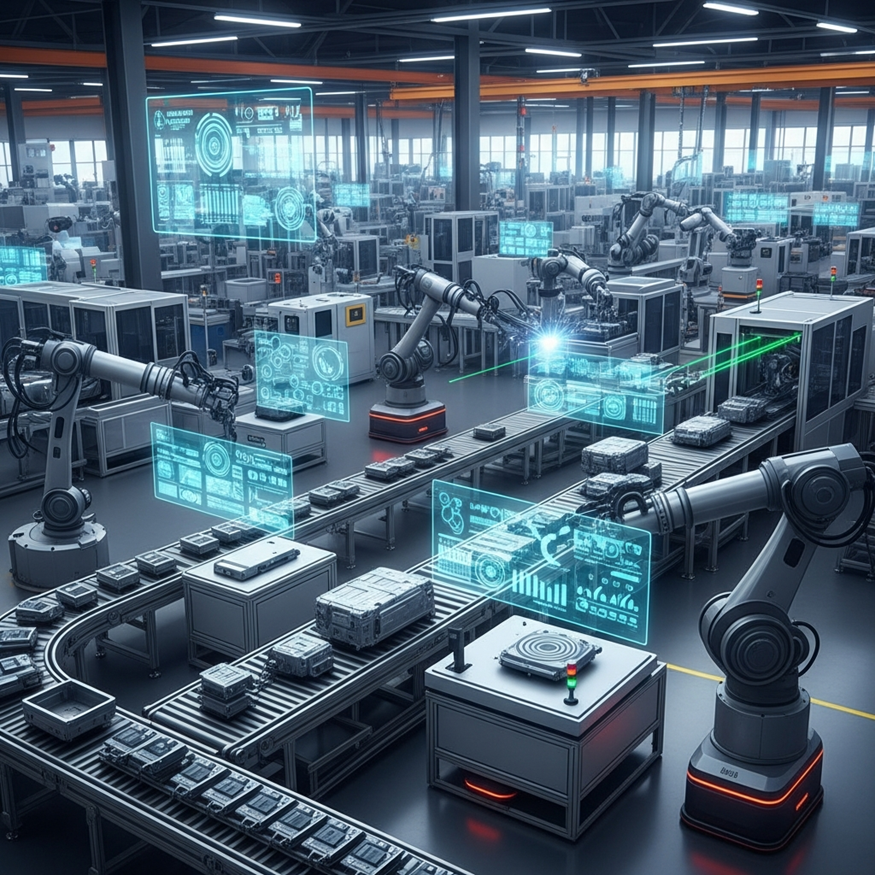
In a factory, automation systems operate on a closed-loop principle. It all starts with sensors that collect data from the production line, detecting what’s happening with a machine or process. This information is then sent to controllers, like PLCs, which act as the brains of the operation.
Based on the sensor data, the controllers make decisions and send commands to actuators, motors, or robotic arms. These components then perform the physical actions required, such as moving a part, welding a seam, or packaging a product. This entire sequence happens with minimal human intervention.
The result is a manufacturing process that is faster and more consistent than what can be achieved manually. By automating repetitive tasks, factories can scale production up or down without relying solely on adding more labor, making the entire operation more agile.
Key Components and Technologies Used
A variety of technologies come together to make industrial automation possible. These components are the building blocks of any automated system, from a single machine to an entire smart factory. Each piece plays a specific role in ensuring the process runs smoothly and efficiently.
The core technologies include sensors that gather data and controllers that make decisions. However, the system is much more than that. Industrial networks are crucial for keeping all devices in communication, while software and human-machine interfaces (HMIs) give operators a real-time view of production.
Some of the most critical components you'll find in modern automation include:
- Programmable Logic Controllers (PLCs): These are ruggedized computers that control machinery on the factory floor.
- Industrial Robots: From large robotic arms to smaller collaborative bots, these handle physical tasks with precision.
- Sensors and Actuators: Sensors detect conditions, while actuators execute physical movements. Technologies like machine learning and edge computing are also becoming increasingly important for processing data and making decisions locally and in real time.
Types of Industrial Automation Systems
Not all automation is the same. There are different types of industrial automation systems, each designed for specific production needs. The choice of system depends on factors like production volume, product variety, and the need for flexibility. Understanding these distinctions is key to selecting the right approach for your manufacturing goals.
The four main categories are fixed, programmable, flexible, and integrated automation. From mass production of a single item to creating customized products in small batches, there's an automation strategy to match. We will now explore these different types in more detail.
Fixed or Hard Automation
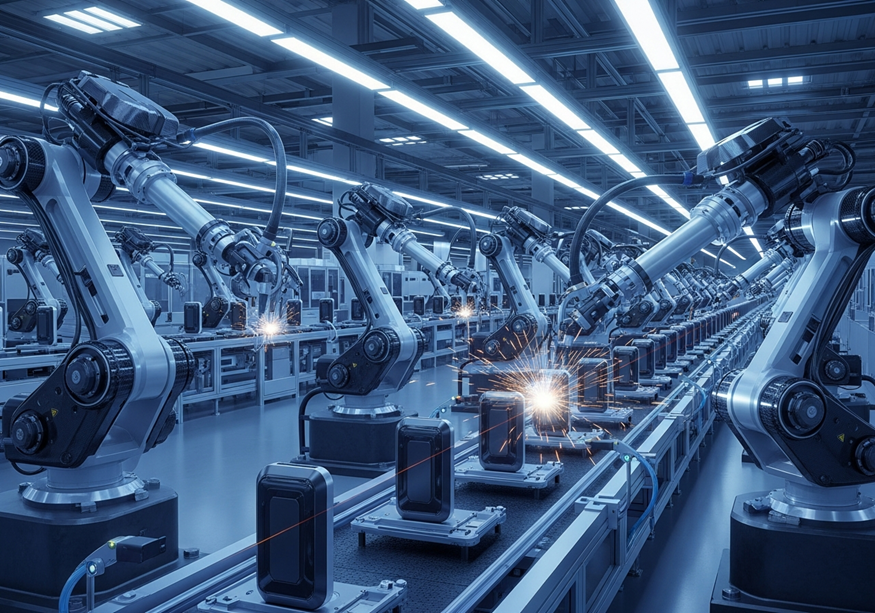
Fixed automation, also known as hard automation, is designed for high-volume, repetitive production. It involves specialized equipment that is configured to perform a single set of specific tasks over and over. A classic example is an automotive assembly line where machines perform the same welding or painting job on every car that passes through.
This type of automation is ideal for mass production scenarios where the product design is stable and doesn't change often. Once the system is set up, it can run continuously with very little adjustment, offering incredible speed and efficiency.
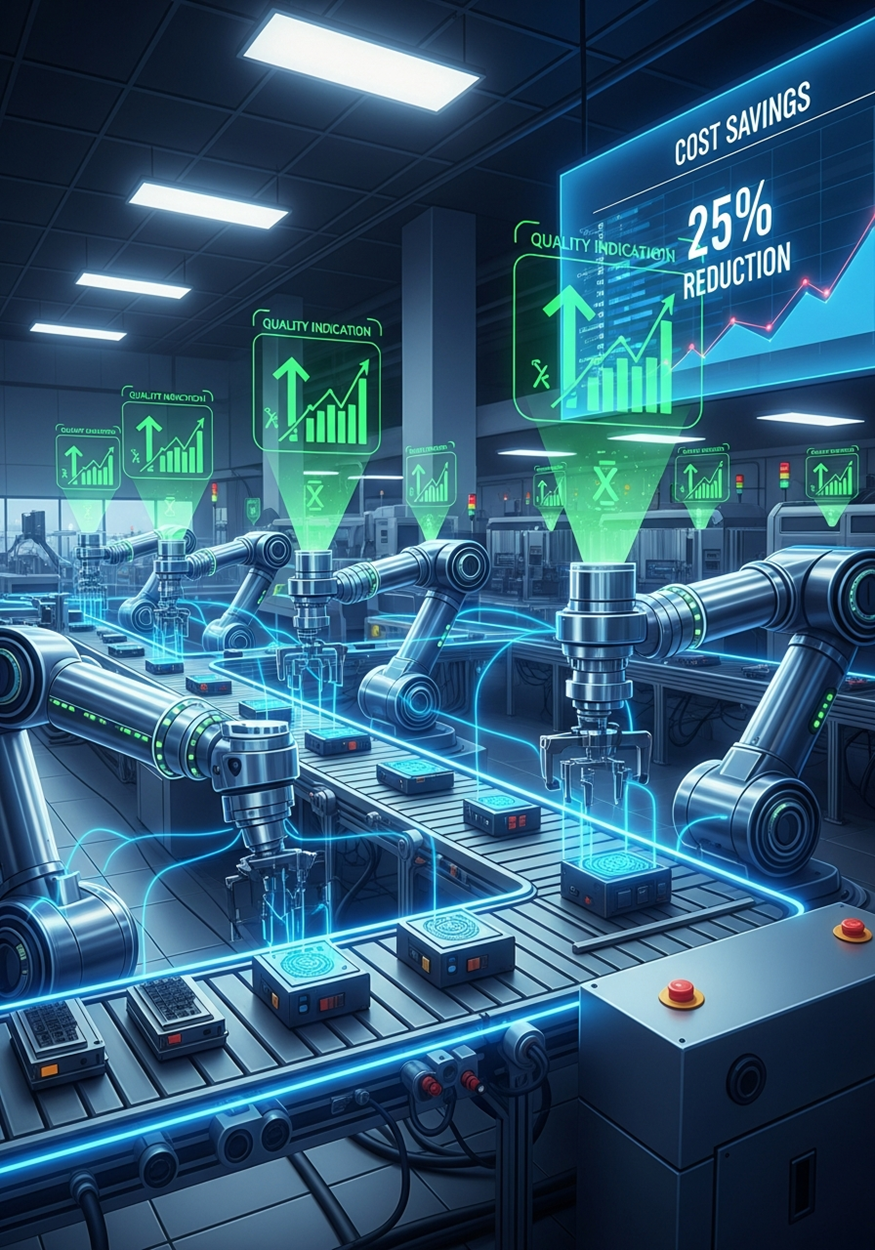
The primary benefit of hard automation is the significant cost savings and consistent product quality it delivers at a large scale. However, its major drawback is its lack of flexibility; changing the product or process requires a significant redesign of the equipment.
Programmable Automation
Programmable automation is a more versatile type of automation suited for batch production. In this setup, the production equipment is designed to be reprogrammed to handle different product configurations or perform different tasks. This makes it ideal for industries where products are made in batches, and the production line needs to be reconfigured between each one.
For example, an electronics manufacturer might use programmable industrial robots to assemble different models of smartphones. Between batches, the robots' programs can be updated to handle the new specifications. This allows for variety without needing entirely new machinery.
This type of automation offers a good balance between efficiency and flexibility. While there is downtime required to reprogram the machines for a new batch, it provides the ability to produce a variety of products on the same production line, making it a popular choice for many modern factories.
Flexible or Soft Automation
Flexible automation, or soft automation, represents the most adaptable form of process automation. It allows for a variety of product variations to be produced with virtually no downtime for changeovers. This system can seamlessly switch between different tasks and products, making it perfect for industries that need to respond quickly to changing market demands.
This high level of adaptability is central to the concept of smart factories. By using advanced industrial robots, sensors, and intelligent software, flexible automation solutions can make adjustments on the fly. This is particularly valuable for producing customized products or handling small-batch orders with high efficiency.
You'll often find flexible automation in industries like consumer goods manufacturing, where product designs change frequently. It provides the ultimate combination of efficiency and agility, enabling companies to offer greater product variety without sacrificing production speed.
The Role of Integrated Automation in Modern Industry
Integrated automation is the glue that holds modern industry together. It goes beyond automating individual tasks and connects multiple machines, processes, and systems into a single, coordinated platform. This is the foundation of smart manufacturing and a key driver of digital transformation, linking everything from the factory floor to the supply chain.
By creating a unified system, businesses can achieve a level of efficiency and control that was previously unimaginable. Let's examine how this integration impacts supply chains, data management, and the overall benefits of system coordination.
Integration with Supply Chains
Integrating automation directly with the supply chain allows for unprecedented visibility and control. When your factory's production systems are connected to your inventory and logistics data, you can streamline operations from end to end. This means your production schedule can automatically adjust based on incoming orders or the availability of raw materials.
For instance, if sensors on the production line detect a slowdown, the system can automatically update inventory levels and notify suppliers. This real-time communication minimizes guesswork and helps prevent both shortages and overstocking, reducing waste and carrying costs.
The automation industry is increasingly focused on this holistic approach. By connecting factory floor operations with the broader supply chain, companies can create a more resilient and responsive manufacturing ecosystem that adapts quickly to market changes.
Automation of Data Management
A key aspect of integrated automation is the automation of data collection and analysis. In a traditional factory, gathering production data is a manual, time-consuming, and often inaccurate process. With process automation, sensors and connected devices collect vast amounts of data in real time.
This automated data collection provides a clear, accurate picture of what's happening on the factory floor. It eliminates human error in data entry and gives you the hard facts needed to make informed decisions. You can track key performance indicators, identify bottlenecks, and monitor equipment health instantly.
This shift toward data-driven operations is a cornerstone of digital transformation. By leveraging real-time data analysis, you can move from reactive problem-solving to proactive process improvement, continuously optimizing your operations for better efficiency and quality.
Benefits of System Coordination
When all parts of your automation system work in harmony, the benefits are immense. System coordination ensures that every machine, robot, and process is synchronized, leading to a smoother and more efficient workflow. This integrated approach allows your entire operation to respond as one cohesive unit to changing production demands.
This level of coordination directly boosts operational efficiency. Downtime is reduced because potential issues are identified and addressed before they cause a shutdown. Production flows more smoothly, eliminating bottlenecks and ensuring that you get the most out of your equipment.
Ultimately, system coordination delivers significant advantages across the board, including:
- Consistent Quality: Synchronized processes reduce variability and ensure every product meets the same high standard.
- Increased Throughput: By optimizing the flow of production, you can make more products in less time.
- Significant Cost Savings: Greater efficiency, reduced waste, and less downtime all contribute to a healthier bottom line.
Current Trends Shaping Industrial Automation in 2025
The industrial automation landscape is constantly changing, driven by advanced technologies and evolving market demands. As we look toward 2025, several key trends are set to accelerate the digital transformation of manufacturing and further enhance the capabilities of smart manufacturing. These innovations are making automation smarter, more connected, and more accessible than ever before.
From artificial intelligence to innovative robotics, these trends are not just futuristic concepts; they are actively being implemented in factories today. Let’s explore the most influential developments shaping the industry right now.
Artificial Intelligence and Machine Learning
Artificial intelligence (AI) and machine learning (ML) are revolutionizing industrial automation by adding a layer of intelligence to factory operations. Instead of just following pre-programmed instructions, AI-powered systems can analyze data, learn from it, and make decisions to optimize processes in real time.
One of the most significant applications is predictive maintenance. By analyzing data from sensors on machinery, ML algorithms can predict when a part is likely to fail. This allows maintenance to be scheduled before a breakdown occurs, dramatically reducing unplanned downtime and extending the life of equipment.
AI is also transforming quality control. Vision systems equipped with AI can inspect products on the assembly line with incredible accuracy, identifying defects that might be missed by the human eye. This leads to higher quality products and less waste.
Innovative Robotics in Manufacturing
Robotics in manufacturing is evolving far beyond the large, caged industrial robots of the past. A major trend is the rise of collaborative robots, or "cobots." These smaller, more flexible robots are designed to work safely alongside human employees, taking over repetitive tasks while people handle more complex or delicate work.
These innovative automation systems are easier to program and deploy than traditional industrial robots, making automation accessible to smaller businesses. They can be quickly moved and repurposed for different tasks, adding a new level of agility to the factory floor.
The latest robots are also being equipped with advanced sensors and vision systems, allowing them to perform more intricate tasks with greater precision. This continuous innovation is expanding the range of applications for robotics in manufacturing, from assembly to packaging and logistics.
Industrial Internet of Things (IIoT) Adoption
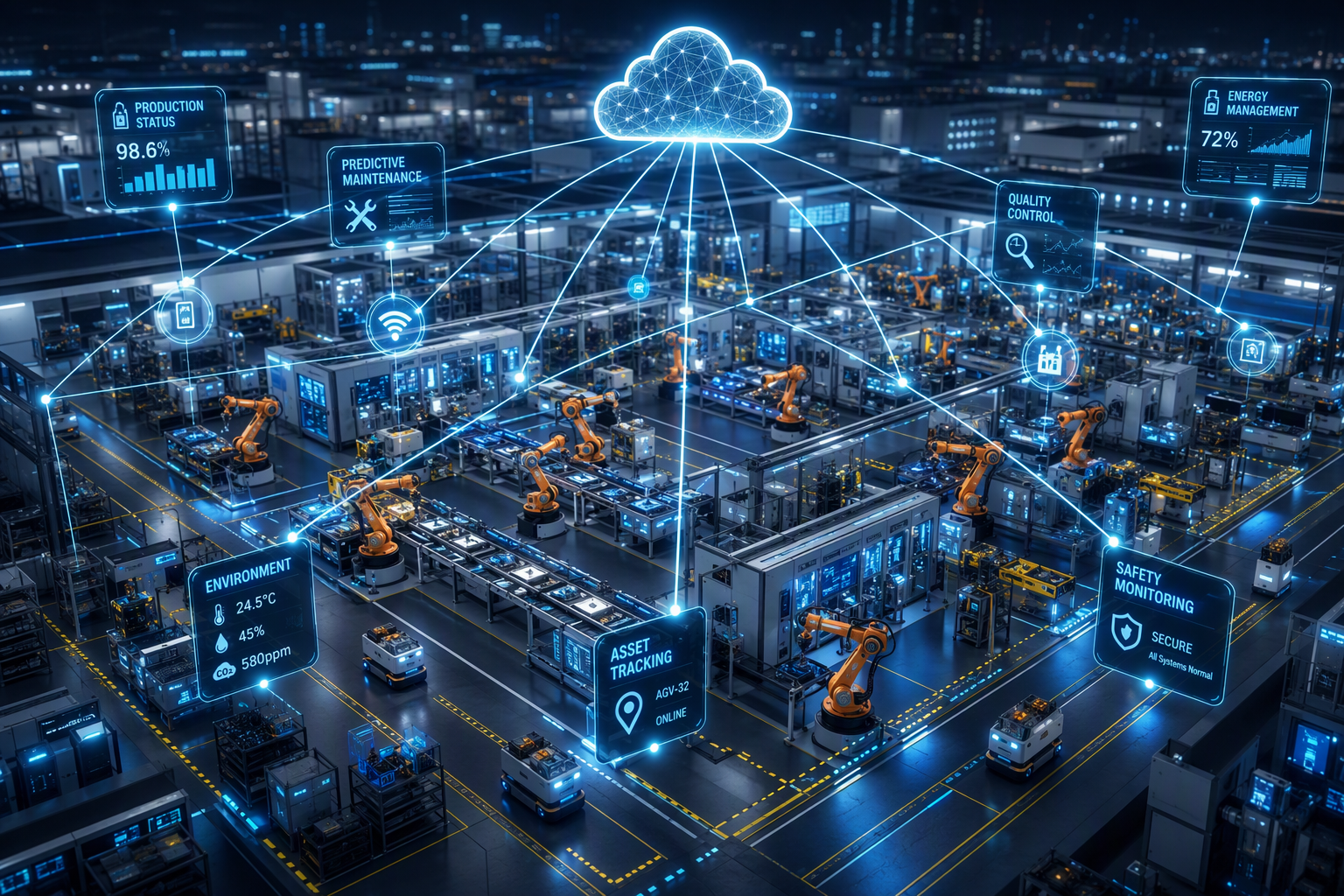
The Industrial Internet of Things (IIoT) is the network of connected sensors, instruments, and other devices that collect and share data in an industrial setting. The widespread adoption of IIoT is a driving force behind the creation of smart factories, where every aspect of the operation is monitored and optimized in real time.
This massive influx of data from IIoT devices allows for a comprehensive, live view of the entire production process. It enables everything from tracking assets on the factory floor to monitoring environmental conditions, providing the information needed for better decision-making.
A related trend is the growth of edge computing, where data is processed locally, near the device where it is generated, rather than being sent to a centralized cloud. This reduces latency and allows for faster real-time responses, which is critical for controlling fast-moving automated systems.
Market Growth and Outlook for the Industrial Automation Sector
The industrial automation market is experiencing robust growth as more companies recognize the need to modernize their operations. The push for greater efficiency, lower costs, and higher quality is driving significant investment in automation technologies across virtually every industry. This upward trend is expected to continue for the foreseeable future.
The automation industry is expanding rapidly due to a combination of technological advancements and intense global competition. Let's delve into the market size projections, global statistics, and the key factors that are fueling this expansion.
Market Size Projections for the United States
The market for industrial automation solutions in the United States is on a strong upward trajectory. As companies face pressures from labor shortages and global competition, they are increasingly turning to automation to enhance productivity and maintain a competitive edge. This has led to consistent industry growth across various sectors.
Projections indicate that this trend will accelerate over the next decade. The demand for smarter, more integrated automation solutions is expected to drive the market size to new heights as businesses invest in technologies like AI, robotics, and IIoT to build the factories of the future.
Here's a look at the anticipated market size growth for industrial automation in the United States:
| Year | Projected Market Size (in USD Billions) |
|---|---|
| 2024 | $220 Billion |
| 2026 | $255 Billion |
| 2028 | $295 Billion |
| 2030 | $340 Billion |
Global Industry Statistics and Facts
Globally, the industrial automation sector is a powerhouse of innovation and economic activity. Industry statistics show that the push for digital transformation is a worldwide phenomenon, with regions like Asia-Pacific, Europe, and North America all making substantial investments in automation technologies.
The automotive industry has historically been the largest adopter of automation, but other sectors are catching up quickly. Industries such as electronics, food and beverage, pharmaceuticals, and consumer goods are now major drivers of global automation growth.
A key fact is that the adoption of automation is no longer limited to large corporations. Thanks to more affordable and flexible solutions like collaborative robots, small and medium-sized enterprises (SMEs) are increasingly able to leverage automation to compete on a global scale. This democratization of technology is broadening the market and fueling further innovation.
Factors Driving Investment and Expansion
Several powerful factors are fueling the rapid expansion of and investment in the automation industry. At the forefront is the relentless pursuit of operational efficiency. In a competitive global market, companies are constantly looking for ways to produce more with less, and automation provides a direct path to achieving that goal.
The promise of long-term cost savings is another major driver. While the initial investment can be high, automation reduces labor costs, minimizes waste, and lowers energy consumption, leading to a strong return on investment over time. Positive market size projections also encourage companies to invest, as they see automation as a key strategy for future growth and market share.
Other key factors influencing investment include:
- The need for higher quality and consistency: Automated systems perform tasks with a level of precision that is difficult for humans to replicate.
- Improved workplace safety: Robots can take over dangerous or physically strenuous tasks, creating a safer environment for employees.
- Labor shortages: In many regions, a lack of skilled labor is pushing companies to automate to fill the gaps.
Key Benefits of Industrial Automation Implementation
Implementing industrial automation is more than just a technological upgrade; it's a strategic move that delivers a wide array of tangible benefits. From significant cost savings to improved quality control, automation solutions can fundamentally transform a manufacturing operation for the better. These advantages help businesses streamline operations and gain a competitive edge.
The impact of automation is felt across the entire production process, leading to improvements in everything from speed to safety. Let’s explore some of the most important benefits that companies can expect when they embrace automation.
Improved Efficiency and Productivity
One of the most immediate and impactful benefits of industrial automation is a dramatic increase in efficiency and productivity. Automated systems can perform repetitive tasks much faster and more consistently than human workers. They don't get tired, distracted, or need breaks.
By automating key parts of the production process, you can significantly shorten cycle times and increase throughput. This means you can produce more goods in the same amount of time, with the same or even fewer resources.
Furthermore, automation can operate 24/7, allowing a manufacturing plant to run around the clock with minimal supervision. This maximizes the use of your facility and equipment, leading to a substantial boost in overall operational efficiency and output.
Enhanced Quality and Consistency
Automation plays a crucial role in enhancing product quality and consistency. Human error is an unavoidable factor in manual processes, leading to variations and defects. Automated systems, on the other hand, perform tasks with exceptional precision and repeatability every single time.
This consistent quality is a major advantage. Whether it's applying a precise amount of paint or tightening a bolt to a specific torque, automation ensures that every product coming off the line meets the exact same standards. In one example from the car industry, automating the installation of pistons reduced the error rate from over 1% to a remarkable 0.00001%.
This level of quality control not only leads to a better final product but also reduces waste from scrap and rework. As part of a broader digital transformation, this focus on quality helps build a stronger brand reputation and increase customer satisfaction.
Contribution to Sustainability and Environment
Industrial automation also makes a significant contribution to sustainability and environmental protection. Smart factories that leverage automation can optimize their use of resources, leading to greater energy efficiency and less waste. This is not only good for the environment but also results in significant cost savings.
For example, automated systems can power down machinery when it's not in use, and precision control can minimize the amount of raw materials needed for each product. By reducing errors and scrap, automation ensures that fewer resources are wasted in the manufacturing process.
Furthermore, by creating more efficient processes, automation helps companies reduce their overall carbon footprint. As sustainability becomes an increasingly important focus for businesses and consumers alike, the role of automation in creating greener manufacturing operations will only continue to grow.
Major Challenges Facing the Industrial Automation Sector
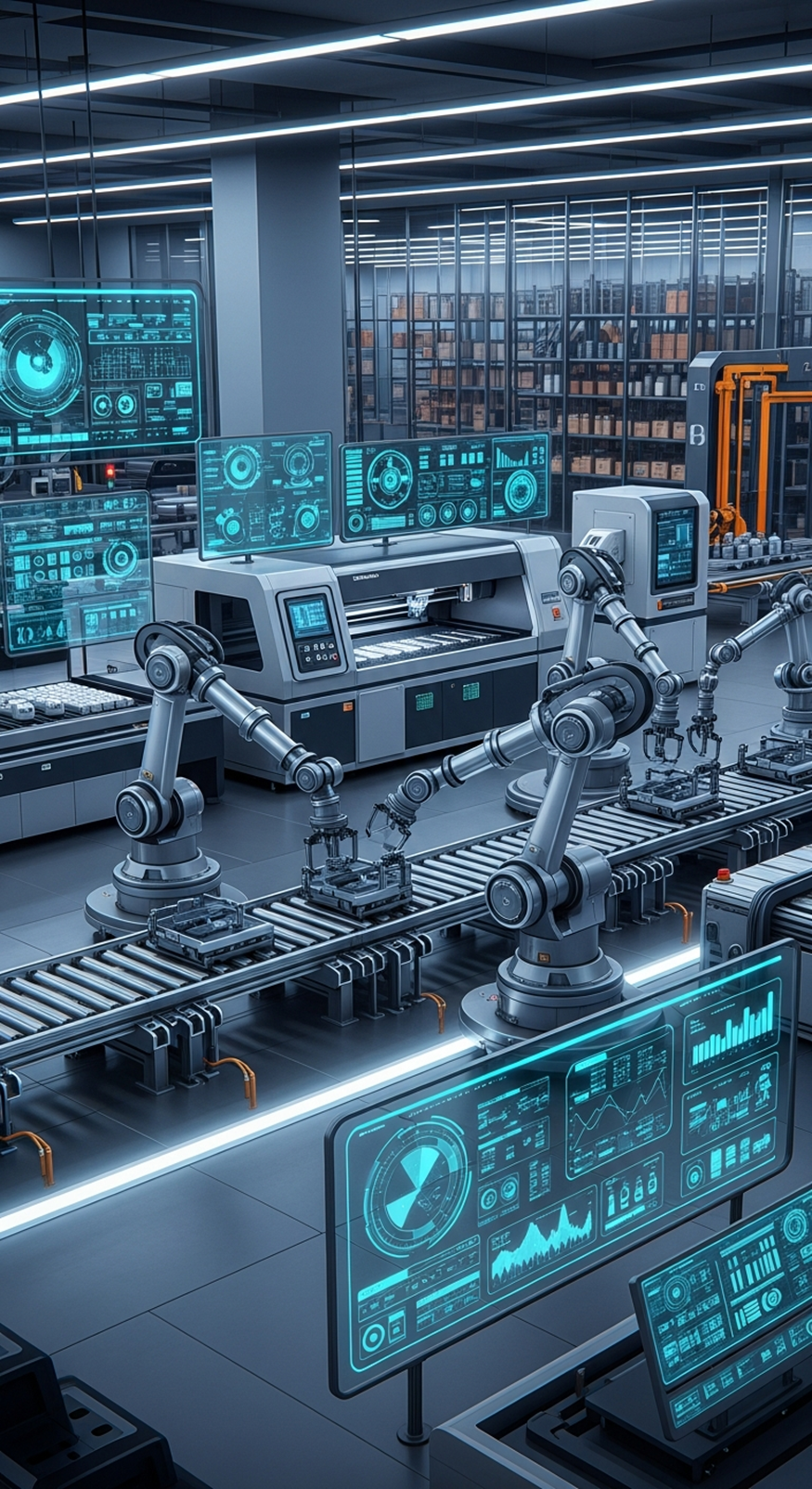
While the benefits of industrial automation are clear, the path to implementation is not without its challenges. Companies looking to adopt new automation systems must navigate several hurdles, from significant upfront costs to concerns about cybersecurity. Integrating new technology with existing legacy systems can also be a complex task.
Addressing these challenges is crucial for a successful automation journey. Let’s take an honest look at some of the biggest obstacles facing the sector today and how they can be managed.
Cybersecurity Concerns and Solutions
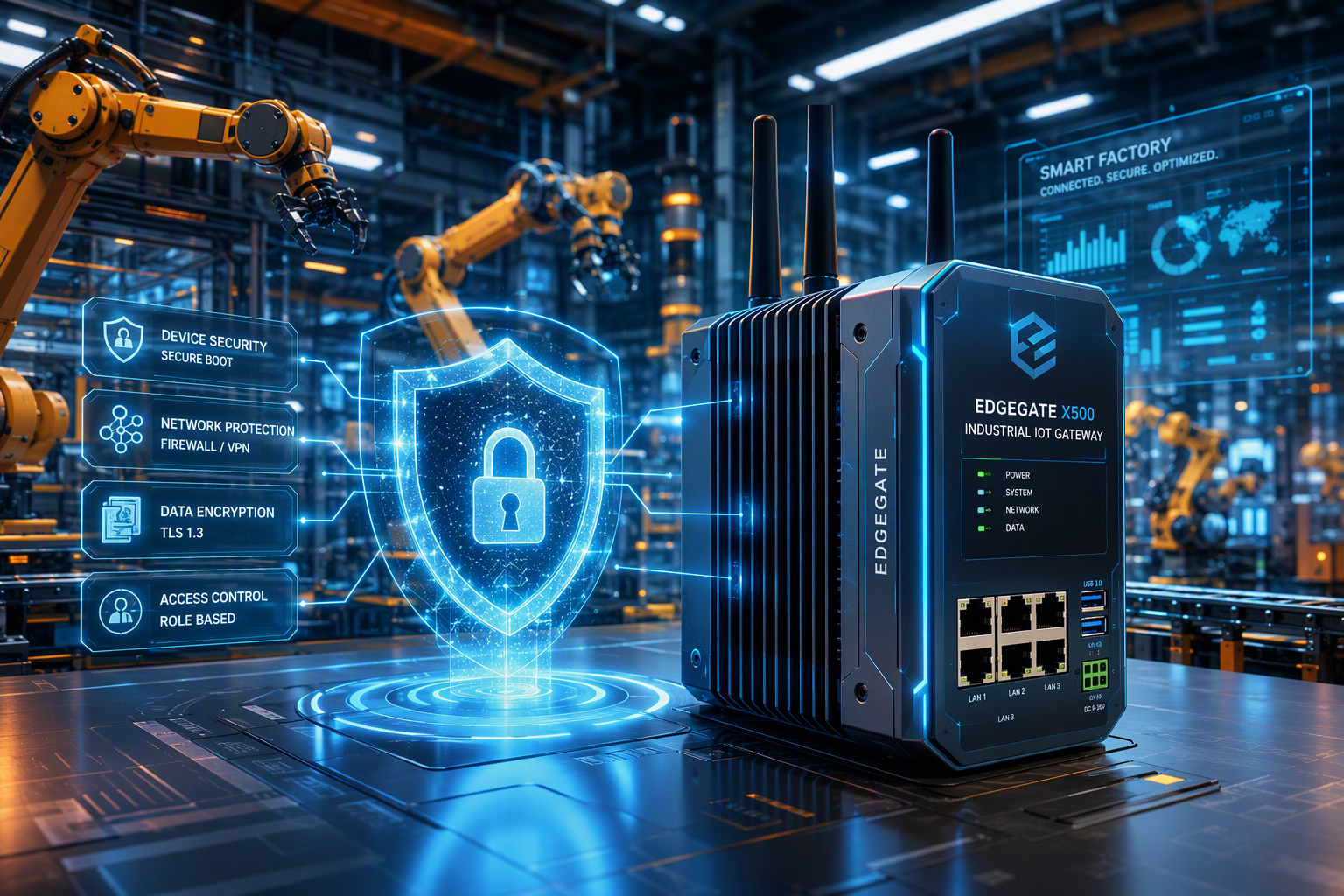
As industrial automation systems become more connected through the Industrial IoT, they also become more vulnerable to cybersecurity threats. A cyberattack on a factory's control systems could disrupt production, compromise sensitive data, or even create a physical safety hazard. This is a major concern for companies embracing digital transformation.
Many factories still use legacy systems that were not designed with modern cybersecurity standards in mind, making them particularly vulnerable. Connecting these older systems to the internet without proper safeguards can open the door to malicious actors.
To combat this, companies must make cybersecurity a top priority in their automation strategy. This includes implementing robust network security measures, regularly updating software, training employees on security best practices, and segmenting networks to isolate critical control systems from the broader internet.
Workforce Adaptation and Job Market Impact
A common concern surrounding industrial automation is its impact on the workforce and the job market. As machines take over tasks previously performed by human labor, there is a legitimate fear of job displacement. While some manual jobs may be reduced, the digital transformation also creates new opportunities.
The key challenge is managing this transition and helping the workforce adapt. The focus is shifting from manual labor to new roles that require different skills, such as robotics maintenance, data analysis, and system management. There will be a growing demand for technicians and engineers who can design, operate, and maintain these sophisticated automated systems.
To navigate this change successfully, companies and governments must invest in reskilling and upskilling programs. Providing training and education to help workers transition into these new roles is essential for ensuring that the benefits of automation are shared broadly and that the workforce remains valuable in an increasingly automated world.
High Initial Investment Costs
One of the most significant barriers to adopting industrial automation is the high initial investment. The upfront costs of purchasing robots, control systems, and software, as well as integrating them into existing processes, can be substantial. This can be particularly challenging for small and medium-sized businesses.
These initial costs also include training employees to operate and maintain the new equipment. The complexity of modern automation solutions requires a skilled workforce, and getting employees up to speed represents an additional expense.
However, it's important to view these upfront costs as an investment rather than just an expense. While the initial outlay is high, the long-term cost savings from increased efficiency, reduced labor costs, and higher quality often result in a strong return on investment, making automation a financially sound decision in the long run.
Real-World Examples of Industrial Automation
To better understand the impact of industrial automation, it's helpful to look at how it's being used in the real world. From automotive plants to electronics assembly, factory automation is transforming manufacturing processes across a wide range of industries. These examples showcase the power and versatility of modern automation solutions.
Let's explore a couple of common applications that demonstrate how automation is put into practice to boost efficiency and quality in today's factories.
Automated Assembly Lines
Automated assembly lines are perhaps the most classic example of industrial automation in action. Found in industries ranging from automotive to consumer goods, these lines use a combination of robots, conveyors, and specialized machinery to assemble products with speed and precision. This is often a form of hard automation, optimized for mass production.
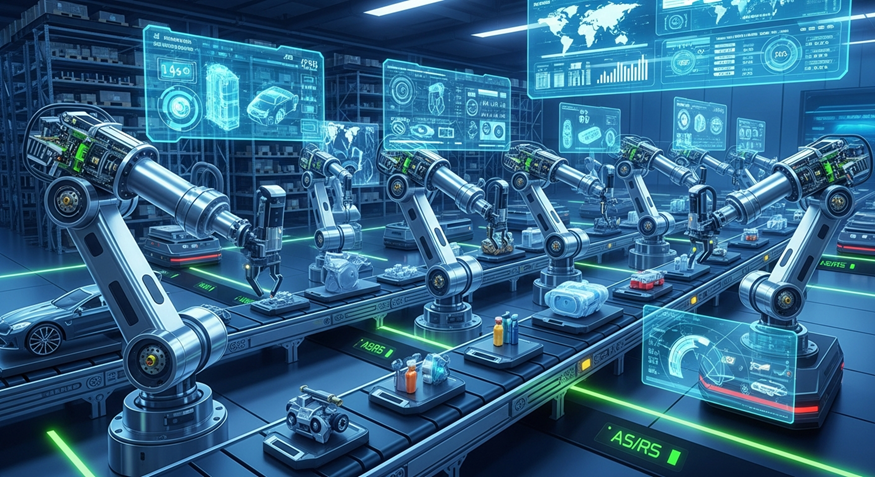
In a modern car factory, for instance, an automated assembly line will see robotic arms performing tasks like welding the car body, painting panels, and installing heavy components like the engine and windshield. These robots work tirelessly, ensuring each step is performed identically for every vehicle.
This high level of automation allows for the efficient mass production of complex products. By handling the heavy, repetitive, and precise tasks, the automated systems free up human workers to focus on quality control, final inspections, and other more nuanced jobs.
Smart Factories in the United States
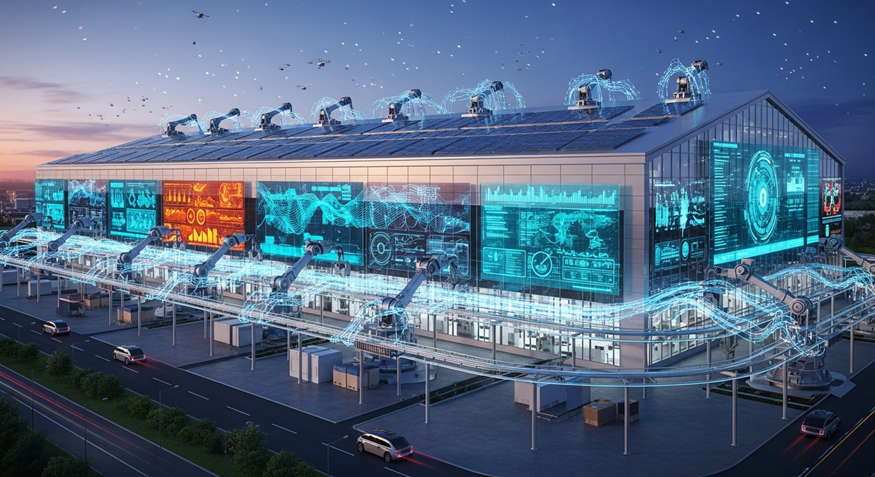
A more advanced example of automation can be seen in the rise of smart factories across the United States. These facilities represent the pinnacle of digital transformation, using principles of flexible automation to create highly adaptable and efficient production environments. In a smart factory, every machine and process on the production line is interconnected.
These factories leverage technologies like IIoT, AI, and edge computing to create a self-optimizing system. Sensors collect data in real time, which is then analyzed to make immediate adjustments to the production process. This could mean changing a robot's path to avoid a bottleneck or adjusting machine settings to maintain quality.
This allows smart factories to handle high-mix, low-volume production with ease, quickly switching between different products without major downtime. They are a powerful example of how integrated and flexible automation is shaping the future of manufacturing.
Conclusion
In conclusion, the industrial automation sector is poised for significant transformation as we look toward the future. With advancements in technology such as artificial intelligence, innovative robotics, and the Industrial Internet of Things, industries are becoming more efficient, productive, and sustainable. However, as companies embrace these changes, they must also navigate challenges like cybersecurity and workforce adaptation. By understanding the benefits and potential hurdles, businesses can strategically plan for a successful transition into this new era of automation. If you're ready to explore how industrial automation can elevate your operations, don’t hesitate to reach out for a consultation.
Frequently Asked Questions
Which types of industrial automation systems are most popular?
Among the different types of industrial automation, programmable automation is extremely popular for batch production, offering a balance of efficiency and flexibility. However, flexible automation is rapidly gaining ground in industries requiring quick changes, while hard automation remains the standard for high-volume mass production.
How does automation contribute to sustainable manufacturing?
Automation solutions promote sustainability by optimizing process automation for greater energy efficiency, reducing material waste through higher product quality, and enabling smarter resource management. This leads to a smaller environmental footprint and more responsible manufacturing practices, supporting long-term sustainability goals.
What are the main factors influencing industrial automation investment?
The primary factors driving investment in the automation industry are the pursuit of cost savings, the need for greater operational efficiency, and the push for digital transformation. Companies invest to improve productivity, enhance quality, and maintain a competitive edge in the global marketplace.
You might also like