Industrial Automation Sector: Insights from Recent Research
Industrial Automation Sector: Insights from Recent Research
Key Highlights
- The global industrial automation market is experiencing significant growth, projected to reach over $504 billion by 2033.
- Key drivers include the rising demand for operational efficiency, digital transformation initiatives like Industry 4.0, and advancements in control systems.
- Major trends shaping the automation market are the integration of Artificial Intelligence, Machine Learning, and the Industrial IoT (Industrial Internet of Things).
- The manufacturing sector currently holds the largest market share, with Asia Pacific leading regional growth.
- Challenges such as cybersecurity risks and a shortage of skilled workers need to be addressed for sustained expansion.
Introduction
Welcome to our deep dive into the world of industrial automation! This dynamic field is rapidly changing how industries operate, from manufacturing floors to energy plants. The industrial automation market is expanding at an impressive rate, driven by a universal need for greater operational efficiency, precision, and safety. In this post, we'll explore recent research to uncover the key trends, growth forecasts, and technologies that are defining the future of industrial automation. Let's get started.
Industrial Automation Sector Overview
The industrial automation sector encompasses the technologies and systems used to control industrial processes without significant human intervention. This shift is reshaping the entire value chain, from raw material handling to final product distribution.
As the automation market grows, its impact on the global supply chain becomes more pronounced. Companies are leveraging automation to create more resilient, efficient, and transparent operations. The following sections will explore the fundamentals of industrial automation, its history in the United States, and insights from the latest industry research.
Defining Industrial Automation and Its Importance
Industrial automation involves the use of automation systems and control systems, like computers and robots, to manage machinery and processes in industrial settings. The primary goal is to replace manual labor and repetitive tasks, leading to a more streamlined production process.
This technology is crucial for modern industries. By automating tasks, companies can significantly boost productivity, ensure consistent product quality, and reduce the risk of human error. It allows for continuous operation, 24/7, which is something manual processes simply cannot match.
Looking forward, the outlook for industrial automation over the next decade is incredibly strong. With continuous advancements in technology and a growing need for efficiency, the sector is set to expand even further, integrating more intelligent systems to optimize every facet of production.
Evolution of Industrial Automation in the United States
The journey of industrial automation in the United States has been one of constant innovation. Early forms of programmable automation laid the groundwork for today's sophisticated systems. North America has consistently been a significant market, driven by the need to maintain a competitive edge in global manufacturing.
In recent years, the push for digital transformation has accelerated this evolution. The adoption of industrial robots and smart technologies is transforming manufacturing processes by enabling greater flexibility and precision. This shift helps companies respond faster to market changes and consumer demands.
Today, the U.S. is focused on advanced manufacturing and reshoring production, further fueling the demand for automation. This evolution is not just about replacing labor but about creating smarter, more resilient, and highly productive industrial environments.
Recent Research and Industry Insights
Recent research provides a clear picture of the global industrial automation market's health and trajectory. The market is not just growing; it's accelerating, thanks to the wider adoption of advanced technologies like AI and IoT. These innovations are enabling smarter decision-making and real-time process optimization.
Several key insights stand out from recent reports. The automation market is being propelled by a combination of factors, including the need to reduce human error, enhance productivity, and improve operational efficiencies across the board.
Here are a few highlights from the latest industry analysis:
- The global industrial automation market was valued at approximately USD 226.76 billion in 2025.
- The Asia Pacific region held the largest market share in 2025, accounting for over 37% of the total revenue.
- The manufacturing sector represents the largest industry vertical, with a market share of over 17% in 2025.
Market Size and Growth Forecast
The industrial automation market is on a remarkable growth path. The current market size reflects a strong global demand for automation solutions, and forecasts indicate that this trend is set to continue. During the forecast period, the industry is expected to see substantial market expansion.
This growth is not just a number; it represents a fundamental shift in how industries operate. As we look closer at the figures, we can see which regions and sectors are driving this expansion and understand the factors contributing to this impressive market growth.
Current Market Valuation and Key Figures
The current market size for industrial automation and factory automation is substantial, underscoring its importance in the global economy. In 2025, the global industrial automation and control systems market was estimated at USD 226.76 billion. This figure highlights the significant investments being made in automation technologies worldwide.
Regionally, the market share is distributed among several key areas. The Asia Pacific region leads the pack, but North America and Europe also hold significant stakes in the automation market. This widespread adoption shows that automation is a global phenomenon.
Here is a quick look at the regional market share breakdown in 2025:
| Region | Market Share |
|---|---|
| Asia Pacific | Over 37% |
| North America | Over 28% |
| Europe | Significant Share |
| Others | Growing Share |
Forecasted Growth until 2030
The outlook for market growth in the industrial automation sector is exceptionally positive. Projections show that the global industrial automation market will continue its upward trajectory over the next decade. This sustained market expansion is a clear indicator of the technology's increasing value across various industries.
During the forecast period from 2026 to 2033, the market is expected to grow at a compound annual growth rate (CAGR) of 10.5%. This robust growth rate points to a rapid and widespread adoption of automation solutions.
By 2030, the market size is projected to reach US$ 322.67 billion, and by 2033, it is expected to hit a staggering USD 504.38 billion. This demonstrates that the demand for automation is not just steady but accelerating as we move further into the decade.
Factors Influencing Market Expansion
Several key factors are fueling the expansion of the automation market. The growing demand for higher operational efficiency and precision in manufacturing is a primary driver. Companies are constantly seeking ways to produce more, faster, and with fewer errors, and automation is the answer.
Another significant influence is the global push for digital transformation, often referred to as Industry 4.0. This movement encourages the integration of smart technologies to create connected, intelligent industrial environments. Furthermore, global demand for products puts pressure on industries to scale up production, making automation a necessity.
Other major factors contributing to market expansion include:
- A strong emphasis on improving energy efficiency and sustainability.
- Rising labor costs and a shortage of skilled workers in many regions.
- Government initiatives and incentives promoting industrial modernization.
Major Trends Shaping the Industrial Automation Sector
The industrial automation landscape is constantly evolving, with several major trends leading the charge. The push towards smart manufacturing is revolutionizing factory floors, integrating advanced technologies to create more agile and efficient systems.
This transformation is powered by continuous innovation in automation technology. In the sections that follow, we'll explore some of the most influential trends, including the impact of digital transformation, the rise of artificial intelligence, and the integration of the Industrial IoT.
Digital Transformation and Smart Manufacturing
One of the most significant trends in 2025 is the widespread digital transformation of industries. This involves integrating digital technology into all areas of a business, fundamentally changing how it operates and delivers value. For the industrial sector, this trend manifests as smart manufacturing.
Smart manufacturing leverages connected automation systems to create smart factories. These are highly digitized and networked production facilities where machinery and equipment can improve processes through automation and self-optimization. The benefits include increased agility, flexibility, and efficiency.
The goal of smart manufacturing is to optimize the entire production process, from design to distribution. By embracing digital transformation, companies can gain real-time insights into their operations, enabling them to make faster, more informed decisions and stay competitive in a rapidly changing market.
Adoption of Artificial Intelligence and Machine Learning
The adoption of artificial intelligence (AI) and machine learning (ML) is another key trend shaping industrial automation in 2025. These technologies are moving beyond theory and into practical application on the factory floor, enabling machines to learn, adapt, and make decisions autonomously.
One of the most impactful applications is predictive maintenance. AI algorithms analyze data from machinery to predict when a part is likely to fail, allowing for maintenance to be scheduled before a breakdown occurs. This minimizes unplanned downtime and extends the life of equipment.
Furthermore, AI and ML power advanced analytics, helping companies uncover patterns and anomalies in their production processes. This leads to better optimization, improved quality control, and more efficient resource use, making operations smarter and more profitable.
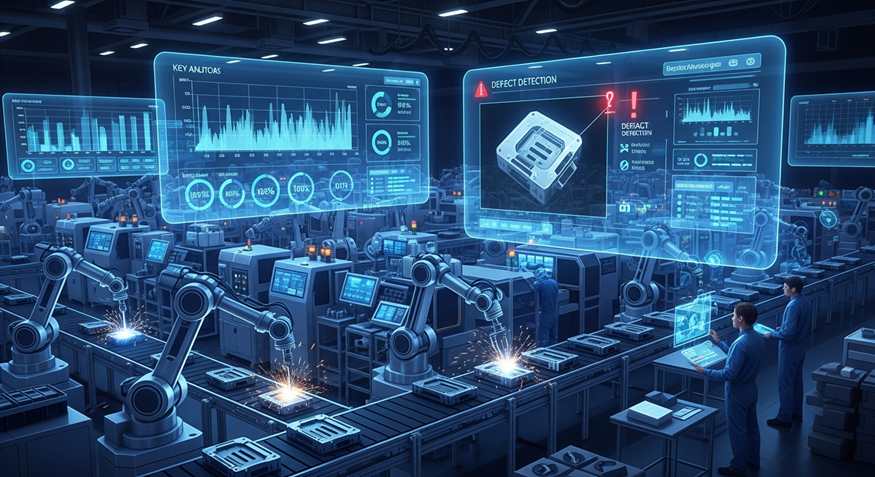
Integration of Industrial IoT and Edge Computing
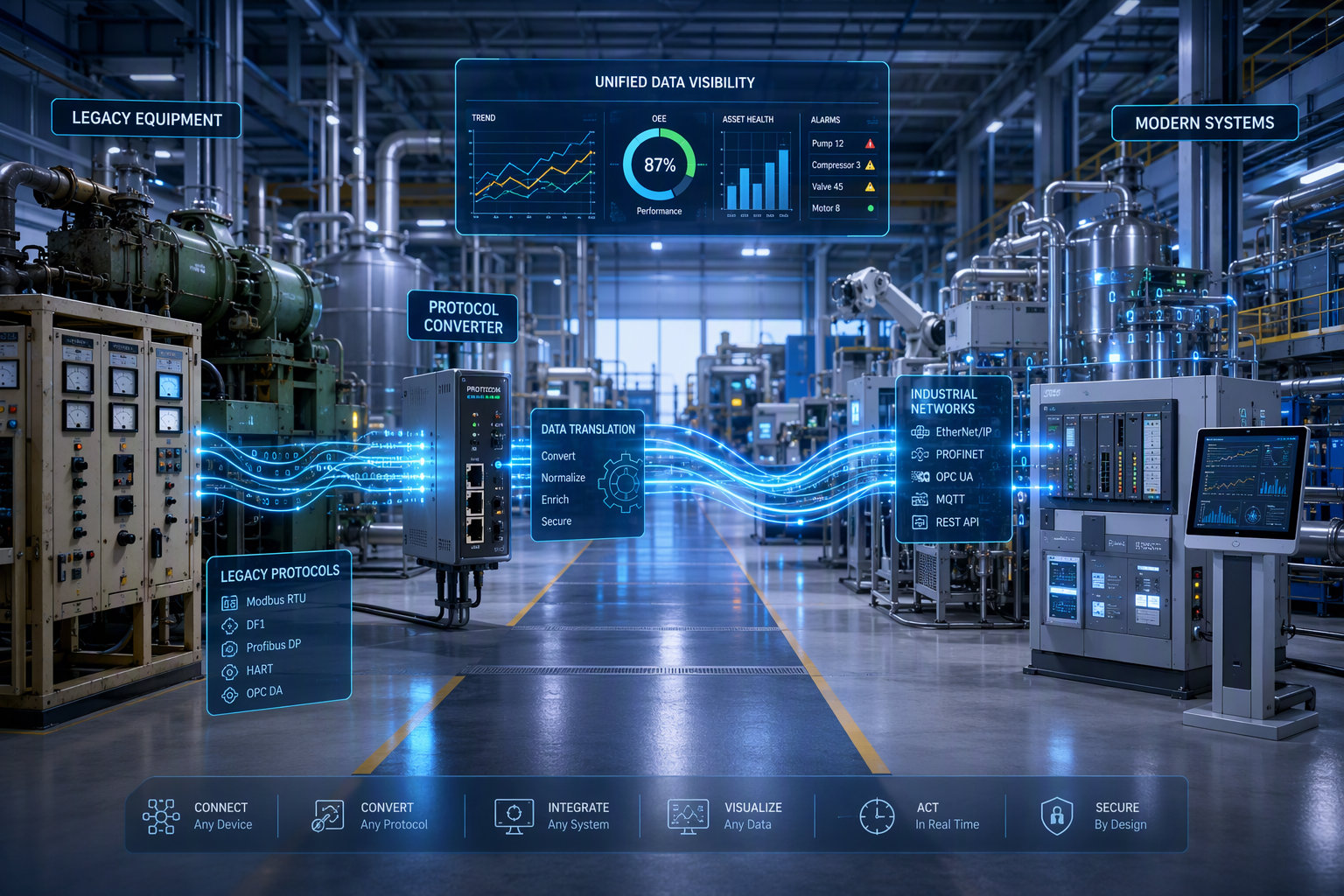
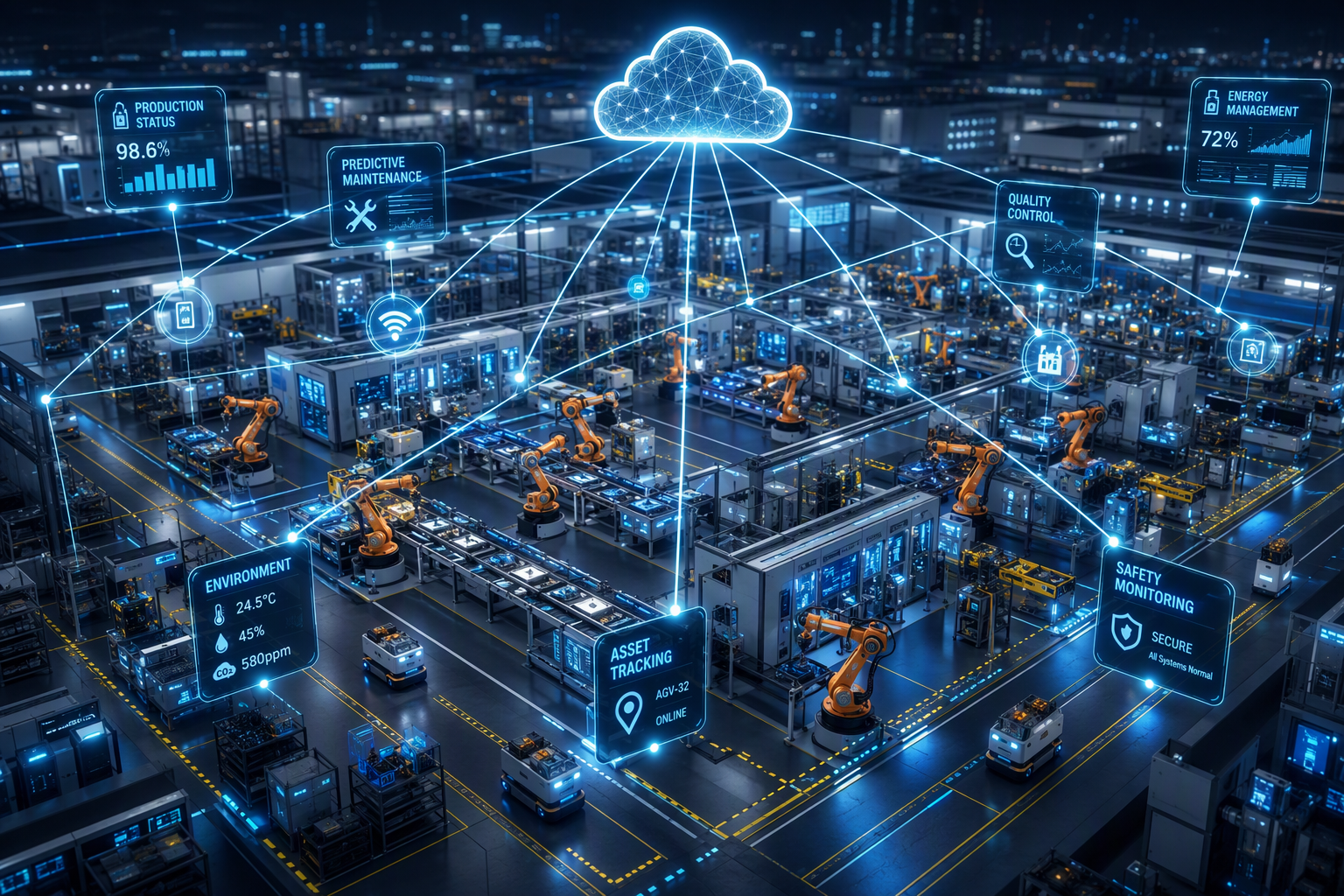
The integration of the Industrial IoT and edge computing is a transformative trend for the sector. The Industrial Internet of Things (IIoT) refers to the network of interconnected smart sensors, instruments, and other devices within an industrial setting. This network generates a massive amount of real-time data.
This is where edge computing comes in. Instead of sending all that data to a centralized cloud for processing, edge computing processes it locally, closer to the source. This reduces latency and allows for faster decision-making, which is critical for controlling industrial processes in real time.
This powerful combination unlocks several capabilities, including:
- Real-time monitoring and control of assets.
- Enhanced data analytics for process optimization.
- Greater visibility across the entire production environment.
Key Challenges and Barriers in Industrial Automation
Despite its many benefits, the path to industrial automation is not without its obstacles. Companies face several key challenges when implementing process automation, from ensuring quality control in newsystems to navigating complex regulatory compliance requirements.
These barriers can slow down adoption and prevent businesses from realizing the full potential of automation. In the following sections, we will discuss some of the most significant challenges, including the skills shortage, cybersecurity risks, and standardization issues.
Skills Shortages and Workforce Readiness
A major challenge facing the industrial automation sector is the growing skills shortage. As automation solutions become more complex, there is an increasing demand for a workforce with specialized technical skills to design, implement, and maintain these systems.
Unfortunately, the supply of qualified workers is not keeping pace with this demand. This gap between the skills needed and the skills available creates a significant bottleneck for companies looking to automate. Finding the right talent has become a critical issue for the industry.
To overcome this, companies and governments must invest in training and upskilling programs. Preparing the workforce for the jobs of the future is essential for ensuring that businesses can successfully adopt and leverage advanced automation technologies.
Cybersecurity Risks and Data Protection
As industrial automation systems become more connected, they also become more vulnerable to cyber threats. Cybersecurity is a critical concern, as a breach could disrupt production, compromise sensitive data, or even cause physical damage to equipment and pose a safety risk to workers.
Protecting these interconnected control systems from cyberattacks is a complex and ongoing challenge. It requires a multi-layered approach to security that covers everything from the network infrastructure to individual devices. Strong data protection measures are also essential to safeguard intellectual property and operational data.
Key areas of focus for mitigating these risks include:
- Implementing robust security protocols for all connected devices.
- Regularly updating software and systems to patch vulnerabilities.
- Providing ongoing cybersecurity training for employees to prevent human error.
Regulatory Compliance and Standardization Issues
Navigating the web of regulatory compliance is another significant challenge in the global industrial automation landscape. Different countries and regions have their own sets of rules and standards for safety, environmental impact, and data privacy, which can be difficult for multinational companies to manage.
Furthermore, a lack of universal standardization across automation technologies can create interoperability issues. When systems from different vendors cannot communicate effectively, it complicates integration and limits the potential for a truly seamless, connected operation.
As technologies like AI become more prevalent, new regulatory questions are emerging around their use and ethical implications. Establishing clear, consistent standards and regulations will be crucial for fostering trust and ensuring the responsible deployment of advanced automation systems worldwide.
Impact on Leading Industries
The influence of industrial automation extends across nearly every major industry, transforming the manufacturing process and optimizing industrial processes on a massive scale. This technological shift is redefining efficiency and productivity from the factory floor to the global supply chain.
Different sectors are adopting automation in unique ways to address their specific needs and challenges. Let's examine how automation is making a significant impact on leading industries, including manufacturing, automotive, energy, and aerospace.
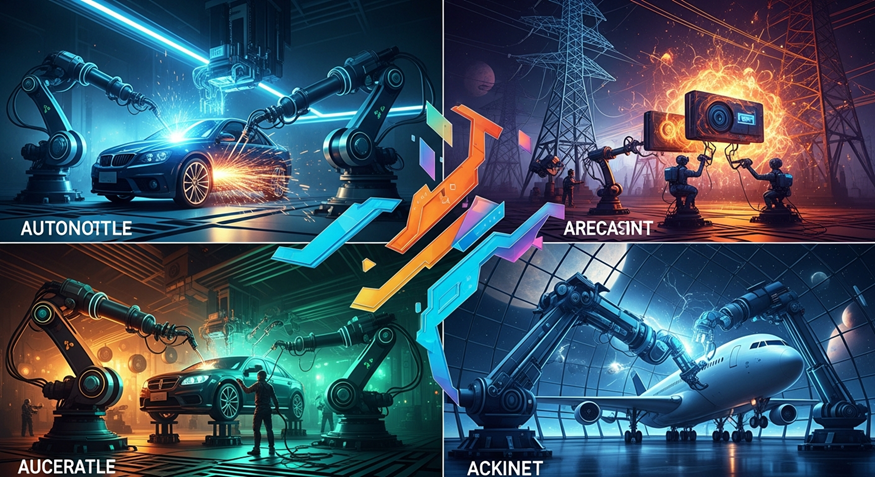
Transformation in Manufacturing and Automotive Sectors
The manufacturing and automotive sectors are among the most heavily impacted by industrial automation. For decades, the automotive industry has been a pioneer in using robots for tasks like welding and painting. Today, automation solutions are making the entire manufacturing process smarter and more flexible.
The rise of smart factories is revolutionizing how cars and other goods are produced. These connected facilities use data and automation to optimize every step, from assembly lines to quality control. This allows for higher precision, reduced costs, and the ability to customize products on a large scale.
In the broader manufacturing industry, automation is enhancing productivity and ensuring consistent product quality. The integration of robotics and smart systems is turning traditional production environments into agile, intelligent operations capable of meeting modern market demands.
Advances in Oil & Gas, Chemicals, and Food & Beverage
Process automation is driving significant advances in the oil & gas, chemicals, and food & beverage industries. In the oil & gas sector, automation is used for remote monitoring of pipelines and drilling operations, enhancing safety and efficiency in often hazardous environments.
The chemicals industry relies on precise process control to ensure product quality and safety. Automation systems help manage complex chemical reactions and maintain stable operating conditions, which is critical for consistent output. This level of control improves the entire value chain, from raw materials to finished products.
In the food & beverage industry, automation plays a key role in everything from processing and packaging to quality inspection. It helps ensure compliance with strict hygiene standards, increases production speed, and reduces waste, making operations more sustainable and profitable.
Growth in Aerospace & Defense and Other Sectors
The aerospace and defense industries are also experiencing significant growth in automation adoption. The manufacturing of aircraft and defense equipment requires extreme precision and adherence to strict quality standards. Automation is essential for achieving the required level of accuracy in tasks like drilling, fastening, and assembly.
The automation market is expanding into other sectors as well. Industries are leveraging specific technologies to solve unique challenges. For example, logistics and warehousing are being transformed by automated material handling systems that can sort, store, and retrieve goods with incredible speed and accuracy.
Other key applications driving growth in various sectors include:
- The use of machine vision for high-speed quality inspection in electronics manufacturing.
- Robotic systems for complex procedures in the healthcare and medical device industries.
- Automated sorting and distribution systems in e-commerce fulfillment centers.
Key Technologies in Modern Automation Systems
Modern automation systems are built on a foundation of powerful and interconnected technologies. At the core are the physical components like industrial robots that perform tasks, and the control systems that direct their actions, ensuring everything runs smoothly and efficiently.
However, today's automation goes far beyond just robots on an assembly line. It incorporates a wide range of advanced technologies that enable greater intelligence, connectivity, and insight. The following sections will highlight some of the key technological pillars of modern industrial automation.
Sensors, Robotics, and Control Systems
Sensors, robotics, and supervisory control systems form the fundamental trio of industrial automation. Smart sensors are the "eyes and ears" of an automated system, collecting data about temperature, pressure, position, and other critical variables from the physical environment.
This data acquisition is then used by control systems, such as programmable logic controllers (PLCs) or distributed control systems (DCS), to make decisions and direct the actions of machinery. These systems are the "brains" of the operation, executing pre-programmed instructions to manage industrial processes.
The "muscle" is provided by robotics. Industrial robots are programmed to perform a wide variety of physical tasks, from heavy lifting and welding to delicate assembly and packaging. Together, these technologies work in harmony to create a fully automated workflow.
Cloud Computing and Big Data Analytics
Cloud computing and big data analytics are key technologies that add a layer of intelligence to modern automation. The vast amounts of data generated by industrial systems can be stored and processed in the cloud, making it accessible from anywhere and enabling powerful analysis.
Big data analytics tools sift through this data to uncover valuable insights, trends, and patterns. This advanced analytics can be used to optimize processes, improve efficiency, and predict future outcomes, such as equipment failure or changes in demand.
This combination of technologies also enables innovative concepts like the digital twin, which is a virtual model of a physical asset or process. Key benefits include:
- Creating simulations to test changes before implementing them in the real world.
- Monitoring asset performance remotely and in real time.
- Running "what-if" scenarios to optimize performance and efficiency.
Human-Machine Interface (HMI) Solutions
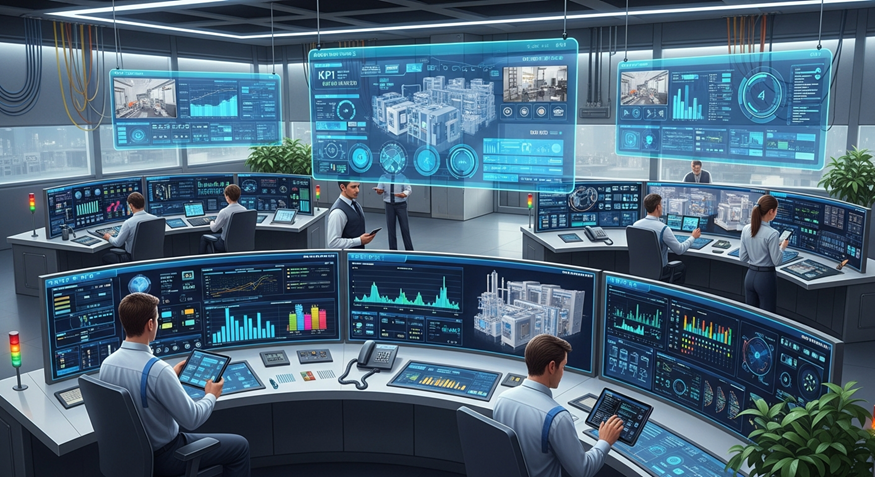
A Human-Machine Interface (HMI) is a critical component of modern automation technology. An HMI is essentially a dashboard that allows human operators to interact with and control a machine or an entire industrial system. It translates complex data from control systems into accessible, graphical visualizations.
These interfaces are crucial for making automation systems user-friendly. Through an HMI, an operator can monitor production status, check for alarms, adjust settings, and manually override processes if needed. They provide a vital link between the human workforce and the automated machinery.
Modern HMI solutions are becoming increasingly sophisticated, featuring intuitive touch screens, mobile access, and advanced data visualization tools. They are designed to give operators the information they need to make quick, effective decisions, ensuring that the automation system runs smoothly and efficiently.
Major Companies and Competitive Landscape
The global industrial automation market is a competitive space, with a mix of established giants and innovative newcomers. A handful of key players command a significant market share, offering comprehensive portfolios of automation products and services across various industries.
These companies are constantly innovating to stay ahead, investing heavily in research and development to bring new technologies to the automation market. In the next sections, we'll look at some of the leading companies in the U.S. and the types of services they provide.
Leading Automation Companies in the U.S.
The United States is home to several key players in the industrial automation sector. These companies are leaders not just domestically but also on the global stage, providing the technologies that power industries around the world.
Firms like Rockwell Automation, Honeywell International, and Emerson Electric are household names in the industry. They offer a wide range of products, from control hardware to advanced software solutions. Other major global players with a strong presence in the U.S. include Siemens AG and ABB Ltd.
Here are some of the top companies operating in the industrial automation sector:
| Company | Key Focus Areas |
|---|---|
| Rockwell Automation, Inc. | Industrial automation, information solutions |
| Honeywell International, Inc. | Aerospace, building technologies, performance materials, safety |
| Emerson Electric Co. | Automation solutions, commercial & residential solutions |
| Siemens AG | Industrial automation, digitalization, electrification |
| ABB Ltd. | Electrification, robotics, automation, motion |
Services and Solutions Offered by Top Providers
The top providers in the automation market offer a comprehensive suite of services and automation solutions designed to meet the diverse needs of modern industries. These offerings go beyond just selling hardware; they often involve end-to-end support, from initial consultation and system design to implementation and ongoing maintenance.
Many of these companies specialize in process automation, providing advanced control systems to manage complex operations in industries like chemicals and oil & gas. They also offer software platforms that enable powerful capabilities like predictive maintenance and advanced data analytics.
Key services and solutions provided by these industry leaders include:
- End-to-end automation solutions tailored to specific industry needs.
- Software for predictive maintenance, asset management, and quality control.
- Consulting and support services for digital transformation initiatives.
Conclusion
In conclusion, the industrial automation sector is rapidly evolving, driven by technological advancements and market demands. As we've explored, the integration of digital transformation, AI, and IoT is not just reshaping processes but also enhancing productivity across various industries. However, challenges like skills shortages and cybersecurity must be navigated to fully harness the potential of automation. Staying informed about the latest research and trends is crucial for businesses looking to thrive in this competitive landscape. If you're interested in diving deeper into this topic or need tailored insights for your organization, don't hesitate to reach out for a free consultation.
Frequently Asked Questions
What is the outlook for industrial automation in the next decade?
The outlook for industrial automation is extremely strong. The market size is projected to experience significant market growth over the forecast period, driven by the demand for efficiency and new technologies. The automation market is expected to more than double in size by 2033, reflecting a sustained and accelerating trend.
Where can I find reliable statistics about global industrial automation?
Reliable statistics on the global industrial automation market can be found in reports from market research firms like Grand View Research and The Insight Partners. These reports offer detailed data on market share, key players, and regional trends in North America, Asia Pacific, and other areas.
How is automation revolutionizing manufacturing processes?
Automation is revolutionizing the manufacturing process by introducing smart manufacturing concepts. Advanced automation systems are making the production process more intelligent and interconnected. This leads to greater operational efficiency, higher product quality, increased flexibility, and reduced costs from start to finish.
You might also like