How AI is Shaping the Industrial Automation Sector Today
How AI is Shaping the Industrial Automation Sector Today
Key Highlights
Here are the key takeaways about the impact of artificial intelligence on industrial automation:
- The global industrial automation market is set for major growth, projected to reach over $504 billion by 2033.
- Artificial intelligence and machine learning are revolutionizing the sector by enabling predictive maintenance and advanced analytics.
- The United States is a key player, with its automation market expected to grow at a CAGR of over 10% through 2033.
- Smart factories and digital twins are becoming major trends, transforming manufacturing processes.
- Key industries like automotive, healthcare, and food & beverage are being significantly transformed by AI-driven automation.
- Leading companies such as Siemens AG and Rockwell Automation are driving innovation in the automation market.
Introduction
Welcome to the world of industrial automation, a field that's being completely reshaped by technology. Have you ever wondered how factories get smarter and more efficient? The secret ingredient is often artificial intelligence. AI is transforming traditional automation systems, making them more intelligent, predictive, and autonomous. This shift is not just about adding new gadgets; it's about fundamentally changing how industries operate, from boosting productivity to enhancing safety. Let's explore how AI is powering this exciting evolution.
The Evolving Landscape of Industrial Automation in the United States
The industrial automation landscape in the United States is buzzing with activity. Driven by the push for smarter manufacturing and more resilient supply chains, companies across North America are embracing automation like never before. This isn't just about keeping up with trends; it's a strategic move to boost productivity and stay competitive.
Rising labor costs and a shortage of skilled workers are further accelerating this shift. As a result, the automation market is seeing a surge in demand for solutions like collaborative robots and AI-powered systems. Let's look closer at the numbers, drivers, and challenges shaping this dynamic sector.
Current Market Size and Growth Projections
So, just how big is the industrial automation market? Globally, the market size was valued at an impressive $226.76 billion in 2025. This figure highlights the massive investment industries are making to modernize their operations and improve efficiency. It's a clear signal that automation is no longer a niche but a core component of modern industry.
Looking ahead, the projections are even more exciting. The market is expected to experience significant market growth, reaching a staggering $504.38 billion by 2033. This represents a compound annual growth rate (CAGR) of 10.5% during the forecast period. This rapid expansion is fueled by the continuous demand for precision, efficiency, and safety across various manufacturing sectors.
In the United States specifically, the outlook is particularly strong. The U.S. market is forecast to grow at a CAGR of over 10% from 2026 to 2033. This growth is driven by a strong focus on digital transformation and the reshoring of production, making the U.S. a key driver in the global automation market.
Key Drivers Behind Market Expansion
What's fueling this incredible market expansion? A major factor is the widespread adoption of Industry 4.0 and the broader digital transformation movement. Companies are realizing that to stay competitive, they need to integrate smarter technologies into their operations. This push is leading to greater investment in advanced automation systems.
Several key drivers are pushing the market forward, including:
- The increasing convergence of Information Technology (IT) and Operational Technology (OT).
- Growing demand for personalized, high-quality products that require flexible and efficient production.
- Government initiatives like "Make in India" and Germany's "Industry 4.0" that incentivize automation investments.
- The global shortage of skilled labor and rising production costs.
Key players in the industry are also playing a crucial role by forming strategic partnerships with software developers and cloud providers. This collaboration helps integrate cutting-edge technologies like AI, IoT, and edge analytics into industrial control systems. This innovation delivers higher value and performance, making modern automation systems more attractive to businesses aiming for energy-efficient and flexible production.
Notable Market Challenges and Barriers
While the growth is impressive, the path to automation isn't always smooth. Companies face several market challenges and barriers when implementing these new technologies. One of the primary hurdles is the high initial investment cost required to purchase and integrate advanced automation systems. For many businesses, particularly smaller ones, this can be a significant financial obstacle.
Furthermore, integrating new systems with legacy infrastructure can be complex and time-consuming. Other notable barriers include:
- A persistent shortage of skilled workers who can operate and maintain sophisticated automation equipment.
- Concerns over cybersecurity, as connected systems can be vulnerable to cyberattacks.
- The complexity of managing and analyzing the vast amounts of data generated by smart devices.
These challenges can disrupt the supply chain and value chain if not addressed properly. Overcoming them requires careful planning, strategic investment in training, and a strong focus on developing secure and scalable automation ecosystems. Successfully navigating these issues is key to unlocking the full potential of industrial automation.
Core Technologies Powering Modern Industrial Automation
At the heart of today's industrial revolution are several core technologies that are making factories smarter and more efficient. Automation technology has evolved far beyond simple robotic arms. We're now seeing the integration of artificial intelligence and machine learning, which allows systems to learn and adapt on their own.
These intelligent technologies work together with advanced control systems and sensors to create a connected, data-driven environment. Let's explore the key innovations, including AI, robotics, and the Industrial Internet of Things (IIoT), that are the true powerhouses behind modern industrial automation.
Role of Artificial Intelligence and Machine Learning
Artificial intelligence (AI) and machine learning (ML) are the brains behind the new age of industrial automation. Instead of just following pre-programmed instructions, these technologies enable machines to think, learn, and make decisions autonomously. This capability is transforming manufacturing by allowing systems to identify patterns and anomalies in production data.
One of the most significant applications is predictive maintenance. By using advanced analytics to monitor equipment performance in real-time, AI algorithms can predict when a machine is likely to fail. This allows maintenance to be scheduled proactively, preventing costly unplanned downtime and extending the lifespan of valuable assets.
Furthermore, AI-powered systems are enhancing process optimization. Operations technology (OT) engineers can now use sophisticated AI tools with user-friendly interfaces to fine-tune production processes. This leads to reduced waste, improved efficiency, and higher-quality products, making AI and machine learning indispensable tools for modern industry.
Robotics and Advanced Machinery Integration
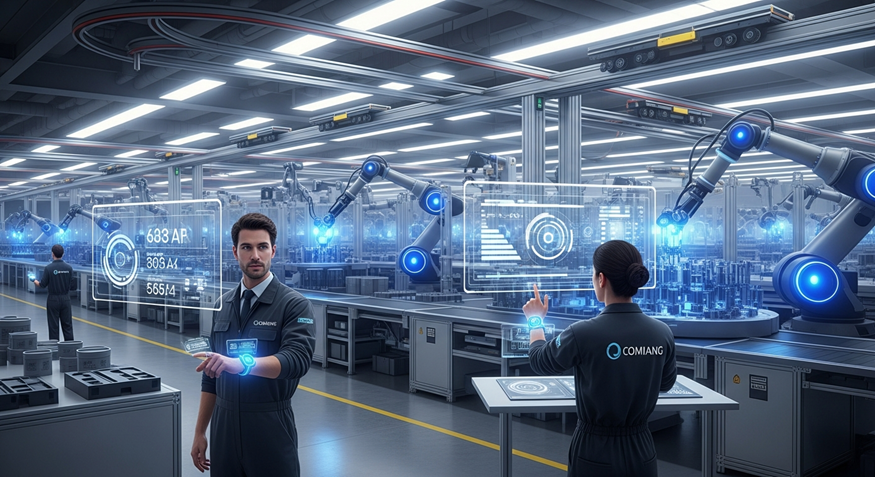
The use of industrial robots is a cornerstone of modern manufacturing, and their capabilities are expanding rapidly. Today's robotics are no longer confined to repetitive, single-task functions. Thanks to the integration of advanced technologies like AI and machine vision, robots are becoming more flexible, intelligent, and collaborative.
This evolution is particularly evident in tasks such as material handling and assembly. Advanced robots can now handle complex objects with greater precision and adapt to changes in the production line in real-time. The industrial robots segment is projected to see the fastest growth, with a CAGR of over 12% from 2026 to 2033, driven by the demand for high-precision output.
The integration of AI also enhances the safety and efficiency of robotic systems. For example, AI-powered drones can be used for inspection and maintenance tasks in hard-to-reach or dangerous areas, reducing human risk. This synergy between robotics and AI is a key factor in transforming manufacturing floors into highly productive and agile environments.
Industrial Internet of Things (IIoT) and Connectivity
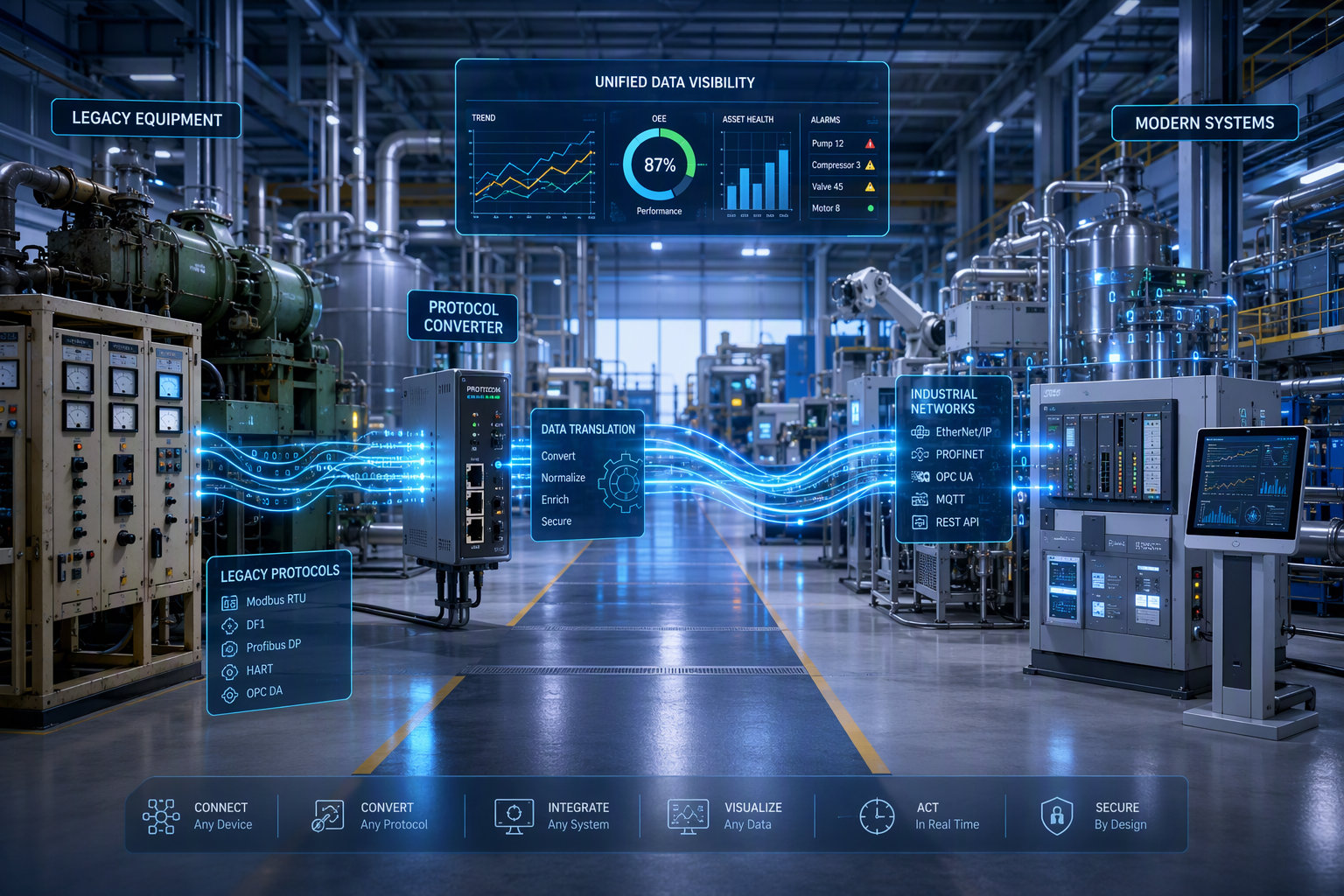
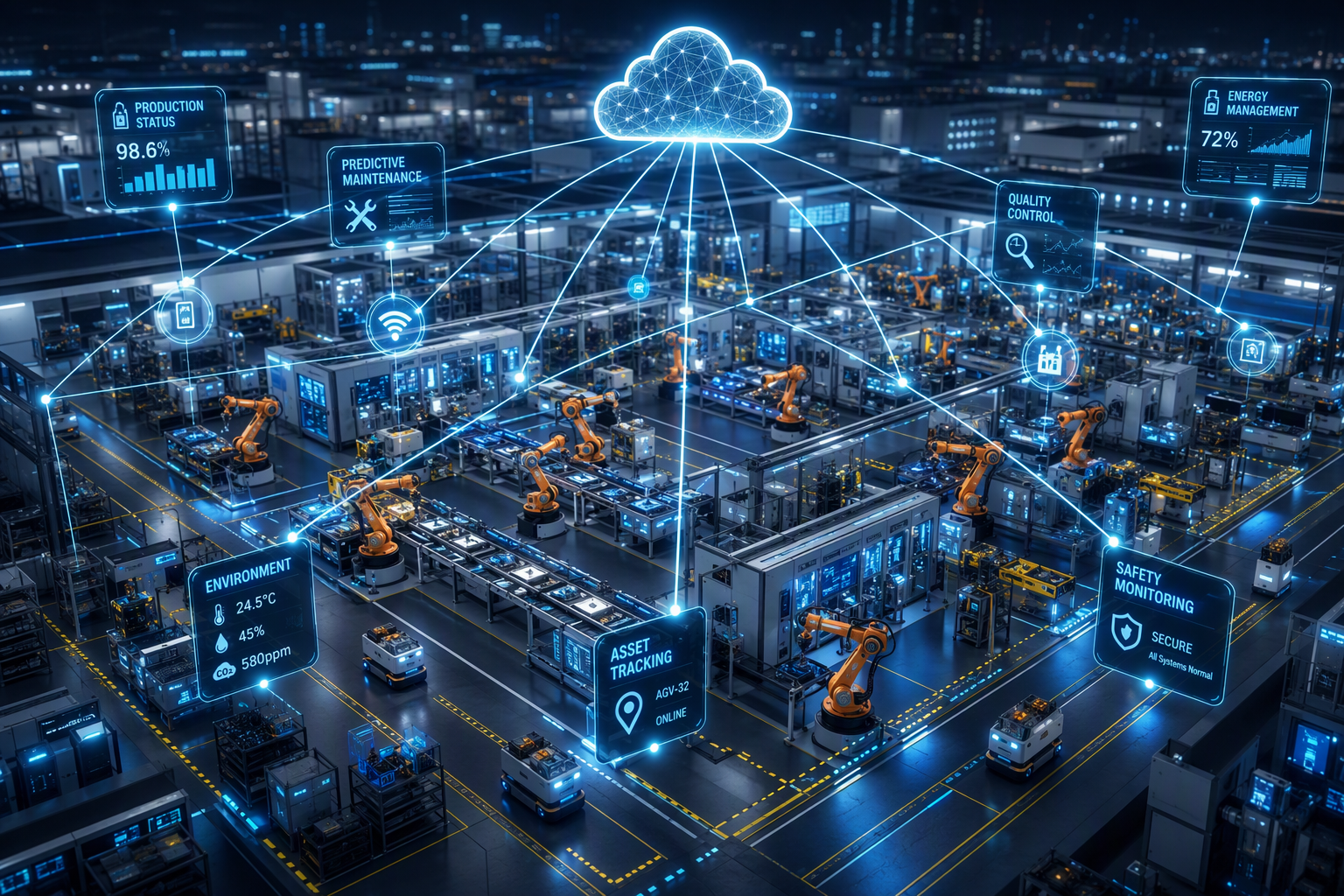
The Industrial Internet of Things (IIoT) is the network that connects everything in a smart factory. It consists of a web of smart sensors, machines, and control systems, all communicating with each other to share real-time data. This constant flow of information provides unprecedented visibility into every aspect of the production process.
This enhanced connectivity is a game-changer for industrial operations. With IIoT, managers can remotely monitor assets, track performance, and make data-driven decisions from anywhere. The integration of the internet of things with cloud platforms and edge computing further boosts these capabilities, allowing for powerful data analytics and faster decision-making right at the source.
Ultimately, IIoT helps bridge the gap between the physical and digital worlds. It enables technologies like digital twins and predictive maintenance to function effectively. As industries become more complex, the robust connectivity provided by IIoT will be essential for maintaining agility, efficiency, and competitiveness in the global market.
Major Trends Influencing Industrial Automation in 2025
As we look toward 2025, several major trends are set to define the future of the automation market. The push for smart manufacturing is stronger than ever, with companies seeking more intelligent and interconnected automation systems. This isn't just about efficiency; it's about creating resilient, agile, and sustainable operations.
From the rise of fully digital factory replicas to a renewed focus on environmental responsibility, these trends are shaping how businesses invest in and implement automation. Let’s examine the key developments that will influence the industrial landscape in the coming years.
Emergence of Smart Factories and Digital Twins
One of the most exciting trends is the emergence of smart factories. These are not just automated facilities but fully integrated, intelligent ecosystems where every machine and process is connected. This allows for seamless process automation and real-time optimization, leading to unprecedented levels of productivity and flexibility.
A key technology enabling smart factories is the digital twin. A digital twin is a virtual replica of a physical asset, process, or system. It allows companies to simulate, test, and optimize their operations in a virtual environment before implementing changes in the real world. This capability drastically reduces risks, shortens development cycles, and improves decision-making.
By using digital twin technology, manufacturers can predict how changes in production will affect outcomes, test new automation systems without disrupting operations, and train employees in a safe, virtual setting. As this technology becomes more accessible, it will play a crucial role in the widespread adoption of smart factories.
Predictive Maintenance Fueled by AI
The move from reactive to proactive maintenance is a huge trend, and it's being powered by artificial intelligence. Predictive maintenance uses AI and machine learning algorithms to analyze data from sensors on industrial equipment. This analysis can identify subtle patterns that signal a potential failure before it happens.
This foresight is incredibly valuable. Instead of waiting for a machine to break down, which can halt entire industrial processes, companies can schedule maintenance at the most convenient time. This approach minimizes unplanned downtime, reduces repair costs, and significantly extends the life of machinery. It's a smarter way to manage assets and ensure operational continuity.
As AI technology continues to advance, predictive maintenance will become even more accurate and widespread. Companies that adopt this strategy can gain a significant competitive edge by improving reliability and asset utilization. It's a clear example of how AI is adding tangible value to the manufacturing sector.
Increased Focus on Sustainability and Green Automation
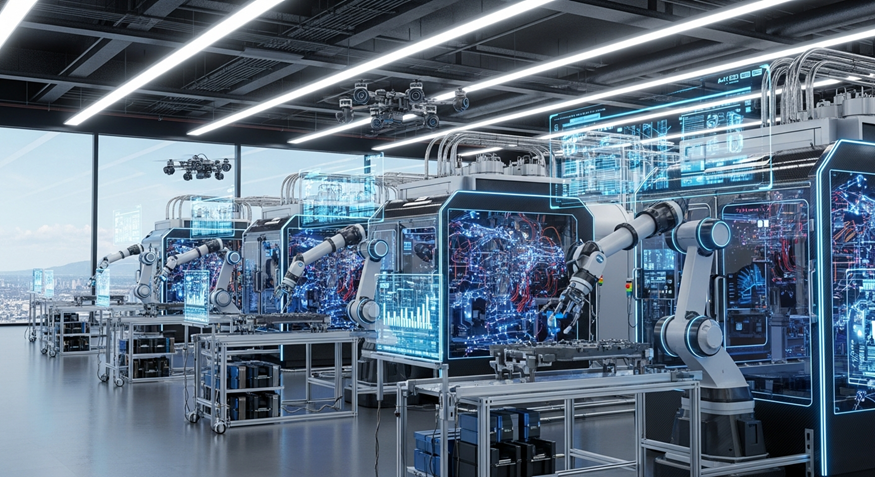
Sustainability is no longer just a buzzword; it's a critical business objective. Companies are increasingly focusing on "green automation" to reduce their environmental footprint. This involves using automation technologies to optimize resource use, minimize waste, and improve energy efficiency across their operations.
For instance, advanced control systems can monitor and adjust energy consumption in real-time, shutting down machines that are not in use and optimizing processes to use less power. This not only helps the planet but also leads to significant cost savings. Europe’s Green Deal is one example of a government initiative that incentivizes automation solutions to reduce carbon emissions.
This focus on sustainability is a key part of the larger digital transformation. By leveraging data and automation, companies can make their operations more efficient and environmentally friendly. As consumers and regulators demand greater corporate responsibility, green automation will become an essential component of any successful industrial strategy.
Impact of AI on Manufacturing Processes
Artificial intelligence is not just an add-on; it's a transformative force in the manufacturing process. By embedding AI into their operations, companies can achieve new levels of intelligence and agility. From optimizing workflows to ensuring flawless quality, AI-driven automation solutions are revolutionizing the factory floor.
This technology allows manufacturers to move beyond simple process automation and toward truly adaptive and self-optimizing systems. The impact is felt across the board, from how products are designed and made to how they are delivered to customers. Let's look at some specific ways AI is making a difference.
Process Optimization and Enhanced Efficiency
One of the most significant impacts of AI in manufacturing is its ability to drive process optimization. AI algorithms can analyze vast amounts of data from the production line to identify inefficiencies and bottlenecks that would be impossible for humans to spot. This allows for continuous improvement and a higher level of operational efficiency.
By integrating AI into automation systems, manufacturers can create self-adjusting processes. For example, an AI system could automatically adjust machine settings in real-time to account for variations in raw materials, ensuring consistent product quality and minimizing waste. This level of granular control leads to substantial gains in productivity.
Ultimately, the goal is to create a more agile and responsive manufacturing environment. AI helps companies move away from rigid, one-size-fits-all processes toward dynamic operations that can quickly adapt to changing demands. This enhanced efficiency not only lowers costs but also improves the ability to compete in a fast-paced market.
Quality Control and Defect Detection
Ensuring high product quality is a top priority for any manufacturer, and AI is revolutionizing quality control. Traditional methods often rely on manual inspection, which can be slow, expensive, and prone to human error. AI-powered machine vision systems offer a much more effective alternative.
These advanced vision systems use cameras and deep learning algorithms to inspect products on the assembly line at incredible speeds. They can detect microscopic defects, inconsistencies, or cosmetic flaws with a level of accuracy that far surpasses human capabilities. This ensures that only perfect products make it to the customer.
By automating the quality control process, companies can improve consistency and reduce the costs associated with rework and recalls. This not only enhances product quality but also builds customer trust and brand reputation. The use of AI in defect detection is a powerful example of how automation is helping manufacturers achieve new standards of excellence.
Automation of Customization and Flexible Production
Today's consumers increasingly demand customized products, a trend that poses a major challenge for traditional mass-production models. This is where flexible automation comes in. By leveraging AI and advanced robotics, manufacturers can create production lines that can quickly and easily switch between different product variations.
Instead of a rigid production process, flexible automation allows for on-the-fly adjustments. Programmable logic controllers (PLCs) and robotic systems can be reprogrammed to handle a variety of tasks, enabling small-batch production and mass customization. This means a factory can produce a wide range of personalized products without the need for costly and time-consuming retooling.
This ability to offer customization at scale is a significant competitive advantage. It allows companies to meet specific customer needs while maintaining the efficiency of automated production. As AI continues to make these systems even more intelligent and adaptable, the factory of the future will be defined by its flexibility.
Industry Verticals Most Transformed by AI-Driven Automation
The benefits of AI-driven industrial automation are not limited to one specific sector. Instead, they are being felt across a wide range of industry verticals. From building cars to producing pharmaceuticals, smart manufacturing and process automation are reshaping how businesses operate.
While the entire automation market is growing, some industries have been particularly quick to adopt these new technologies and are already seeing a profound transformation. Let's explore which sectors are leading the way in leveraging AI to revolutionize their operations.
Automotive and Transportation
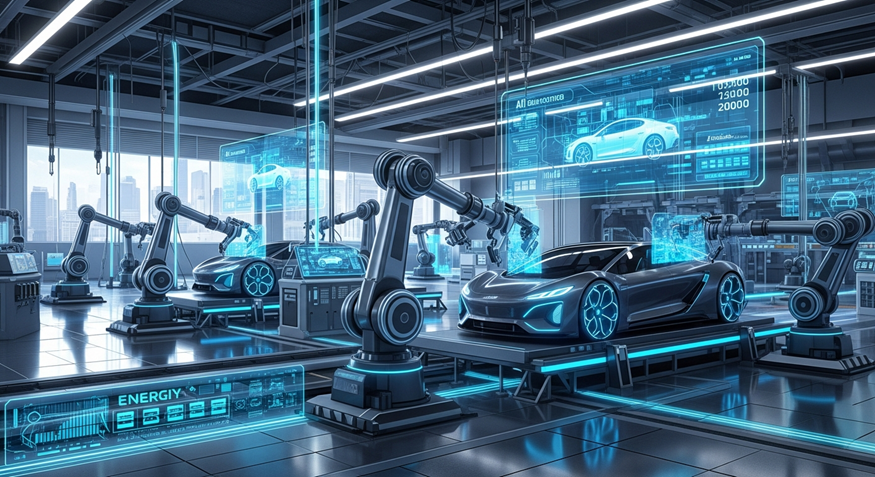
The automotive industry has long been a pioneer in industrial automation, and it continues to be a leader in adopting AI-driven technologies. In auto manufacturing, robots perform a wide range of tasks, from welding and painting to the final assembly of vehicles. AI is making these processes even more efficient and precise.
For instance, AI-powered vision systems are used for quality inspection, ensuring that every component meets strict safety and quality standards. In logistics and material handling within the plants, autonomous mobile robots (AMRs) transport parts and materials to the assembly line, optimizing workflow and reducing manual labor.
The automotive and transportation sector is expected to be one of the fastest-growing end-user segments for automation. The drive for electric vehicles and autonomous driving technology is further accelerating the need for advanced, flexible, and intelligent manufacturing processes, making this industry a key driver of innovation in automation.
Food & Beverage and Packaging
In the food & beverage industry, automation is crucial for ensuring safety, consistency, and efficiency. AI-driven automation is transforming everything from food processing to packaging. With strict regulations and the need for high-quality standards, technology plays a vital role in this sector.
For example, AI-powered vision systems are used for quality control, sorting produce, and detecting contaminants with incredible speed and accuracy. In packaging, robots can handle delicate items without causing damage and can quickly adapt to different package sizes and shapes. This flexibility is essential in an industry with a vast range of products.
Advanced control systems help manage complex processes like brewing and baking, ensuring consistent results every time. By automating these tasks, food & beverage companies can increase production speed, reduce waste, and ensure that their products meet the highest safety and quality standards, which is critical for consumer trust.
Healthcare, Pharmaceuticals, and Biotech
The healthcare, pharmaceuticals, and biotech sectors are experiencing rapid growth in the adoption of automation technology. Precision and sterility are paramount in these fields, and automation helps to eliminate human error and ensure compliance with strict regulatory standards. This sector is expected to register the fastest CAGR from 2026 to 2033.
In pharmaceutical manufacturing, process automation is used to produce medicines with high precision and consistency. Robots handle sterile materials, fill vials, and package drugs, reducing the risk of contamination. In biotech labs, automation accelerates research and development by automating repetitive tasks like sample handling and analysis.
Within healthcare facilities, automation is improving operational efficiency. Robotics are used in surgical procedures for enhanced precision, and smart diagnostic systems help doctors make faster, more accurate diagnoses. The growing demand for personalized medicine and the need for scalable, reliable production are driving the transformation of this critical industry through automation.
Leading Companies in the U.S. Industrial Automation Sector
The industrial automation market is powered by a host of innovative companies that develop the cutting-edge technologies driving this transformation. Global giants like Siemens AG, Rockwell Automation, and Schneider Electric are at the forefront, offering comprehensive solutions that span hardware, software, and services.
These companies, along with other key players like ABB Ltd and Mitsubishi Electric, are not just suppliers; they are strategic partners helping industries navigate their digital transformation journeys. Let's take a closer look at these market leaders and what they offer.
Overview of Top Automation Solution Providers
The industrial automation sector is home to several major players who command a significant market share. These companies provide a wide range of automation solutions, from hardware components like sensors and robots to sophisticated software platforms for controlling and monitoring entire factories. They are the key players driving innovation in the industry.
These leaders are global technology and engineering powerhouses. They serve a diverse array of industries, including automotive, energy, chemicals, and pharmaceuticals. Their extensive portfolios and global presence make them central to the industrial automation ecosystem.
Here is a quick overview of some of the top companies in the market:
| Company Name | Core Focus |
|---|---|
| Siemens AG | Comprehensive industrial automation, digital twin platforms, and smart factory solutions. |
| Schneider Electric | Energy management and industrial automation, including IoT platforms and SCADA software. |
| Rockwell Automation, Inc. | Industrial automation and information solutions, specializing in smart manufacturing. |
| ABB Ltd. | Robotics, power, heavy electrical equipment, and automation technology. |
| Mitsubishi Electric Corp | Factory automation systems, including PLCs, motors, and industrial robots. |
Signature Offerings and Services of Major Players
The leading companies in industrial automation distinguish themselves through a diverse range of signature offerings and services. They provide comprehensive automation solutions that cater to the specific needs of different industries, moving beyond simple hardware to offer integrated systems that combine programmable automation with advanced software.
For example, Siemens AG is renowned for its end-to-end automation technology, including its Digital Twin platforms that enable virtual simulation and optimization. Schneider Electric, on the other hand, excels in energy management and industrial IoT platforms, helping businesses achieve both efficiency and sustainability. These advanced technologies are what set the major players apart.
Here are some examples of their key offerings:
- Siemens AG: Offers the TIA (Totally Integrated Automation) Portal, which provides access to its entire digitalized automation portfolio.
- Rockwell Automation: Known for its Allen-Bradley programmable logic controllers (PLCs) and the FactoryTalk software suite for smart manufacturing.
- ABB Ltd.: A leader in robotics with its YuMi collaborative robots and the ABB Ability™ platform for digital solutions.
- Emerson Electric Co.: Provides advanced process control systems and measurement technologies for various industries.
Noteworthy Partnerships and Industry Collaborations
In today's interconnected world, no company can do it all alone. That's why industry collaborations and strategic partnerships are essential for driving innovation and market expansion. Leading automation companies are actively teaming up with software developers, cloud providers, and other technology firms to enhance their offerings.
These partnerships allow them to integrate the latest technologies, like AI and cloud computing, into their platforms, delivering more value to their customers. For example, Emerson Electric's acquisition of National Instruments was a strategic move to bolster its presence in software-driven automated testing and measurement systems.
Here are a few examples of recent noteworthy partnerships:
- Rockwell Automation and PTC: A collaboration to integrate their smart factory technologies, combining Rockwell's industrial automation expertise with PTC's IoT and AR platforms.
- Siemens and NVIDIA: A partnership to create an industrial metaverse, enabling the use of physics-based digital twins in real-time.
- ABB and Ericsson: A collaboration to enhance wireless automation for factories, using 5G technology to improve connectivity and flexibility.
These collaborations help strengthen the entire value chain and accelerate the adoption of new technologies across the industry.
Regional Dynamics and the Influence of Global Demand
The industrial automation market is a truly global phenomenon, with distinct dynamics in different regions. While North America and Europe are mature markets with a strong focus on advanced technologies and sustainability, the Asia Pacific region has emerged as the dominant force in the global industrial automation market, accounting for over 37% of the market share in 2025. This is fueled by rapid industrialization and strong government support in countries like China and India.
Global demand, international trade policies, and regional economic priorities all play a significant role in shaping the competitive landscape. For example, growing demand in emerging economies in the Middle East and Latin America is creating new opportunities for market expansion. This interconnectedness means that trends in one part of the world can quickly influence the entire market. Let's delve into how these regional dynamics play out.
United States’ Position in the Worldwide Automation Market
The United States holds a strong and influential position in the global industrial automation landscape. As part of the North America automation market, which accounted for a significant market share of over 28% in 2025, the U.S. is a hub for innovation and a major consumer of automation technologies.
The U.S. market is characterized by a strong emphasis on digital transformation, advanced manufacturing, and the reshoring of production. These factors are driving robust demand for sophisticated automation solutions, including collaborative robots and AI-powered predictive maintenance. The country's market is projected to grow at one of the highest rates, with a CAGR of over 10% from 2026 to 2033.
This growth solidifies the United States' role as a key player in global industrial automation. A strong focus on developing secure and scalable automation ecosystems, influenced by concerns over cybersecurity and data sovereignty, further defines its leadership position and sets trends for the rest of the world.
International Trade, Supply Chains, and Competitive Landscape
The industrial automation sector is deeply intertwined with global supply chains and international trade. The competitive landscape is shaped by where components are made, where systems are assembled, and where the final products are sold. Disruptions in one part of the world, such as supply chain bottlenecks, can have a ripple effect across the entire industry.
To build resilience, many companies are re-evaluating their supply chain strategies. This has led to trends like reshoring (bringing manufacturing back to the home country) and near-shoring (moving it to a nearby country). Automation plays a key role in making these strategies economically viable by offsetting higher labor costs.
Several factors influence this complex landscape:
- Trade Policies: Tariffs and trade agreements can impact the cost and availability of components, influencing manufacturing location decisions.
- Geopolitical Stability: Political instability in key regions can disrupt the supply chain and affect market access.
- Logistics and Transportation: The efficiency and cost of global shipping are critical to the value chain of the automation industry.
Navigating this environment requires agility and strategic planning from all players in the market.
Conclusion
In closing, the influence of AI on the industrial automation sector is profound and continuously evolving. From enhancing manufacturing processes to driving the creation of smart factories, AI is paving the way for greater efficiency and innovation. As businesses embrace these technological advancements, staying informed about emerging trends and core technologies becomes essential. The integration of AI not only optimizes operations but also addresses significant challenges in quality control and sustainability. As we move forward, it’s crucial to recognize the transformative power of AI and how it can help shape a more efficient and sustainable industrial landscape. If you’d like to explore how AI can benefit your operations, don’t hesitate to reach out for a free consultation.
Frequently Asked Questions
How is AI expected to impact the future of industrial automation?
Artificial intelligence will make automation systems smarter and more autonomous. We can expect to see wider adoption of advanced technologies like AI-driven predictive maintenance, self-optimizing production lines, and more collaborative human-robot partnerships, thanks to advancements in machine learning. This will lead to unprecedented levels of efficiency and flexibility.
What challenges do companies face when implementing AI in industrial automation?
Key challenges include the high initial investment cost, the complexity of integrating new AI-powered control systems with legacy equipment, and a shortage of skilled workers. Cybersecurity concerns and managing the vast amounts of data generated also pose significant hurdles for companies undergoing a digital transformation in the automation market.
Where can I find reliable statistics and insights on the industrial automation sector?
For reliable data, look to market research firms like Grand View Research and The Insight Partners. Their reports offer detailed analysis of market size, growth forecasts, and market share. Industry associations and publications from key players in the automation market also provide valuable insights into the entire value chain.
You might also like