Industrial Automation Sector: Trends to Watch in 2025
Industrial Automation Sector: Trends to Watch in 2025
Key Highlights
- The global industrial automation market is set for significant growth, reaching an estimated value of $226.76 billion in 2025.
- Key trends driving the automation market include the rise of smart manufacturing, artificial intelligence, and machine learning.
- Industrial robots and collaborative robots (cobots) are transforming production lines across various sectors.
- The Asia-Pacific region currently dominates the market, but North America is showing strong growth projections.
- Cybersecurity is becoming a major focus to protect increasingly connected industrial systems.
- Challenges like workforce skills gaps and supply chain disruptions are impacting the sector's expansion.
Introduction
Welcome to the future of manufacturing! The world of industrial automation is evolving at an incredible pace, driven by the need for greater efficiency, precision, and connectivity. As we look toward 2025, automation systems are becoming smarter and more integrated, turning traditional factories into highly advanced smart factories. This shift is not just about robots; it's about creating intelligent ecosystems that reshape how products are made, from start to finish. Are you ready to see what's next?
Overview of the Industrial Automation Sector in 2025
The industrial automation market is experiencing a massive surge as we head into 2025. This growth is fueled by a widespread digital transformation, with companies across the board adopting advanced automation technology to stay competitive. The focus is on boosting productivity, improving safety, and making operations more efficient.
This expansion reflects a broader industry trend toward smarter, more connected manufacturing environments. The increasing market size indicates a strong commitment from businesses to invest in technologies that will define the future of production. Let's explore the numbers and drivers behind this exciting growth.
Recent Market Size and U.S. Growth Projections
The global industrial automation market size was valued at an impressive USD 226.76 billion in 2025, setting the stage for substantial market growth. Projections show the market is expected to reach USD 504.38 billion by 2033, demonstrating a strong compound annual growth rate (CAGR) of 10.5% during the forecast period.
In North America, the market is particularly vibrant. The U.S. is projected to see a CAGR of over 10% from 2026 to 2033. This growth is driven by a focus on reshoring production and enhancing the entire value chain through advanced manufacturing.
| Market Metric | Value |
|---|---|
| 2025 Market Size | USD 226.76 Billion |
| 2033 Projected Market Size | USD 504.38 Billion |
| CAGR (2026-2033) | 10.5% |
Key Drivers Behind Market Expansion
Several key factors are propelling the expansion of the automation market. At the forefront is the relentless pursuit of operational efficiency. Companies are looking to reduce human error, boost productivity, and streamline processes, and automation provides a clear path to achieving these goals.
The integration of advanced technologies is another major driver. The rise of Industry 4.0 has brought innovations like AI, IoT, and robotics into the mainstream, making automation more accessible and powerful than ever before.
Key drivers include:
- Increasing demand for smart manufacturing solutions.
- Rising adoption of robotics in industrial processes.
- Technological advancements in AI, machine learning, and IoT.
- Government initiatives promoting industrial modernization.
Shifting Industry Demands and Landscape
The demands of the modern industrial landscape are shifting rapidly, and automation is at the heart of this transformation. Today, there's a much greater emphasis on smart manufacturing, where data and connectivity are used to optimize every aspect of the manufacturing process. This allows for greater flexibility and responsiveness to market changes.
One of the most significant impacts is on product quality. Automated systems can perform tasks with a level of precision and consistency that is difficult for humans to replicate, leading to fewer defects and higher standards. This not only improves customer satisfaction but also reduces waste.
Furthermore, companies are increasingly using automation to improve energy efficiency. By monitoring and controlling energy consumption in real-time, smart systems help reduce operational costs and support sustainability goals, reshaping how factories operate.
Major Trends Shaping Industrial Automation in 2025
As we move further into 2025, several powerful automation trends are defining the future of industrial automation. These trends are not just about new gadgets; they represent a fundamental shift in how factories are designed and managed. The integration of artificial intelligence and machine learning is creating systems that can think, learn, and adapt.
These innovations are helping companies gain a competitive edge and increase their market share by making their operations smarter and more agile. From the factory floor to the cloud, these trends are creating a new paradigm for industrial production.
Rise of Artificial Intelligence and Machine Learning
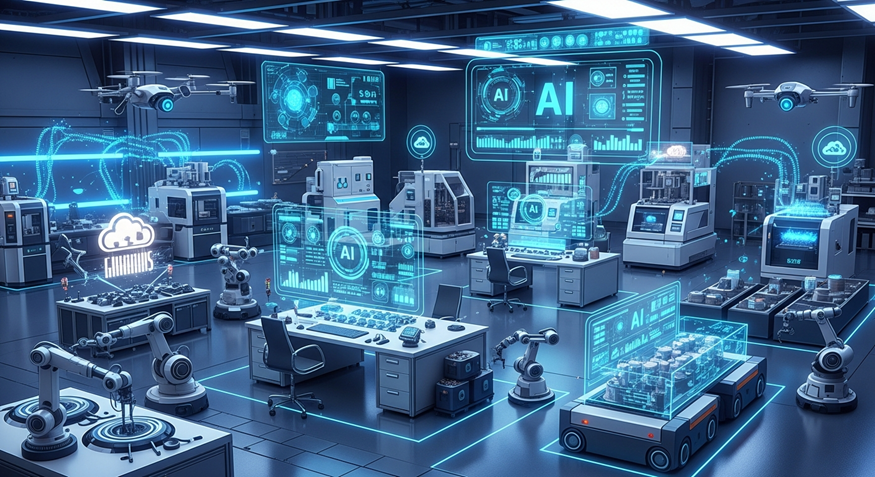
Artificial intelligence (AI) and machine learning (ML) are no longer futuristic concepts; they are practical tools revolutionizing industrial automation today. These technologies enable systems to analyze vast amounts of data, identify patterns, and make intelligent decisions without human intervention. This shift is leading to smarter, more autonomous factories.
One of the most impactful applications is predictive maintenance. By using advanced analytics, ML algorithms can predict equipment failures before they happen, allowing for scheduled repairs that reduce unplanned downtime and save costs. This proactive approach is a game-changer for maintaining operational continuity.
The influence of AI and ML extends to:
- Optimizing production processes in real-time.
- Improving quality control through intelligent inspection.
- Enhancing supply chain efficiency with better forecasting.
- Enabling adaptive control for dynamic production environments.
Growing Importance of Industrial IoT (IIoT)
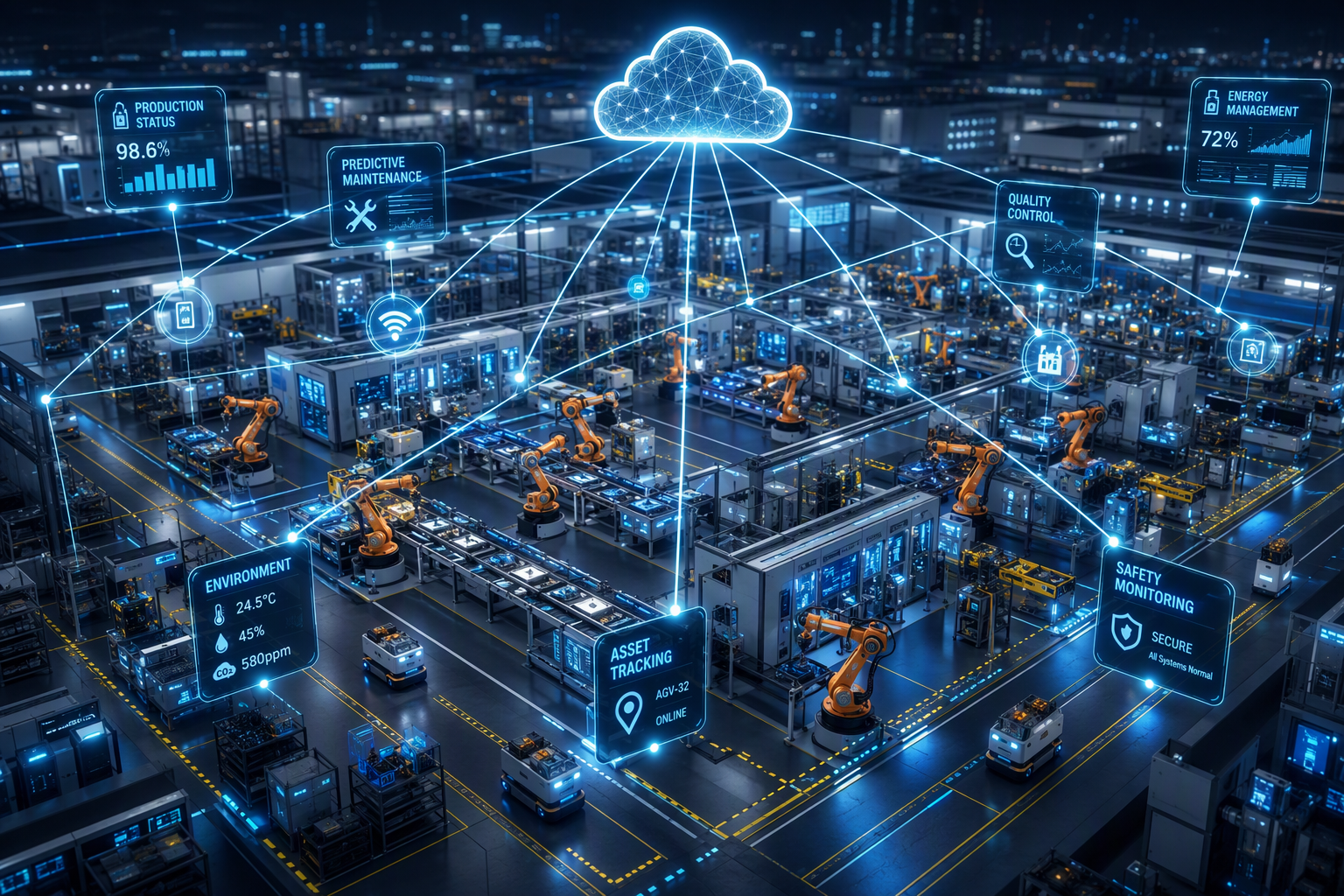
The Industrial Internet of Things (IIoT) is rapidly becoming the backbone of modern smart factories. It involves a network of interconnected sensors, instruments, and other devices that collect and share data across industrial processes. This connectivity provides an unprecedented level of visibility and control over factory operations.
By leveraging the Internet of Things, companies can monitor equipment performance, track assets, and manage workflows in real-time. This data-driven approach helps optimize efficiency, reduce operational costs, and improve decision-making from the factory floor to the executive suite.
Ultimately, IIoT is what enables the creation of truly integrated smart factories. It bridges the gap between physical machinery and digital systems, allowing for seamless communication and automation that transforms industrial processes and unlocks new levels of productivity.
Cloud-Based Automation Solutions
Cloud computing is extending its reach into the industrial sector, offering powerful and flexible automation solutions. By hosting automation software and data in the cloud, companies can access powerful tools without the need for extensive on-premise IT infrastructure. This makes advanced process automation more accessible and scalable.
One of the most exciting applications is the concept of a digital twin. This is a virtual model of a physical asset, process, or system that is updated with real-time data. Using cloud-based platforms, engineers can simulate, test, and optimize processes in a virtual environment before implementing them in the real world.
This approach reduces risk, shortens development cycles, and allows for continuous improvement. As more companies recognize the benefits of remote monitoring, data analytics, and collaborative tools, the adoption of cloud-based automation solutions is set to accelerate.
Emphasis on Cybersecurity in Industrial Systems
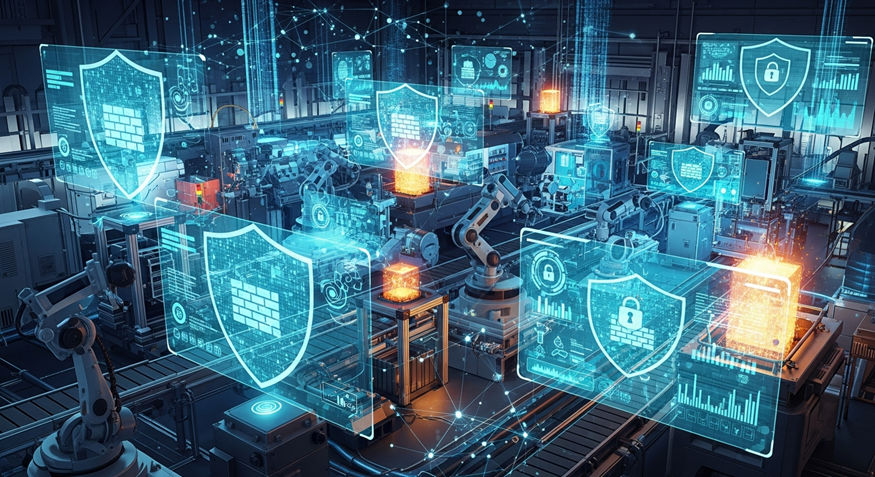
As industrial systems become more connected through digital transformation, they also become more vulnerable to cyber threats. The emphasis on cybersecurity has never been greater. A single breach could disrupt production, compromise sensitive data, or even cause physical damage, making robust security measures essential for operational efficiency.
Companies are addressing these risks by implementing multi-layered security strategies. This includes securing networks, protecting control systems from unauthorized access, and continuously monitoring for threats. They are investing in advanced cybersecurity tools and working with experts to fortify their defenses against increasingly sophisticated attacks.
Leading automation providers are also integrating enhanced security features directly into their products. For example, recent product launches from companies like Honeywell and ABB include advanced cybersecurity tools designed to protect critical infrastructure. This focus ensures that the benefits of connectivity do not come at the expense of security.
Technological Innovations Impacting Automation
The world of industrial automation is constantly being reshaped by groundbreaking technological innovations. These advanced technologies are not just improving existing automation systems; they are enabling entirely new possibilities for how we manufacture goods. From smarter robots to faster data processing, innovation is the engine driving the industry forward.
These advancements are making automation more intelligent, flexible, and efficient. As we explore some of the most impactful technologies, you'll see how they are converging to create the next generation of automated factories and industrial processes.
Next-Generation Robotics and Collaborative Robots (Cobots)
The field of robotics is undergoing a significant evolution. While traditional industrial robots continue to be workhorses in manufacturing, a new generation of collaborative robots, or "cobots," is gaining popularity. Unlike their predecessors, cobots are designed to work safely alongside human employees, sharing tasks and augmenting their capabilities.
This collaboration enhances productivity and flexibility. Cobots are often easier to program and deploy, making them a viable option for small and medium-sized businesses. They are being used for a wide range of applications, from assembly and packaging to material handling and quality control.
The impact of next-generation robotics includes:
- Increased safety in human-robot collaboration.
- Greater production flexibility for varied tasks.
- Higher precision and consistency in repetitive jobs.
- Enhanced productivity across various industries.
Advanced Sensors and Real-Time Data Analytics
Modern automation is powered by data, and advanced sensors are the source of that data. Smart sensors are more than just simple measurement devices; they are intelligent components that can process information locally and communicate with other parts of the system. These sensors provide the real-time data needed for effective monitoring and control.
This data is then fed into real-time data analytics platforms, where it is analyzed to provide actionable insights. This allows operators to make informed decisions quickly, optimizing processes on the fly. For instance, vision systems using machine vision technology can inspect products for defects at high speeds, ensuring consistent quality.
The combination of smart sensors and powerful analytics is transforming factories into responsive, data-driven environments. By capturing and interpreting data from every stage of production, companies can achieve new levels of efficiency and quality.
Edge Computing and Decentralized Control Solutions
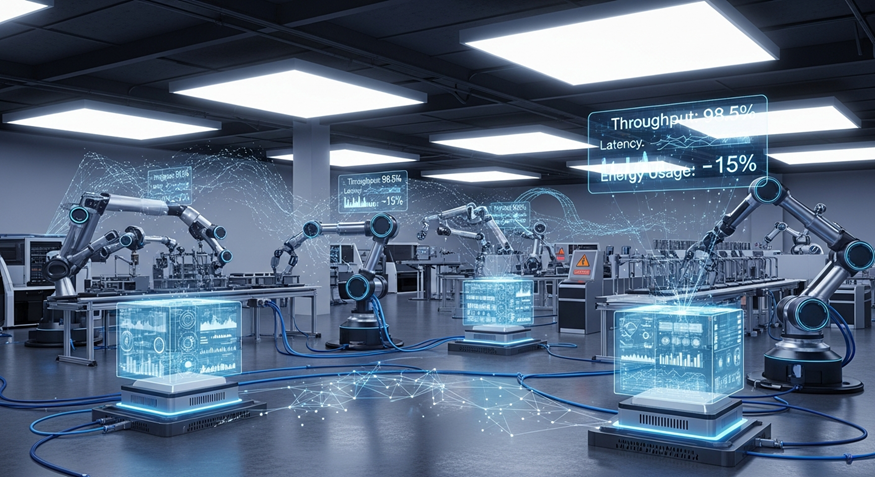
While cloud computing offers immense storage and processing power, not all data needs to travel that far. Edge computing brings data processing closer to the source, right at the "edge" of the network. This approach reduces latency and allows for faster decision-making, which is critical for many industrial applications.
In a decentralized automation model, control is distributed across various devices and systems rather than being centralized in a single controller. This improves the resilience and scalability of the system. If one component fails, the rest of the system can continue to operate. This is a significant shift from traditional supervisory control architectures.
Edge computing is a key enabler of this decentralized approach to process automation. By processing data locally, edge devices can respond to events in milliseconds, providing the real-time control needed for complex and fast-paced manufacturing environments.
Industrial Automation Across Key U.S. Industries
Industrial automation is not a one-size-fits-all solution; its application varies significantly across different industries in North America. From the high-speed assembly lines of automotive plants to the sterile environments of pharmaceutical labs, automation is being tailored to meet unique challenges and opportunities.
Each sector is leveraging automation to optimize its specific manufacturing process and production process. Let's take a closer look at how industrial automation is making a tangible impact on some of the most important industries in the U.S.
Automotive Manufacturing Developments
The automotive manufacturing sector has long been a pioneer in factory automation, and it continues to push the boundaries of what's possible. Today, automotive plants are among the most automated facilities in the world, using robots for everything from welding and painting to final assembly.
The drive for operational efficiency is relentless. Automakers are using advanced automation technology to increase production speed, improve vehicle quality, and reduce costs. The rise of electric vehicles is also creating new manufacturing challenges and opportunities for automation.
As the industry moves toward more flexible and agile production models, automation will play an even more critical role. The ability to quickly reconfigure assembly lines to produce different models is a key competitive advantage in the fast-changing automotive market.
Innovations in Food and Beverage Processing
The food and beverage processing industry is embracing process automation to meet the challenges of safety, consistency, and consumer demand. Automation helps ensure product quality and hygiene by minimizing human contact and standardizing processes, which is crucial in this highly regulated sector.
Robots are increasingly used for tasks like packaging, palletizing, and sorting, which can be repetitive and physically demanding for human workers. This not only improves efficiency but also enhances worker safety. The need to handle a wide variety of products and packaging formats is driving the demand for flexible automation solutions.
Furthermore, automation allows for better traceability throughout the production process. By tracking ingredients and products from farm to fork, companies can quickly respond to any quality issues and ensure compliance with food safety regulations, building trust with consumers.
Pharmaceuticals and Life Sciences Adaptations
In the pharmaceuticals and life sciences industries, precision and compliance are paramount. Automation systems are essential for achieving the high standards of quality control required in this field. Automated systems can perform tasks with a level of accuracy and repeatability that is critical for drug manufacturing and laboratory testing.
From high-throughput screening in drug discovery to automated packaging and labeling of finished products, automation is present at every stage. It helps reduce the risk of human error, ensure product consistency, and maintain a sterile manufacturing environment.
Moreover, automation plays a key role in data integrity and regulatory compliance. Automated systems can meticulously record every step of the manufacturing process, providing the detailed documentation required by regulatory agencies. This ensures that products are safe, effective, and meet all legal requirements.
Role in Oil, Gas, and Energy Sectors
In the oil and gas and energy sectors, automation is crucial for safety, efficiency, and environmental management. These industries often operate in harsh and remote environments, where automation can reduce the need for human presence and minimize risks. Process automation is used to control complex operations like drilling, refining, and power generation.
A major focus in these sectors is improving energy efficiency. Advanced control systems can optimize processes to reduce energy consumption and lower carbon emissions, helping companies meet their sustainability goals and comply with environmental regulations. This is a significant driver in the automation market for energy.
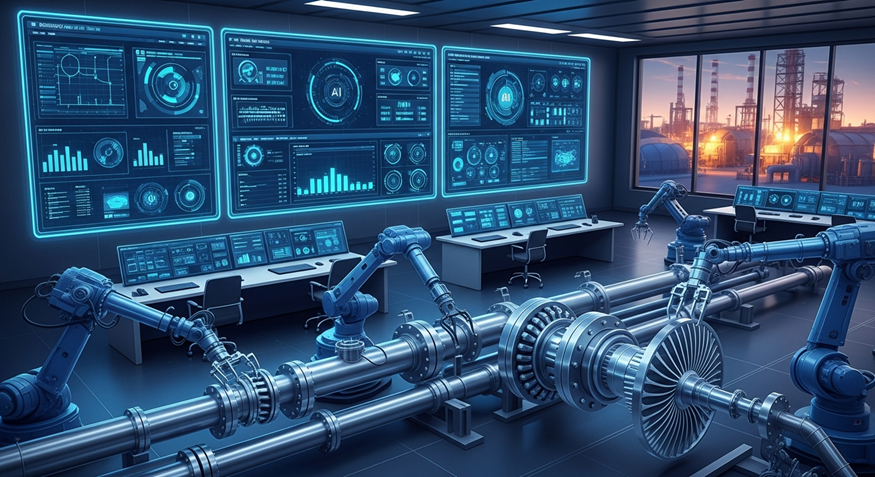
Furthermore, automation enables remote monitoring and predictive maintenance of critical assets, such as pipelines and turbines. This helps prevent costly failures, ensures operational reliability, and extends the lifespan of expensive equipment, making it an indispensable tool for the modern energy industry.
Key Players and Competitive Dynamics in the Market
The global industrial automation market is a dynamic and competitive space, home to a mix of established giants and innovative newcomers. These key players are constantly vying for market share by developing cutting-edge technologies and expanding their service offerings. Understanding the competitive landscape is key to grasping the direction of the automation market.
From comprehensive automation platforms to specialized components, these companies shape the industry through their products, strategies, and investments. The following sections will highlight some of the leading companies and the strategic moves they are making to stay ahead.
Leading U.S. and Global Automation Companies
The industrial automation sector is led by several major global corporations that provide a wide range of products and services. Companies like Siemens AG and Schneider Electric offer comprehensive portfolios that include everything from control systems and software to smart factory solutions.
Rockwell Automation is a key player based in the U.S., known for its programmable logic controllers (PLCs) and integrated automation platforms. Similarly, Honeywell International provides advanced solutions for process control and building automation, with a strong focus on cybersecurity.
Other notable companies shaping the market include:
- ABB Ltd.: A leader in robotics, power, and automation technologies.
- Omron Corporation: Known for its sensors, control components, and factory automation systems.
- Yokogawa Electric Corporation: Specializes in industrial automation and control, test and measurement, and information systems.
- Mitsubishi Electric Corporation: Offers a broad range of factory automation products, including robots and PLCs.
Notable Mergers, Partnerships, and Investments
The industrial automation market is characterized by a high level of strategic activity, including mergers and acquisitions (M&A), partnerships, and significant investments. These moves are aimed at strengthening market position, acquiring new technologies, and expanding into new markets, all of which fuel market growth.
Companies are forming strategic partnerships with software developers and cloud service providers to integrate AI, IoT, and cloud-based analytics into their offerings. This collaboration is essential for delivering the comprehensive, integrated solutions that customers are demanding.
The steady flow of investment into the sector, both from established players and venture capitalists, indicates strong confidence in the long-term outlook for industrial automation. These financial commitments are funding the research and development that will drive the next wave of innovation.
Current Challenges Facing the Industrial Automation Sector
While the future of industrial automation looks bright, the industry is not without its challenges. Navigating issues like supply chain disruptions, a growing workforce skills gap, and complex regulatory compliance is crucial for sustained market growth. These obstacles can slow down the adoption of new technologies and impact project timelines.
Addressing these challenges requires a concerted effort from companies, educators, and policymakers. By working together, the industry can overcome these hurdles and continue its trajectory of innovation and expansion. Let's examine some of these key challenges in more detail.
Workforce Skills Gap and Training Demands
One of the most significant challenges facing the industrial automation sector is the growing workforce skills gap. As factories become smarter and more technologically advanced, the skills required to operate and maintain them are changing. There is a shortage of workers with the necessary expertise in areas like robotics, data analytics, and AI.
This digital transformation requires a massive effort in training and upskilling the existing workforce. Companies need to invest in programs that equip their employees with the new workforce skills needed for smart manufacturing environments. This includes both technical training and developing problem-solving abilities.
Closing this skills gap is not just the responsibility of individual companies. It requires collaboration between industry, educational institutions, and governments to create a pipeline of talent that can support the continued growth of the industrial automation sector.
Supply Chain Disruptions and Component Shortages
The global industrial automation market is heavily reliant on a complex global supply chain. Recent years have highlighted the vulnerability of this chain to disruptions, from pandemics and geopolitical events to natural disasters. These disruptions can lead to significant delays and cost increases.
A major issue has been the shortage of key electronic components, such as semiconductors. These components are essential for a wide range of automation products, from sensors and controllers to robots. Component shortages can bring production lines to a halt and delay the implementation of new automation projects.
In response, companies are rethinking their supply chain strategies. This includes diversifying suppliers, increasing local sourcing, and using automation to improve the efficiency and resilience of their own logistics and material handling operations to better navigate these challenges.
Regulatory and Compliance Complexities
Navigating the web of regulatory and compliance requirements is another challenge for the industrial automation sector. Regulations can vary significantly by industry and region, adding complexity to the design and implementation of automation systems, especially for companies operating in multiple markets like North America.
As advanced technologies are introduced, new regulations are often developed to address safety, data privacy, and environmental impact. For example, the use of AI in quality control might be subject to specific validation requirements to ensure its reliability. Staying current with these evolving standards is a constant effort.
Ensuring regulatory compliance is not just about avoiding penalties; it's about ensuring the safety and quality of products and processes. Companies must integrate compliance considerations into every stage of their automation projects, from initial design to ongoing operation.
The Impact of Global Demand and Regional Shifts
The global industrial automation market is shaped by demand patterns and economic shifts happening all over the world. Regions like the Asia Pacific, including manufacturing powerhouses like South Korea, continue to be major drivers of growth. At the same time, new opportunities are emerging in areas like the Middle East and South Africa.
These regional dynamics influence the entire value chain, from component manufacturing to system integration. Understanding these global trends is essential for any company looking to compete on the world stage. Let's explore how these regional shifts are impacting the market.
U.S. Versus International Market Dynamics
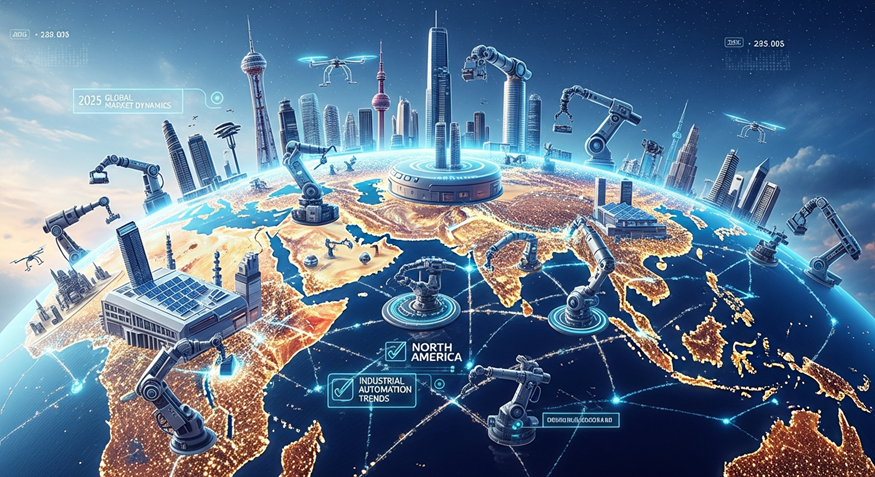
The market dynamics of industrial automation vary significantly between North America and other regions, particularly the Asia Pacific. The Asia Pacific region currently holds the largest market share, with over 37% of the global total in 2025. This is fueled by rapid industrialization, large-scale manufacturing, and strong government support.
In contrast, the market in North America is driven more by the need to modernize existing facilities, improve productivity to compete with lower-cost regions, and reshore manufacturing. The focus is often on advanced technologies, such as AI-driven solutions and collaborative robotics.
While the Asia Pacific region is the largest market by volume, North America and Europe remain crucial innovation hubs. The interplay between these different regional priorities and strengths is what shapes the overall global market dynamics.
The Influence of Reshoring and Nearshoring Manufacturing
In recent years, there has been a growing trend of reshoring and nearshoring manufacturing. This involves bringing production back to a company's home country (reshoring) or moving it to a nearby country (nearshoring). This trend is largely a response to the vulnerabilities in global supply chains that have become apparent.
Automation is a key enabler of this shift. By using advanced automation, companies can offset the higher labor costs in their home markets and make domestic manufacturing economically viable again. This helps create more resilient and responsive supply chains.
The move toward reshoring and nearshoring is driven by several factors:
- A desire to reduce supply chain risk and complexity.
- The need for shorter lead times and faster response to customer demand.
- Rising transportation costs and geopolitical uncertainties.
- The ability of automation to make the production process more competitive.
Future Outlook for Industrial Automation: 2025 and Beyond
Looking ahead, the future of industrial automation is incredibly promising. The trends we are seeing today are just the beginning of a much larger digital transformation that will continue to unfold. The forecast period shows strong and sustained market growth, driven by the ongoing need for greater efficiency, quality, and flexibility.
As emerging technologies mature and become more accessible, we can expect to see even more innovative applications of automation. The journey toward the fully autonomous "lights-out" factory is well underway, and the next decade will be a period of rapid advancement.
Long-Term Growth Predictions and Opportunities
The long-term outlook for the industrial automation sector is very positive, with strong market growth predicted for the next decade. The global market size is expected to continue its upward trajectory as more industries embrace automation to enhance operational efficiency and stay competitive.
This market expansion will create numerous opportunities. There will be a growing demand for customized automation solutions tailored to specific industry needs. The expansion of automation into new sectors, such as agriculture and construction, also presents significant growth potential.
Some of the key opportunities for long-term growth include:
- Developing more sustainable and energy-efficient automation solutions.
- Expanding into emerging markets with growing industrial bases.
- Providing training and support services to help companies manage the transition to automation.
- Innovating in software and data analytics to unlock more value from automated systems.
Emerging Technologies to Watch
Beyond the trends already making an impact, there are several emerging technologies that are poised to further revolutionize industrial automation. These advanced technologies promise to make smart manufacturing even smarter, more connected, and more autonomous in the coming years.
The concept of the digital twin will continue to evolve, becoming more sophisticated and integrated into the entire product lifecycle, from design to service. This will allow for unprecedented levels of simulation and optimization. We can also expect to see further advancements in programmable automation, making systems even more flexible.
Other technologies to keep an eye on include advanced materials, 5G connectivity for ultra-reliable, low-latency communication on the factory floor, and more sophisticated forms of human-machine collaboration. These innovations will continue to push the boundaries of what is possible in industrial automation.
Conclusion
In conclusion, the industrial automation sector is poised for significant advancements in 2025, driven by cutting-edge technologies and evolving market demands. As we have explored, trends such as the rise of artificial intelligence, the growing importance of IIoT, and the emphasis on cybersecurity are reshaping the landscape, making it vital for companies to adapt and innovate. Understanding these trends can provide a competitive edge and unlock new opportunities across various industries. Staying informed about the challenges and innovations in this sector will be essential for future growth. If you want to dive deeper into these insights or discuss how they can impact your business, feel free to reach out for more information!
Frequently Asked Questions
Which U.S. industries benefit most from industrial automation trends?
Industries like automotive manufacturing, food and beverage, pharmaceuticals, and energy are major beneficiaries of industrial automation. They leverage smart manufacturing, industrial robots, and other technologies to boost operational efficiency, improve quality, and increase their market share by staying competitive in a rapidly evolving global landscape.
How are companies addressing cybersecurity risks in industrial automation?
Companies are tackling cybersecurity risks by implementing multi-layered security strategies for their control systems and industrial processes. This includes network segmentation, access control, continuous monitoring, and investing in advanced automation solutions with built-in security features to protect against threats emerging from the ongoing digital transformation.
Where can I find reliable statistics and resources about the industrial automation sector?
Reliable statistics on the automation market, including market size, market growth, and key players' market share, can be found in reports from market research firms like Grand View Research and Virtue Market Research. Industry associations and publications also provide valuable data and analysis on current trends.
You might also like