Exploring the Industrial Automation Industry: Key Insights
Exploring the Industrial Automation Industry: Key Insights
Key Highlights
- Industrial automation uses automation systems to improve the production process with less human intervention.
- Smart manufacturing is growing as artificial intelligence supports faster decisions and better output.
- Digital transformation is changing how factories manage quality, speed, and process control.
- The automation market includes fixed, programmable, flexible, and integrated systems.
- Leading industries use industrial automation to handle repetitive work and improve consistency.
- Future growth will be shaped by data, connectivity, and smarter operations.
Introduction
Industrial automation is changing how companies run production, monitor equipment, and respond in real time. Instead of relying only on people for every task, businesses use automation technology to guide machines, track performance, and support steady output. You see this shift across many industrial settings, from packaging to assembly. If you want to understand where manufacturing is heading, industrial automation is a good place to start. It connects efficiency, visibility, and smarter daily operations.
Defining Industrial Automation
At its core, industrial automation is the use of control systems and automation solutions to manage machines and industrial processes with minimal human intervention. Instead of depending on constant manual input, companies set up equipment and software to perform tasks, monitor conditions, and keep operations moving. This helps improve speed, consistency, and process control in demanding environments.
In simple terms, the industrial automation industry builds and applies the tools that let factories and plants run more efficiently. These tools include controllers, software, sensors, and connected devices that guide actions based on preset rules or live inputs. That is how it works: systems collect information, process it, and trigger the next step automatically. To see this more clearly, it helps to look at how the process works in practice.
How Industrial Automation Works
Most automation systems follow a simple cycle. First, they collect information from machines, lines, or process points. This step is often called data acquisition. It gives the system the signals it needs to understand what is happening at that moment.
Next, control logic decides what action should happen. A programmable logic controller often handles this job. It reads inputs, compares them with programmed rules, and sends commands to equipment. That might mean starting a conveyor, stopping a motor, or adjusting timing on a production step.
As a result, fewer tasks depend on manual labor alone. People still oversee operations, but machines carry out repeated actions faster and with fewer variations. This combination of sensing, decision-making, and action is what makes automation practical across many production settings.

The Evolution of Automation in Industry
Early automation technology focused on basic machine control and repeated motion. The goal was simple: keep output steady and reduce time lost in routine tasks. Over time, this approach expanded beyond isolated machines into wider production systems.
Then digital transformation changed the picture. Industrial control systems became more connected, more responsive, and easier to monitor across multiple operations. Instead of treating each machine as a standalone unit, companies began linking data, software, and equipment for better coordination.
Today, advanced technologies continue that shift. Businesses now expect automation to support faster decisions, cleaner workflows, and stronger process visibility. The evolution of automation is really a move from simple mechanized control to connected systems that help operations adapt, improve, and scale more effectively.
Difference Between Factory Automation and Industrial Automation
Factory automation usually refers to the use of machines, controls, and software inside a factory setting. It focuses on the production process, such as assembly, packaging, movement of parts, and quality checks. In other words, it is a specific type of automation used within manufacturing facilities.
Industrial automation is broader. It includes factory automation, but it also covers other industrial processes where automation solutions support operations. The main idea is the same: use systems to reduce manual effort, improve consistency, and keep work flowing.
So how do they relate? Factory automation is one part of industrial automation overall. If industrial automation is the larger field, factory automation is a focused application within that field. With that distinction clear, the next step is to look at the main system types used today.
Types of Industrial Automation Systems
The main types of industrial automation help companies match equipment to production needs. These automation systems are usually grouped by how much change they can handle, how often products vary, and how the process is controlled.
Some setups are built for high-volume, repeated work, while others are better for changing output. That is why businesses often compare fixed, programmable automation, flexible, and integrated approaches before making a decision. Each model supports a different operating style, which the next sections explain in more detail.
Fixed Automation
Fixed automation is designed for high-volume, repeated output. It works best when the same product is made again and again with very few changes. You often see it in mass production environments where speed and consistency matter most.
A classic example is an assembly line. Machines are arranged in a set order, and each station performs a specific action. Because the process stays stable, equipment can handle repetitive tasks quickly and with predictable results.
The tradeoff is flexibility. Fixed automation is efficient, but it is not ideal when a company needs to switch products often. Changing the setup can take time and effort. Still, for long runs and steady demand, it remains one of the most effective choices in industrial operations.
Programmable Automation
Programmable automation is built for situations where output changes from one run to another. Instead of locking equipment into one permanent task, companies use control software to adjust how machines operate. This makes the system useful when product designs or volumes shift over time.
It is often used in batch production. A manufacturer may produce one item for a period, then reprogram the system for the next batch. That makes it more adaptable than fixed automation, especially when production requirements vary across product lines.
The main advantage is flexibility within structure. You still get automation benefits, but you also gain the ability to update settings without rebuilding the entire system. For businesses that balance efficiency with changing demand, programmable automation is a practical middle ground.

Flexible Automation
Flexible automation allows a production line to handle different products with fewer disruptions. Instead of stopping for large reconfiguration steps, the system is designed to shift between tasks more smoothly. This is useful when product variety is high and schedules change often.
In smart factories, flexible automation supports fast response to market needs. Equipment, software, and controls work together so lines can adapt with minimal human intervention. That means companies can manage product changes while still keeping output steady.
This approach is especially valuable when businesses want both efficiency and responsiveness. It does not only automate work; it also helps operations stay agile. When product mix matters as much as production speed, flexible automation becomes a strong option for modern manufacturing environments.
Integrated Automation
Integrated automation connects multiple parts of an operation into one coordinated system. Instead of treating machines, software, and control layers separately, it brings them together for smoother communication and better oversight. The result is more unified decision-making across the production environment.
This setup often relies on industrial PCs and industrial software to connect planning, control, monitoring, and reporting. When information moves cleanly between systems, teams can spot issues faster and manage workflows with less confusion.
The biggest benefit is process optimization. Integrated automation helps reduce gaps between machines, operators, and management systems. It supports better visibility, improved timing, and stronger consistency across the whole operation. After reviewing the main system types, it makes sense to examine the core technologies that power them.
Core Technologies Powering Industrial Automation
Industrial automation depends on several connected tools working together. Key automation technology includes sensors, controllers, software, industrial iot networks, and edge computing devices that support fast responses on the floor.
Artificial intelligence and machine learning add another layer by helping systems recognize patterns and support smarter decisions. These technologies do not operate alone. They form a stack that collects data, interprets conditions, and drives action. The following sections break down the major building blocks behind modern automated operations.
Robotics and Collaborative Robots (Cobots)
Robotics plays a central role in many industrial automation solutions. Robots are well suited for repetitive tasks that require speed, precision, and steady motion. They can move parts, support assembly, and help keep output consistent across long shifts.
Collaborative robots, often called cobots, are designed to work closer to people. Unlike traditional setups that limit nearby access, collaborative robots support tasks where some human intervention still matters. This makes them useful in operations that need both machine consistency and human judgment.
As intelligence improves, robotics becomes more responsive and easier to apply. Smarter systems can adjust actions based on inputs, which helps operations run with fewer interruptions. That shift shows how AI is changing the sector: not by replacing every person, but by making automation more adaptive and practical.
Artificial Intelligence and Machine Learning Applications
Artificial intelligence and machine learning help automation move beyond fixed responses. Instead of only following preset commands, systems can use data analytics to identify patterns, detect changes, and support better decisions. This is a key part of smart manufacturing.
One strong use case is predictive maintenance. By reviewing operating signals over time, machine learning models can flag conditions linked to wear or failure. That helps teams act before a breakdown leads to delays or extra maintenance costs.
These tools also improve planning and performance tracking. Artificial intelligence can support process adjustments, while machine learning refines results as more data becomes available. For companies aiming to improve visibility and control, these applications make automation more informed, more efficient, and better aligned with day-to-day production demands.
Industrial Internet of Things (IIoT) and Connectivity
Industrial iot connects machines, devices, and systems so they can share information across operations. This brings the internet of things into production environments, where equipment data becomes easier to monitor and use.
Iot devices collect signals from different points in the process and send them through industrial networks. That connected flow improves visibility, supports tracking, and helps teams understand what is happening as work moves through the line.
The real value is real time awareness. When systems communicate quickly, businesses can respond faster to issues, adjust production, and maintain smoother workflows. Industrial iot does not just add connectivity for its own sake. It creates a more informed operation where decisions are based on current conditions instead of delayed reports.

Sensors, Actuators, and Edge Devices
Sensors are the eyes and ears of automated operations. They detect temperature, position, motion, pressure, and other conditions that help systems understand what is happening on the line. Without reliable inputs, automation cannot respond accurately.
Actuators handle the action side. Once the system decides what should happen, actuators move, open, close, lift, or shift equipment as needed. This is how data becomes physical motion inside a production process.
Edge devices strengthen this setup by supporting edge computing close to the source of activity. Instead of sending every signal far away for processing, edge devices can handle some decisions locally. That helps speed up responses and supports better quality checks. Together, sensors, actuators, and edge devices create the fast feedback loop that keeps automation effective.
Programmable Logic Controllers (PLCs) and SCADA Systems
A programmable logic controller is one of the most common tools in automated operations. It reads inputs from equipment, applies programmed rules, and sends outputs to machines. Because it works quickly and reliably, it remains a core part of many control systems.
SCADA stands for supervisory control and data acquisition. These systems give teams a broader view of operations by collecting information, displaying status, and supporting oversight across multiple process points. They help operators track performance and respond to issues more efficiently.
Together, PLCs and SCADA support both action and visibility. PLCs manage machine-level control, while SCADA helps supervise the wider process. In many industrial control systems, this pairing forms the backbone of daily operation. With the technology foundation covered, the next focus is the market itself and where growth is heading.
Market Overview and Growth Trends
The automation market continues to expand as companies invest in better visibility, efficiency, and connected operations. Demand for automation solutions is rising because businesses want more stable production and stronger process control.
Digital transformation is a major reason behind this movement. As operations become more data-driven, market players are building systems that connect equipment, software, and decision-making. Growth is not coming from one tool alone. It is being shaped by a wider shift toward smarter and more responsive industrial environments.
Current Market Size and Major Players in the United States
The United States has a strong position in the automation market, supported by steady investment in digital transformation and industrial upgrades. While market size changes over time, the direction is clear: demand continues to grow as companies expand automation solutions across production, monitoring, and control environments.
Several market players are commonly associated with this space. These companies are known for equipment, software, and industrial systems used across manufacturing and process operations.
| Market players | Role in the automation market |
|---|---|
| Rockwell Automation | Known for industrial control and automation solutions in the United States |
| Siemens AG | Active in automation technology, software, and connected industrial systems |
| Schneider Electric | Supports control, monitoring, and energy-related automation applications |
Overall, expected growth is tied to smart manufacturing, connected systems, and continued modernization across industrial sectors.
Key Drivers of Market Growth
Several forces are pushing industrial automation forward. Companies are under pressure to produce more efficiently, respond faster, and keep operations stable. That makes automation solutions more attractive across a wide range of industrial settings.
Smart manufacturing is also gaining attention because businesses want more connected, visible, and data-aware operations. At the same time, advanced technologies are making adoption easier and more practical than before.
Key growth drivers include:
- Labor shortages that increase the need for systems that reduce dependence on manual tasks
- Greater interest in smart manufacturing and connected production environments
- Wider availability of advanced technologies that support automation at different scales
- Rising demand for automation solutions that improve consistency and process control
These factors are shaping market momentum and influencing investment decisions.
Forecasted Trends and Investment Opportunities
Looking ahead, the automation market is expected to keep moving toward connected and data-supported operations. Businesses are not only buying equipment. They are investing in systems that support visibility, flexibility, and stronger coordination across production and planning.
Smart manufacturing will remain a major focus. Companies want automation solutions that connect machines, software, and reporting so they can improve output and respond faster to changes. This trend also creates room for upgrades in process automation across existing facilities.
Cloud computing is another important area. It supports broader access to operational data and can help teams manage information across locations. For investors and operators, the opportunity lies in solutions that combine control, connectivity, and scalable insight. With market direction in view, the next question is which industries are adopting these tools most actively.
Leading Industries Adopting Automation Solutions
Automation solutions are being adopted across many sectors, but some industries are moving faster because of scale, quality demands, and process complexity. Industrial automation is especially useful where output must stay consistent and operations run continuously.
Smart factories are not limited to one market. Different industries apply automation in ways that fit their own industrial processes, product requirements, and operating pressures. The following examples show where adoption is especially strong and why these sectors see clear value.
Automotive Manufacturing
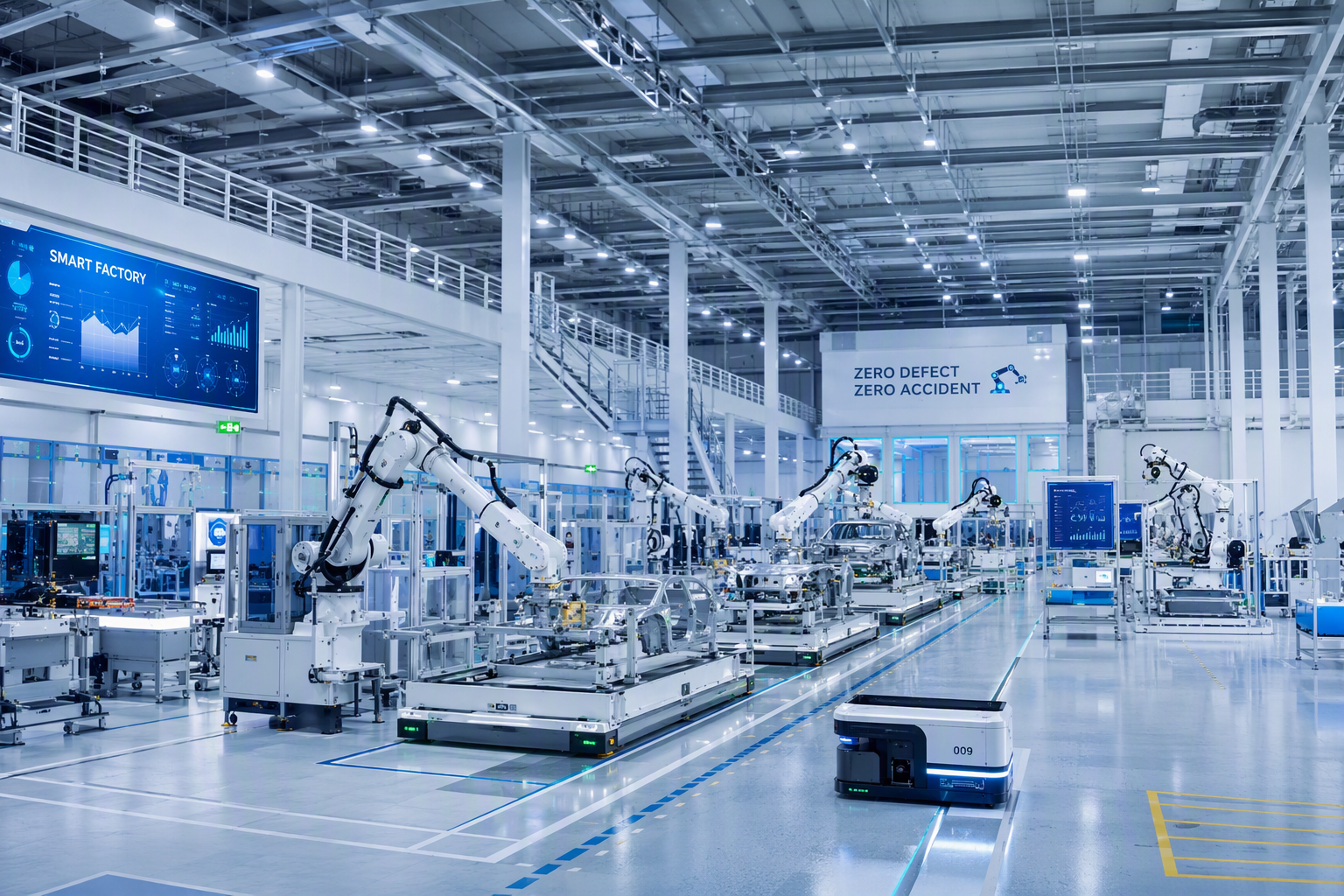
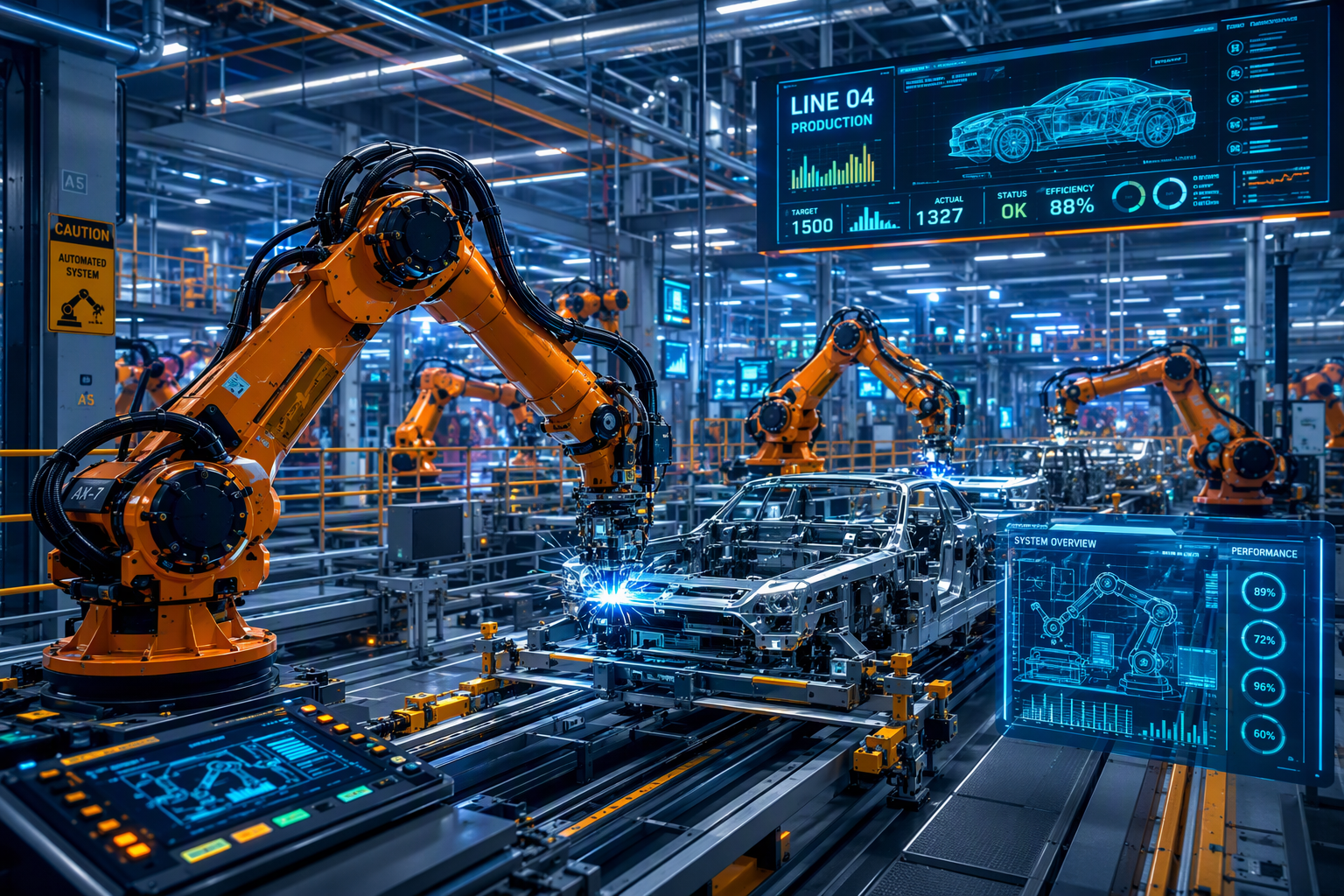
Automotive manufacturing is one of the clearest examples of large-scale automation use. This industry depends on mass production, precise timing, and high output, which makes automation systems a natural fit for daily operations.
Many steps involve repetitive tasks such as movement, positioning, joining, and inspection. Machines can perform these jobs with steady speed and support better workflow across the line. That helps reduce variation and keeps production moving.
Quality control is another major reason the automotive sector leads adoption. When every part must meet consistent standards, automation helps maintain repeatable results across large volumes. Because of these demands, automotive manufacturing remains one of the industries most strongly linked to industrial automation growth.
Food and Beverage Processing
Food and beverage processing relies on stable workflows, accurate handling, and dependable timing. Automation technology supports these needs by helping facilities manage repeated production steps with better consistency and less delay.
In this sector, quality checks are especially important. Products must move through processing, filling, packaging, and inspection in a controlled way. Automated systems help keep those steps organized and easier to monitor.
Industrial operations in food and beverage settings also benefit from smoother coordination between machines and operators. That can improve throughput while supporting cleaner, more reliable production routines. For businesses that need high volumes and consistent results, automation plays a practical role in everyday processing activities.
Pharmaceuticals and Life Sciences
Pharmaceuticals and life sciences depend on careful control, accurate workflows, and clear process visibility. Automation systems help manage these demands by supporting repeated tasks and consistent handling across production stages.
Real time monitoring is valuable in these environments because teams need quick insight into process status and equipment conditions. When systems can track and report conditions as they happen, operators can respond faster and maintain tighter oversight.
Quality assurance is another key reason automation matters here. In pharmaceuticals and life sciences, even small process differences can create problems. Automated controls and monitoring help reduce variation and support more dependable results. That makes automation a strong fit for industries where precision and consistency are central to daily operations.

Electronics and Semiconductors
Electronics and semiconductors require careful handling, repeatable processes, and tight control over production steps. Industrial automation helps manage these needs by supporting accurate movement, process timing, and steady output in highly structured settings.
Many facilities in this space use batch production, where specific runs must be completed with consistency before the next setup begins. Automation helps reduce variation between runs and improves control over each stage of work.
These industries also operate in demanding industrial environments where precision matters at every point. Because components and processes can be sensitive, automation supports better coordination and more reliable production flow. That is why electronics and semiconductors continue to be strong adopters of automated systems and connected process tools.
Advantages and Benefits of Industrial Automation
The benefits of industrial automation are easy to see when you look at daily operations. Businesses use it to improve operational efficiency, reduce variation, and keep the production process moving with fewer delays.
Cost savings are also part of the picture, but the value goes beyond expense control. Automation helps companies improve speed, consistency, and oversight at the same time. The next sections explain the main gains in productivity, quality, safety, and resource use that make automation worth the investment.
Productivity and Efficiency Gains
One of the clearest advantages of automation is higher productivity. Machines can repeat tasks quickly and consistently, which helps businesses keep output steady over long shifts. That makes it easier to meet demand without relying only on manual effort.
Operational efficiency also improves because automation technology reduces delays between steps. When equipment, controls, and monitoring work together, production flows more smoothly and bottlenecks become easier to manage.
This leads to better process optimization. Teams can organize work with more precision, respond faster to issues, and use equipment more effectively. For manufacturers, these gains are among the main benefits of adopting industrial automation. It supports more output, steadier operations, and a stronger foundation for long-term performance improvements.
Quality and Consistency Improvements
Industrial automation helps improve quality control by making repeated actions more stable. When machines follow the same settings and timing each cycle, the process becomes easier to manage and less likely to drift from the target.
Consistency matters in every production environment. If one batch differs from the next, waste and rework can grow quickly. Automated systems reduce that risk by supporting uniform performance across tasks that would otherwise vary more from person to person.
Quality checks also become easier to build into the workflow. Sensors, monitoring tools, and programmed responses help identify issues during production instead of after the fact. For companies focused on reliable output, this combination of consistency and built-in control is a major benefit of automation.
Safety and Risk Reduction
Safety is a major reason many companies invest in automation systems. When machines handle demanding, repeated, or tightly timed tasks, people spend less time exposed to difficult parts of industrial operations.
This supports risk reduction in practical ways. Fewer manual touchpoints can mean fewer chances for process mistakes during repeated motion or high-speed work. Automation can also keep actions consistent, which helps reduce operating uncertainty.
That does not remove people from the process entirely. Human intervention still matters for oversight, setup, and decision-making. But by shifting routine actions to machines, businesses can create a safer workflow. In many facilities, automation improves both protection and control at the same time.
Cost Savings and Resource Optimization
Cost savings often come from better use of time, equipment, and materials. When automation technology helps a process run more smoothly, companies can reduce waste, avoid repeated corrections, and improve the value of each production hour.
Resource optimization is another key gain. Automated systems can support better scheduling, steadier throughput, and clearer visibility into how production assets are being used. That makes it easier to align output with demand and reduce unnecessary strain on operations.
Maintenance costs can also be managed more effectively when systems provide clearer performance signals. Instead of reacting late, teams can plan service more carefully and avoid larger disruptions. Together, these improvements help businesses control expenses while getting more from the resources already in place.
Challenges in the Industrial Automation Industry
Industrial automation brings clear value, but adoption is not always simple. Companies often face technical, workforce, and security issues as they expand automation solutions across operations.
Digital transformation can expose gaps in systems, skills, and planning. Automation technology works best when tools, people, and processes are aligned, and that takes time. To build a realistic view of the industry, it is important to look at the main challenges businesses face while modernizing their production environments.
Integration of New Technologies
Integration is one of the biggest challenges in automation projects. Many businesses already have existing equipment, software, and workflows in place. Adding advanced technologies to that environment can be difficult if systems were not designed to work together from the start.
Digital transformation often depends on connecting old and new tools without disrupting production. That is easier said than done. If data structures, interfaces, or control methods do not align, automation systems may require extra configuration and planning.
Another concern is unplanned downtime during changeover. Even useful upgrades can create temporary disruption if installation or testing affects production flow. For many companies, the challenge is not just choosing better tools. It is making sure new technology fits the current operation without creating bigger problems in the process.

Cybersecurity and Data Privacy Concerns
As more equipment becomes connected, cybersecurity becomes harder to ignore. Automated operations rely on data flow, remote visibility, and linked systems, which means industrial networks can create more points of exposure if they are not managed carefully.
Data privacy is also a concern. Operational information, system settings, and performance records all have value. When that data moves across platforms and connected tools, businesses need stronger control over who can access it and how it is used.
These issues matter across the automation market because trust is part of adoption. Companies want the benefits of connected systems, but they also need confidence that their information and operations are protected. That balance between connectivity and protection remains a major challenge in modern automation environments.
Workforce Transition and Skills Gap
Workforce transition is a real issue as industrial automation expands. When companies move away from manual labor for routine tasks, job roles start to change. People are still needed, but the type of work often shifts toward monitoring, setup, and system support.
That creates a skills gap. Employees may know the production process well, yet still need training to work with connected controls, software, and data-based tools used in smart manufacturing. Without that support, adoption can slow down.
The challenge is not simply replacing old methods. It is helping teams adapt to new ones. Businesses that manage workforce transition well are usually better positioned to get value from automation. They build skills alongside technology, which helps people and systems work together more effectively over time.
The Future of Industrial Automation
The future of industrial automation points toward more connected, adaptive, and data-aware operations. Businesses are moving beyond basic machine control and using automation technology to support broader decision-making across production.
Smart manufacturing will continue to shape that direction, with artificial intelligence playing a larger role in insight and optimization. The next decade is likely to bring systems that are not only faster, but also more responsive to changing conditions. To understand that shift, it helps to look at the main trends and innovations already taking shape.
Intelligent Factory Trends and Innovations
The intelligent factory is becoming a central idea in smart manufacturing. It describes an operation where connected systems, data flow, and automated controls support faster responses and better coordination across production activities.
Current innovations are focused on visibility, adaptability, and planning. Predictive maintenance is one example, helping businesses act before equipment issues grow into larger disruptions. This supports smoother operations and better use of assets over time.
Another important trend is closer alignment between production and the supply chain. As factories become more connected, they can respond more effectively to changing needs across sourcing, scheduling, and output. These trends are shaping the industry today by making automation more informed, more integrated, and better suited to ongoing operational change.
The Role of AI and Data Analytics in Future Automation
Artificial intelligence is becoming a larger part of future automation because it helps systems interpret information instead of only reacting to fixed commands. With stronger data analytics, operations can identify patterns, support better planning, and improve ongoing decision-making.
Cloud computing adds reach by helping businesses manage information across sites and teams. In smart factories, that means data can support wider visibility, performance tracking, and process coordination without staying locked inside one machine or one line.
Over the next decade, AI is likely to make automation more adaptive and more predictive. Rather than simply running tasks, systems will help companies respond to change with greater speed and clarity. That is how intelligence is changing the sector: by turning automation into a more informed partner in daily operations and long-term planning.
Conclusion
In conclusion, understanding the industrial automation industry is crucial for businesses aiming to enhance productivity and efficiency. By exploring its various systems and core technologies, you can grasp the immense benefits that automation offers across multiple sectors, from automotive to pharmaceuticals. While challenges such as workforce transition and cybersecurity exist, the future of industrial automation is bright with innovations in AI and intelligent factories on the horizon. Embracing these advancements not only elevates operational capabilities but also positions companies for sustained growth in a competitive landscape. If you’re ready to take the next step in automating your processes, don't hesitate to reach out for a free consultation to explore tailored solutions for your business needs.
Frequently Asked Questions
What are the main types of industrial automation systems?
The main types of industrial automation include fixed automation, programmable automation, flexible automation, and integrated automation. These automation systems differ in how they handle volume, product changes, and connected control. Businesses choose among these types of industrial automation based on output needs, variety, and process complexity.
How big is the industrial automation market in the United States?
The United States holds a strong position in the automation market, with continued growth linked to digital transformation and rising demand for automation solutions. Major market players such as Rockwell Automation, Siemens AG, and Schneider Electric support this momentum as industrial automation expands across manufacturing and connected operations.
What benefits do manufacturers gain from adopting industrial automation?
The benefits of industrial automation include higher productivity, stronger quality control, better operational efficiency, and meaningful cost savings. Manufacturers also gain more consistent output, smoother workflows, and improved process visibility. These advantages help businesses run production more effectively while reducing waste, variation, and avoidable delays.
You might also like